
LZLJ(000568)

Search documents
白酒市场生变,酒企纷纷“降度”
Sou Hu Cai Jing· 2025-08-27 12:48
Group 1 - Major Chinese liquor companies, including Wuliangye and Shede, announced the launch of low-alcohol products, indicating a shift in the market towards lower alcohol content [1][4] - The trend of reducing alcohol content is a response to changing consumer preferences, particularly among younger demographics who favor taste and health [4][9] - The China Alcoholic Drinks Association's report highlights a mismatch between traditional liquor offerings and the demands of younger consumers born between 1985 and 1994 [4][5] Group 2 - Companies like Luzhou Laojiao and Yanghe are actively developing low-alcohol products, with Luzhou Laojiao planning to introduce a 28-degree version of its flagship product [5][4] - The introduction of low-alcohol products is seen as a proactive measure to adapt to a market undergoing significant adjustments, with many companies experiencing declining sales [4][9] - The market for low-alcohol beverages is expanding, with various companies launching products in the range of 15 to 28 degrees [4][5] Group 3 - In addition to lowering alcohol content, liquor companies are entering the craft beer market, with Wuliangye launching its first craft beer product [7] - Young consumers are driving the craft beer market, with over 75% prioritizing unique flavor experiences [7][9] - The strategy of combining liquor and beer aims to create a synergistic ecosystem, leveraging shared distribution channels and consumer engagement [7][9] Group 4 - Despite the opportunities presented by low-alcohol and craft beer strategies, companies face challenges such as technical difficulties in producing low-alcohol beverages and regional market differences [9] - The need for effective supply chain management is critical as beer has a shorter shelf life and higher consumption frequency compared to traditional liquor [9] - The dual strategy of lowering alcohol content and entering the beer market is essential for addressing the loss of younger consumers and the competitive landscape [9]






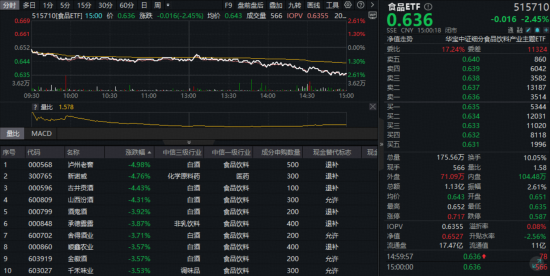
滞涨洼地!吃喝板块全线回调,食品ETF(515710)跌超2%!机构:建议关注估值修复机会
Xin Lang Ji Jin· 2025-08-27 11:53
Group 1 - The food and beverage sector experienced a significant decline on August 27, with the Food ETF (515710) dropping by 2.45% to close at 0.636 [1][2] - Notable declines were observed in liquor stocks, with Luzhou Laojiao, Gujing Gongjiu, and Shanxi Fenjiu falling over 4%, while Kweichow Moutai and Wuliangye also saw declines exceeding 2% [1][2] - The overall market sentiment indicates that despite previous gains, the liquor sector remains at a low point, with institutions suggesting that the current market conditions may present attractive opportunities for high-quality liquor stocks [1][3] Group 2 - According to institutional analysis, the current environment, characterized by policy-driven demand and favorable supply-side conditions, is expected to gradually improve the supply-demand dynamics in the liquor sector [3] - The Food ETF's price-to-earnings ratio stands at 21.35, placing it in the 10.57 percentile over the past decade, indicating a favorable long-term investment opportunity [3] - Analysts from Ping An Securities believe that the liquor sector's fundamentals are stabilizing, with upcoming festive seasons likely to boost consumption [4] Group 3 - The liquor sector has faced pressure since the implementation of the alcohol ban, but recent policy changes are expected to alleviate some of this pressure, setting the stage for a potential recovery [4] - Investment strategies suggest focusing on high-end liquor, mid-range liquor with national expansion, and local market strongholds as key areas for potential growth [4] - The Food ETF (515710) is highlighted as a core asset for investors looking to gain exposure to the food and beverage sector, with a significant portion of its holdings in leading liquor stocks [5]


白酒板块8月27日跌2.74%,泸州老窖领跌,主力资金净流出35.2亿元
Zheng Xing Xing Ye Ri Bao· 2025-08-27 08:43
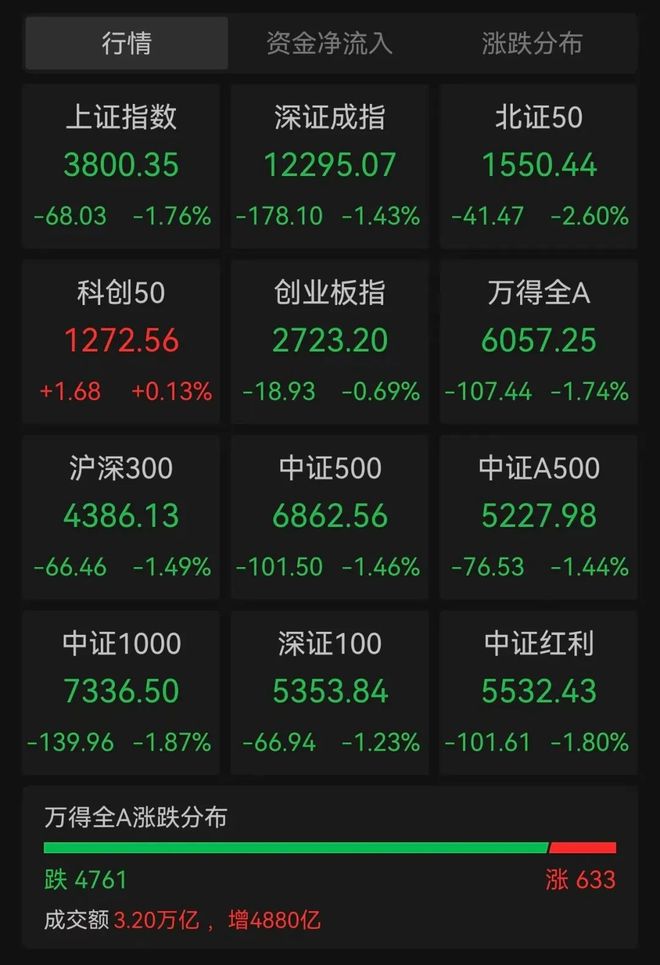
Market Overview - The liquor sector experienced a decline of 2.74% on August 27, with Luzhou Laojiao leading the drop [1] - The Shanghai Composite Index closed at 3800.35, down 1.76%, while the Shenzhen Component Index closed at 12295.07, down 1.43% [1] Individual Stock Performance - Luzhou Laojiao (000568) closed at 133.82, down 4.98%, with a trading volume of 200,300 shares and a transaction value of 2.723 billion [1] - Other notable declines include: - ST Yanshi (600696) down 4.50% to 6.37 - Gujing Gongjiu (000596) down 4.43% to 165.21 - Shanxi Fenjiu (600809) down 4.31% to 198.94 [1] Capital Flow Analysis - The liquor sector saw a net outflow of 3.52 billion from main funds, while retail funds had a net inflow of 1.636 billion [1] - The table of capital flow indicates that major stocks like Kweichow Moutai (6150009) had a net outflow of 1.17 billion, while retail investors contributed 1.548 million [2] Detailed Stock Capital Flow - Luzhou Laojiao (000568) had a net outflow of 336 million from main funds and a net inflow of 226 million from retail investors [2] - Other stocks with significant capital movements include: - Wuliangye (000858) with a net outflow of 659 million from main funds and a net inflow of 410 million from retail investors - Jiugui Liquor (000799) with a net outflow of 324 million from main funds and a net inflow of 165 million from retail investors [2]

沪指跌超1.7%,超4700股下跌
2 1 Shi Ji Jing Ji Bao Dao· 2025-08-27 07:27
Market Overview - The A-share market experienced a significant decline, with the Shanghai Composite Index dropping over 1.7% and the Shenzhen Component Index falling by 1.43% [1][2] - A total of 4,761 stocks declined, while the trading volume exceeded 3 trillion yuan, an increase of 488 billion yuan compared to the previous day [1][2] Sector Performance - The financial sector led the declines, with notable drops in bank stocks such as Postal Savings Bank down over 4% and Everbright Bank down 2.78% [2][3] - Other sectors like liquor, coal, and real estate also saw significant declines, with major liquor brands like Luzhou Laojiao and Gujing Gongjiu experiencing drops of 4.97% and 4.43% respectively [4][3] Investment Trends - There has been a notable increase in the number of new A-share accounts, with 1.9636 million new accounts opened in July 2025, marking a year-on-year increase of 70.54% [7] - The active user base for securities apps reached 167 million, reflecting a 3.36% month-on-month increase and a 20.89% year-on-year increase [7] - Investors are shifting from traditional savings to equity markets, with a significant reduction in household deposits by 1.1 trillion yuan in July [8] Economic Insights - The preference for bond assets is expected to decline as the yield center decreases, leading to an increased allocation towards equity assets among domestic investors [9] - The focus on corporate earnings is rising as the A-share market enters the peak reporting season, with sectors like TMT, consumer goods, and manufacturing showing strong Q2 performance [11] Future Outlook - The liquor industry is anticipated to reach a bottom by Q3 2025, with expectations of a gradual recovery in the second half of the year [13] - The consumer sector, particularly leading companies, may benefit from foreign capital inflows, providing support to the market [13]




白酒板块午盘下跌 贵州茅台下跌1.44%
Bei Jing Shang Bao· 2025-08-27 06:04
Group 1 - The core index of Shanghai Composite Index rose by 0.33% to 3881.07 points on August 27, while the liquor sector fell by 1.07% to 2384.56 points at midday, with all 20 liquor stocks declining [1] - Notable individual stock performances include Kweichow Moutai closing at 1460.32 CNY per share, down 1.44%; Wuliangye at 128.14 CNY, down 1.23%; Shanxi Fenjiu at 200.36 CNY, down 3.63%; Luzhou Laojiao at 135.64 CNY, down 3.69%; and Yanghe Brewery at 73.95 CNY, down 0.63% [1] - Huatai Securities reported that the liquor sector's valuation and sentiment are at low levels, with the overall fundamentals stabilizing and the upcoming Mid-Autumn Festival expected to boost demand [1] Group 2 - The government is increasingly focused on boosting domestic demand, with ongoing consumer promotion policies providing support for the liquor sector [1] - Companies in the liquor industry are placing greater emphasis on maintaining investor interests, with several firms announcing long-term and mid-term dividend plans, indicating high long-term allocation value in the current interest rate environment [1]
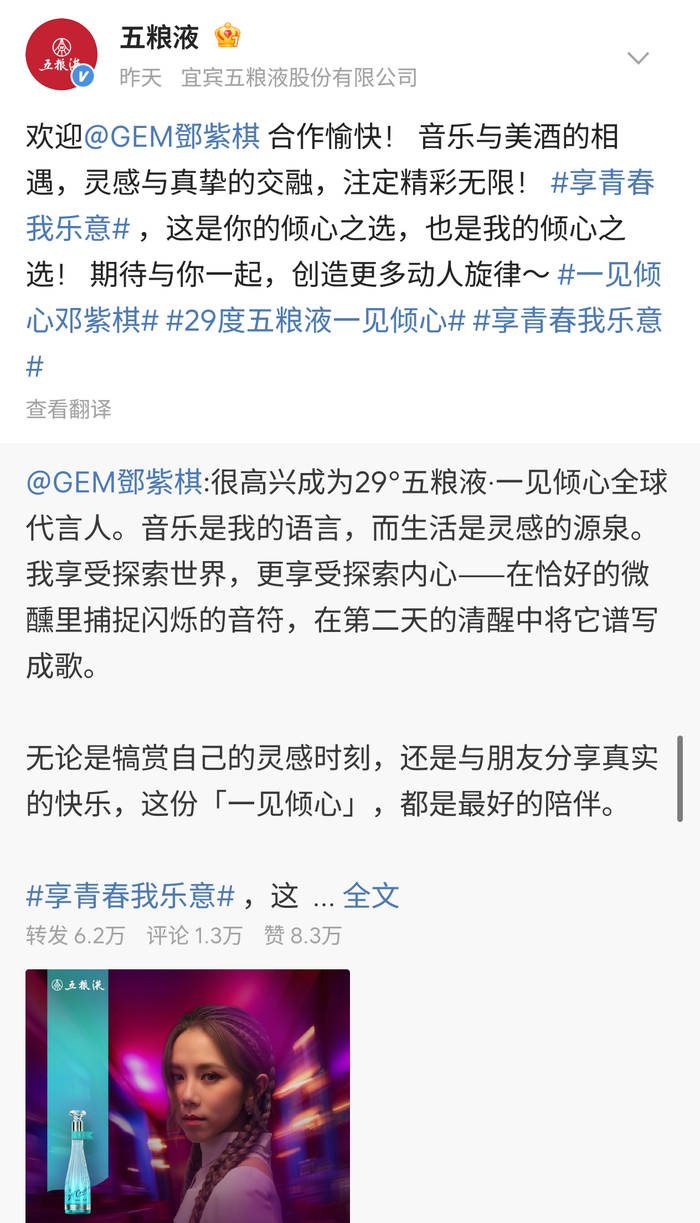
邓紫棋代言五粮液低度酒!新品白酒度数一个比一个低
Di Yi Cai Jing Zi Xun· 2025-08-27 04:44
Core Viewpoint - A "degree reduction competition" is emerging in the Chinese liquor industry, with major brands launching low-alcohol products to adapt to changing consumer preferences [2][4]. Group 1: Industry Trends - Major liquor companies, including Wuliangye and Shede, have recently introduced low-alcohol products, reflecting a shift in consumer demand [2][4]. - In the past month, four companies have announced new low-alcohol products, with alcohol content decreasing progressively [2][4]. - The trend towards lower alcohol content is seen as a response to the industry's adjustment to market changes, particularly the evolving preferences of younger consumers [4][5]. Group 2: Consumer Behavior - The rise of younger consumers, particularly those born between 1985 and 1994, is driving demand for more palatable and health-conscious alcoholic beverages [4][5]. - Traditional high-alcohol liquor has been losing appeal among younger demographics, who prefer alternatives like beer, fruit wine, and cocktails [5][6]. - A report indicates that low-alcohol liquor market size in China is expected to reach 74 billion yuan by 2025, highlighting the potential for growth in this segment [5][6]. Group 3: Production Challenges - Producing low-alcohol liquor requires advanced techniques and higher-quality ingredients, making it more costly than traditional high-alcohol products [3][4]. - Experts emphasize that maintaining the flavor profile while reducing alcohol content poses significant production challenges [3][4]. Group 4: Market Opportunities - The introduction of low-alcohol products is seen as a way to tap into new market segments and meet the diverse needs of consumers [5][6]. - Companies are encouraged to innovate not only in product offerings but also in consumer engagement strategies to effectively reach younger audiences [4][6].

邓紫棋代言五粮液低度酒!新品白酒度数一个比一个低
第一财经· 2025-08-27 04:19
Core Viewpoint - A "degree reduction competition" is emerging in the Chinese liquor industry, with major brands launching lower-alcohol products to adapt to changing consumer preferences and market dynamics [3][4]. Group 1: Industry Trends - Major liquor companies like Wuliangye and Shede are introducing lower-alcohol products, reflecting a shift in consumer demand and a response to market changes [3][4]. - In the past month, four companies have announced new low-alcohol products, with alcohol content decreasing progressively, indicating a trend towards lower alcohol offerings [3][4]. - The introduction of lower-alcohol products is accompanied by modern packaging and online sales strategies, targeting younger consumers through celebrity endorsements [3][4]. Group 2: Consumer Behavior - The rise of younger consumers, particularly those born between 1985 and 1994, is influencing the liquor market, as they prefer drinks that are more palatable and healthier [5][6]. - Traditional high-alcohol liquor is losing appeal among younger consumers, who are increasingly drawn to beer, fruit wine, and cocktails, with white liquor only accounting for 31.8% of their consumption [5][6]. - The shift in consumer preferences is prompting liquor companies to innovate and adapt their offerings to meet the diverse needs of modern consumers [5][7]. Group 3: Market Potential - The domestic low-alcohol liquor market is projected to reach 74 billion yuan by 2025, indicating significant growth potential for this segment [6]. - Lower-alcohol products are expected to complement existing sales channels and cater to social drinking occasions, potentially opening new revenue streams for companies [6][7]. - While lowering alcohol content is a key strategy, companies must also consider how to meet the evolving demands of younger consumers in various social contexts [7].

邓紫棋代言五粮液低度酒!新品白酒度数一个比一个低 试图讨好年轻人
Di Yi Cai Jing· 2025-08-27 03:29
Core Viewpoint - A "degree reduction competition" is quietly unfolding in the liquor industry, reflecting the industry's anxiety and adjustments in response to changing consumer preferences [1][3]. Industry Trends - Recently, four companies have announced the launch of low-alcohol liquor products, with alcohol content decreasing progressively, indicating a trend towards lower alcohol content in the industry [3][4]. - The introduction of low-alcohol products is accompanied by modern packaging and online sales strategies, aiming to attract consumers through celebrity endorsements [3][4]. Consumer Behavior - The shift towards low-alcohol liquor is a response to the changing preferences of younger consumers, who prioritize taste and health characteristics over traditional high-alcohol content [4][5]. - The core consumer group for liquor is undergoing a generational shift, with younger consumers showing a preference for beverages like beer, fruit wine, and cocktails, which collectively account for over 40% of consumption [5][6]. Market Potential - The low-alcohol liquor market is projected to reach a scale of 740 billion yuan by 2025, indicating significant growth potential for companies that adapt to this trend [5][6]. - Companies like Luzhou Laojiao have reported that lower-alcohol products contribute significantly to their sales, suggesting a positive market response to these offerings [5][6]. Production Challenges - Producing low-alcohol liquor presents technical challenges, requiring higher quality base and flavoring spirits, which can increase production costs [4][6]. - The industry must balance the reduction of alcohol content with maintaining the traditional flavor profile of liquor, necessitating advanced production techniques [4][6].

邓紫棋代言五粮液低度酒!新品白酒度数一个比一个低,试图讨好年轻人
Di Yi Cai Jing· 2025-08-27 03:29
Core Viewpoint - The Chinese liquor industry is experiencing a "lowering alcohol content competition," with major brands launching low-alcohol products to adapt to changing consumer preferences and market dynamics [2][4][5]. Industry Trends - Major liquor companies like Wuliangye and Shede are introducing low-alcohol products, with Wuliangye launching a 29° version and Shede set to release a 29° product soon [2][4]. - In the past month, four companies have announced new low-alcohol products, indicating a growing trend in the industry [4]. - The shift towards lower alcohol content reflects a response to the evolving preferences of younger consumers who favor lighter, more palatable beverages [5][6]. Consumer Insights - The rise of younger consumers, particularly those born between 1985 and 1994, is influencing the liquor market, as they seek drinks that are more flavorful and healthier [6]. - Traditional high-alcohol content liquors are losing appeal among younger demographics, who prefer alternatives like beer, fruit wine, and cocktails [6][7]. - The market for low-alcohol beverages is projected to reach 74 billion yuan by 2025, highlighting significant growth potential in this segment [7]. Production Challenges - Producing low-alcohol liquor presents technical challenges, requiring higher quality ingredients and more advanced production processes [5]. - Companies like Shede emphasize that lower alcohol content does not equate to lower production costs, as advanced techniques are necessary to maintain flavor [5]. Market Opportunities - The introduction of low-alcohol products is seen as a way to tap into new market segments, particularly for social drinking occasions [7]. - Liquor companies are encouraged to innovate beyond just lowering alcohol content to meet the diverse needs of modern consumers [7].
A股白酒板块回调:泸州老窖、酒鬼酒跌超3% 贵州茅台跌1.3%
Ge Long Hui· 2025-08-27 02:13
Group 1 - The A-share liquor sector has experienced a significant pullback, with Shanxi Fenjiu dropping nearly 4% [1] - Luzhou Laojiao and Jiugui Liquor both fell over 3%, while Yingjia Gongjiu, Jiansi Yuan, and Gujing Gongjiu declined more than 2% [1] - Kweichow Moutai saw a decrease of 1.3%, with other companies like *ST Yanshi and Jinhui Liquor also following the downward trend [1]


