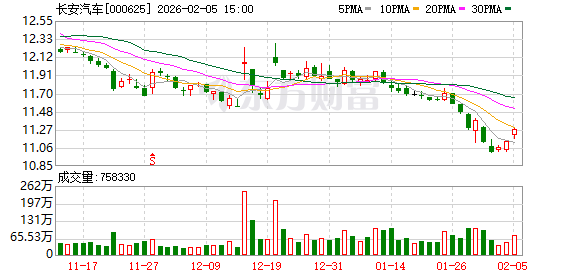
CHANGAN AUTOMOBILE-B(000625)

Search documents
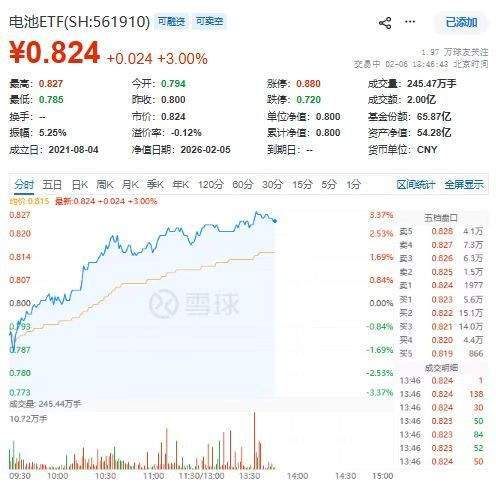
钠电+储能共振,电池ETF(561910)午后拉涨超3%引领两市!震裕科技暴涨超12%
Sou Hu Cai Jing· 2026-02-06 06:43
Core Insights - The battery industry chain is experiencing a comprehensive surge, with the battery ETF (561910) rising by 3.12%, leading the market [1] - The strong bullish sentiment in the sector is reflected in the performance of key companies, such as Enjie Co., which hit the daily limit, and other core material companies like Tianci Materials and Molybdenum & Tungsten, which saw increases exceeding 7% [1] Industry Dynamics - A significant breakthrough has been achieved with the industrialization of sodium batteries, marked by the launch of the world's first mass-produced sodium battery passenger vehicle by CATL and Changan Automobile on February 5, indicating the beginning of a new market space worth trillions [2] - The battery industry's fundamentals are showing signs of improvement after a prolonged adjustment period, with global energy storage demand expected to exceed 2TWh by 2030, while supply expansion is becoming more rational due to "anti-involution" policies [3] - Recent national policies have introduced capacity compensation mechanisms for energy storage, enhancing the economic viability of storage power stations and likely accelerating the construction of previously approved projects, thereby increasing demand for storage batteries [3] Future Outlook - The battery industry is positioned at a new starting point, driven by technological iterations (sodium and solid-state batteries) and global green demands (electric vehicles and energy storage) [3] - The battery ETF (561910) encompasses the entire industry chain from leading battery manufacturers to core material suppliers, serving as an efficient tool for investors to capitalize on the industry's opportunities [3]



长安汽车首发量产钠电池车型,宁德时代提供电池系统
Xin Lang Cai Jing· 2026-02-06 05:33
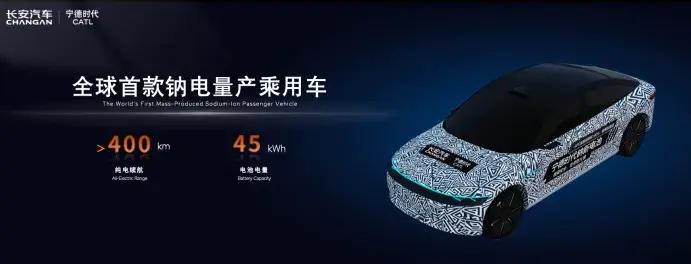
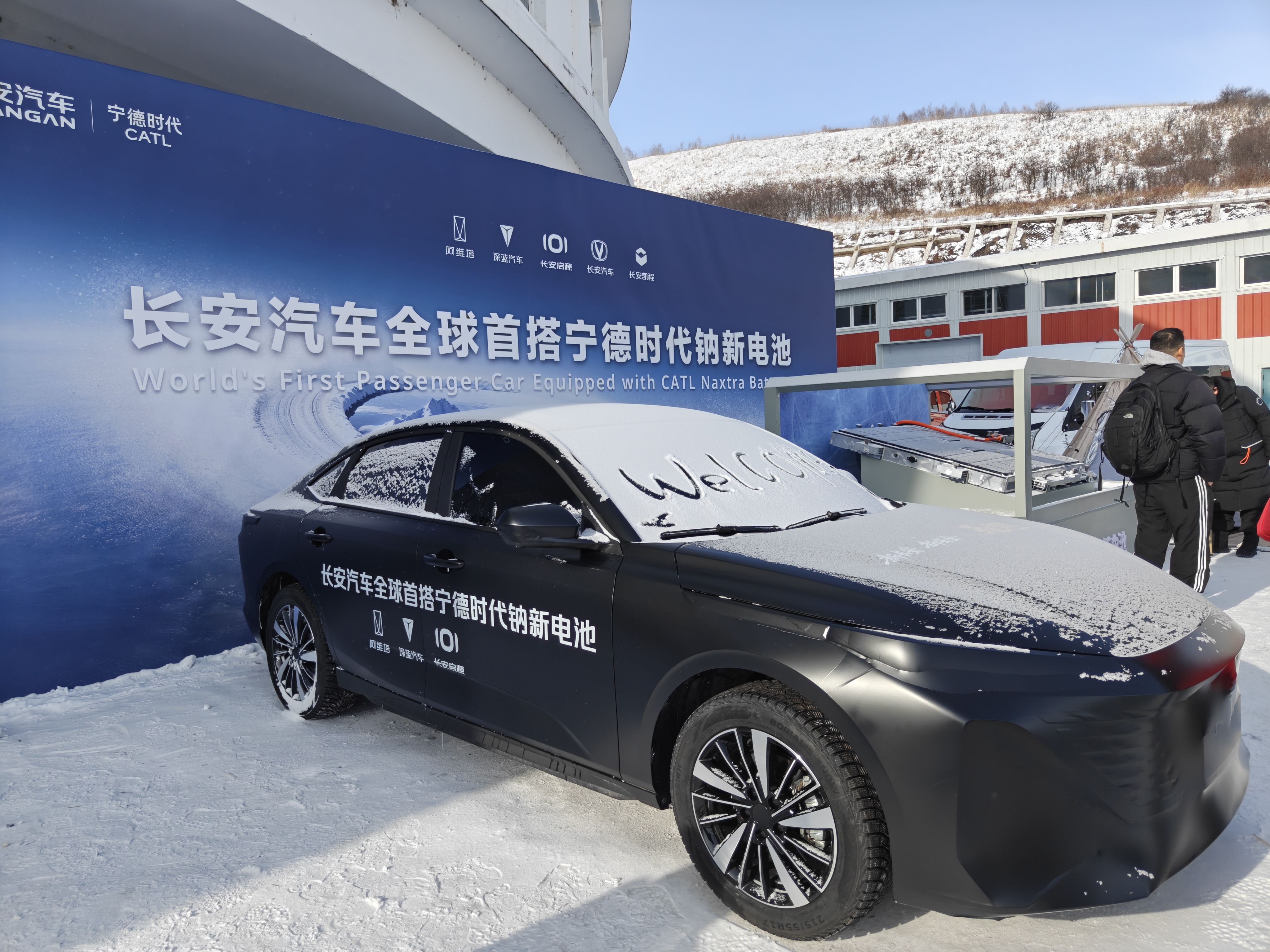
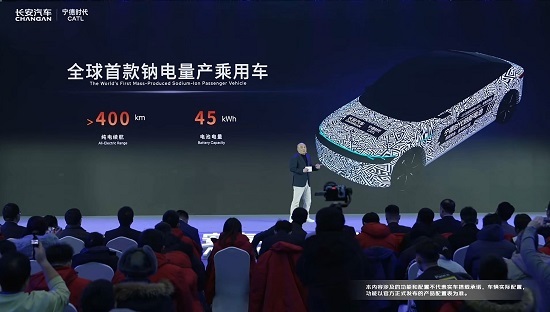
2月5日,长安汽车在内蒙古牙克石举行"天枢智能新安全成果发布暨钠电战略全球发布会",正式宣布其 钠离子电池(以下简称"钠电")发展战略,并首次公开亮相全球首款搭载钠离子电池的量产乘用车。 据发布会披露,该车型已通过牙克石地区冬季标定测试,在低温性能、续航表现、安全性和放电能力等 方面达到可量产标准。车辆所搭载的钠离子电池由宁德时代提供,采用其第三代CTP(CelltoPack)成 组技术,系统能量密度最高达175Wh/kg。在实际测试中,该车型纯电续航里程超过400公里;官方表 示,随着产业链成熟与技术迭代,未来有望实现500–600公里的纯电续航,并支持增程式混动系统实现 300–400公里的综合续航。 据发布会披露,该车型已通过牙克石地区冬季标定测试,在低温性能、续航表现、安全性和放电能力等 方面达到可量产标准。车辆所搭载的钠离子电池由宁德时代提供,采用其第三代CTP(CelltoPack)成 组技术,系统能量密度最高达175Wh/kg。在实际测试中,该车型纯电续航里程超过400公里;官方表 示,随着产业链成熟与技术迭代,未来有望实现500–600公里的纯电续航,并支持增程式混动系统实现 300–400公 ...
长安汽车(000625):系列点评三十四:智能化竞争力持续强化,全球化支撑长期发展
Guolian Minsheng Securities· 2026-02-06 05:09
Investment Rating - The report maintains a "Buy" rating for the company [2] Core Views - The company reported a significant decline in January sales, with total wholesale sales down 51.14% year-on-year and 47.14% month-on-month, while its own brand sales fell 58.46% year-on-year [1] - The company aims to achieve a total sales target of 3.3 million units by 2026, with 1.4 million units from new energy vehicles and 750,000 units from overseas markets [7] - The company is enhancing its technological capabilities, achieving key breakthroughs in autonomous driving and launching new models to accelerate its electric transformation and global expansion [7] - Strategic partnerships with major companies like Midea Group and CATL are being deepened to explore advanced fields such as battery swapping and flying cars [7] - The company has established a global presence in 117 countries, with local production in Thailand and plans to double its capacity while increasing localization rates in Europe [7] Financial Forecasts - Projected revenue for 2024 is 159.73 billion yuan, with a growth rate of 5.6%, and expected to reach 233.54 billion yuan by 2027 [2][8] - The net profit attributable to shareholders is forecasted to decline to 6.31 billion yuan in 2025, before recovering to 10.94 billion yuan by 2027, reflecting a growth rate of 34.1% [2][8] - Earnings per share (EPS) are expected to be 0.64 yuan in 2025 and increase to 1.10 yuan by 2027 [2][8]
钠电上车!长安宁德时代推出全球首款量产乘用车
Zhong Guo Neng Yuan Wang· 2026-02-06 04:03
Core Viewpoint - Changan Automobile and CATL jointly launched the global sodium battery strategy and unveiled the world's first mass-produced passenger vehicle equipped with CATL's sodium battery technology at a conference held in Inner Mongolia [1]. Group 1: Product Launch and Features - The first mass-produced sodium battery vehicle has completed rigorous winter validation tests in Yakeshi, achieving over 400 kilometers of pure electric range with precise battery display [5]. - The sodium battery exhibits exceptional low-temperature performance, with discharge power nearly tripling compared to lithium iron phosphate battery models at -30°C, and maintaining over 90% capacity at -40°C, even functioning at -50°C [5]. - The energy density of the sodium battery cell has reached the industry's highest level of 175Wh/kg [5]. Group 2: Safety and Testing - The sodium battery demonstrated extreme safety features, remaining smoke-free, flame-free, and non-explosive after undergoing severe abuse tests, including crushing and drilling [5]. - Even after being sawed through, the battery pack continued to discharge normally, significantly exceeding national safety standards [5]. Group 3: Future Plans and Investments - CATL plans to build over 3,000 "chocolate" battery swap stations across more than 140 cities by 2026, prioritizing northern regions with severe winter conditions [6]. - The company has invested nearly 10 billion yuan in sodium-ion battery research since 2016, conducting tests on nearly 300,000 battery cells with over 300 R&D personnel involved [6]. - Future advancements in sodium battery technology are expected to enhance pure electric range capabilities to 500-600 kilometers, covering over 50% of the market's range demands [6].
汽车早餐 | 蔚来首次实现单季度盈利;曝吉利、福特洽谈合作造车;长安汽车钠新电池全球首发“上车”
Zhong Guo Qi Che Bao Wang· 2026-02-06 01:48
Domestic News - The Ministry of Industry and Information Technology (MIIT) is accelerating the development of key standards for driving automation, collision safety, and control components to enhance automotive safety and quality performance, laying a solid foundation for sustainable high-quality development in the industry [2] - The State Administration for Market Regulation has released 32 national measurement technical specifications, including the first professional measurement testing specification for automatic parking performance in intelligent connected vehicles [3] - Guangdong Province aims to expand the testing and demonstration application scope of intelligent connected vehicles, encouraging digital transportation service platforms to provide integrated smart traffic services [4] International News - Volkswagen has reached a preliminary labor agreement with the United Auto Workers (UAW) for its Tennessee plant, covering approximately 3,000 employees, which includes a 20% wage increase and improved medical benefits and job security [5] - Volvo Cars reported a significant decline in 2025, with global sales down 7% to 710,000 units, revenue down 11%, and operating profit plummeting 99% to 300 million Swedish Krona (approximately 230 million RMB) [6] - Canada plans to abolish mandatory electric vehicle sales regulations, replacing them with a new fuel efficiency standard system that aims for all new light vehicles sold in Canada to be electric by 2035 [8] Company News - Leap Motor's COO announced a sales target of 1.05 million units by 2026, emphasizing stability and consistent performance in their product offerings [9] - Ford is in talks with Geely for potential collaboration, focusing on utilizing Geely's production capacity in Europe and sharing vehicle technologies, including autonomous driving [10] - NIO expects to achieve adjusted operating profit of approximately 700 million to 1.2 billion RMB in Q4 2025, marking the company's first quarterly adjusted operating profit in its 11-year history [11] - XPeng Motors announced its first flagship six-seat SUV, the XPeng GX, built on the new SEPA 3.0 physical AI vehicle architecture [12] - Tesla's Shanghai Gigafactory is projected to account for over half of Tesla's global deliveries by 2025, with the energy storage factory also beginning to supply multiple markets [13] - Changan Automobile, in collaboration with CATL, launched the world's first sodium-ion battery production passenger vehicle, marking a significant step in their sodium battery strategy [14]





纯电续航超400公里、-50℃稳定放电,宁德时代钠电池量产应用乘用车
Zhong Guo Jing Ji Wang· 2026-02-06 01:16
Core Viewpoint - CATL is advancing its sodium-ion battery technology, which is expected to complement lithium-ion batteries and expand the application scenarios for electric vehicles, marking the beginning of a "sodium-lithium dual-star era" [15] Group 1: Sodium-Ion Battery Development - CATL's sodium-ion battery research began in 2016, with an investment of nearly 10 billion yuan expected by 2025, involving the testing of nearly 300,000 battery cells and over 30,000 material-level analyses [1] - The sodium-ion battery technology has achieved key breakthroughs, including multi-ion extraction, composite antifreeze electrolytes, and high-safety electrolytes [1] Group 2: Strategic Partnerships and Product Launches - Changan Automobile, in collaboration with CATL, launched its global sodium battery strategy and unveiled the world's first mass-produced sodium-ion passenger vehicle, which is expected to be available by mid-year [3] - Multiple brands under Changan, including Avita, Deep Blue, and Qiyuan, will adopt CATL's new sodium battery technology in their future models [3] Group 3: Market Position and Competitive Landscape - The competition between lithium-ion and sodium-ion technologies continues, with lithium-ion batteries having advantages in energy density and cycle life, while sodium-ion batteries excel in safety, low-temperature adaptability, and fast charging [5] - Despite the dominance of lithium-ion batteries, there is a growing demand for sodium-ion batteries to address specific user needs, such as winter performance and safety concerns [5] Group 4: Performance Metrics and Future Projections - CATL's sodium battery, when paired with its third-generation CTP system, can achieve a pure electric range of over 400 km, with potential upgrades to 500 km or even 600 km in the future [8] - The sodium battery demonstrates exceptional low-temperature performance, maintaining over 90% capacity at -40°C and stable discharge at -50°C [10] - The sodium battery also exhibits superior safety features, remaining functional under extreme abuse conditions without catching fire or exploding [11] Group 5: Ecosystem and Infrastructure Development - CATL is committed to supporting Changan's sodium battery strategy through a comprehensive ecosystem approach, enabling rapid deployment of multiple sodium battery models by 2026 [13] - The company plans to establish over 3,000 battery swap stations across more than 140 cities by 2026, enhancing the charging infrastructure for sodium battery vehicles [13]
长安汽车时隔14年再推回购最高20亿 60亿定增获受理冲刺年销330万辆目标
Chang Jiang Shang Bao· 2026-02-06 00:18
Core Viewpoint - Changan Automobile is initiating a significant share buyback plan shortly after receiving approval for a private placement, aiming to enhance its capital structure and shareholder value through a total buyback fund of no less than 1 billion yuan and no more than 2 billion yuan [1][3]. Group 1: Share Buyback and Capital Structure - Changan Automobile plans to repurchase shares for a total fund of between 1 billion yuan and 2 billion yuan, marking its first simultaneous buyback of A and B shares [1][3]. - This buyback is the first market-based repurchase in 14 years, with the last being a B-share buyback in 2012 [3]. - The buyback will utilize the company's own funds, with a cash balance of 55.241 billion yuan, making the maximum buyback amount only about 3.6% of its cash reserves [3]. Group 2: Sales Performance and Future Targets - In January 2026, Changan's sales were reported at 134,700 units, a year-on-year decrease of 51.14%, while the company aims for an annual sales target of 3.3 million units for 2026, representing a 13.3% increase [2][6]. - Changan's sales have shown consistent growth over the past six years, with 2025 sales reaching 2.913 million units, a year-on-year increase of 8.54%, and nearly 1.11 million units of that being electric vehicles, up 51.1% [5][6]. - The company has set ambitious targets for 2026, including 1.4 million units of electric vehicle sales, a 26.2% increase, and 750,000 units in overseas sales, a 17.7% increase [6].
智能网联新能源汽车领域场景对接会举办
Xin Lang Cai Jing· 2026-02-05 17:12
Group 1 - The event "Empowering New Quality Productivity in Intelligent Connected New Energy Vehicles" was held in Shunyi District, marking a new stage in the deep integration of the industrial chain and innovation chain [1] - Two cooperation projects, "Key Technology Innovation Project for Automotive Cabin Materials" and "Digital Twin and Intelligent Simulation Technology Platform Project," were signed, indicating a focus on core technology support and application verification [1] - The event was co-hosted by the Beijing Municipal Science and Technology Commission, Zhongguancun Science Park Management Committee, and Shunyi District People's Government, aiming to promote the integration of intelligent connected new energy vehicle technology with diverse application scenarios [1] Group 2 - Beijing Automotive Research Institute and Chongqing Changan Automobile Co., Ltd. presented four scene demand projects, including "Multi-domain Integrated Intelligent Chassis Control Technology" and "Next-Generation High-Integration High-Performance Vehicle Range Extender System" [2] - Several companies, including Beijing Qingling Electric Co., Ltd. and Aido AI Technology (Beijing) Co., Ltd., showcased five technology new scene capability projects during the event [2]
钠电池加速“上车”长安汽车携手宁德时代开启“锂钠协同”新阶段
Zheng Quan Ri Bao· 2026-02-05 16:41
Core Insights - Changan Automobile has officially launched its global sodium battery strategy and unveiled the world's first mass-produced sodium-powered passenger vehicle in Yakeshi, in collaboration with CATL [1][2] - The sodium battery technology is seen as a significant complement to lithium batteries, enhancing the adaptability of electric vehicles in extreme cold conditions [1][2] - CATL's sodium battery, combined with its third-generation CTP system, offers a range of over 400 km, with potential future upgrades to 500 km or even 600 km [2][3] Group 1 - Changan Automobile's sodium battery-powered vehicle has demonstrated a discharge power nearly three times higher than conventional lithium iron phosphate models at -30°C, with over 90% capacity retention at -40°C [1] - The sodium battery technology is expected to cover over 50% of the market's range requirements as the sodium industry chain develops rapidly [2] - Changan aims to become the first major automaker to fully adopt sodium batteries across multiple brands, leveraging its extensive manufacturing experience [2] Group 2 - By 2026, CATL plans to apply sodium batteries on a large scale across various sectors, including passenger vehicles, commercial vehicles, and energy storage [3] - The production of sodium-ion batteries in China is projected to reach 3.45 GWh by 2025, marking a 96% year-on-year increase [3] - The collaboration between lithium and sodium batteries is expected to enhance supply chain resilience and reduce resource risks, facilitating the electrification of the market [3]
钠电池加速“上车” 长安汽车携手宁德时代开启“锂钠协同”新阶段
Zheng Quan Ri Bao· 2026-02-05 16:41
Core Viewpoint - The global first sodium-ion battery mass-produced passenger vehicle has successfully passed winter validation in Yakeshi, meeting various performance requirements such as range, low-temperature performance, safety, and discharge capabilities [1] Group 1: Company Developments - Changan Automobile officially launched its global sodium-ion strategy and unveiled the world's first sodium-ion mass-produced passenger vehicle in Yakeshi on February 5, in collaboration with CATL [2] - Changan Automobile plans to equip multiple brands, including Avita, Deep Blue, Qiyuan, and Inertia, with CATL's sodium-ion batteries in the future [2][4] - The company aims to become the first leading automaker to fully adopt sodium-ion technology, leveraging its extensive experience in vehicle manufacturing over 40 years [4] Group 2: Industry Insights - Sodium batteries serve as an important supplement to lithium batteries, with significant implications for enhancing the all-climate adaptability of electric vehicles [3] - The sodium-ion battery, developed by CATL, shows a nearly threefold increase in discharge power at -30°C compared to conventional lithium iron phosphate models, with over 90% capacity retention at -40°C [3] - CATL's sodium-ion battery has a maximum energy density of 175 Wh/kg, which is considered industry-leading, and future advancements could increase pure electric range to 500-600 km [3][4] - The sodium-ion battery market in China is projected to grow significantly, with a production capacity of 3.45 GWh expected by 2025, marking a 96% year-on-year increase [4] - The collaboration between lithium and sodium batteries is seen as a complementary approach, enhancing supply chain resilience and reducing resource risks [5]