
CHANGAN AUTOMOBILE-B(000625)

Search documents
长安汽车申请车辆人机工程评价方法专利,将车辆模型导出工程进行开发
Jin Rong Jie· 2026-02-07 02:19
Group 1 - Chongqing Changan Automobile Co., Ltd. has applied for a patent titled "Vehicle Human-Machine Engineering Evaluation Method and Device, Vehicle, Medium, Program Product," with publication number CN121455798A, and the application date is October 2025 [1] - The patent abstract indicates that the application provides a method and device for evaluating vehicle human-machine engineering, which includes obtaining a vehicle model for evaluation, classifying design parameter values based on multiple secondary indicators of human-machine engineering, and determining evaluation results based on these indicators [1] - The method involves defining secondary indicators that are subdivided from primary indicators of comprehensive passenger experience, and if the evaluation results meet expectations, the vehicle model will be exported for development [1] Group 2 - Chongqing Changan Automobile Co., Ltd. was established in 1996 and is primarily engaged in the automotive manufacturing industry, with a registered capital of 991,408.606 million RMB [2] - The company has made investments in 120 enterprises, participated in 5,000 bidding projects, and holds 3,087 trademark records and 5,000 patent records, along with 1,065 administrative licenses [2]

21社论丨构建核心竞争力,促进汽车业高质量增长
2 1 Shi Ji Jing Ji Bao Dao· 2026-02-06 23:12
Core Viewpoint - The Chinese automotive market is transitioning from rapid growth to stable growth, with companies adjusting their sales targets to be more realistic and sustainable in light of recent market conditions [1][2][3]. Group 1: Market Performance - In the first half of January, vehicle sales decreased by 34.2% compared to the same period in December 2025, and by 66.4% compared to the second half of December 2025 [1][4]. - The overall retail sales for January are estimated to be around 1.8 million vehicles, reflecting a month-on-month decline of 20.4% but a slight year-on-year increase of 0.3% [1][4]. - The passenger car market is expected to maintain retail sales in 2026 at levels similar to 2025, with exports projected to grow at a rate of over 10% [1][4]. Group 2: Sales Targets - Major automotive companies have set more pragmatic sales targets for 2026, with Geely aiming for 3.45 million units (up 14%), Changan at 13.3%, and Chery also targeting a 14% increase [2][5]. - New energy vehicle manufacturers, which previously aimed for aggressive growth, have moderated their targets, with Leap Motor projecting a 67.6% increase, NIO around 40%-50%, and XPeng expecting growth of 28.1%-39.7% [2][5]. Group 3: Industry Trends - The automotive industry is undergoing a critical transformation, with rapid development in new energy vehicles leading to innovation, structural changes, and intensified competition [2][5]. - The previous years' fierce competition has resulted in revenue growth without profit for some companies, squeezing margins for suppliers and dealers [2][5]. Group 4: Strategic Shifts - Companies are encouraged to shift their focus from merely increasing sales volume to achieving sustainable profitability and healthy cash flow [3][6]. - The industry should respect market dynamics, as rapid product iterations can lead to increased costs and consumer fatigue, necessitating a more balanced approach to innovation and production [3][6]. - In a stabilizing market, companies should avoid relying solely on sales volume and price wars, instead prioritizing cash flow stability and setting achievable, profitable sales plans [3][6].




阿维塔收到证监会境外上市备案反馈意见 涉及股权合规、控制权认定及数据安全等六大问题
Xin Lang Cai Jing· 2026-02-06 14:58
Group 1 - The China Securities Regulatory Commission (CSRC) has provided feedback on Avita's overseas listing application, raising specific inquiries regarding the legality and compliance of past capital increases and share transfers, including the authenticity of transactions involving nominal or zero consideration [1] - The CSRC has requested clarification on the current and post-listing controlling shareholders, highlighting discrepancies between the prospectus and the registration materials regarding the identification of controlling shareholders and actual controllers [1] - The CSRC has asked for detailed explanations regarding the company's control rights based on historical resolutions from shareholder and board meetings, as well as the composition of the board of directors [1] Group 2 - The CSRC inquired about the rationale and legitimacy behind share transfers for equity incentives by shareholders holding less than 5%, and whether these transfers involve any benefit transfer [2] - The progress of exit procedures for departing employees and compliance with the equity incentive plan management regulations has also been requested [2] - The CSRC has sought information on the company's involvement in core technologies such as autonomous driving, as well as the specific use of raised funds and their allocation between domestic and overseas projects [2] Group 3 - The CSRC has requested details on the company's operations related to websites, apps, and data protection measures, including the scale of user information collected and stored, and the arrangements for personal information protection and data security before and after the listing [3]
钠锂双星时代,来了!
中国能源报· 2026-02-06 13:58
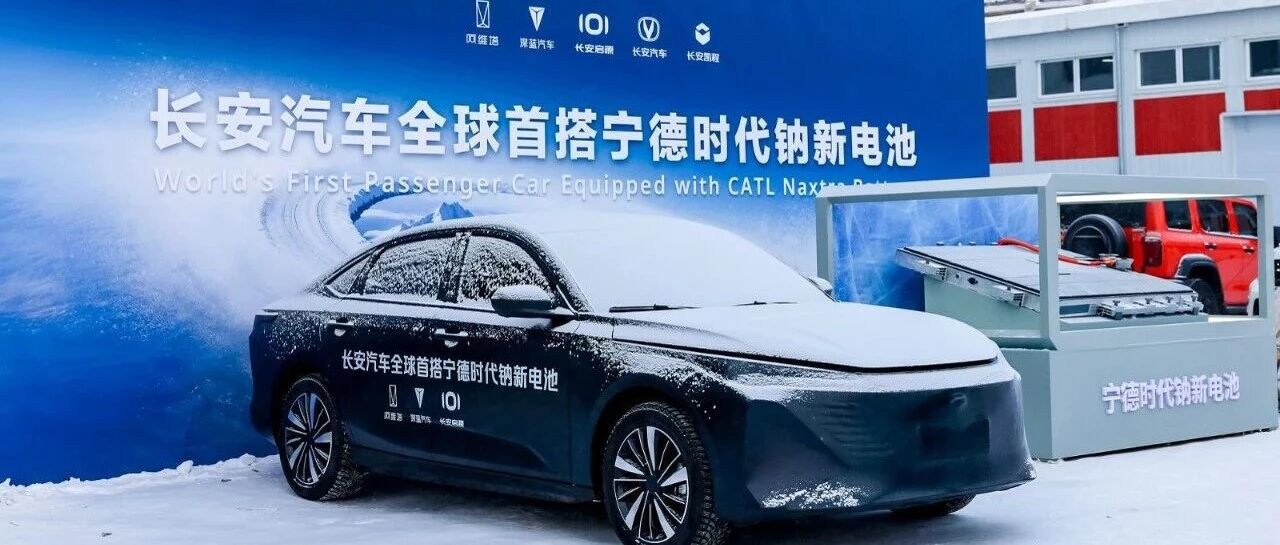
Core Viewpoint - The article highlights the launch of Changan Automobile's global sodium battery strategy in collaboration with CATL, marking a significant step towards the commercialization of sodium-ion battery technology in the automotive sector [2][4]. Group 1: Sodium Battery Launch and Features - Changan Automobile unveiled its first mass-produced sodium battery vehicle, which has successfully completed winter testing in extreme cold conditions, meeting key performance indicators for daily use [2]. - The sodium battery, branded as "Sodium New" by CATL, aims for large-scale application in various sectors by 2026, including battery swapping, passenger vehicles, commercial vehicles, and energy storage [2][4]. - The sodium battery vehicle boasts a range of over 400 kilometers, with an energy density of up to 175 Wh/kg, positioning it competitively within the industry [10]. Group 2: Policy Support and Industry Trends - Sodium-ion technology has been integrated into national strategic planning since 2022, with increasing policy support aimed at accelerating its development [4][5]. - The Ministry of Industry and Information Technology and other departments have emphasized the need for rapid advancements in sodium-ion battery technology as part of broader energy electronic industry development [4]. - By 2025, several national guidelines will focus on the integration of sodium-ion batteries in energy storage systems, highlighting their potential as a key component of new power systems [4]. Group 3: Technological Breakthroughs and Safety - CATL's sodium battery has achieved significant breakthroughs in low-temperature performance, demonstrating nearly three times the discharge power compared to lithium iron phosphate batteries at -30°C [10]. - The battery has passed rigorous safety tests under extreme conditions, showcasing its resilience and safety, which exceeds national standards [10][11]. - The company plans to establish over 3,000 battery swapping stations across more than 140 cities by 2026 to support the widespread adoption of sodium batteries [10]. Group 4: Resource Independence and Market Potential - The large-scale application of sodium batteries is expected to alleviate China's reliance on lithium resources, which are limited and heavily imported [12]. - Sodium resources are abundant and widely distributed, making sodium-ion technology a viable alternative to mitigate supply risks associated with lithium [12]. - The global market for sodium battery storage is projected to reach 580 GWh by 2030, with the potential for power sodium batteries to exceed 410 GWh, indicating a shift towards a dual technology landscape of sodium and lithium [12][14]. Group 5: Strategic Importance of Dual Technology - The parallel development of sodium and lithium technologies enhances the resilience of the energy system, ensuring stability in the face of potential disruptions in resource supply or technological bottlenecks [14]. - The article emphasizes the importance of diversifying energy storage technologies to safeguard national energy security and promote sustainable development in the automotive and energy sectors [14].


多家A股公司披露股份回购计划或进展
Zheng Quan Ri Bao Wang· 2026-02-06 12:49
2026年开年以来,多家A股公司密集披露股份回购计划或回购进展相关公告。 例如,2026年2月4日晚间,重庆长安汽车(000625)股份有限公司(以下简称"长安汽车")正式发布公 告,宣布拟以10亿元至20亿元自有资金回购公司股份,其中,A股回购金额不低于7亿元且不超过14亿 元,B股回购金额不低于3亿元且不超过6亿元。 对于此次回购的目的,步长制药称,鉴于公司当前股价未能体现出公司的长期价值和出色的资产质量, 对公司良好的市场形象有所影响。为充分维护公司和投资者利益,稳定投资者预期,增强市场信心,推 动公司股票价值的合理回归,基于对公司未来发展前景的信心以及对公司价值的高度认可,在综合考虑 公司财务状况以及未来盈利能力的情况下,依据相关规定,公司拟通过集中竞价交易方式进行股份回 购。 值得关注的是,为保障公司回购股份事项的顺利实施,近期多家上市公司相继宣布上调回购股份价格上 限。例如,1月27日晚间,江苏华盛锂电材料股份有限公司发布公告称,公司拟将回购价格上限从32元/ 股上调至150元/股,旨在应对股价持续超出原上限的情况,确保回购计划有效推进。 巨丰投顾高级投资顾问于晓明告诉记者:"多家公司上调回购股份 ...

钠电池正式叩响主流乘用车市场大门,头部企业推动规模化上车
Xin Lang Cai Jing· 2026-02-06 11:27
过去一年,国内动力电池厂商在钠电池商用化领域加速布局,头部企业通过技术突破、产能扩张及场景 落地,推动钠电池从实验室走向规模化应用。行业内最新的重磅则是,长安汽车和宁德时代两家巨头2 月5日在极寒汽车测试地牙克石举办了一场发布会,长安汽车正式发布全球钠电战略,同时宣布旗下阿 维塔、深蓝、启源、引力等多品牌,未来都将搭载宁德时代钠新电池。(智通财经) ...
冰火炼真金,极寒验真章!长安硬核实测“天枢智能 天生安全”
Zhong Guo Zhi Liang Xin Wen Wang· 2026-02-06 08:41
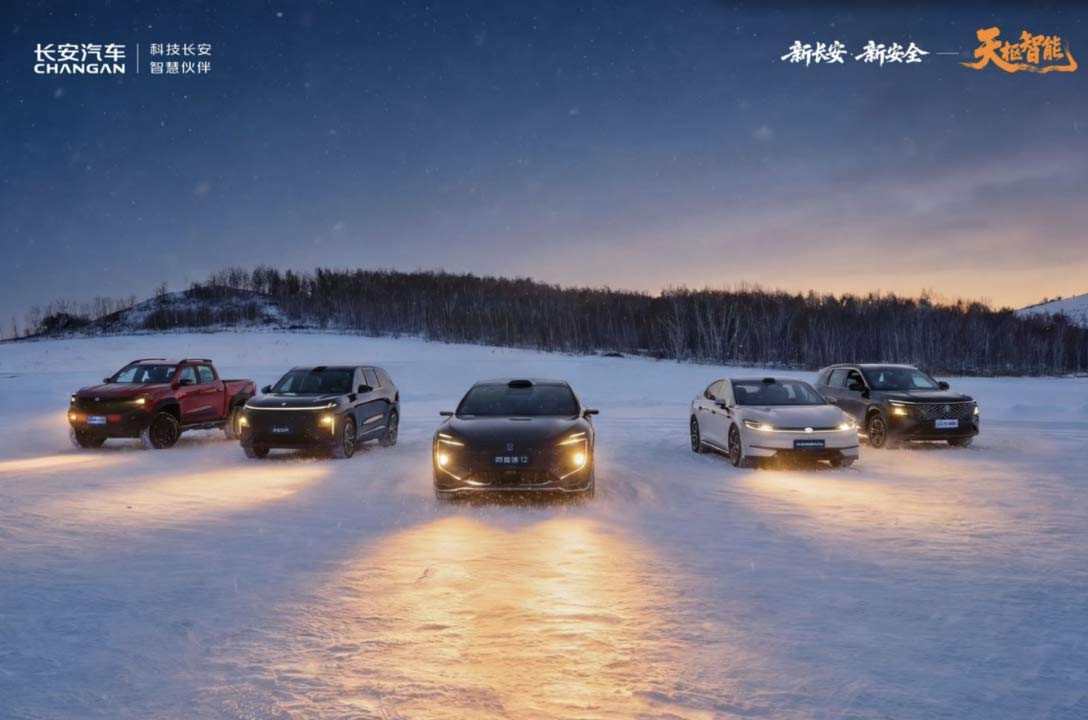
Core Viewpoint - Changan Automobile officially launched the "New Changan·New Safety - Tian Shu Intelligent" brand in 2025, focusing on a comprehensive safety approach that extends beyond physical protection to encompass driving, health, data, psychological, and privacy safety, aiming to ensure "safe return home" for users [1] Group 1: Product and Technology Highlights - The Tian Shu Intelligent safety system was showcased during the extreme cold testing event in Yakeshi, where multiple models, including Avita, Deep Blue, and Changan, demonstrated their capabilities under harsh conditions [1][2] - Avita 12, equipped with a distributed electric drive and intelligent dynamic torque control, successfully navigated extreme tests on icy surfaces, achieving speeds of 92.3 km/h and 70.7 km/h without drifting [4] - The distributed electric drive system in the Taixing Intelligent chassis is designed to enhance stability and control on slippery surfaces, preventing skidding by actively adjusting drive power between wheels [6] - Changan Qiyuan A06 demonstrated stability on icy roads with a tire blowout, utilizing the Tian Shu Intelligent blowout stability system to maintain control at speeds of 95 km/h [6][8] - Deep Blue S09 successfully completed a moose test and emergency braking, showcasing its electronic stability program and advanced sensor integration for enhanced safety [10] Group 2: Safety Technology and Innovations - The Tian Shu Intelligent system expands Changan's safety philosophy to a "pan-safety" framework, covering driving assistance, cabin safety, and chassis systems [14] - The system includes features for risk detection, risk avoidance, and risk escape, utilizing advanced technologies for real-time monitoring and adjustment during critical situations [14] - Changan's safety capabilities are backed by 28 years of experience in extreme cold testing, establishing a robust verification system that contributes to its "born safe" technology [15][23] Group 3: Future Plans and Developments - Changan plans to extend its global vehicle testing to various extreme climates and terrains, including Italy, Saudi Arabia, Thailand, Austria, and Mexico, to validate vehicle performance under diverse conditions [20] - The company is collaborating with CATL to develop sodium-ion batteries, which promise enhanced safety and a range exceeding 400 km, with future potential for 500-600 km [22] - Changan emphasizes its commitment to safety and technology, aiming to provide reliable travel solutions for users worldwide, regardless of environmental challenges [24]
电池板块技术迭代与产业链布局加速推进,电池ETF嘉实(562880)表现亮眼
Jin Rong Jie· 2026-02-06 07:45
Group 1 - The core viewpoint of the articles highlights the strong performance of the battery sector, driven by technological advancements and accelerated industry chain development, with significant gains in stock prices for key companies [1][2] - The CS battery index increased by 2.61%, with notable individual stock performances including Multi-Flor and Zhenyu Technology, which rose over 8% and 7% respectively [1] - The battery ETF managed by Jiashi (562880) saw a 2.44% increase, with a trading volume of 22.759 million yuan and a turnover rate of 2.18%, reflecting a 64.95% increase over the past year [1] Group 2 - Citic Securities indicates that the solid-state battery sector is supported by improvements in the fundamentals of related companies and accelerated industry development, suggesting strong sustainability and investment value [2] - The top ten weighted stocks in the Jiashi battery ETF include CATL, Sungrow Power, and EVE Energy, collectively accounting for over 50.68% of the fund [2] - The current management fee for the Jiashi battery ETF is 0.50% annually, with a custody fee of 0.10% annually [2]



极寒淬炼见真章,长安猎手K70解锁全场景出行新可能
Zhong Guo Qi Che Bao Wang· 2026-02-06 07:43
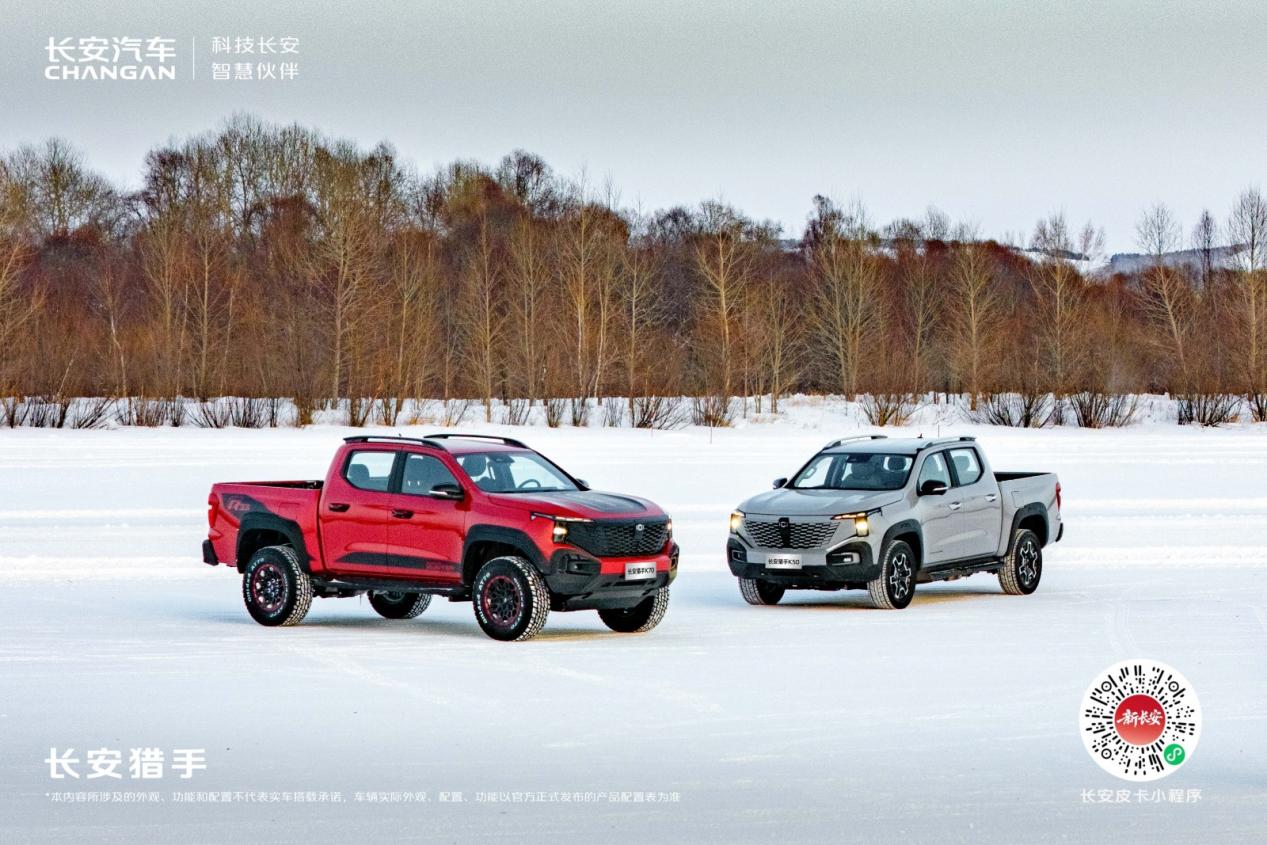
Core Viewpoint - The Changan Hunter K70, a new electric pickup truck, showcases its performance in extreme cold conditions, emphasizing its all-season reliability and advanced features, building on the success of its predecessor, the K50 [1][3][14]. Group 1: Product Performance - The K70 demonstrated strong performance in extreme cold, passing critical tests in snow and ice, proving its capability as an all-season vehicle [4][6]. - Equipped with a professional OR3 chassis and high-strength body, the K70 maintains structural stability under extreme conditions, enhancing its off-road capabilities [6][11]. - The dual-motor system with a peak torque exceeding 550 N·m ensures responsive power delivery even in low temperatures, addressing common issues faced by traditional vehicles [6][11]. Group 2: Battery Technology - The K70 features a new high-capacity battery developed in collaboration with CATL, maintaining stable discharge performance at -30℃, thus mitigating winter range anxiety [8][16]. - An intelligent thermal management system further enhances battery performance in cold conditions, ensuring consistent power output [8][16]. Group 3: Market Positioning - The K70 builds on the K50's success, which was the best-selling hybrid pickup in 2025, with a total sales volume of 56,644 units, reflecting a year-on-year growth of 8.9% [9][14]. - The K70's upgrades in power, off-road capability, and design aim to expand the market for electric pickups, catering to both industrial and family needs [14][17]. Group 4: Design and Usability - The K70 features a rugged design with a width exceeding 2.08 meters and a height close to 2 meters, appealing to consumers seeking both functionality and aesthetics [13]. - Its cargo design supports various practical applications, from outdoor camping to industrial use, enhancing its versatility as a "mobile power station" [13][14]. Group 5: Future Outlook - With a planned launch in mid-2026, the K70 is positioned to solidify Changan's leadership in the electric pickup market, responding to evolving consumer demands for multifunctional vehicles [16][17]. - The K70's development reflects Changan's commitment to innovation and user-centric design, setting a new benchmark in the electric pickup segment [16][17].
长安汽车:系列点评三十四智能化竞争力持续强化,全球化支撑长期发展-20260206
Guolian Minsheng Securities· 2026-02-06 07:30
Investment Rating - The report maintains a "Buy" rating for the company [2] Core Views - The company reported a significant decline in January sales, with total wholesale sales down 51.14% year-on-year and 47.14% month-on-month. The sales of its own brand vehicles fell by 58.46% year-on-year, while new energy vehicle sales decreased by 45.74% year-on-year [1][7] - The company aims to achieve a total sales target of 3.3 million vehicles by 2026, with 1.4 million of those being new energy vehicles. The company is also focusing on expanding its overseas market presence [7] - The company is enhancing its technological capabilities, particularly in smart driving, with the Deep Blue brand achieving significant milestones in autonomous driving technology [7] - Strategic partnerships with companies like Midea Group and CATL are being pursued to enhance technological collaboration and explore new frontiers in the automotive industry [7] Financial Forecasts - Projected revenue for 2024 is 159.73 billion yuan, with a growth rate of 5.6%. By 2027, revenue is expected to reach 233.54 billion yuan, with a growth rate of 11.5% [2][8] - The net profit attributable to shareholders is forecasted to be 7.32 billion yuan in 2024, decreasing to 6.31 billion yuan in 2025, before rising to 10.94 billion yuan by 2027 [2][8] - Earnings per share (EPS) is expected to be 0.74 yuan in 2024, decreasing to 0.64 yuan in 2025, and then increasing to 1.10 yuan by 2027 [2][8]