WLY(000858)

Search documents
自由现金流ETF中证全指(561080)涨0.73%,半日成交额292.18万元
Xin Lang Cai Jing· 2025-12-05 05:01
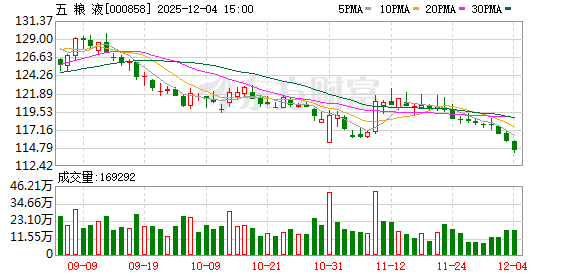
Core Viewpoint - The Freedom Cash Flow ETF CSI All Share (561080) experienced a 0.73% increase, closing at 1.243 yuan with a trading volume of 2.9218 million yuan on December 5 [1] Group 1: ETF Performance - The Freedom Cash Flow ETF CSI All Share (561080) has a performance benchmark based on the CSI All Share Free Cash Flow Index return [1] - Since its inception on April 23, 2025, the fund has achieved a return of 23.58%, with a monthly return of 2.50% [1] Group 2: Major Holdings Performance - Major stocks in the ETF include: - China National Offshore Oil Corporation (CNOOC) down 0.89% - Midea Group up 0.11% - Gree Electric Appliances down 0.54% - Wuliangye Yibin up 0.26% - China Merchants Energy down 0.40% - Luoyang Molybdenum up 2.85% - TCL Technology up 2.06% - China Aluminum Corporation up 3.95% - SF Express up 0.37% - Shaanxi Coal and Chemical Industry down 0.62% [1]





酒价内参12月5日价格发布 青花汾20价格回升3元
Xin Lang Cai Jing· 2025-12-05 01:12
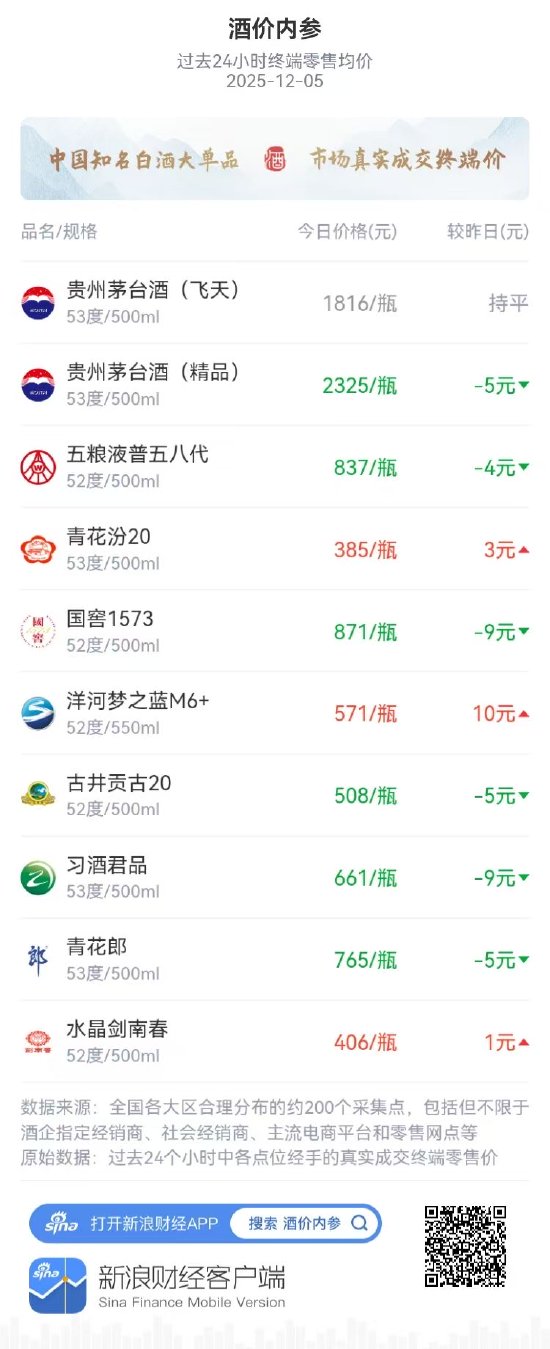
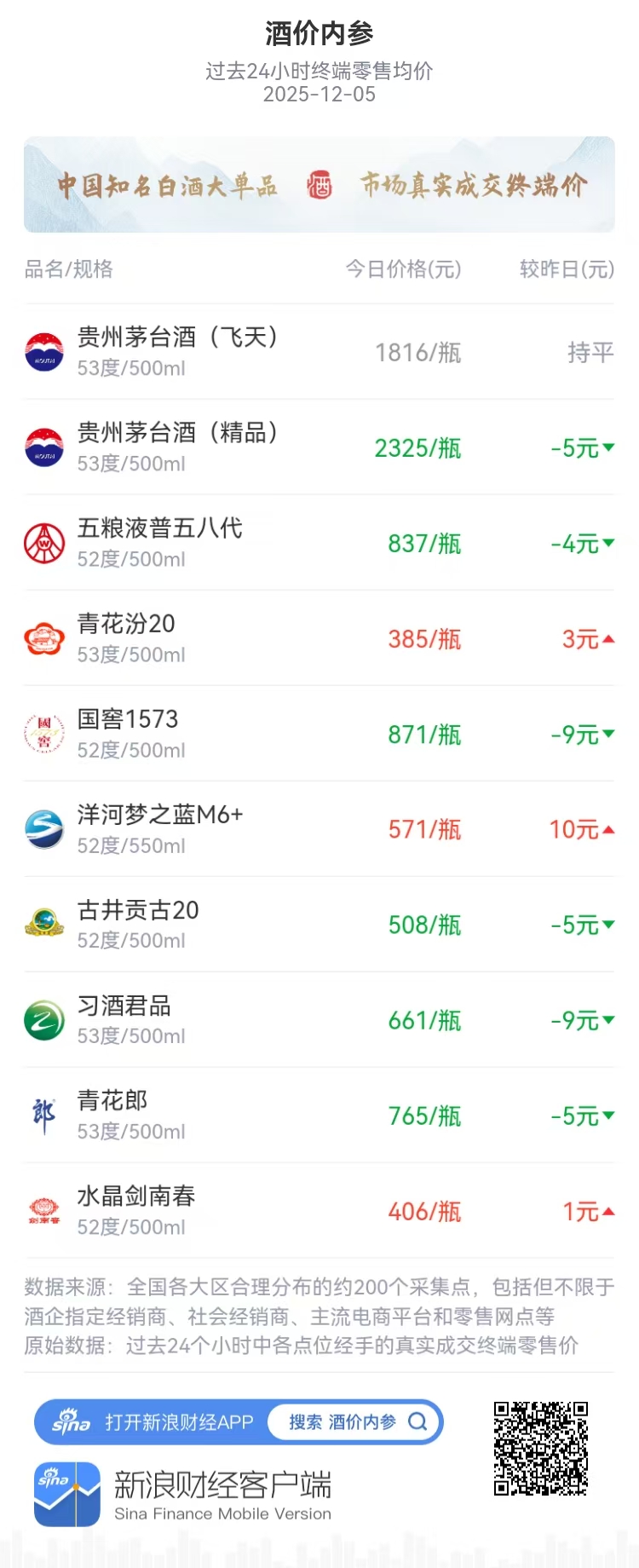
Core Viewpoint - The white liquor market is experiencing a downward trend in retail prices, with the average price of the top ten products decreasing for the second consecutive day, indicating a weak adjustment in the market [1][4]. Price Trends - The total price for a package of the top ten products is 9145 yuan, down 23 yuan from the previous day [1][4]. - Most products are seeing price declines, but some have stabilized or increased, such as: - Yanghe Dream Blue M6+ increased by 10 yuan per bottle - Qinghua Fen 20 rose by 3 yuan per bottle - Shuijing Jian Nan Chun increased by 1 yuan per bottle - Feitian Moutai remained unchanged [1][5]. - Declining products include: - Xijiu Junpin and Guojiao 1573, each down by 9 yuan per bottle - Qinghua Lang down by 5 yuan per bottle - Gujing Gonggu 20 and Jingpin Moutai down by 5 yuan per bottle - Wuliangye Pu 58 down by 4 yuan per bottle [1][5]. Market Analysis - The current valuation of Moutai is approximately 20 times its earnings, which is below its five-year average of 36.35 times and its ten-year average of over 33 times, indicating a relatively low valuation [2][5]. - Some analysts argue that Moutai's valuation may have shifted downward due to fundamental changes in the white liquor industry's business model, despite its high brand equity and pricing power justifying a premium valuation [2][5].





酒价内参12月5日价格发布 市场延续回调洋河梦之蓝M6+逆势领涨
Xin Lang Cai Jing· 2025-12-05 00:47
Group 1 - The core viewpoint of the article indicates that the retail prices of the top ten liquor products in the white liquor market continue to decline, with an overall downward trend observed for the second consecutive day [1] - The total price for a packaged set of the top ten products is 9145 yuan, which is a decrease of 23 yuan from the previous day [1] - Most products in the market are experiencing price drops, although some products have shown signs of stabilization and recovery [1] Group 2 - Yanghe Dream Blue M6+ has seen a price increase of 10 yuan per bottle, reversing the previous day's decline [1] - Qinghua Fen 20 has increased by 3 yuan per bottle, while Shuijing Jian Nan Chun has slightly risen by 1 yuan per bottle [1] - Among the declining products, Xijiu Junpin and Guojiao 1573 have each dropped by 9 yuan per bottle, while Qinghua Lang has decreased by 5 yuan per bottle [1][4]
五粮液集团成川航集团新股东
Nan Fang Du Shi Bao· 2025-12-04 23:14
对此,一位知情人士对南都湾财社记者表示,五粮液出资参与川航集团增资扩股项目,双方积极探索航 空货运数智化业务,打造智慧航空物流体系新样板,推动资源共享、业务协同与品牌联动,实现合作共 赢发展。 五粮液集团此前投资川航约50亿 事实上,这不是五粮液集团第一次投资川航集团。时间回溯至2022年12月份,川航集团与五粮液集团签 署《增资扩股补充协议》,投资金额约50亿元。彼时,有媒体报道称,这笔资金也将进一步用于对川航 集团旗下的航空主业资产川航股份(四川航空股份有限公司)的增资,以解川航股份的资金之急。 据了解,疫情以来航空公司业绩较低迷。据川航股份此前发布的财务数据,2020年,川航股份亏了 24.76亿元,2021年又亏了18.21亿元,截至2020年三季度末,公司资产负债率已达到92.9%。 到了今年上半年,川航股份仍处于亏损态势,净资产甚至为负数。据南方航空(600029.SH)披露的数 据,川航股份上半年营业收入162.18亿元,同期亏损8.02亿元,净资产为-5.36亿元。 川航股份计划2028年上市 12月3日,南都湾财社记者从天眼查获悉,四川航空集团有限责任公司(简称"川航集团")完成工商变 更, ...
入股川航集团成为第二大股东 五粮液集团多元战略再落关键一子
Zheng Quan Ri Bao· 2025-12-04 16:37
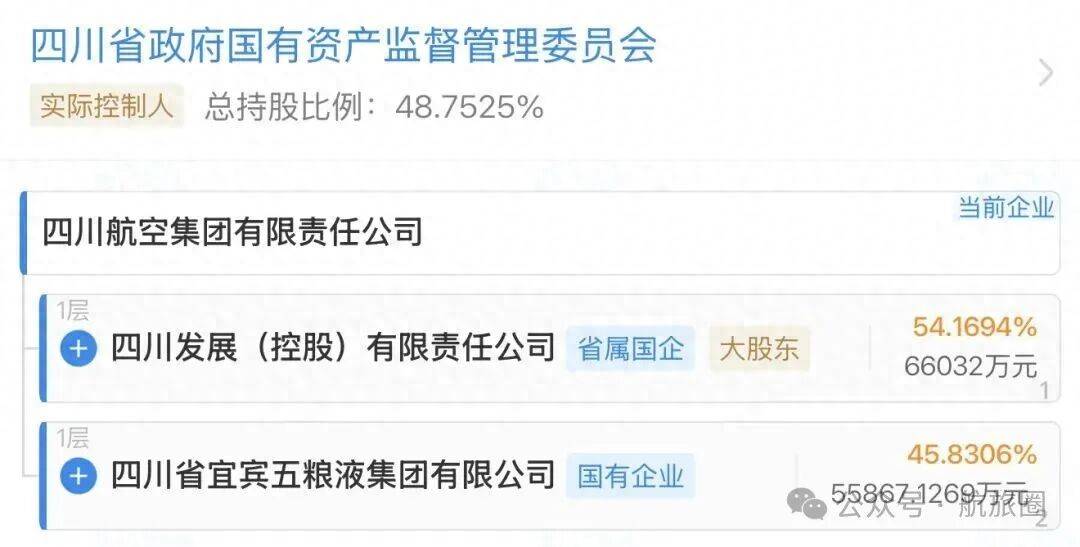
Group 1 - Sichuan Airlines Group has undergone a business change, with Wuliangye Group becoming a new shareholder and registered capital increasing from 417 million to 1.219 billion yuan [2] - After the change, the shareholding structure of Sichuan Airlines Group is 54.17% held by Sichuan Development Holding and 45.83% by Wuliangye Group [2] - Wuliangye Group previously invested 5 billion yuan in Sichuan Airlines Group at the end of 2022, specifically for capital increase in Sichuan Airlines [2] Group 2 - Wuliangye Group's investment in Sichuan Airlines Group reflects its diversification strategy, as it is a large modern enterprise group with interests in various industries including new energy vehicle parts and smart logistics [3] - In 2023, Wuliangye Group established a wholly-owned subsidiary with a registered capital of 1 billion yuan, further expanding its investment footprint [3] - The company has accelerated its diversification efforts, with significant investments in various sectors, indicating a shift from a single industry focus to a comprehensive enterprise group [3] Group 3 - Wuliangye Group achieved a sales revenue of 195.297 billion yuan in 2024, a year-on-year increase of 10.3%, and a profit of 47.243 billion yuan, up 10.86% [4] - The trend of leading companies in the liquor industry investing in heavy asset sectors like aviation and new energy reflects a strategic shift towards ecological expansion amid increasing market concentration [4] - This diversification is seen as a search for a second growth curve during a period of deep adjustment in the liquor industry [4]
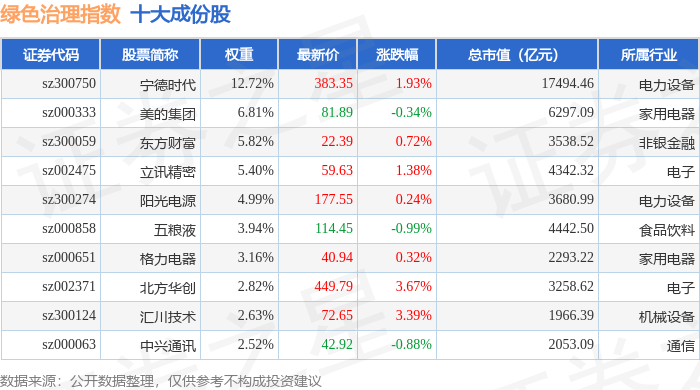
12月4日绿色治理(980058)指数涨0.4%,成份股北方华创(002371)领涨
Sou Hu Cai Jing· 2025-12-04 11:39
Core Points - The Green Governance Index (980058) closed at 1324.41 points, up 0.4%, with a trading volume of 87.561 billion yuan and a turnover rate of 1.14% [1] - Among the index constituents, 39 stocks rose while 58 fell, with Northern Huachuang leading the gainers at 3.67% and Luzhou Laojiao leading the decliners at 3.76% [1] Index Constituents - The top ten constituents of the Green Governance Index include: - Ningde Times (12.72% weight) at 383.35 yuan, up 1.93% [1] - Midea Group (6.81% weight) at 81.89 yuan, down 0.34% [1] - Dongfang Wealth (5.82% weight) at 22.39 yuan, up 0.72% [1] - Luxshare Precision (5.40% weight) at 59.63 yuan, up 1.38% [1] - Sungrow Power Supply (4.99% weight) at 177.55 yuan, up 0.24% [1] - Wuliangye (3.94% weight) at 114.45 yuan, down 0.99% [1] - Gree Electric Appliances (3.16% weight) at 40.94 yuan, up 0.32% [1] - Northern Huachuang (2.82% weight) at 449.79 yuan, up 3.67% [1] - Inovance Technology (2.63% weight) at 72.65 yuan, up 3.39% [1] - ZTE Corporation (2.52% weight) at 42.92 yuan, down 0.88% [1] Capital Flow - The net outflow of main funds from the index constituents totaled 2.808 billion yuan, while retail investors saw a net inflow of 3.06 billion yuan [1] - Detailed capital flow for specific stocks shows: - Ningde Times had a main fund net inflow of 568 million yuan [2] - Inovance Technology had a main fund net inflow of 15 million yuan [2] - Dongfang Wealth experienced a main fund net inflow of 76.89 million yuan [2] Recent Adjustments - The Green Governance Index constituents were adjusted recently, adding 10 new stocks, effective December 15, 2025 [3] - New additions include: - Zhongke Environmental Protection (77.42 billion yuan market cap) [3] - Dongsoft Zhaibo (72.07 billion yuan market cap) [3] - Furan Energy (158.40 billion yuan market cap) [3] - Water Technology (51.67 billion yuan market cap) [3] - Satellite Chemical (567.95 billion yuan market cap) [3] - Jinhe Industry (115.60 billion yuan market cap) [3] - Changbao Co. (70.35 billion yuan market cap) [3] - Shuanghuan Transmission (338.81 billion yuan market cap) [3] - Shield Environment (136.16 billion yuan market cap) [3] - Fu'ao Co. (94.25 billion yuan market cap) [3]





“价格锚”松动!飞天茅台批价连跌,白酒何时企稳?
Sou Hu Cai Jing· 2025-12-04 10:47
Industry Overview - The liquor industry is currently in a deep adjustment period, entering a "stock competition" era, with companies facing high channel inventory, product price inversion, and slowing growth rates [2] - The A-share liquor index has seen a cumulative decline of over 15% this year, underperforming in a generally hot market and dragging down the overall market [2] Performance Analysis - In the first three quarters of 2025, most liquor stocks experienced a slowdown in performance, with only Kweichow Moutai and Shanxi Fenjiu reporting profit growth, while others, including Shunxin Agriculture and Jiu Gui Jiu, faced significant declines [2][3] - Kweichow Moutai's total revenue reached 130.9 billion yuan, a year-on-year increase of 6.32%, with net profit at 64.63 billion yuan, also up 6.25%, marking a multi-year low in growth rates [3][4] Specific Company Performance - Kweichow Moutai's third-quarter revenue was 39.06 billion yuan, growing only 0.56%, while its net profit increased by 0.48%, indicating further slowdown [4] - Wuliangye's performance was notably poor, with total revenue of 60.95 billion yuan, down 10.26%, and net profit of 21.51 billion yuan, down 13.72%, with a staggering 52.66% drop in third-quarter revenue [4][5] Price Trends - The price of Feitian Moutai has significantly declined, with wholesale prices dropping below 1,600 yuan, down nearly 30% from around 2,200 yuan at the beginning of the year [6] - The decline in Feitian Moutai's price has affected pricing strategies across the industry, leading to a collective drop in prices among lower-tier products [6][7] Market Sentiment and Future Outlook - The industry is experiencing a liquidity trap, with declines in business banquets, gift-giving, and investment collections contributing to the downturn [7] - Some companies, particularly those with weaker financial positions, are facing severe challenges, as evidenced by the financial troubles of Guizhou Wuyou Liquor [8][9] - Despite the current challenges, some analysts remain optimistic about the long-term prospects of the liquor industry, suggesting that the sector may be nearing a bottom and could see recovery driven by macroeconomic factors and consumer sentiment [13][15]
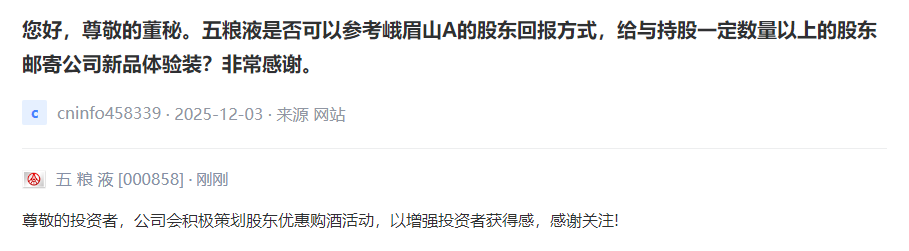
五粮液:积极策划股东优惠购酒活动
Zheng Quan Shi Bao· 2025-12-04 10:37
Core Viewpoint - Wuliangye plans to actively organize shareholder discount activities to enhance investor satisfaction [1] Group 1: Shareholder Benefits - Emei Mountain A announced a shareholder reward program allowing shareholders with 500 or more shares to enjoy free entry to the scenic area, free cable car rides, hot springs, skiing, and hotel discounts from December 1, 2025, to January 31, 2026 [3] - This announcement led to a significant increase in Emei Mountain's stock price, which hit the daily limit on December 1 [3] Group 2: Dividend Distribution - Wuliangye has implemented 25 cash dividend distributions since its listing, totaling over 120 billion yuan [4] - The company announced a mid-term profit distribution plan in late October, proposing a cash dividend of 25.78 yuan per 10 shares (including tax) [4] - Wuliangye's average dividend payout ratio since its listing is 49.64% [5] Group 3: Financial Performance - In the first three quarters of this year, Wuliangye reported operating revenue of 609.45 billion yuan, a year-on-year decrease of 10.26% [5] - The net profit attributable to shareholders for the same period was 215.11 billion yuan, down 13.72% year-on-year [5]
揭秘丨50亿巨资驰援,五粮液如何坐实川航集团二股东
Sou Hu Cai Jing· 2025-12-04 10:17
近日,四川航空集团发生工商变更,五粮液集团以5.59亿元的注册资本认缴金额资,成为川航二股东,持股约45.83%。 川航集团的大股东四川发展代表四川省持股54.17%,川航集团的注册资本由4.17亿元增至约12.19亿元。 据航旅圈了解,这50亿增资款并不是全部作为增加川航集团的注册资金,而是大部分计入了资本公积,并且这笔注资在四川省的推动下于2022年12月30日 全部到位。【回顾:川航换人,50亿到账!还有哪些航司缺钱待救】 而最终计入注册资金的是5.59亿元,依据认缴出资占比,五粮液由此成为川航集团的二股东,并且在外部董事席位中占据了三席。 五粮液成为川航集团的二股东,其实历时长达五年的时间。 在此之前,川航集团一直是四川省属国资全资企业,不过,在疫情期间航司普遍日子不好过的2020年,五粮液出手驰援川航。 2020年12月,四川发展、川航集团、五粮液集团、五粮液基金地方签署增资扩股协议,其中五粮液拟对川航集团增资50亿。【回顾:独家丨川航获五粮液 巨额增资】 据四川省国资委网站,11月18日,川航集团召开了引入新股东后的2025年第一次股东会,股东单位代表四川发展(控股)公司党委书记、董事长徐一心, ...
五粮液:积极策划股东优惠购酒活动
证券时报· 2025-12-04 10:01
Core Viewpoint - Wuliangye is actively planning shareholder benefit activities to enhance investor satisfaction and engagement [2]. Group 1: Shareholder Benefits - On December 1, 2025, to January 31, 2026, shareholders holding 500 shares or more of Emei Mountain A will enjoy various benefits, including free entry to the scenic area, free cable car rides, hot spring access, and hotel discounts [4]. - Other liquor companies, such as Shede Liquor and Yingjia Gongjiu, have also organized similar shareholder benefit activities in the first half of the year [5]. Group 2: Dividend Distribution - Since its listing in 1998, Wuliangye has implemented 25 cash dividend distributions, totaling over 120 billion yuan [5]. - The company announced a mid-term profit distribution plan in October, proposing a cash dividend of 25.78 yuan per 10 shares (including tax) [5]. - The cumulative net profit since listing is approximately 254.72 billion yuan, with a cumulative cash dividend of about 126.44 billion yuan, resulting in an average dividend rate of 49.64% [6]. Group 3: Financial Performance - In the first three quarters of this year, Wuliangye reported an operating income of 60.945 billion yuan, a year-on-year decrease of 10.26%, and a net profit attributable to shareholders of 21.511 billion yuan, down 13.72% year-on-year [6].