WLY(000858)

Search documents
食品饮料行业点评:近期更新反馈:固本强基,趋时驭势
GOLDEN SUN SECURITIES· 2025-11-16 09:39
Investment Rating - The report maintains an "Accumulate" rating for the food and beverage industry, indicating a positive outlook for investment opportunities in this sector [5]. Core Insights - The food and beverage industry is experiencing a transformation driven by health-conscious consumer trends, product innovation, and channel expansion, with companies actively enhancing their product offerings and exploring overseas markets [1][9]. - In the liquor segment, the supply side is undergoing continuous changes to seek growth, while the demand side is gradually recovering, highlighting the absolute investment value in the industry [2][3]. - The beverage sector is focusing on product innovation and network expansion to uncover growth potential, with a strong emphasis on health upgrades and premiumization [4][7]. Summary by Relevant Sections Liquor Industry - **Water Well**: The company is optimizing its product matrix and plans to launch a new high-end product in 2025, focusing on brand collaboration and expanding its terminal network [2]. - **Jiu Gui Jiu**: The brand is implementing a strategic focus on brand depth and product line simplification, with expectations for improved sales performance [3]. - **She De Jiu Ye**: The company is maintaining its core strategy while expanding its product offerings, particularly in e-commerce, to drive growth [3]. Beverage Industry - **Kang Shi Fu**: The company is committed to innovation and quality, focusing on expanding its product range to meet diverse consumer needs [4]. - **Unified Enterprises**: The company is experiencing stable performance with a focus on product innovation and market expansion, particularly in the instant noodle and beverage segments [7]. - **Hua Run Beverage**: Short-term performance is under pressure due to competition, but long-term growth prospects remain strong due to the essential nature of its products [7]. Health and Wellness Trends - **Anqi Yeast**: The company is targeting over 10% revenue growth, with a focus on expanding its overseas market presence and maintaining cost advantages [9]. - **Xian Le Health**: The company is advancing its global strategy and product innovation to capture new consumer trends, with a focus on high-margin products [9]. - **Jian Yi Health**: The company is enhancing its probiotic offerings and expanding its product lines to meet evolving consumer demands [10]. Overall Market Trends - The food and beverage industry is witnessing a shift towards healthier products and innovative marketing strategies, with companies adapting to changing consumer preferences and exploring new growth avenues [1][4].


酒价内参11月16日价格发布贵州茅台飞天大涨5元
Xin Lang Cai Jing· 2025-11-16 01:34
Core Insights - The overall retail price of major Chinese liquor brands has increased, with leading products like Guizhou Moutai and Yanghe showing significant price rises [1] - Some products, such as Wuliangye and Qinghua Lang, have experienced notable price declines, with Wuliangye down by 4 yuan per bottle and Qinghua Lang down by 5 yuan per bottle [1] - Douyin has shut down all unauthorized Moutai stores, following complaints about false advertising related to low-priced Moutai [1] Price Trends - The average retail price of the top nine liquor brands has risen overall, indicating a positive trend in the market [1] - Guizhou Moutai and Yanghe are leading the price increases among major products [1] - Wuliangye and Qinghua Lang have seen significant price drops, with declines of 4 yuan and 5 yuan per bottle respectively [1] Regulatory Actions - Douyin has taken action against unauthorized Moutai sellers, responding to consumer complaints about misleading low-price promotions [1] - A notification from Douyin indicated that any Moutai priced below market value would face penalties, highlighting the platform's efforts to regulate pricing practices [1] - Douyin clarified that previous rumors regarding the notification were false, emphasizing their commitment to addressing consumer complaints [1] Market Data - The "Liquor Price Reference" by Sina Finance provides objective and traceable data on the retail prices of major Chinese liquor brands [1] - The report aims to offer a comprehensive view of the market pricing landscape for well-known Chinese liquor products [1]


食品饮料行业周报 20251110-20251114:板块关注度回升,重申进入战略配置期-20251115
Shenwan Hongyuan Securities· 2025-11-15 15:27
Investment Rating - The report maintains a positive investment outlook for the food and beverage industry, particularly highlighting the strategic configuration period for quality companies [3][7]. Core Insights - The food and beverage sector has shown signs of recovery, with retail sales growth of 2.9% year-on-year in October and a 3.8% increase in restaurant revenue, indicating a rebound from previous declines [3][7]. - Major liquor companies have experienced significant revenue declines, but the market is actively seeking a balance between volume and price, suggesting a potential bottoming out of the market [3][7]. - The report emphasizes the importance of patience regarding fundamental performance and notes that individual stock performance will vary during this adjustment phase [3][7]. Summary by Sections Food and Beverage Weekly Insights - The food and beverage sector rose by 2.82% last week, outperforming the Shanghai Composite Index by 2.99 percentage points [6]. - Key stocks such as Huanyujia and Sanyuan have shown significant gains, while Dongpeng Beverage and Qianwei Yangchun faced declines [6]. Liquor Sector Analysis - The report indicates that the liquor sector is entering a strategic configuration phase, with expectations of a fundamental turning point in Q3 2026 [8]. - The average price for Moutai is reported at 1655 RMB for loose bottles, with a week-on-week increase of 15 RMB, while the price for Wuliangye remains stable at approximately 830 RMB [8][26]. - The report anticipates continued pressure on sales volume in early 2026, but a stabilization and recovery in prices as inventory clears and demand rebounds [8]. Consumer Goods Sector Insights - The performance of consumer goods companies has been mixed, with leading firms like Yili and Qingdao Beer maintaining stable operations, while some companies in the snack and beverage sectors have seen a slowdown in revenue growth [9]. - The report recommends focusing on high-dividend yielding companies and those with sustainable growth potential, particularly in the snack and beverage segments [9]. Valuation Metrics - As of November 14, 2025, the food and beverage sector has a dynamic PE of 20.85x, with a premium rate of 27%, while the liquor sector has a dynamic PE of 19.51x, with a premium rate of 18% [27].



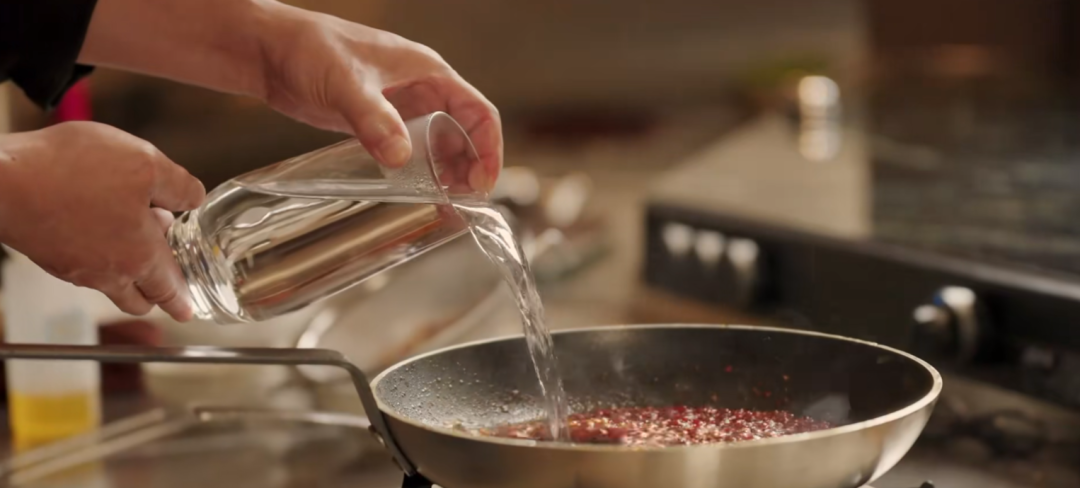
以“双国宝”赋能,五粮液如何用“TA说”讲好大国浓香的“活窖之美”
Zhong Guo Jing Ji Wang· 2025-11-15 06:20
Core Viewpoint - The article emphasizes the significance of the age of fermentation pits in the quality of Chinese liquor, particularly focusing on Wuliangye's unique brewing process and its cultural heritage [1][11]. Group 1: Wuliangye's Brewing Heritage - Wuliangye has been continuously brewing for over 700 years using the ancient Yuanming fermentation pits, which are recognized as a national cultural heritage site and a key industrial heritage [4][11]. - The fermentation pits contain a complex ecosystem of microorganisms, with over 10 billion microorganisms per gram of ancient pit mud, which play a crucial role in determining the flavor, aroma, and quality of the liquor [4][6]. Group 2: Scientific Exploration and Innovation - In 2021, Wuliangye collaborated with Jiangnan University to discover a significant acetic acid bacterium in the ancient pit mud, confirming the traditional wisdom that older pits yield higher quantities and more active microorganisms [6][11]. - The company is committed to scientifically decoding the secrets of ancient pit mud to ensure the continuous production of high-quality liquor, positioning itself as a leader in the international research of brewing microorganisms [6][11]. Group 3: Cultural and Culinary Integration - The recent episode of Wuliangye's video series "TA Says: The Beauty of Active Pits" features renowned chef Hao Zhenjiang, exploring the connection between Sichuan cuisine and Wuliangye liquor, highlighting the role of liquor in enhancing the flavors of dishes [2][4]. - The series aims to bridge the gap between industry knowledge and consumer understanding, making the complex brewing principles accessible and engaging for a broader audience [12][14]. Group 4: Brand Positioning and Market Strategy - Wuliangye's dual heritage of ancient fermentation pits and traditional brewing techniques forms a unique brand moat, providing economic, cultural, and social value that differentiates it in a competitive market [11][12]. - The ongoing video series has garnered significant attention, facilitating a deeper understanding of Wuliangye's brand strength and industry position among consumers [12][14]. Group 5: Future Outlook - The continuous release of video content is expected to enhance Wuliangye's cultural appeal and brand value, leading the Chinese liquor industry towards broader recognition and appreciation [15].

美团闪购茅台交易额大增612%!为何仍有商家保持谨慎?
Mei Ri Jing Ji Xin Wen· 2025-11-14 13:28
Core Insights - The online retail sector, particularly instant retail, is experiencing significant growth in the Chinese liquor market, with major brands like Moutai and Wuliangye leading the surge in sales during the Double 11 shopping festival [1][5][6] Group 1: Sales Performance - Moutai's transaction volume on Meituan's instant retail platform increased by 612% year-on-year during the Double 11 period [1][4] - JD Supermarket reported a 35% year-on-year increase in self-operated liquor sales and a 30% increase in local specialty liquor sales from October 9 to November 11 [2][5] - The top-selling liquor brands on various platforms include Moutai, Wuliangye, and Jian Nan Chun, with significant sales growth across the board [2][3] Group 2: Market Trends - Instant retail is becoming a new focal point in the online liquor market, with a notable increase in transaction volumes across various categories, including liquor, mobile phones, and baby formula [5][6] - The penetration rate of liquor in instant retail is rapidly increasing, projected to reach 6% by 2027, with a market size exceeding 100 billion [5][6] - Traditional e-commerce is facing challenges as instant retail captures a larger share of consumer spending, driven by the demand for immediate satisfaction [5][6] Group 3: Brand Dynamics - Major liquor brands are driving growth in online channels, with Moutai, Wuliangye, and Jian Nan Chun consistently ranking among the top sellers [2][3] - New product launches, such as Moutai's zodiac-themed gift boxes, have seen substantial sales increases, indicating strong consumer interest in premium offerings [3] - Regional liquor companies are also emerging in niche markets, demonstrating the competitive landscape of the liquor industry [3][6]



宜宾纸业:公司和股东五粮液旗下其他包装印刷公司不存在同业竞争的问题
Zheng Quan Ri Bao· 2025-11-14 13:13
(文章来源:证券日报) 证券日报网讯宜宾纸业11月14日在互动平台回答投资者提问时表示,公司和股东五粮液旗下其他包装印 刷公司不存在同业竞争的问题。 ...

白酒板块11月14日跌1.2%,古井贡酒领跌,主力资金净流出9.78亿元
Zheng Xing Xing Ye Ri Bao· 2025-11-14 08:49
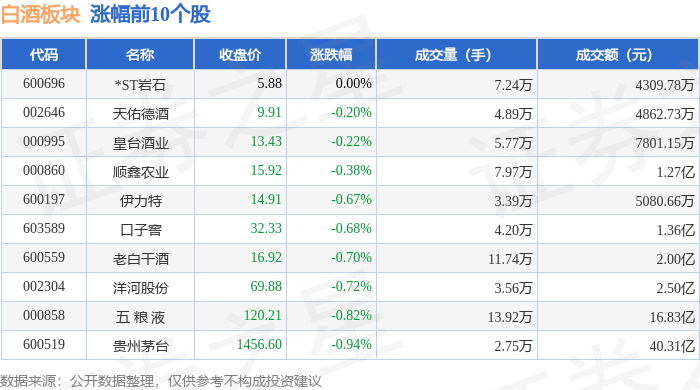
Core Insights - The liquor sector experienced a decline of 1.2% on November 14, with Gujing Gongjiu leading the drop [1][2] - The Shanghai Composite Index closed at 3990.49, down 0.97%, while the Shenzhen Component Index closed at 13216.03, down 1.93% [1] Liquor Sector Performance - Gujing Gongjiu's stock price fell by 2.95% to 161.60, with a trading volume of 30,700 shares and a transaction value of 503 million [2] - Luzhou Laojiao decreased by 2.58% to 139.62, with a trading volume of 94,700 shares and a transaction value of 1.345 billion [2] - The overall liquor sector saw a net outflow of 978 million from major funds, while retail investors contributed a net inflow of 487 million [2][3] Individual Stock Movements - Major stocks like Moutai and Wuliangye also experienced declines, with Moutai down 0.94% to 1456.60 and Wuliangye down 0.82% to 120.21 [1] - The stock of Shunxin Agriculture fell by 0.38% to 15.92, with a trading volume of 79,700 shares [1] - The net inflow from retail investors was notable in stocks like Jinzhongzi Liquor, which saw a net inflow of 966.04 million despite a decline in major funds [3]


CPI结构变化趋势对消费影响分析
Haitong Securities International· 2025-11-14 08:25
Investment Rating - Investment advice: Prioritize growth, supply-demand balance signals a turning point [2][12][19] Core Insights - Service CPI rises, food CPI stabilizes, future PPI increase may drive further CPI improvement, benefiting mass products first [12][19] - Economic transformation leads to a rise in service consumption, with service CPI consistently outperforming food CPI since 2012, indicating a shift from product to service consumption [4][19] - Moderate inflation is expected to promote consumption recovery, with autumn-winter related consumption anticipated to strengthen due to sudden cold weather [4][19] Summary by Sections CPI Trends - Service CPI has been consistently higher than food CPI since 2012, reflecting a structural shift in consumption patterns [4] - Service CPI is relatively stable while goods CPI is more volatile, influenced by supply-demand dynamics [4] - Non-food CPI remains stable, whereas food CPI is more volatile, primarily affected by pork prices [4] Investment Recommendations - Recommended stocks in the baijiu sector include Shanxi Xinghuacun Fen Wine Factory, Gujing Distillery, and Kweichow Moutai among others [12][19] - For beverages, Eastroc Beverage and Nongfu Spring are highlighted, with a focus on low valuation high dividends stocks like China Foods and Tingyi [12][19] - Snack and food raw material growth targets include Bailong Chuangyuan, Yankershop Food, and Three Squirrels [12][19] - Beer recommendations include Yanjing Brewery and Tsingtao Brewery [12][19] - Stable condiment companies recommended include Haitian Flavouring & Food and Yili Industrial Group [12][19]
食品饮料行业专题报告:数说食饮(一):宏观经济指标如何指引白酒行业投资?
Guoxin Securities· 2025-11-14 07:59
Investment Rating - The report maintains an "Outperform the Market" rating for the liquor industry, specifically for companies like Guizhou Moutai, Wuliangye, Luzhou Laojiao, and Shanxi Fenjiu [4]. Core Insights - The liquor industry serves as an economic lubricant, with its revenue growth closely aligned with GDP growth and the sales expenses of A-share listed companies [2]. - Long-term price trends for Moutai are expected to fluctuate around one-third of urban residents' average disposable income, indicating a strong correlation between consumer purchasing power and liquor prices [2]. - Short-term demand for liquor reflects economic fluctuations and expectations, with product prices closely related to macroeconomic indicators such as PPI and excavator sales [3]. Summary by Sections Economic Indicators and Liquor Demand - The liquor industry is influenced by macroeconomic indicators, with PPI, excavator sales, and industrial profits reflecting business consumption demand, while CPI and disposable income indicate consumer purchasing needs [1]. - The correlation between liquor demand and economic activity suggests that tracking forward-looking indicators can provide insights into price and performance expectations [1]. Long-term and Short-term Price Dynamics - Moutai's price is expected to rise steadily within a reasonable range of residents' income levels, with historical data showing a strong relationship between Moutai prices and disposable income [2]. - In the short term, liquor prices are expected to respond to economic conditions, with a notable correlation between Moutai's wholesale price and PPI trends [3]. Investment Recommendations - As of mid-November, the wholesale price of Moutai is around 1,660 RMB, down 25% year-on-year, indicating a potential bottoming signal for the sector [3]. - Recommended stocks for investment include stable performers like Luzhou Laojiao, Shanxi Fenjiu, and Guizhou Moutai, with a focus on companies that have long-term growth potential [3].

食品饮料行业:关注PPI的环比首次转正,利好食品饮料行业利润复苏
Dongxing Securities· 2025-11-14 05:32
Investment Rating - The report maintains a "Positive" outlook for the food and beverage industry, indicating expected performance above the market benchmark [4]. Core Insights - The report highlights the first month-on-month increase in PPI (Producer Price Index) in 2023, which is expected to positively impact the profitability recovery of the food and beverage industry [1][8]. - The correlation between food and beverage industry revenues and PPI is emphasized, suggesting that improvements in PPI will lead to better profit margins for food companies [1][9]. - The report recommends focusing on cyclical sectors such as the liquor segment and snack foods that benefit from channel advantages due to the overall price recovery [9]. Summary by Sections PPI and CPI Analysis - In October, CPI increased by 0.2% year-on-year and month-on-month, while PPI decreased by 2.1% year-on-year but showed a month-on-month increase of 0.1%, marking the first rise in 2023 [2][8]. - The report notes that the improvement in supply-demand relationships across various industries has led to price increases in sectors such as coal mining and photovoltaic equipment [2][8]. Market Performance - The report provides a weekly performance overview of various sub-sectors within the food and beverage industry, with seasoning and fermentation products leading with a 1.75% increase, while other food categories showed mixed results [10][13]. - Key companies in the liquor sector, such as Zhongxin Niya and Weilang Co., saw significant stock price increases, while others like Huaiqi Mountain and Jiu Gui Jiu experienced declines [13][21]. Company Tracking - The report includes recent announcements from major companies, such as Kweichow Moutai's mid-term profit distribution plan and share buyback initiatives, which aim to enhance shareholder confidence [23][27]. - It also notes the issuance of short-term financing by Yili Co. and the extension of pre-restructuring for Tianbang Food, indicating ongoing corporate activities within the industry [23][24].