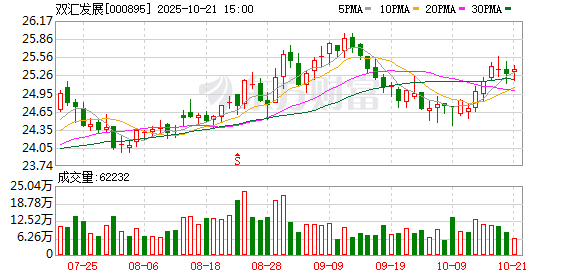
SHUANGHUI(000895)

Search documents
武汉双汇订单排到年底
Chang Jiang Ri Bao· 2025-10-28 00:31
Core Insights - The company, Wuhan Shuanghui, has seen a 30% increase in orders compared to the same period last year, with production lines operating at near full capacity [1] - The company is facing a labor shortage and is urgently recruiting 400 new employees to meet production demands [1] - The new production base in Wuhan is the largest sausage production facility for Shuanghui in the country, with a daily production capacity expected to exceed 170 tons [1] Production and Capacity - The new sausage production base covers an area of 15,000 square meters and currently has a daily output of 100 tons [1] - The facility is expected to produce a total of 10,000 tons of sausages by the end of the year, contributing an additional 200 million yuan in annual revenue once fully operational [1] Product Development - The company has introduced various new flavors of sausages, including cheese explosion, black pepper beef, and peppercorn, which are particularly popular among younger consumers [2] - The R&D team is planning to develop flavors tailored to regional preferences, such as spicy flavors for Central China and mild sweet flavors for Southern China [2]

预制菜企业最集中的省份 为什么是河南?
3 6 Ke· 2025-10-27 02:05
Core Insights - Henan province, known for its large population, is emerging as a significant player in the new consumption landscape, particularly in the prepared food sector [1][2] - The province is home to over 4,000 companies related to prepared food, ranking first in the country for the number of such enterprises [2] - Henan's agricultural advantages contribute to its dominance in the prepared food industry, producing a substantial portion of China's staple foods [3][4] Industry Overview - Henan produces 25% of China's steamed buns, 33% of instant noodles, 50% of ham sausages, and 60% of dumplings, showcasing its agricultural strength [3] - The province is recognized as a major agricultural hub, with its grain output second only to Heilongjiang in 2024, and it consistently ranks first in wheat production [3] - The local market provides high-quality, low-cost raw materials, supported by a well-established food production and management system [3] Market Dynamics - The population density in Henan provides a robust market and labor force, while its strategic location enhances logistics and cold chain transportation capabilities [4] - Companies like Shuanghui have successfully entered the prepared food market, launching various products under their brands [3] - The combination of agricultural output and industrial development positions Henan as a key player in the prepared food sector, often referred to as "China's kitchen" [4]


预制菜企业最集中的省份,为什么是河南?
36氪· 2025-10-26 02:00
Core Viewpoint - The article emphasizes that Henan province plays a crucial role in China's food industry, particularly in the prepared food sector, making it a significant contributor to the national dining table [4][10]. Group 1: Industry Overview - Henan is home to several popular new consumer brands, including Mixue Ice City and Pop Mart, which have emerged from the province [4]. - The province has a high concentration of food processing companies, with over 4,000 related enterprises, ranking first in the country [9]. - Major food brands from Henan include Sanquan Foods, Shuanghui Development, and Si Nian Foods, which dominate various segments of the prepared food market [6][7]. Group 2: Market Share and Production - Sanquan Foods holds a market share of 20% to 40% in the frozen food sector, with a sales scale of 7.434 billion yuan in 2023 [6]. - Shuanghui Development, a leader in meat products, reported a sales scale of 60.1 billion yuan, capturing 5% of the market [6]. - Henan produces a significant portion of China's staple foods, including 1/4 of the country's steamed buns, 1/3 of instant noodles, and 1/2 of ham sausages [10]. Group 3: Agricultural Advantages - As a major agricultural province, Henan is known as the "granary of the world," with its grain output second only to Heilongjiang in 2024 [10]. - The province's meat, egg, and milk production totals 13.37 million tons, ranking third nationally, with a leading position in pig farming [14]. - The availability of local raw materials, such as flour and pork, combined with a well-established food production and management system, supports the growth of the prepared food industry [14]. Group 4: Strategic Location - Henan's geographical position in the center of China, along with its developed transportation infrastructure, provides a logistical advantage for the food industry [14]. - The province's population offers a substantial market and labor force, further enhancing its role in the prepared food sector [14].


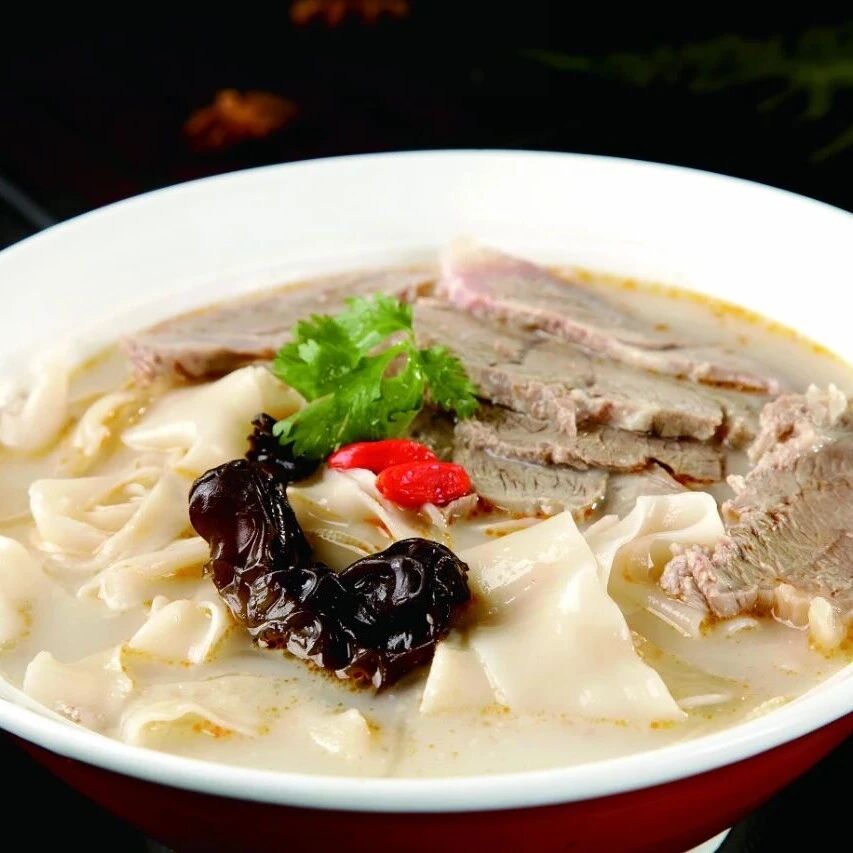
双汇发展:目前公司推出了五香、麻辣风味的手撕蛋白肉
Zheng Quan Ri Bao Wang· 2025-10-24 11:12
Core Viewpoint - The company has launched new flavors of shredded protein meat, specifically five-spice and spicy flavors, available in its cooked food stores, indicating a focus on product diversification to meet consumer demand [1] Product Development - The company plans to enhance product research and development based on market demand, aiming to enrich its product categories [1] - The introduction of diverse and differentiated products is intended to satisfy various consumer preferences [1]
双汇发展:两家联营企业主要从事液体大豆浓缩蛋白和干粉类大豆分离蛋白的生产与销售
Zheng Quan Ri Bao Wang· 2025-10-23 11:40
Group 1 - The core viewpoint of the article is that Shuanghui Development (000895) has clarified its association with two joint ventures involved in the production and sales of soybean protein products [1] Group 2 - The joint ventures mentioned are Danisco Shuanghui Luhe Soybean Industry Co., Ltd. and Danisco Shuanghui Luhe Food Co., Ltd. [1] - These companies primarily focus on the production of liquid soybean concentrate protein and dry powder soybean isolate protein [1]
红利板块有望成为资金避险池,300红利低波ETF(515300)盘中蓄势,近5日“吸金”1.63亿元
Xin Lang Cai Jing· 2025-10-23 03:05
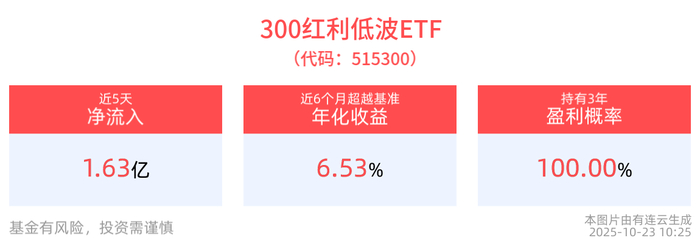
Core Viewpoint - The article discusses the performance and characteristics of the CSI 300 Dividend Low Volatility Index and its associated ETF, highlighting its recent market behavior, liquidity, and investment opportunities in the dividend sector amidst a changing economic landscape [1][2][3]. Group 1: Market Performance - As of October 23, 2025, the CSI 300 Dividend Low Volatility Index decreased by 0.05%, with mixed performance among constituent stocks [1]. - Postal Savings Bank led the gains with an increase of 3.32%, while Conch Cement experienced the largest decline [1]. - The CSI 300 Dividend Low Volatility ETF (515300) showed a trading turnover of 0.81% and a transaction volume of 39.5 million yuan [2]. Group 2: Fund Size and Inflows - The latest size of the CSI 300 Dividend Low Volatility ETF reached 4.873 billion yuan [2]. - Over the past five trading days, the ETF recorded net inflows on three occasions, totaling 163 million yuan [2]. Group 3: Historical Performance - As of October 22, 2025, the CSI 300 Dividend Low Volatility ETF's net value increased by 58.14% over the past five years, ranking in the top 8.52% among index equity funds [2]. - The ETF has achieved a maximum monthly return of 13.89% since inception, with the longest consecutive monthly gain being five months and an average monthly return of 3.57% during rising months [2]. Group 4: Sector Insights - Bank of China International noted a "seesaw" relationship between the dividend sector and the TMT sector, suggesting that the dividend sector may serve as a safe haven for funds during periods of weak market sentiment [2]. - Key sectors to focus on include banking, coal, electricity, and transportation, which are part of the dividend sector [2]. Group 5: High Dividend Stocks - As of September 30, 2025, the top ten weighted stocks in the CSI 300 Dividend Low Volatility Index accounted for 35.84% of the index, with China Shenhua and Shuanghui Development being the top two [3][5]. - The top ten stocks include Gree Electric, Sinopec, and China Mobile, among others, indicating a diverse range of industries represented [3][5].





双汇发展:丹尼士科双汇漯河豆业有限公司、丹尼士科双汇漯河食品有限公司是双汇发展的联营企业
Mei Ri Jing Ji Xin Wen· 2025-10-23 01:29
Core Viewpoint - The news highlights the partnership between Shuanghui Development and DuPont in the food protein sector, specifically focusing on the production and sales of soybean protein products through their joint ventures [1]. Company Summary - Shuanghui Development acquired a 40% stake in the joint venture with DuPont for 18.02 million yuan in May 2020, which has allowed for centralized management of the equity [1]. - The joint ventures, namely Danisco Shuanghui Luoyang Soybean Industry Co., Ltd. and Danisco Shuanghui Luoyang Food Co., Ltd., are primarily engaged in the production and sales of liquid soybean concentrate protein and dry powder soybean isolate protein [1]. Industry Summary - The focus of the joint venture is on the food protein industry, particularly in the production of plant-based protein products, which aligns with the growing trend towards alternative protein sources in the food market [1].
三天暴涨近600%,人造肉又火了!A股受益公司有哪些?
Ge Long Hui· 2025-10-22 03:32
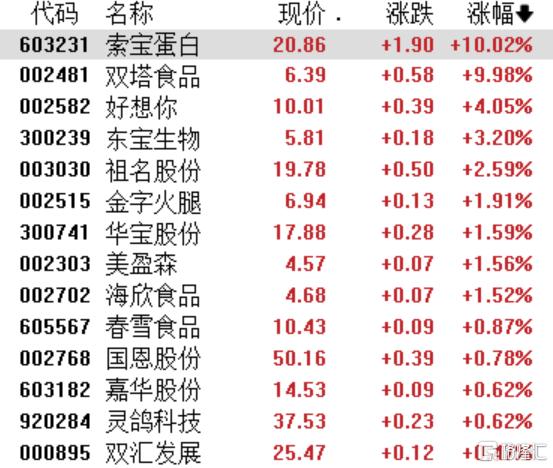
Group 1 - The artificial meat sector has seen a significant surge, with stocks like Suobao Protein and Shuangta Food hitting their daily limits, and companies like Haoxiangni and Dongbao Biological also experiencing gains [1][2] - Beyond Meat, the first public company in the artificial meat space, saw its stock price soar by 146.26% in one day, with a cumulative increase of nearly 600% over three trading days [2][3][5] - The surge in Beyond Meat's stock is attributed to its announcement of expanding distribution with Walmart, which will offer new packaging for its products in over 2,000 stores [5][6] Group 2 - The global plant-based meat market was valued at approximately $13.6 billion in 2020 and is projected to reach $35 billion by 2027, with a compound annual growth rate (CAGR) of 14.4% from 2020 to 2027 [7] - Despite previous challenges in the artificial meat market, including taste and price issues, the sector is experiencing renewed interest, particularly in China, where the market is expected to capture a significant share of the global market [8][11] - Major traditional food companies are entering the plant-based meat space, including Shuangta Food, Shuanghui Development, and Jinzi Ham, indicating strong market potential [8][11][12] Group 3 - Companies like Xue Rong Biological and Dongbao Biological are actively developing plant-based meat products, enhancing their product diversity and market position [11][12] - Suobao Protein has a wide range of soybean protein products that are utilized in various food sectors, including meat products and traditional soybean products [12][13] - Jinzi Ham, a leader in the ham industry, has diversified its product line to include plant-based meat, showcasing the industry's shift towards alternative protein sources [13]


食品饮料行业2025年三季报前瞻:白酒加速出清,大众逐渐改善
Huachuang Securities· 2025-10-22 00:46
Investment Rating - The report maintains a recommendation for the liquor sector, indicating a bottoming out phase with potential for recovery in the future [2]. Core Insights - The liquor industry is experiencing a significant decline in sales, with an expected drop of over 20% in overall sales volume. However, there are signs of month-on-month improvement, and the decline is narrowing [5][9]. - Major liquor companies like Moutai and Wuliangye are showing strong recovery in payment collection, with over 80% collection rates, while regional brands are performing adequately [5][9]. - The report emphasizes the importance of focusing on high-quality liquor brands that are likely to recover faster, such as Moutai and Fenjiu, while also highlighting the need to monitor companies undergoing significant changes [6][9]. Summary by Sections 1. Liquor Sector: Q3 Accelerated Decline and Bottoming Out - The liquor sector is facing a 20%+ decline in sales due to external demand shocks, with a gradual improvement expected in the coming months [5][9]. - High-end liquor brands are expected to show resilience, with Moutai projected to achieve a 3% revenue growth in Q3, while Wuliangye is expected to see a 20% revenue decline [10][11]. - The report indicates that companies are adjusting their strategies to reduce channel pressure and improve operational efficiency [9][10]. 2. Consumer Goods Sector: Overall Demand Weakness, Structural Resilience - The consumer goods sector is experiencing overall weak demand, but segments like snacks and beverages are showing higher resilience [17][24]. - The report notes that while the demand for dairy and beer remains stable, the restaurant supply chain is still under pressure [17][24]. - Raw material prices are generally declining, which may provide some cost relief to companies in the sector [24][25]. 3. Investment Recommendations: Focus on Liquor Bottoming Catalysts and Selective Consumer Goods Trends - The report suggests focusing on liquor companies that are at the bottom of their cycles, with Moutai and Fenjiu being primary recommendations [6][9]. - For consumer goods, the report highlights the potential of snack and beverage companies, recommending brands that are well-positioned to benefit from current trends [6][17].





双汇发展:2025年10月20日公司股东人数161909户(含信用账户)
Zheng Quan Ri Bao· 2025-10-21 13:41
证券日报网讯双汇发展10月21日在互动平台回答投资者提问时表示,2025年10月20日公司股东人数 161909户(含信用账户)。 (文章来源:证券日报) ...