Semir(002563)

Search documents
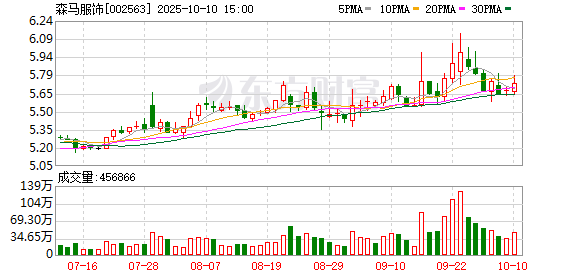
森马服饰:近期公司旗下巴拉巴拉品牌与意大利罗马地中海集团签署战略合作协议
Mei Ri Jing Ji Xin Wen· 2025-10-10 10:36
(文章来源:每日经济新闻) 森马服饰(002563.SZ)10月10日在投资者互动平台表示,近期,公司旗下巴拉巴拉品牌与意大利罗马 地中海集团(Mediterraneo 1996 Srl)签署战略合作协议,罗马地中海集团正式成为巴拉巴拉品牌在意 大利市场的战略合作伙伴,并以此为基础,逐步辐射拓展欧洲市场。 每经AI快讯,有投资者在投资者互动平台提问:注意到贵公司在研发方面与法国等欧盟国家合作,请 问贵公司是否将产品出口至欧盟国家? ...


森马服饰:2025年半年度权益分派实施公告
Zheng Quan Ri Bao· 2025-09-29 13:38
Core Points - Semir Apparel announced a profit distribution plan for the first half of 2025, proposing a cash dividend of 1.50 yuan per 10 shares (tax included) [2] - The record date for the dividend is set for October 14, 2025, and the ex-dividend date is October 15, 2025 [2]
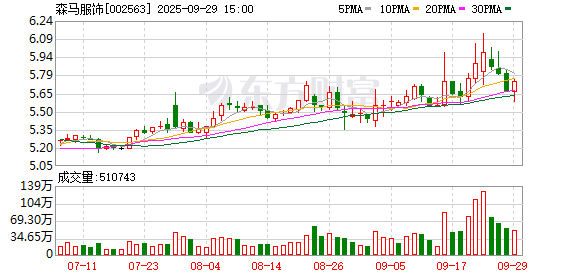
森马服饰:利润分配股权登记日为2025年10月14日
Mei Ri Jing Ji Xin Wen· 2025-09-29 12:01
Group 1 - Senma Apparel announced a profit distribution plan, proposing a cash dividend of 1.5 RMB per 10 shares to all shareholders, based on a total share capital of approximately 2.694 billion shares [1] - The record date for the dividend is set for October 14, 2025, and the ex-dividend date is October 15, 2025 [1] - As of the report, Senma Apparel has a market capitalization of 15.5 billion RMB [1] Group 2 - In the beverage industry, the competition between Nongfu Spring and Yibao has intensified, with Nongfu Spring's green bottle launch leading to a significant market share decline for Yibao, dropping nearly 5 percentage points [1]
森马服饰(002563) - 2025年半年度分红派息实施公告
2025-09-29 12:00
证券代码:002563 证券简称:森马服饰 公告编号:2025-28 浙江森马服饰股份有限公司 2025 年半年度权益分派实施公告 本公司及董事会全体成员保证信息披露的内容真实、准确和完整,没有虚假 记载、误导性陈述或重大遗漏。 一、股东大会审议通过利润分配方案情况 1、浙江森马服饰股份有限公司(以下简称"公司"或"本公司")于 2025 年 9 月 8 日召开 2025 年第一次临时股东大会,审议通过《公司 2025 年半年度利 润分配预案》。 公司股东大会同意 2025 年半年度利润分配方案如下: 以公司未来利润分配实施时确定的股权登记日的股本总额为股本基数,以可 供股东分配的利润向全体股东每 10 股派发 1.50 元现金红利(含税),2025 年半 年度公司不进行送股及资本公积金转增股本。 在本分配方案实施前,公司总股本由于股份回购等原因而发生变化的,分配 比例将保持不变。公司保证考虑未来股本变动后的预计分配总额不会超过财务报 表上可供分配的范围。 2、自分配方案披露至实施期间,公司股本总额未发生变化。 二、本次实施的利润分配方案 本公司 2025 年半年度权益分派方案为:以公司现有总股本 2,694 ...
森马服饰:每10股派发现金红利1.5元
Xin Lang Cai Jing· 2025-09-29 11:57
Core Viewpoint - The company announced its cash dividend distribution plan for the first half of 2025, indicating a commitment to returning value to shareholders through cash dividends [1] Group 1: Dividend Distribution Details - The company will distribute a cash dividend of 1.5 RMB per 10 shares, based on a total share capital of 2.694 billion shares [1] - The record date for the dividend distribution is set for October 14, 2025, while the ex-dividend date is October 15, 2025 [1] - The cash dividends will be distributed through the China Securities Depository and Clearing Corporation Limited, Shenzhen Branch, directly credited to the accounts of shareholders on the ex-dividend date [1]
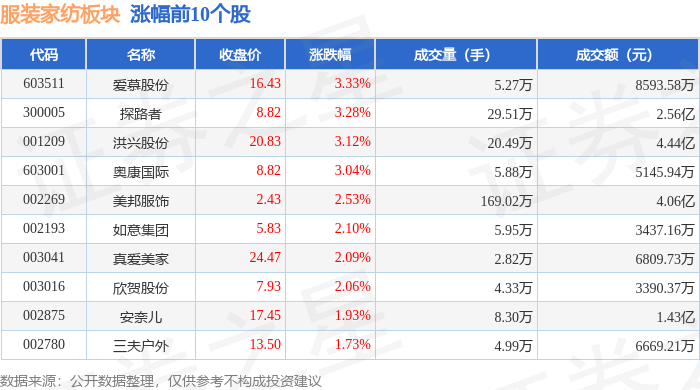
服装家纺板块9月29日涨0.12%,爱慕股份领涨,主力资金净流入248.83万元
Zheng Xing Xing Ye Ri Bao· 2025-09-29 08:39
Market Overview - The apparel and home textile sector increased by 0.12% on September 29, with Aimer leading the gains [1] - The Shanghai Composite Index closed at 3862.53, up 0.9%, while the Shenzhen Component Index closed at 13479.43, up 2.05% [1] Top Gainers - The following companies showed significant gains: - Yuancao Co., Ltd. (603511) closed at 16.43, up 3.33% with a trading volume of 52,700 shares and a turnover of 85.94 million yuan [1] - Explorer (300005) closed at 8.82, up 3.28% with a trading volume of 295,100 shares and a turnover of 256 million yuan [1] - Bingshi Co., Ltd. (001209) closed at 20.83, up 3.12% with a trading volume of 204,900 shares and a turnover of 444 million yuan [1] Top Losers - The following companies experienced notable declines: - Hongdou Co., Ltd. (600400) closed at 3.04, down 6.46% with a trading volume of 2,063,000 shares and a turnover of 629 million yuan [2] - Taimusi (001234) closed at 27.43, down 5.35% with a trading volume of 106,200 shares and a turnover of 29.4 million yuan [2] - Seven Wolves (002029) closed at 7.97, down 5.34% with a trading volume of 686,600 shares and a turnover of 552 million yuan [2] Capital Flow - The apparel and home textile sector saw a net inflow of 2.49 million yuan from institutional investors, while retail investors contributed a net inflow of 74.56 million yuan [2][3] - The sector experienced a net outflow of 77.04 million yuan from speculative funds [2][3] Individual Stock Capital Flow - Meibang Apparel (002269) had a net outflow of 51.37 million yuan from institutional investors, with a 12.65% share of the total [3] - Semir Apparel (002563) saw a net inflow of 30.10 million yuan from institutional investors, representing 10.42% of the total [3] - Hongdou Co., Ltd. (600400) had a net inflow of 13.71 million yuan from institutional investors, accounting for 2.18% of the total [3]


森马服饰9月24日获融资买入5413.53万元,融资余额2.16亿元
Xin Lang Cai Jing· 2025-09-25 01:39
Core Insights - On September 24, Semir Apparel experienced a decline of 2.01% with a trading volume of 449 million yuan [1] - The company reported a net financing outflow of 4.03 million yuan on the same day, with a total financing and securities balance of 220 million yuan [1][2] - As of June 30, the company achieved a revenue of 6.149 billion yuan, reflecting a year-on-year growth of 3.26%, while the net profit attributable to shareholders decreased by 41.17% to 325 million yuan [2] Financing and Margin Trading - On September 24, Semir Apparel had a financing purchase amount of 54.1353 million yuan, with a current financing balance of 216 million yuan, representing 1.37% of the market capitalization [1] - The financing balance is above the 90th percentile level for the past year, indicating a high level of financing activity [1] - The company repaid 5,400 shares in margin trading on the same day, with a margin balance of 3.5113 million yuan, also exceeding the 90th percentile level for the past year [1] Shareholder and Dividend Information - As of June 30, the number of shareholders for Semir Apparel increased by 65.36% to 41,400, while the average circulating shares per person decreased by 39.34% to 53,283 shares [2] - Since its A-share listing, the company has distributed a total of 12.181 billion yuan in dividends, with 2.290 billion yuan distributed over the past three years [3] - Among the top ten circulating shareholders, Hong Kong Central Clearing Limited holds 171 million shares, a decrease of 11.3318 million shares from the previous period [3]
森马服饰增长乏力、归母净利润-41.17% 童装占比超70%暗藏结构性隐忧
Xin Lang Zheng Quan· 2025-09-24 09:44
Core Insights - Semir Apparel is experiencing a "revenue growth without profit increase" scenario, with a slight revenue increase but a significant decline in net profit, indicating operational challenges [1][2] - The company's heavy reliance on children's clothing as a primary revenue source poses sustainability risks, especially as the main leisurewear brand faces downward pressure [1][3] Revenue and Profitability - In the first half of 2025, Semir Apparel achieved a revenue of 6.149 billion yuan, a year-on-year increase of 3.26%, while net profit fell to 325 million yuan, a decline of 41.17% [1][2] - The increase in sales expenses, driven by efforts to expand direct sales channels and enhance online marketing, has significantly eroded profit margins [2] Inventory Management and Business Structure - The company faces challenges in inventory management, with a slowdown in inventory turnover and increased inventory levels indicating a mismatch between sales speed and procurement [3] - The dependency on the children's clothing segment has risen, contributing approximately 70% of total revenue, while the leisurewear segment's share has decreased [3] - High online return rates, approaching 50%, are impacting user experience and operational efficiency [3] Strategic Responses - Semir Apparel is seeking breakthroughs through channel optimization and refined operations, with plans to increase investment in direct sales channels and enhance online-offline integration [3] - The company aims to strengthen cost control in the second half of the year while balancing short-term performance with long-term strategic investments [3]
森马服饰跌2.01%,成交额2.07亿元,主力资金净流出180.29万元
Xin Lang Zheng Quan· 2025-09-24 02:29
Core Viewpoint - Semir Apparel's stock price has experienced a decline of 12.14% year-to-date, despite a recent uptick in the last five trading days, indicating potential volatility in the market [2]. Company Overview - Semir Apparel, established on February 5, 2002, and listed on March 11, 2011, is headquartered in Shanghai and specializes in clothing design, production outsourcing, marketing, and distribution [2]. - The company's main products include Semir brand casual wear and Balabala brand children's clothing, with revenue composition being 70.15% from children's clothing, 28.02% from casual wear, and 1.83% from other sources [2]. Financial Performance - For the first half of 2025, Semir Apparel reported a revenue of 6.149 billion yuan, reflecting a year-on-year growth of 3.26%, while the net profit attributable to shareholders was 325 million yuan, showing a significant decrease of 41.17% [2]. - Cumulative cash dividends since the company's A-share listing amount to 12.181 billion yuan, with 2.290 billion yuan distributed over the past three years [3]. Shareholder Information - As of June 30, 2025, the number of shareholders increased by 65.36% to 41,400, while the average circulating shares per person decreased by 39.34% to 53,283 shares [2]. - The top ten circulating shareholders include Hong Kong Central Clearing Limited, which holds 172 million shares, a decrease of 11.3318 million shares from the previous period [3].
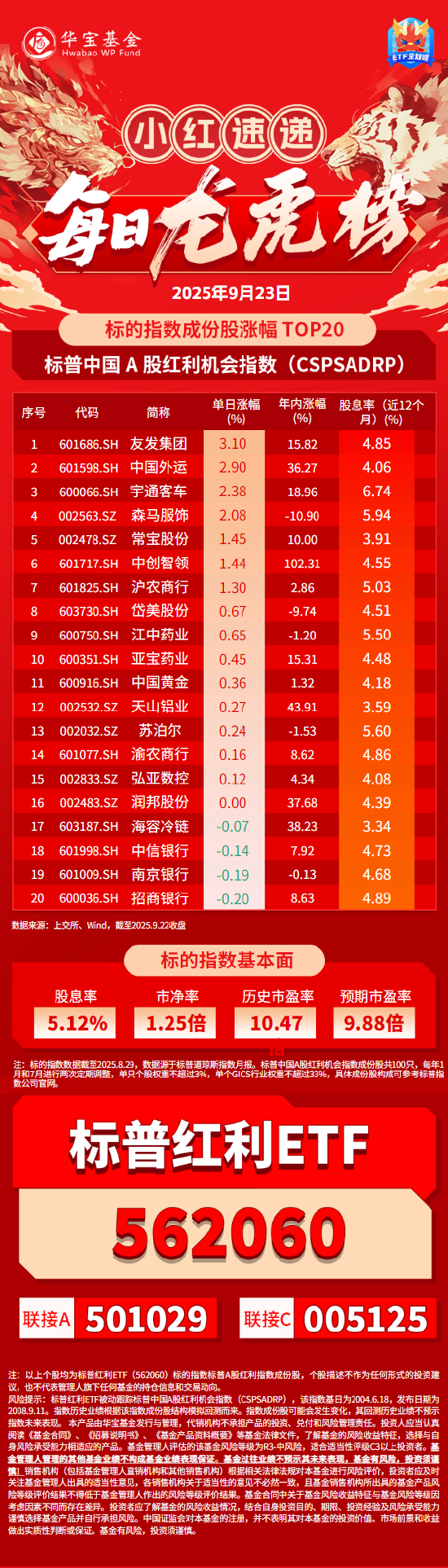
小红日报|标普红利ETF(562060)9月23日龙虎榜揭晓
Xin Lang Ji Jin· 2025-09-24 00:56
Group 1 - The article highlights the top 20 performing stocks in the S&P China A-Share Dividend Opportunity Index (CSPSADRP) as of September 22, 2025, showcasing significant year-to-date gains and dividend yields [1][2] - The top performer is Youfa Group (601686.SH) with a year-to-date increase of 15.82% and a dividend yield of 4.85% [1] - Other notable performers include HERRIG (601598.SH) with a 36.27% increase and a 4.06% dividend yield, and Yutong Bus (600066.SH) with an 18.96% increase and a 6.74% dividend yield [1] Group 2 - The overall dividend yield for the index is reported at 5.12%, with a historical price-to-earnings ratio of 10.47 and an expected price-to-earnings ratio of 9.88 [2] - The index consists of 100 stocks, with individual stock weight capped at 3% and sector weight limited to 33% [2] - The data is sourced from the Shanghai Stock Exchange and Wind, reflecting the performance and characteristics of the index as of late August 2025 [2]