BYD(002594)

Search documents
长沙比亚迪:智造领航,书写新能源全球冠军的星城担当
Chang Sha Wan Bao· 2026-03-02 05:32
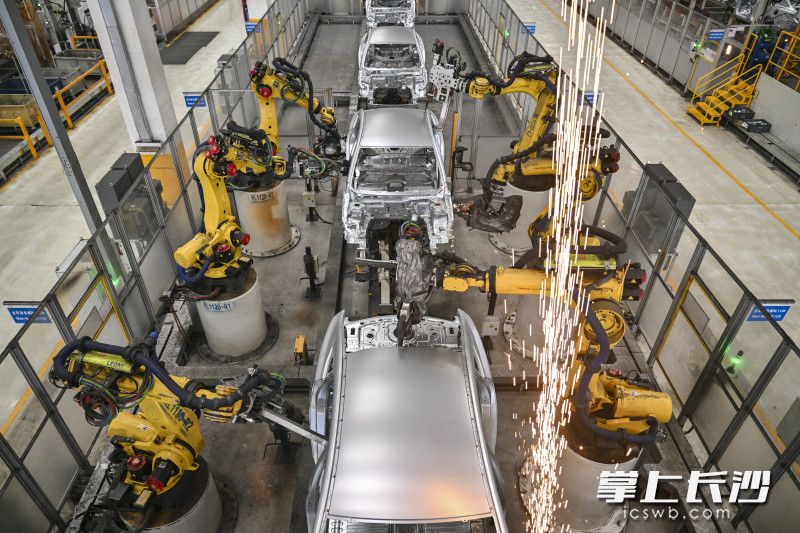
Core Insights - Changsha BYD has been recognized at the Changsha 2025 High-Quality Development Awards, winning two significant honors for outstanding contributions to economic quality and industrial strength, highlighting its role in supporting BYD's global leadership in the electric vehicle market [3] Group 1: Company Performance - In 2025, BYD achieved a record 2.257 million pure electric vehicle sales, securing the top position globally in pure electric sales and maintaining its status as the world's leading seller of new energy vehicles [3] - BYD has established a collaborative development framework in Changsha, comprising six major bases that cover key industries such as new energy vehicles, advanced energy storage, and new displays, creating over 60,000 jobs and exceeding 100 billion yuan in annual output value for four consecutive years [3][4] Group 2: Export and Innovation - In the past year, Changsha BYD's vehicle exports reached 82,000 units, marking a 135% year-on-year increase, contributing over 5 billion yuan to the total import and export value, making it a standout in Changsha's foreign trade [4] - Changsha BYD serves as a crucial technology transfer base for the group, implementing core technologies such as blade batteries and advanced intelligent driving systems, which enhance safety and production efficiency [4] Group 3: Industry Ecosystem - As a leading player, Changsha BYD has significantly stimulated the local new energy vehicle industry ecosystem, attracting upstream and downstream suppliers and establishing a vertically integrated system from battery to vehicle manufacturing [4] - The company aims to leverage its existing industrial foundation to drive upgrades and maintain its competitive edge across all product categories, contributing to Changsha's goal of becoming a national hub for advanced manufacturing [5][6]


比亚迪AH股齐拉升,即将召开颠覆性技术发布会
Ge Long Hui A P P· 2026-03-02 05:21
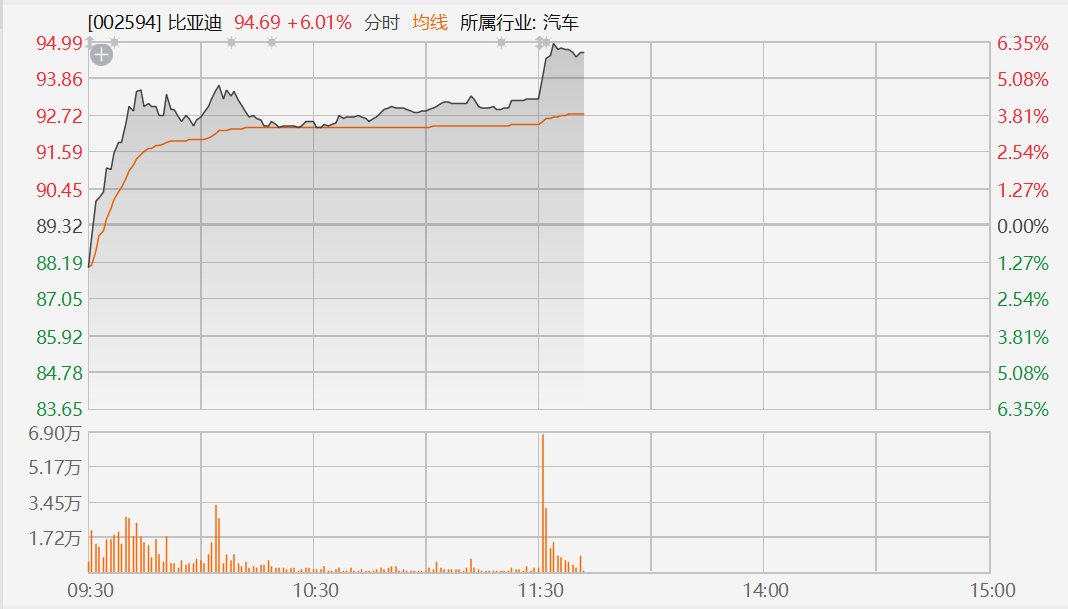
MACD金叉信号形成,这些股涨势不错! 格隆汇3月2日|比亚迪AH股午后齐拉升,A股一度拉升涨超6%报94.99元,H股一度涨拉升涨4%报98.75港元。消息面上,比亚迪在互动平台表示,公司 即将于2026年3月5日召开颠覆性技术发布会。 ...
比亚迪股价涨5.18%,华泰柏瑞基金旗下1只基金位居十大流通股东,持有4630.4万股浮盈赚取2.14亿元
Xin Lang Cai Jing· 2026-03-02 05:18
Group 1 - BYD's stock price increased by 5.18% to 93.95 CNY per share, with a trading volume of 7.404 billion CNY and a turnover rate of 2.29%, resulting in a total market capitalization of 856.561 billion CNY [1] - BYD was established on February 10, 1995, and listed on June 30, 2011. The company's main business includes secondary rechargeable batteries, mobile phone components and assembly, as well as traditional and new energy vehicles. The revenue composition is 81.48% from automotive and related products, 18.52% from mobile phone components and assembly, and 0.01% from other sources [1] Group 2 - Huatai-PB Fund's Huatai-PB CSI 300 ETF (510300) is among BYD's top ten circulating shareholders, having increased its holdings by 30.2458 million shares to a total of 46.304 million shares, representing 0.65% of circulating shares. The estimated floating profit today is approximately 214 million CNY [2] - The Huatai-PB CSI 300 ETF was established on May 4, 2012, with a current scale of 422.258 billion CNY. Year-to-date return is 1.89%, ranking 4222 out of 5577; the one-year return is 21.87%, ranking 2700 out of 4327; and since inception, the return is 120.28% [2] Group 3 - The fund manager of Huatai-PB CSI 300 ETF is Liu Jun, who has a cumulative tenure of 16 years and 276 days. The total asset scale under management is 550.928 billion CNY, with the best fund return during his tenure being 218.93% and the worst being -45.64% [3] Group 4 - The Huatai-PB Fund's Intelligent Driving (516520) holds 320,200 shares of BYD, accounting for 4.85% of the fund's net value, making it the fourth-largest holding. The estimated floating profit today is approximately 1.4825 million CNY [4] - Intelligent Driving was established on February 9, 2021, with a current scale of 645 million CNY. Year-to-date return is 4.96%, ranking 3221 out of 5577; the one-year return is 10.62%, ranking 3479 out of 4327; and since inception, the return is 34.93% [4] Group 5 - The fund manager of Intelligent Driving is Tan Hongxiang, who has a cumulative tenure of 4 years and 359 days. The total asset scale under management is 57.506 billion CNY, with the best fund return during his tenure being 120.06% and the worst being -37.2% [5]
汽车及汽车零部件行业研究:智驾行业2026年投资策略:从辅助驾驶走向物理AI
SINOLINK SECURITIES· 2026-03-02 05:13
Investment Rating - The report suggests a positive investment outlook for the smart driving industry, particularly focusing on companies that can leverage cost advantages and regulatory benefits in the evolving landscape of intelligent driving technology [5]. Core Insights - The smart driving sector is expected to maintain high growth momentum, driven by the trend of "Smart Driving Equality 2.0," which will see advanced features like urban NOA (Navigation on Autopilot) becoming more accessible to consumers in the 100,000 to 200,000 RMB price range [1][12]. - The L2 level of autonomous driving is entering a strong regulatory phase, which will benefit testing institutions and lead to a significant expansion of the market for compliance testing [2][29]. - The concept of scaling law is identified as a deterministic technological trend, with advancements in end-to-end architectures approaching L4 level capabilities [3][50]. - The Robotaxi business model has shown initial validation, indicating that the industry is on the verge of a significant turning point, particularly with the potential success of Tesla's Robotaxi [4][50]. Summary by Sections Section 1: Smart Driving Equality 2.0 - The trend of smart driving equality is expected to strengthen, with urban NOA features penetrating the 100,000 to 200,000 RMB price segment, supported by robust supply and demand dynamics [1][12]. - The penetration rate of urban NOA hardware configurations is projected to increase from 16% in 2025 to 25% in 2026, with sales expected to reach 5.45 million units, reflecting a year-on-year growth of over 50% [1][12]. Section 2: L2 Regulatory Phase - The L2 level is entering a strong regulatory phase, with the implementation of stringent standards that will benefit testing institutions and expand the market for compliance testing [2][29]. - The L3/L4 autonomous driving regulatory framework is gradually being established, moving from local trials to a national legal framework [2][40]. Section 3: Scaling Law and Technological Trends - The scaling law is recognized as a key technological trend, with the end-to-end architecture reaching preliminary L4 thresholds [3][50]. - The demand for computational power on the vehicle side is expected to grow alongside the increase in model parameters, necessitating companies to develop integrated software and hardware capabilities to remain competitive [3][50]. Section 4: Robotaxi Business Model - The Robotaxi model has been validated through successful regional operations by leading L4 manufacturers, indicating a growing consumer demand for such services [4][50]. - The success of Tesla's Robotaxi is seen as a potential catalyst for the industry, with significant implications for the advancement of high-level autonomous driving technologies [4][50].






最新清华毕业生数据出炉,华为、比亚迪、字节跳动、腾讯等抢走大量人才
Xin Lang Cai Jing· 2026-03-02 05:00
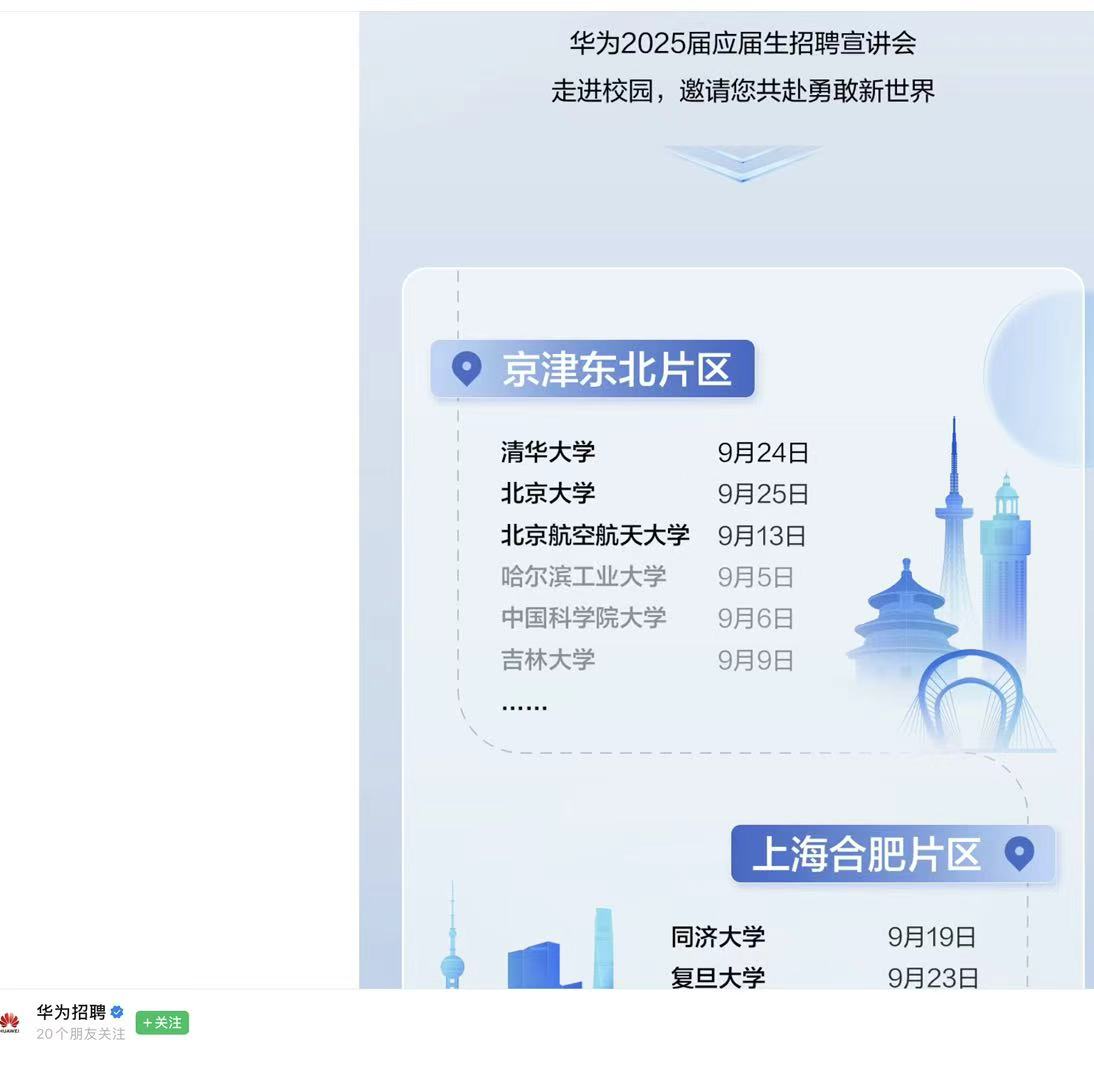
Group 1 - The employment rate for Tsinghua University graduates in key domestic sectors for the class of 2025 exceeds 86%, maintaining over 80% for 16 consecutive years [1] - Major employers for the 2025 graduates include Huawei, BYD, ByteDance, Tencent, State Grid Corporation, Meituan, Alibaba, China National Nuclear Corporation, and China North Industries Group [1] - The employment rate for Tsinghua graduates outside Beijing is 56.3%, exceeding 50% for 11 consecutive years, with a continuous increase in employment in western and northeastern regions for five years [1] Group 2 - Employment in the manufacturing and energy sectors has increased by 19.1% year-on-year [2] - The academic employment rate for doctoral graduates is 42.7%, remaining above 40% for five consecutive years [2] Group 3 - The most common industries for Tsinghua graduates historically include information transmission, software and information technology services, education, and scientific research and technical services [3] - The proportion of graduates pursuing further studies abroad is 8.5%, with 17.3% of undergraduates and 6.6% of master's students seeking overseas education [3] - The average proportion of Tsinghua graduates studying abroad over the past decade is 10.0% [3] Group 4 - Huawei announced plans to recruit thousands of outstanding graduates for over 60 positions, including software and hardware engineering roles, targeting graduates from January 1, 2025, to December 31, 2025 [3] - Huawei held a special presentation for the 2025 graduates at Tsinghua University, highlighting its commitment to technological innovation [3] Group 5 - Alibaba plans to issue over 6,000 job offers for the 2025 fall campus recruitment, covering 15 business groups and companies under its umbrella [5] - In the 2025 recruitment cycle, technical positions are the primary focus, with nearly half of the AI-related positions offered by Alibaba [6] - Meituan's recruitment includes 5,000 positions, with 60% specifically requiring "AI research and development talent" and "digital retail talent" [6]
国产汽车卷海外!比亚迪海外销量已超国内,投行称今年将卖150万辆,股价逆势大涨4%,“一哥”奇瑞海外爆卖12.5万辆,连续10个月破10万
Jin Rong Jie· 2026-03-02 04:33
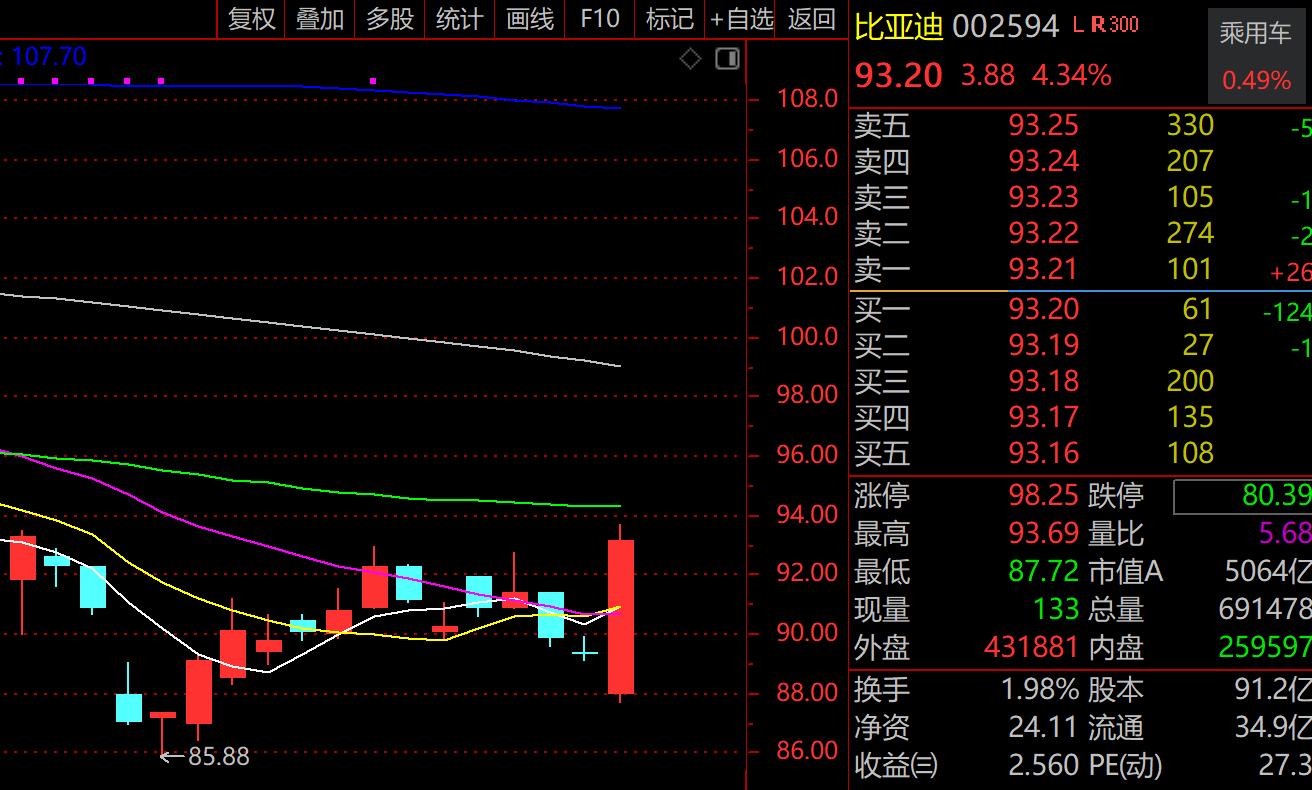
Core Viewpoint - The global market is under pressure due to geopolitical events, but A-shares remain stable, with strong performance from sectors like oil, military, non-ferrous metals, and coal. BYD, a leading automotive company, saw its stock price rise over 4%, indicating active trading dynamics [1]. Group 1: BYD Performance - BYD's stock price increased significantly, reaching a peak of 93.69 yuan, with a notable trading volume, reflecting a robust market interest [1]. - The market speculation around BYD is primarily focused on its global expansion prospects and technological innovations, with expectations that its global delivery volume will reach 6 million units by 2026, contributing 1.5 million units from overseas markets [2]. - BYD's recent sales data shows that in February, it sold 190,200 vehicles, with overseas sales surpassing domestic sales for the first time, totaling 100,200 units [3]. Group 2: Technological Advancements - BYD has made significant progress in solid-state battery technology, achieving a key milestone by passing automotive-grade testing, marking a transition from laboratory concepts to industrial application [3]. - The company is also focusing on advancements in smart driving technologies, which are attracting attention from the capital market [2]. Group 3: Industry Comparisons - Chery, another automotive player, reported strong sales figures, with a total of 160,800 vehicles sold in February, including 124,900 units exported, representing a year-on-year growth of 41.5% [3]. - In the first two months of the year, Chery's cumulative sales reached 361,000 vehicles, with exports accounting for 244,500 units [3].
中小保险公司风险化解观察与思考:寻中国特色范式,筑金融强国根基
ZHONGTAI SECURITIES· 2026-03-02 04:30
Investment Rating - The report does not explicitly state an investment rating for the insurance industry, but it emphasizes the importance of risk resolution for small and medium-sized insurance companies as a key regulatory task for 2026 [4][27]. Core Insights - The risk resolution of small and medium-sized insurance institutions is a significant regulatory focus during the "14th Five-Year Plan" period, with a particular emphasis on market-oriented solutions for existing risks [4][32]. - The report highlights that 19 life insurance companies are currently unable to disclose their solvency reports, with recognized liabilities totaling approximately 4.31 trillion yuan, accounting for about 11.4% of the industry [4][17]. - The report discusses the transition from a "single fund guarantee" model for the insurance guarantee fund to a more diversified market-oriented risk resolution approach [4][32]. Summary by Sections 1. Introduction - The report outlines the challenges faced by small and medium-sized insurance institutions in a persistently low interest rate environment, which has led to operational difficulties and increased risk exposure [10][14]. 2. Observations and Thoughts on Risk Resolution - The current risk resolution approach for small insurance companies involves customized strategies rather than reducing the number of licensed institutions, contrasting with the banking sector [4][35]. - The report compares the current situation to Japan's 1990s insurance crisis, noting that the resolution of risks has not yet broken the "guaranteed return" constraint [4][38]. - It emphasizes the need to find market participants willing and capable of taking over the business of troubled institutions as a priority for risk resolution [4][4]. 3. Key Processes in Risk Resolution for Life Insurance Institutions - The report details various models for risk resolution, including state-led initiatives and the involvement of large insurance funds [6][23]. - It highlights specific cases of life insurance companies undergoing restructuring and the methods employed, such as new entity establishment and asset transfer [6][23]. 4. Key Processes in Risk Resolution for Property Insurance Institutions - The report notes that property insurance companies have a relatively lighter burden due to their asset-liability characteristics, allowing for quicker risk resolution [4][4]. - It outlines diverse methods for property insurance companies, including bankruptcy restructuring and new entity establishment [6][23]. 5. Investment Recommendations - The report suggests that accelerating the risk resolution process for small problem insurance companies is essential for transitioning the market from "quantity expansion" to "quality improvement," fostering a healthier competitive environment [4][4].





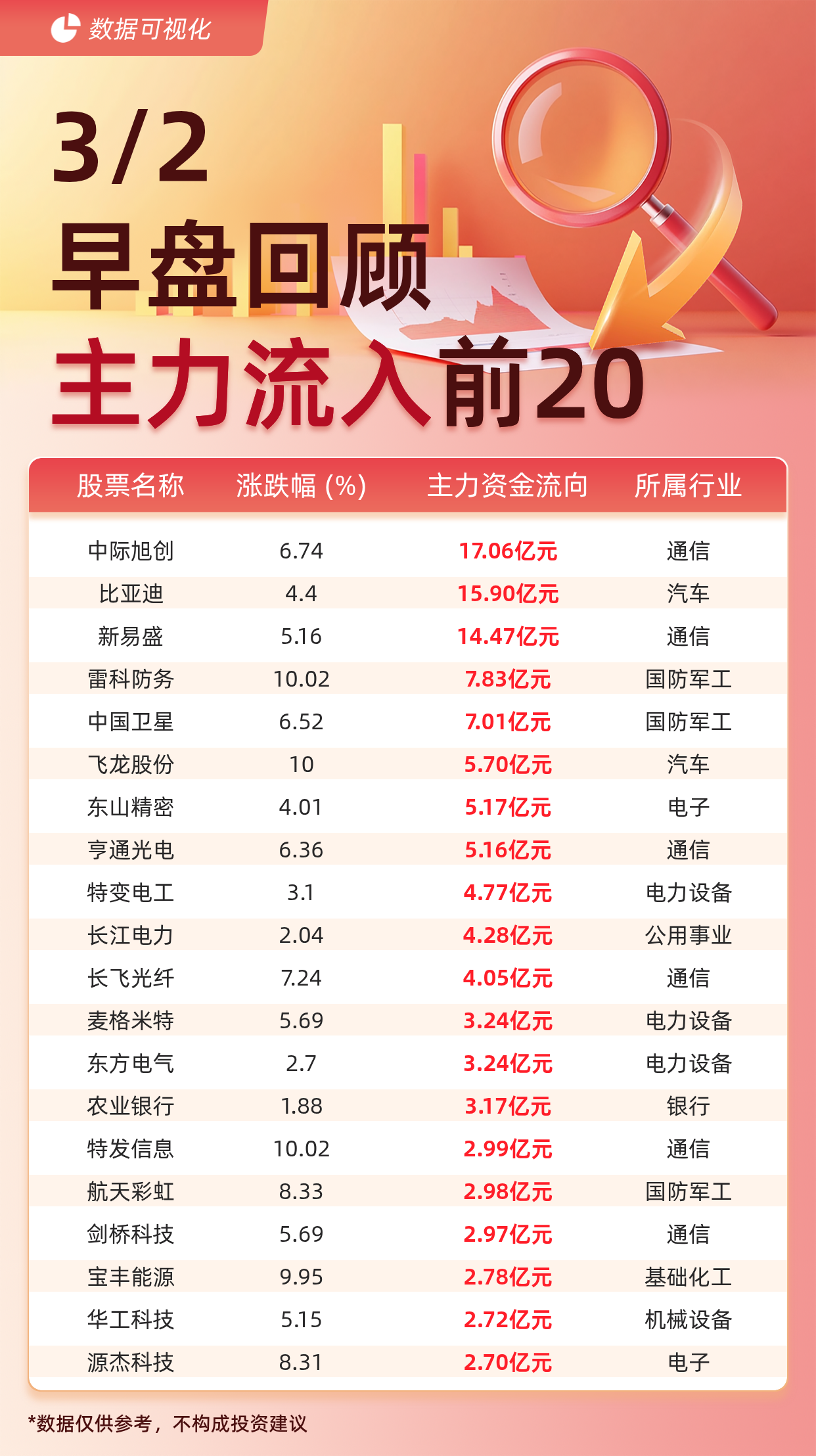
主力资金流入前20:中际旭创流入17.06亿元、比亚迪流入15.90亿元
Jin Rong Jie· 2026-03-02 04:02
Group 1 - The top 20 stocks with significant capital inflow include Zhongji Xuchuang (1.706 billion), BYD (1.590 billion), and Xinyi Sheng (1.447 billion) [1] - Zhongji Xuchuang experienced a price increase of 6.74%, while BYD rose by 4.4% [2] - The defense sector shows strong performance with Lei Ke Defense and China Satellite increasing by 10.02% and 6.52% respectively [2] Group 2 - Other notable stocks include Feilong Co. (10% increase), Dongshan Precision (4.01% increase), and Hengtong Optic-Electric (6.36% increase) [2][3] - The energy sector is represented by TBEA (3.1% increase) and Changjiang Electric Power (2.04% increase) [2] - Agricultural Bank saw a modest increase of 1.88% with a capital inflow of 3.17 billion [3]


春节新政叠加致2月车企销量普降,比亚迪跌破20万辆
3 6 Ke· 2026-03-02 03:55
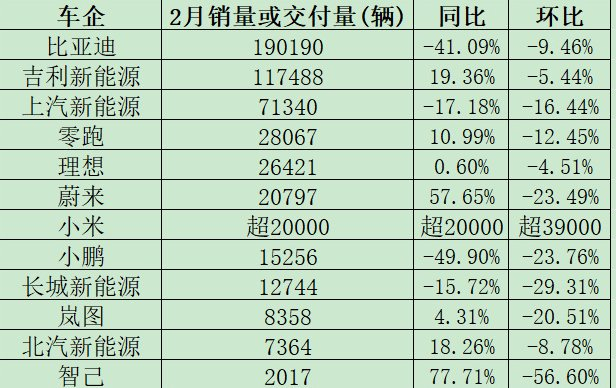
Core Insights - The overall performance of multiple car manufacturers in February was weak, with significant declines in sales figures compared to the previous year [1] - The decline in sales is attributed to a combination of factors including the long Spring Festival holiday, reduced effective sales days, pre-holiday inventory clearance, and consumer hesitation regarding upcoming promotions [1] Group 1: Sales Performance - BYD reported sales of 190,190 units in February, a year-on-year decrease of 41.09%, marking the first time in recent years that monthly sales fell below 200,000 units [2] - SAIC's sales also saw a year-on-year decline of 8.64% [1] - New energy vehicle sales from Geely increased by 19.36% year-on-year, while SAIC's new energy sales dropped by 17.18% [2] Group 2: New Energy Vehicle Trends - The sales threshold for leading new energy vehicle manufacturers has dropped to 20,000 units, with Leap Motor regaining the top spot among new forces with 28,067 units sold [1] - Zeekr achieved a sales increase of 70% year-on-year, reaching 23,900 units [1] - The industry is actively launching new products and enhancing charging and battery swap networks to alleviate consumer concerns about energy replenishment [1]
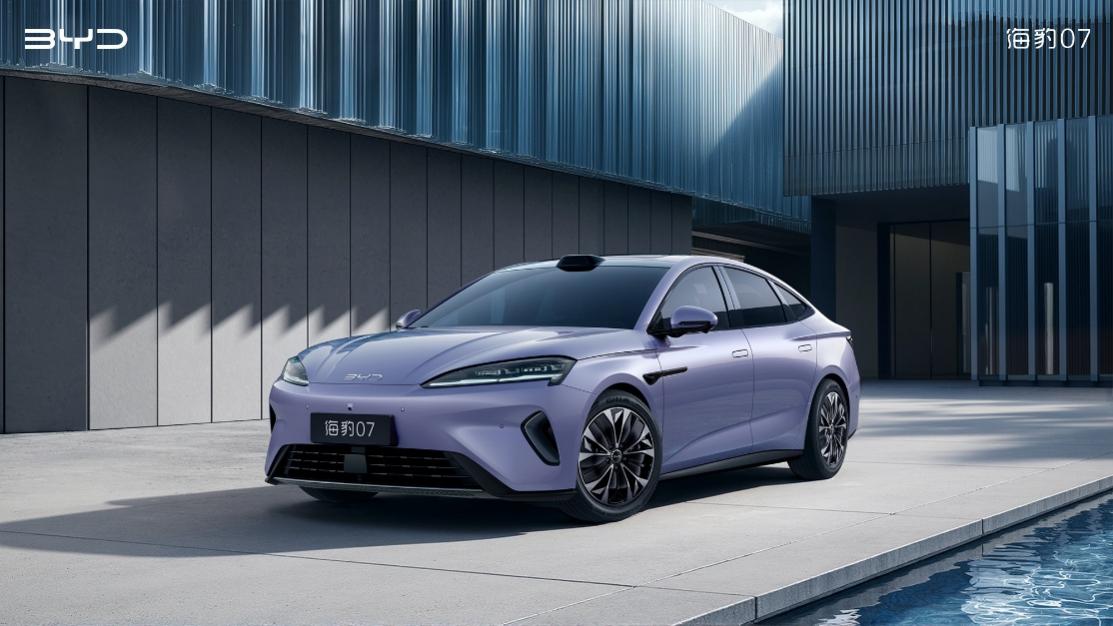
比亚迪海豹07 EV图片发布 纯电续航705km
Zhong Guo Zhi Liang Xin Wen Wang· 2026-03-02 03:36
Core Viewpoint - BYD has officially released images of the Seal 07 EV, a mid-sized pure electric sedan, which has already completed the Ministry of Industry and Information Technology's declaration process [1] Group 1: Design and Features - The new model continues the family design language of the existing Seal 07 series, incorporating exclusive details for electric vehicles [1] - The front features a closed grille and sharp, elongated headlights, with a smooth and tech-savvy design [1] - The roof is equipped with lidar, and the vehicle will include an advanced intelligent driving assistance system capable of highway navigation and urban driving assistance [1] - The rear design is simple yet elegant, featuring a horizontal light strip and chrome accents that enhance visual depth, along with a black diffuser that adds a sporty touch [1] - The vehicle dimensions are 4995mm in length, 1910mm in width (10mm wider than the current Seal 07 DM-i), and 1495mm in height, with a wheelbase of 2900mm [1] Group 2: Powertrain and Performance - The driving motor has a maximum power output of 240kW and a top speed of 200km/h [2] - It is equipped with a 69.07kWh lithium iron phosphate blade battery, providing a CLTC pure electric range of 705km [2] - The battery supports 800V high-voltage fast charging, which significantly enhances charging efficiency [2]