
BYD(002594)

Search documents
风停帆转:车市告别“顺风时代”,打响技术与出海“体系战”
2 1 Shi Ji Jing Ji Bao Dao· 2025-12-25 08:24
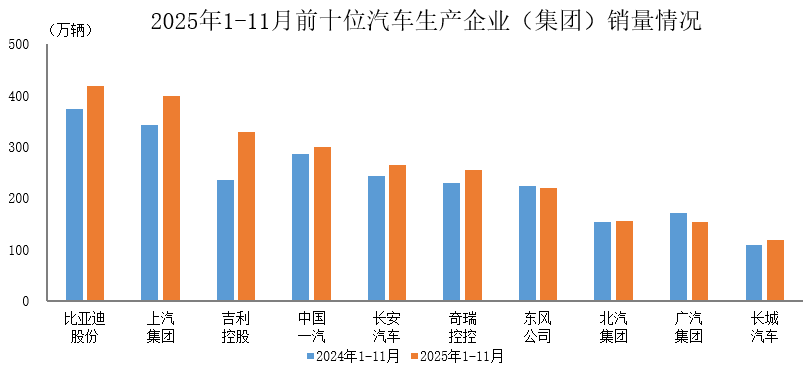
Core Insights - The Chinese automotive market is at a historic crossroads, transitioning from a growth phase to a competitive landscape characterized by technology, ecology, and globalization [1] - The penetration rate of new energy vehicles (NEVs) has reached 62.3%, marking a significant shift in market dominance [3] - The competition has intensified, moving from volume-driven growth to a focus on technology iteration, ecological construction, and organizational efficiency [5] Market Performance - In November 2025, retail sales of passenger vehicles in China were 2.225 million units, a year-on-year decline of 8.1% and a month-on-month decline of 1.1% [2] - Retail sales of fuel vehicles fell by 22% year-on-year, while pure electric models grew by 9.2%, pushing the NEV retail penetration rate to 59.3% [3] Competitive Landscape - BYD's domestic sales in November 2025 were 348,300 units, down 26.81% year-on-year, indicating increased competitive pressure [5] - Geely's NEV sales exceeded 1.5 million units in the first 11 months of 2025, achieving a penetration rate of 60.5% [6] - Chery's NEV sales reached 116,800 units in November, a year-on-year increase of 50.1%, marking a historical high [6] Export Dynamics - China's automotive exports surpassed 700,000 units in November 2025, with NEV exports doubling year-on-year [9] - BYD's overseas sales in November were 132,000 units, a 297% increase, with a target of over 1.6 million overseas sales in 2026 [10] - Chery's exports in November were 136,700 units, a year-on-year increase of 30.3%, indicating strong international demand [11] Strategic Shifts - The automotive industry is transitioning from a trade-oriented export model to a more integrated approach involving localized production and ecosystem collaboration [9] - Companies like NIO and Leap Motor are adopting unique strategies for international expansion, focusing on user-centric models and cost control [12][9] Policy Implications - The adjustment of the new energy vehicle purchase tax in 2026 will require companies to enhance cost control and supply chain optimization [14] - The new regulatory guidelines aim to address excessive competition and promote a shift towards high-quality development in the industry [14] Future Outlook - The market is expected to see a modest growth of around 3% in 2026, with NEV penetration continuing to rise but at a slower pace [15] - Companies are focusing on product iteration, technological implementation, and cost optimization to prepare for intensified competition [16][17]


3月19-20日常州!2026锂电关键材料及应用市场高峰论坛
鑫椤锂电· 2025-12-25 07:51
Core Viewpoint - The lithium battery industry is poised for a significant growth cycle in 2026, characterized by strong demand recovery, accelerated global expansion, and disruptive technological advancements, leading to a "spiral rise" in both volume and price [3]. Group 1: Market Predictions - By 2025, global lithium battery production is expected to reach 2250 GWh, with a growth rate of 30% in 2026. The energy storage sector is projected to grow even faster at 48.3%, driven by both domestic and international demand [5]. - There is a notable supply gap in battery cells and various materials, necessitating a focus on ensuring a stable and efficient supply chain to capitalize on this growth opportunity [5]. Group 2: Conference Details - The 2026 Lithium Key Materials and Applications Market Summit will be held on March 19-20, 2026, in Changzhou, Jiangsu, organized by Xinluo Information [4]. - The summit will focus on three core topics: 1. In-depth discussions on cutting-edge technologies and market supply-demand dynamics [5]. 2. Announcement and award ceremony for the "Top 10 Lithium Material Brands of 2025," evaluated based on shipment volume, market share, and customer reputation [6]. 3. B2B procurement matching to connect top battery manufacturers and material suppliers, enhancing resource matching and reducing procurement costs [7]. Group 3: Conference Agenda - The agenda includes various topics such as the analysis of lithium carbonate fundamentals and supply-demand outlook, advancements in solid-state battery key electrolyte materials, and developments in high-performance electrolytes and composite materials [9][10].



行走拉美手记|中巴合作实现绿色梦想——走进比亚迪巴西卡马萨里大型生产基地综合体
Xin Hua She· 2025-12-25 07:30
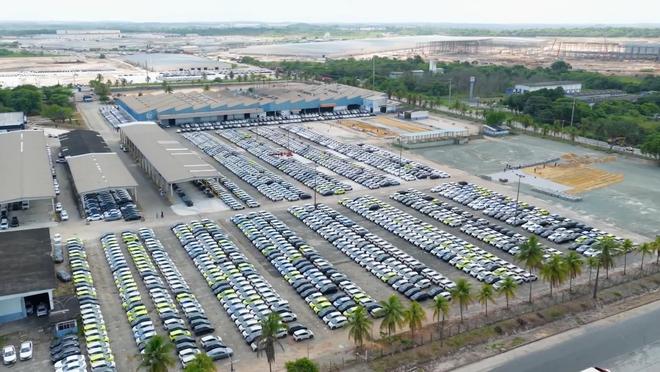
0:00 从巴西萨尔瓦多国际机场出发,开车往卡马萨里市方向行驶,很快就来到比亚迪大道。沿着这条大道直 走,就到了比亚迪的大型生产基地综合体。 目前综合体内一期工程即总装厂已经完成,首车在今年7月下线;10月,比亚迪第1400万辆新能源汽车 也在这里下线。 记者:周永穗、赵焱 报道员:保罗·洛佩斯 新华社音视频部制作 ...
环环相call:为买中国巴士“恼火”,德国财长此举不明智
Huan Qiu Shi Bao· 2025-12-25 06:48
Core Viewpoint - The recent order of over 3,300 buses by Deutsche Bahn, including approximately 200 electric intercity buses from Chinese company BYD, has sparked significant discussion in Germany, particularly regarding the implications for local industry and patriotism in procurement practices [1] Group 1: Industry Reactions - German Vice Chancellor and Finance Minister Christian Lindner expressed frustration over the order, advocating for a preference for domestic or European manufacturers [1] - The concept of "healthy domestic industry patriotism" was highlighted, suggesting that procurement should focus on long-term competitiveness rather than short-term market share [1] Group 2: Manufacturing and Procurement Insights - BYD's order of 200 buses is notable, as these vehicles are produced in Hungary, categorizing them as "European-made" [1] - The scrutiny of this procurement process raises questions about the political implications of purchasing foreign products, particularly in the context of German manufacturing and its historical reliance on the Chinese market [1] Group 3: Broader Implications for the Automotive Industry - The challenges faced by the German automotive industry are attributed to technological paradigm shifts rather than competition from foreign manufacturers [1] - A focus on preventing "Chinese cars" and excluding Chinese investments may hinder necessary self-reform and innovation within the German automotive sector [1]
德铁买中国大巴德国财长这么说,中企如何“迎难而上”
Di Yi Cai Jing· 2025-12-25 06:41
Group 1 - The core viewpoint of the article highlights the growing interest of Chinese companies in investing in Germany, particularly in sectors like electric vehicles and digitalization, as evidenced by the recent agreement between Deutsche Bahn and BYD for 200 electric buses [1][2] - Deutsche Bahn's decision to partner with BYD is driven by cost-effectiveness and the aim to support Germany's green transition and carbon reduction goals, coinciding with the EU's relaxation of the "fuel vehicle ban" [1][2] - The German economy has shown signs of stagnation, with zero growth in Q3 compared to Q2, and a forecasted growth of only 0.1% for 2025, prompting discussions on economic restructuring [2][3] Group 2 - Foreign investment in Germany is primarily motivated by the need for supply chain integration and access to the EU market rather than short-term high returns, with 1,724 foreign investment projects recorded in 2024, a slight decrease of 2% year-on-year [2][3] - The German government is actively seeking to attract more foreign investment through tax incentives and structural reforms, as outlined in the "Growth Opportunities Act" [2][3] - Recent changes in investment patterns show a shift from mergers and acquisitions to greenfield investments by Chinese companies, with a notable example being CATL's factory investment in Thuringia [3][4] Group 3 - Chinese companies are increasingly focusing on rational investment strategies, moving away from opportunistic investments, with key areas of interest including digitalization (51%), energy (48%), and electric vehicles (35%) [4][5] - Challenges for Chinese enterprises in Germany include site selection for factories or stores, accessing local government subsidies, and finding suitable labor [5][6] - The tightening of foreign investment regulations in Germany has created uncertainties for Chinese companies, with increased scrutiny on foreign acquisitions and data protection [6][7] Group 4 - German companies emphasize the importance of the Chinese market, with a notable trend of relocating operations to China, as seen with major firms like Volkswagen and BMW [7] - The dependency of the German economy on China remains significant, with a lack of clear structural de-risking trends observed [7]
中国电车攻占泰国70%市场
2 1 Shi Ji Jing Ji Bao Dao· 2025-12-25 06:21
Core Insights - Thailand is the 10th largest automotive producer globally and the largest in Southeast Asia, known as the "Detroit of the East" [2] - The Thai government is initiating a transition to electric vehicles (EVs), prompting Chinese automakers to aggressively enter the market [3][6] - The penetration rate of new energy vehicles in Thailand has reached 20%, with significant growth in EV sales compared to other regions [6][10] Industry Overview - Thailand's automotive market has a long-standing dominance of Japanese brands, which held a market share of around 90% at their peak and is expected to remain at about 70% in 2024 [2] - Chinese automakers have increased their market share from 5% to approximately 20% in recent years, with over 70% market share in the EV segment [7][10] - The Thai government has implemented subsidies for EVs, significantly boosting sales, with a reported 7.6 times increase in new EV registrations in the first nine months of 2023 compared to the previous year [11] Market Dynamics - The Thai EV market is characterized by a lack of local automotive brands, allowing for a more open market environment [10] - The government has introduced policies requiring local production to benefit from subsidies, which has led to increased investments from Chinese companies like BYD and GAC [12][11] - The competition in the Thai automotive market is intensifying, with new entrants increasing the pressure on existing players [18] Future Opportunities - There is a significant opportunity for Chinese brands in the Thai market, particularly in the segments of pickup trucks and commercial vehicles, where current penetration is low [20] - The Thai government is negotiating free trade agreements with the EU, which could provide additional market access and benefits for manufacturers operating in Thailand [13] - The shift towards hybrid vehicles (PHEV and REEV) presents a potential growth area, as these models may capture market share from traditional HEVs [19]

中国电车攻占泰国70%市场
21世纪经济报道· 2025-12-25 06:14
记者丨赖镇桃 编辑丨和佳 李艳霞 黎奥从未想过,一次他觉得很寻常的对话,会让一位泰国员工怕得想离职。"当时和一位员工 说话声音大了点,对方就觉得我们是在凶他,第二天不敢来上班了。"作为一家中国车企的海 外业务人士,这是他踏上"微笑之国"一年多后,才逐渐参透的文化差异。 在泰国,游客们常会听闻一种"三不叫"的说法:车不叫——即便曼谷的交通堵得水泄不通, 也少见烦躁的喇叭声;狗不叫——街头的流浪犬慵懒地趴着,它们知道静候常能换来一口施 舍;人不叫——细声慢语是这里表达尊敬的默认规则。 然而,这片浸润在独特"宁静"之中的土地,在全球汽车工业的版图上,却从不沉寂。 泰国是全球第十大、东南亚第一大汽车生产国,享有"东方底特律"的盛名。 同时,它又是牢 不可破的"日系车后花园"。自上世纪60年代踏足于此, 日系车 凭借先发优势与成熟的本地产 业链, 巅峰时期市占率常年高达90%,2024年其占有率依然稳固在70%左右。 当泰国政府拉开新能源转型的大幕,蓄力已久的中国车企开始了密集抢滩。 电动化狂奔 在泰国Citywalk时,只要走出曼谷的核心区,尤其是来到曼谷以外的城镇,常会看到道路两旁 散落着许多两三层高的独栋小房。 ...
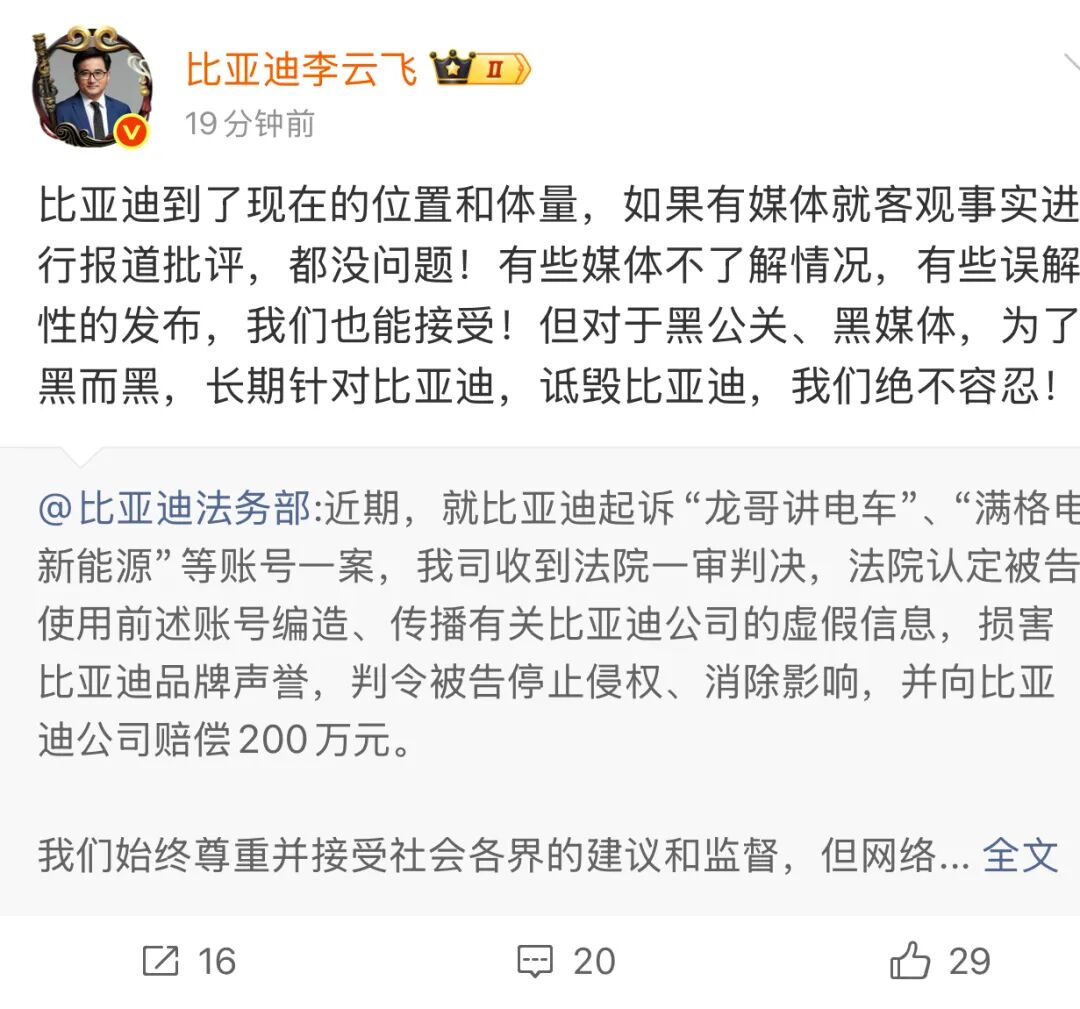
比亚迪诉“龙哥讲电车”等账号案一审获赔200万元,比亚迪李云飞:为了黑而黑,诋毁比亚迪,我们绝不容忍
Hang Zhou Ri Bao· 2025-12-25 04:33
Core Viewpoint - BYD has won a court ruling against accounts spreading false information, which damages its brand reputation, and has been awarded compensation of 2 million yuan [1][2] Group 1: Legal Action and Court Ruling - The court found that the defendants used specific accounts to fabricate and disseminate false information about BYD, harming its brand reputation [1] - The court ordered the defendants to cease infringement, eliminate the negative impact, and compensate BYD with 2 million yuan [1] Group 2: Company Stance on Media and Public Relations - BYD's General Manager of Brand and Public Relations, Li Yunfei, stated that the company is open to objective criticism based on factual reporting but will not tolerate black public relations or media that aim to defame BYD [2] - The company emphasizes that it respects suggestions and supervision from society but will continue to use legal means to protect its legitimate rights against any form of insult or defamation [1][2]
比亚迪车辆避撞专利公布
2 1 Shi Ji Jing Ji Bao Dao· 2025-12-25 04:00
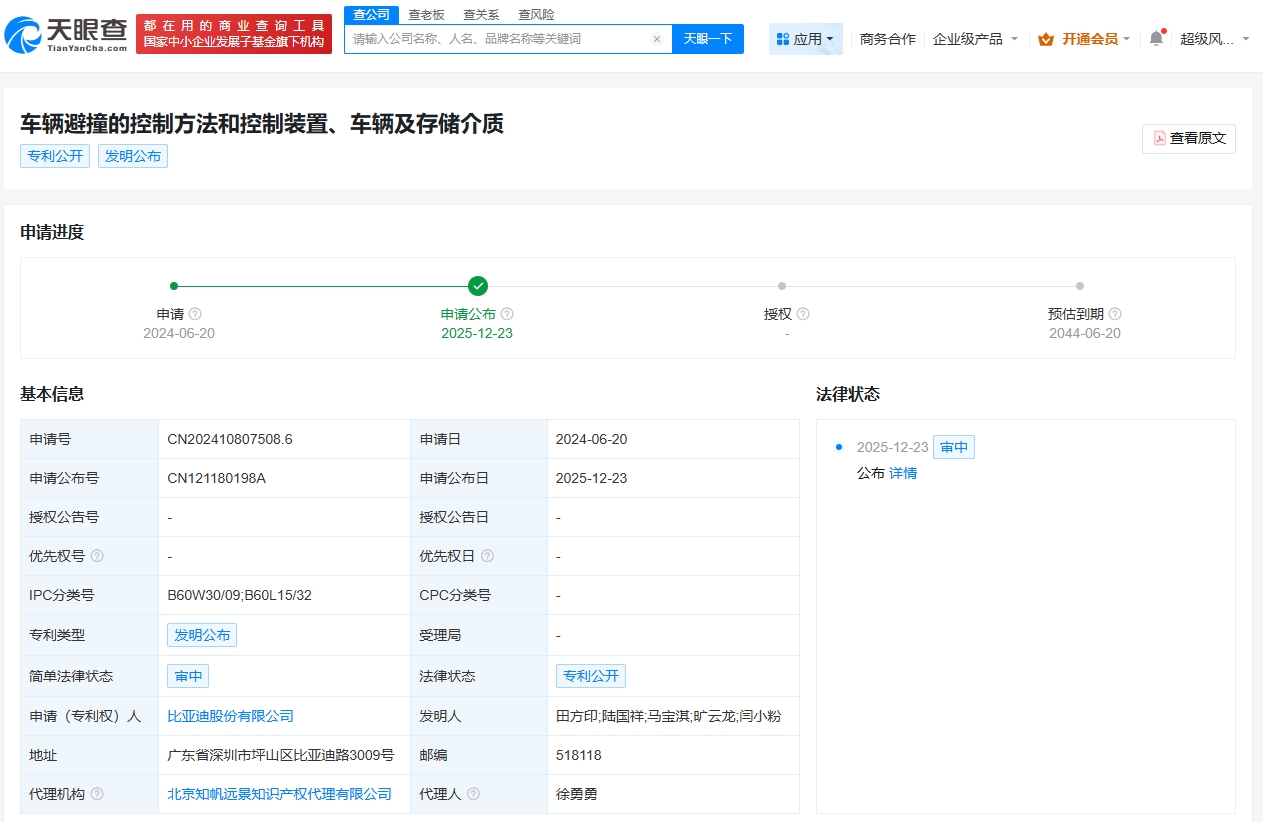
南方财经12月25日电,天眼查App显示,近日,比亚迪股份有限公司申请的"车辆避撞的控制方法和控制装置、车辆及存储介质"专利公布。摘要显示,所述 车辆避撞的控制方法用于车辆,所述车辆避撞的控制方法包括在根据所述车辆的感知信息确定所述车辆符合避撞条件的情况下,通过所述车辆的电机控制所 述车辆的车轮进行避撞。上述控制方法中,在车辆符合避撞条件的情况下,可以控制每个电机运行以对多个车轮进行扭矩分配使车辆进行避撞操作,从而可 以避免车辆来控制转动方向盘进行避撞操作,避免造成方向盘抢手的问题,在一定程度上提高车辆避撞的成功率。 基本信息 | 申请号 | CN202410807508.6 | 申请日 | 2024-06-20 | | ● 2025-12-23 审中 | | --- | --- | --- | --- | --- | --- | | 申请公布号 | CN121180198A | 申请公布日 | 2025-12-23 | | 公布 详情 | | 授权公告号 | | 授权公告日 | | | | | 优先权号 ② | | 优先权日 ② | | | | | IPC分类号 | B60W30/09;B60L15/32 ...
港股节假日休市,港股通科技ETF(513860)二级市场照常交易,机构:港股科技板块明年有望成为最强主线
2 1 Shi Ji Jing Ji Bao Dao· 2025-12-25 03:57
Group 1 - The Hong Kong Stock Exchange will be closed from December 25 to December 26 due to the holiday, and the Hong Kong Stock Connect service will not be available during this period [1] - The secondary market trading of ETFs will continue as usual during the closure of the Hong Kong market, allowing related Hong Kong stock ETFs listed on A-shares to be traded normally [1] - Hai Fu Tong Fund Management Company announced the suspension of subscription and redemption services for the Hai Fu Tong CSI Hong Kong Stock Connect Technology ETF from December 24 to December 26, with normal services resuming on December 29 [1] Group 2 - The Hong Kong Stock Connect Technology ETF (513860) closely tracks the CSI Hong Kong Stock Connect Technology Index, which selects 50 large-cap, high R&D investment, and fast-growing revenue technology leading companies [2] - The top ten weighted stocks in the ETF include Alibaba-W, Tencent Holdings, SMIC, Xiaomi Group-W, and BYD Company, indicating a focus on major technology players [2] - According to a report, 2025 is expected to be a year of full recovery for the Hong Kong stock market, driven by technological breakthroughs and a resurgence in capital market activities [2] - Everbright Securities predicts that in 2026, the Hong Kong stock market will experience a "Davis Double Play" driven by valuation recovery, profit growth, and a return to main themes, with the technology sector being a key driver of market rebound [2]

