Lepu Medical(300003)

Search documents
财说|乐普医疗“童颜针”获批背后,应收账款逼近行业警戒值
Xin Lang Cai Jing· 2025-06-09 23:06
Core Viewpoint - Lepu Medical's self-developed polylactic acid facial filler has received approval from the National Medical Products Administration (NMPA), marking its entry into the regenerative aesthetic market, despite ongoing performance declines [1][2][4] Product Approval and Market Position - The approved product is the seventh domestic and fifth local "youthful needle" filler, indicating a significant step into the aesthetic medicine sector [1] - The product is classified as a Class III medical device, which has a high approval threshold, positioning the company in the second tier among domestic products [2] - The regenerative aesthetic filler market in China is projected to reach 11.52 billion yuan by 2027, with a compound annual growth rate of 31.2% [2] Product Pipeline and Strategy - Lepu Medical's aesthetic pipeline includes botulinum toxin type A and various hyaluronic acid formulations, creating a comprehensive product chain covering "regenerative filling - wrinkle repair - facial shaping" [1][2] - The company is expanding its aesthetic product line, with multiple hyaluronic acid products in the registration phase and a focus on maintaining core technology autonomy to control costs and build brand barriers [4][5] Financial Performance and Challenges - Lepu Medical's financial performance has been under pressure, with a 23.52% decline in revenue to 6.103 billion yuan in 2024 and an 80.37% drop in net profit to 247 million yuan, marking the worst performance since its listing in 2009 [6] - The core business segments, including medical devices and pharmaceuticals, have faced significant revenue declines, with the medical device segment down 9.47% and pharmaceuticals down 42.25% [6] Management Changes and Strategic Shift - The company has undergone management changes, with a new general manager implementing marketing reforms and workforce reductions to enhance operational efficiency [7] - The shift towards aesthetic medicine is seen as a strategic response to pressures from traditional pharmaceutical operations, with the potential for financial recovery hinging on successful product commercialization and market adaptation [7]


医美材料大战正式打响,谁能胜出?
3 6 Ke· 2025-06-09 01:04
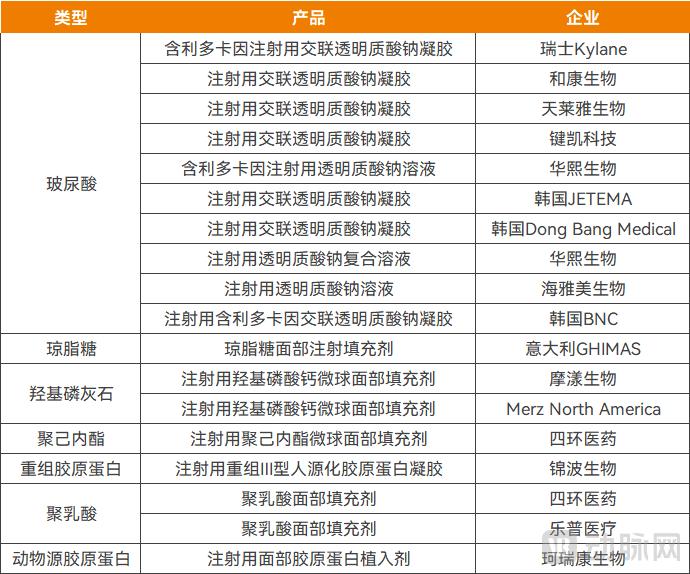
Core Insights - The medical beauty materials market is entering a competitive phase in 2025, with significant approvals for new materials such as agarose and hydroxyapatite, indicating a growing diversity of products [1][10] - The approval of various injection fillers, including recombinant collagen and animal-derived collagen, highlights the rapid development and commercialization of medical beauty materials [1][4] - Investment in medical beauty materials companies has surged, with 12 companies securing funding in the first five months of 2025, reflecting strong interest from investors [4][5] Regulatory Approvals - Hydroxyapatite received two approvals in 2025, with the first compliant product for medical beauty injections approved in February [10] - Agarose also saw its first approval in January 2025, marking a significant milestone for this material in the domestic market [10] - Over 110 products for medical beauty injections have been approved in China, primarily classified as Class III medical devices [2][4] Market Dynamics - The competition for the first regulatory approval (Class III certificate) is intense, as it provides a significant market advantage [10][12] - Companies are increasingly focusing on developing new materials and applications, with many aiming to secure the first approval in various new material categories [11][12] - The market is characterized by a mix of established companies and startups, all vying for a share of the growing medical beauty sector [15][16] Investment Trends - Notable investments in medical beauty materials companies include significant funding rounds for firms like 聚源生物 and 未名拾光, indicating robust investor confidence [5][6] - The trend of startups receiving funding is expected to continue, as the demand for innovative medical beauty solutions grows [4][5] Product Development - Companies are exploring the combination of different materials to enhance product competitiveness, with a focus on safety and efficacy [14][15] - New materials such as PDRN, silk protein, and chitosan are being investigated for their applications in medical beauty and functional skincare [16][17] - The development of multi-indication products is becoming a strategic focus, with companies aiming to address various aesthetic needs [13][15] Future Outlook - The medical beauty market is anticipated to expand, driven by the introduction of new materials and innovative applications [16][17] - The interplay between medical beauty and skincare sectors is expected to create a positive feedback loop, enhancing market growth [16][17] - Ultimately, the success of new materials will depend on their clinical validation and real-world application, as safety and effectiveness remain paramount [16][17]


去年净利润创16年来最差成绩,乐普医疗布局医美能否破局
Xin Jing Bao· 2025-06-06 11:58
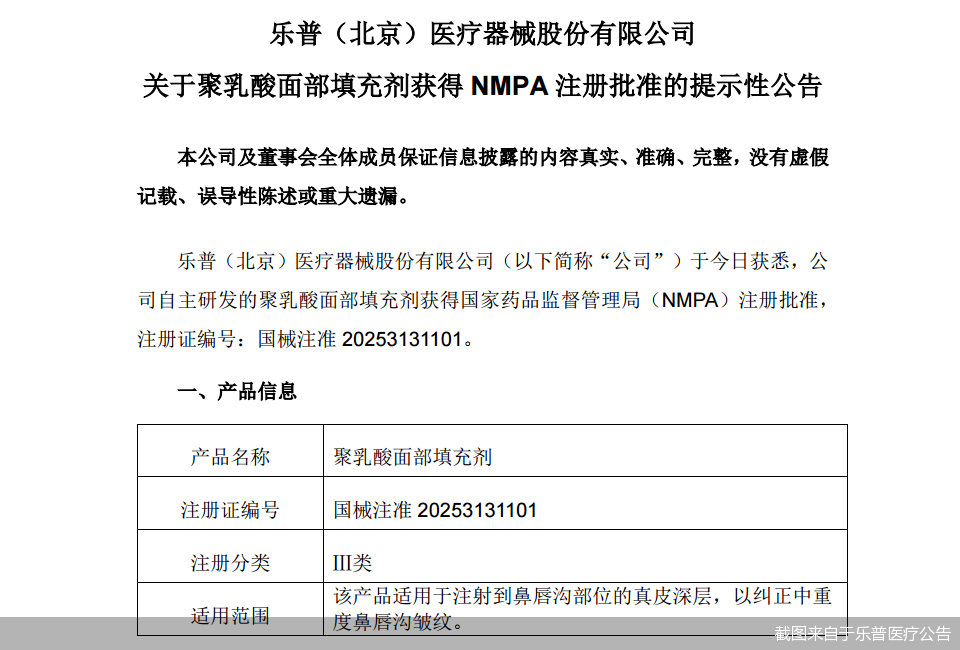
Core Viewpoint - Lepu Medical has received approval from the National Medical Products Administration for its self-developed polylactic acid facial filler, marking its entry into the dermatology field and aiming to boost its consumer healthcare business [1] Group 1: Company Developments - Lepu Medical has shifted focus from generic drugs to innovative cardiovascular drugs and dermatology injection products due to declining performance [1] - The company reported a significant decline in revenue and net profit, with 2023 revenue at 7.98 billion yuan, down 24.78%, and net profit at 1.26 billion yuan, down 42.91% [5] - In 2024, Lepu Medical's revenue further decreased to 6.103 billion yuan, a 23.52% decline, and net profit dropped to 247 million yuan, down 80.37% [5] - The company has also expanded its product line in dermatology with several injection products, including sodium hyaluronate solutions [4] Group 2: Market Competition - The global market for facial fillers, known as "童颜针," is projected to reach approximately $1.488 billion in 2024, growing to $1.5445 billion in 2025, with a compound annual growth rate of 3.8% from 2025 to 2033 [2] - The domestic market for "童颜针" is expected to exceed 3 billion yuan by 2024, up from about 100 million yuan in 2021 [2] - Competition in the "童颜针" market is intensifying, with six other products already approved prior to Lepu Medical's entry, including both domestic and imported options [2] Group 3: Financial Performance and Future Outlook - Lepu Medical's first quarter of 2025 continued the trend of declining performance, with revenue of 1.736 billion yuan, down 9.67%, and net profit of 379 million yuan, down 21.44% [6] - The company anticipates future profit growth primarily from structural heart disease, dermatology, and neuro-regulation sectors, while traditional medical device products are expected to maintain around 10% revenue growth [6] - The impact of the newly approved dermatology product on Lepu Medical's future performance remains uncertain [3]
心血管器械龙头乐普医疗入局“童颜针”背后:创上市以来最差业绩,研发费用连降
Bei Jing Shang Bao· 2025-06-05 14:23
Core Viewpoint - Lepu Medical, a leader in cardiovascular devices, has officially entered the dermatology field with the approval of its self-developed polylactic acid facial filler, "童颜针" (Tongyan Needle), marking a significant milestone for the company amid declining performance in recent years [1][5][6]. Company Developments - The "童颜针" is a dermal filler designed to correct moderate to severe nasolabial folds, utilizing polylactic acid (PLLA) which is biodegradable and safe for human use [5][6]. - The product's approval is seen as a key event for Lepu Medical, enhancing its consumer healthcare business and providing new options for both doctors and consumers [5][6]. - The company has been actively expanding into the ophthalmology and dermatology sectors, with several products in various stages of development, including hyaluronic acid gels [5][7]. Financial Performance - Lepu Medical's financial performance has deteriorated significantly, with a projected net profit decline of over 80% in 2024, marking the worst performance since its listing in 2009 [1][7]. - In 2023, the company reported a revenue of approximately 79.8 billion yuan, a year-on-year decrease of 24.78%, and a net profit of about 12.58 billion yuan, down 42.91% [7]. - For 2024, the expected revenue is around 61.03 billion yuan, a decline of 23.52%, with a net profit of approximately 2.47 billion yuan [7][8]. R&D and Market Position - Despite a decline in R&D expenses and personnel, the proportion of R&D investment relative to revenue has increased, indicating a strategic focus on innovation [9][10]. - The number of R&D personnel decreased by over 20% from 2023 to 2024, reflecting potential adjustments in the company's strategic direction [9][10]. - The competitive landscape for the "童颜针" market is intensifying, with seven similar products already approved in China, suggesting a need for Lepu Medical to leverage its technological advantages to stand out [6][7].
主力动向:6月5日特大单净流入51.70亿元
Zheng Quan Shi Bao Wang· 2025-06-05 09:05
Market Overview - The net inflow of large orders in the two markets reached 5.17 billion yuan, with 27 stocks seeing net inflows exceeding 200 million yuan, led by Xue Ren Co. with a net inflow of 681 million yuan [1] - The Shanghai Composite Index closed up 0.23% today, with a total of 2,026 stocks experiencing net inflows and 2,591 stocks seeing net outflows [1] Industry Analysis - Among the 10 industries with net inflows, the electronics sector led with a net inflow of 3.27 billion yuan, followed by the communications sector with 2.86 billion yuan [1] - The pharmaceutical and biological industry had the highest net outflow, totaling 3.398 billion yuan, followed by the non-ferrous metals sector with a net outflow of 751 million yuan [1] Individual Stock Performance - Xue Ren Co. had the highest net inflow of 681 million yuan, with a closing price of 13.06 yuan and a price increase of 7.31% [2] - Sanwei Communication ranked second with a net inflow of 561 million yuan and a price increase of 10.01% [2] - Stocks with net inflows exceeding 200 million yuan saw an average increase of 7.15%, outperforming the Shanghai Composite Index [2] Notable Stocks with High Net Inflows - The top stocks with significant net inflows include: - Xue Ren Co. (681 million yuan, 7.31% increase) - Sanwei Communication (561 million yuan, 10.01% increase) - Zhongji Xuchuang (537 million yuan, 5.73% increase) [2][3] Notable Stocks with High Net Outflows - The stocks with the highest net outflows include: - Lepu Medical (260 million yuan, -6.31% decrease) - Zhongke Jin Cai (188 million yuan, 3.79% increase) - Ping An Bank (185 million yuan, -1.44% decrease) [4]



主力资金监控:医药板块净流出超21亿
news flash· 2025-06-05 02:57
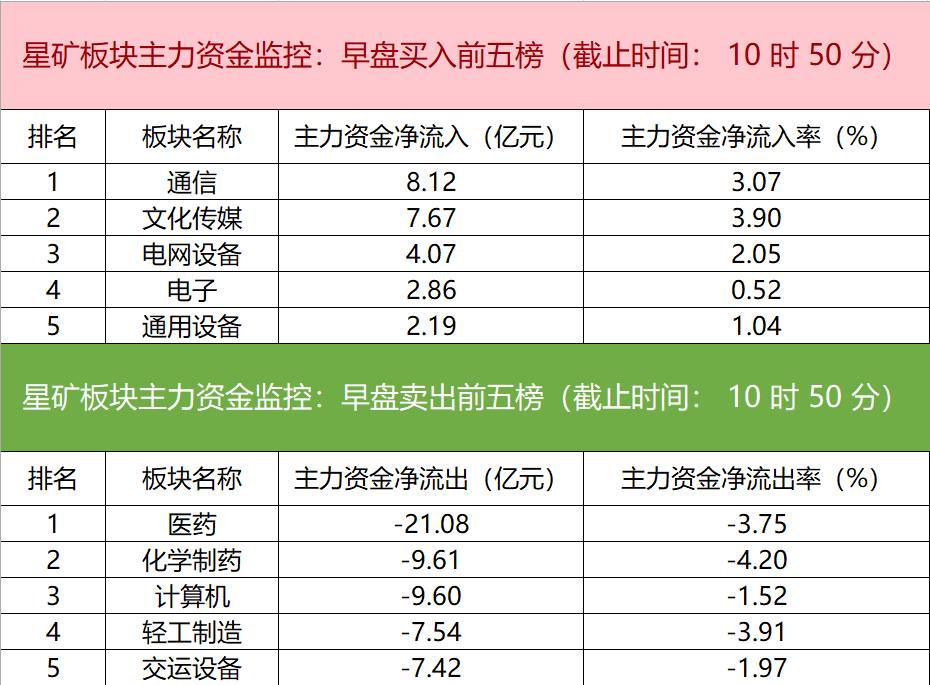
Core Viewpoint - The pharmaceutical sector experienced a significant net outflow of over 2.1 billion yuan, while other sectors like communication and cultural media saw net inflows [1][2]. Group 1: Sector Performance - The communication sector had a net inflow of 8.12 billion yuan, with a net inflow rate of 3.07% [2]. - The cultural media sector recorded a net inflow of 7.67 billion yuan, with a net inflow rate of 3.90% [2]. - The pharmaceutical sector faced the largest net outflow, totaling 21.08 billion yuan, with a net outflow rate of -3.75% [2]. Group 2: Top Stocks by Net Inflow - The top stock by net inflow was Zhongji Xuchuang, with a net inflow of 4.28 billion yuan and a net inflow rate of 14.23% [3]. - Xue Ren Shares followed with a net inflow of 3.34 billion yuan and a net inflow rate of 11.14% [3]. - N Zhongce had a net inflow of 3.12 billion yuan, with a notable net inflow rate of 18.73% [3]. Group 3: Top Stocks by Net Outflow - The stock with the highest net outflow was Zhongke Jincai, with a net outflow of 2.34 billion yuan and a net outflow rate of -10.10% [4]. - Jiu Zhi Tang experienced a net outflow of 1.95 billion yuan, with a net outflow rate of -21.64% [4]. - Shangluo Electronics had a net outflow of 1.93 billion yuan, with a net outflow rate of -28.67% [4].

心血管巨头挥师医美!乐普医疗“童颜针”获批
Xin Lang Zheng Quan· 2025-06-05 01:31
Group 1 - The core viewpoint is that Lepu Medical has officially entered the aesthetic medicine market with the approval of its self-developed polylactic acid facial filler, marking a significant strategic move into consumer healthcare [1][2] - The newly approved product is expected to fill a gap in the dermatology field and is seen as a milestone for the company, with anticipated positive contributions to its performance [2][3] - The company is facing declining growth in its main business, with a reported revenue of 1.736 billion yuan in Q1 2024, down 9.67% year-on-year, and a net profit of 379 million yuan, down 21.44% year-on-year, indicating a need for new growth avenues [3] Group 2 - Lepu Medical's ambitions in the aesthetic field extend beyond the facial filler, as its subsidiary has submitted an application for a botulinum toxin product, targeting a domestic market worth over 6 billion yuan [4] - The aesthetic medicine market is becoming increasingly competitive, with several existing products already in the market, including those from competitors like Aimeike and Sihuan Pharmaceutical [2][5] - The entry of major pharmaceutical companies into the aesthetic market indicates a shift towards a more robust and competitive landscape, where Lepu Medical's experience in medical device development may provide a commercial advantage [5]
主力动向:6月4日特大单净流入44.13亿元
Zheng Quan Shi Bao Wang· 2025-06-04 12:38
Market Overview - The net inflow of large orders in the two markets reached 4.413 billion yuan, with 16 stocks seeing net inflows exceeding 200 million yuan, led by Lepu Medical with a net inflow of 381 million yuan [1][2] - The Shanghai Composite Index closed up 0.42% today, with a total of 2,162 stocks experiencing net inflows and 2,424 stocks seeing net outflows [1] Industry Performance - Among the 20 industries with net inflows, the electronics sector led with a net inflow of 1.963 billion yuan and an index increase of 1.17%, followed by non-bank financials with a net inflow of 1.319 billion yuan and a 0.99% increase [1] - The automotive industry experienced the highest net outflow of 1.336 billion yuan, followed by defense and military with a net outflow of 1.017 billion yuan [1] Individual Stock Performance - Lepu Medical topped the list of net inflows with 381 million yuan, followed by Dongfang Caifu with 339 million yuan [2] - Stocks with net inflows exceeding 200 million yuan saw an average increase of 7.11%, outperforming the Shanghai Composite Index [2] - Notable stocks with significant net outflows include Zhangqu Technology with a net outflow of 427 million yuan, and Qianhong Pharmaceutical and Yunnei Power, both with net outflows of 251 million yuan [2][4] Detailed Stock Data Top Net Inflow Stocks | Code | Name | Closing Price (Yuan) | Change (%) | Net Inflow (Billion Yuan) | Industry | |------|--------------|----------------------|------------|----------------------------|-----------------| | 300003 | Lepu Medical | 14.11 | 19.98 | 0.381 | Medical Biology | | 300059 | Dongfang Caifu | 20.94 | 1.36 | 0.339 | Non-bank Finance | | 002657 | Zhongke Jin Cai | 26.14 | 10.02 | 0.332 | Computer | | 002342 | Juyi Suojun | 6.37 | 10.02 | 0.310 | Machinery | | 688256 | Hanwujing | 607.50 | 1.95 | 0.309 | Electronics | [2] Top Net Outflow Stocks | Code | Name | Closing Price (Yuan) | Change (%) | Net Outflow (Billion Yuan) | Industry | |------|--------------|----------------------|------------|-----------------------------|-----------------| | 300315 | Zhangqu Technology | 5.39 | -6.26 | -0.427 | Media | | 002550 | Qianhong Pharmaceutical | 9.01 | 5.50 | -0.251 | Medical Biology | | 000903 | Yunnei Power | 4.68 | -4.10 | -0.251 | Automotive | [4]



童颜针赛道添新玩家,安全与增长博弈待解
2 1 Shi Ji Jing Ji Bao Dao· 2025-06-04 12:22
Core Viewpoint - The domestic "童颜针" (youthful needle) market is experiencing intensified competition with the recent approval of new products, including 乐普医疗's (Lepu Medical) self-developed polylactic acid facial filler, marking a significant milestone for the company in the dermatology field [1][4]. Company Overview - 乐普医疗, established in 1999, is one of China's earliest companies engaged in cardiovascular interventional device research and development. The company went public on the Shenzhen Stock Exchange in 2009, and its business segments include medical devices, pharmaceuticals, medical services, and health management [2]. - In 2022, 乐普医疗 achieved a peak net profit of 2.203 billion yuan, but faced a sharp decline in 2024, with a projected net profit drop of 80.37% to approximately 247 million yuan, marking the lowest level since its listing [2][3]. Financial Performance - In 2024, all three main business segments of 乐普医疗 experienced revenue declines: medical devices down 9.47% to 3.326 billion yuan, pharmaceuticals down 42.25% to 1.758 billion yuan, and medical services and health management down 19.24% to 1.019 billion yuan [3]. - The company reported a total revenue of 1.736 billion yuan in the first quarter of 2025, a year-on-year decrease of 9.67%, with net profit down 21.44% [3]. Market Dynamics - The approval of 乐普医疗's "童颜针" adds to the growing list of seven approved products in the domestic market, intensifying competition among companies [1]. - The medical beauty industry is undergoing significant changes, with a focus on product safety and compliance, as well as the increasing demand for aesthetic procedures among consumers [5][7]. Future Outlook - 乐普医疗 maintains a cautiously optimistic outlook for 2025, anticipating a recovery in its pharmaceutical segment with a projected 30% year-on-year growth, while also expecting growth in its medical device and health management segments [4]. - The company is accelerating its entry into the consumer medical sector, with the "童颜针" expected to positively impact its business development [4]. Industry Trends - The market for "童颜针" in China is projected to grow, with the industry size nearing 600 million yuan in 2023. The regulatory environment is improving, leading to an expected increase in the market share of compliant products [7]. - The rise of illegal medical beauty projects poses challenges, but increased regulatory scrutiny is expected to enhance the supply of compliant products, with a projected 75% replacement rate for compliant "童颜针" by 2025 [7].
心脏支架龙头跨界拿下“童颜针”第7证,乐普医疗的“下坡路”快走完了吗?
Tai Mei Ti A P P· 2025-06-04 11:38
Core Viewpoint - The entry of Lepu Medical into the aesthetic medicine market with its self-developed polylactic acid facial filler, known as "童颜针" (youthful needle), marks a significant transformation for the company amidst a challenging revenue environment [2][11]. Company Overview - Lepu Medical, recognized as the "first stock in cardiovascular" in A-shares, has faced declining revenues since 2022, prompting a strategic shift towards the aesthetic medicine sector through layoffs and reduced investment in stagnant businesses [3][14]. - The company’s latest product approval represents its first major step into the aesthetic medicine field, following previous efforts that included acquiring Suzhou Bomeisi and partnering with American company Saimus for exclusive distribution rights of botulinum toxin products in China [6][11]. Product Details - The approved polylactic acid facial filler is classified as a Class III medical device and is intended for injection into the deep dermis to correct moderate to severe nasolabial folds [3][6]. - This product is part of a competitive landscape, being the seventh approved polylactic acid filler in China and the sixth domestic product, indicating a crowded market with overlapping target demographics [4][10]. Market Dynamics - The regenerative aesthetic medicine market is rapidly growing, with a reported market size of 1.45 billion yuan in 2022 and a projected compound annual growth rate (CAGR) of 31.2% from 2025 to 2027, potentially reaching 11.52 billion yuan by 2027 [12][11]. - The competitive environment is intensifying, with multiple new products being approved, including three new fillers in 2023 alone, indicating a fast-evolving market landscape [9][10]. Financial Performance - Lepu Medical's revenue has been on a downward trend, with a reported decline of 9.47% in its medical device segment and a staggering 42.25% drop in its pharmaceutical segment in 2024 [14][16]. - The company is strategically reallocating resources from its generic drug business to focus on innovative drugs and skin injection products, with the approval of the youthful needle marking an initial success in this transition [16][14].