
CATL(300750)

Search documents
风口掘金!津巴布韦禁止锂精矿出口,锂价有望上涨
Mei Ri Jing Ji Xin Wen· 2026-02-26 03:13
Core Viewpoint - The Zimbabwean government has announced an immediate suspension of all raw material and lithium concentrate exports, which will significantly impact the global lithium supply chain and potentially drive lithium prices higher [1] Group 1: Export Regulations - Zimbabwe's export ban includes all shipments in transit and restricts exports to companies with valid mining rights and approved processing plants [1] - Companies must submit a recommendation from provincial mining offices regarding processing capacity and compliance when applying for export permits [1] - Violators of the new regulations may face revocation of export licenses and mining rights [1] Group 2: Impact on Lithium Supply - According to CITIC Securities, 19% of China's lithium concentrate imports are sourced from Zimbabwe, and the country is expected to account for 12% of global lithium resource output by 2026 [1] - The export ban is anticipated to exacerbate the short-term supply shortage of lithium carbonate in China, likely leading to a significant increase in lithium prices [1] Group 3: Investment Opportunities - The New Energy Vehicle ETF (515030) is currently the largest themed ETF in the market, tracking the CSI New Energy Vehicle Index [1] - The ETF includes stocks from companies involved in lithium batteries, charging stations, and new energy vehicles, with a high weight of 79.98% in lithium battery concepts [1] - Major holdings in the ETF include industry leaders such as CATL (300750), Huayou Cobalt (603799), EVE Energy (300014), Ganfeng Lithium (002460), and Zhongmin Resources (002738) [1]





港股异动 | 宁德时代(03750)跌近6% 津巴布韦收紧锂精矿出口或推升锂价
Zhi Tong Cai Jing· 2026-02-26 03:12
Core Viewpoint - CATL's stock price has declined nearly 6%, currently at 502 HKD, with a trading volume of 876 million HKD, amid tightening lithium ore exports from Zimbabwe and rising lithium carbonate futures prices [1] Group 1: Company Performance - CATL's stock has shown a lackluster performance year-to-date, reflecting recent adverse factors [1] - The stock price drop of 5.82% indicates market concerns regarding CATL's future profitability [1] Group 2: Industry Impact - Zimbabwe's export ban on lithium ore is expected to exacerbate the short-term supply shortage of lithium carbonate in China [1] - Lithium carbonate futures surged over 11%, reaching a peak of 187,700 CNY per ton, indicating potential for significant price increases [1] Group 3: Market Analysis - CITIC Securities suggests that the tightening of lithium ore exports will likely drive lithium prices significantly higher [1] - A previous report from Credit Lyonnais noted that CATL's stock weakness is largely attributed to slowing electric vehicle sales in China, rising lithium prices, and reductions in battery export tax rebates [1]
宁德时代跌近6% 津巴布韦收紧锂精矿出口或推升锂价
Zhi Tong Cai Jing· 2026-02-26 03:07
Core Viewpoint - CATL's stock price has declined nearly 6%, currently trading at 502 HKD, with a transaction volume of 876 million HKD, amid tightening lithium ore export regulations in Zimbabwe and rising lithium carbonate futures prices [1] Group 1: Market Impact - Zimbabwe's tightening of lithium ore exports is expected to lead to a short-term supply shortage of lithium carbonate in China, potentially driving lithium prices significantly higher [1] - Lithium carbonate futures surged over 11%, reaching a peak of 187,700 RMB per ton [1] Group 2: Company Performance - CATL's stock performance has been lackluster since the beginning of the year, reflecting recent adverse factors such as a slowdown in electric vehicle sales in China, rising lithium prices, and the reduction of export tax rebates on batteries [1]
锂电池板块震荡回落 鹏辉能源跌近10%
Jin Rong Jie· 2026-02-26 03:05
Group 1 - The lithium battery sector experienced significant volatility, with several companies seeing sharp declines in their stock prices [1] - Penghui Energy fell nearly 10%, while Yahua Group hit the daily limit down [1] - Other companies such as Shengxin Lithium Energy, Tianhua New Energy, Yiwei Lithium Energy, and CATL all dropped over 5% [1]


宁德时代股价跌5%,国融基金旗下1只基金重仓,持有6100股浮亏损失11.05万元
Xin Lang Cai Jing· 2026-02-26 02:52
Group 1 - The core point of the news is that CATL's stock price has dropped by 5%, currently trading at 344.06 yuan per share, with a total market capitalization of 1,570.241 billion yuan [1] - CATL is primarily engaged in the research, production, and sales of power batteries and energy storage batteries, with its products applied in various fields including passenger vehicles, commercial vehicles, and energy storage systems [1] - The revenue composition of CATL's main business includes 73.55% from power battery systems, 15.88% from energy storage battery systems, 4.41% from battery materials and recycling, and 1.88% from battery mineral resources [1] Group 2 - According to data, Guorong Fund has one fund heavily invested in CATL, specifically Guorong Rongyin A, which reduced its holdings by 1,100 shares in the fourth quarter, now holding 6,100 shares, accounting for 3.36% of the fund's net value [2] - The fund has experienced a floating loss of approximately 110,500 yuan due to the reduction in holdings [2] - Guorong Rongyin A has a total asset scale of 7.2662 million yuan, with a year-to-date return of 0.13% and a one-year loss of 4.4% [2]
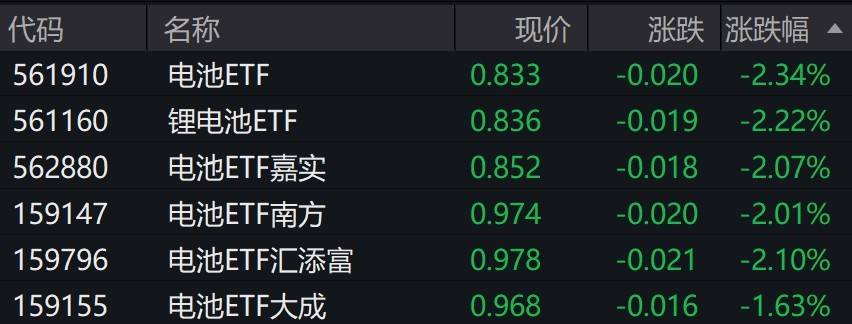
电池概念股走低,多只电池相关ETF跌超2%
Sou Hu Cai Jing· 2026-02-26 02:36
Core Viewpoint - Battery-related stocks have declined, with major companies like Sunshine Power, CATL, and EVE Energy dropping over 4% [1] Group 1: Stock Performance - Multiple battery-related ETFs have also seen a decline, with losses exceeding 2% [1] - Specific ETF performance includes: - Battery ETF: Current price 0.833, down 0.020, a decrease of 2.34% [2] - Lithium Battery ETF: Current price 0.836, down 0.019, a decrease of 2.22% [2] - Battery ETF Jiashi: Current price 0.852, down 0.018, a decrease of 2.07% [2] - Battery ETF Southern: Current price 0.974, down 0.020, a decrease of 2.01% [2] - Battery ETF Huitianfu: Current price 0.978, down 0.021, a decrease of 2.10% [2] - Battery ETF Dacheng: Current price 0.968, down 0.016, a decrease of 1.63% [2] Group 2: Industry Insights - Analysts suggest that recent policy support has injected strong momentum into the battery industry [1] - Continuous government initiatives promoting new energy vehicles, including trade-in programs, charging infrastructure development, and rural new energy initiatives, are expected to further unleash consumer potential [1] - The gradual implementation of "anti-involution" policies is leading to more rational competition within the industry, which may improve the overall profitability environment [1]


松下、三星等动力电池巨头,为什么输给了中国人?
Sou Hu Cai Jing· 2026-02-26 02:28
Core Insights - The article discusses the evolution of the global lithium battery industry, highlighting the rise and fall of different players, particularly focusing on the dominance of Chinese companies in recent years [1][29]. Historical Context - In the 1990s, Japanese companies like Sony, Panasonic, and Sanyo dominated the lithium battery market, controlling nearly 90% of the global share [1]. - By the early 2000s, South Korean firms such as LG Chem, Samsung SDI, and SK On began to emerge, eventually surpassing Japan to become the largest lithium battery producers around 2011 [3]. Technological Shifts - The introduction of Tesla in 2003 marked a significant shift in battery technology, as the company sought high-performance batteries for electric vehicles, leading to a partnership with Panasonic for the 18650 cylindrical battery [5][7]. - Tesla's success propelled Panasonic's battery business, which at its peak held a 40% market share in the global battery market [9]. Emergence of Chinese Companies - The success of the 2008 Beijing Olympics and subsequent government initiatives, such as the "Ten Cities, Thousand Vehicles" program, catalyzed the growth of China's electric vehicle and battery industries [11][13]. - In 2011, CATL was established, focusing on power batteries, and began collaborations with major automakers like BMW, while BYD also entered the electric vehicle market [14][15]. Market Dynamics - By 2014, China's new energy vehicle sales surged by 320%, significantly increasing battery demand and allowing companies like CATL and BYD to scale production [15]. - The introduction of the "battery whitelist" policy in 2015 favored domestic manufacturers, providing a four-year period for local companies to strengthen their market position [17]. Competitive Landscape - In 2017, CATL surpassed Panasonic in battery shipments for the first time, achieving a 17% global market share, marking a pivotal moment in the battery industry's competitive landscape [17]. - By 2025, Chinese companies are projected to occupy six of the top ten positions in global battery installations, with a combined market share exceeding 70% [29]. Industry Structure - China has developed a comprehensive and competitive lithium battery supply chain, from raw materials to battery manufacturing, creating strong synergies [20]. - Chinese companies have significantly reduced battery costs to below 40 RMB per kWh, while South Korean and Japanese companies remain at higher costs, creating a competitive disadvantage [22]. Future Outlook - The article concludes that the shift in battery dominance is not only a result of technological competition but also reflects national strategies and industrial policies that have fostered innovation in China [30].


申万宏源五家被投企业荣登“投中榜·2025年度锐公司榜单”
申万宏源证券上海北京西路营业部· 2026-02-26 02:25
Core Viewpoint - The "2025 Annual Sharp Company List" has been officially released, highlighting five companies backed by Shenwan Hongyuan Group that excel in cutting-edge fields such as artificial intelligence computing power, embodied intelligent robots, commercial aerospace, and semiconductors [1]. Group 1: Company Highlights - Jita Semiconductor, established in 2017, focuses on semiconductor manufacturing and has completed E-round financing [2]. - Aurora Starlink, founded in 2020, specializes in commercial aerospace and has secured A+ round financing [2]. - Wuwen Xinqiong, a 2023 startup in artificial intelligence, has also completed A+ round financing [2]. - Star Motion Era, another 2023 company in embodied intelligence, has completed A+ round financing [2]. - Galaxy General Robotics, focusing on embodied intelligent robots, has completed B+ round financing [2]. Group 2: Financing Achievements - Jita Semiconductor achieved nearly 500 million RMB in A round financing in 2025, setting a record for domestic AI infrastructure startups [3]. - Galaxy General Robotics completed 1.1 billion RMB in B round financing and over 300 million USD in B+ round financing in 2025, reaching a valuation of approximately 30 billion RMB [4]. - Star Motion Era secured nearly 1 billion RMB in A+ round financing in November 2025, with a post-financing valuation of nearly 4 billion RMB [5]. - Aurora Starlink completed nearly 300 million RMB in A4 round financing in early 2026, supported by national industrial funds and market capital [6]. Group 3: Strategic Insights - The collective recognition of these five companies underscores their strong technological capabilities, innovation potential, and growth prospects, affirming Shenwan Hongyuan Group's strategic focus on hard technology sectors aligned with national innovation strategies [7]. - The companies are driving high-quality industrial development through technological breakthroughs and innovative business models [7]. - Shenwan Hongyuan Group aims to continue fostering "new productive forces" and contribute to national technological innovation by implementing its "research + investment + investment banking" strategy [7].


合作提速!宝马与宁德时代签署合作备忘录
Ju Chao Zi Xun· 2026-02-26 02:20
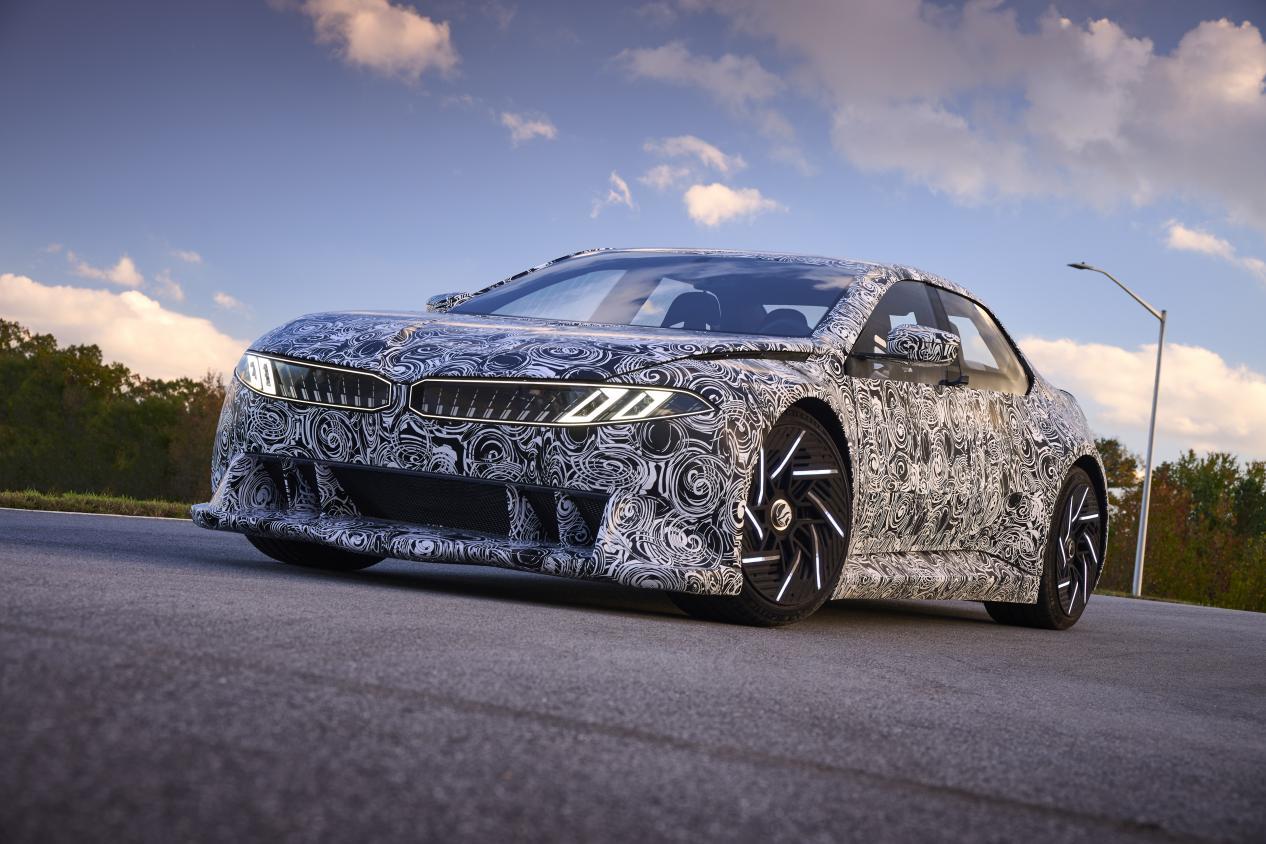
Group 1 - BMW Group's Chairman Zipse visited China with German Chancellor Merz and signed a memorandum of understanding with CATL to promote collaboration in the battery supply chain and reduce the carbon footprint of electric vehicles [2] - China is a core part of BMW's global strategy, with over 120 billion yuan invested in the Shenyang production base and the establishment of four R&D innovation centers and three software companies in the country [2] - The new generation BMW iX3 long-wheelbase version, the first domestically produced model, is set to make its global debut at the Beijing Auto Show in April [2] Group 2 - CATL is the world's largest power battery supplier and announced in September 2022 that it would supply cylindrical batteries for BMW's new generation models starting in 2025 [2] - Prior to this partnership, BMW's battery suppliers included third-party companies such as Envision AESC and EVE Energy [2]

齐普策随德国总理访华 与中国电池龙头签大单
Zhong Guo Jing Ying Bao· 2026-02-26 01:24
Group 1 - BMW Group's Chairman, Oliver Zipse, accompanied German Chancellor Olaf Scholz on a visit to China, highlighting the importance of strengthening the comprehensive strategic partnership between Germany and China [1] - During the visit, BMW signed a memorandum of understanding with CATL to enhance collaboration in the electric vehicle supply chain and reduce carbon footprints [1] - Zipse emphasized the necessity of global cooperation to address challenges and foster innovation in the automotive industry, particularly in the context of electrification and intelligent driving [1] Group 2 - By 2025, China is expected to become Germany's largest trading partner again, showcasing the resilience and complementarity of Sino-German economic relations [2] - The automotive industry is identified as a core pillar of Sino-German cooperation, with China's transition to a consumption-driven economy expected to boost demand for high-end automotive products [2] - BMW plans to launch new models in China to meet the diverse and high-quality travel needs of Chinese consumers, recognizing China as a critical component of its future development strategy [2]