
Maxwell(300751)

Search documents
半导体设备,2026年最强风口
3 6 Ke· 2026-01-11 04:37
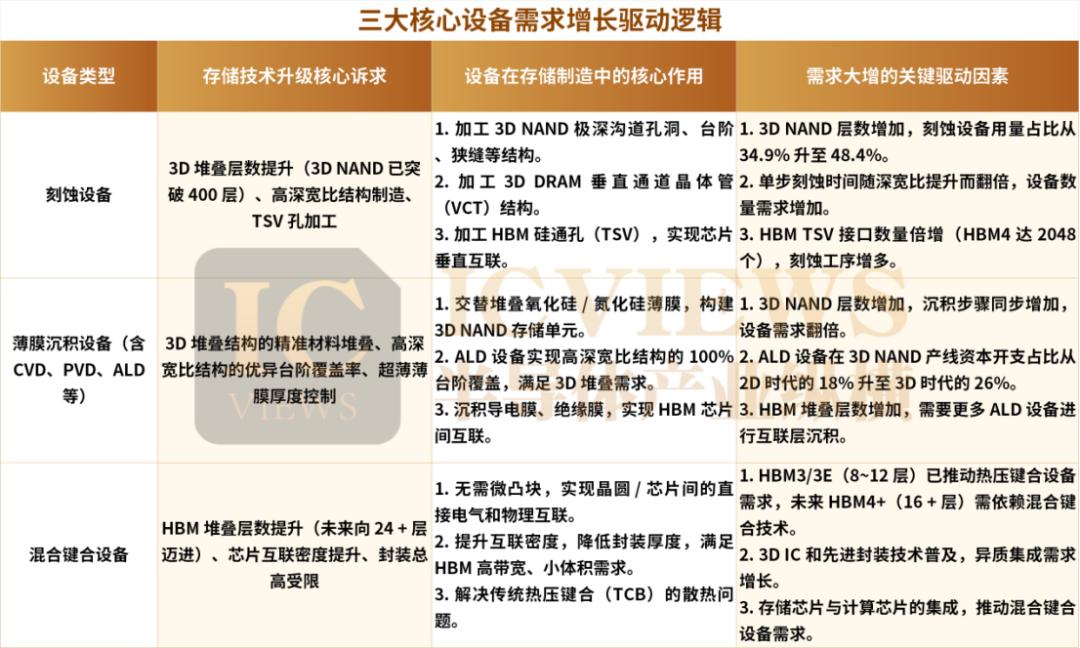
Group 1 - The semiconductor equipment market is experiencing significant growth driven by the demand for AI-related investments, particularly in advanced logic circuits, memory, and packaging technologies [2][3] - The global semiconductor equipment sales are projected to reach a record $133 billion in 2025, with a year-on-year growth of 13.7%, and expected to continue rising to $145 billion in 2026 and $156 billion in 2027 [2] - The wafer fabrication equipment (WFE) sector is anticipated to achieve a sales record of $104 billion in 2024, with an 11% increase to $115.7 billion in 2025, reflecting higher-than-expected investments in DRAM and HBM [2] Group 2 - Major global memory manufacturers are expanding production and upgrading technology, which is a key driver for semiconductor equipment demand [3][4] - Samsung and SK Hynix are accelerating memory capacity expansion, with Samsung focusing on high-end products and SK Hynix preparing to complete a new factory by 2027 [4] - By 2026, South Korea is expected to reclaim the second position in global chip equipment spending, reaching approximately $29.66 billion, a 27.2% increase from 2025 [4] Group 3 - The evolution of storage chips, particularly 3D NAND and DRAM, is driving demand for etching and deposition equipment, with significant increases in the number of layers and complexity of structures [5][6] - The demand for etching equipment is expected to rise sharply as 3D NAND layers increase from 32 to 128, with etching equipment usage rising from 34.9% to 48.4% [10] - The global spending on storage-related equipment is projected to reach $136 billion between 2026 and 2028, with over 40% attributed to 3D NAND investments [11] Group 4 - The demand for deposition equipment is also surging, with the need for more steps in the deposition process as the number of 3D NAND layers increases [11] - Advanced technologies such as atomic layer deposition (ALD) are becoming more critical, with ALD equipment's share in capital expenditures rising from 18% in the 2D era to 26% in the 3D era [11] - HBM technology is increasing the demand for lithography and hybrid bonding equipment due to the need for high-density interconnections and precision [12] Group 5 - Domestic companies are making significant progress in the production of core semiconductor equipment, including etching, deposition, and hybrid bonding devices [14][15] - Companies like Zhongwei, Northern Huachuang, and Yitang Semiconductor are leading in etching equipment, while Northern Huachuang and TuoJing Technology are notable in deposition equipment [14][15] - The hybrid bonding sector is also seeing advancements, with companies like Qinghe Crystal and TuoJing Technology developing innovative bonding solutions for various applications [16][17]





机械设备行业周观点:看好商业航天、核聚变、机器人、算力等方向
Xin Lang Cai Jing· 2026-01-11 00:32
Commercial Aerospace - China submitted an unprecedented satellite frequency application to the International Telecommunication Union (ITU) for 203,000 new satellites covering 14 satellite constellations [1] - The U.S. Federal Communications Commission (FCC) approved SpaceX's application to deploy an additional 7,500 second-generation Starlink satellites [1] - Beijing Arrow Yuan Technology's large and medium-sized liquid launch vehicle production test and assembly base officially opened in Zhejiang [1] - Guangzhou issued a plan to accelerate the construction of a strong advanced manufacturing city from 2024 to 2035 [1] - Companies to watch include Superjet Co., Maiwei Co., Raycus Fiber Laser Technologies, Su Shi Testing, Anhui Heli, Haozhi Electromechanical, and Lanshi Heavy Industry [1] Nuclear Fusion - The 2026 Nuclear Fusion Energy Technology and Industry Conference will be held in Hefei on January 16-17, featuring reports on BEST device engineering progress and future industry outlook [1] - The bidding for the "Spark One" hybrid reactor project is about to start, with the fusion industry expected to maintain high capital expenditure through 2026 [1] - Key companies to focus on include Huitian Intelligent, Lianchuang Optoelectronics, Antai Technology, Western Superconducting, Yongding Co., Wangzi New Materials, Xuguang Electronics, and Sichuang Electronics [1] Robotics - Over 20 domestic humanoid robot manufacturers showcased their products at the 2026 CES, demonstrating capabilities such as combat, human-robot interaction, and dancing [2] - The Ministry of Industry and Information Technology and eight other departments issued implementation opinions for the "Artificial Intelligence + Manufacturing" initiative, including the establishment of humanoid robot pilot bases and training grounds [2] - Companies to watch include Zhejiang Rongtai, Hengli Hydraulic, Top Group, Sanhua Intelligent Controls, Siling Co., Weichuang Electric, Wuzhou New Spring, and Xinquan Co. [2] - Domestic manufacturers to focus on include Dongfang Precision and Zhongjian Technology [2] Computing Power - NVIDIA unveiled its next-generation AI computing platform, Rubin, at CES, featuring significant changes in liquid cooling design [3] - The cooling medium temperature has shifted from traditional cold water to approximately 45°C warm water, with an upgraded cooling plate structure [3] - Domestic computing power is progressing rapidly, with companies like Yingweike and Shenling Environment to watch [3] - xAI confirmed the purchase of five additional 380 MW gas turbines from Doosan Energy amid structural shortages in overseas power resources [3] - Companies to focus on include Yingliu Co., Jereh Group, and Wanze Co. [3] - PCB equipment companies to watch include Dingtai High-Tech, Dazhu CNC, Chipbond Technology, and Kaige Precision [3] Lithium Battery Equipment - The expansion of liquid battery production continues, with approximately 64 new lithium battery projects planned in China for 2025, totaling over 1,100 GWh of capacity, a year-on-year increase of 105% [3] - The first national standard for solid-state batteries has been established, requiring specific weight loss tests for recognition as solid-state batteries, marking a key step towards industrialization [3] - Companies to focus on include Xianlead Intelligent, Nakanor, Rongqi Technology, and Huazi Technology [3] Weekly Focus - Key companies to monitor include Maiwei Co., Raycus Laser, Lanshi Heavy Industry, Huitian Intelligent, Yongding Co., Zhejiang Rongtai, Hengli Hydraulic, Xinquan Co., and Chipbond Technology [4]



迈为股份股价跌5.03%,汇添富基金旗下1只基金重仓,持有33万股浮亏损失353.1万元
Xin Lang Cai Jing· 2026-01-09 05:17
Group 1 - The core point of the news is that Maiwei Co., Ltd. experienced a stock decline of 5.03%, with a current share price of 202.10 yuan and a total market capitalization of 564.68 billion yuan [1] - Maiwei Co., Ltd. is primarily engaged in the design, research and development, production, and sales of high-end intelligent manufacturing equipment, with 75.00% of its revenue coming from solar cell production equipment [1] - The company was founded on September 8, 2010, and went public on November 9, 2018 [1] Group 2 - According to data, the Huatai-PineBridge Fund holds a significant position in Maiwei Co., Ltd., with 330,000 shares representing 3.77% of the fund's net value, making it the eighth largest holding [2] - The fund, Huatai-PineBridge CSI Photovoltaic Industry Index Enhanced A (013816), has a current scale of 287 million yuan and has reported a year-to-date return of 6.51% [2] - The fund manager, Lai Zhongli, has a tenure of 13 years and has achieved a best return of 94.17% during his management period [3]
太空算力中心具备颠覆性优势,HJT或为能源系统最优解
Zhong Guo Neng Yuan Wang· 2026-01-09 01:17
Group 1 - The emergence of "space computing" is driven by the increasing power demand in data centers due to global AI model advancements, leading to the deployment of high-performance satellites in low/mid orbits [1][2] - Space computing offers significant advantages over traditional ground data centers, including higher deployment efficiency, better energy efficiency, and lower cooling costs [1][2] - The "Zhijiang Laboratory + Guoxing Aerospace" collaboration has launched the "Trinity Computing Constellation" with 12 satellites in orbit, aiming for a future capacity of 1000 POPS [1][2] Group 2 - The energy system's weight significantly impacts the overall cost of satellites, with energy costs accounting for 22% of the total satellite economics [2] - Rollable solar arrays combined with flexible batteries are key to the development of space computing systems, with silicon-based HJT batteries being the most suitable for the new generation of rollable solar systems [2] - Companies like NexWafe and Solestial are accelerating their layouts in this area, and HJT batteries are also optimal for perovskite tandem applications, showing long-term evolution potential [2] Group 3 - The current mainstream orbits are LEO and SSO, with SSO providing stable sunlight year-round, making it the best choice for high-power data centers [3] - To address the shortage of orbital resources, space computing platforms are evolving towards large motherships and multi-satellite clusters, with Starcloud constructing a 4km x 4km solar mothership platform [3] - A 10 GW solar capacity can correspond to 448 Google Suncatcher satellites or 2 Starcloud motherships, indicating the scale of deployment needed [3] Group 4 - Investment recommendations focus on companies with overseas customer bases, such as HJT equipment leader Maiwei Co., Ltd. and Gaomei Co., Ltd., which has achieved mass production of 60μm ultra-thin silicon wafers [3]
两融余额首破2.6万亿元 再创历史新高
Zheng Quan Shi Bao· 2026-01-08 18:47
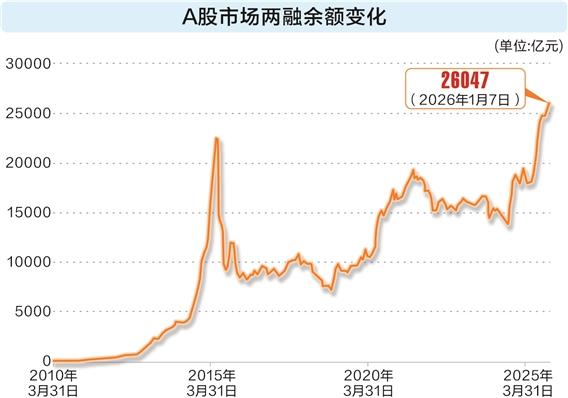
Group 1 - The A-share market's margin trading balance reached a historical high of 26,047 billion yuan as of January 7, 2026, marking a single-day increase of approximately 24.8 billion yuan [2] - Since December 22, 2025, the margin trading balance has increased by over 100 billion yuan in just 11 trading days, indicating a significant acceleration in growth [2] - On January 7, 2026, the margin trading transaction volume hit 3,312 billion yuan, the highest level in nearly three months, with a nearly 70% increase compared to the average daily margin trading volume in December 2025 [2] Group 2 - The overall trading volume in the A-share market has significantly increased, reaching 28.3 trillion yuan on January 8, 2026, with three consecutive trading days exceeding 28 trillion yuan [3] - On January 7, 2026, Nanda Optoelectronics achieved a historic trading volume of 10.43 billion yuan, which further increased to 11.36 billion yuan on January 8, setting a new record since its listing [3] - Multiple stocks, including Maiwei Co., also saw substantial trading volume increases, with Maiwei Co. reaching 4.79 billion yuan on January 8, marking a historical high [3]

光伏板块震荡拉升
Di Yi Cai Jing· 2026-01-08 11:52
Group 1 - Haiyou New Materials and Aotwei both saw stock increases of over 10% [1] - Junda Co. previously reached a daily limit increase, while Maiwei Co., Airo Energy, Trina Solar, and Jinko Solar all experienced stock rises exceeding 6% [1]




光伏设备板块1月8日涨1.63%,连城数控领涨,主力资金净流入12.81亿元
Zheng Xing Xing Ye Ri Bao· 2026-01-08 08:56
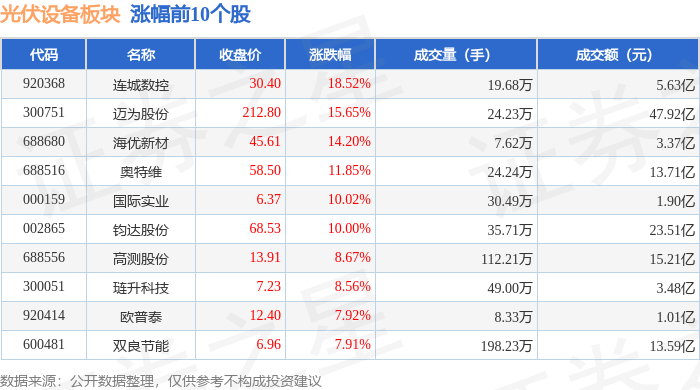
Core Viewpoint - The photovoltaic equipment sector experienced a notable increase of 1.63% on January 8, with Liancheng CNC leading the gains, while the overall market indices showed slight declines [1]. Group 1: Market Performance - The Shanghai Composite Index closed at 4082.98, down 0.07%, and the Shenzhen Component Index closed at 13959.48, down 0.51% [1]. - Liancheng CNC saw a significant rise of 18.52%, closing at 30.40, with a trading volume of 196,800 shares and a transaction value of 563 million [1]. - Other notable performers included Maiwei Co., which rose by 15.65% to 212.80, and Haiyou New Materials, which increased by 14.20% to 45.61 [1]. Group 2: Fund Flow Analysis - The photovoltaic equipment sector had a net inflow of 1.281 billion in main funds, while retail investors experienced a net outflow of 723 million [2]. - The main funds showed a significant net inflow in stocks like Dongfang Risen, with 208 million, and Junda Co., with 260 million [3]. - Conversely, stocks like Yijing Photovoltaic and Gu Dewei saw net outflows of 1.017 billion and 3.20% respectively [2][3].


东吴证券:太空算力中心具备颠覆性优势 HJT或为能源系统最优解
智通财经网· 2026-01-08 08:19
Group 1 - The core viewpoint of the report emphasizes the disruptive advantages of space computing over traditional ground data centers, including high deployment efficiency, excellent energy efficiency, and low cooling costs [1][2] - The report highlights the emergence of "orbital data centers" driven by the imbalance in computing power supply and demand in the AI era, with examples such as the "Three-body Computing Constellation" launched by Zhijiang Laboratory and Guoxing Aerospace, which has already deployed 12 satellites and plans for a 1000 POPS computing scale [1][3] - The report recommends companies such as Maiwei Co., Ltd. (300751.SZ) and Gaomei Co., Ltd. (688556.SH) due to their involvement in the space computing and HJT battery sectors [1] Group 2 - The energy system weight significantly impacts the overall cost of satellites, with energy system costs accounting for 22% of the total, making lightweight and high-power quality ratio structures like rollable solar arrays critical for development [2] - The report notes that rollable solar arrays are gradually replacing traditional Z-type structures in LEO orbits, and they are best suited for flexible and thin-film batteries, with companies like NexWafe and Solestial accelerating their layouts in this area [2] - HJT batteries are identified as the optimal bottom cell for perovskite tandem cells, showcasing long-term evolution potential [2] Group 3 - The report discusses the current tightness of orbital resources, with LEO and SSO being the main orbits, and SSO providing stable sunlight year-round, making it the optimal choice for high-power data centers, with approximately 9617 available satellites remaining [3] - To address the shortage of orbital resources, space computing platforms are evolving along two paths: large-scale deployment, exemplified by Starcloud's construction of a 4km×4km photovoltaic mothership platform, and cluster deployment, as seen in Google's Suncatcher plan with 81 to 324 satellite formations [3] - The report estimates that a 10GW photovoltaic capacity can correspond to 448 Google Suncatcher satellite clusters or 2 Starcloud motherships [3]


迈为股份2实控人拟套现10亿元 去年实控人方套现3.8亿
Zhong Guo Jing Ji Wang· 2026-01-08 07:07
Core Viewpoint - The controlling shareholders of Maiwei Co., Ltd. plan to reduce their holdings by a total of 5,400,000 shares, representing 1.94% of the company's total shares, with an estimated cash-out amount of approximately 994 million yuan based on the closing price of 184.00 yuan per share on January 7, 2026 [1]. Shareholder Reduction Plan - The controlling shareholders, Zhou Jian and Wang Zhenggen, currently hold a combined total of 109,537,827 shares, which accounts for 39.35% of the company's total shares after excluding shares in the repurchase account [1]. - The reduction will occur through centralized bidding or block trading, starting 15 trading days after the announcement and lasting for three months, from January 29, 2026, to April 28, 2026 [1]. Shareholding Structure - Zhou Jian and Wang Zhenggen are acting in concert and collectively control 43.41% of the company, including 4.21% through Suzhou Maituo Venture Capital Partnership [2]. - Following a previous share transfer, their combined shareholding decreased from 43.84% to 41.57% [3]. Fundraising Activities - Maiwei Co., Ltd. is planning to issue convertible bonds to raise up to 1.9666752 billion yuan, which will be used for the industrialization of perovskite tandem solar cell equipment [3]. - The company has previously raised a total of 4.157 billion yuan through three fundraising activities since its listing [7].

太空算力,HJT或为能源系统最优解!光伏ETF华夏(515370)上涨1.26%,钧达股份涨停
Mei Ri Jing Ji Xin Wen· 2026-01-08 07:01
Group 1 - The core viewpoint of the article highlights the transition of space photovoltaic technology from experimental to commercial acceleration, addressing the energy supply challenges in various applications such as space computing, deep space exploration, and remote area power supply [1] - The new "space computing" model, which operates in low/mid orbits, offers significant advantages over traditional ground data centers, including higher deployment efficiency, better energy efficiency, and lower cooling costs [1] - The cost of energy systems accounts for 22% of the overall economic viability of satellites, making it a critical factor in the development of space photovoltaic systems [1] Group 2 - The photovoltaic ETF Huaxia (515370) tracks the CSI Photovoltaic Industry Index, which includes upstream, midstream, and downstream companies in the photovoltaic industry, providing a comprehensive reflection of the industry's overall performance [2] - The index has a photovoltaic content of 83.64%, ranking first in the entire market dimension [2]