Atour Lifestyle (ATAT)

Search documents
隔夜欧美·12月3日
Sou Hu Cai Jing· 2025-12-03 00:33
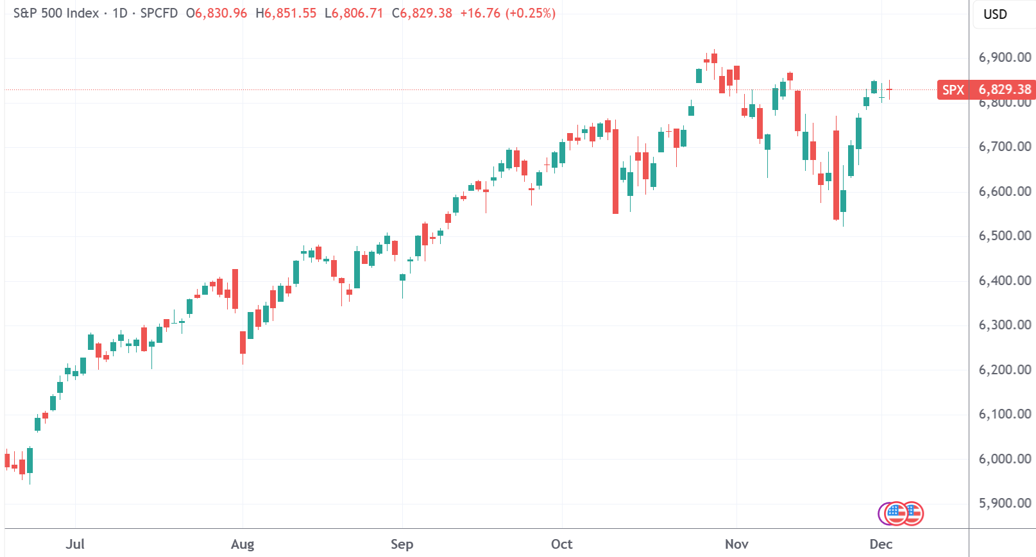
Market Performance - The three major U.S. stock indices experienced slight gains, with the Dow Jones up 0.39% at 47,474.46 points, the S&P 500 up 0.25% at 6,829.37 points, and the Nasdaq up 0.59% at 23,413.67 points [1] - Major tech stocks mostly rose, with Apple increasing over 1%, Facebook nearly 1%, Nvidia up 0.86%, Microsoft up 0.67%, Google up 0.29%, and Amazon up 0.223%, while Tesla fell 0.21% [1] - Popular Chinese concept stocks mostly declined, with Atour up over 5% and Tiger Brokers up over 2%. Xpeng Motors dropped over 7%, iQIYI fell over 3%, and NIO, Global Data, and Bilibili fell over 2%. Alibaba, NetEase, and ZTO Express dropped over 1% [1] European Market - European stock indices closed mixed, with Germany's DAX index up 0.49% at 23,705.8 points, France's CAC40 down 0.28% at 8,074.61 points, and the UK's FTSE 100 down 0.01% at 9,701.8 points [1] Commodity Markets - International precious metal futures closed mixed, with COMEX gold futures down 0.84% at $4,238.70 per ounce and COMEX silver futures up 0.01% at $59.15 per ounce [1] - U.S. oil main contract fell 1.23% to $58.59 per barrel, while Brent crude main contract dropped 1.28% to $62.36 per barrel [1] - London base metals all declined, with LME zinc down 1.32% at $3,055.50 per ton, LME nickel down 1.26% at $14,740.00 per ton, LME aluminum down 1.02% at $2,863.50 per ton, LME copper down 0.95% at $11,145.00 per ton, LME tin down 0.76% at $38,840.00 per ton, and LME lead down 0.42% at $1,993.50 per ton [1] Bond Markets - U.S. Treasury yields were mixed, with the 2-year yield down 1.62 basis points at 3.508%, the 3-year yield down 1.13 basis points at 3.528%, the 5-year yield down 0.34 basis points at 3.657%, the 10-year yield up 0.19 basis points at 4.088%, and the 30-year yield up 0.99 basis points at 4.747% [1] - European bond yields mostly fell, with the UK 10-year yield down 1.1 basis points at 4.468%, France's 10-year yield up 0.6 basis points at 3.489%, Germany's 10-year yield down 0.1 basis points at 2.747%, Italy's 10-year yield down 0.4 basis points at 3.462%, and Spain's 10-year yield down 0.4 basis points at 3.221% [1]


全球市场早报|美股三大股指集体收涨,波音涨超10%
Sou Hu Cai Jing· 2025-12-02 23:30
Market Performance - The Dow Jones Industrial Average rose by 185.13 points, closing at 47,474.46, an increase of 0.39% [1] - The Nasdaq Composite gained 137.75 points, ending at 23,413.67, up by 0.59% [1] - The S&P 500 index increased by 16.74 points, closing at 6,829.37, a rise of 0.25% [1] Sector Performance - Major technology stocks mostly increased, with Apple up over 1%, Facebook nearly 1%, Nvidia up 0.86%, Microsoft up 0.67%, Google up 0.29%, Amazon up 0.223%, while Tesla fell by 0.21% [1] - Energy stocks declined across the board, with ExxonMobil down over 1%, Chevron down more than 1%, ConocoPhillips down over 1%, Schlumberger down 0.7%, and Western Oil down nearly 1% [1] - Airline stocks collectively rose, with Boeing up over 10%, American Airlines up more than 2%, Delta Airlines up over 1%, Southwest Airlines up nearly 2%, and United Airlines up over 3% [1] - Semiconductor stocks mostly increased, with the Philadelphia Semiconductor Index rising by 1.83%, Intel up over 8%, NXP Semiconductors up more than 7%, Microchip Technology up over 6%, and Texas Instruments up over 4% [1] Chinese Stocks - The Nasdaq Golden Dragon China Index fell by 0.65%, with individual stocks like Xpeng Motors down nearly 8%, and Artis Solar down nearly 6% [2] - Some Chinese stocks saw gains, such as Wanwu Xingsheng up over 6%, Atour up more than 5%, and Tiger Brokers up nearly 2% [2] Economic Indicators - Recent data indicates a gradual cooling of the economy, with policymakers urging caution on interest rate cuts and warning of potential inflationary pressures [2] - The probability of a 25 basis point rate cut by the Federal Reserve in December has surged to 89.2% according to the Chicago Mercantile Exchange [2] European Market Performance - European stock indices showed mixed results, with the FTSE 100 in London down 0.01%, the CAC 40 in Paris down 0.28%, and the DAX in Frankfurt up 0.51% [2] Commodity Prices - International oil prices fell, with light crude oil futures for January 2026 down by $0.68, closing at $58.64 per barrel, a decrease of 1.15% [3] - Brent crude oil futures for February fell by $0.72, closing at $62.45 per barrel, a decline of 1.14% [3] Currency Exchange Rates - The US dollar index decreased by 0.06%, closing at 99.357 [3] - The euro traded at 1.1622 against the dollar, the pound at 1.3211, and the yen at 155.88 [3]



美股收盘:三大指数震荡收高,光通信牛股再创新高
Feng Huang Wang· 2025-12-02 23:21
Market Overview - The cryptocurrency market has stabilized, leading to a rise in Bitcoin and tech stocks, which boosted trading sentiment and resulted in slight gains for the three major stock indices [1] - As of the market close, the S&P 500 index rose by 0.25% to 6829.37 points, the Nasdaq Composite increased by 0.59% to 23413.67 points, and the Dow Jones Industrial Average gained 0.39% to 47474.46 points [1] Market Sentiment and Predictions - The market is awaiting catalysts for a potential "Santa Rally," with more stocks declining than rising in the S&P 500 [3] - Analysts suggest that the market may need to consolidate before reaching new highs, with a mixed outlook for December [3] Stock Performance - Notable stock movements include Nvidia up by 0.86%, Apple up by 1.09%, and Boeing up by 10.15% due to expectations of returning to positive cash flow by 2026 [3][4] - Conversely, some stocks like Broadcom and Tesla saw declines of 1.17% and 0.21% respectively [3] Cryptocurrency and Related Stocks - Bitcoin's rebound of 6% positively impacted related stocks like MSTR and BMNR, while ABTC, linked to the Trump family, plummeted by 38% due to a lock-up expiration [6] - The Nasdaq China Golden Dragon Index fell by 0.65%, with Alibaba down by 1.91% and NIO down by 2.9% [6] Company Developments - Nvidia's CFO stated that the $100 billion investment in OpenAI has not yet been included in revenue guidance, as it is still in the letter of intent stage [7] - Amazon AWS launched its first 3nm AI chip, Trainium3, which boasts a performance increase of 4.4 times compared to its predecessor [8] - AWS also introduced a new large model training service, Nova Forge, allowing businesses to customize training with proprietary data [9] Philanthropic Initiatives - Dell's founders announced a donation of $6.25 billion to help establish investment accounts for 25 million American children, with each account receiving $250 [10]


Atour Lifestyle Shares Up After Guidance Raise
Benzinga· 2025-12-01 16:50
The hotel operator expects to report 35% revenue growth for all of 2025, up from a 25% forecast at the start of the year, thanks to strong performance for its retail businessKey Takeaways:Atour reported 38.4% revenue growth in the third quarter, and raised its full-year guidance to 35% from a previous forecast of 25% growthThe hotel operator's revpar continued to decline in the third quarter, but it said the situation should improve after a strong performance during the weeklong Oct. 1 holidayThe year 2025 ...


社服行业 2026 年度投资策略:新复苏,新生态,新供给
Huachuang Securities· 2025-12-01 09:19
Core Insights - The report highlights three core trends in the consumer services industry: "New Recovery, New Ecology, and New Supply" [6] - Structural factors are aiding certain sectors in stabilizing and improving operations, indicating a gradual recovery from the bottom [7] - The integration of online platforms with offline operations is reshaping the industry ecosystem, enhancing competition and operational efficiency [8] Industry Overview - The consumer services sector has seen a slight revenue increase of 2.57% year-on-year, totaling 183.23 billion yuan in the first three quarters of 2025, despite a 12.7% decline in net profit [20][22] - The sector's performance has been mixed, with tourism and education sectors showing significant growth, while the hotel and restaurant sectors faced slight declines [16][19] New Recovery - The hotel industry is experiencing a rebound due to increased tourism demand and a stabilization in average daily rates (ADR), with occupancy rates showing signs of improvement [31][57] - The Macau gaming market has shown strong recovery, with gross gaming revenue (GGR) reaching 24.086 billion MOP in October 2025, driven by non-gaming attractions [32][44] - The duty-free market is benefiting from policy optimizations, with sales in Hainan reaching 2.425 billion yuan in October 2025, reflecting a 34.86% year-on-year increase [32][38] New Ecology - Major players like Alibaba, Meituan, and JD.com are competing in the instant retail space, each leveraging their strengths to enhance online and offline integration [42] - The restaurant industry is witnessing a shift towards standardized and professional supply chains, with the chain restaurant rate increasing from 15% in 2020 to 23% in 2024 [46][48] New Supply - The tourism sector is transitioning from a "sightseeing + ticket" model to one focused on content innovation and immersive experiences, with companies like Sanxia Tourism and Haichang Ocean Park leading this change [50][53] - The sports industry is evolving to combine spectator and participatory sports, creating new social engagement opportunities through digital platforms [54] Investment Recommendations - Key recommendations include focusing on leading hotel chains like Jinjiang Hotels and ShouLai Hotels, and monitoring companies with strong supply chain advantages in the restaurant sector [6][8] - The report suggests that innovative companies in tourism, sports, and education sectors, particularly those utilizing AI and content innovation, are worth attention for potential growth [8][50]





中国消费板块优选标的与五大投资主题-China Consumer Sector Top Buys with Five Investment Themes-China Consumer
2025-12-01 00:49
Summary of Key Points from the Conference Call Industry Overview - **Industry**: China Consumer Sector - **Event**: Citi's 2025 China Conference - **Participants**: 44 China consumer companies were hosted, leading to the identification of five investment themes in the consumer sector [1][9] Investment Themes 1. **Shift Towards Experience Consumption**: - Consumers are increasingly valuing emotional experiences over physical goods, seeking happiness and self-expression through services [2] - Companies like Pop Mart provide affordable entertainment options that resonate with young consumers [2] 2. **Focus on Well-being**: - Younger generations are prioritizing spending on wellness, including health, fitness, and mindfulness [3] - Growth opportunities are seen in sectors like sportswear (Anta), health supplements (H&H), and beauty care (Giant Bio) [3] 3. **Rising Silver Economy**: - The aging population is driving demand for leisure and cultural experiences, benefiting industries like tourism (H World, Atour) and health supplements [4] 4. **Emerging New Channels**: - New offline channels such as membership stores and snack specialty chains are gaining traction, helping to offset declines in traditional distribution [5] 5. **Multi-brand Strategy**: - Companies are expanding their brand portfolios to meet diverse consumer demands, with a focus on easing channel inventory pressure [6] Company-Specific Insights Pop Mart (9992.HK) - **Sustainability of IP Operation**: Pop Mart is seen as a growth play due to its strong IP incubation capabilities. Concerns about growth sustainability are being addressed through new product launches [10] - **LABUBU Durability**: The company plans to enhance its LABUBU IP with new products and has postponed the launch of LABUBU 4.0 to 2026 [11] - **Overseas Expansion**: Plans to operate over 60 stores in the US by the end of 2025, with expansions into Canada and Mexico [13] Laopu Gold (6181.HK) - **Sales Growth Expectations**: Management expects high revenue growth in 2H25E driven by price adjustments and new store sales [16] - **Price Adjustment Strategy**: A recent price increase of over 25% aims to maintain a gross profit margin (GPM) of at least 40% [17] - **Store Expansion Plans**: Focus on expanding floor areas in existing malls rather than entering new ones [22] Haidilao International Holding Ltd (6862.HK) - **Recovery in Table-Turn**: Management anticipates positive momentum in table-turn rates due to seasonal factors and a low comp base [30] - **Operational Improvements**: Plans to terminate loss-making pilot programs to save on operational expenses [32] China Resources Beer (0291.HK) - **Sales Performance**: The company reported low single-digit year-over-year sales growth, outperforming peers [34] - **Margin Outlook**: Expected GPM improvement in 2H25E, with a target dividend payout ratio increase to ~60% in 2025E [36] Midea Group (0300.HK) - **Sales Growth Target**: Management maintains a target of ~10% sales growth for 2025, with a focus on air-conditioning sales recovery [40] - **Overseas Business Expansion**: Plans to increase overseas production to ~30% and grow sales in developed markets through M&A [41] Li Ning (2331.HK) - **Sales Guidance**: Maintained guidance for 2025 with expectations of flat sales and high single-digit net profit margin growth [48] Nongfu Spring (9633.HK) - **Sales Guidance**: Management reiterated a mid-teen percentage growth target for 2025, with limited impact from price wars in the beverage sector [51] Cosmetics Sector - **Mixed Performance**: Domestic brands like Mao Geping and Chicmax showed strong growth, while others lagged behind [56] - **Growth Strategies**: Companies are focusing on online sales growth and improving operational efficiency to enhance margins [57][59] Additional Insights - **Consumer Trends**: There is a notable shift towards experiential consumption and wellness, indicating a changing landscape in consumer preferences [2][3] - **Operational Strategies**: Companies are adopting multi-brand strategies and optimizing supply chains to enhance profitability and meet diverse consumer demands [6][14] This summary encapsulates the key insights and trends discussed during the conference, highlighting the evolving dynamics within the China consumer sector and specific company strategies.


如何看待酒店行业的近期回暖和新零售业务拓展?
2025-12-01 00:49
Summary of Hotel Industry and Atour's Retail Business Conference Call Industry Overview - The hotel industry is experiencing a gradual recovery, with RevPAR (Revenue Per Available Room) decline narrowing each quarter, particularly for Huazhu, which has nearly returned to last year's levels in Q3, driven mainly by room prices while occupancy rates remain stable [1][2] - Recent high-frequency data indicates that the improvement in RevPAR is likely temporary, influenced by factors such as trade shows and holiday periods [1][4] - Despite a slowdown in store expansion, the supply of hotel rooms continues to grow at a fast pace, with franchisees remaining cautious about future demand recovery, particularly in business travel [1][5] Key Insights on Atour - Atour has achieved significant success in its new retail business, maintaining over 70% growth, effectively utilizing its membership base of 100 million and nearly 2,000 hotels [1][9] - The retail business is closely related to hotel services, with strong sales in sleep-related products, such as mattresses and pillows, expected to generate over 1 billion yuan in sales in 2024 [3][11] - The current franchisee landscape has shifted from small operators to larger franchisees, who prioritize cash flow stability and are willing to accept longer payback periods of around 5 years [6][7] Future Outlook - The overall sentiment among franchisees regarding future demand recovery remains cautious, with a notable decline in business travel demand and general consumer behavior leaning towards budget travel [5][8] - The supply side continues to show high growth rates, indicating persistent pressure on supply despite a slight decrease [5][8] - Atour's retail business is expected to continue growing, with projections indicating that retail revenue could reach approximately 4 billion yuan by the end of 2025, contributing 30%-40% of total revenue [10][14] Retail Business Development - Atour's retail strategy focuses on leveraging its hotel service experience to sell related products, with a significant emphasis on sleep-related items [11][12] - The company has effectively utilized new media platforms like Douyin and Xiaohongshu for content-driven e-commerce, enhancing brand recognition and user loyalty [13][14] - The retail business serves as a counterbalance to pressures in the hotel sector, helping maintain stable overall revenue growth [14][15] Challenges and Considerations - The increase in sales expenses, particularly due to investments in new media advertising, raises questions about the sustainability of Atour's original sales advantages [15][16] - Monitoring the transition from public to private user channels is crucial for assessing the effectiveness of Atour's user retention strategies [16][17] This summary encapsulates the key points discussed in the conference call regarding the hotel industry and Atour's strategic initiatives in retail, highlighting both opportunities and challenges ahead.
一周文商旅速报(11.24—11.28)
Cai Jing Wang· 2025-11-28 08:54
Group 1 - China Jinmao plans to sell 100% equity of its subsidiary holding the Ritz-Carlton Hotel in Sanya for a base price of 2.265 billion RMB as part of asset securitization efforts [1] - Huafa Group's subsidiary acquired 51% equity of Shenzhen Ronghua Land from Sunac Cultural Tourism, with a conditional buyback option for Sunac by November 2025 [1] Group 2 - Tongcheng Travel reported Q3 2025 revenue of 5.509 billion RMB, a year-on-year increase of 10.4%, with transportation revenue growing by 9% and accommodation revenue by 14.7% [2] Group 3 - Joy City Property announced the withdrawal of its listing status on the Hong Kong Stock Exchange effective November 27, 2025, following a buyback of shares from minority shareholders [3] Group 4 - Atour Group achieved Q3 2025 revenue of 2.628 billion RMB, reflecting a 38.4% year-on-year growth, with adjusted net profit increasing by 27% and adjusted EBITDA by 28.7% [4] Group 5 - The Ministry of Culture and Tourism supports seasonal tourism products and services, promoting activities that enhance cultural and tourism consumption, including rural tourism initiatives and night-time consumption events [5]

从“两千好店”完成度,分析亚朵的增长逻辑
Cai Fu Zai Xian· 2025-11-28 05:36
Core Insights - At the end of Q3 2025, Atour is nearing its strategic goal of "Two Thousand Good Stores," with a total of 1,948 operating hotels and 219,359 rooms as of September 30, indicating a transition to a new growth phase based on "quality stock" [1] Group 1: Growth and Performance - In Q3, Atour opened 152 new hotels, reflecting a significant scale increase [1] - The average revenue per available room (RevPAR) for the quarter was 371.3 yuan, recovering to 97.8% of the same period in 2024, showing a trend of gradual improvement throughout the year [3] - The growth is characterized by "quality first," driven by continuous investment in product iteration and user experience, enhancing the brand's appeal to high-quality customer segments [3][4] Group 2: Channel Structure and Profitability - In Q3, the Central Reservation System (CRS) channel accounted for 62.4% of orders, indicating a strong independent customer acquisition capability and a healthier order structure, which stabilizes profit margins [3] - A higher proportion of self-owned channels suggests that consumers actively seek and choose the brand, reinforcing the long-term value of the franchise system [3][4] Group 3: Product Matrix and Business Model - Atour has developed a diversified product matrix covering mid-range to high-end markets, supported by years of product system and operational validation [5] - The 3.6 and 4.0 product lines cater to different customer needs, with the 4.0 projects achieving a RevPAR of over 500 yuan, demonstrating strong operational validation [6] - The "Two Thousand Good Stores" strategy reflects Atour's ability to replicate its operational model and product system, supporting sustainable growth across various market conditions [6]
华泰证券今日早参-20251128
HTSC· 2025-11-28 01:49
Macro Insights - In October 2025, industrial enterprises' profits fell to -5.5% year-on-year from 21.6% in September, while revenue growth also declined to -3.3% from 3.1% [2] - The cash flow of industrial enterprises continues to improve, with cash and short-term investments rising to 5.3% year-on-year in September from 5% in August [2] Fixed Income Analysis - The report discusses the transition of China's economy into a new phase of old and new driving forces, emphasizing the need for a new framework for fundamental analysis [2] Consumer Sector Strategy - The real estate cycle, particularly changes in real estate prices, is crucial for assessing the recovery of consumption in 2026, with expectations of structural stabilization in housing prices [3] - The current allocation and valuation of the essential consumer sector are at historical lows, indicating a high probability of a bottoming out, suggesting opportunities for investment [3] Aerospace and Defense - The report highlights the advancements in reusable rocket technology, with China actively developing rockets like Zhuque-3 and Long March 12A, which are expected to enhance space transportation capacity and reduce costs [5] - The success of reusable rockets is anticipated to accelerate the construction of large satellite constellations, particularly in satellite internet [5] Company-Specific Insights - BOSS Zhipin (2076 HK) is rated "Buy" with a target price of 107.6 HKD, benefiting from its leading position in online recruitment and expected steady profit growth [6] - Advantest (6857 JP) is also rated "Buy" with a target price of 23,000 JPY, poised to benefit from the increasing complexity of AI chips and the growth of the semiconductor testing market [6] - Gaotu Group (GOTU US) reported a revenue of 1.58 billion CNY for Q3 2025, a year-on-year increase of 30.7%, with a focus on improving profitability through AI technology [9] - Atour (ATAT US) achieved a revenue of 2.628 billion CNY in Q3 2025, reflecting a year-on-year growth of 38.4%, with a strong outlook for both hotel and retail segments [10] - Zhongjiao Holdings (839 HK) reported a revenue of 7.363 billion CNY for FY25, indicating a year-on-year growth of 11.9%, transitioning towards a focus on internal growth and value enhancement [10]