
Broadcom(AVGO)

Search documents
计算机行业2026年年度投资策略:人工智能日新月异,自主安全加速落地
KAIYUAN SECURITIES· 2025-11-03 09:23
Group 1 - The computer index has outperformed the CSI 300 index, with a year-to-date increase of 25.12% as of October 31, 2025, ranking ninth among all primary industries [3][10] - Fund holdings in the computer sector remain low, with a percentage of 2.92% as of September 30, 2025, indicating a stable but historically low level of investment [3][19] - The computer sector has shown signs of performance recovery, with a median revenue growth of 3.10% and a net profit growth of 3.93% year-on-year for the first three quarters of 2025 [3][15] Group 2 - Two core trends are emphasized: rapid advancements in AI and the acceleration of domestic security initiatives [4] - AI innovation is ongoing, with significant developments in model capabilities, cost reductions, and the emergence of Chinese open-source models like Deepseek and Qwen gaining global recognition [4][27] - The domestic software and hardware sectors are entering a "usable" phase, with policies promoting technological self-reliance leading to a golden development period for domestic computing power and AI chips [4][99] Group 3 - Investment recommendations include companies benefiting from AI applications such as Kingsoft Office, Hohhot Information, and Dingjie Zhizhi, among others [5] - For AI computing power, recommended companies include Haiguang Information, Sugon, and Inspur Information, with beneficiaries like Cambricon and Jingjia Micro [5] - In the context of domestic innovation, companies like Dameng Data and Taiji Co., Ltd. are highlighted as key players in the software and hardware sectors [5]


Scaleup助推交换芯片增长
Minsheng Securities· 2025-11-03 08:58
Investment Rating - The report maintains a "Recommendation" rating for the industry, indicating a positive outlook for investment opportunities in the sector [6]. Core Insights - The transition from Scale-out to Scale-up architecture in AI data centers is expected to drive significant growth in the interconnect technology market, particularly benefiting the switch chip market [3][4]. - Major technology companies are collaborating to establish new open standards like UALink to challenge Nvidia's dominance in AI data centers, which is anticipated to enhance interconnect capabilities [2][24]. - The domestic market for PCIe switch chips in China is projected to grow significantly, with estimates suggesting a market size of approximately 3.8 billion yuan in 2024, potentially reaching 17 billion yuan by 2029 [5][44]. Summary by Sections 1. Scale-up as an Upgrade Direction - Scale-up interconnect technology is becoming the preferred upgrade path for supernode solutions, addressing the limitations of traditional Scale-out architectures [1][15]. - The shift to Scale-up architecture aims to enhance performance by increasing the number of GPUs, CPUs, and storage resources within a single node, utilizing high-speed interconnect technologies like PCIe and NVLink [1][12]. 2. Growth of Switch Chip Market - The switch chip market is expected to benefit from the growth of Scale-up interconnect technology, with both PCIe switch chips and Ethernet switch chips poised for significant demand increases [3][26]. - The report highlights that the demand for AI large models will continue to drive the growth of Scale-up interconnects, positively impacting the switch chip market [3][26]. 3. Domestic Replacement Opportunities - The report identifies a substantial domestic replacement opportunity in the switch chip market, particularly for PCIe switch chips, as China is the largest market globally [5][44]. - The domestic PCIe switch chip market is expected to grow from 3.8 billion yuan in 2024 to 17 billion yuan by 2029, driven by the increasing demand for AI servers [5][44]. 4. Investment Recommendations - The report suggests focusing on companies with PCIe design capabilities, such as ZTE, Montage Technology, and others, as they are well-positioned to benefit from the growth in the switch chip market [5][54]. - Additionally, companies involved in Ethernet switch chip production, like ZTE and Sanken Communication, are also recommended for investment consideration [5][54].
微软CEO:若电力供应不足,AI芯片只能堆放成库存
Sou Hu Cai Jing· 2025-11-03 05:48
Core Insights - The current challenge in the AI industry is not an oversupply of computing resources but a lack of sufficient electricity to power GPUs, as stated by Microsoft CEO Satya Nadella [2] - The demand for electricity in AI data centers is projected to increase significantly, with a forecasted growth of 160% by 2030, leading to a need for an additional $50 billion in capital expenditure in the U.S. [2] - The competition for electricity resources among AI data centers is causing a rise in residential electricity costs, impacting ordinary citizens [5] Group 1: Electricity Supply and Demand - Nadella emphasized that the main issue is the inability to provide adequate power for the existing GPU inventory, rather than a shortage of chips [2] - Goldman Sachs reported that the share of electricity demand from U.S. data centers is expected to rise from 3% in 2022 to 8% by 2030 [2] - The U.S. Energy Information Administration (EIA) predicts an addition of 63 GW of power supply this year, with major AI companies accounting for approximately 41.3% of this new capacity [3] Group 2: Impact on AI Development - If electricity supply does not keep pace with the growing demand from AI data centers, it could become a bottleneck for AI development [4] - Dell Technologies noted that some clients have delayed delivery times for AI servers due to power supply issues, highlighting the critical need for sufficient energy alongside computing power [4] - OpenAI has called for the U.S. government to add 100 GW of generating capacity annually to maintain competitiveness with China in AI [5] Group 3: Future Considerations - There is speculation about the potential for advanced edge AI hardware to replace the need for large data centers, which could change the landscape of AI infrastructure [5] - Sam Altman mentioned the possibility of developing consumer hardware capable of running advanced AI models at low power, which could pose a risk to large centralized computing clusters [5]




艾德金融研究部:美股策略月报|大盘成长风格领先,科技板块是主线
Sou Hu Cai Jing· 2025-11-03 01:53
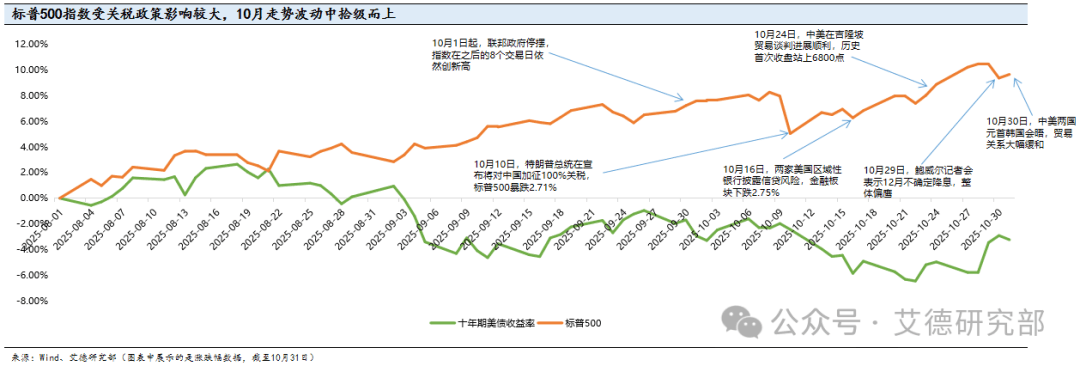
Core Insights - The article discusses the impact of U.S. government shutdowns and tariff policies on the stock market, particularly focusing on the fluctuations in the S&P 500 index and the implications for economic growth and investor sentiment [2][6]. Economic Impact - The U.S. government shutdown is expected to have a slight negative impact on GDP growth, with the stock market showing resilience initially, as the S&P 500 reached new highs [2]. - The IMF and the Federal Reserve have adjusted their GDP growth forecasts for the U.S. to 2.0% for 2025 and 2.1% for 2026, indicating a potential "soft landing" for the economy [9]. Market Reactions - Following President Trump's announcement of a 100% tariff on China, the S&P 500 experienced a significant drop of 2.71%, marking the largest single-day decline since the implementation of equivalent tariffs [2]. - Investor confidence has been on the rise, with the Sentix investor confidence index recovering from negative territory to a positive value of 4.2 in October [11]. Sector Performance - The technology sector is expected to lead in earnings growth, with the S&P 500 projected to see an earnings growth of 12.6% in 2025 and 13% in 2026, driven by significant capital expenditures in AI [21][41]. - The S&P 500's net profit margin reached 13.5% in Q3 2025, significantly above the 10.5% average from 2020, indicating strong profitability in the current economic environment [32]. Investment Trends - The article highlights a shift in market preference from value stocks to growth stocks, particularly in the technology sector, as AI continues to drive market dynamics [44]. - The capital expenditures of the top ten technology companies are expected to reach $398.2 billion in 2025, reflecting a 58.3% year-over-year increase, which is anticipated to bolster the S&P 500's performance [32][33]. Earnings Reports - As of October 31, 2025, 83% of S&P 500 companies reported earnings above expectations, the highest level in 17 quarters, with a notable 10.7% year-over-year growth in actual EPS for Q3 2025 [37].



博通Marvell,迎来一个新对手
半导体行业观察· 2025-11-03 00:39
Group 1: ASIC Business Overview - The ASIC business remains at the forefront of the semiconductor industry and is a key driver of the ongoing AI revolution [2] - ASICs provide unparalleled performance, energy efficiency, and cost-effectiveness compared to general-purpose chips like CPUs and GPUs, playing a crucial role in AI, high-performance computing, telecommunications, automotive, and consumer electronics [2] - The global ASIC market is projected to exceed $20 billion by 2025, with expectations to double in the next five years, driven by strong demand in AI, edge computing, and advanced connectivity (5G/6G) [3] Group 2: Major Players in ASIC Market - Broadcom and Marvell are significant semiconductor companies producing ASIC chips, while companies like Chipone, Silex, and Creative focus solely on ASIC services without competing directly with clients [3] - Broadcom's ASIC business has seen significant contributions to revenue, with a gross margin exceeding 50% in its custom ASIC business as of Q2 2025 [3] - Marvell has shifted focus to custom ASIC chips for AI, 5G, and cloud computing, reporting a 58% revenue growth in Q2 of FY 2026 due to demand in these sectors [4] Group 3: Intel's Strategic Moves - Intel's CEO, Pat Gelsinger, announced a new central engineering team to enhance efficiency in ASIC and design services, aiming to integrate Intel's CPU architecture with NVIDIA's AI capabilities [5] - This strategic move is intended to expand Intel's core x86 IP applications and leverage design advantages to provide a range of solutions from general computing to fixed-function computing [5] - Intel's approach contrasts with competitors like Broadcom and Marvell, focusing on utilizing its wafer fabrication and packaging technology to develop custom ASIC chips [6] Group 4: Industry Trends and Challenges - The trend of self-developed ASICs is gaining momentum among major cloud service providers (CSPs) like AWS, Google, Microsoft, and Meta, aiming to reduce reliance on general-purpose GPUs [8] - The ASIC industry faces a potential decline in margins due to increased competition from traditional IC design companies entering the ASIC space [9] - Despite the competitive landscape, the demand for advanced packaging and system performance integration is expected to drive growth opportunities for ASIC suppliers [9]


CPO,最新进展
半导体行业观察· 2025-11-03 00:39
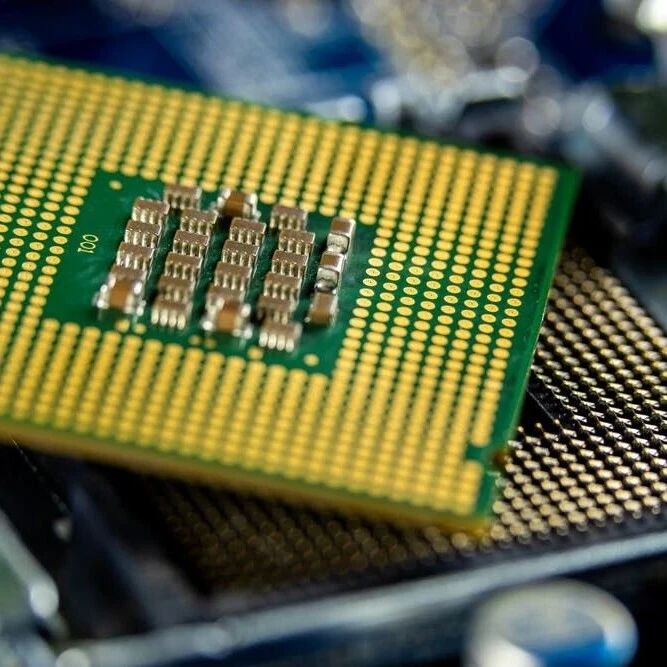
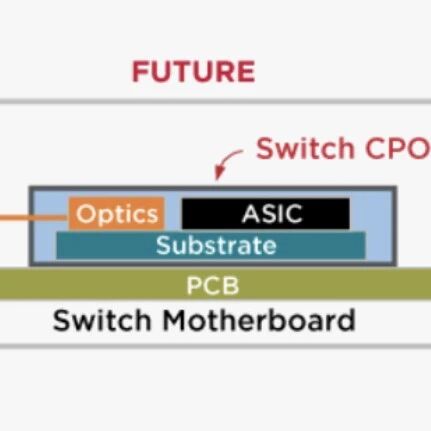
Core Insights - The article emphasizes the growing demand for interconnect bandwidth in data centers, driven by increasing internet traffic and the rapid expansion of AI large language models. However, this demand leads to higher power consumption, prompting the industry to seek improved energy efficiency in data transmission measured in picojoules per bit [2][4]. Group 1: CPO Technology Overview - Co-packaged optics (CPO) is emerging as a key solution to address the challenges of power consumption and efficiency in data center interconnects. By integrating electronic chips and silicon photonic chips in the same package, CPO significantly reduces power consumption and enhances performance [2][5]. - CPO technology offers several advantages over traditional pluggable optical modules, including reduced signal loss, lower power consumption, and increased connection density on the front panel [6][8]. Group 2: Industry Adoption and Developments - Major companies, including Broadcom and Marvell, are heavily investing in CPO technology, with Broadcom's products promising a 70% reduction in power consumption compared to pluggable transceiver solutions [8][10]. - NVIDIA is also adopting CPO technology in its upcoming network switches, claiming a 3.5 times increase in energy efficiency and 10 times network resilience compared to traditional networks [12][14]. Group 3: Market Growth and Future Predictions - The CPO market is projected to grow significantly, with revenues expected to rise from approximately $38 million in 2022 to $2.6 billion by 2033, reflecting a compound annual growth rate (CAGR) of 46% [14][16]. - Analysts predict that CPO technology will see large-scale deployment by 2027, with ongoing research and development activities at an all-time high [16][18]. Group 4: Performance and Testing - Broadcom's CPO technology has undergone extensive testing, achieving over 86,000 hours of high-temperature operating life (HTOL) testing, demonstrating stability and reliability in performance metrics [18][19]. - The performance of CPO solutions is characterized by low power consumption and high bandwidth density, with Broadcom reporting a 30% reduction in power and a 40% decrease in cost per bit for optical devices [6][19]. Group 5: Competitive Landscape - The competitive landscape for CPO technology is evolving, with companies like TSMC and NVIDIA leading advancements in device miniaturization and packaging technologies [10][12]. - The market is also seeing the emergence of startups like Celestial AI and LightMatter, which are developing next-generation CPO technologies that could surpass current offerings from established players [41][43].
Analyst Says Broadcom (AVGO) Among the Best AI Semiconductor Stocks to Benefit from Bull Run Until 2030
Yahoo Finance· 2025-11-02 17:18
Core Insights - Broadcom Inc (NASDAQ:AVGO) is identified as one of the top AI and non-tech stocks to watch during the latest earnings season [1] - The current bull market for AI semiconductor companies is expected to last for several more years, potentially until 2030, according to a semiconductor analyst at Bank of America [1][2] - The ongoing infrastructure cycles, such as 5G, are anticipated to last a decade or more, creating a favorable environment for companies like Broadcom [2] Company Analysis - Broadcom Inc is positioned well to benefit from the ongoing bull cycle in AI semiconductors, as it is considered one of the best stocks in this sector [2] - The investment strategy of Polen Focus Growth has recently included positions in both NVIDIA and Broadcom, indicating renewed confidence in these companies after a period of caution due to their cyclical business models [3] - Concerns regarding the cyclical nature of earnings growth have been a factor in the investment decisions related to Broadcom, highlighting the challenges in forecasting future performance [3]
Prediction: AMD Will Be Worth More Than Broadcom by 2030
Yahoo Finance· 2025-11-02 16:34
Core Viewpoint - Advanced Micro Devices (AMD) is predicted to surpass Broadcom in market capitalization by the end of 2030, with AMD's shares having increased by 114% in 2025, indicating strong growth potential [1][2]. Group 1: Market Capitalization and Predictions - AMD currently has a market cap of approximately $420 billion, while Broadcom's valuation stands at $1.76 trillion, suggesting significant growth is needed for AMD to reach a trillion-dollar valuation by 2030 [2]. - The prediction entails that AMD will not only become a trillion-dollar company but will also overtake Broadcom in market cap rankings [2]. Group 2: Growth Drivers - AMD's GPUs are priced lower than comparable Nvidia products, which could attract more customers, especially with upcoming product launches like the MI400X GPU in 2026 [5]. - A significant partnership with OpenAI to deploy six gigawatts of AMD data center chips by 2030 highlights AMD's growing influence in the AI sector [6]. - AMD's CPU/GPU business for PCs has been gaining market share, and its embedded processors have potential applications in emerging technologies such as autonomous vehicles [7]. Group 3: Competitive Landscape - While Nvidia remains the leader in AI chips, AMD is gaining traction in the data center GPU market, which could enhance its valuation if momentum continues [9].
Sam Altman Says OpenAI Revenue Exceeds $13 Billion Estimate, Says Could Reach $100 Billion By 2027 - Broadcom (NASDAQ:AVGO), Amazon.com (NASDAQ:AMZN)
Benzinga· 2025-11-02 05:05
Core Insights - OpenAI's revenue is significantly higher than the previously estimated $13 billion annually, with CEO Sam Altman emphasizing the company's strong financial performance [1] - OpenAI has made substantial infrastructure investments totaling $1.4 trillion, which Altman defends as necessary for future growth [1] - Despite generating billions in revenue, OpenAI continues to face persistent losses, with a reported loss of $12 billion last quarter [4][5] Revenue and Growth Projections - Altman projects that OpenAI's revenue could exceed $100 billion by 2027, suggesting that growth will be steep and rapid [9] - The company is betting on sustained expansion, particularly in the AI cloud services market, with ChatGPT expected to play a significant role [6] Infrastructure and Partnerships - OpenAI has secured major infrastructure agreements with companies like Nvidia, Broadcom, and Oracle, indicating strong industry partnerships [3] - Other tech giants, including Microsoft, Amazon, and Alphabet, are also investing heavily in AI infrastructure, spending hundreds of billions annually [3] Market Position and Future Plans - Altman has expressed confidence in OpenAI's growth prospects, pushing back against skeptics and highlighting the potential for AI to automate scientific work and generate significant value [6][7] - There is speculation about OpenAI going public in the future, with Altman acknowledging that the company may be well-suited for a public offering under certain market conditions [7][9]

综述|10月全球人工智能领域发展盘点
Xin Hua She· 2025-11-02 03:08
Core Insights - The global artificial intelligence (AI) sector continues to experience breakthroughs and cross-industry integration, while also facing challenges and risks [1][4] Research and Industry Dynamics - AI is driving innovation in research methodologies and intensifying competition among industries, exemplified by the development of the CellTransformer AI model for mapping mouse brains [1] - AI's involvement in the entire research process is increasing, yet most academic journals still prohibit AI from being listed as authors, indicating a need for exploration of academic norms [1] - The first academic conference where all papers were written and reviewed by AI was held on October 22, showcasing AI's potential in academic settings [1] Competitive Landscape - OpenAI launched ChatGPT Atlas on October 21, seen as a challenge to Google Chrome, with CEO Sam Altman describing it as a once-in-a-decade opportunity to reshape web browsing [2] - Microsoft and OpenAI announced a new agreement to strengthen their partnership, focusing on the establishment of a public benefit corporation [2] - AI applications are extending into critical infrastructure, as seen with Italy's Ministry of Culture developing an AI-based security system for protecting valuable artifacts [2] Strategic Developments and Infrastructure Investment - Major tech companies are projected to spend approximately $400 billion on AI infrastructure in 2023, highlighting the strategic importance of AI [3] - Significant collaborations and investments in AI infrastructure were announced, including a partnership between OpenAI and Broadcom for a custom AI accelerator and a $40 billion acquisition of a data center company [3] - The European Commission and Chinese authorities are implementing strategies to enhance AI applications in industrial and governmental sectors [3] Application and Risk Factors - The user base for generative AI in China is expected to reach 515 million by June 2025, indicating rapid adoption across various demographics [4] - Despite the growth, risks related to accuracy, ethics, and fairness in AI applications are becoming more apparent, with studies showing a high error rate in AI-generated news responses [4][5] - California's governor signed a law on October 13 to regulate AI chatbots, emphasizing the need for protective measures for vulnerable users [5] - The IMF's president warned that while AI can boost productivity, it may also exacerbate disparities within and between countries, calling for stronger policy responses [5]
