
BABA(BABA)

Search documents
「举家」托举千问,阿里在赌什么?
雷峰网· 2026-01-15 10:43
Core Viewpoint - The article discusses the transformation of Alibaba's Qianwen from a chat assistant to a task-oriented assistant, integrating various services within the Alibaba ecosystem to enhance user experience and streamline transactions [2][3][4]. Group 1: Product Updates and Features - Qianwen has integrated over 400 new functionalities, including food delivery, shopping, and travel booking, marking its evolution into a service-oriented AI [2][3]. - The update signifies Qianwen's first engagement with transactions, indicating a shift from experimental to business validation within Alibaba's ecosystem [3]. - The AI now directly connects user needs with Alibaba's services, allowing for a seamless process from demand to payment, enhancing user convenience [6][10]. Group 2: User Engagement and Growth - Qianwen achieved over 100 million monthly active users within two months of launch, primarily attracting students and white-collar workers [10]. - The app's download surged from around 10,000 to over 150,000 daily, attributed to Alibaba's promotional efforts and user curiosity [10]. - User inquiries for product recommendations increased by 300% month-over-month, indicating a shift towards Qianwen being used as a decision-making tool [11]. Group 3: Competitive Landscape and Strategic Positioning - Alibaba's ability to integrate transactions within its ecosystem gives Qianwen a competitive edge over other companies like ByteDance and Tencent, which face challenges in creating a closed-loop transaction system [13][16]. - The article highlights that while other companies have attempted similar integrations, Alibaba's established transaction capabilities allow for smoother implementation and lower organizational friction [13][15]. - Qianwen's approach to becoming a transaction entry point is seen as a significant step in the commercialization of AI applications, potentially influencing the broader industry [19][21]. Group 4: Future Implications and Challenges - The transition to a transaction-oriented AI raises questions about user satisfaction and the potential for dissatisfaction if recommendations do not meet expectations [17]. - As Qianwen becomes a transaction entry point, it will face regulatory, risk management, and compliance pressures [18]. - The long-term success of Qianwen will depend on its ability to convert initial user engagement into sustained growth and reliable transaction pathways [11][19].


阿里“折叠”,千问打响2026AI入口争夺战第一枪
Di Yi Cai Jing· 2026-01-15 10:10
Core Insights - The integration of Alibaba's ecosystem into the Qianwen app is expected to create significant new life service increments driven by AI technology [1][5] - Qianwen aims to execute 60%-70% of routine tasks in the digital world through AI within the next two years, enhancing efficiency in creative tasks as well [1][5] Group 1: Integration and Functionality - Qianwen app has announced full integration with Alibaba's ecosystem, allowing users to order food, book hotels, and purchase tickets directly through the app after initial authorization [1][5] - The integration process is gradual and currently in testing, with some functionalities like direct payment already available for certain services [5][6] - A dedicated project team has been established within Alibaba to facilitate the integration of Qianwen with various business units, focusing on user satisfaction rather than numerical targets [5][6] Group 2: Future Developments and Commercialization - Qianwen plans to incorporate third-party products in the future, with discussions already underway [6] - The app will enhance its model technology and expand its operational capabilities, particularly in understanding life scenarios [6] - Currently, Qianwen's recommendations for services like food delivery are not commercialized, focusing instead on user experience factors such as price and delivery time [6]
退货率30%,AI眼镜成“大厂丑儿子”?
3 6 Ke· 2026-01-15 10:06
Core Insights - The evolution of smart wearable devices is expanding from wrists and fingers to the nose bridge, marking the beginning of a "battle of hundreds of glasses" [2] - 2025 is defined as the "Year of AI Glasses," with numerous consumer-grade products set to launch, driving rapid growth in the global smart glasses market [3][4] - The competition will intensify in 2026 as more tech giants enter the market, with Google, Apple, and ByteDance announcing their AI glasses projects [5] Market Overview - In 2024, AI glasses sales are projected to be 1/125 of smartwatches, but with a staggering year-on-year growth of 533% [6] - The global shipment of AI glasses in 2024 is expected to reach 152,000 units, while the total shipment of wearable devices (smartwatches and bands) is estimated at 190 million units [10] - Morgan Stanley predicts that by 2028, global AI glasses shipments could reach 35 million units, with a compound annual growth rate of 96% [11] Product Categories - AI audio glasses combine headphones with glasses, focusing on high-quality audio and voice assistant features, making them the most accessible form of smart glasses [7] - AI camera glasses include first-person perspective recording capabilities, appealing to social media users and content creators [8] - AI+AR glasses incorporate augmented reality features, overlaying virtual information onto the real world [9] Consumer Trends - The Double Eleven shopping festival in 2025 saw a 25-fold increase in smart glasses sales on Tmall, indicating strong consumer interest [12] - AI glasses are categorized as a high-growth segment alongside AI smartphones and learning devices, with sales growth exceeding 100% [12] - The market's enthusiasm is driven more by marketing efforts from major companies than by widespread consumer demand [29] Sales Performance - Xiaomi and Rokid are leading in sales, with Xiaomi's glasses priced at 1,899 yuan and Rokid's at 4,299 yuan, targeting different consumer segments [33] - Popular features among consumers include real-time translation, first-person shooting, high-definition calls, and smart voice assistants [34] - Despite high sales, the average return rate for AI glasses is around 30%, indicating potential issues with consumer satisfaction [32][38] Challenges and Future Outlook - The main challenges for AI glasses include balancing weight, computing power, and battery life, often referred to as the "impossible triangle" [44] - The lack of physical retail experiences contributes to high return rates, as potential buyers face information asymmetry [45] - The industry is exploring the concept of "necessity" for AI glasses, questioning whether their functionalities can support daily use like smartphones [46]



Qwen超强模型+完整生态,阿里要打造中国AI龙头标的
3 6 Ke· 2026-01-15 10:01
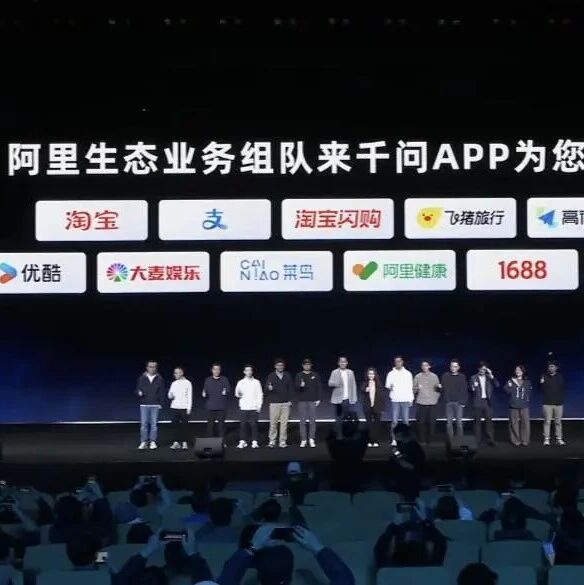
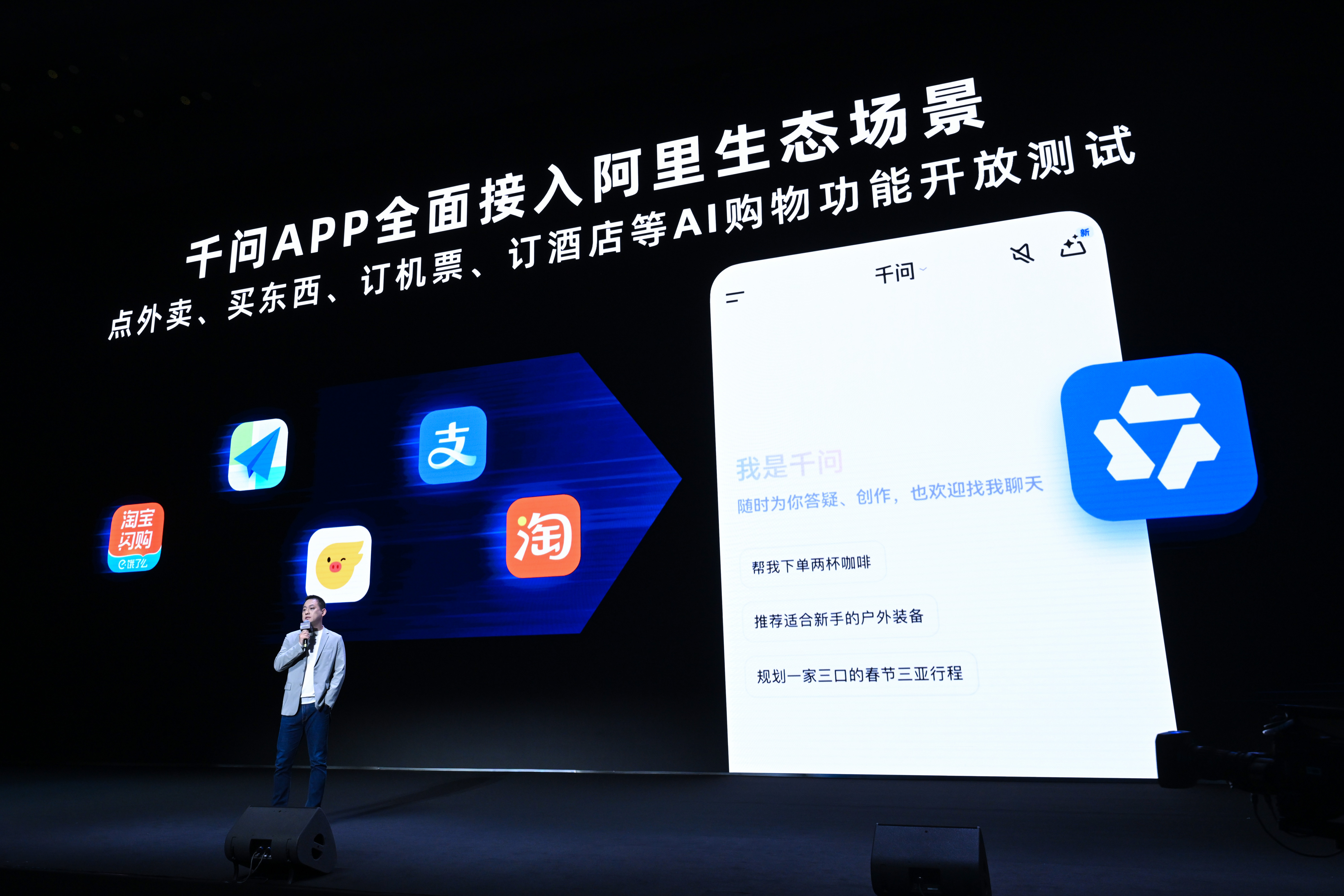
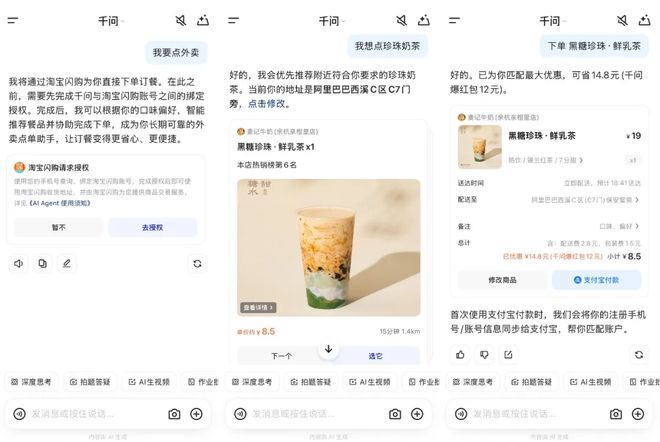
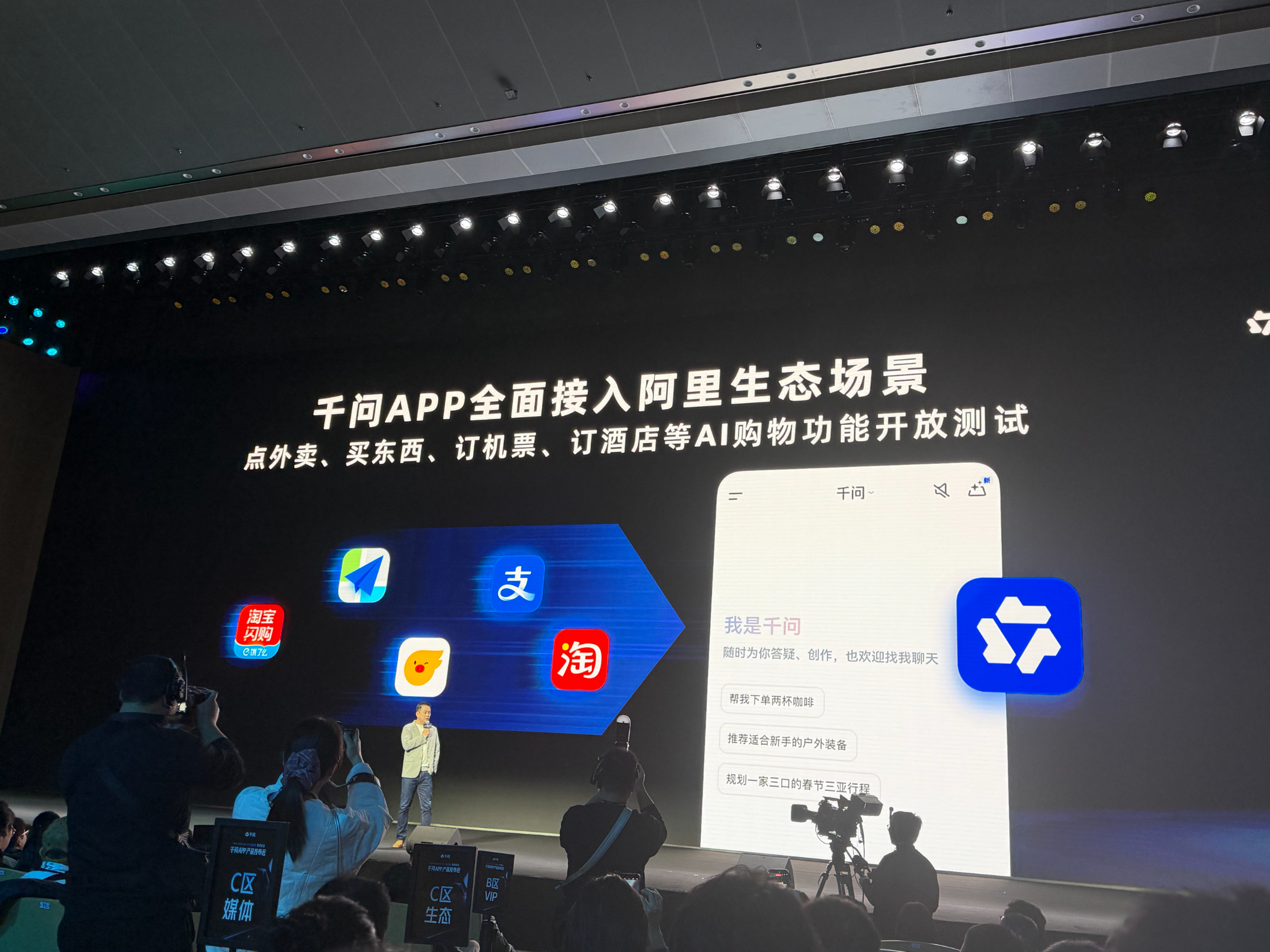
当大模型带来的对话新鲜感逐渐褪去,行业逐渐意识到,单纯的"陪聊"并不能构成商业闭环。 1月15日,千问App宣布全面接入淘宝闪购、支付宝、淘宝、飞猪、高德等阿里生态场景,全球范围内先一步实现AI超级应用内点外卖、买东西、订机票、 订酒店等AI购物功能。目前,该功能所有人开放测试。测试发现,在外卖场景,用户已无需跳转,可在千问App端内完成推荐、点餐、支付全过程。 而今天千问给出的答案是"意图即交易"。此次上新的千问App拥有"双核"驱动: 大脑:通义系列大模型的理解与规划能力,负责拆解复杂需求。 手脚:阿里生态的系统级接入,可调用高德规划路线,调用飞猪查宠物友好酒店,调用淘宝/闪购推荐露营装备,调用支付宝支付和获取政务服务等。 这是又一次阿里生态多业务聚合,集中力量办大事。自去年推出淘宝闪购以来,阿里在大消费、AI等多个战场生态聚合的趋势越来越明显,体现其围绕主 业形成合力,坚决打胜仗的决心。 这不仅是阿里"最强大脑"与"最丰富生态"的合体,更是中国科技公司用AI重塑购物的一次抢跑。面向Agent时代,阿里AI与大消费业务之间形成合力所释放 的巨大想象空间。 01. 新增400多个新功能,阿里超级"大脑"与" ...

北水动向|北水成交净卖出15.15亿 千问App接入阿里业务生态 北水抢筹阿里(09988)近20亿港元
Zhi Tong Cai Jing· 2026-01-15 09:56
Group 1 - Northbound trading recorded a net sell of 15.15 billion HKD, with a net buy of 19.3 billion HKD from the Shanghai Stock Connect and a net sell of 34.46 billion HKD from the Shenzhen Stock Connect [1] - Alibaba (09988) received a net buy of 19.76 billion HKD, driven by the launch of the Qianwen App, which integrates various services like Taobao and Alipay, creating a comprehensive AI shopping experience [3] - Tencent (00700) saw a net buy of 6.42 billion HKD, supported by positive growth forecasts in gaming, advertising, and financial services, with an expected 10% year-on-year growth in financial technology and enterprise services revenue for Q4 [3] Group 2 - Semiconductor stocks were favored, with SMIC (00981) and Hua Hong Semiconductor (01347) receiving net buys of 1.8 billion HKD and 1.14 billion HKD respectively, following TSMC's strong Q4 earnings report showing a 35% profit increase [4] - Meituan-W (03690) had a net buy of 1.28 billion HKD, as regulatory actions against the food delivery sector may reshape competition and improve profitability [4] - China Mobile (00941) faced a net sell of 7.91 billion HKD, influenced by a drop in international oil prices following comments from President Trump regarding the situation in Iran [5]


2026外卖行业有了新风向标!千问APP全面接入淘宝闪购
Di Yi Cai Jing Zi Xun· 2026-01-15 09:45
Core Insights - Alibaba's Taobao Flash Purchase has transitioned to a new competitive strategy by integrating AI capabilities, allowing users to place orders through natural language commands, marking a shift from traditional competition to an "intelligent race" in the local service industry [1][2][10] Group 1: AI Integration and User Experience - The integration of the Qianwen App with Taobao Flash Purchase enables a seamless ordering experience, where users can simply state their requests, and the system handles the entire process from merchant matching to payment [1][2] - This development signifies the emergence of a true consumer-grade AI agent, transforming the user experience by providing personalized recommendations and making digital services accessible to special groups like the elderly and visually impaired [2][4] Group 2: Industry Transformation and Competitive Landscape - The integration of AI into local services represents a fundamental shift in service models, moving from "users seeking services" to "services proactively responding," thus unlocking previously dormant demand [2][4] - Taobao Flash Purchase has optimized its order structure, with a focus on high-value users and non-food categories, leading to a reduction in expected losses to 20 billion yuan, indicating a strategic shift from scale to value innovation [4][5] Group 3: Ecosystem Synergy and Competitive Advantage - The collaboration of various Alibaba services, including Taobao, Gaode, and Fliggy, supports over 400 task capabilities, enhancing the overall service ecosystem [3][5] - The "AI + ecosystem" model creates a competitive moat for Taobao Flash Purchase, emphasizing understanding consumer needs and efficiently meeting complex demands rather than merely competing on delivery speed or subsidies [5][6] Group 4: Future Outlook and Industry Direction - The shift towards AI-driven services indicates that future competition in the local consumption sector will focus on intelligent service depth, ecosystem integration, and user value enhancement rather than traditional promotional tactics [9][10] - Alibaba's strategic move to embed AI deeply into core consumer scenarios suggests that true growth in the current market will stem from redefining efficiency, experience, and ecosystem value rather than relying on subsidies [10][11]
Qwen超强模型+完整生态,阿里要打造中国AI龙头标的
36氪· 2026-01-15 09:41
超级AI助手迈入Agent时代。 文| 陈曦 当大模型带来的对话新鲜感逐渐褪去,行业逐渐意识到,单纯的"陪聊"并不能构成商业闭环。 1月15日,千问App宣布全面接入淘宝闪购、支付宝、淘宝、飞猪、高德等阿里生态场景,全球范围内先一步实现AI超级应用内点外卖、买东西、订机 票、订酒店等AI购物功能。目前,该功能所有人开放测试。测试发现,在外卖场景,用户已无需跳转,可在千问App端内完成推荐、点餐、支付全过程。 这是又一次阿里生态多业务聚合,集中力量办大事。自去年推出淘宝闪购以来,阿里在大消费、AI等多个战场生态聚合的趋势越来越明显,体现其围绕主 业形成合力,坚决打胜仗的决心。 这不仅是阿里"最强大脑"与"最丰富生态"的合体,更是中国科技公司用AI重塑购物的一次抢跑。面向Agent时代,阿里AI与大消费业务之间形成合力所释 放的巨大想象空间。 新增400多个新功能,阿里超级"大脑"与"手脚"的系统级会师 去年,全球的AI模型公司都在焦虑同一个问题:模型越来越强,但离商业变现的物理世界依然很远。 最近,OpenAI和Perplexity不再满足于做陪聊的空军,他们正在通过Shopping、research等功能试图 ...

超越谷歌,阿里千问率先推出AI购物功能
Guo Ji Jin Rong Bao· 2026-01-15 09:32
Core Insights - Qianwen App has integrated with Alibaba's ecosystem, enabling AI shopping functionalities such as ordering food, purchasing items, and booking flights, marking a significant advancement in AI-driven e-commerce [1][4] - Alibaba's unique "model + ecosystem" integration allows it to outperform competitors like Google in AI shopping, leveraging its extensive internal resources for seamless user experiences [1][4] Group 1: AI Shopping Functionality - Users can place orders through Qianwen App using simple voice commands, which then utilizes Taobao's services to generate orders and process payments via Alipay without switching applications [1][3] - The app provides personalized shopping recommendations based on user needs, utilizing Taobao's vast product database and review system to create tailored suggestions [3][4] Group 2: Cross-Application Collaboration - Qianwen App demonstrates strong cross-application capabilities, allowing users to book flights and hotels through Fliggy and plan itineraries with Amap, enhancing the overall user experience during travel [3][4] - The app can even assist users in making restaurant reservations by directly placing calls, showcasing its versatility in various consumer scenarios [3] Group 3: Market Position and Future Outlook - With the launch of full-scale testing, Alibaba positions itself as the first major tech company to offer a comprehensive "search-decision-payment-fulfillment" AI functionality in the global market [4] - The global retail market is projected to reach $3 trillion to $5 trillion by 2030, driven by AI tools and smart commerce, indicating significant growth potential for companies like Alibaba [4]
2026外卖行业有了新风向标!千问APP全面接入淘宝闪购
第一财经· 2026-01-15 09:22
Core Viewpoint - Alibaba's Taobao Flash Purchase has transitioned to a new competitive strategy by integrating AI capabilities, allowing users to place food orders through natural language commands, marking a shift from traditional competition to an "intelligent race" in the local life service industry [1][2][10]. Group 1: AI Integration and User Experience - The integration of the Qianwen App with Taobao Flash Purchase enables a seamless ordering experience, where users can simply state their requests, and the system handles the entire process from merchant matching to payment [1][2]. - This development signifies the emergence of a true consumer-grade AI agent, which can execute tasks rather than just respond to queries, fundamentally changing the user interaction model in local services [2][4]. - The AI's ability to provide personalized recommendations and streamline the ordering process enhances convenience for all users, including those with special needs [3][4]. Group 2: Business Model Evolution - Taobao Flash Purchase has shifted its focus from scale to structural optimization and unit economics improvement, with a notable increase in GMV share and a stable daily order volume exceeding 10 million [6][7]. - The integration of AI allows for proactive service delivery, transforming the business model from reactive to one that anticipates user needs, thus creating a self-reinforcing cycle of user engagement and data enrichment [7][10]. - The collaboration of various Alibaba services, such as Taobao, Alipay, and Gaode, enhances the overall service capability, allowing for over 400 task execution functions [4][8]. Group 3: Competitive Landscape and Future Outlook - The competitive landscape is shifting towards understanding consumer intent and executing tasks efficiently, rather than merely competing on delivery speed or promotional offers [9][10]. - Alibaba's commitment to a value-driven approach, focusing on user experience and ecosystem synergy, positions it favorably against competitors who rely on traditional methods [10][12]. - The integration of AI into local life services is expected to redefine the industry, emphasizing the importance of a comprehensive ecosystem that combines products, payment systems, and logistics [10][12].
阿里千问上线“一句话点外卖”功能,和豆包助手走了不同路线
Nan Fang Du Shi Bao· 2026-01-15 09:21
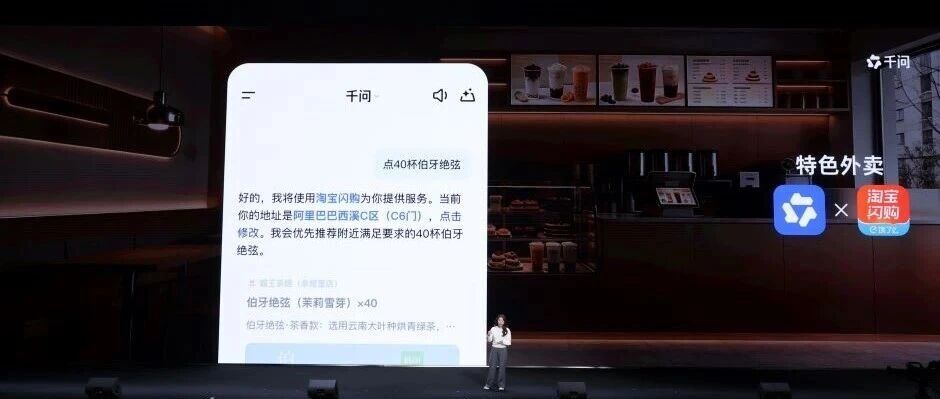
Core Insights - Alibaba's AI application "Qianwen" has launched a life assistant feature that allows users to order food, book flights, and hotels, and find restaurants through simple voice commands, currently integrated only within Alibaba's ecosystem [1] - The AI agent utilizes API technology to provide a seamless user experience, enabling automatic shopping, smart price comparisons, and various life services [2] - The rise of mobile AI agents is seen as a significant future traffic entry point, with competition intensifying among major tech firms [2][3] Group 1 - The "Qianwen" app can recommend nearby coffee shops using user location data and facilitate transactions through Alipay, allowing users to complete orders without leaving the app [1] - For hotel and flight bookings, "Qianwen" connects to Alibaba's Fliggy platform, offering multiple options based on price and comfort, with users redirected to the booking page for final selection [1] - The app has seen a 300% month-on-month increase in user inquiries for product recommendations since its launch [1] Group 2 - The AI agent's functionality involves recognizing user commands, retrieving data from partner platforms, and generating pre-orders while requiring user confirmation for sensitive actions like payment [2] - In contrast to "Qianwen," the Doubao mobile assistant from ByteDance uses screen reading and simulated operations, which raises privacy concerns and has led to temporary limitations on its capabilities [3] - The API interface approach faces challenges in adoption, as few apps provide these interfaces, making it difficult for mobile AI agents to meet diverse user needs [3]