BABA(BABA)

Search documents
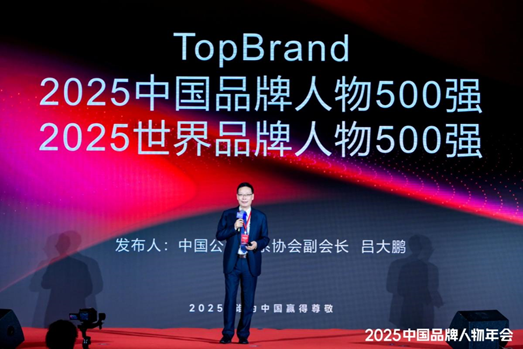
《TopBrand 2025世界品牌人物500强》榜单发布
Xin Lang Cai Jing· 2026-01-09 10:57
Core Insights - The 2025 China Brand Person Annual Conference will be held from December 28 to 30 in Shenzhen, focusing on the theme "Who Earns Respect for China" and featuring various activities to review the history of Chinese brand development and explore new trends and opportunities in brand building [1][9]. Group 1: Event Overview - The conference is organized by the Brand Alliance and the Huaxia Cultural Promotion Association, with support from several local organizations [1][9]. - Activities include an opening ceremony, main forum, honor ceremony, and closed-door discussions [1][9]. Group 2: Top Brand Person Rankings - The "Top Brand 2025 World Brand Person 500" list was released, highlighting the top three individuals: Elon Musk, Jensen Huang, and Sergey Brin [3][11]. - The list is based on a sample of over 10,000 influential brand figures, evaluated on criteria such as industry authority, social influence, social responsibility, public image, and attention [3][11]. Group 3: Notable Rankings - The top ten individuals in the rankings include: 1. Elon Musk (Tesla) - Brand Index: 28613.62 2. Jensen Huang (NVIDIA) - Brand Index: 25676.29 3. Sergey Brin (Google) - Brand Index: 16337.59 4. Mark Zuckerberg (Meta) - Brand Index: 15426.22 5. Taylor Swift - Brand Index: 14152.01 6. Bill Gates (Microsoft) - Brand Index: 14050.16 7. Sam Altman (OpenAI) - Brand Index: 12702.13 8. Larry Ellison (Oracle) - Brand Index: 11206.99 9. Ren Zhengfei (Huawei) - Brand Index: 11092.05 10. LeBron James - Brand Index: 11071.39 [6][11].






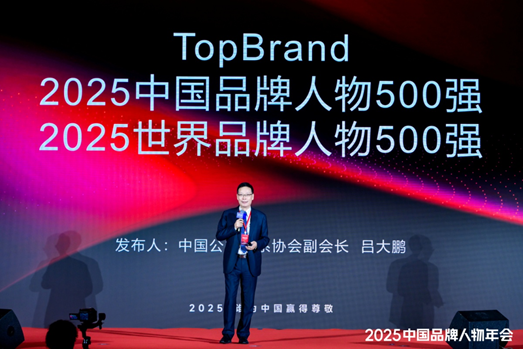
《TopBrand 2025中国品牌人物500强》榜单发布
Xin Lang Cai Jing· 2026-01-09 10:57
Group 1 - The 2025 China Brand Person Annual Conference will be held from December 28 to 30 in Shenzhen, focusing on the theme "Who Earns Respect for China" [1][10] - The event will include a series of activities such as an opening ceremony, main forum, honor ceremony, and closed-door discussions to review the history of Chinese brand development and explore new trends and opportunities in brand building [1][10] Group 2 - The "Top Brand 2025 China Brand Person 500" list was released by Lv Dapeng, Vice President of the China Public Relations Association, highlighting the overall characteristics and industry trends of the listed individuals [10][12] - This list has been publicly released for the seventh consecutive year, continuously recording and promoting the growth and influence of Chinese brand figures [10][12] Group 3 - The top three individuals in the 2025 China Brand Person 500 are Ren Zhengfei, Liu Qiangdong, and Yu Chengdong, with Dong Mingzhu, He Xiaopeng, Li Shufu, Wang Chuanfu, Jack Ma, Liang Wenfeng, and Wang Ning following in positions 4 to 10 [3][12] - The selection process involved analyzing over 5,000 influential brand figures based on criteria such as industry authority, social influence, sense of social responsibility, public image, and attention [3][12]




Alibaba Steps Up AI Race With Potential Nvidia Mega Order
Benzinga· 2026-01-09 10:41
Group 1: Market Reaction - Alibaba Group's stock rose over 5% following reports of potential expanded access to Nvidia's H200 AI chips in China [1] - The stock experienced a slight decline of 2.51% in premarket trading on Friday, settling at $150.59 [6] Group 2: Nvidia's Sales Strategy - Nvidia is tightening its sales approach for H200 chips to China, requiring full upfront payment and rigid terms from Chinese customers [2] - The company is navigating geopolitical tensions while attempting to reopen the Chinese market [2] Group 3: Regulatory Developments - Chinese regulators are preparing to approve limited imports of H200 chips for specific commercial uses, while restricting access for military and sensitive government entities [3] - There are indications that some Chinese tech firms may need to pause orders and consider purchasing domestically made chips alongside Nvidia products [3] Group 4: Alibaba's Interest - Alibaba has expressed interest in ordering over 200,000 units of the H200 chips from Nvidia [4] Group 5: Analyst Insights - Analysts believe that the expected approval for domestic companies to use Nvidia's H200 chips would benefit firms like Alibaba [5] - The H200 chip is considered an older-generation chip that can still be exported to China amid ongoing geopolitical tensions [5] Group 6: Alibaba's AI Investment - Alibaba has become the largest AI spender among Chinese tech companies, with a reliable chip supply likely to bolster its cloud business [6] - The company's stock has surged 92% over the past 12 months, reflecting strong investor confidence in its AI investments and growth, particularly in cloud computing [6]



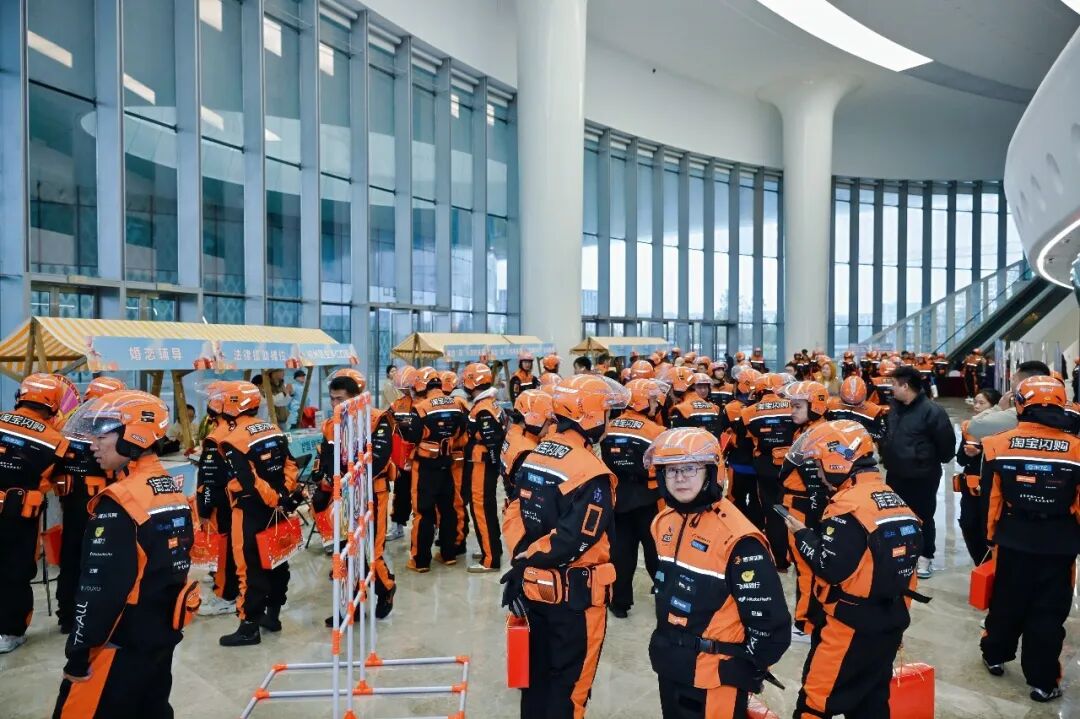
阿里巴巴“淘宝闪购”力争第一 香港科技股行业格局生变
Di Yi Cai Jing· 2026-01-09 10:13
"阿里巴巴加大相关业务投入,正面影响在财务数据没有那么快体现。"光大证券国际策略师伍礼贤称, 对阿里巴巴总体看法偏正面。具体来看,传统电商及新兴本地生活板块虽处于高额投入期,财务端成本 压力即时显现,但潜在收益有望随后释放。核心电商业务体量扩张需依托用户基数累积,效果呈现存在 滞后,人工智能赛道则具备更快兑现能力。 "关键要看投入能否换来长远增长。"关于互联网科技股的前景,伍礼贤认为,当前港股科技板块相对大 盘偏弱,中长期修复空间依然比较大。互联网科技股估值较海外同业处于低点,随着技术迭代及商业化 落地,将会迎来估值修复。 1月8日下午,阿里巴巴(09988.HK)面向投资者的交流信息显示,淘宝闪购在最新季度取得关键进 展。阿里集团对于淘宝闪购2026年的投入战略明朗化:闪购首要目标是份额增长,会坚定加大投入以达 到市场绝对第一。 1月8日下午阿里巴巴一度加速下跌,全天跌2.26%,盘中一度创出141港元阶段新低,相比10月高点累 计下跌约25%;隔夜美股大幅反弹超过5%,引发投资者憧憬;1月9日香港交易时段,阿里巴巴高开后 回落,半天上涨2.81%,中午报收146.6港元,成交近115亿港元,京东集团(09 ...

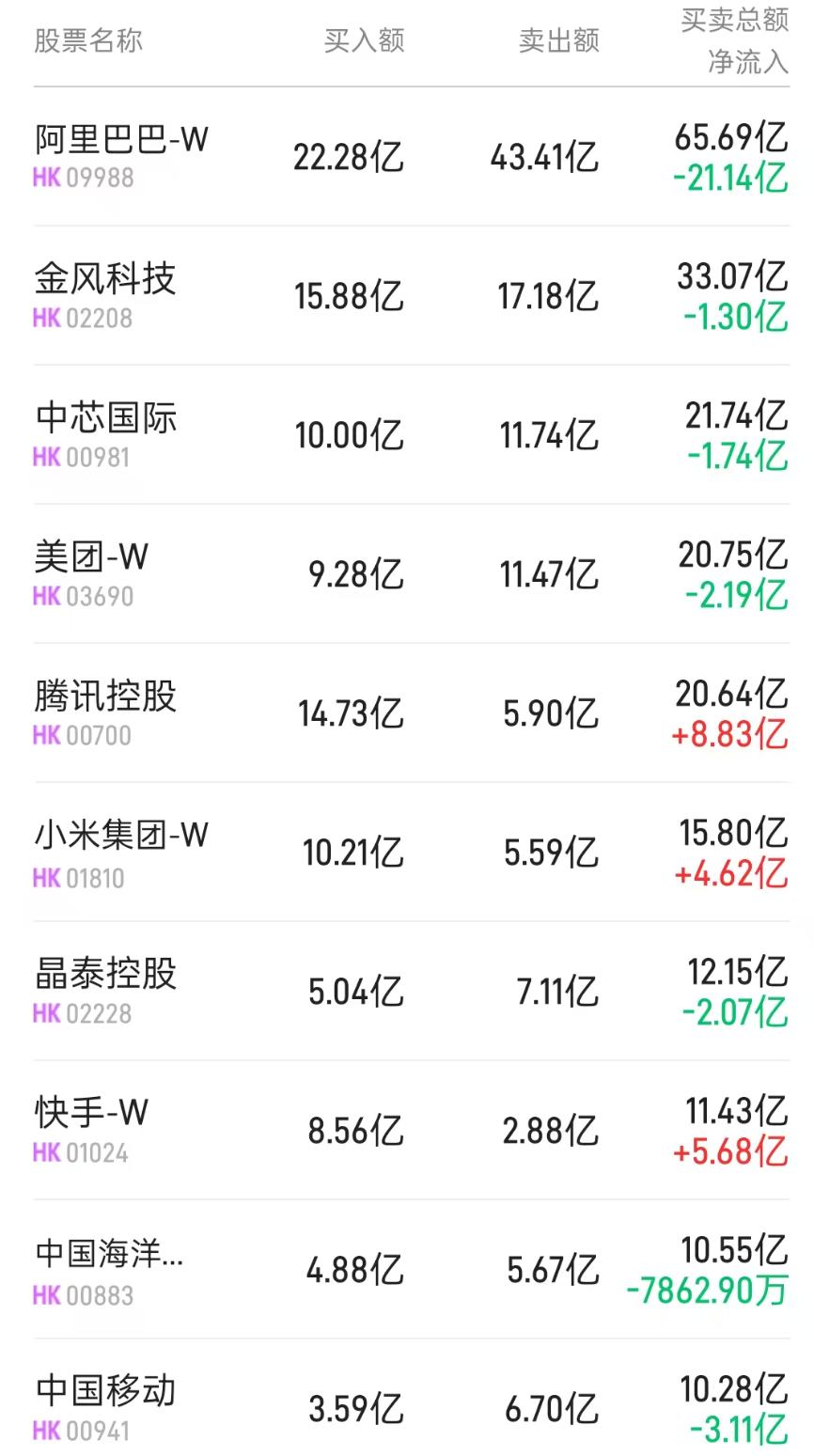
北水动向|北水成交净买入68.15亿 阿里(09988)拟加大淘宝闪购投入 北水全天抛售阿里超26亿港元
智通财经网· 2026-01-09 10:02
Group 1 - The Hong Kong stock market saw a net inflow of 68.15 billion HKD from northbound trading, with 16.6 billion HKD from Shanghai and 51.55 billion HKD from Shenzhen [1] - The most bought stocks included Tencent (00700), Xiaomi Group-W (01810), and Kuaishou-W (01024), while the most sold stocks were Alibaba-W (09988), China Mobile (00941), and Goldwind Technology (02208) [1][2] Group 2 - Alibaba-W (09988) had a net outflow of 26.21 billion HKD, with a total trading volume of 65.69 billion HKD, indicating significant selling pressure [2][7] - Tencent (00700) received a net inflow of 14.11 billion HKD, supported by a report from Morgan Stanley highlighting its AI strategy and high potential for monetization [4][5] - Xiaomi Group-W (01810) attracted a net inflow of 8.69 billion HKD, with plans for 200 billion HKD in R&D investment over the next five years [5] - Kuaishou-W (01024) saw a net inflow of 7.76 billion HKD, driven by strong performance in AI-generated content [5] - Semiconductor company SMIC (00981) had a net inflow of 6.92 billion HKD, following a strategic acquisition that is expected to positively impact earnings [6] - Goldwind Technology (02208) faced a net outflow of 1.94 billion HKD, despite potential positive catalysts from its stake in Blue Arrow Aerospace [7]




阿里巴巴“淘宝闪购”力争第一,香港科技股行业格局生变
Di Yi Cai Jing Zi Xun· 2026-01-09 09:57
港股100研究中心顾问余丰慧向第一财经记者表示,阿里巴巴在即时零售与人工智能领域的推进,对其 他互联网企业产生显著外溢效应。即时零售方面,阿里加大闪购等资源投入,行业竞争强度随之提升, 美团、京东需同步加快布局,通过优化服务及运营效率维持份额。人工智能方面,阿里持续迭代大模型 及应用,促使腾讯、百度等公司加速技术落地,行业整体研发节奏加快,具备技术储备、增长路径清晰 的企业获得更多关注。 1月8日下午,阿里巴巴(09988.HK)面向投资者的交流信息显示,淘宝闪购在最新季度取得关键进 展。阿里集团对于淘宝闪购2026年的投入战略明朗化:闪购首要目标是份额增长,会坚定加大投入以达 到市场绝对第一。 1月8日下午阿里巴巴一度加速下跌,全天跌2.26%,盘中一度创出141港元阶段新低,相比10月高点累 计下跌约25%;隔夜美股大幅反弹超过5%,引发投资者憧憬;1月9日香港交易时段,阿里巴巴高开后 回落,半天上涨2.81%,中午报收146.6港元,成交近115亿港元,京东集团(09618.HK)上涨近3%,美 团(03690.HK)下跌2.38%。 业内人士认为,阿里巴巴这一举动加剧了竞争,而本身有更多人工智能方面的 ...

2025年中国人形机器人320起融资!
机器人圈· 2026-01-09 09:56
| 自变量机器人 | 具身大模型 | 2025年2月18日 | Pre-A++4 | 数亿元 | 光速光合、君联资本、北京机器人产业基金、 田原谷本 | | --- | --- | --- | --- | --- | --- | | 中科第五纪 | 具身大模型 | 2025年2月19日 | 种子轮 | 未披露 | 草源亚洲 | | 重要图 | 人形机器人 | 2025年2月20日 | A48 | 3亿人民币 | 百度风投、高瓴资本、同歌创投、IDG资本、 | | | | | | | 蚂蚁集团 | | 玄鸟科智 | RV减速机 | 2025年2月20日 | 股权投资 | 未披露 | 成都高投 | | 干诀科技 | 具身大模型 | 2025年2月21日 | 股权投资 | 未披露 | 华业天成 | | 正德智控 | 电机 | 2025年2月25日 | 股权投资 | 1亿人民币 | 安徽省铁路发展基金 | | 松延动力 | SOLIns 人形机器人 | Int Research 2025年2月25日 | A+轮 | 1亿人民币 | 华强资本、彬复资本 | | 源升智能 | 灵巧手 | 2025年2月26日 | 天使轮 ...

三巨头增长30%,超市又行了?
和讯· 2026-01-09 09:01
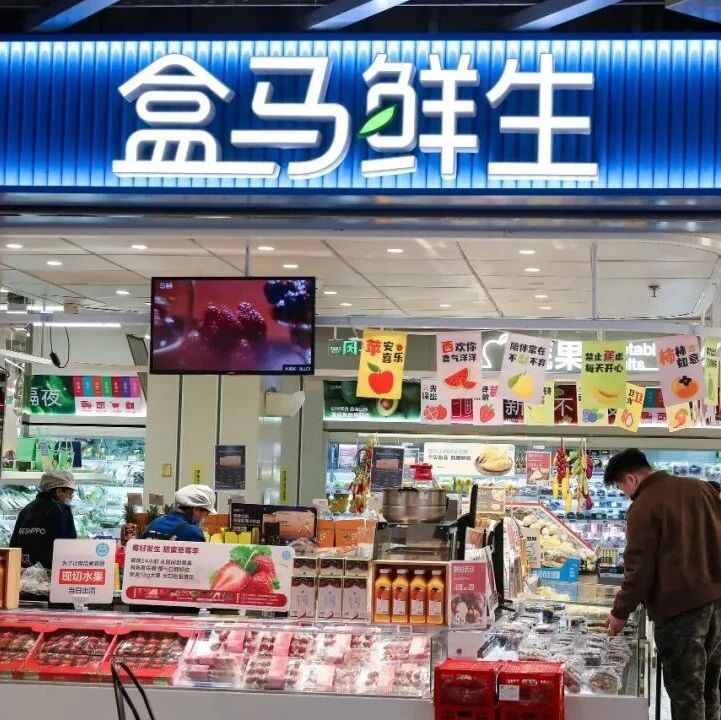
Core Viewpoint - The retail industry is experiencing significant growth driven by key players like Fat Donglai, Hema, and Sam's Club, while traditional supermarkets are undergoing substantial upgrades to compete in a challenging market environment [4][19]. Group 1: Company Performance - Fat Donglai achieved a record annual sales of 23.53 billion, a 38.71% increase from 16.96 billion in 2024, with its flagship store in Xuchang generating nearly 6 billion in sales [5][6]. - Hema's overall revenue growth exceeded 40% in 2025, with a projected GMV of over 100 billion by the end of the fiscal year [11][12]. - Sam's Club reported a sales figure surpassing 140 billion, marking a 40% increase from 100.5 billion in 2024, supported by an aggressive expansion strategy [16][18]. Group 2: Industry Trends - The overall retail sector remains under pressure, with less than 40% of chain supermarkets achieving positive sales growth in 2025, highlighting a competitive landscape [19]. - The industry is witnessing a "Matthew Effect," where leading companies are gaining market share while weaker players struggle, prompting a shift from broad growth strategies to focused innovations [20][23]. - Traditional supermarkets are enhancing their offerings by improving fresh produce and convenience services, aiming to redefine their neighborhood value [21][25]. Group 3: Strategic Shifts - Companies are increasingly focusing on supply chain capabilities rather than just expanding store numbers, with strategies like Sam's global sourcing and Hema's direct supply of fresh produce [24]. - The "Fat Reform" trend is evident as traditional retailers like Yonghui and Bubugao adopt operational strategies from Fat Donglai, resulting in significant increases in customer traffic and profitability [25][26]. - The Ministry of Commerce has encouraged innovation and quality improvement in the retail sector, emphasizing the importance of supply chain optimization and digital empowerment for industry transformation [26].
大摩:中国在AI竞赛中拥有独特优势,阿里是“最佳赋能者”,腾讯具“最高2C变现潜力”
Hua Er Jie Jian Wen· 2026-01-09 08:41
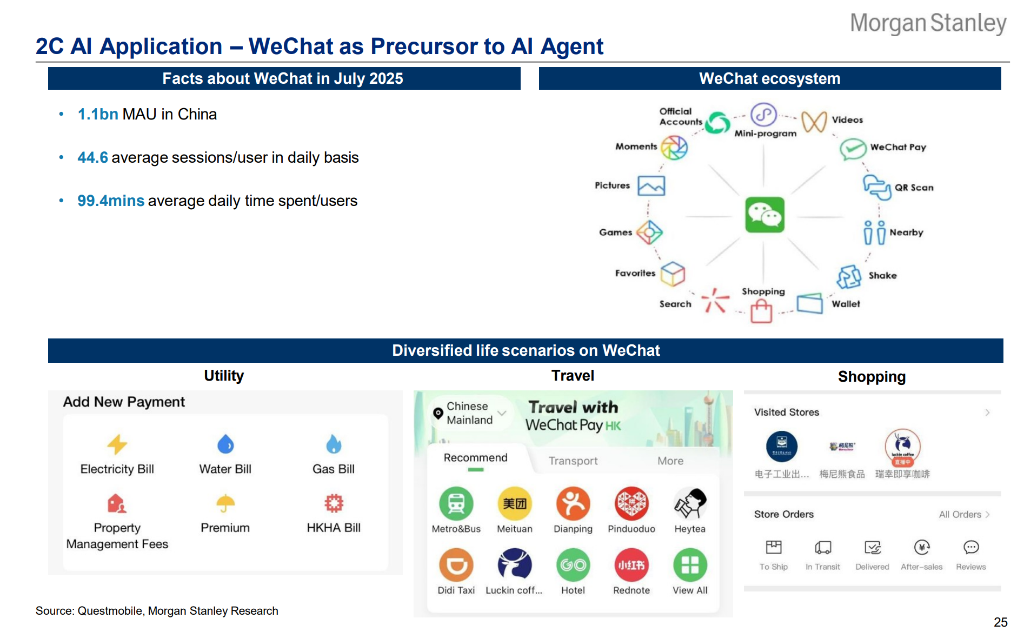
Core Insights - Morgan Stanley believes that the market is undergoing a structural transformation, with China adopting a unique "open" model strategy to counter the world's "closed" systems in the global AI race [1] - The report indicates that China has captured a significant share of the top SOTA models, with expectations that the total addressable market (TAM) for cloud AI in China will reach $50 billion by 2027 [1] - Investors should focus on the monetization capabilities and ecological barriers at the application layer rather than just the infrastructure arms race [1] Market Dynamics - China holds a comparative advantage in data volume, power supply, and engineering talent, which supports the growth of AI applications [1] - The dual-track evolution of "super apps" and "AI-native applications" is evident in the Chinese market, with WeChat emerging as a leading AI agent with 1.1 billion monthly active users and high user engagement [2][5] Application Landscape - AI-native applications from companies like ByteDance, Baidu, and Alibaba are rapidly evolving from simple chatbots to more complex emotional interactions and content creation tools [5] - The penetration of AI in enterprise sectors is reshaping industry dynamics, with strong deployment intentions for generative AI across various verticals such as advertising, healthcare, and finance [11] Competitive Positioning - Alibaba is positioned as the "best AI enabler" in China, leveraging its cloud infrastructure and integration with e-commerce and other business scenarios [14] - Tencent is recognized for its high consumer monetization potential through its WeChat ecosystem, which provides a natural barrier in content ecology [14] - ByteDance is defined as a "full-stack AI leader," with a comprehensive layout from underlying engines to various AI-native applications [14] Investment Focus - Investors are encouraged to monitor the speed at which these tech giants implement AI in their respective domains, particularly those that can translate AI technology into actual revenue and profits [15]
别低估了,淘宝闪购这一战的决心
Feng Huang Wang· 2026-01-09 08:35
Core Viewpoint - Alibaba is determined to lead the next retail revolution by significantly increasing its investment in instant retail, with a goal of market share growth by 2026 [2][4][18] Group 1: Strategic Importance of Instant Retail - The battle for instant retail is not just a business competition but a critical fight for Alibaba's future business model [5][9] - Instant retail is seen as a necessary response to the saturation of traditional e-commerce growth, with consumer demand for immediacy rapidly increasing [6] - Failure in this sector could result in Alibaba losing not just a business segment but also its influence in the evolving consumer landscape [9] Group 2: Investment Strategy - Alibaba plans to invest in three key dimensions to enhance its competitive edge: improving user and order value, expanding product categories, and optimizing fulfillment experiences [10][11] - The focus is on elevating the perception of instant retail from low-value delivery services to high-quality consumer experiences [11] - By integrating its extensive supply chain from Tmall and Hema, Alibaba aims to create a differentiated advantage in instant retail [15][17] Group 3: Efficiency and Long-term Vision - Despite a reported loss of approximately 20 billion yuan in the fourth quarter, Alibaba's loss reduction is outpacing competitors, indicating a strategic approach to spending [8][14] - The company is leveraging data and technology to ensure that every subsidy is effectively directed towards improving business fundamentals [8][14] - Alibaba's long-term strategy involves transforming instant retail into a service-oriented model, which is seen as a calculated investment for future growth [8][14][18] Group 4: Competitive Advantages - Alibaba's unique supply chain integration provides a significant barrier to entry for competitors, making it difficult for them to replicate its model [15][17] - The synergy between its physical retail networks and instant delivery capabilities enhances operational efficiency and product variety [17] - The shared consumer data across platforms allows for precise inventory management and targeted marketing, creating a more responsive retail environment [17]