BABA(BABA)

Search documents
给商业大佬颁“年终奖”:刘强东、王兴兴……拿走了啥奖?
Nan Fang Du Shi Bao· 2026-01-07 04:44
Core Insights - The year 2025 has seen significant developments in the business landscape, with major companies like JD.com, ByteDance, and others making headlines for their innovative strategies and employee compensation initiatives [2] - The narrative emphasizes the dynamic nature of business, highlighting the importance of adaptability and innovation in a rapidly changing environment [2] Group 1: JD.com and Liu Qiangdong - Liu Qiangdong has made a strong public return in 2025, taking on the role of "Chief Experience Officer" and engaging directly with consumers through various initiatives [3][5] - His actions, such as cooking local dishes during live streams, signal a commitment to expanding JD.com's local service offerings and enhancing customer engagement [3][5] - Throughout the year, Liu has focused on employee welfare, announcing full social insurance coverage for delivery riders, thus redefining competition in the industry to include social responsibility [5][6] Group 2: Alibaba and Jiang Fan - Jiang Fan has returned to lead Alibaba's e-commerce division, focusing on integrating various business segments under a unified platform to enhance operational efficiency [7][9] - His strategy includes leveraging AI and real-time retail to drive growth, with significant improvements in user engagement and profitability reported [9] Group 3: Pop Mart and Wang Ning - Wang Ning has transformed Pop Mart into a leading player in the collectible toy market, with the LABUBU IP gaining significant popularity and driving stock prices to new highs [10][12] - Despite market concerns about sustainability, Pop Mart continues to innovate and expand its brand presence, including the introduction of luxury executives to its board [12] Group 4: AI and Yan Junjie - Yan Junjie, founder of MiniMax, has positioned the company as a leading player in the AI sector, focusing on high-efficiency algorithms and innovative approaches to model training [20][22] - MiniMax's recent IPO plans reflect its rapid growth and the increasing demand for AI solutions, with a strong emphasis on a youthful and efficient workforce [22][23] Group 5: Domestic Beauty and Zhao Yan - Zhao Yan of Huaxi Biological has been at the forefront of controversy and reform in the domestic beauty industry, actively addressing internal and external challenges [29][31] - Her leadership style emphasizes direct confrontation and accountability, aiming to reshape the company's culture and market position amidst ongoing scrutiny [31][32] Group 6: Old Puhuang and Xu Gaoming - Xu Gaoming's Old Puhuang brand has achieved remarkable sales performance, with projections indicating it may surpass major international luxury brands in revenue [33][34] - The brand's expansion into international markets, particularly Southeast Asia, marks a significant step in its growth strategy [36] Group 7: Live Streaming and Xin Ba - Xin Ba's decision to step back from live streaming reflects broader industry challenges, including personal health issues and shifts in business strategy [39][41] - The turmoil within his company highlights the transition of the live commerce sector from rapid growth to a more regulated and sustainable operational model [42]


100天,10亿人,一个超级入口:高德不再只是地图
36氪· 2026-01-07 04:12
Core Insights - The article discusses how the Gaode Street Ranking has transformed consumer decision-making and reshaped platform growth logic through real user navigation data [2][3] Group 1: Gaode Street Ranking Overview - The Gaode Street Ranking, launched in September 2025, is the world's first life service ranking based on real user behavior and AI technology, integrating navigation data with user feedback to avoid issues of manipulated ratings [6][8] - By January 2026, the Gaode Street Ranking had achieved significant user engagement, with daily active users exceeding 70 million and a cumulative user base of 660 million, marking it as one of the fastest-growing life service rankings globally [4][7] Group 2: Impact on Local Businesses - The ranking has led to a notable increase in foot traffic for local businesses, exemplified by the "Yuzhen Sour Bamboo Shoot Hotpot" restaurant, which saw a reduction in wait times from 5-6 hours to just 1-2 hours due to its ranking [3][9] - Over 860,000 businesses actively joined the Gaode Street Ranking within 100 days of its launch, with these businesses experiencing a 270% increase in revenue [10] Group 3: Enhancements in User Experience - The Gaode Street Ranking 2026 introduces a multi-dimensional upgrade focusing on "digital, trust, and technology," aiming to provide a more personalized user experience [12][17] - New features include a dynamic ranking system that evolves based on seasonal and regional characteristics, enhancing the relevance of recommendations [13][15] Group 4: Trust and Community Engagement - The introduction of a "friend dynamics" feature allows users to see ratings and reviews from friends, increasing the credibility of the rankings [17] - Users can create and share their own rankings, fostering a sense of community and personalization within the platform [17] Group 5: AI Integration and Future Prospects - Gaode's AI capabilities enable a deeper understanding of the physical world, allowing for features like "Flying Street View," which provides immersive previews of locations [19][24] - The integration of Gaode's spatial intelligence with Alibaba's AI strategy positions it as a key player in future technologies such as autonomous driving and AR applications [25]

午评:港股恒指跌1.01% 科指跌1.65% 科网股普跌 石油股走弱 生物医药股延续涨势 阿里巴巴跌超4%
Xin Lang Cai Jing· 2026-01-07 04:04
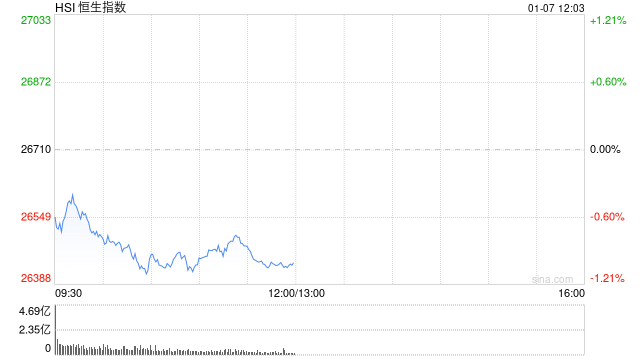
Market Overview - The Hong Kong stock market indices experienced a decline, with the Hang Seng Index falling by 1.01% to 26,439.68 points, the Hang Seng Tech Index down by 1.65%, and the National Enterprises Index decreasing by 1.11% [1][9]. Technology Sector - Technology stocks faced widespread losses, with Alibaba dropping over 4%, Bilibili down more than 3%, and Kuaishou, NetEase, and Meituan each declining by over 2% [1][9]. Biopharmaceutical Sector - The biopharmaceutical sector continued its upward trend, highlighted by Kangfang Biopharmaceutical's stock rising over 6%. The company announced an important update regarding its PD-1/VEGF bispecific antibody, which has shown statistically significant and clinically meaningful benefits in treating advanced non-squamous non-small cell lung cancer [2][11]. Metals Sector - The metals sector showed strength, with Luoyang Molybdenum rising over 5%. Citigroup raised its short-term copper price target to $14,000 per ton, although it warned that the price increase may be nearing its peak [5][14]. Oil Sector - Oil stocks weakened, with PetroChina falling over 3%. This decline follows an announcement regarding the transfer of 30 to 50 million barrels of oil from the Venezuelan interim government to the U.S., which will be sold at market prices [5][16]. Automotive Sector - The automotive sector saw significant declines, with NIO dropping over 3%. Reports indicate that the Chinese auto market may experience a 7% decline in sales in 2026, marking the first anticipated annual drop since 2020. A price war has begun, involving over 76 models from various manufacturers [6][16].



本季度云业务:超大规模服务商 2025 年第三季度表现如何-Cloud in the Quarter How did the hyperscalers do in 3Q25
2026-01-07 03:05
Summary of Key Points from the Conference Call Industry Overview - The hyperscale market is a significant opportunity in the Software/Cloud/Internet sector, estimated at $1.3-1.5 trillion, potentially the largest in technology [4][2] - The market is currently influenced by the Generative AI wave, with concerns about CAPEX growth and associated margins for AI-related infrastructure investments [2][3] Company-Specific Insights Microsoft (MSFT) - Microsoft is leading in AI and non-AI revenue growth, with Azure growing 39% in constant currency (40% reported) in Q3 [15][50] - CAPEX for Q1 FY26 was $34.9 billion, with expectations for continued growth driven by strong demand signals [15][50] - Concerns exist regarding the sustainability of AI revenue and exposure to OpenAI, but long-term growth and margin potential are viewed positively [8][50] Amazon (AMZN) - AWS growth accelerated to 20% year-over-year, reaching $33 billion, with AI contributions growing at triple digits [10][35] - AWS capacity has doubled since 2022 and is expected to double again by 2027, with a backlog growth of 22% year-over-year [10][35] - Management revised FY25 CAPEX guidance to $125 billion, primarily for AWS infrastructure [10][35] Google (GOOGL) - Google Cloud revenues increased by 34% year-over-year, reaching approximately $15 billion, with a significant backlog of $155 billion [12][17] - Despite strong demand, revenue growth is limited by capacity constraints, and management expects this to continue into 2026 [12][17] - CAPEX guidance for 2025 was raised from $85 billion to $91-93 billion, reflecting a 73% year-over-year increase [12][17] Oracle (ORCL) - Oracle's OCI revenue grew 68% year-over-year, with total Remaining Performance Obligations (RPO) increasing significantly [9][20] - Concerns about CAPEX required for capacity build-out and the sustainability of AI revenue exist, but the long-term growth potential is viewed favorably [9][20] Alibaba (BABA) - Alicloud revenue growth accelerated to 34.5% year-over-year, with AI-related products contributing significantly [13][18] - Management indicated strong revenue growth expectations for the coming quarters, despite higher comparative growth rates [13][18] Additional Insights - The hyperscale market is experiencing a shift in sentiment due to AI developments, leading to confusion about potential bubbles in the market [14] - The competitive landscape is evolving, with questions about which companies will emerge as winners or losers in the AI space [3][14] - The overall capital intensity of IaaS/PaaS is a critical factor, with ongoing analysis of the cost structures and profitability of major players [6][5] Conclusion - The hyperscale cloud market is poised for significant growth, driven by AI and increasing demand for cloud services. Each major player is navigating unique challenges and opportunities, with varying growth rates and CAPEX strategies. Investors should closely monitor these developments to identify potential investment opportunities and risks.




微盟战略合作淘宝闪购
Bei Jing Shang Bao· 2026-01-07 02:57
Core Insights - Weimob Group has entered into a strategic partnership with Alibaba's local life service platform, Taobao Flash Purchase, focusing on instant retail, digital marketing, and technological innovation [1] Group 1: Strategic Collaboration - The collaboration aims to integrate systems and coordinate business operations, enabling Weimob merchants to efficiently access the Taobao Flash Purchase platform [1] - This partnership is expected to facilitate a unified operation for local retail, enhancing both "home delivery" and "in-store" services [1] Group 2: Marketing and Ecosystem Development - Weimob and Taobao Flash Purchase will jointly build a comprehensive full-link marketing system, combining Taobao Flash Purchase's public traffic with Weimob's private domain capabilities [1] - The collaboration will also focus on connecting the entire membership ecosystem, allowing for interconnectivity of marketing products [1] Group 3: Business Expansion and Innovation - Both companies will explore joint efforts in enterprise-level customer expansion, artificial intelligence, and data operations [1]
AI立功了!百元早筛“癌症之王”
财联社· 2026-01-07 02:08
Core Viewpoint - The article highlights the successful application of Alibaba's AI model for early detection of pancreatic cancer, showcasing its potential to save lives by identifying tumors that may be missed by traditional methods [1][4][17]. Group 1: AI Model and Its Impact - The AI model, named DAMO PANDA, has analyzed over 180,000 CT scans, leading to the detection of 24 cases of pancreatic cancer, with 14 being in early stages [17]. - The model demonstrated a 93% accuracy rate in identifying pancreatic lesions from non-contrast CT scans, which are commonly used in routine checks [10][17]. - The cost of the screening using the AI model is approximately $25, making it accessible for many patients [15]. Group 2: Clinical Implementation and Results - The AI tool was tested at the Affiliated People's Hospital of Ningbo University, where it flagged cases that had previously shown no alarms, leading to timely interventions [6][10]. - Dr. Zhu Kelei, a key figure in the implementation, stated that the AI has unequivocally saved lives by detecting cancers that would have otherwise gone unnoticed [10][17]. - The model has issued alerts for about 1,400 scans, with around 300 requiring follow-up, indicating its effectiveness in clinical settings [11]. Group 3: Broader AI Healthcare Landscape - The article notes that Alibaba's AI technology is being promoted globally, covering nine countries and serving 20 million people, indicating a significant expansion of its application [18]. - Other major Chinese tech companies are also investing in AI healthcare, with initiatives from Ant Group, Huawei, and JD.com, reflecting a competitive landscape in AI medical applications [19]. - The Chinese AI healthcare market is projected to grow significantly, with estimates suggesting a rise from 8.8 billion yuan in 2023 to 315.7 billion yuan by 2033, indicating a compound annual growth rate of 43.1% [26].

微盟集团高开逾7% 微盟集团与阿里旗下淘宝闪购达成战略合作
Zhi Tong Cai Jing· 2026-01-07 01:57
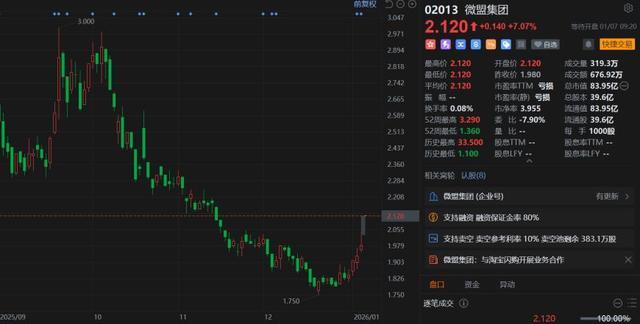
微盟集团(02013)高开逾7%,截至发稿,涨7.07%,报2.12港元,成交额676.92万港元。 消息面上,微盟集团宣布与阿里巴巴集团旗下本地生活服务平台淘宝闪购达成战略合作,将在双方共通 行业开展多维业务合作与探索,包括但不限于:解决方案商家互联,即时零售生态共建;公私联营、会 员打通,一站式营销升级;及创新共创,在企业级客户拓展、AI、数据运营等场景探索共建。 ...
微盟集团大幅高开7% 与淘宝闪购开展业务合作
Jin Rong Jie· 2026-01-07 01:51
Core Viewpoint - Weimob Group's stock opened significantly higher by 7%, reaching HKD 2.12, with a total market capitalization of HKD 83.95 billion following the announcement of a strategic partnership with Alibaba's local life service platform, Taobao Flash Purchase [1]. Group 1: Business Cooperation - Weimob Group's subsidiary, Shanghai Weimob Enterprise Development Co., Ltd., has signed a strategic cooperation agreement with Shanghai Lazada Information Technology Co., Ltd., the entity behind Taobao Flash Purchase [1]. - The collaboration will focus on multi-dimensional business cooperation and exploration in shared industries, including but not limited to: merchant interconnection as solution providers, co-building an instant retail ecosystem, public-private partnerships, and integrated membership systems for one-stop marketing upgrades [1]. - The partnership aims to innovate and co-create in areas such as enterprise-level customer expansion, artificial intelligence, and data operations [1].
上市在即!智谱AI与MiniMax背后资本阵容揭秘
Sou Hu Cai Jing· 2026-01-07 01:33
2026年开年第一周,同为"AI六小虎"的智谱AI与MiniMax(稀宇科技)将先后于港交所挂牌上市。随着两家原生大模型"独角兽"撞线,中国乃至全球范围 内的"大模型第一股"即将诞生。 今天我们就来盘点一下智谱AI与MiniMax背后的资本阵容。 作为第一家上市的大模型公司,智谱AI在冲刺IPO前已完成8轮融资,44家机构投资,累计融资金额超83亿元。 智谱AI背后投资方阵容强大,既有从前期即陪伴的中科创星、达晨财智、华控基金、启明创投、君联资本等创投机构,又有强势入局的美团、阿里巴 巴、蚂蚁集团、腾讯、学而思、BOSS直聘等产业资本,以及红杉、高瓴、顺为资本、光合创投等知名机构,更有顺禧基金、中国信科、珠海科技创投、 杭州城创、中关村科学城、金浦投资等一大批国资背景基金。 产业投资者中的美团、蚂蚁集团、阿里巴巴、腾讯、学而思、BOSS直聘等均与智谱AI有业务合作,形成"投资+业务"协同效应。 数据来源:执中ZERONE、公开资料 智谱AI在本次IPO发行中引入了多元化的基石投资阵容,涵盖北京国资、头部保险资金、大型公募基金、明星私募基金、产业投资方等,包括清华大学教 育基金、北京金控、泰康人寿、广发基金、上 ...

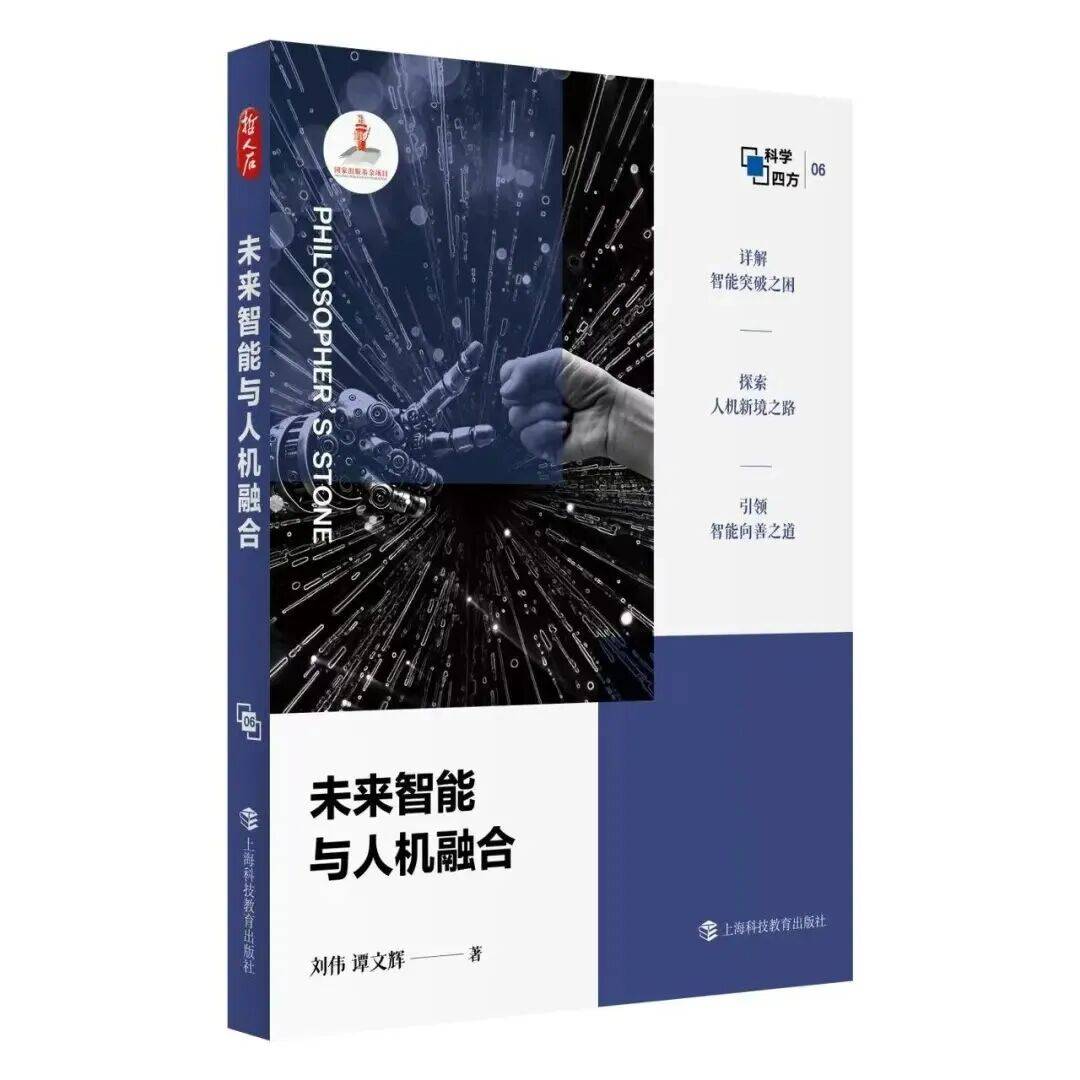
AI CHINA|刘伟:中美AI发展路径差异与“AI+”生态的核心优势
Sou Hu Cai Jing· 2026-01-07 01:17
Core Insights - The article contrasts the AI development strategies of the United States and China, highlighting that while the U.S. focuses on limiting chip access and proving model safety, China is advancing AI as a self-repairing and self-evolving industrial infrastructure through a comprehensive approach involving policy, state-owned enterprises, scenarios, and data [1][2]. Group 1: U.S. AI Development Characteristics - U.S. AI development is characterized by a focus on general foundational technology breakthroughs, leading to a closed-source model and hardware monopoly, which creates a "technical island" effect [1][2]. - The reliance on hardware monopolies, such as NVIDIA GPUs and Google TPUs, has established significant technical barriers, making it difficult for other countries to overcome computational bottlenecks [2]. - The application of U.S. AI is primarily concentrated in consumer internet sectors, lacking depth in complex industrial and social governance scenarios, which limits its ability to address real-world unstructured problems [2]. Group 2: China's AI Development Approach - China has shifted from a "technology defines demand" model to a "demand defines technology" approach, utilizing its diverse economic and social governance scenarios as testing grounds for AI technology [2][3]. - The development of AI in China is not limited to single breakthroughs but encompasses a systematic innovation that integrates chips, frameworks, models, and applications, creating a self-sustaining industrial ecosystem [4]. - China's AI strategy emphasizes open collaboration and ecosystem building through open-source models and industry alliances, which contrasts with the U.S. approach and fosters a complementary relationship between the two nations [5][6]. Group 3: Practical Applications and Innovations - Various practical applications in China demonstrate the effectiveness of AI technology, such as the implementation of 67 digital applications in Shougang's cold-rolling company, where AI applications account for 61% [2][3]. - In agriculture, China National Chemical Corporation launched the iMAP model for intelligent decision-making across the entire farming process, significantly reducing decision-making time by 75% [2]. - The integration of AI in healthcare is exemplified by the AI+ county medical community initiative, which facilitates rapid deployment of outpatient pre-diagnosis and intelligent health management [2][3]. Group 4: Future Trends and Global Cooperation - The article suggests that the future of AI development will involve both the U.S. and China leveraging their respective strengths, with the U.S. focusing on general problems and China addressing complex issues through a systematic innovation approach [6]. - Both countries are expected to continue their parallel advancements in AI technology, with potential for mutual benefits in achieving breakthroughs such as general artificial intelligence (AGI) [6].