BABA(BABA)

Search documents
斯坦福大学发布研究报告称:中国开放权重模型重塑全球AI竞争格局
Sou Hu Cai Jing· 2025-12-29 09:03
Core Insights - A recent Stanford University report indicates that China's AI models, particularly open-weight large language models, are approaching or even surpassing international advanced levels in capability and adoption [2][3] Group 1: Performance of Chinese Open-Weight Models - Open-weight models allow developers to download, use, and modify AI model parameters, enabling independent operation and customization [3] - The report highlights four representative Chinese large language models: Alibaba's Tongyi Qianwen, DeepSeek-R1, Kimi K2 from Moonlight, and Z.ai's GLM-4.5, which have shown performance close to global leaders [3] - All Chinese open-weight models in the top 22 have outperformed OpenAI's open-source model GPT-oss, indicating a shift from follower to leader in the open-source large model field [3] Group 2: Global Adoption of Chinese AI Models - The cost-effectiveness of Chinese AI models is reshaping global business decisions, with their global usage rate rising from 1.2% at the end of 2024 to nearly 30% by August this year [4] - Chinese open-weight models are praised for being affordable, with some even free, leading to significant savings for companies [4] - Notable companies, including Airbnb, have adopted Tongyi Qianwen for its speed and cost advantages over proprietary models like ChatGPT [5] Group 3: Impact on Global AI Ecosystem and Governance - The rapid rise of Chinese AI models is facilitating widespread adoption of AI technology globally, with 63% of new derivative models on Hugging Face being based on Chinese models as of September this year [6] - The widespread adoption of Chinese open-weight models may reshape global technology acquisition and dependency patterns, influencing AI governance and competition [6] - The emergence of these models has even affected U.S. policy towards open-weight models, with the White House recognizing them as strategic assets [6] Group 4: Future of AI Leadership - The global leadership in AI is not solely determined by proprietary systems but also by the coverage, adoption, and regulatory influence of open-weight models [7]



天猫发布2025年度消费观察:“乐意”成为年度关键词
Sou Hu Cai Jing· 2025-12-29 09:00
Group 1 - The core viewpoint of the article highlights six major consumer trends for 2025 as identified by Tmall, which include professional players, emotional spending, and the rise of Chinese aesthetics [1][3] - The annual consumption keyword is "willingness," reflecting a shift in young consumers' spending philosophy that emphasizes spending based on mood and personal desire [1][3] - Young consumers are increasingly identifying as "professional players" across various fields, prioritizing unique aesthetics and quality over quantity in their purchases [3] Group 2 - The new consumption logic among young people focuses on buying less but better, emphasizing long-lasting and meaningful purchases [3] - Products that serve multiple functions, such as "Swiss Army knife" style items, are gaining popularity among consumers, indicating a trend towards practicality and versatility [3] - The influence of Chinese aesthetics is becoming prominent, with young consumers showing a strong preference for products that resonate with their cultural identity [3]
DeepSeek一夜爆火、Labubu引爆全球抢购潮、“史诗级”外卖大战……2025年中国十大商业事件全盘点
Hua Er Jie Jian Wen· 2025-12-29 08:38
Group 1 - The year 2025 is marked as a transformative year in business, driven by DeepSeek's introduction of a cost paradigm that challenges the profitability myths of Silicon Valley [1][2] - DeepSeek's R1 model demonstrated that high-level AI capabilities could be achieved at a fraction of the cost, using only 2,000 GPUs and approximately $6 million, which is less than one-tenth of OpenAI's costs [5] - Following DeepSeek's success, there was a significant market shift, with the Nasdaq China Golden Dragon Index rising over 4% and major Chinese tech companies like Alibaba and Baidu seeing increased stock prices [5] Group 2 - The Chinese government intervened in the stock market during a crisis caused by new U.S. tariffs, with state-owned enterprises purchasing ETFs to stabilize the market [7][9] - The establishment of a "stabilizer" role for the Central Huijin Investment Company and the People's Bank of China provided a liquidity backstop, enhancing investor confidence [9] Group 3 - Pop Mart's LABUBU character became a global phenomenon, leading to a surge in sales and a 170%-175% year-on-year revenue increase in Q1 2025, with significant growth in the Americas and Europe [10][12] - Pop Mart's stock price soared over 200% in the first half of 2025, with major investment banks raising their target prices significantly [12] Group 4 - JD.com entered the food delivery market, intensifying competition with Alibaba and Meituan, leading to aggressive subsidy wars and record order volumes [16][18] - The competition is characterized by significant discounts and promotional offers, indicating a shift towards a new market dynamic in instant retail [20] Group 5 - Alibaba rebranded its AI application to "Qwen," aiming to compete directly with OpenAI's ChatGPT, focusing on consumer applications and integrating with its e-commerce platforms [21][23] - ByteDance's "Doubao" AI assistant faced challenges in compatibility with major applications, highlighting the difficulties of integrating new technology into existing ecosystems [24][26] Group 6 - China officially launched L3 autonomous driving vehicles, marking a significant step towards commercial application in the automotive industry, with expectations for the market to exceed 1.2 trillion yuan by 2030 [27][29] - The first L3 vehicles were approved for use, showcasing advancements in technology and safety standards [28] Group 7 - The Chinese GPU industry is experiencing a collective breakthrough, with companies like Moore Threads and Nanjing Huazhong Technology preparing for IPOs, reflecting a strong market demand for domestic chips [30][31] - These companies are adopting different strategies to capture market share, with a focus on innovation and production capabilities [32] Group 8 - China achieved significant milestones in nuclear fusion research, with the EAST device setting a world record for stable operation at 100 million degrees Celsius for over 1,000 seconds [33][34] - The country is positioning itself as a global leader in fusion energy, with numerous international collaborations and advancements in technology [34] Group 9 - China's commercial space sector is entering a new era with the successful test flights of reusable rockets, which are expected to reduce launch costs significantly [35][37] - The government is supporting the commercial space industry through funding and policy initiatives, aiming for scalable and cost-effective satellite launches [37]


内容创业,当下青年的职业新选择
Huan Qiu Wang Zi Xun· 2025-12-29 08:33
Core Insights - Douyin's "Youth Creator Growth Plan" has successfully generated over 800 million yuan in cash income for 14,000 young creators within six months, with total views exceeding 5 trillion [1] - The plan has created new employment pathways for youth, with 260 creators joining the "Million Fans Club" and 1,590 surpassing 100,000 followers [1] Group 1: Youth Entrepreneurship and Support - Youth are increasingly engaging in entrepreneurship through various avenues, including e-commerce and content creation, driven by their innovative spirit and adaptability [1][2] - Government initiatives are in place to support youth entrepreneurship, including training programs and financial subsidies for skills development [2] - The rise of platform economies provides new opportunities for youth, allowing them to explore content creation as a viable career path [2] Group 2: Douyin's Role and Initiatives - Douyin collaborates with universities to offer courses on content creation, aiming to equip young creators with the necessary skills and knowledge [3] - The platform has implemented various support measures, such as traffic allocation and AI tool encouragement, enhancing content quality and creator engagement [4] - A significant percentage of creators on Douyin report substantial income, with many transitioning from personal expression to professional content production, contributing to job creation and industry growth [4] Group 3: Content Quality and Audience Engagement - Douyin's ecosystem has seen a 160% increase in quality content views and a 220% rise in viewing duration, driven by the contributions of young creators [4] - The platform fosters a balance between self-expression and value realization for creators, while also catering to diverse audience needs for quality content [5] - The ongoing demand for high-quality content remains strong, indicating a sustainable future for content entrepreneurship [5][6]

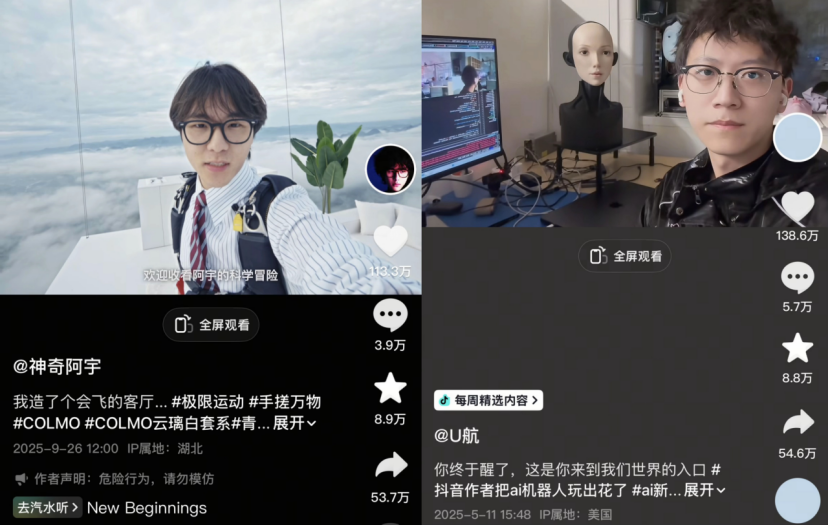
抖音发布“2025年度100条必看知识作品”,将推多重举措持续扶持知识作者成长
Jin Rong Jie Zi Xun· 2025-12-29 06:10
12月27日,"2025抖音知识创作者年度之约"在上海举办。活动中,抖音发布了"2025年度抖音100条必看知识作品", 作品内容覆盖科技、科普、人文社科、教育校园、财经、社会时政、法律、医疗健康等重点知识方向。打开抖音,搜 索"我的年度精选"即可观看包括100条知识作品在内的"年度精选内容"。 圆桌讨论环节,抖音相关负责人用三个"新"总结2025年抖音知识生态:涌现出新的创作趋势,打开了新的创作场景, 拓展了新的成长路径。展望2026年,抖音知识将在前沿科技、深度内容、全球一线实拍、长图文等方向上多重发力, 为创作者提供更多创作服务、创作资源和成长助力。 "2025年度抖音100条必看知识作品"发布 边画边讲、科技"手搓"、第一视角直击……2025年,各种各样的知识类内容在抖音频频出圈。抖音知识梳理了其中的 100条精华视频,为他们颁发"年度硬核知识作品""年度启发思考作品""年度实用干货作品""年度创意突破作品""年度 广泛传播作品""年度新知探索作品"6大类奖项。 超长知识视频趋势自2024年在抖音兴起,2025年这一势头依然不减。@风雪夜灯 作品《一口气(9小时)看完战国时 代》,用18.8万字文稿回 ...
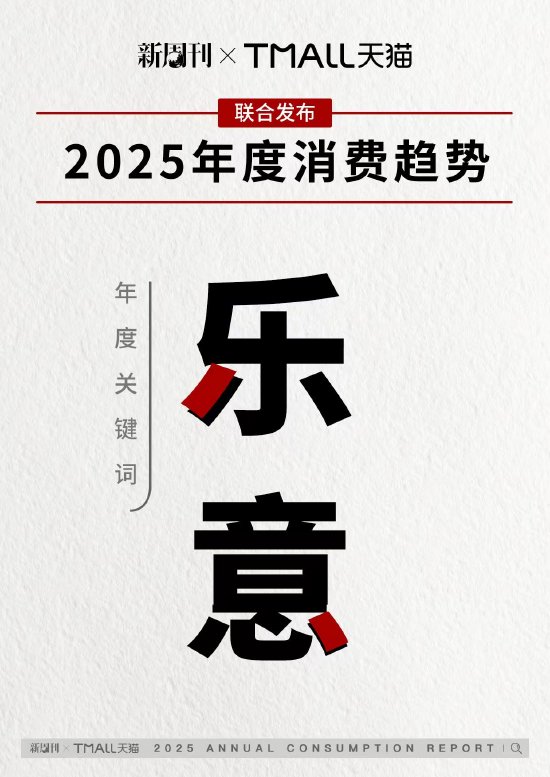
2025天猫年度消费观察:“乐意”成年度关键词
Xin Lang Cai Jing· 2025-12-29 05:00
Group 1 - The core viewpoint of the article is the release of six major consumption trends by Tmall for 2025, highlighting the evolving consumer behavior among young people [1][3] - The six consumption trends identified are: Professional Players, Dressing for Persona, Long-termism, Emotional Spending, Chinese Wave, and One Item to Rule Them All [1][3] - The key consumption philosophy for this year is summarized as "willingness," indicating that young consumers prioritize their feelings in spending decisions, encapsulated in the phrase "money can't buy my willingness; I would spend thousands for my willingness" [1][3]
跨境电商 丝路新潮
Xin Lang Cai Jing· 2025-12-29 04:47
Core Viewpoint - Cross-border e-commerce is emerging as a new driving force for economic development and a significant trend in international trade, with China's cross-border e-commerce imports and exports reaching approximately 2.06 trillion yuan, a year-on-year increase of 6.4% in the first three quarters of the year [1] Group 1: Growth and Transformation - Cross-border e-commerce is evolving from a supplementary force in foreign trade to a key variable reshaping the global trade ecosystem [1] - The rise of cross-border e-commerce has diversified trade entities, allowing numerous small and medium-sized enterprises to access global markets directly [1] - The trade content is becoming more sophisticated, with a shift from simple products to high-value items, such as smart feeding devices and health supplements, reflecting a transition from "Made in China" to "Intelligent Manufacturing in China" [1] Group 2: Flexible Trade Models - The trade model is becoming more flexible, transitioning from traditional bulk, low-frequency models to small-batch, high-frequency, customizable supply chain models [2] - Cross-border e-commerce has benefited from a continuously optimized institutional framework, enhancing efficiency through customs facilitation reforms and streamlined documentation processes [2] - Innovations in regulatory models, such as the "same package, same vehicle" shipping method, have reduced costs for enterprises while improving consumer experience [2] Group 3: Value and Future Directions - Cross-border e-commerce serves as a crucial channel for domestic consumption upgrades, with significant growth in imported products [3] - The "cross-border e-commerce + industrial belt" model is empowering local industries by connecting them with global markets, enhancing the value chain [3] - Future development of cross-border e-commerce should focus on digital trade, green sustainable development, and enhancing supply chain resilience [3] Group 4: Sustainable Development and Global Integration - The robust growth of cross-border e-commerce exemplifies China's high-level opening-up to the outside world [4] - Sustainable high-quality development in cross-border e-commerce requires continuous optimization of the business environment, innovation to enhance trade intelligence, and deepening international cooperation [4] - The "online Silk Road" is expected to reshape global trade patterns and inject lasting momentum into China's economic high-quality development [4]
盘前必读丨官方明确明年继续“国补”;央行发布重磅报告
Di Yi Cai Jing· 2025-12-28 23:18
Market Overview - The market structure characteristics are expected to continue in the short term, with trading volume being a key signal for market trends [1][9] - Major U.S. stock indices hovered near historical highs, with the Dow Jones down 0.04%, Nasdaq down 0.09%, and S&P 500 down 0.03% at the close [3] - The Nasdaq China Golden Dragon Index rose by 0.72%, with notable gains from Alibaba (1.5%), Pinduoduo (1.4%), and Baidu (1.2%) [3] Commodity Markets - Gold futures for December delivery increased by 1.08% to $4,529.10 per ounce, while silver futures surged by 7.68% to $76.48 per ounce, with post-market gains pushing silver above $78 per ounce [4] - International oil prices declined, with WTI crude down 2.76% to $56.74 per barrel and Brent crude down 2.57% to $60.64 per barrel [3] Financial Policies and Regulations - The People's Bank of China and the State Administration of Foreign Exchange announced the promotion of integrated currency pools for multinational companies, aiming to streamline cross-border fund management [6] - The National Bureau of Statistics released implementation opinions to strengthen data technology innovation, targeting the establishment of leading data technology innovation platforms by 2027 [6] Market Sentiment and Investment Trends - Institutional investors are increasingly adding to A500 ETF and other broad-based products, contributing to stable incremental capital in the market [9] - The market is currently characterized by a "buy on dips, structural switching" approach rather than aggressive trend-based accumulation at high levels, indicating a potential for gradual upward movement in the market [9] Company-Specific Developments - Xiaomi Group's co-founder plans to sell up to $2 billion of Class B common stock [10] - ST Houlv's chairman is under investigation for information disclosure violations by the China Securities Regulatory Commission [10] - Chipmaker AI orders from Chip Original Co. exceeded 24.94 billion yuan, with over 84% of fourth-quarter orders related to AI computing power [10]



计算机行业GenAI系列(二十三):火山多模态和千问高德:硬核能力成生态
Sou Hu Cai Jing· 2025-12-28 17:08
Core Insights - The focus in the GenAI sector is shifting from business models to foundational hard technology capabilities, with leading companies leveraging long-term technological accumulation and ecosystem integration to drive rapid industry growth [2][3]. Group 1: Doubao Model Performance and Growth - The Doubao model's daily token usage has surpassed 50 trillion as of December 18, 2025, marking a significant increase from 30 trillion in September 2025, reflecting a growth of 417 times since its launch [20][21]. - The Doubao 1.8 model has achieved notable enhancements in tool invocation, complex instruction adherence, and OS agent capabilities, showing competitive performance against Qwen3 in key areas such as mathematical reasoning and long video analysis [32][33]. - The model's efficiency improvements have led to a clearer commercialization path, with a reduction in unit inference costs and a growing demand for inference-related computing power [21][30]. Group 2: New Product Releases and Features - Fire Mountain Engine has released several upgraded products, including the Doubao 1.8 model, Seedance 1.5 Pro for video generation, and Seedream 4.5 for image creation, enhancing the capabilities of the Doubao model family [32][38]. - The Seedance 1.5 Pro model supports high-quality audio-visual content creation with features that improve synchronization and expression, achieving a 65% increase in creative efficiency [38][43]. - The Seedream 4.5 model has improved image generation quality and stability, while the voice recognition model 2.0 has enhanced context understanding, increasing keyword recall rates by 20% [48][49]. Group 3: Integration of Qianwen APP with Gaode - The Qianwen APP has successfully integrated with Gaode Map, enabling it to transition from understanding user intent to executing specific services, such as intelligent route planning and restaurant recommendations [57][58]. - The Qianwen APP has gained significant traction, surpassing 30 million monthly active users within 23 days of its public testing [56]. - This integration lays the groundwork for future connections with other Alibaba applications, potentially creating a comprehensive super agent ecosystem [3][57].

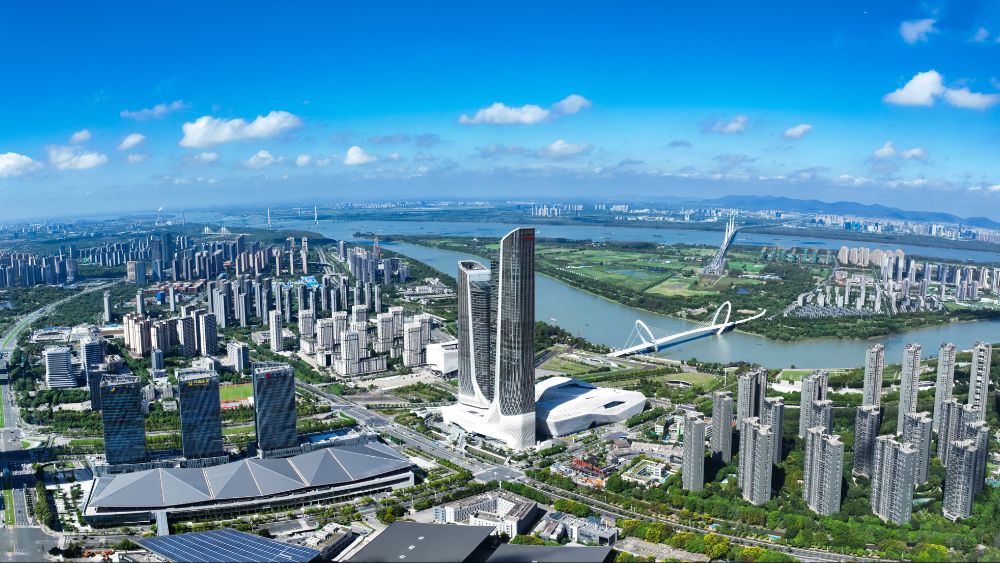
经济大省挑大梁│巨头竞相落子,南京新“擎”澎湃
Nan Jing Ri Bao· 2025-12-28 12:58
Core Insights - Nanjing is increasingly becoming a hub for major industry players, focusing on high-end projects such as R&D centers and regional headquarters, which are essential for future growth [1][6] - The city is shifting its investment strategy from single projects to developing an ecosystem that supports high-value industries [1][6] Group 1: Industry Developments - Major companies like SAIC, Xiaomi, and ABB are establishing significant operations in Nanjing, indicating a trend towards high-tech and innovative manufacturing [3][5][8] - ABB's new super factory in Nanjing, with an investment of approximately 1.5 billion yuan, will focus on the R&D and production of industrial motion control products, crucial for advanced robotics [5][6] - Xiaomi's automotive delivery center in Nanjing has evolved into a major R&D hub, employing over 5,000 people and fostering a network of over 20 ecosystem partners [8][10] Group 2: Collaborative Ecosystem - Nanjing is promoting a collaborative ecosystem where leading companies act as "chain masters," driving the development of the entire industry chain [7][8] - The establishment of the JD.com R&D center in Nanjing aims to create a strategic hub for innovation, focusing on AI, robotics, and cloud computing [12][13] - Partnerships between major firms, such as JD.com and New Work Group, are enhancing the industrial internet and supply chain capabilities in Nanjing [13][14] Group 3: Talent and Infrastructure - Nanjing's favorable business environment and rich talent pool are attracting high-end technology professionals, contributing to the city's growth as a tech hub [14][18] - The Nanjing Intelligent Computing Center is set to provide significant computational power, supporting AI and algorithm development [17][18] - The rapid establishment of projects, such as Xiaomi's automotive center, showcases the efficiency of Nanjing's government in facilitating business operations [18][19]