
Goldman Sachs(GS)

Search documents
高盛中国经济展望-2025 年 10 月GS China Economic Outlook_ October 2025 [Presentation]
Goldman Sachs· 2025-11-01 13:47
Investment Rating - The report raises the 2025 real GDP growth forecast for China from 4.9% to 5.0% based on government spending acceleration and commitment to economic targets [6][10]. Core Insights - The report emphasizes the importance of China's manufacturing push in driving economic growth and highlights the expected annual growth of Chinese export volumes by 5-6% [9][10]. - It notes that the fiscal deficit is projected to widen by 1.0 percentage point of GDP in 2026, with total social financing stock growth expected to rise [9][10]. - The report discusses the ongoing focus on high-tech manufacturing and AI investment as a counterbalance to demographic and local government debt challenges [9][10]. Summary by Sections Current State of the Economy - The 2025 real GDP growth forecast has been raised to 5.0% due to increased government spending and commitment to economic targets [6]. 2026 Macro Views - The report anticipates a real GDP growth of 4.8% in 2026, which is significantly above market consensus [9]. - It expects the fiscal deficit to widen and further cuts in the reserve requirement ratio (RRR) and policy rates [9]. Medium- to Long-Term Views - Chinese export volumes are expected to grow by 5-6% annually, contributing to overall economic expansion [9]. - The report highlights the prioritization of manufacturing, technology, and security in China's 15th Five-Year Plan [9]. Economic Indicators - The report provides a detailed forecast of various economic indicators, including GDP growth, domestic demand, consumption, and inflation rates for the years 2025 to 2027 [13]. - It notes that household consumption is expected to grow at a rate of 4.6% in 2025, with government consumption at 4.0% [13]. Policy Measures - The report outlines several policy measures aimed at boosting consumption and investment, including a consumer goods trade-in program and increased government spending on infrastructure [81][82].

“消费信心跌至数十年最差水平”!高盛警告美国中产消费“失速”,25-35岁人群“捂紧钱包”
华尔街见闻· 2025-11-01 11:10
Core Viewpoint - Goldman Sachs has issued a "red" warning regarding the health of American consumers, indicating that consumer fatigue has spread from low-income groups to the middle class, with many executives reporting the lowest consumer confidence levels in decades [2][3]. Consumer Health Status - The discussion around consumer health is shifting, with more companies reporting a slowdown in consumption that now affects middle-income groups, particularly consumers aged 25-35 [4][9]. - Recent weeks have seen significant sell-offs in consumer stocks, with the non-essential consumer goods sector underperforming the market by 500 basis points [5][12]. Corporate Earnings and Consumer Behavior - Companies like Kraft Heinz have drastically lowered their annual sales guidance, expecting a decline of 3% to 3.5%, attributing this to inflationary pressures and cuts in food assistance [6]. - The latest earnings reports reveal a widening gap in consumer spending, with companies like Chipotle and CAVA experiencing stock price drops of 17% and 11% respectively, as lower-income customers reduce spending frequency [8]. Market Trends and Stock Performance - The consumer discretionary sector has underperformed the market by 400 basis points this week and 500 basis points over the past two weeks, indicating a fundamental deterioration in the market [13]. - Despite some companies exceeding earnings expectations, the overall market response has been negative, reflecting a broader concern about consumer spending [13][14]. Resilience in High-End Consumption - Despite pressures on the middle class, some high-end market companies continue to show resilience, with Visa reporting strong performance across various spending categories [15]. - Starbucks and Brinker International's Chili's brand have reported positive growth, particularly among lower-income households, contrasting with trends seen in other sectors [15].


Goldman Sachs(GS) - 2025 Q3 - Quarterly Report
2025-10-31 20:17
Financial Performance - Net earnings for Q3 2025 reached $4,098 million, a 37.2% increase from $2,990 million in Q3 2024[8] - Comprehensive income for the nine months ended September 2025 was $12,785 million, compared to $10,580 million for the same period in 2024, reflecting a 21.0% increase[8] - The net earnings for the nine months ended September 2025 were $12,559 million, a 23.5% increase from $10,165 million in the same period of 2024[8] - Other comprehensive income for Q3 2025 was a loss of $491 million, compared to a gain of $397 million in Q3 2024[8] Assets and Liabilities - Total assets as of September 30, 2025, amounted to $1,807,982 million, up from $1,675,972 million at the end of 2024, indicating a growth of 7.9%[10] - Deposits increased to $490,249 million as of September 2025, compared to $433,013 million in December 2024, representing a rise of 13.2%[10] - Trading assets at fair value were $652,585 million, an increase from $570,555 million in December 2024, marking a growth of 14.4%[10] - Shareholders' equity totaled $124,402 million as of September 2025, up from $121,996 million in December 2024, reflecting a 3.3% increase[10] Cash Flow - Net cash used for operating activities was $(28,878) million, a decrease of 51.9% from $(59,978) million in the previous year[17] - Cash and cash equivalents at the end of September 2025 were $169,577 million, compared to $154,689 million at the end of September 2024, reflecting a year-over-year increase of 9.3%[17] - Net cash used for investing activities was $(39,194) million, a decrease of 7.8% from $(42,509) million in 2024[17] - Net cash provided by financing activities was $49,345 million, significantly higher than $15,140 million in the previous year[17] Stock Repurchase and Equity - The company repurchased $2,000 million in stock during Q3 2025, contributing to a total repurchase of $9,360 million for the nine months ended September 2025[13] - The preferred stock balance remained stable at $15,153 million as of September 2025, unchanged from the previous quarter[13] Revenue Sources - Revenues from contracts with clients accounted for approximately 55% of total non-interest revenues for the three months ended September 2025, compared to 50% for the same period in 2024[38] - Investment banking revenues included approximately 85% of total revenues from contracts with clients, while investment management revenues contributed approximately 95%[38] Financial Assets and Liabilities Valuation - The total level 1 financial assets as of September 2025 amounted to $516,317 million, an increase from $494,481 million in June 2025 and $436,298 million in December 2024[82] - Total level 2 financial assets were $473,641 million as of September 2025, down from $501,293 million in June 2025 but up from $497,514 million in December 2024[82] - Total level 3 financial assets increased to $21,781 million in September 2025, compared to $21,117 million in June 2025 and $20,358 million in December 2024, primarily due to an increase in level 3 investments[83] - Total financial assets at fair value were $965,610 million as of September 2025, slightly down from $967,846 million in June 2025 but up from $907,669 million in December 2024[82] Derivatives and Risk Management - Significant inputs for the valuation of derivatives include market prices, yield curves, and credit curves, which are essential for determining fair value[106] - Level 3 derivatives are valued using unobservable inputs, including illiquid credit spreads and specific recovery rates[107] - The firm employs valuation adjustments to account for credit and funding risks inherent in derivative portfolios[110] Level 3 Financial Instruments - The ending balance of Level 3 trading cash instrument liabilities was $(241) million as of September 2025, compared to $(106) million in September 2024[127] - The net unrealized gains on Level 3 trading cash instrument assets for the nine months ended September 2025 were $30 million, reflecting a total of $101 million in net realized and unrealized gains[133] - The total corporate debt securities as of September 2025 were valued at $7,208 million, with $4,539 million classified under level 3[174] Corporate Loans and Real Estate - The total amount of Level 3 real estate loans was $102 million as of September 2025, with a yield range of 6.1% to 10.9%[202] - The recovery rate for Level 3 corporate loans ranged from 32.3% to 95.2% as of September 2025, with an average recovery rate of 58.2%[202]
Goldman Sachs CEO: AI’s opportunity is enormous, but ‘there will be winners and losers’
Fortune· 2025-10-31 11:57
Core Insights - Goldman Sachs views AI as a significant growth driver, although the journey may be complex [1][5] - The company reported stronger-than-expected third-quarter earnings, attributed to robust investment banking fees and trading revenue [2] - Solomon expresses cautious optimism regarding the U.S. economy, suggesting a low chance of near-term recession [3][4] Economic Outlook - Solomon highlights the U.S. economy's diversity and current good shape, while acknowledging unseen factors that could trigger a recession [3] - The buildout of AI infrastructure is identified as a key factor supporting economic growth, with major companies expected to spend a combined $350 billion on AI this year [4] AI Investment Boom - Solomon discusses the potential for significant productivity gains as AI becomes integrated into enterprise operations [4] - He reflects on the historical context of technology investment cycles, noting that the current AI boom may not follow a straight trajectory [5][7] - The opportunity set with AI is described as enormous, but there will be both winners and losers in this space [6][7] Market Capitalization Concerns - Solomon addresses concerns about the massive market capitalizations of major tech firms, some nearing $5 trillion, suggesting that this could indicate a potential bubble [5] - He recalls past investment cycles and the phenomenon of "irrational exuberance," emphasizing that while AI investment trends are real, they will not be linear [6][7]

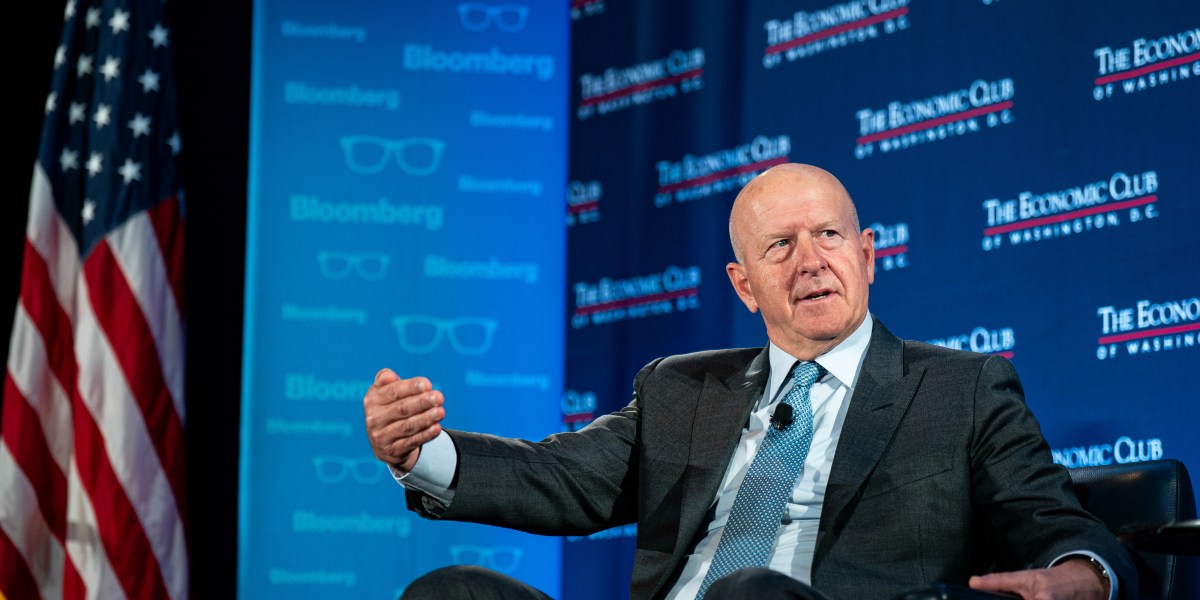
Goldman Sachs Survey Finds Only 11% Of Companies Cutting Jobs As AI Adoption Rises: Report - Goldman Sachs Group (NYSE:GS)
Benzinga· 2025-10-31 10:28
Core Insights - A survey by Goldman Sachs indicates that only 11% of clients in technology, industrial, and finance sectors are actively cutting jobs due to AI adoption [1] - The majority of clients, 47%, are utilizing AI to enhance productivity and revenue rather than to reduce staff, with only 20% focusing on cost-cutting [2] - The tech sector is experiencing the most significant job cuts, with 31% of companies in tech, media, and communications reducing their workforce due to AI [3] - Major companies like Amazon, Salesforce, and Accenture have recently laid off tens of thousands of employees, although some experts argue these layoffs are not solely due to AI [4] - Unemployment among young tech workers (ages 20-30) has risen nearly 3 percentage points since early 2024, significantly higher than the overall jobless rate increase [5] - Goldman Sachs predicts a 4% general headcount reduction across clients in the next year, with potential cuts reaching 11% over three years, particularly affecting financial institutions (14% reduction) and the technology sector (10% reduction) [6] - The rapid expected adoption of AI and associated headcount reductions suggest that the impacts on the U.S. labor market may occur sooner than anticipated [7]


高盛CEO警告:美国38万亿美元国债或迎“清算时刻”,支付利息开支已超1.2万亿美元,规模超过国防支出!多个机构警告,可能进一步推升通胀压力削弱居民购买力
Sou Hu Cai Jing· 2025-10-31 08:30
Group 1 - The CEO of Goldman Sachs, David Solomon, expressed concerns about the rapid increase in U.S. national debt, which has surpassed $38 trillion, and warned of potential "clearing" consequences if economic growth does not improve [2] - Since the 2008 financial crisis, the national debt has increased by over $7 trillion, with the pandemic accelerating government borrowing [2] - The current debt growth rate is nearly $70,000 per second, rising from $34 trillion in January 2024 to the current level, although Solomon maintains that the overall condition of the U.S. economy is good and the likelihood of recession is low [2] Group 2 - The cost of servicing the debt has rapidly eroded fiscal space, with interest payments exceeding $1.2 trillion, accounting for approximately 17% of federal spending, surpassing defense expenditures [2] - Budget oversight organizations have warned that this trend may further increase inflationary pressures and weaken consumer purchasing power [2] - Despite concerns about the potential weakening of the U.S. dollar's status as a reserve currency, Solomon disagrees, noting that global capital continues to flow into U.S. markets, indicating the attractiveness of dollar-denominated assets [2] Group 3 - The Trump administration claims that the fiscal deficit has decreased by about $350 billion this year compared to last year, attributing this to spending controls and improved revenues, although overall debt continues to grow [3] - Solomon emphasized that the ability to avoid future fiscal pressures depends on the overall economy's capacity for stronger expansion; otherwise, the debt burden will accumulate to a significant level [3]
外资眼中的投资机遇 陆家嘴金融沙龙第33期顶级投资人对话精彩落幕
财联社· 2025-10-31 06:50
Core Viewpoint - The article discusses the significant investment opportunities in China as highlighted by the "14th Five-Year Plan," emphasizing the strategic focus on technology, consumption, green initiatives, and security as key investment themes for global capital [3][14]. Group 1: Investment Opportunities - The "14th Five-Year Plan" is seen as a guiding framework for China's development over the next five years, attracting global capital interest [14]. - Experts agree that the shift from "going out" to becoming "global enterprises" represents a major investment opportunity, with Chinese companies achieving world-leading capabilities in industrial and technological sectors [14]. - The demand for risk asset allocation has notably increased, as evidenced by the rapid growth of multi-asset allocation strategies [9]. Group 2: Market Dynamics - The relationship between Hong Kong and A-share markets is characterized by a complementary and mutually beneficial development pattern, with Hong Kong's ECM financing reaching $76 billion since 2025, making it the largest globally [12]. - The current bull market is transitioning from being liquidity-driven to being supported by institutional reforms and fundamental improvements [12]. - The "capital bridge" strategy is emphasized, showcasing the role of foreign institutions in facilitating cross-border investments and enhancing market connectivity [9][10]. Group 3: Strategic Insights - The decline of "American exceptionalism" is prompting global capital to focus on China, with concerns about U.S. fiscal deficits and regulatory uncertainties [6]. - The strategic partnership between foreign and Chinese financial institutions is crucial for promoting the development of capital markets and enhancing financial infrastructure connectivity [10]. - A clear and sustainable planning approach is highlighted as a unique advantage for both enterprises and governments, reinforcing the attractiveness of the Chinese market [15]. Group 4: Recommendations for Investors - Experts recommend a long-term investment philosophy to navigate market volatility, advocating for diversified strategies to mitigate risks [16]. - The low percentage of stock allocation among Chinese households (11%) indicates significant potential for growth in equity investments [16]. - The emphasis on consumer spending and the creation of new consumption scenarios is seen as a key driver for economic growth under the "14th Five-Year Plan" [15].


高盛CEO警告:若经济增长乏力 美国将面临债务“清算”
Zhi Tong Cai Jing· 2025-10-31 04:12
Core Viewpoint - Goldman Sachs CEO David Solomon warns that rising debt levels could lead to an economic "cleansing" if U.S. economic growth does not improve [1] Group 1: Economic Concerns - Solomon emphasizes that the path to overcoming current economic challenges lies in growth [1] - He expresses a belief that the likelihood of a recession in the short term is "very low" [1] - There is growing concern in the financial community regarding the debt situation in the U.S. and other developed countries, which has accelerated significantly over the past five years [1] Group 2: Debt-Driven Stimulus Policies - Solomon's comments reflect widespread worries about the increasing reliance on debt-driven stimulus policies in the U.S. and other Western economies, particularly during the pandemic [1] - He notes that fiscal stimulus and aggressive fiscal policies have become deeply embedded in the economic operations of these democracies [1] Group 3: Company Performance and Workforce Changes - Earlier this week, Goldman Sachs reported record third-quarter revenue, benefiting from increased fees from merger activities [1] - The bank has informed its 48,300 employees that it will continue layoffs this year, as the application of artificial intelligence technology enhances operational efficiency [1]
宏观速览:最新观点与预测-Macro at a Glance_ Latest views and forecasts
2025-10-31 01:53
Summary of Key Points from the Conference Call Industry Overview - The macroeconomic outlook indicates a focus on global GDP growth, particularly in China, the US, and the Euro area, with specific forecasts for the years 2025 to 2027 [1][4][5]. Key Economic Forecasts - **China**: - Real GDP growth forecasts for 2025, 2026, and 2027 have been raised to 5.0%, 4.8%, and 4.7% year-over-year (yoy) respectively, up from previous estimates of 4.9%, 4.3%, and 4.0% [1][5]. - This increase is attributed to the government's commitment to enhancing manufacturing competitiveness, increased government spending, and improved export growth expectations [1][5]. - Inflation expectations for China are projected at 0% for Consumer Price Index (CPI) and -2.6% for Producer Price Index (PPI) this year [5]. - **United States**: - GDP growth is expected to slow to 1.2% in the fourth quarter of 2025, with a full-year growth forecast of 1.9% [4]. - Core Personal Consumption Expenditures (PCE) inflation is anticipated to rise to 3.0% yoy by the end of 2025, with an unemployment rate expected to reach 4.5% [4]. - The Federal Reserve is projected to implement one more 25 basis point rate cut in December 2025, followed by two additional cuts in 2026 [4]. - **Euro Area**: - Real GDP growth is forecasted at 1.4% yoy in 2025, with core inflation expected to stabilize around 2.3% [4][5]. - The European Central Bank (ECB) is expected to maintain its current policy stance due to anticipated better growth and target-consistent inflation [4]. Global Economic Dynamics - The report emphasizes the importance of monitoring US policy, global fiscal dynamics, and geopolitical developments, particularly the ongoing tensions in US-China relations and the situations in Ukraine and the Middle East [5]. Additional Insights - The global economic growth is projected to slow to 2.7% yoy in 2025, influenced by higher US tariffs and other economic headwinds [4]. - The report highlights the potential risks posed by fiscal pressures in major economies, including the US, UK, France, and Japan, which could have significant macroeconomic implications [5]. Conclusion - The macroeconomic outlook presents a cautiously optimistic view for China, while the US and Euro area face challenges that could impact growth. Investors are advised to remain vigilant regarding policy changes and geopolitical developments that may affect market conditions [5].
高盛:铜价位于每吨11,000美元上方将是短暂现象
Wen Hua Cai Jing· 2025-10-31 00:44
Group 1 - Goldman Sachs indicates that the copper market fundamentals suggest a reasonable consolidation at the upper end of the price forecast range of $10,000 to $11,000 per ton, with any significant breakout unlikely to be sustained [1] - On Wednesday, copper prices surged to $11,200 per ton due to supply concerns and improved trade outlook, surpassing the previous record high of $11,104.50 per ton [1] - The investment bank does not foresee a tightening of copper market fundamentals in the next six months, predicting a slight supply surplus in 2026 even with a significant drop in global refined copper production [1] Group 2 - Goldman Sachs aligns its forecast of $10,500 per ton for copper in 2026 with the expectation that if visible copper inventories do not continue to decline, investors may start to liquidate long positions in early 2026 [2] - Despite tight positions among LME copper investors, the open interest in COMEX remains low compared to the peak in Q2 2024, indicating potential for further entry into the COMEX copper market, which may temporarily push LME copper prices higher [2] Group 3 - As the world's largest copper consumer, China faces three major challenges: increasing reliance on foreign upstream resources, excess capacity in the midstream processing sector, and downstream demand being suppressed by high copper prices [3]