Goldman Sachs(GS)

Search documents
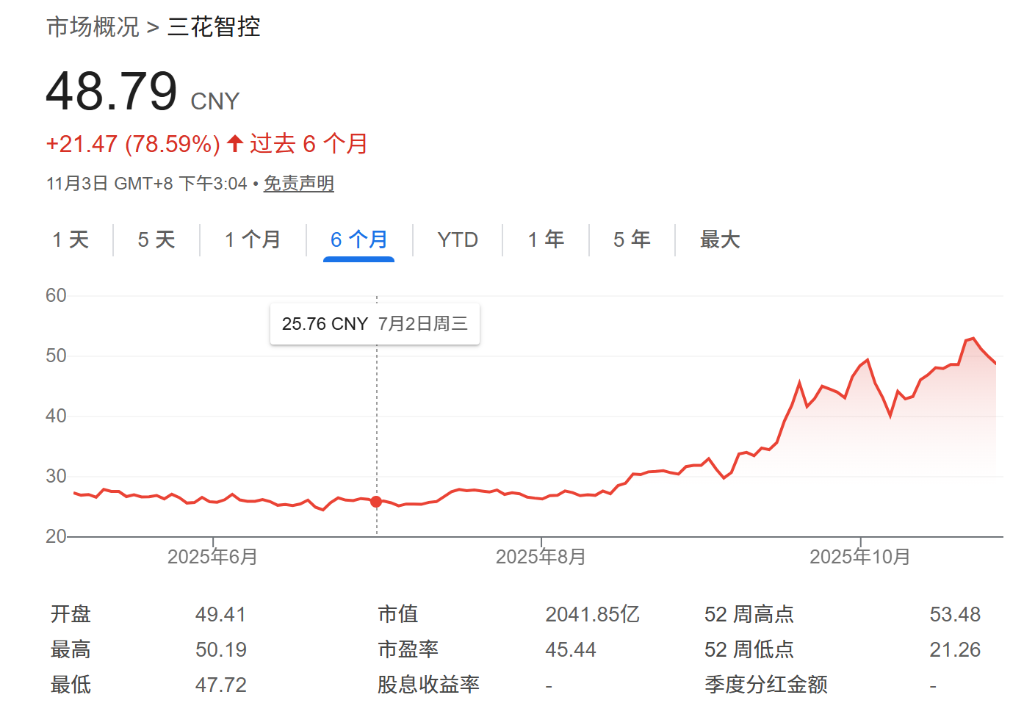
市场对机器人业务预期过高!高盛下调了“三花智控”评级
Hua Er Jie Jian Wen· 2025-11-03 09:29
Core Viewpoint - The market's expectations for humanoid robot business are overly optimistic, leading Goldman Sachs to downgrade Sanhua Intelligent Controls' A-share rating from "Buy" to "Neutral" despite the company's long-term potential [1][4]. Group 1: Rating Changes - Goldman Sachs issued a report on November 2, downgrading Sanhua's A-share rating due to the stock price reflecting overly optimistic short-term sentiments that are unlikely to materialize [1]. - The target price for Sanhua's A-share is set at 40.9 RMB, indicating an 18.1% downside from the report's release price [4]. Group 2: Market Expectations - Goldman Sachs believes the current stock price incorporates aggressive assumptions regarding robot shipment volumes, which are not feasible within the next 12 months [4]. - The analysis suggests that the market's enthusiasm for Sanhua's humanoid robot business is premature, with implied valuations requiring shipments of 900,000 to 2 million humanoid robots [5]. Group 3: Business Performance - Sanhua's traditional business may face growth slowdowns in the next two to three quarters due to high base effects and government subsidy controls [7]. - The growth rate for Sanhua's electric vehicle thermal management business is expected to moderate, with projections of 12%-15% year-on-year growth in the coming quarters [7]. Group 4: Earnings Forecasts - Despite the downgrade, Goldman Sachs raised its earnings per share (EPS) forecasts for Sanhua for 2025-2030 by 4%-8% due to the company's strong cost control [8]. - The target price-to-earnings ratio for Sanhua has been increased from 21 times to 25 times, reflecting improved long-term profitability and valuation models [8].


高盛预言“美国政府关门”两周内结束,美联储12月降息“更有依据”?
Hua Er Jie Jian Wen· 2025-11-03 08:24
Core Viewpoint - Goldman Sachs predicts that the ongoing partial government shutdown in the U.S. is likely to end within two weeks, which is crucial for the data-driven decision-making of the Federal Reserve [1][2]. Group 1: Government Shutdown Outlook - Goldman Sachs indicates that the shutdown, which is approaching the record duration of 35 days from 2018-2019, is nearing its end, with a likely resolution around the second week of November [2][3]. - The prolonged shutdown is attributed to unconventional measures taken by the Trump administration, such as utilizing unspent funds from the previous year, but this temporary relief is diminishing [2]. - Key pressure points, including missed paychecks for air traffic controllers and airport security personnel, are increasing the urgency for Congress to reach a compromise [2]. Group 2: Impact on Federal Reserve Decisions - The duration of the shutdown is seen as a critical variable influencing the Federal Reserve's interest rate decisions in December [1][4]. - If the government reopens by mid-November, the Bureau of Labor Statistics (BLS) may take additional days to release delayed employment reports, which could affect the timing of key economic data releases [4]. - Citigroup analysts express growing confidence that the government will reopen soon, allowing the Fed to receive multiple employment reports before its December meeting, potentially supporting a 25 basis point rate cut [4]. Group 3: Economic Consequences of the Shutdown - Goldman Sachs estimates that if the shutdown lasts about six weeks, it could reduce the annualized real GDP growth for Q4 2025 by 1.15 percentage points, leading to a downward revision of the GDP growth forecast to 1.0% [5]. - The report suggests that the economic impact of the shutdown is likely to be temporary, with a rebound expected in Q1 2026 as furloughed employees return to work [5].


美联储12月降息非定局 高盛看空美元
Sou Hu Cai Jing· 2025-11-03 07:37
Core Viewpoint - Federal Reserve Chairman Jerome Powell stated that a rate cut in December is not guaranteed, contrary to investor expectations that it was almost certain [1] Group 1: Federal Reserve Insights - Powell's comments indicate that the decision for a December rate cut is still uncertain, suggesting a cautious approach from the Federal Reserve [1] - The market had previously anticipated a rate cut as a near certainty following the October monetary policy meeting [1] Group 2: Goldman Sachs Perspective - Goldman Sachs strategists maintain that the motivation for a Federal Reserve rate cut aligns with a further decline in the U.S. dollar, indicating a less favorable economic outlook for the U.S. compared to previous periods [1] - The report from Goldman Sachs suggests that the U.S. economy is not expected to perform as strongly as it has in the past [1]
高盛:美国电力项目储备,光伏风电集中未来两年,天然气和储能未来规划激增
美股IPO· 2025-11-03 04:39
Core Insights - The article highlights a significant shift in the U.S. energy landscape, driven by a surge in renewable energy projects, particularly solar and battery storage, while also noting a substantial increase in planned natural gas and storage projects for the long term [3][6][7]. Group 1: Renewable Energy Growth - Solar and battery storage projects are expected to dominate the new capacity additions in the short term, with solar projects alone accounting for 94% and 99% of the new capacity forecasted by Goldman Sachs for the next two years [1][6]. - In the first nine months of the year, over 90% of the 32 GW of new capacity added was from solar and battery storage [4]. - The current planning for solar projects has reached a historical high of 122 GW, while natural gas and storage projects have seen increases of 127% and 60%, respectively, reaching 40 GW and 67 GW [3][5]. Group 2: Project Delays and Challenges - Despite strong growth, the article emphasizes that the high rate of project delays remains a significant challenge, with 36.5% of planned solar projects and 38.6% of planned wind projects facing delays of over six months [5]. - In contrast, natural gas projects have a much lower delay rate of 11.2%, indicating better execution efficiency [5]. Group 3: Long-term Planning and Labor Shortages - Looking ahead, there is a clear shift in project timelines, with most renewable energy projects expected to come online between 2026 and 2027, while a significant number of natural gas projects are planned for 2028 to 2030 [6][7]. - Labor shortages are identified as a critical constraint on achieving energy growth targets, with an estimated need for over 500,000 new jobs in the electricity and grid sectors by 2030 [8][10]. - The aging workforce is a concern, as 30% of electricians are nearing retirement, and training skilled workers takes 3-5 years [9].

高盛:美国数据中心增量电力需求,“电网外方案”解决“1/4到1/3”,其中燃料电池满足“25-50%”
美股IPO· 2025-11-03 04:39
Core Insights - The "Behind-the-Meter" (BTM) power supply solutions are emerging as a key strategy to address the electricity consumption challenges posed by AI technologies [3][9] - Goldman Sachs predicts that by 2030, the BTM market could reach a capacity of 20-25 gigawatts (GW) to meet the increasing power demands of data centers [3][5] Group 1: Market Dynamics - AI's exponential growth is transforming data centers into significant power consumers, with a projected need for an additional 82 GW of electricity capacity in the U.S. alone by 2030 [5] - The aging electrical grid infrastructure is unable to keep pace with this demand, with new high-voltage transmission line construction dropping from an average of 1,700 miles per year (2010-2014) to just 350 miles per year (2020-2023) [6] - The median time for a project to go from application to commercial operation has reached nearly 5 years, exacerbating the urgency for alternative power solutions [7] Group 2: BTM Solutions - BTM solutions provide a crucial alternative for data centers, offering reliable, uninterrupted power independent of grid reliability issues [9] - It is estimated that from 2024 to 2030, the incremental electricity demand from data centers will total approximately 730 terawatt-hours (TWh), with BTM solutions expected to satisfy one-quarter to one-third of this demand [9] Group 3: Fuel Cell Technology - Fuel cell technology is projected to capture 25% to 50% of the BTM market, translating to an installed capacity of 8-20 GW [4][10] - Solid Oxide Fuel Cells (SOFC) are highlighted for their structural advantages over traditional gas turbines, including delivery time, noise, emissions, and flexibility [10][12] - The optimistic outlook for fuel cells in the data center market is supported by their high efficiency, fuel flexibility, and readiness for commercialization [12]

中国_2025 年第三季度贸易数据_贸易额增长加速-China_ Trade Dashboard 2025Q3_ Trade volume growth accelerated
2025-11-03 03:32
Summary of Key Points from the Conference Call Industry Overview - The report focuses on the **Chinese trade industry**, specifically analyzing export and import trends for Q3 2025. Core Insights Exports - **Export Growth**: Chinese export growth accelerated to **9.2% year-over-year (yoy)** in real terms for Q3, up from **8.6% yoy** in Q2. Nominal exports grew by **6.4% yoy**, compared to **6.0% yoy** in Q2 [3][7]. - **Price Decline**: Export prices declined broadly across most categories, except for electrical equipment [3][17]. - **Key Growth Areas**: The most significant increases in real terms were seen in transportation equipment (mainly autos) and chemicals/plastics/rubber [3][17]. - **Regional Performance**: Exports to Africa saw the highest year-over-year increase, while exports to the US fell by **27.3% yoy** in Q3 [3][14]. Imports - **Import Growth**: Nominal imports rose by **4.2% yoy** in Q3, a recovery from a **-0.9% yoy** decline in Q2. In volume terms, imports increased by **5.6% yoy**, up from **0.5% yoy** in Q2 [3][30]. - **Sector Variability**: Growth in imports varied significantly across sectors, with the strongest real growth in stone/glass/metals and the weakest in transportation equipment [3][32]. - **Price Changes**: Import prices for stone/glass/metals rose by **11.3% yoy**, while mineral prices (mainly crude oil) dropped by **-9.6% yoy** [3][29]. Current Account Outlook - **Surplus Expectations**: The current account surplus is projected to increase to **3.4% of GDP** in 2025, up from **2.2% in 2024**. This is attributed to a widening goods trade surplus and a marginally narrowing services trade deficit [4][47]. - **Export Resilience**: Despite high US tariffs, Chinese exports have shown resilience, primarily due to the competitiveness of Chinese products across various industries [3][4]. Balance of Payments (BBOP) - **BBOP Projections**: The broad balance of payments is expected to rise to **1.7% of GDP** in 2025, compared to **0.4% in 2024**. This is driven by a larger current account surplus and significant net foreign direct investment (FDI) outflows [4][49]. Additional Insights - **Investment Trends**: Outbound FDI is expected to significantly outpace inbound FDI, with notable portfolio investment outflows observed in Q3 [4][44]. - **Market Share**: China's exports continue to lose market share in the US, indicating potential long-term challenges in maintaining export levels to this key market [3][19]. This summary encapsulates the critical findings and projections regarding China's trade dynamics as discussed in the conference call, highlighting both opportunities and risks within the industry.
64%公司盈利爆表,市场却冷眼相待! 高盛:投资者转向AI与宏观不确定性
Zhi Tong Cai Jing· 2025-11-03 00:01
(原标题:64%公司盈利爆表,市场却冷眼相待! 高盛:投资者转向AI与宏观不确定性) 智通财经APP获悉,高盛策略师大卫·科斯汀在10月31日发布的报告中指出,尽管第三季度财报季呈现 出近年来最强劲的利好表现,投资者对此却反应冷淡。 截至目前,约三分之二的标普500指数成分股公司已公布业绩,其中64%的公司盈利超出市场预期至少 一个标准差。科斯汀指出,这一比例"在新冠疫情重启期之外是前所未有的"。 这些超预期表现主要得益于收入增长与利润率稳定:总销售额同比增长6%,利润率维持在11.8%左右。 然而,市场对利好消息的反应明显不足——盈利超出预期的公司,在财报发布次日相对指数的中位数超 额收益仅为0.3个百分点,远低于历史平均水平。 报告分析称,投资者普遍认为本季度业绩对未来盈利前景的参考意义较低,并指出贸易政策波动、银行 贷款状况及其他宏观因素的不确定性是主要影响原因。 盈利增长放缓,但业绩指引依然乐观 信贷状况与市场前景 此外,部分区域性银行的贷款损失引发了对非银行金融机构贷款业务的关注。高盛分析师认为,这些问 题属于"个别现象",而非系统性风险。这类贷款占美国商业银行贷款总额的13%,其中近一半尚未提 取 ...
美国电力项目储备:光伏风电集中未来两年,天然气和储能未来规划激增
Hua Er Jie Jian Wen· 2025-11-02 08:57
Core Insights - The U.S. energy sector is undergoing significant transformation driven by AI-induced electricity demand, with a surge in renewable energy projects in the short term and remarkable growth in natural gas and storage planning in the long term, constrained by labor shortages [1][4] Group 1: Current Energy Capacity Expansion - As of September 2025, the U.S. is expected to add approximately 32 GW of new power generation capacity, primarily from 19 GW of solar and 11 GW of battery storage, achieving 54% of Goldman Sachs' annual forecast [1][2] - Over 90% of the new capacity added in the first nine months of the year comes from solar and battery storage, indicating strong growth momentum [2] - However, project delays are a significant challenge, with 36.5% of planned solar projects and 38.6% of planned wind projects facing delays of over six months, compared to only 11.2% for natural gas projects [2] Group 2: Long-term Planning Trends - Future electricity project timelines show a clear shift, with most renewable energy projects expected to come online between 2026 and 2027, while a sharp decline in renewable project reserves is anticipated post-2028 [3] - Approximately 65% of planned natural gas projects are expected to be operational between 2028 and 2030, with 2028 alone projected to account for 103% of Goldman Sachs' forecast for new natural gas capacity that year [3] - Storage project planning capacity has also reached 67 GW, growing in parallel with natural gas projects [3] Group 3: Labor Shortages as a Key Constraint - Labor shortages are identified as a critical constraint to achieving electricity growth targets, with over 500,000 additional jobs needed in the electricity and grid sectors by 2030 [4] - The aging workforce is a concern, with 30% of electricians nearing retirement, and it takes 3-5 years to train a skilled technician [4] - Worker shortages are reported as the second-largest reason for project delays, following government approval delays, potentially impacting project execution and increasing labor costs [4]
华尔街券商员工2024年平均年薪约50.6万美元
日经中文网· 2025-11-02 00:33
Group 1 - The average annual salary for securities industry professionals in New York City in 2024 is $505,630, an increase of 7.3% from the previous year, marking the second-highest level since 2021. Bonuses are expected to reach a historical high in 2025 [2][4] - Total bonuses in the securities industry are projected to reach $47.5 billion in 2024, with an average of $244,700 per employee, setting a new record [4] - Profits for firms joining the New York Stock Exchange are expected to continue growing, with a projected 31% year-on-year increase in profits for the first half of 2025, reaching $30.4 billion [4] Group 2 - Trading revenues increased by 73% due to rising stock prices, contributing to the overall profit growth of major banks, which reported a combined net profit increase of 19% for the third quarter of 2025 [4][5] - Morgan Stanley's net profit grew by 45% to $4.61 billion, while Bank of America saw a 23% increase. Other major banks like JPMorgan and Goldman Sachs also reported profit growth [5] - The securities industry is expected to see a 10% increase in labor costs in the first half of 2025, driven by anticipated bonus increases [5]



“消费信心跌至数十年最差水平”!高盛警告美国中产消费“失速”,25-35岁人群“捂紧钱包”
美股IPO· 2025-11-01 16:03
Core Viewpoint - Goldman Sachs warns that consumer weakness has spread from low-income groups to the middle class, particularly affecting consumers aged 25-35, with many executives reporting the worst consumer confidence in decades [1][3]. Group 1: Consumer Sentiment and Market Performance - Goldman Sachs' consumer goods expert Scott Feiler notes a significant shift in market discussions, with more companies reporting a slowdown in consumption that now includes middle-income groups [3]. - The non-essential consumer goods sector has underperformed the market by 500 basis points over the past two weeks, indicating a broader market concern [3][9]. - Kraft Heinz CEO Carlos Abrams-Rivera stated that the company is facing one of the worst consumer confidence levels in decades, leading to a downward revision of annual sales guidance by 3% to 3.5% [3][5]. Group 2: Impact on Specific Companies - Chipotle's stock plummeted by 17%, citing reduced spending frequency among lower and middle-income customers due to pressures like unemployment and stagnant wage growth [5]. - CAVA and home goods retailer SG also saw significant stock declines of 11% and 9.6%, respectively, reflecting the broader trend of reduced consumer spending [5]. - O'Reilly Automotive reported moderate pressure on DIY transactions, indicating a reaction from consumers to rising prices [6]. Group 3: Broader Economic Indicators - The consumer discretionary sector has faced severe sell-offs, with non-essential goods underperforming the market by 400 basis points this week alone [8][9]. - Despite the overall consumer spending slowdown, high-end market segments remain resilient, with Visa reporting strong performance across various spending categories [9]. - Starbucks noted positive growth in transaction volume, particularly in its university and campus business, indicating some segments of the market are still thriving [9].