
LI AUTO(LI)

Search documents
Oklo ($OKLO) | VinFast ($VFS) | Hesai Technology ($HSAI) | Li Auto ($LI) | Wallbox ($WBX)
Youtube· 2025-11-12 00:46
Group 1 - Oaklo has received approval from the US Department of Energy for the nuclear safety design agreement for its Aurora fuel fabrication facility at Idaho National Laboratory, establishing a faster authorization pathway for US nuclear fuel production [1][2] - The Vinfast VF9 has established a presence in Canada's electric vehicle market as a full-size luxury electric SUV, offering a range of up to 518 km and 42 horsepower, appealing to families and professionals [2] - Hessi technology has been selected by Lee Auto as the exclusive lighter supplier for its next generation assisted driving platform, enhancing intelligent driving safety through automotive grade LAR technology [3] Group 2 - Wallbox has introduced the Supernova Power Ring, a modular fast charging system capable of delivering up to 400 kW per vehicle and a total shared capacity of 720 kW for destination and semi-public sites, maximizing efficiency and cost-effectiveness [3][4] - The Supernova Power Ring allows for intelligent power distribution across multiple chargers, providing scalable configurations to meet varying site demands [4]






理想i6:客户比L系列年轻10岁,60%车主不做任何选装
车fans· 2025-11-12 00:30
Core Insights - The launch of the i6 has generated significant customer interest, with 25 batches of customers visiting the dealership daily since October, 60% of whom are specifically interested in the i6 [2][4]. Sales and Customer Preferences - The i6 is sold in a single configuration with optional features, with 60% of customers opting for no additional options. The most popular model is the white two-wheel drive standard version, accounting for 40% of sales [4]. - The current waiting period for the i6 is approximately 16 weeks, with a promotional discount of 10,000 yuan available until October 31, followed by a reduced discount of 5,000 yuan starting in November [6][18]. Financing and Pricing - The total cost for the i6, including financing, is approximately 101,620 yuan, with a monthly payment of 2,750 yuan based on a loan amount of 150,000 yuan [7]. - The financing options include a 1.99% annual interest rate, with down payments ranging from 0% to 80% and loan terms of 1 to 5 years [6]. Target Demographics and Competitors - The primary customer demographic for the i6 is younger individuals, with an average age around 25-30 years, often from elite families or early in their careers. The main competitors are Tesla Model Y and Xiaomi Yu7, with customers comparing these models frequently [8][10]. - Customers are drawn to the i6 for its advanced battery technology and intelligent driving features, which are perceived as superior to competitors [14]. Customer Feedback and Concerns - Common customer complaints include long waiting times for vehicle delivery and mixed opinions on the vehicle's exterior design, with some customers loving it while others do not accept it [17]. - Customers who place orders are informed about potential changes to battery brands and vehicle configurations without affecting their position in the queue [18]. Special Offers and Incentives - Special incentives are available for specific professions, such as police officers and teachers, offering 20,000 ideal points for eligible buyers [19].
美股指数涨跌不一,道指创历史新高,市场押注美国政府停摆将结束
Feng Huang Wang· 2025-11-11 22:40
Market Overview - The U.S. stock market showed mixed results with the Dow Jones reaching a historical high, driven by expectations of an end to the government shutdown [1] - The Senate passed a budget bill to end the government shutdown, which is now under consideration by the House of Representatives [1] - Concerns over high valuations in AI stocks led to a decline in companies like Nvidia, which saw a sell-off after SoftBank liquidated its Nvidia shares for $5.8 billion [1][2] Employment and Economic Data - Recent ADP data indicated a loss of an average of 11,250 jobs per week in the U.S. private sector over the last four weeks, contributing to negative market sentiment [2] Stock Performance - The Dow Jones increased by 559.33 points (1.18%) to close at 47,927.96, while the Nasdaq fell by 58.87 points (0.25%) to 23,468.30 [3] - The S&P 500 rose by 14.18 points (0.21%) to 6,846.61, with healthcare and energy sectors performing well, while the technology sector declined by 0.72% [3] Notable Company Movements - Nvidia's stock dropped by 2.96%, reflecting broader concerns in the AI sector [4] - CoreWeave, an Nvidia-invested cloud computing company, lowered its revenue guidance for the year, further pressuring AI stocks [2][4] - AMD's CEO stated that the AI data center market is expected to exceed $1 trillion by 2030, with significant growth anticipated in their data center business [6] - Google announced a $6.4 billion investment in Germany for data center construction, marking a significant commitment to European infrastructure [7] - Microsoft plans to invest $10 billion in Portugal for AI infrastructure, collaborating with Nvidia and other partners [8]




热门中概股周二收盘涨跌不一
Xin Lang Cai Jing· 2025-11-11 22:39
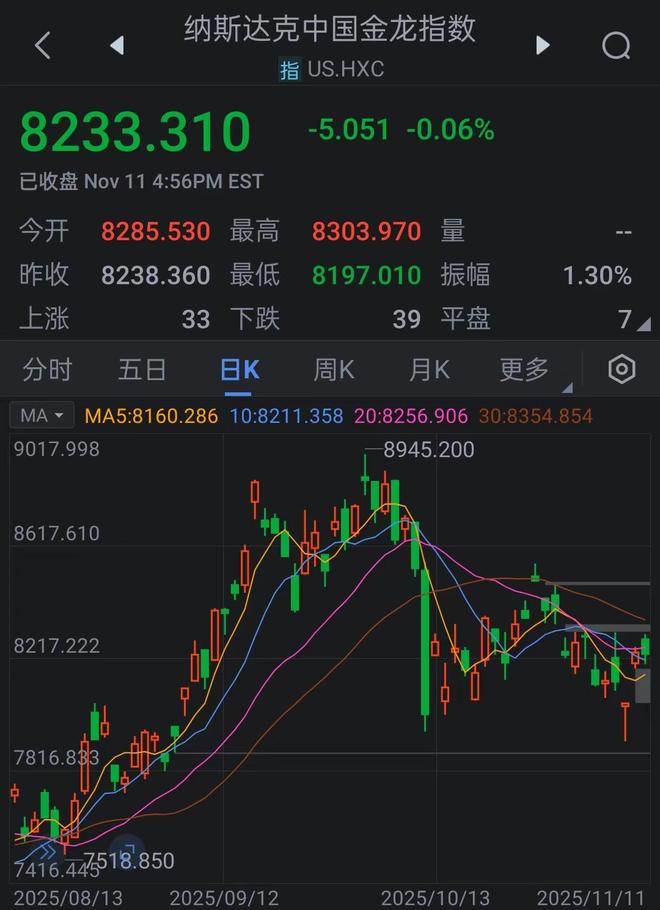
Group 1 - The Nasdaq Golden Dragon China Index experienced a slight decline of 0.06% [1] - Alibaba's stock fell by over 3% [1] - Netease's stock increased by over 1% [1] Group 2 - Tencent Music's stock dropped by over 3% [1] - XPeng Motors saw a rise of over 7% [1] - Li Auto's stock increased by over 1% [1] Group 3 - NIO's stock decreased by over 1% [1] - Bilibili's stock also fell by over 1% [1]

纯电与增程“龙虎斗” 造车新势力“技术对调”打破“路线围城”
Zheng Quan Shi Bao· 2025-11-11 17:58
Core Viewpoint - The Chinese electric vehicle market is witnessing a shift in technology strategies, with companies like Xiaopeng Motors and Li Auto adjusting their approaches to include both pure electric and range-extended vehicles, reflecting market demands and competitive pressures [1][2][6]. Group 1: Xiaopeng Motors' Strategy - Xiaopeng Motors has launched its first range-extended model, the Xiaopeng X9, featuring a fast-charging lithium iron phosphate battery and a large fuel tank, achieving a pure electric range of over 450 kilometers and a combined range exceeding 1600 kilometers [2]. - The company plans to adopt a dual strategy of offering both pure electric and range-extended vehicles in the future, responding to market demands where traditional fuel vehicles still hold significant market share [2][6]. - Xiaopeng's shift towards range extension is seen as a necessary compromise to address challenges such as reduced range in winter and insufficient charging infrastructure in lower-tier cities [2][6]. Group 2: Li Auto's Transition - Li Auto, initially focused on range-extended vehicles, is now increasing its efforts in the pure electric segment due to competitive pressures and the need to diversify its offerings [3][7]. - The company faces competition from other brands in the range-extended market, which has prompted it to explore pure electric options to maintain market relevance [7]. - Data indicates that pure electric vehicles accounted for over 60% of total new energy vehicle sales in China from January to September this year, with a significant increase in sales of pure electric large SUVs [3]. Group 3: Market Dynamics and Consumer Preferences - The market is evolving towards a dual approach where both pure electric and range-extended vehicles coexist, driven by consumer preferences and technological advancements [8][12]. - The competition in the range-extended segment is intensifying, with multiple companies, including Lantu and others, planning to enhance their offerings in this area [3][10]. - The overall trend suggests that while pure electric vehicles are the long-term goal, range-extended and hybrid technologies will play a crucial role in the short to medium term as the market transitions [11][12].
汽车2026年投资策略:品牌化、全球化、智能化,迎接AI浪潮下的产业升级机遇【国信汽车】
车中旭霞· 2025-11-11 16:02
Core Viewpoint - The Chinese automotive industry is transitioning from a growth phase to a mature phase, with a significant slowdown in sales growth and a shift in focus towards brand building and globalization to maintain profitability and market share [1][11]. Group 1: Industry Characteristics and Changes - The automotive industry is experiencing three main characteristics: diminishing total volume dividends, low growth normalization in sales, and a shift in production capacity from traditional fuel vehicles to new energy vehicles [11][19]. - The industry has undergone significant changes, including the transition from a focus on meeting transportation needs to a broader application in various life scenarios, and the evolution of vehicles from mere transportation tools to intelligent entities [42][45]. Group 2: Sales and Market Trends - The sales volume of the automotive industry is expected to reach 34.89 million units in 2025, with a growth rate of approximately 11%, driven by tax incentives and subsidies [1][11]. - The penetration rate of new energy vehicles is projected to increase significantly, with sales expected to rise from 1.21 million in 2019 to 14 million by 2024, reflecting a compound annual growth rate of 63% [19][24]. Group 3: Brand and Globalization Strategies - Brand building and globalization are essential strategies for automotive companies to counteract intense competition and maintain market share, with a focus on creating brand premiums and establishing barriers through advanced technologies [2][4]. - Domestic automotive brands are increasingly expanding overseas, supported by the establishment of production capacities, distribution channels, and service systems in international markets [2][4]. Group 4: Technological Advancements - The automotive industry is on the brink of a technological revolution, with advancements in intelligent driving expected to transition from co-pilot (L3) to agent (L4) capabilities, creating new investment opportunities in various components [2][3]. - The expected mass production of robots in 2026 will mark a significant milestone for the robotics industry, with a high overlap in components between automotive and robotics sectors, presenting investment opportunities in related supply chains [3][4]. Group 5: Policy and Economic Influences - The automotive industry is influenced by macroeconomic cycles, industry cycles, and policy cycles, with the latter playing a crucial role in shaping market dynamics through incentives and regulations [1][50]. - The upcoming reduction in new energy vehicle purchase tax incentives in 2026 is anticipated to stabilize overall automotive sales, with a slowdown in the growth rate of new energy vehicle sales [1][50].





禾赛公布三季度业绩:实现营收27亿元,与理想汽车续签激光雷达合作
Zheng Quan Shi Bao Wang· 2025-11-11 15:09
Core Viewpoint - Hesai Technology reported significant growth in revenue and net profit for the third quarter of 2025, achieving a record high in net profit and marking a strong position in the lidar market [1][2]. Financial Performance - For the first nine months of 2025, the company generated revenue of 2.027 billion RMB, up from 1.357 billion RMB in the same period last year, representing a year-on-year increase of 49.3% [1]. - The net profit for the same period was 310 million RMB, a turnaround from a net loss of 249 million RMB in the previous year [1]. - In Q3 2025, revenue reached 800 million RMB, reflecting a year-on-year growth of 47.5%, marking the sixth consecutive quarter of revenue growth [1]. - The net profit for Q3 was 260 million RMB, achieving a historical high and reaching the annual profit target one quarter ahead of schedule [2]. Product and Market Developments - The total lidar delivery volume reached 441,398 units, a year-on-year increase of 228.9%, with ADAS deliveries at 380,759 units, up 193.1%, and deliveries in the robotics sector at 60,639 units, up 1311.9% [1]. - The company became the first in the world to produce over one million lidar units annually as of September 2025 [1]. - Hesai secured contracts for the full range of models from its top two ADAS clients for 2026, achieving 100% standardization [2]. - The ETX+FTX product combination was selected for its first passenger vehicle mass production, set to launch by the end of 2026 or early 2027 [2]. Strategic Partnerships and Market Position - The company has established partnerships with leading autonomous driving firms globally, including Motional, enhancing its market presence and securing multi-million dollar contracts [2]. - In the domestic market, Hesai collaborated with major players in the autonomous taxi and logistics sectors, with some models expected to feature up to eight Hesai lidar units [3]. - The company successfully listed on the Hong Kong Stock Exchange, raising a total of 614 million USD, marking the largest IPO in the lidar industry to date [3]. - The CEO expressed a commitment to transforming the company into a full-stack infrastructure builder, aiming to lead a new wave of technological innovation in automotive and robotics perception [3].
理想年内第6次组织调整,李想首次直管人力资源
21世纪经济报道· 2025-11-11 14:01
Core Viewpoint - The article discusses the recent organizational restructuring at Li Auto, highlighting the integration of the HR department and the strategic implications of this change under CEO Li Xiang's direct management [5][6]. Group 1: Organizational Changes - Li Auto announced an organizational adjustment where the HR department was merged with the product and strategy group, with Yang Haishan appointed as the head of the new HR department [5]. - This restructuring marks the first time Li Xiang directly manages the HR department, aiming to streamline processes and reduce internal inefficiencies [6][7]. - The previous HR head, Yuan Chunfeng, is leaving the company, coinciding with the departure of Li Wenzhi, the former head of the CFO office [6]. Group 2: Strategic Intent - The restructuring is part of a broader strategy to adapt to AI-driven organizational needs, moving away from Huawei's model that emphasized rhythm over efficiency [6][7]. - The HR department's functions have been divided into two main areas: strategic policy design and operational execution, with the latter managed by the organization department [8]. Group 3: Process and Efficiency - The restructuring aims to simplify processes and expedite approvals, addressing previous bottlenecks where budget constraints hindered HR decisions [8][9]. - Employees have expressed concerns about the complexity of existing processes, which can delay hiring and limit operational flexibility [8]. Group 4: Frequency of Adjustments - Li Auto has undergone six major organizational adjustments in 2023, indicating a dynamic approach to management and operational efficiency [9].
李想首次直管人力资源,原人力资源负责人离职
Xin Lang Cai Jing· 2025-11-11 13:57
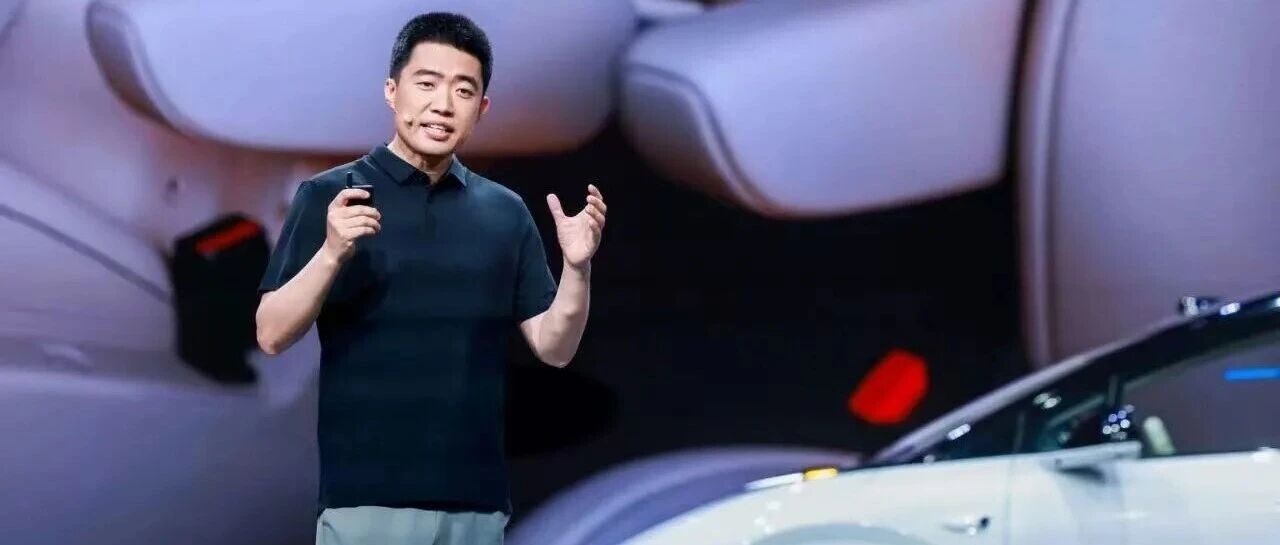
Core Insights - Li Auto announced an organizational restructuring, integrating the "Organization Department" and "Human Resources" under the leadership of CFO Li Tie into a new "Human Resources" department, which will report to CEO Li Xiang [1] - Yang Haishan has been appointed as the head of the newly formed Human Resources department, increasing the number of departments directly reporting to the CEO to five [1] - The previous head of the Human Resources department, Yuan Chunfeng, is in the process of leaving the company, with today being his last day [1] Organizational Changes - The restructuring involves the consolidation of the "Organization Department" and "Human Resources" into a single department [1] - The new Human Resources department will now be part of the Product and Strategy group [1] - The direct reports to CEO Li Xiang now include the Brand Department, Strategy Department, Product Department, Product Line, and the new Human Resources department [1] Leadership Transition - Yang Haishan has been appointed as the new head of the Human Resources department [1] - Yuan Chunfeng, the former head of Human Resources, is departing from the company [1]
21独家| 原人力资源负责人等已离职,李想首次直管人力资源
2 1 Shi Ji Jing Ji Bao Dao· 2025-11-11 13:01
(原标题:21独家| 原人力资源负责人等已离职,李想首次直管人力资源) 21世纪经济报道记者 易思琳 报道 《21汽车·一见Auto》从多位独立信源处获悉,今天上午(11月11日),理想汽车发布了一则组织调整 公告。公告称,CFO李铁管理的组织与财经群组下的一级部门——"组织部"与"人力资源"整合为"人力 资源",并入产品与战略群组。同时,杨海山为新成立的人力资源部门负责人,向理想汽车CEO李想汇 报。 至此,直接汇报给李想的部门新增至5个。此前直接汇报给李想的分别是:品牌部、战略部、产品部、 产品线。 杨海山,是理想汽车的老人,工号是232。在2023年之前,杨海山一直在销售服务体系里管理售后部 门。他曾在2023年年初短暂汇报给李想,后作为售后负责人汇报给原销售服务体系负责人邹良军。 这是李想第一次直接管理人力资源部门。"这次组织调整早就酝酿中,因为想哥(李想)判断的是,面 向AI的组织建设,不能走华为那套强调节奏而不强调效率的流程。"一位接近理想汽车的知情人士称。 2022年底,李想宣布公司全面向华为学习,向矩阵型组织架构升级。在当时的规划下,理想在原来的职 能部门之外共设有七个横向管理的实体部门,组织 ...