
LI AUTO(LI)

Search documents
理想万辆电车召回:10元单价冷却液引发的质量风暴
3 6 Ke· 2025-11-05 00:56
Core Viewpoint - The incident involving the Ideal MEGA electric vehicle, which caught fire due to a cooling liquid issue, has raised significant concerns in the industry and among consumers, leading to a recall of over 11,000 vehicles and an estimated cost of 2 billion yuan for the company [2][4][18]. Group 1: Incident Overview - On October 23, an Ideal MEGA electric vehicle caught fire in Shanghai after a malfunction related to its cooling system [1]. - The fire was attributed to insufficient corrosion resistance of the cooling liquid, which led to leakage and potential thermal runaway of the battery [2][3]. - Ideal announced a recall of 11,411 MEGA vehicles produced between February 18, 2024, and December 27, 2024, to replace the cooling liquid and affected components [2][3]. Group 2: Technical Details - The MEGA is Ideal's first pure electric model, launched in March 2024, priced at 550,000 yuan, featuring CATL's first-generation Kirin battery with ultra-fast charging capabilities [3]. - The cooling liquid used in the 2024 MEGA was a low-conductivity type, intended to meet insulation design requirements, but it failed to provide adequate corrosion resistance [3][9]. - The corrosion issue arose within just over a year of the vehicle's launch, which is unusual for such components that typically have a lifespan exceeding 15 years [13][18]. Group 3: Industry Implications - The incident has prompted other manufacturers, such as Xiaomi Automotive, to conduct urgent inspections of their cooling systems and battery structures [26]. - The industry is now questioning the verification processes for cooling liquids and the materials used in electric vehicle components, highlighting a potential oversight in testing protocols [15][17]. - The shift to low-conductivity cooling liquids, while aimed at improving safety, has revealed vulnerabilities that need to be addressed through more rigorous testing and validation [11][12][19].


英伟达、特斯拉大跌
Xin Lang Cai Jing· 2025-11-05 00:47
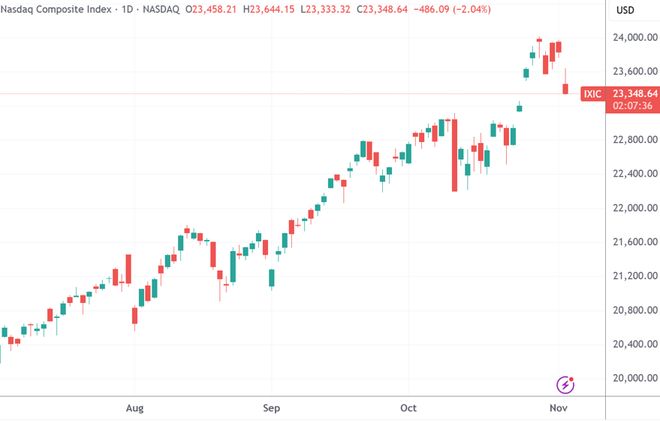
Market Overview - The S&P 500 index fell by 1.17% to 6771.55 points, the Nasdaq Composite dropped by 2.04% to 23348.64 points, and the Dow Jones Industrial Average decreased by 0.53% to 47085.24 points, indicating a market adjustment amid concerns over high valuations [1] Company Performance - Palantir, a leading AI application stock, saw its shares decline by 7.94% despite reporting earnings that exceeded expectations and raising its performance guidance. The stock has quadrupled in value over the past year, becoming a symbol of the "AI bubble" [2] - Nvidia's stock fell by 3.96%, while other major tech stocks like Apple and Microsoft experienced mixed results, with Apple rising by 0.37% and Microsoft dropping by 0.52% [7] Investor Sentiment - Investor confidence was further shaken by Michael Burry's disclosure of purchasing put options on Palantir and Nvidia, which raised concerns among retail investors [5] - The retail investor preference index compiled by Goldman Sachs dropped by 3.6%, approximately three times the decline of the S&P 500 index, reflecting a challenging day for day traders [5] Market Predictions - BTIG's chief market technician, Jonathan Krinsky, indicated that the S&P 500 has not tested the 50-day moving average since April, currently around 6654 points, and suggested potential declines to the 6400-6500 point range due to extreme market divergences [5] - Goldman Sachs and Morgan Stanley executives expressed concerns about a potential market pullback of 10% to 20% over the next 12 to 24 months, with Morgan Stanley's CEO suggesting that a 10%-15% correction would be welcome if not driven by macroeconomic factors [5] Broader Market Trends - Similar to the U.S. stock market, commodities, including oil and gold, experienced declines, with Bitcoin dropping nearly 6% and Ethereum falling over 10% in the cryptocurrency market [6] - The Nasdaq China Golden Dragon Index fell by 2.05%, with notable declines in Chinese stocks such as Alibaba down 2.02% and JD.com down 2.93% [8]


汽车购置税补贴退坡前夜,市场迎来抢购潮,车企自掏腰包为消费者兜底
Hua Xia Shi Bao· 2025-11-05 00:37
Core Viewpoint - The upcoming adjustment in the new energy vehicle (NEV) purchase tax policy is prompting various car manufacturers to launch subsidy programs to mitigate the impact on consumers, leading to a surge in vehicle orders before the policy change takes effect [2][3][6]. Group 1: Policy Changes - The Ministry of Finance announced that NEVs purchased between January 1, 2024, and December 31, 2025, will be exempt from purchase tax, with a maximum exemption of 30,000 yuan per vehicle. From January 1, 2026, to December 31, 2027, the tax will be halved, with a maximum reduction of 15,000 yuan per vehicle [3][4]. - The adjustment marks a shift from a "policy-driven" to a "market-driven" approach in China's NEV industry, indicating a significant transition after ten years of tax exemptions [3][8]. Group 2: Market Reactions - Car manufacturers like Xiaomi, NIO, and Li Auto are implementing "purchase tax subsidy" programs to attract consumers, offering to cover the tax difference for orders placed before November 30, 2025, if delivery occurs in 2026 [2][6]. - The introduction of these subsidy programs has led to a notable increase in consumer inquiries and orders, with a reported 35.4% rise in customer engagement in early October compared to September [7]. Group 3: Consumer Behavior - Consumers are exhibiting a "last-minute rush" mentality, with over 60% of recent orders being placed to lock in subsidies, particularly in the market segment above 300,000 yuan [5][6]. - The anticipated increase in purchase tax is influencing consumer decisions, with many opting to purchase vehicles sooner to avoid higher costs in the future [7]. Group 4: Industry Outlook - The NEV market is expected to face a significant test of market dynamics as the purchase tax exemption transitions to a reduction, highlighting the industry's resilience and adaptability [8].


理想智驾逆袭往事:端到端的百日冲刺
自动驾驶之心· 2025-11-05 00:04
Core Viewpoint - The article discusses the significant advancements made by Li Auto in the field of autonomous driving, particularly the introduction of the "end-to-end + VLM" system, which marks a turning point for the company in achieving industry leadership [5][7][40]. Group 1: Development of Autonomous Driving Technology - In March 2024, Li Auto's CEO expressed dissatisfaction with the company's autonomous driving progress, emphasizing the need for a shift to an end-to-end approach [4][9]. - The launch of the "end-to-end + VLM" system in July 2024 allowed Li Auto to finally experience true leadership in autonomous driving technology after years of following competitors [5][6]. - By October 2024, the trial driving of the new system accounted for 65% of user experiences in stores, indicating strong market enthusiasm [6][7]. Group 2: Market Performance and User Adoption - In 2024, the delivery share of models equipped with the AD Max system (featuring the new technology) reached 75.4% in the 300,000+ RMB segment and 84.6% in the 400,000+ RMB segment, a significant increase from just 20% earlier in the year [7][51]. - The rapid adoption of the end-to-end system led to a dramatic increase in user interest and sales, with the proportion of users experiencing the system rising to over 70% by the end of the year [51][52]. Group 3: Strategic Shifts and Team Expansion - In 2023, Li Auto began to learn from Huawei's approach to autonomous driving, significantly expanding its engineering team from around 600 to over 1,000 by the end of the year [10][11]. - Despite the team expansion, initial results did not meet expectations, prompting a strategic pivot towards the end-to-end model [11][24]. - The end-to-end project was initiated with a small, dedicated team, emphasizing the importance of voluntary participation and commitment to the project's success [27][28]. Group 4: Technical Innovations and Efficiency - The end-to-end project was completed in approximately 100 days, showcasing an unprecedented speed of development in the industry, with no significant errors reported during the process [46][56]. - The project utilized a one-stage end-to-end technology, integrating various functions into a single network, which allowed for more efficient processing and reduced complexity compared to traditional modular approaches [58][59]. - The success of the project was attributed to effective collaboration among team members and a strong focus on data-driven methodologies, which allowed for high-quality outcomes with a relatively small team [57][64]. Group 5: Data-Driven Approach - The foundation of Li Auto's success in autonomous driving is rooted in a robust data collection and processing system established by the team, which has been in development since 2018 [72][73]. - The company has emphasized the importance of high-quality data over sheer model complexity, leading to significant improvements in performance metrics [70][72].
自动驾驶是否一定需要语言模型?
自动驾驶之心· 2025-11-05 00:04
Core Viewpoint - The article discusses the technological competition between two architectures for autonomous driving: WEWA (World Engine + World Action Model) represented by Huawei and VLA (Vision-Language-Action) pursued by companies like Li Auto and Xpeng. It highlights the debate on whether large language models (LLMs) are essential for autonomous driving, emphasizing the trade-offs between efficiency and cognitive depth in technology choices [2][4]. Summary by Sections 1. Technological Divergence: WEWA vs. VLA - The year 2025 is identified as a critical turning point for autonomous driving technology, with WEWA and VLA architectures representing opposing approaches. WEWA aims for efficient implementation through "de-linguistic" methods, while VLA focuses on cognitive intelligence via language models [2][4]. 2. Fundamental Differences Between WEWA and VLA - The two architectures differ fundamentally in their information processing logic, core components, and technical goals, particularly regarding the role of language as an intermediary. WEWA emphasizes direct mapping from visual data to actions, while VLA incorporates a three-tiered process involving visual features, language semantics, and control instructions [5][6]. 3. Cost of Language Models - VLA's reliance on large language models incurs significant computational costs, presenting a core bottleneck for mass production. The hardware costs escalate dramatically due to the need for high-performance GPU clusters during training and advanced chips for real-time inference [7][8][9]. 4. Advantages of Language Models - Despite high computational costs, VLA's rise is attributed to the abstracting capabilities and cognitive intelligence provided by language models. These models can compress numerous similar scenarios into concise language, enhancing decision-making in complex situations [10][12][13][14]. 5. Core Trade-offs: Efficiency vs. Intelligence - The necessity of language models in autonomous driving is debated, with no definitive conclusion. In short-term production scenarios (L2-L3), WEWA's efficiency and low latency are more valuable, while in long-term high-level scenarios (L4-L5), VLA's cognitive advantages become essential. The future may see a hybrid approach combining both architectures to balance efficiency and intelligence [15][16][17][18].

热门中概股多数下跌,纳斯达克中国金龙指数跌2.05%
Mei Ri Jing Ji Xin Wen· 2025-11-04 21:16
Core Viewpoint - The majority of popular Chinese concept stocks experienced a decline, with the Nasdaq Golden Dragon China Index dropping by 2.05% on November 5th [1] Company Performance - WeRide (文远知行) saw a preliminary drop of 13.7% [1] - Pony.ai (小马智行) fell by 11.2% [1] - Xiaomi's American Depositary Receipts (ADR) decreased by 4.7% [1] - Xpeng (小鹏), NIO (蔚来), TSMC (台积电), Meituan (美团 ADR), and Li Auto (理想) all dropped over 3% [1]

美股异动 | 热门中概股普跌 富途控股(FUTU.US)跌逾5%
智通财经网· 2025-11-04 15:32
Core Viewpoint - The Nasdaq China Golden Dragon Index experienced a decline of over 1%, indicating a downturn in popular Chinese concept stocks [1] Group 1: Stock Performance - Futu Holdings (FUTU.US) fell by more than 5% [1] - Xpeng Motors (XPEV.US) decreased by nearly 4% [1] - Tiger Brokers (TIGR.US) dropped by over 3% [1] - Li Auto (LI.US) saw a decline of nearly 2% [1] - Alibaba (BABA.US) fell by over 1% [1]


新势力 | 10月:车市平稳 新势力销量向上【民生汽车 崔琰团队】
汽车琰究· 2025-11-04 14:53
Core Viewpoint - The article highlights the stable performance of the new energy vehicle market in October 2025, with significant growth in delivery volumes for several key players, indicating a strong demand and increasing market penetration of new energy vehicles [2][3]. Group 1: Market Overview - In October 2025, the retail market for narrow passenger vehicles is estimated at approximately 2.2 million units, a year-on-year decrease of 2.6% and a month-on-month decrease of 2.0%. The new energy vehicle retail volume is expected to reach 1.32 million units, with a penetration rate of around 60.0% [3]. - The combined delivery of six new energy vehicle companies (excluding Xiaomi) reached 232,903 units in October, representing a year-on-year increase of 16.7% and a month-on-month increase of 3.8% [3]. Group 2: Company Performance - **Leap Motor**: Delivered 70,289 units in October, a year-on-year increase of 84.1% and a month-on-month increase of 5.4%. The growth is attributed to strong sales of models C10 and B01, with the C10 accounting for 23.4% of total deliveries [4]. - **Xpeng Motors**: Delivered 42,013 units in October, a year-on-year increase of 75.7% and a month-on-month increase of 1.0%. The MONA M03 model contributed significantly to the sales [5]. - **NIO**: Delivered 40,397 units in October, a year-on-year increase of 92.6% and a month-on-month increase of 16.3%. The delivery of the ET5T and ES6 models played a key role in this growth [6]. - **Li Auto**: Delivered 31,767 units in October, a year-on-year decrease of 38.2% and a month-on-month decrease of 6.4%. The company is expected to recover as new electric models are introduced [6]. - **Aion**: Delivered 27,014 units in October, a year-on-year decrease of 32.6% and a month-on-month decrease of 7.2% [6]. - **Zeekr**: Delivered 21,423 units in October, a year-on-year decrease of 14.5% but a month-on-month increase of 17.3% [6]. Group 3: Technological Advancements - The article discusses the acceleration of end-to-end technology applications in intelligent driving, with a focus on achieving equality in smart driving capabilities. Companies like Xpeng and those associated with Huawei are leading the charge in this area [8]. - The article predicts that advancements in intelligent driving technology will lower hardware barriers and expand applications in the mainstream market, particularly for vehicles priced under 200,000 yuan [8]. Group 4: Investment Recommendations - The article recommends focusing on companies with strong intelligent driving capabilities and those that are well-positioned in the new energy vehicle market, including Geely, Xpeng, Li Auto, BYD, and Xiaomi [9][10].

郎咸鹏给理想VLA新画的4个饼以及值得留意的5点
理想TOP2· 2025-11-04 13:33
Core Viewpoint - The article discusses the future of Li Auto's VLA technology, emphasizing the importance of a reinforced learning loop and the potential for significant advancements in autonomous driving capabilities by 2027 [1][2]. Short-term Outlook - Li Auto aims to establish a reinforced learning loop by the end of 2025, which is expected to enhance user experience significantly, making the vehicle feel more "alive" and responsive [1]. Mid-term Outlook - With the reinforced learning loop in place, Li Auto anticipates surpassing Tesla in the Chinese market due to its advantageous environment for iterative improvements [1]. Long-term Outlook - The VLA technology is projected to achieve Level 4 autonomy, with the expectation of new technologies emerging beyond this milestone [1]. Business Process Transformation - The transition to reinforced learning is not just a technical change but a fundamental business transformation that will create a competitive moat for the company [1][3]. Team Dynamics and Leadership - The restructuring of the autonomous driving team focuses on building a robust business system rather than relying on individual talents, with an emphasis on internal talent development [7][8]. AI and Computational Needs - The current intelligence requirements for driving are considered low, and after the business process reform, clearer insights into computational needs will emerge [3][4]. Competitive Landscape - The article suggests that multiple players will exist in the autonomous driving space, and the narrative of having unique capabilities may not constitute a strict competitive moat [2][8]. Data and Model Development - The importance of data quality and distribution in training models is highlighted, with a focus on addressing corner cases to enhance system performance [9]. Strategic Insights - Li Auto's strategy emphasizes the need for substantial resource allocation and continuous investment in AI technology, akin to the role of Elon Musk at Tesla [8][12]. Organizational Structure - The restructuring of the autonomous driving department includes the formation of various specialized teams to enhance operational efficiency and employee engagement [7][11]. Future Projections - By 2027, the industry may shift away from traditional metrics like MPI, indicating a potential evolution in performance evaluation standards [11].

新势力销量持续高增
Shanghai Aijian Securities· 2025-11-04 13:22
Investment Rating - The report rates the automotive industry as "Outperforming the Market" [29] Core Insights - The new energy vehicle sales continue to grow significantly, with various companies reporting impressive sales figures for October 2025 [3] - The report highlights the acceleration of intelligent driving technology among leading companies, indicating a shift towards enhanced user experience and competitive differentiation [3] - The investment recommendation focuses on companies that are leading in smart technology and user experience, specifically mentioning Xiaomi Group, Xiaopeng Motors, and Li Auto as key players to watch [3] Summary by Sections Sales Performance - Leap Motor reported sales of 70,289 units in October, showing a year-on-year increase of 84.1% and a month-on-month increase of 5.4% [3] - Xiaopeng Motors sold 42,013 units, with a year-on-year increase of 75.7% and a month-on-month increase of 1.0% [3] - NIO's sales reached 40,397 units, marking a year-on-year increase of 92.6% and a month-on-month increase of 16.3% [3] - BYD maintained strong sales with 441,706 units sold, although it experienced a year-on-year decline of 12.1% [3] - Other companies like Geely, Changan, and SAIC also reported significant sales figures, contributing to the overall growth in the sector [3] Technological Advancements - Xiaopeng Motors is enhancing its intelligent driving capabilities, with a notable penetration rate of 86% for its XNGP urban driving feature [3] - Tesla continues to leverage its Full Self-Driving (FSD) technology, achieving a record global delivery of 497,000 units in Q3 2025, a year-on-year increase of 7.4% [3] - The report emphasizes the importance of technological innovation in maintaining competitive advantages within the automotive industry [3] Market Dynamics - The report suggests that the industry is moving towards a concentrated market structure, with leading companies establishing user experience barriers through advanced technology [3] - The competitive landscape is characterized by a focus on smart technology and integrated ecosystems, as seen with Xiaomi's automotive strategy [3]


