
LI AUTO(LI)

Search documents
遭遇成长“阵痛” 理想汽车向内“动刀”
Zhong Guo Jing Ying Bao· 2026-01-09 20:25
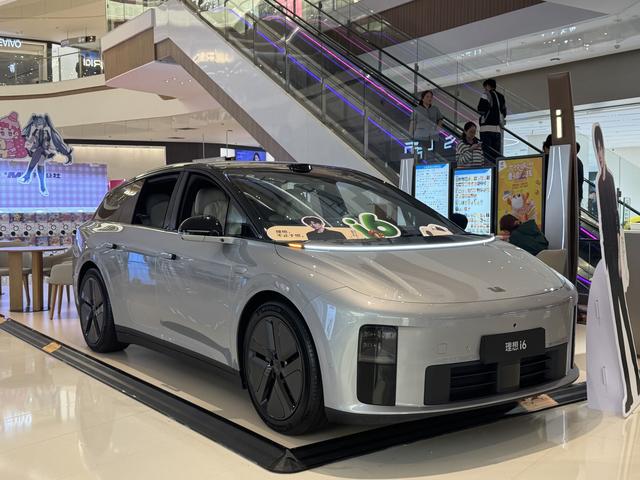
Core Insights - Li Auto is undergoing significant changes due to operational challenges, including a projected delivery of 406,300 vehicles in 2025, which represents an 18.81% year-on-year decline from its target of 640,000 vehicles [2] - The company reported a 39% year-on-year drop in deliveries and a net loss of 624 million yuan in Q3 2025, influenced by the recall costs of the Li Auto MEGA [2] - Li Auto is shifting back to an entrepreneurial management model from a professional manager system to enhance agility in responding to market changes [4] Management Strategy - The entrepreneurial management model emphasizes innovation, agility, and rapid iteration, contrasting with the professional manager model that focuses on stability and control [3] - Li Auto's CEO, Li Xiang, believes that the professional manager model has led to slower decision-making and product iteration, making the company less responsive to competition [4] - The company aims to foster a culture of open dialogue and quick decision-making, moving away from hierarchical reporting structures [5] Product Line Adjustments - In early 2026, Li Auto will restructure its product lines from three to two, focusing on efficiency and market coverage [5] - The L series will return to a simplified SKU model to enhance product experience and supply chain efficiency, addressing previous customer complaints about product complexity [6] - The L series has faced declining sales due to internal competition and external market pressures, necessitating a revitalization strategy [7][8] Competitive Landscape - The L series is experiencing significant competition from both internal models and external brands, which has impacted its sales performance [8] - Analysts suggest that revitalizing the L series is crucial for Li Auto to overcome current market challenges and improve sales in 2026 [8]


KLÉPIERRE: INFORMATION REGARDING THE TOTAL VOTING RIGHTS AND SHARES OF KLÉPIERRE SA AS OF DECEMBER 31, 2025
Globenewswire· 2026-01-09 16:45
Core Viewpoint - Klépierre, a leading European shopping mall operator, has reported its total number of shares and voting rights as of December 31, 2025, highlighting its significant market presence and commitment to sustainable development [2][4]. Group 1: Company Overview - Klépierre is the European leader in shopping malls, focusing exclusively on continental Europe [4]. - The company's portfolio is valued at €20.6 billion as of June 30, 2025, comprising large shopping centers across more than 10 countries in continental Europe [4]. - Klépierre attracts over 700 million visitors annually to its shopping centers [4]. - The company is a French REIT (SIIC) listed on Euronext Paris and is included in the CAC Next 20 and EPRA Euro Zone Indexes [4]. - Klépierre is recognized in various ethical indexes, including CAC SBT 1.5, MSCI Europe ESG Leaders, and FTSE4Good, reflecting its commitment to sustainable development and climate change initiatives [4]. Group 2: Voting Rights and Shares - As of December 31, 2025, Klépierre has a total of 286,861,172 shares [2]. - The theoretical voting rights correspond to the total number of voting rights attached to all shares, which is also 286,861,172 [6]. - The number of exercisable voting rights is 286,360,353, accounting for shares deprived of voting rights [6].

MoonFox Data | Li Auto's Performance Plunges, BEV Transition Faces Formidable Headwinds
Globenewswire· 2026-01-09 10:00
Core Viewpoint - Li Auto reported a net loss of RMB 625 million (approximately USD 89.286 million) in Q3 2025, marking the end of 11 consecutive profitable quarters, primarily due to a recall of 11,400 vehicles [1] Financial Performance - Vehicle sales revenue in Q3 2025 was RMB 25.9 billion (approximately USD 3.7 billion), a decline of 37.4% from RMB 41.3 billion (approximately USD 5.9 billion) in Q3 2024 [2] - Total revenue for Q3 2025 was RMB 27.4 billion (approximately USD 3.914 billion), down 36.2% from RMB 42.9 billion (approximately USD 6.129 billion) in Q3 2024, and down 9.5% quarter-over-quarter from RMB 30.2 billion (approximately USD 4.314 billion) in Q2 2025 [3] - Total deliveries were 93,211 units, reflecting a 39.0% year-over-year decrease [2] Market Challenges - Li Auto is expected to face a continued decline in Q4 2025, with projected vehicle deliveries between 100,000 to 110,000 units, representing a year-over-year decrease of 37.0% to 30.7% [5] - The company is experiencing intensified competition in the new energy vehicle market, with rivals like Tesla and NIO having established significant advantages [6][7] - Li Auto's transition to battery electric vehicles (BEVs) is lagging, and the company must enhance its production capacity and technology deployment to remain competitive [8] Production and Supply Chain Issues - New BEV models i6 and i8 have received positive market responses, with orders exceeding 100,000 units; however, supply chain challenges have limited their deliveries to only 18% of total deliveries in Q3 [9] - Li Auto is attempting to increase production capacity through a dual-supplier system but faces urgent supply chain stability issues [9] Strategic Expansion and Consumer Engagement - Despite challenges in its core vehicle business, Li Auto has begun diversifying into new lines, launching AI smart glasses, although market response has been lukewarm [10][11] - Li Auto's app user engagement remains high, indicating a strong core consumer base, which is crucial for any potential turnaround [12] Q4 Outlook - For Q4 2025, revenue is forecasted at RMB 26.5 billion (approximately USD 3.786 billion), representing a 40% year-over-year decline [14]

MoonFox Data | Li Auto's Performance Plunges, BEV Transition Faces Formidable Headwinds - Aurora Mobile (NASDAQ:JG), Li Auto (NASDAQ:LI)
Benzinga· 2026-01-09 10:00
Core Viewpoint - Li Auto reported a net loss of RMB 625 million (approximately USD 89.286 million) in Q3 2025, marking the end of 11 consecutive profitable quarters, primarily due to a recall of 11,400 vehicles [1] Financial Performance - Vehicle sales revenue in Q3 2025 was RMB 25.9 billion (approximately USD 3.7 billion), a decline of 37.4% from RMB 41.3 billion (approximately USD 5.9 billion) in Q3 2024; total deliveries were 93,211 units, down 39.0% YoY [2] - Total revenue for Q3 2025 was RMB 27.4 billion (approximately USD 3.914 billion), down 36.2% from RMB 42.9 billion (approximately USD 6.129 billion) in Q3 2024, and down 9.5% QoQ from RMB 30.2 billion (approximately USD 4.314 billion) in Q2 2025 [3] - The projected vehicle deliveries for Q4 2025 are between 100,000 to 110,000 units, representing a YoY decrease of 37.0% to 30.7% [5] Competitive Landscape - Li Auto faces intensified competition in the new energy vehicle market, particularly from brands like AITO and Deepal in the EREV segment, and Tesla and NIO in the BEV segment, which have established significant advantages [6][7] - The company must accelerate its transition to BEVs and enhance its production capacity to remain competitive [8] Production Challenges - Despite strong market response to newly launched BEV models i6 and i8, supply chain challenges have limited their deliveries to only 18% of total deliveries in Q3 [9] - Li Auto is attempting to increase production capacity through a dual-supplier system but faces urgent supply chain stability issues [9] Strategic Expansion - Li Auto has begun diversifying into new business lines, launching divisions for "Space Robotics" and "Wearable Robotics," and introduced AI smart glasses priced at RMB 1,999 (approximately USD 285.57), though market response has been lukewarm [10][11] Consumer Engagement - Despite declining deliveries, Li Auto maintains high app user engagement, indicating a strong core consumer base that could support future recovery [12] Future Outlook - For Q4 2025, revenue is forecasted at RMB 26.5 billion (approximately USD 3.786 billion), reflecting a 40% YoY decline, with ongoing challenges expected in the near term [13][14]
MoonFox Data | Li Auto’s Performance Plunges, BEV Transition Faces Formidable Headwinds
Globenewswire· 2026-01-09 10:00
Core Viewpoint - Li Auto has reported a significant net loss in Q3 2025, marking a shift from its previous profitability and indicating challenges in its transition to battery electric vehicles (BEVs) amid increasing competition in the new energy vehicle market [1][4][6]. Financial Performance - In Q3 2025, Li Auto recorded a net loss of RMB 625 million (approximately USD 89.286 million), ending a streak of 11 profitable quarters [1][4]. - Vehicle sales revenue fell to RMB 25.9 billion (approximately USD 3.7 billion), a decrease of 37.4% from RMB 41.3 billion (approximately USD 5.9 billion) in Q3 2024 [3]. - Total revenue for Q3 2025 was RMB 27.4 billion (approximately USD 3.914 billion), down 36.2% from RMB 42.9 billion (approximately USD 6.129 billion) in Q3 2024, and down 9.5% quarter-over-quarter from RMB 30.2 billion (approximately USD 4.314 billion) in Q2 2025 [4]. - Total deliveries were 93,211 units, reflecting a 39.0% year-over-year decline [3]. Market Challenges - Li Auto is facing intensified competition in the new energy vehicle market, particularly from brands like AITO and Deepal in the extended-range electric vehicle (EREV) segment, and Tesla and NIO in the BEV segment [7][8]. - The company is experiencing a late transition to BEVs and insufficient production capacity, which are critical issues that need to be addressed to enhance competitiveness [7][10]. Production Capacity and Supply Chain - Despite positive market response to newly launched BEV models i6 and i8, supply chain challenges have limited their deliveries to only 18% of total deliveries in Q3 [11]. - Li Auto is attempting to increase production capacity through a dual-supplier system but faces urgent supply chain stability issues [11]. Strategic Expansion and New Ventures - Li Auto has begun expanding into new business lines, including "Space Robotics" and "Wearable Robotics," and launched AI smart glasses, but the market response has been lukewarm [12][13]. - The AI smart glasses market is highly competitive, with established brands dominating, making it difficult for Li Auto to gain traction [13]. Consumer Engagement - Despite declining deliveries, Li Auto maintains a relatively stable consumer base with high app user engagement, indicating strong customer loyalty [14]. Q4 Outlook - For Q4 2025, Li Auto is projected to continue facing challenges, with revenue expected to decline to RMB 26.5 billion (approximately USD 3.786 billion), a 40% year-over-year decrease [18].


美股开盘:美股三大指数集体低开


Xin Lang Cai Jing· 2026-01-08 15:00
Market Overview - The three major US stock indices opened lower, with the S&P 500 index down by 0.1%, the Dow Jones down by 0.35%, and the Nasdaq down by 0.15% [1] Large Technology Stocks - Among large tech stocks, Google A rose by 1.43%, while Meta fell by 1.01%, Apple decreased by 1.33%, and Tesla dropped by 1.37% [1] Chinese Concept Stocks - In the Chinese concept stocks sector, Bilibili increased by 3.24%, Ctrip rose by 1.02%, while Li Auto fell by 1.10%, JD.com decreased by 1.14%, and Pinduoduo dropped by 1.19% [1]
2025AIEV销量榜出炉!华为、小米等七强围攻10万亿特斯拉
Xin Lang Cai Jing· 2026-01-08 11:43
Core Insights - Tesla remains the top seller in the smart electric vehicle (AIEV) market but faces its largest sales decline in history, with a 8.6% drop in 2025, resulting in total sales of 1.636 million units [2][39] - In 2025, seven leading Chinese smart electric vehicle companies collectively achieved sales that are double that of Tesla, indicating a significant competitive challenge [2][40] - Despite the sales decline, Tesla's market capitalization remains robust at over 1 trillion RMB, significantly higher than the combined market value of its Chinese competitors [4][40] Tesla - In 2025, Tesla delivered approximately 1.636 million electric vehicles globally, with the Shanghai Gigafactory contributing 851,000 units, accounting for over 52% of total deliveries [10][46] - The company faces increasing pressure from rapidly rising Chinese competitors in the electric vehicle market, which is impacting its market share [10][47] - Tesla's innovation pace in key areas like autonomous driving and battery technology has slowed compared to previous years, while local competitors are catching up [10][47] Chinese Competitors - Leap Motor achieved sales of 597,000 units in 2025, surpassing its target of 500,000 units, marking a significant milestone in its growth trajectory [3][50] - Hongmeng Zhixing delivered 589,000 units, establishing a strong presence in both mainstream and high-end markets, with a notable average transaction price of 390,000 RMB [16][52] - Xpeng Motors reported a 126% year-on-year increase, delivering 429,000 units, exceeding its target of 380,000 units, although some new models underperformed [21][57] - Xiaomi Motors delivered over 410,000 units, significantly exceeding its target of 350,000 units, despite facing brand challenges [23][59] - Li Auto's sales fell to 406,000 units, down 18.8% from its target of 640,000 units, reflecting competitive pressures [26][62] - NIO delivered 326,000 units, achieving a 46.9% year-on-year growth, although it did not meet its target of 440,000 units [34][69] Market Dynamics - The combined sales of the seven leading Chinese smart electric vehicle companies indicate a growing competitive landscape that is beginning to challenge Tesla's dominance [2][40] - The market capitalization of Tesla remains a significant barrier for Chinese competitors, who have substantial growth potential but currently lack comparable valuations [4][42] - The ongoing strategic adjustments by Tesla and its competitors highlight the dynamic nature of the electric vehicle market, with companies striving to innovate and capture market share [8][44]




造车新势力10年沉浮:既分高下,也决生死
经济观察报· 2026-01-08 10:29
Core Viewpoint - The article discusses the evolution of China's new car-making forces over the past decade, highlighting the contrasting fates of companies like Leap Motor and Neta Auto, and the emergence of new players like Xiaomi and Huawei's Hongmeng Zhixing [2][4]. Group 1: Market Dynamics - By 2025, Leap Motor is projected to achieve nearly 600,000 annual sales, becoming the sales champion among new car-making forces, while Neta Auto faces auctioning due to its decline [2]. - The number of new car-making enterprises has drastically reduced from over 60 in 2015 to only a few that still report sales [2]. - The new rankings for 2025 among new car-making enterprises include Leap Motor, Hongmeng Zhixing, Xiaopeng, Li Auto, Xiaomi, and NIO [2]. Group 2: Rise of New Players - Leap Motor's sales reached 597,000 units in 2025, a 103% increase year-on-year, marking its first time at the top of the sales chart [4]. - Hongmeng Zhixing, although not a traditional new car-making force, has seen rapid growth with its AITO brand, achieving 445,000 units in 2024 and 589,000 units in 2025, a 32% increase [5]. - Xiaomi, entering the market later, achieved 120,000 units in its first year of delivery and 412,000 units in 2025, surpassing NIO, which has been in the market for ten years [5]. Group 3: Challenges for Established Players - NIO, once a leader, saw its sales drop to 326,000 units in 2025, despite launching new brands and models to regain market share [8]. - Xiaopeng Motors sold 429,000 units in 2025, a 126% increase, but faced challenges with product positioning and market competition [9]. - Li Auto's sales fell to 405,900 units in 2025, a 19.6% decline, as it struggled to meet its annual target of 640,000 units [10]. Group 4: Industry Consolidation - Many once-prominent new car-making enterprises have disappeared, categorized into three groups: those that failed before mass production, those that made strategic errors, and those that faced funding issues [12][13][14]. - The industry has undergone a brutal elimination process, with only a few companies remaining competitive as they face increasing pressure from new entrants and established brands [14]. - The next decade is expected to be even more complex, testing the operational efficiency and competitive capabilities of the remaining players [15].

【快讯】每日快讯(2026年1月8日)
乘联分会· 2026-01-08 08:38
Domestic News - The Ministry of Industry and Information Technology and seven other departments have issued an implementation opinion to accelerate the integration of artificial intelligence in industrial mother machines and industrial robots, focusing on developing new-generation AI numerical control systems and conducting tests for intelligent connected vehicles [7] - Hefei's 14th Five-Year Plan emphasizes the growth of emerging industries, particularly in sectors like "chip, display, automotive, and integration," aiming to enhance the scale and advantages of leading industries, including smart connected new energy vehicles [8] - Geely Auto has obtained an L3-level autonomous driving road test license in Hangzhou, which is the largest in terms of area and mileage in the country, allowing access to over 7,000 traffic data points [9] - Dongfeng Motor plans to start localized production of passenger vehicles in Turkey within the year, targeting a market with an annual sales volume of approximately 1.4 million vehicles [10] - Li Auto has launched a total of 3,900 Li Supercharging stations across 286 cities in China as of January 4, 2026 [11] - BAIC and Horizon Robotics have established a joint venture, Zhiyu Technology, focusing on core technologies for intelligent driving [12] - Baidu's Apollo Go has received the first full unmanned testing license in Dubai, marking a significant milestone in autonomous driving [13] - Intramco has partnered with Leap Motor to apply its charging products in Leap Motor's future European factory for electric vehicles [14] International News - Turkey's automotive market is projected to reach a record high of 1.37 million units in 2025, reflecting a year-on-year growth of 10.5% despite high taxes and tightening financing conditions [16] - Ford plans to launch a new driver assistance system by 2028, which will allow drivers to completely disengage from monitoring while driving [17] - Mercedes-Benz will introduce both fuel and electric versions of the next-generation S-Class, with separate platforms for each, indicating a strategic shift in their electric vehicle lineup [18] - Mobileye intends to acquire the humanoid robot manufacturer Mentee Robotics for $900 million, aiming to enhance its capabilities in autonomous driving and robotics [19] Commercial Vehicles - Henan Province will exempt hydrogen fuel trucks from tolls on expressways until the end of 2027, and electric trucks will receive a 50% toll discount [21] - Foton's Oumark has launched the "Zhi Nuan Core" thermal management system for electric trucks, addressing winter operational challenges with advanced temperature control technologies [22] - The Long-distance company has introduced its 3.0 generation product matrix, focusing on AI integration and high-efficiency solutions for various commercial vehicle segments [23] - Chongqing has released policies to support the development of intelligent connected new energy commercial vehicles from 2025 to 2027, including incentives for R&D and financing [24]



2025年我国召回乘用车超680万辆合资车成召回“主力” 新能源车召回数量下降
Zhong Guo Zhi Liang Xin Wen Wang· 2026-01-08 07:38
Core Insights - In 2025, China implemented 105 recalls for passenger vehicles, affecting approximately 6.825 million vehicles, with a notable decline in recalls for German brands and an increase for Japanese brands [1][2] Group 1: Recall Statistics - Japanese brands led in recall numbers with a total of 2.207 million vehicles recalled, marking a 27.3% increase year-on-year, accounting for over 30% of total recalls [1] - German brands had 1.28 million vehicles recalled, a significant decrease, while American brands recalled 1.399 million vehicles, experiencing a 60.5% drop [1] - Domestic brands recalled 566,000 vehicles, a 26.7% increase from 2024, with their market share surpassing 70% for the first time [1] Group 2: Major Recalls - Three recalls exceeded 500,000 vehicles: Dongfeng Honda and GAC Honda recalled approximately 1.367 million vehicles due to steering issues, Tesla recalled over 1.2 million vehicles for rearview camera and steering system failures, and Jaguar Land Rover recalled over 630,000 vehicles for engine and software issues [2] - The overall recall numbers for new energy vehicles decreased significantly, with over 2.1 million recalls in 2025, indicating improved quality control in the industry [2] Group 3: Quality Control and Investigations - In 2025, passive recalls reached 21 instances, with 12 involving domestic brands, highlighting the need for improved quality management systems among some manufacturers [4] - More than half of the battery-related recalls were initiated by the market regulatory authority, indicating a proactive approach to safety [4] - Japanese brands conducted all their recalls voluntarily, reflecting a mature corporate responsibility and transparency that can help rebuild consumer trust [4]
