LI AUTO(LI)

Search documents
【快讯】每日快讯(2026年1月8日)
乘联分会· 2026-01-08 08:38
Domestic News - The Ministry of Industry and Information Technology and seven other departments have issued an implementation opinion to accelerate the integration of artificial intelligence in industrial mother machines and industrial robots, focusing on developing new-generation AI numerical control systems and conducting tests for intelligent connected vehicles [7] - Hefei's 14th Five-Year Plan emphasizes the growth of emerging industries, particularly in sectors like "chip, display, automotive, and integration," aiming to enhance the scale and advantages of leading industries, including smart connected new energy vehicles [8] - Geely Auto has obtained an L3-level autonomous driving road test license in Hangzhou, which is the largest in terms of area and mileage in the country, allowing access to over 7,000 traffic data points [9] - Dongfeng Motor plans to start localized production of passenger vehicles in Turkey within the year, targeting a market with an annual sales volume of approximately 1.4 million vehicles [10] - Li Auto has launched a total of 3,900 Li Supercharging stations across 286 cities in China as of January 4, 2026 [11] - BAIC and Horizon Robotics have established a joint venture, Zhiyu Technology, focusing on core technologies for intelligent driving [12] - Baidu's Apollo Go has received the first full unmanned testing license in Dubai, marking a significant milestone in autonomous driving [13] - Intramco has partnered with Leap Motor to apply its charging products in Leap Motor's future European factory for electric vehicles [14] International News - Turkey's automotive market is projected to reach a record high of 1.37 million units in 2025, reflecting a year-on-year growth of 10.5% despite high taxes and tightening financing conditions [16] - Ford plans to launch a new driver assistance system by 2028, which will allow drivers to completely disengage from monitoring while driving [17] - Mercedes-Benz will introduce both fuel and electric versions of the next-generation S-Class, with separate platforms for each, indicating a strategic shift in their electric vehicle lineup [18] - Mobileye intends to acquire the humanoid robot manufacturer Mentee Robotics for $900 million, aiming to enhance its capabilities in autonomous driving and robotics [19] Commercial Vehicles - Henan Province will exempt hydrogen fuel trucks from tolls on expressways until the end of 2027, and electric trucks will receive a 50% toll discount [21] - Foton's Oumark has launched the "Zhi Nuan Core" thermal management system for electric trucks, addressing winter operational challenges with advanced temperature control technologies [22] - The Long-distance company has introduced its 3.0 generation product matrix, focusing on AI integration and high-efficiency solutions for various commercial vehicle segments [23] - Chongqing has released policies to support the development of intelligent connected new energy commercial vehicles from 2025 to 2027, including incentives for R&D and financing [24]




2025年我国召回乘用车超680万辆合资车成召回“主力” 新能源车召回数量下降
Zhong Guo Zhi Liang Xin Wen Wang· 2026-01-08 07:38
Core Insights - In 2025, China implemented 105 recalls for passenger vehicles, affecting approximately 6.825 million vehicles, with a notable decline in recalls for German brands and an increase for Japanese brands [1][2] Group 1: Recall Statistics - Japanese brands led in recall numbers with a total of 2.207 million vehicles recalled, marking a 27.3% increase year-on-year, accounting for over 30% of total recalls [1] - German brands had 1.28 million vehicles recalled, a significant decrease, while American brands recalled 1.399 million vehicles, experiencing a 60.5% drop [1] - Domestic brands recalled 566,000 vehicles, a 26.7% increase from 2024, with their market share surpassing 70% for the first time [1] Group 2: Major Recalls - Three recalls exceeded 500,000 vehicles: Dongfeng Honda and GAC Honda recalled approximately 1.367 million vehicles due to steering issues, Tesla recalled over 1.2 million vehicles for rearview camera and steering system failures, and Jaguar Land Rover recalled over 630,000 vehicles for engine and software issues [2] - The overall recall numbers for new energy vehicles decreased significantly, with over 2.1 million recalls in 2025, indicating improved quality control in the industry [2] Group 3: Quality Control and Investigations - In 2025, passive recalls reached 21 instances, with 12 involving domestic brands, highlighting the need for improved quality management systems among some manufacturers [4] - More than half of the battery-related recalls were initiated by the market regulatory authority, indicating a proactive approach to safety [4] - Japanese brands conducted all their recalls voluntarily, reflecting a mature corporate responsibility and transparency that can help rebuild consumer trust [4]


造车新势力10年沉浮:既分高下,也决生死
Jing Ji Guan Cha Wang· 2026-01-08 07:36
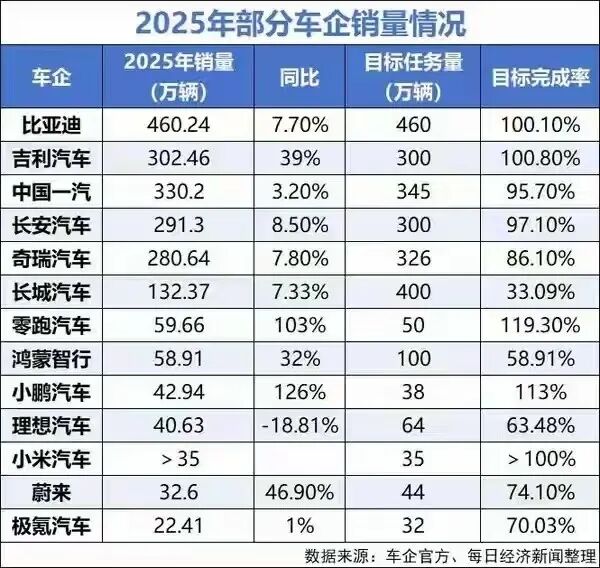
Core Insights - The article highlights the contrasting fates of new energy vehicle manufacturers in China, with Leap Motor achieving significant sales success while Neta Auto faces bankruptcy [2] - The landscape of new car manufacturers has drastically changed since 2015, with only a few remaining competitive players in the market [2] Group 1: Leap Motor's Success - Leap Motor is projected to sell nearly 600,000 vehicles in 2025, marking a 103% year-on-year increase and securing the title of sales champion among new car manufacturers [3] - The company shifted its strategy to target the mainstream market, launching models like the T03 and C11, which contributed to its sales growth [3] - Leap Motor has formed strategic partnerships with Stellantis and FAW, enhancing its brand credibility and accelerating its international expansion [3] Group 2: Hongmeng Zhixing's Rise - Hongmeng Zhixing, formerly Huawei Smart Selection, has seen rapid growth, with total deliveries reaching 589,000 units in 2025, a 32% increase from the previous year [4][5] - The AITO Wenjie brand, particularly the Wenjie M7, has been a significant contributor to this growth, with 420,000 units delivered in 2025, accounting for 71% of total sales [5] Group 3: Xiaomi's Entry - Xiaomi, entering the automotive sector later than its competitors, achieved sales of 412,000 vehicles in 2025, surpassing its target and ranking fifth among new energy vehicle manufacturers [5] - Despite its success, Xiaomi has faced challenges, including negative publicity related to safety incidents and design issues [5] Group 4: The Decline of "Wei Xiao Li" - The trio of "Wei Xiao Li" (NIO, Li Auto, and Xpeng) has experienced a divergence in performance, with NIO's sales declining to 326,000 units in 2025, despite a 47% year-on-year increase [6][7] - Xpeng led the trio with sales of 429,000 units, a 126% increase, while Li Auto's sales fell by 19.6% to 405,900 units, marking a significant drop from its previous leadership position [7][8] Group 5: Industry Challenges and Failures - The article discusses the decline of many new energy vehicle manufacturers, categorizing them into three groups: those that failed before mass production, those that made strategic errors, and those that faced funding issues [9][10] - Notable failures include companies like LeEco and Byton, which struggled with financial sustainability and market competition [10] Group 6: Future Outlook - The article suggests that the next decade will be more challenging for remaining players, emphasizing the need for operational efficiency and cost control to survive in a competitive environment [10][11] - New entrants continue to emerge, indicating ongoing interest in the automotive sector despite the challenges faced by existing manufacturers [11]


汽车早报|雷军称改款小米SU7做不到“加量不加价”广汽集团2025年汽车销量同比下降14.06%
Xin Lang Cai Jing· 2026-01-08 00:37
Group 1: Industry Standards and Regulations - The Ministry of Industry and Information Technology is soliciting opinions on the revision plan for seven mandatory national standards, including "Safety Requirements for Automatic Parking Systems of Intelligent Connected Vehicles" [1] Group 2: Automotive Market Performance - In December, the national retail sales of passenger cars reached 2.296 million units, a year-on-year decrease of 13%, but a month-on-month increase of 3%. Cumulatively, retail sales for the year reached 23.779 million units, a year-on-year increase of 4% [2] - In December, wholesale sales of passenger cars were 2.759 million units, a year-on-year decrease of 10% and a month-on-month decrease of 8%. Cumulatively, wholesale sales for the year reached 29.524 million units, a year-on-year increase of 9% [2] Group 3: Company Announcements and Product Launches - Xiaomi's new generation SU7 is expected to launch in April 2026, with a starting pre-sale price of 229,900 yuan [3] - Xiaomi's founder Lei Jun stated that the new SU7 model's price increase of up to 14,000 yuan compared to the previous generation is due to rising costs and added features, indicating that price reductions are unlikely [4] - The new SU7 will feature a silicon carbide high-voltage platform and will have a range of 720 km for the standard version, 902 km for the Pro version, and 835 km for the Max version, all equipped with lidar and advanced driving assistance [4] - Ideal Auto announced the launch of 140 new charging stations, bringing the total to over 3,900 across 286 cities in China [6] Group 4: Company Performance and Sales Data - GAC Group reported a December automobile production of 165,302 units, a year-on-year decrease of 20.23%, with total production for the year at 1,744,429 units, down 8.98%. December sales were 187,453 units, down 33.82%, with total sales for the year at 1,721,489 units, down 14.06% [7] - Volvo Cars reported a December global sales figure of 75,049 units, a year-on-year increase of 2%, but a total annual sales decrease of 7% to 710,042 units [8] - Yueda Kia's December sales reached 20,666 units, maintaining over 20,000 units for ten consecutive months, with total annual sales of 253,964 units, a year-on-year increase of 2.3% [9][10] Group 5: Corporate Developments - Xiaopeng Motors has announced a patent for a robot vision calibration method that allows for fully automated calibration processes [10] - Horizon Robotics and the Omnivision Group's joint venture, Smart Driving Mainland neueHCT, has completed nearly $200 million in financing, with investments from several leading industry and market funds [10] - Volvo Cars appointed Thomas Ingenlath as Chief Design Officer, effective February 1, 2026, to lead the global design department [11]


2026年,这些“创二代”,谁能突围,谁是扶不起的阿斗?
3 6 Ke· 2026-01-07 13:07
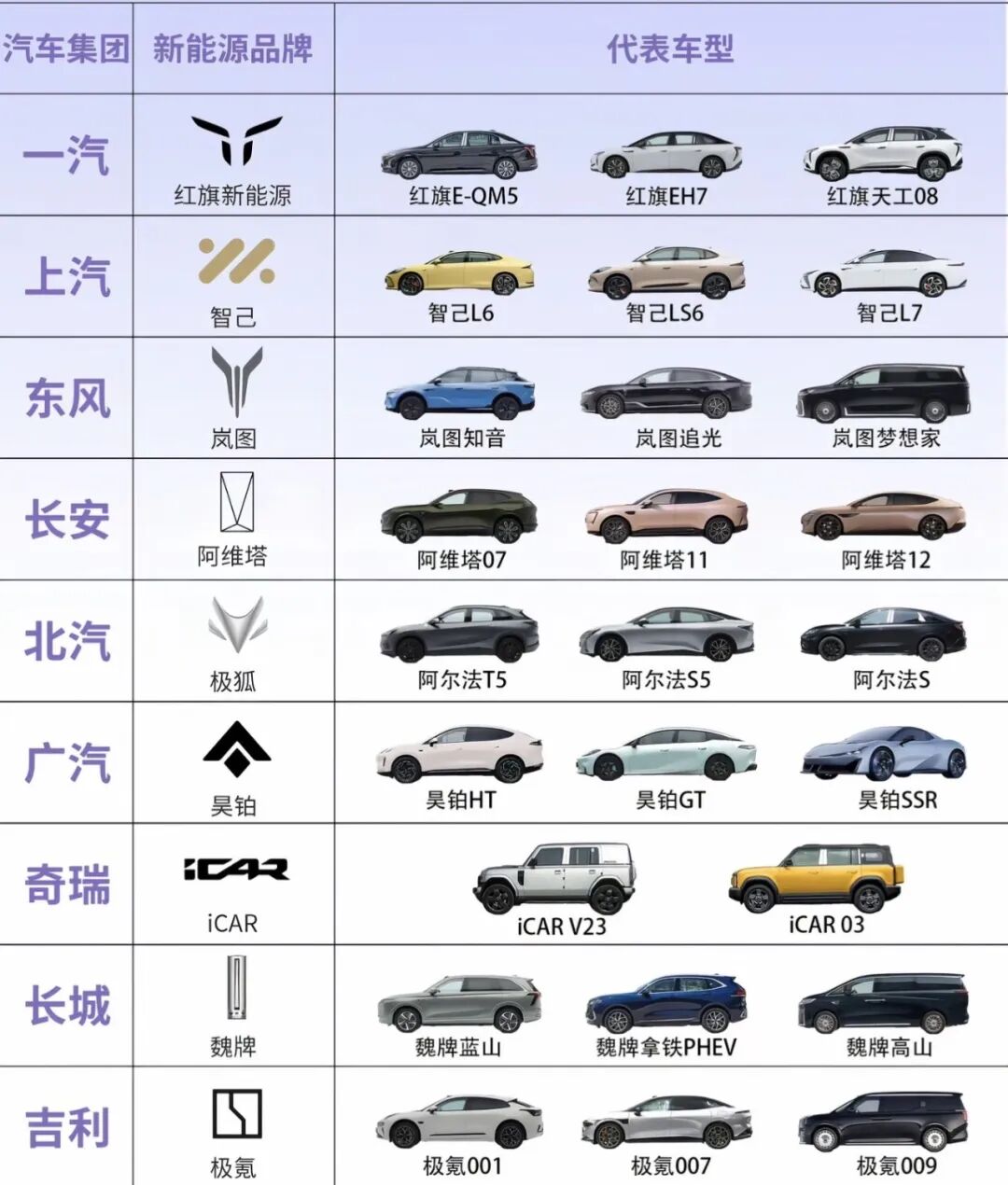
Core Insights - The new energy vehicle (NEV) industry in 2025 has seen a clear division between leading brands and those lagging behind, with companies like Leap Motor, Hongmeng Zhixing, and Xiaopeng firmly establishing themselves in the top tier, while traditional automaker-backed brands struggle to gain traction [1][6][11] Group 1: Market Performance - In 2025, the top three new car brands were Leap Motor (596,555 units, +103%), Hongmeng Zhixing (589,107 units, +32%), and Xiaopeng (429,445 units, +126%) [6][7] - The second tier includes Xiaomi Auto (over 411,625 units), Li Auto (406,343 units), and Deep Blue (333,117 units), while brands like Lantu, Avita, and Zhiji lagged with sales of 150,169, 128,772, and 81,017 units respectively [6][7][8] - The overall NEV market is expected to enter a phase of slower growth and intensified competition in 2026, with significant price cuts from major players like BMW and Tesla reigniting a price war [2][5] Group 2: Brand Dynamics - The "second-generation" brands, despite their backing from established automakers, have not been able to match the performance of pure new car brands, with significant sales gaps [6][11] - However, brands like Deep Blue and Lantu have shown impressive growth rates, with Lantu achieving a 87% increase in sales [8][21] - Traditional automakers are heavily investing in these "second-generation" brands, providing them with essential resources and support to compete in the high-end NEV market [11][13][15] Group 3: Future Outlook - Predictions for 2026 indicate a potential market growth of only about 2%, significantly lower than the previous year's growth [16] - Lantu is expected to expand its product lineup significantly and is on track for an IPO, which could enhance its market position [21][23] - Deep Blue is also positioned for growth, having achieved a high completion rate of its annual sales target [21][23] - Brands like Avita and Zeekr may stabilize but face challenges in maintaining competitive pricing and market share [26][29]

理想汽车(02015) - 截至二零二五年十二月三十一日止月份之股份发行人的证券变动月报表
2026-01-07 11:57
FF301 本月底法定/註冊股本總額: USD 500,000 第 1 頁 共 10 頁 v 1.1.1 | 1. 股份分類 | 不同投票權架構公司普通股 | 股份類別 | A | | 於香港聯交所上市 (註1) | 是 | | | --- | --- | --- | --- | --- | --- | --- | --- | | 證券代號 (如上市) | 02015 | 說明 | | | | | | | | | 已發行股份(不包括庫存股份)數目 | | 庫存股份數目 | | 已發行股份總數 | | | 上月底結存 | | | 1,785,070,188 | | 0 | | 1,785,070,188 | | 增加 / 減少 (-) | | | 0 | | 0 | | | | 本月底結存 | | | 1,785,070,188 | | 0 | | 1,785,070,188 | | 2. 股份分類 | 不同投票權架構公司普通股 | 股份類別 | B | | 於香港聯交所上市 (註1) | 否 | | | --- | --- | --- | --- | --- | --- | --- | --- | | 證券代 ...
理想汽车材料技术负责人:尾灯开裂可能是玻璃水没加对
Feng Huang Wang· 2026-01-07 10:57
凤凰网科技讯 1月7日,理想汽车材料技术负责人"吉超超有才"发视频称,尾灯开裂不一定是质量问 题。通常,汽车尾灯的材料一般为亚克力(PMMA),具有透光、抗老化的优势,但它容易被醇类溶 剂渗入,逐渐变脆。而咱们开车离不开的玻璃水就含有醇类溶剂。 ...

网传理想2026年产品规划
数说新能源· 2026-01-07 10:42
Group 1 - The core strategy for the L9 and i8 models is to lower prices while enhancing features to compete in the 2026 automotive market, which is expected to remain highly competitive [1] - The L789 series will feature an extended range battery capacity of over 70 kWh, while the L6 will have a capacity of over 40 kWh, all supporting 5C charging [1] - The L6 model will also offer optional air suspension, indicating a focus on high cost-performance, similar to competitors like NIO [1] Group 2 - The i9 is set to be released in May, while the i8 will see a price reduction through a smaller battery version by September to October [1] - The high-end LX series is expected to launch in 2027, indicating a long-term product strategy [1]

复盘2025新能源汽车下半场:在喧嚣、焦虑与体验升级中打响淘汰赛
Xin Lang Cai Jing· 2026-01-07 05:57
Core Insights - The 2025 year for the electric vehicle (EV) industry is characterized by aggressive growth, a backlash against internal competition, and uncertainty heading into 2026 [2][17][19] Group 1: Aggressive Growth - The EV industry is projected to sell 12.852 million units in 2025, with a market penetration rate surpassing 50% [3] - BYD leads the market with 4.6024 million units sold, achieving a 7.7% year-on-year growth [6] - New players like Leap Motor and Xiaomi are also showing significant growth, with Leap Motor achieving a 103% year-on-year increase [4][6] Group 2: Backlash Against Internal Competition - The industry has faced issues of malicious competition, with average price reductions of 9.2% leading to a decline in profit margins from 6.2% in 2020 to 4.3% in 2025 [17][18] - Regulatory bodies are advocating for a shift towards innovation and service differentiation rather than price wars [18] - The backlash aims to guide companies towards better product definitions and fair competition practices [18] Group 3: Uncertainty in 2026 - The competition in the EV sector is expected to intensify, with a slowdown in growth rates and increased pressure on product iteration [19][20] - Key factors influencing competition will be autonomous driving capabilities and expansion strategies [20][25] - The industry may face a dilemma regarding price wars as average vehicle prices have decreased from 184,000 yuan in 2024 to 178,000 yuan in 2025 [27]

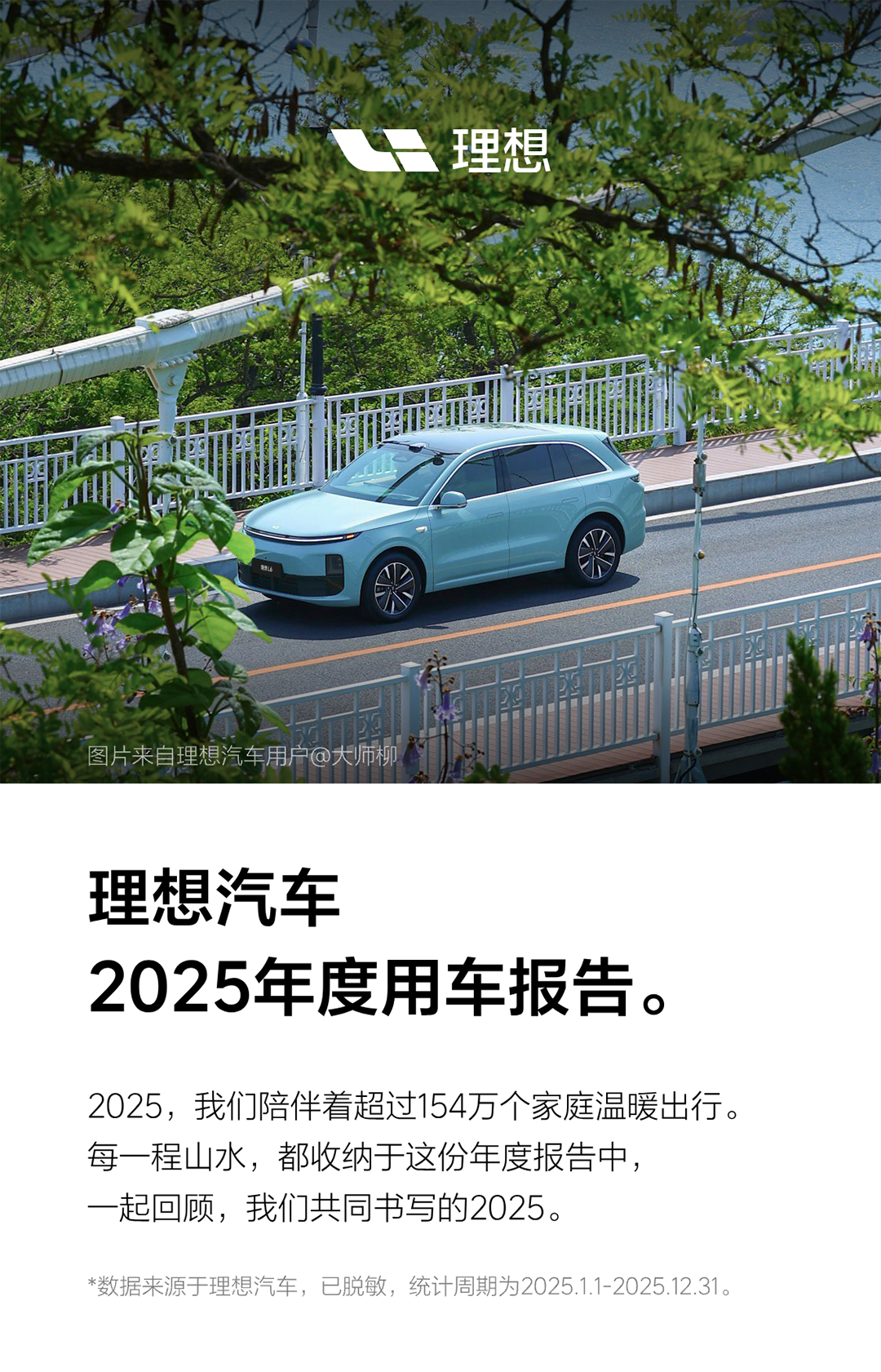
理想汽车2025年度用车报告
Xin Lang Cai Jing· 2026-01-07 04:27
Core Insights - The report highlights that in 2025, the company supported over 1.54 million families in their journeys, showcasing a significant user base and engagement [2][48]. Group 1: Driving Metrics - The total mileage driven by users reached 26.19 billion kilometers, equivalent to 655,000 laps around the Earth [6][51]. - The breakdown of driving distance includes 9.62 billion kilometers from fuel-driven vehicles and 16.57 billion kilometers from pure electric vehicles [6][51]. - The longest single vehicle mileage recorded was 188,000 kilometers [6][51]. Group 2: Advanced Driver Assistance - The total mileage covered using assisted driving features was 3.07 billion kilometers, with a total usage time of 37.29 million hours [9][53]. - The top three cities for assisted driving activation were Chengdu, Hangzhou, and another unspecified city [10][53]. - The system successfully avoided potential accidents 8.22 million times and extreme accidents 16,172 times [12][55]. Group 3: User Engagement with AI Features - The AI assistant was activated 2.52 billion times, with 170 million instances of commands issued without wake-up prompts [14][57]. - The most popular topics for AI interactions included automotive inquiries and health-related questions [14][57]. - The AI assistant also facilitated 1.95 million instances of parking fee payments through Alipay [14][57]. Group 4: In-Car Entertainment and Comfort - The total usage time for entertainment screens in the vehicle was 110 million hours, with significant time spent on watching shows and listening to music [60][61]. - The most popular movie among families was "Ne Zha," while the favorite song was "The Only" [60][61]. - The vehicle's features also included 1.7 billion hours of sofa usage while parked, indicating a focus on comfort [60][61]. Group 5: Charging Infrastructure - The company established 3,907 charging stations across 286 cities, with a total annual charging volume of 530 million kilowatt-hours [33][73]. - The average charging time for pure electric users at fast charging stations was 10.9 minutes [33][73]. - The charging network provided services for 19.53 million times to the company's users and 10.82 million times to users of other brands [33][73]. Group 6: Customer Service and Community Engagement - The company operated 548 retail centers and 171 delivery centers across 159 cities, providing extensive customer service [35][76]. - Roadside assistance was provided 101,000 times, with the longest rescue operation covering 1,482 kilometers [35][76]. - The community engagement included over 422,000 posts and 300 events throughout the year, fostering a strong user community [38][79].