LI AUTO(LI)

Search documents
汽车股继续走低,元旦以来超20家车企降价促销
Ge Long Hui· 2026-01-12 02:25
Group 1 - The core viewpoint of the article highlights the ongoing weakness in Hong Kong's automotive stocks, with significant declines observed in companies such as Geely Auto and Li Auto, among others [1] - As of January 12, 2026, over 20 automotive companies have launched promotional activities for more than 75 models, employing various strategies such as cash subsidies and interest-free financing [1] - The Secretary-General of the National Passenger Car Market Information Association, Cui Dongshu, suggests that the current price reductions by car manufacturers are a rational return to pricing rather than a price war, although the trend of price cuts is expected to continue into 2026 [1] Group 2 - Analysts predict that the promotional activities may stimulate sales, potentially leading to a strong start for the automotive market in January 2026, but these promotions are likely to compress profit margins for companies and create significant operational pressure for dealers [1] - It is widely anticipated that the number of automotive companies will decrease by 2026, with market concentration (CR5) expected to rise from 65% to 80%, indicating that brands lacking core competitiveness may face elimination or consolidation [1]



理想汽车失销冠交付量仅完成目标63% 单季归母净利亏6.2亿李想急调管理模式
Chang Jiang Shang Bao· 2026-01-11 23:31
Core Viewpoint - Li Auto has experienced a significant decline in sales and profitability, leading to a restructuring of its product lines and management approach to regain market competitiveness [1][4][6]. Sales Performance - In 2025, Li Auto delivered a total of 406,300 vehicles, representing an 18.81% year-on-year decline, and only achieved approximately 63% of its revised sales target of 640,000 vehicles [6][7]. - The company has fallen from the top position in the new energy vehicle sector to fifth place, trailing behind competitors such as Leap Motor, Hongmeng Zhixing, Xiaomi Auto, and XPeng [7]. Financial Performance - In Q3 2025, Li Auto reported a net loss of 624 million yuan, ending a streak of 11 consecutive profitable quarters [8]. - The company's revenue for 2023 was 123.85 billion yuan, a 173.5% increase year-on-year, but revenue growth slowed to 16.64% in 2024, with a net profit decline of 31.37% [8]. Organizational Restructuring - Li Auto is restructuring its product lines into two main categories: the first line, led by Tang Jing, will cover models MEGA, L9, L8, and L7; the second line, led by Li Xinyang, will focus on the i series and L6 [2]. - The restructuring is a response to declining sales and aims to return to a startup management model to enhance value creation and better meet user needs [2][5]. Market Challenges - The company has faced challenges including a recall of 11,411 vehicles due to safety concerns related to cooling system failures, which may impact consumer confidence [9][10]. - A recent fire incident involving the Li Auto MEGA has raised concerns among consumers and the media, further complicating the company's recovery efforts [10]. Future Outlook - Despite current challenges, the CEO remains optimistic about achieving significant milestones, including surpassing 1.5 million cumulative deliveries and expanding into new international markets [10].


贾可吴伯凡吴声张晓亮,4万字2025-2026跨年对谈全文(下)
汽车商业评论· 2026-01-11 23:06
Core Viewpoint - The article discusses the evolving landscape of the Chinese automotive industry, focusing on the impact of personal branding (IP) of industry leaders, the rise of Huawei in automotive technology, and the trends in global expansion and regulatory changes in autonomous driving [4][5][6]. Group 1: Personal Branding in Automotive Industry - The debate on whether automotive leaders like Lei Jun and Wei Jianjun should develop personal brands (IP) has intensified, with differing opinions on its effectiveness and potential backlash [5][25]. - Lei Jun's recent challenges with Xiaomi's automotive ventures highlight the risks of personal branding, while Wei Jianjun's successful IP development reflects a more grounded approach [26][30]. - The article emphasizes the need for automotive leaders to focus on product quality and strategic management rather than solely on personal branding [31][35]. Group 2: Huawei's Role in Automotive Technology - Huawei's positioning as a service provider rather than a car manufacturer allows it to play a unique role in the automotive industry, focusing on empowering car manufacturers with advanced technologies [7][10]. - The introduction of Huawei's "Jing" and "Jie" series vehicles indicates a strategic expansion into the automotive market, with a focus on high-end segments [9][10]. - Huawei's technology capabilities, including smart cockpit and driving technologies, are seen as critical to its success in the automotive sector, potentially reshaping the competitive landscape [12][15]. Group 3: Trends in Global Expansion - The article notes a significant trend of Chinese automotive companies pursuing IPOs in Hong Kong, reflecting a renewed interest in capital markets and the need for ongoing funding in a capital-intensive industry [38][39]. - The global expansion of Chinese automotive brands is characterized by a shift towards local production and partnerships, moving beyond simple export strategies to more integrated approaches [43][45]. - The necessity for Chinese companies to adapt to local markets and consumer behaviors is emphasized, indicating a more mature approach to globalization [47][49]. Group 4: Regulatory Changes in Autonomous Driving - The Chinese government has implemented stricter regulations on L2 autonomous driving systems, reflecting a growing emphasis on safety following recent incidents [58][60]. - The approval of L3 autonomous driving systems indicates a positive regulatory environment for advanced driving technologies, with companies like Deep Blue and BAIC leading the way [58][61]. - The article suggests that the development of Robotaxi services is gaining momentum, with a focus on subscription-based models as a viable business strategy [61][63].




汽车及汽车零部件行业周报:2026年“两新”政策落地,有望带动需求稳步向上-20260111
SINOLINK SECURITIES· 2026-01-11 15:10
Group 1 - The investment rating for the automotive industry is positive, with expectations for steady demand growth driven by the implementation of the "Two New" policy in 2026 [1][12][14] - The core viewpoint emphasizes that the subsidy policy has shifted from fixed amounts to a percentage of the vehicle price, which is expected to benefit high-end vehicles while putting pressure on low-priced cars [1][14] - The report anticipates a marginal recovery in sales growth in Q1 2026, with an upward revision of the annual domestic sales growth forecast to -2% [1][14][16] Group 2 - The report highlights opportunities in themes such as smart technology and overseas expansion, with passenger car exports maintaining a growth rate of over 20% year-on-year [2][17] - Key companies to watch include BYD, Geely, and Li Auto in the automotive sector, and Horizon Robotics and Top Group in the smart technology and robotics sectors [2][22] - The report notes that the export volume of passenger cars is expected to maintain double-digit growth in 2026, driven by recovering demand in markets like Russia and the increasing penetration of fuel and new energy vehicles [2][17] Group 3 - The automotive market saw a wholesale sales volume of 1.457 million units in the last week of December 2025, with a year-on-year increase of 5%, while new energy vehicles accounted for 772,000 units, up 22% year-on-year [4][31] - In December 2025, the total wholesale sales volume was 2.759 million units, down 10% year-on-year, with new energy vehicles at 1.554 million units, showing a 3% increase [4][31] - The retail sales data for December 2025 indicated a total of 2.296 million units sold, down 13% year-on-year, while new energy vehicles saw a 7% increase in retail sales [4][31][46]

近期介绍理想车机最好的视频,B站破百万播放
理想TOP2· 2026-01-11 06:13
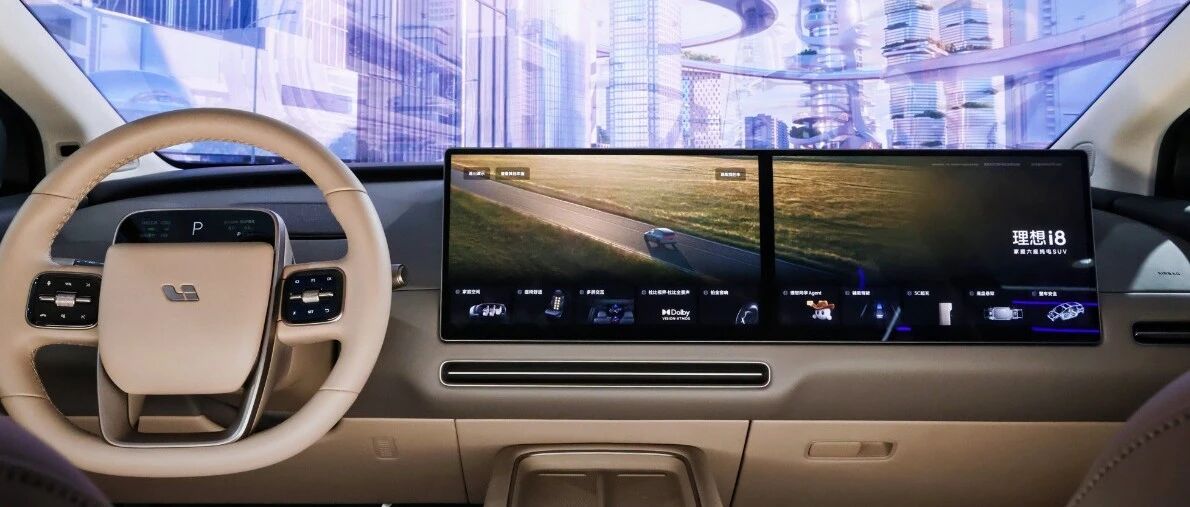
Core Viewpoint - The article emphasizes that the Li Auto vehicle's infotainment system is currently the best in quality among domestic electric vehicles, surpassing even Apple's capabilities in certain aspects [2][6][14]. Group 1: Hardware and UI Design - The Li Auto infotainment system features two 15.7-inch 3K screens, which outperform the latest iPad Air's 2K display [2][7]. - The UI design adopts a flat, minimalist style reminiscent of Apple, enhancing user experience with smooth operation and familiar navigation [6][7]. Group 2: AI Capabilities - The system includes a true AI Agent that can execute cross-application tasks, such as placing food orders directly through voice commands, which Apple has not achieved [3][9]. - It can manage various media applications, allowing users to control playback and settings seamlessly [3][9]. Group 3: Innovative Features - The vehicle can automatically scan QR codes for parking payments using its cameras, addressing a common pain point for drivers [4][10]. - The system has the capability to generate code in real-time, allowing users to create custom applications through voice commands, showcasing advanced software customization [4][12][13]. Group 4: AI Glasses - Li Auto has introduced AI glasses priced at 1699 yuan, which support voice control and multimodal interaction, extending the functionality of the Li Auto assistant beyond the vehicle [5][14]. Group 5: Overall Impression - The article concludes that Li Auto's innovations challenge the perception of traditional automotive technology, positioning the company as a competitor to tech giants like Apple in the automotive space [12][14].
李想: 在意使用中的体验超过了在意用户购买一瞬间的表现
理想TOP2· 2026-01-11 06:13
文字版: Q: 想哥,车身钢材是强度越高越好吗? Q: 我们车内没有异味就是好的吗? 李想: 分两方面,危害最强的气体是没有味道的,比如甲醛。还是得相信专业的仪器。但在专业仪器 以外,也会漏掉一些东西。比如去看很多的德国车,它用了可回收的木纹材料,其实在测环保指标的 时候没什么问题,但是会闻到一种酸味。这种酸味虽然对身体没什么伤害,但是用户体验很差。所以 拿仪器来收底,拿体感更敏感的人来拉高上限。 确实,今年有很多车坐进去就是呛的。尤其是很多便宜的车,或者原来卖得很贵、后来卖得很便宜的 车,它很明显在用料方面产生了巨大的降本。但这并不代表便宜的车环保就不好。如果价格很便宜, 你以不用真皮,可以用人造革的方式,可以用更多的布艺材料,但是不要装成豪华的。可以不用皮 子,但不要用劣质的皮子;可以少一些隔音棉,但不要用劣质的隔音棉。 这是这里边的差别。 Q: 如何区分一辆车用料的好坏? 李想: 我觉得大家肯定是希望强度又强、韧性又好。但现实中我们看到,包括供应商能够提供的材 料,它其实是一个相互冲突的。当强度足够强的时候,韧性会变差;当想让韧性变好的时候,强度会 变差。所以这也是我们自己自研这些材料背后的一些核心原因 ...

i6i8MEGA分别交付15994/2745/939|理想25年12月记录
理想TOP2· 2026-01-10 13:21
Summary of Key Points Core Viewpoint - The company achieved a total delivery of 44,246 vehicles in December 2025, with significant contributions from both extended-range and pure electric models, indicating a strong market performance and growth trajectory in the electric vehicle sector [1][2]. Delivery Performance - Total deliveries in December 2025 reached 44,246, a notable increase from previous months, with extended-range vehicles accounting for 24,568 and pure electric vehicles for 19,678 [1][2]. - Monthly delivery data shows a consistent upward trend, with November 2025 at 33,181 and October 2025 at 31,767, reflecting a growth of approximately 33.5% from November to December [2]. - The breakdown of deliveries for specific models in December includes L6 at 12,676, IL7 at 6,150, IL8 at 3,010, and MEGA at 15,994, showcasing a diverse product lineup [1][2]. Recent Developments - The company released a technical report on MindGPT-4ov on December 2, 2025, indicating advancements in technology [2]. - On December 3, 2025, the company secured a debt financing tool registration quota of 10 billion, enhancing its financial flexibility [2]. - The company announced its entry into new markets, including Egypt, Kazakhstan, and Azerbaijan, on December 17, 2025, which could expand its customer base and revenue streams [2]. Market Insights - There are discussions regarding the impact of the end of vehicle replacement subsidies on order volumes, suggesting that market expectations may have been overly pessimistic [2]. - The company is also exploring adjustments to its product offerings, particularly in the 300,000 yuan price range, with a focus on continuous iteration of pure electric models and streamlining extended-range SKUs [2].
智驾行业杀入“曼哈顿时刻”
Xin Lang Cai Jing· 2026-01-10 01:29
Core Insights - The autonomous driving industry is approaching a state of transparency, with multiple automakers and tech companies targeting the sub-100,000 yuan market for advanced driving features [1][4][9] - The competition has intensified, with companies like BYD, Chery, and Geely launching models equipped with high-level autonomous driving capabilities at lower price points [5][6][7] - The industry is witnessing a convergence of algorithmic approaches, with discussions around VLA and world model architectures, as companies aim to enhance the usability of autonomous driving features [3][20][21] Group 1 - The introduction of advanced driving features in vehicles priced below 100,000 yuan has become a key focus for both automakers and autonomous driving technology providers [1][2][4] - Companies like Horizon Robotics and Huawei are planning to expand their advanced driving capabilities into lower price segments, aiming to break the perceived barriers of high costs associated with such technologies [8][11] - The competition is not only about vehicle pricing but also about the technological advancements in algorithms and hardware, with a significant push towards reducing costs in chips and sensors [10][11][13] Group 2 - The industry is transitioning from a phase of diverse approaches to a more consolidated focus on effective algorithmic solutions, with VLA and world model architectures being at the forefront of discussions [3][20][21] - The recent approval of L3-level conditional autonomous driving vehicles by the Ministry of Industry and Information Technology marks a significant milestone, indicating a potential "breakthrough year" for L3 technology [4][28] - Companies are also exploring the integration of autonomous driving technologies into broader applications, such as logistics and robotics, indicating a shift towards a more comprehensive ecosystem [30][33] Group 3 - The competitive landscape is evolving into a "red ocean" as more players enter the sub-100,000 yuan market, necessitating a focus on efficiency and differentiation [9][13] - The advancements in chip technology and the reduction in costs for essential components like lidar are enabling more companies to offer competitive autonomous driving solutions [10][11] - The push towards L3 and L4 capabilities is becoming a race among automakers and tech firms, with significant investments and developments expected in the coming years [29][30]
见证历史,大涨!美联储,大消息!
Zhong Guo Ji Jin Bao· 2026-01-10 00:08
Market Performance - US stock markets closed higher, with the Dow Jones and S&P 500 reaching record closing highs, while major tech stocks saw broad gains [1][3] - The three major US indices all rose, with the Dow Jones increasing by 0.48% to 49,504.07 points, the S&P 500 up 0.65% to 6,966.28 points, and the Nasdaq Composite rising 0.81% to 23,671.35 points [3] - Weekly performance showed all three indices increased, with the Nasdaq up 1.88%, the Dow up 2.32%, and the S&P 500 up 1.57% [4] Sector Performance - Major tech stocks mostly rose, with the US Tech Seven Index increasing by 0.48% [5] - Notable individual stock performances included Tesla rising over 2%, Meta increasing by more than 1%, and slight gains for Google, Amazon, Microsoft, and Apple [6] Chip Sector Insights - The chip sector experienced significant gains, driven by increased demand for AI computing data centers, leading to rising prices for memory chips and components [11] - Intel rose over 10%, SanDisk increased nearly 13%, and other companies like Lam Research, Applied Materials, and ASML saw gains exceeding 6% [11] - SanDisk's stock price was reported at $377.41, with a year-to-date increase of 58.99%, while Intel's stock was at $45.53, up 23.37% year-to-date [12] Chinese Stocks Performance - Chinese stocks showed mixed results, with the Nasdaq Golden Dragon China Index declining by 1.3% [12] - Major Chinese stocks such as Alibaba and Xpeng Motors fell over 2%, while Netease and Beike dropped more than 1% [12][13] Economic Indicators - The US non-farm payroll report for December showed an increase of 50,000 jobs, below expectations, with an unemployment rate of 4.4% [15] - The labor market appears balanced rather than weak, indicating a stable economic condition that may not necessitate significant changes in monetary policy [16] - Traders expect almost zero probability of a Federal Reserve rate cut in January, with the likelihood of maintaining current rates rising to 95% [17]



遭遇成长“阵痛” 理想汽车向内“动刀”
Zhong Guo Jing Ying Bao· 2026-01-09 20:25
Core Insights - Li Auto is undergoing significant changes due to operational challenges, including a projected delivery of 406,300 vehicles in 2025, which represents an 18.81% year-on-year decline from its target of 640,000 vehicles [2] - The company reported a 39% year-on-year drop in deliveries and a net loss of 624 million yuan in Q3 2025, influenced by the recall costs of the Li Auto MEGA [2] - Li Auto is shifting back to an entrepreneurial management model from a professional manager system to enhance agility in responding to market changes [4] Management Strategy - The entrepreneurial management model emphasizes innovation, agility, and rapid iteration, contrasting with the professional manager model that focuses on stability and control [3] - Li Auto's CEO, Li Xiang, believes that the professional manager model has led to slower decision-making and product iteration, making the company less responsive to competition [4] - The company aims to foster a culture of open dialogue and quick decision-making, moving away from hierarchical reporting structures [5] Product Line Adjustments - In early 2026, Li Auto will restructure its product lines from three to two, focusing on efficiency and market coverage [5] - The L series will return to a simplified SKU model to enhance product experience and supply chain efficiency, addressing previous customer complaints about product complexity [6] - The L series has faced declining sales due to internal competition and external market pressures, necessitating a revitalization strategy [7][8] Competitive Landscape - The L series is experiencing significant competition from both internal models and external brands, which has impacted its sales performance [8] - Analysts suggest that revitalizing the L series is crucial for Li Auto to overcome current market challenges and improve sales in 2026 [8]