
LI AUTO(LI)

Search documents
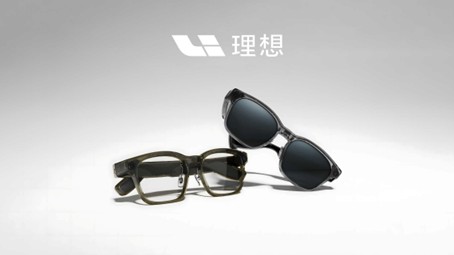
理想AI眼镜Livis重磅发布 黑芝麻智能(02533)AI影像解决方案强势赋能
智通财经网· 2025-12-04 07:12
Core Insights - Li Auto's first AI glasses, Livis, were officially launched on December 3, attracting significant attention from the industry and market [1] - The collaboration between Black Sesame Intelligence and Li Auto focuses on creating AI imaging solutions, including HDR fusion, multi-frame noise reduction, video EIS stabilization, night scene enhancement, and portrait beautification [1][3] - Livis aims to provide a seamless smart experience both inside and outside the vehicle, with Li Auto's CEO praising it as "the best AI accessory" [3] Company Developments - The development of Livis involved a seven-month deep collaboration between Black Sesame Intelligence and Li Auto's technical teams, utilizing a point-to-point seamless connection model to efficiently advance the project [3] - Livis employs a distributed processing solution, where the glasses and smartphone work together to optimize performance while balancing effect and power consumption [3] - The collaboration allows Livis to be compatible with mainstream smartphone platforms such as Qualcomm, MTK, and Kirin, as well as operating systems like Android, iOS, and HarmonyOS, broadening its user base [3] Industry Trends - Black Sesame Intelligence has extensive experience in the AI imaging field, having partnered with major companies like Samsung, Lenovo, and Motorola, with over 500 million devices equipped with its solutions [4] - AI glasses are seen as a key bridge connecting the digital and physical worlds, with the market for AI glasses expected to grow rapidly; Counterpoint data indicates that by the first half of 2025, AI glasses will account for 78% of total smart glasses shipments [4] - The successful launch of Livis marks Li Auto's transition from the smart automotive sector to the smart wearable device market, while Black Sesame Intelligence achieves a significant industry breakthrough [4]


多家车企11月销量创新高 新能源车和出口市场表现成亮点
Zhong Guo Zhi Liang Xin Wen Wang· 2025-12-04 05:20
Core Insights - The automotive industry in November showed strong sales performance across various companies, with a notable focus on electric vehicle (EV) transitions and global expansion strategies [1][2][3][4] Group 1: Traditional Domestic Brands - BYD achieved a record monthly sales of 480,000 units, maintaining the top position, with overseas sales surpassing 130,000 units, marking a historical high [1] - Geely sold 310,000 units in November, a year-on-year increase of 24%, with its Galaxy series seeing a 76% growth [1] - Chery reported sales of 273,000 units, with EV sales reaching 117,000 units, a 50.1% increase, and export sales of 137,000 units, up 30.3% [1][2] Group 2: New Energy Vehicle Performance - Changan's November sales reached 283,000 units, with EV sales at 125,000 units, a 23% increase [2] - SAIC Group set a new record for EV sales at 209,000 units, reflecting a 38.8% year-on-year growth [2] Group 3: New Forces in the Automotive Sector - Huawei's HarmonyOS Automotive division delivered 82,000 vehicles in November, a remarkable 89.61% increase, establishing itself as a leader among new entrants [3] - Leap Motor delivered over 70,000 vehicles in November, achieving a cumulative sales milestone of over 500,000 units [3] - Xiaomi's automotive division also exceeded its annual delivery target, with over 40,000 units delivered in November and a total exceeding 350,000 units [3] Group 4: Market Dynamics and Challenges - Xpeng and NIO experienced a decline in sales, with Li Auto delivering 33,181 units, a slight increase of 4.45% month-on-month but a 31.92% year-on-year drop [4] - The automotive market is shifting from subsidy-driven growth to a more competitive landscape focused on product capabilities and brand strength, as consumer behavior evolves post-subsidy [4]




Li Auto (LI) Posts Q3 Loss as Deliveries Drop 39% YoY
Yahoo Finance· 2025-12-04 04:29
Core Insights - Li Auto Inc. is currently viewed as a promising investment in the EV charging sector, holding a consensus rating of Hold from analysts, with an average price target suggesting a potential upside of 26.2% from its current stock price [1] Financial Performance - In Q3 2025, Li Auto reported a non-GAAP diluted net loss per ADS of RMB 0.36 ($0.05), which was below analyst expectations of RMB 0.64 [1] - The company's total revenue for the quarter was RMB 27.4 billion ($3.8 billion), exceeding analyst forecasts by 3.28%, but reflecting a significant year-over-year decline of 36.2% due to reduced vehicle deliveries and a vehicle recall [1][2] - Li Auto experienced a net loss of RMB 624.4 million ($87.7 million) in Q3 2025, a stark contrast to a net income of RMB 2.8 billion in Q3 2024, attributed to a 37.4% decline in vehicle sales [2] - Total vehicle deliveries fell by 39.0% to 93,211 units compared to the same quarter last year [2] - Gross profit decreased by 51.6% year-over-year to RMB 4.5 billion ($627.8 million), resulting in a gross margin of 16.3%, down from 21.5% [2] Strategic Initiatives - Li Auto is actively investing in EV charging infrastructure, committing over RMB 6 billion to expand its supercharging network, with a goal of establishing more than 5,000 supercharging stations by the end of 2025 [3] - The new supercharging stations will utilize proprietary 5C fast-charging technology and aim to cover 90% of major highway routes and urban centers in China [3]
财报季变局:“蔚小理”三强分化,新势力赛道重新洗牌
Xin Lang Cai Jing· 2025-12-04 04:16
Core Insights - The recent Q3 2025 financial reports from Chinese automakers highlight the competitive landscape and strategic shifts within the industry, particularly among the leading new energy vehicle (NEV) companies NIO, Xpeng, and Li Auto [1][4] Financial Performance - Xpeng Motors reported a record revenue of 20.38 billion yuan, a year-on-year increase of 101.8%, and achieved a gross margin of 20.1%, surpassing NIO's 13.9% and Li Auto's 16.3% [2][3] - NIO's Q3 revenue reached 21.79 billion yuan, up 16.7% year-on-year, with a gross margin of 13.9%, but still faced a net loss of 3.48 billion yuan, the highest among the three [2][3] - Li Auto generated 27.4 billion yuan in revenue, a decline of 36.2% year-on-year, and reported a net loss of 624 million yuan, ending its streak of 11 consecutive profitable quarters [2][3] Strategic Adjustments - NIO is shifting its focus to core automotive operations, reducing investments in non-core businesses, and controlling sales and management expenses [4][5] - Xpeng is pursuing a strategy of "technology integration into the market," expanding into the range-extended vehicle market while maintaining its focus on smart driving [5] - Li Auto is transitioning from a "family-oriented" brand to an "AI-focused" strategy, aiming to build an "embodied intelligence" ecosystem [5] Competitive Landscape - The competition among NEV companies remains intense, with no clear leader emerging in profitability, as companies continue to vie for market share through cost-effectiveness and technological advancements [3][6] - New entrants like Leap Motor and Xiaomi are gaining traction, further intensifying the competitive environment [6] - The industry is evolving from a focus on product features to a comprehensive assessment of product definition, cost control, and brand strategy [6] Future Outlook - The immediate focus for NIO and Xpeng is achieving stable profitability, while Li Auto aims to recover from the MEGA recall incident and ramp up production of its electric models [7] - Long-term success will depend on technological advancements and the ability to adapt to global markets, with companies like Xpeng and NIO already expanding their international presence [7][8] - The NEV sector is entering a new phase of consolidation, where the ability to deliver on profitability promises and navigate technological changes will be crucial for survival [8]

Li Auto (NASDAQ:LI) Faces Challenges but Holds Potential for Recovery
Financial Modeling Prep· 2025-12-04 04:13
Core Viewpoint - Li Auto is facing significant challenges, including a major recall of its MEGA MPV, which has affected its financial performance, yet it remains a key competitor in the electric vehicle market with a market capitalization of approximately $17.6 billion [1]. Financial Performance - HSBC set a price target of $18.60 for Li Auto, indicating a potential upside of about 6.65%, while downgrading the stock from "Buy" to "Hold" due to challenges such as a 39% year-over-year decline in deliveries [2][6]. - The recall of the MEGA MPV has led to a shift to a loss in the third quarter, putting pressure on the company's margins, although underlying margins remain strong compared to industry peers when excluding recall costs [3][6]. Stock Performance - In November, Li Auto's delivery performance fell short of expectations, contributing to a stock decline of 3.65%, or $0.66, with fluctuations between $17.27 and $18.17 during the day; over the past year, the stock has seen a high of $33.12 and a low of $17.27, indicating volatility [4]. Long-term Potential - Despite current challenges, there is optimism regarding Li Auto's long-term potential, with the possibility of doubling its value if margin issues are resolved, which keeps investor interest alive [5].
11月新势力销量解析:鸿蒙智行破8万 蔚小理陷3万瓶颈
Zhong Guo Zhi Liang Xin Wen Wang· 2025-12-04 03:56
Core Insights - The competition landscape for China's new energy vehicle market is becoming clearer as various automakers disclose their sales data for November 2025, with a focus on efficiency and technological innovation reshaping the industry dynamics [1] Group 1: Sales Performance - Hongmeng Zhixing and Leap Motor both surpassed 70,000 units in deliveries, showcasing over 75% year-on-year growth, significantly widening the gap with traditional leading brands [3] - Hongmeng Zhixing achieved a record delivery of 81,864 vehicles in November, marking a 90% increase year-on-year, with the Aion brand being the main contributor [5] - Leap Motor delivered 70,327 vehicles, maintaining its position as the single brand champion in the new energy vehicle sector, with a 75% year-on-year increase [7] - Xiaomi Auto delivered over 40,000 vehicles, achieving a 100% year-on-year growth, and has exceeded its annual target of 350,000 vehicles [7] - Changan Qiyuan reported 46,909 vehicles delivered, with a 31% year-on-year increase, driven by strong product positioning [9] - NIO delivered 36,275 vehicles, reflecting a 76.3% year-on-year increase, with the ES8 model being a key contributor [10] - Ideal Auto's deliveries were 33,181 vehicles, showing a 31.92% year-on-year decline, attributed to market competition and product transition [12] - Deep Blue Auto delivered 33,060 vehicles, maintaining a steady performance despite market pressures [12] - Zeekr brand achieved 28,843 vehicles delivered, benefiting from improved production efficiency [13] - Lantu Auto reached a new high with 20,005 vehicles delivered, supported by product innovation and manufacturing capabilities [14] - Avita and Zhiji both set new sales records, with 14,057 and 13,577 vehicles delivered respectively, indicating their emergence as stable mainstream brands [16] Group 2: Market Trends and Outlook - The new energy vehicle market is expected to continue its growth in December 2025, driven by seasonal consumption peaks, tax incentives, and promotional activities from automakers [16] - The performance of different brand tiers is anticipated to show significant differentiation, influenced by the delivery rhythm of new models and promotional efforts [16]

港股开盘|恒生指数高开0.17% 京东健康等涨逾3%
Xin Lang Cai Jing· 2025-12-04 03:53
(本文来自第一财经) 来源:第一财经 恒生指数高开0.17%,恒生科技指数涨0.21%。京东健康、紫金矿业、携程集团涨逾3%;新能源车概念 股再度走低,理想汽车、小鹏汽车、蔚来均下跌。 ...



宁德时代、恒瑞及宏桥获纳入富时中国50指数,12月22日生效
Ge Long Hui A P P· 2025-12-04 03:42
Group 1 - FTSE Russell announced the quarterly review results for the FTSE China Index Series, effective from December 22, 2025 [1] - The FTSE China A50 Index added two constituents: Luoyang Molybdenum and Sunshine Energy, while removing SF Express and Jiangsu Bank [1] - The FTSE China 50 Index added three constituents: China Hongqiao, CATL, and Heng Rui Medicine, while removing CITIC Securities, Great Wall Motors, and Li Auto [1] - The next quarterly review for the FTSE China Index will be announced in March [1]




闪电快讯 | 理想第一款人工智能硬件:AI眼镜 Livis 起售价1999元
Xin Lang Cai Jing· 2025-12-04 03:17
12月4日,电厂获悉,理想汽车正式发布了第一款人工智能硬件理想AI眼镜 Livis,全系标配蔡司镜片,并提供屈光、 感光变色、墨镜等多种版本,全国统一零售价1999元起。截止12月31日仍可享受15%的国家补贴。目前用户可在理想 汽车App商城、京东理想智能眼镜官方旗舰店下单购买;后续理想全国零售中心店也将开放选购服务。 理想AI眼镜 Livis配备了1200万像素镜头,支持105°超广角拍摄,具备EIS电子防抖、自动地平线矫正等功能,按下拍 摄键拍照仅需0.7秒即可完成拍照。单次最长可录制3分钟,总计可录制41分钟。 4麦克风环绕式立体收音,配合降噪算法,有效抑制环境噪音。360°全向录音可精准捕捉3米范围内人声,结合AI语音 转文字和待办事项提取功能,应对会议、学习和创作场景。 该产品线的最高负责人是理想汽车产品部高级副总裁范皓宇,他表示:"基于在辅助驾驶、空间智能和AI理想同学等 方面的技术积累,理想一直在探索能够自然、持续陪伴用户的智能设备形态。而眼镜因其日常佩戴时间长、靠近眼 睛、耳朵、嘴巴,且无需改变用户习惯,是目前最自然的交互入口,也是理想AI大模型能力在车外空间交互里生长出 的第一个'本体'。 ...

豆包手机助手回应“侵犯隐私”;黄仁勋再次反驳AI泡沫论
2 1 Shi Ji Jing Ji Bao Dao· 2025-12-04 03:17
Group 1: Technology Industry Developments - Doubao Mobile Assistant responded to privacy infringement claims, stating that user authorization is required for system-level permissions and that the product is not aimed at ordinary consumers [2] - OpenAI's ChatGPT service experienced interruptions, with approximately 3,000 users reporting issues, and the company has implemented measures to mitigate the problems [5] - Nvidia's CFO refuted "AI bubble" claims, asserting that the global economy is in the early stages of transitioning to AI-required data center infrastructure, with AI investments expected to reach $3 trillion to $4 trillion by the end of 2030 [6] Group 2: Market and Sales Insights - IDC projected that global smartphone shipments will grow by 1.5% to 1.25 billion units this year, with Apple's shipments expected to reach a record high of 247 million units, driven by strong demand for the iPhone 17 series [7][8] - The total number of 5G base stations in China surpassed 4.758 million, with a net increase of 507,000 from the previous year, indicating robust growth in telecommunications infrastructure [9] Group 3: Corporate Announcements and Financials - Moer Technology announced its upcoming IPO on the STAR Market, with the company currently not profitable and set to be included in the Sci-Tech Growth Layer upon listing [4] - Airbus maintained its profit guidance of approximately €7 billion but lowered its delivery target for the A320 series due to quality issues with fuselage panels, adjusting the 2025 delivery target to 790 aircraft from 820 [12] - JD Industrial plans to globally issue approximately 211 million shares, with the share price set between HKD 12.7 and HKD 15.5, and the listing date expected on December 11, 2025 [13]


