Morgan Stanley(MS)

Search documents
摩根士丹利:外资对中国资产兴趣提升
Zhong Guo Xin Wen Wang· 2025-12-03 05:51
Core Insights - Morgan Stanley's chief economist for China, Xing Ziqiang, highlights two major factors attracting foreign investment to China: timely policy adjustments boosting market confidence and advancements in industrial competitiveness and technological innovation [1] Group 1: Economic Factors - The Chinese government is expanding fiscal deficits, increasing consumer support, and providing subsidies to stimulate domestic demand [1] - Concerns over U.S. immigration policies, tariff policies, and the independence of the Federal Reserve are leading investors to diversify their asset allocations globally, increasing demand for Chinese assets [1] Group 2: Investment Opportunities - Key investment highlights in China include advancements in artificial intelligence represented by DeepSeek, emerging humanoid robots, globally marketed smart driving cars, next-generation batteries, and biopharmaceuticals [1] - Morgan Stanley predicts that by 2026, foreign investment in Chinese stock assets will show a trend of steady accumulation [1]

X @The Wall Street Journal
The Wall Street Journal· 2025-12-02 23:20
When Scott Galloway was in college, Morgan Stanley recruited him to be an analyst. “I hated investment banking, but the job exposed me to professionalism, intensity and paying attention to details.” https://t.co/a14CnfyF5o ...
Josh Brown's best stocks in the market: Morgan Stanley, Baker Hughes and Ciena
CNBC Television· 2025-12-02 18:38
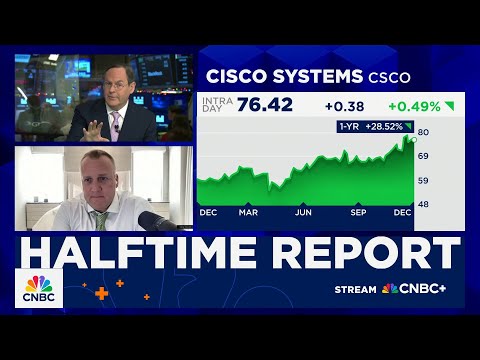
Stock Recommendations & Analysis - Morgan Stanley benefits from wealth management, asset management, trading, investment banking, IPOs, and M&A, driving its stock price higher [2] - Sienna (CEN) has become an AI darling, with a well-defined downside around $172-$173, suggesting a stop-loss point [3] - Baker Hughes is technically one of the best stocks in the market, fundamentally improving going into Q1, and is underowned [6] Market Trends & Observations - The market is currently underweight in energy stocks [8] - Concerns about oversupply, particularly in natural gas, are impacting energy investments [9] - Natural gas is expected to fuel AI-related power needs, presenting an opportunity for investors to add to their positions [10] - SoftBank has declined approximately 40% since October 29th, reflecting concerns about a potential stumble in the AI narrative [19] Investment Strategies & Risk Management - Risk management is crucial, especially considering past experiences with high-growth stocks like Sienna [17] - CNBC Pro includes stop losses for both traders and investors [16] - Hedging activity is observed against SoftBank's $18 billion corporate debt offering [19] Company Comparisons & Contrasts - Sienna and Cisco share fundamental drivers related to data centers and AI infrastructure buildout [12] - Sienna is considered the high-beta little brother of Cisco, with significantly higher revenue growth (294% last quarter) [13]


Josh Brown's best stocks in the market: Morgan Stanley, Baker Hughes and Ciena
Youtube· 2025-12-02 18:38
分组1: Morgan Stanley - Morgan Stanley is positioned to benefit from a year-end rally due to its involvement in wealth management, asset management, trading, investment banking, IPOs, and M&A [2][6] - The stock had previously experienced a 9-point drawdown from a recent record high, but is now seen as a strong buy opportunity [1][2] 分组2: Sienna - Sienna has emerged as a key player in the AI sector, showing significant revenue growth of 29.4% last quarter [12][13] - The stock is currently in a breakout phase, with a defined downside level around 172-173, making it a favorable investment as long as it remains above this threshold [3][4] 分组3: Baker Hughes - Baker Hughes is noted for its underownership in the market, with a year-to-date increase of 19% and a 12% rise over the past year [7][8] - The company is expected to benefit from a potential bottoming of the declining rig count, which could lead to significant price appreciation [5][6] 分组4: Energy Sector - The energy sector, particularly natural gas, is viewed as underowned, presenting an opportunity for investors to increase their positions [9][10] - There is a growing recognition of the importance of natural gas in supporting AI infrastructure, which could drive demand and investment in this area [10][11]

华尔街对黄金后市看法
Sou Hu Cai Jing· 2025-12-02 09:03
Group 1: Core Views on Gold Prices - Bank of America sets a target price of $5,000 per ounce for gold, citing the ongoing expansion of the U.S. fiscal deficit and related macro policies as key support for gold prices, which are expected to continue rising until 2026 unless fundamental drivers change [1] - Goldman Sachs expresses an unprecedented bullish stance on gold, predicting prices will reach $4,900 per ounce by the end of 2026, supported by central bank gold purchases and anticipated Fed rate cuts of 75 basis points in 2026, with 70% of surveyed investors believing in a continued upward trend [1] - Deutsche Bank forecasts a more optimistic scenario, suggesting gold prices could peak at $4,950 per ounce by 2026, with a baseline estimate of $4,450 per ounce, driven by strong demand from central banks and ETFs, while cautioning about potential pressures from stock market corrections and geopolitical tensions [1] Group 2: Market Predictions and Factors - Morgan Stanley's commodity strategy team expects gold prices to peak at $4,500 per ounce by mid-2026, highlighting gold as the top commodity choice for the coming year, supported by a reversal in ETF fund flows and increased central bank purchases [2] - HSBC takes a more cautious view, predicting gold prices will fluctuate between $3,600 and $4,400 per ounce in 2026, noting potential increases in gold supply and a slowdown in central bank purchases, which may temper price gains [2] Group 3: Market Conditions and Trends - GF Futures notes that the U.S. economy and job market are facing challenges from government shutdowns and trade tensions, while central banks are increasing gold holdings, suggesting a potential return to a bull market for precious metals similar to the 1970s [5] - The report indicates that after reaching new highs, gold prices may experience a 2-3 month consolidation period, with current market liquidity influenced by U.S. government actions and Fed signals, leading to potential price corrections [5]


企业“上调指引”激增,华尔街正沉浸在完美的复苏叙事中
Hua Er Jie Jian Wen· 2025-12-02 07:34
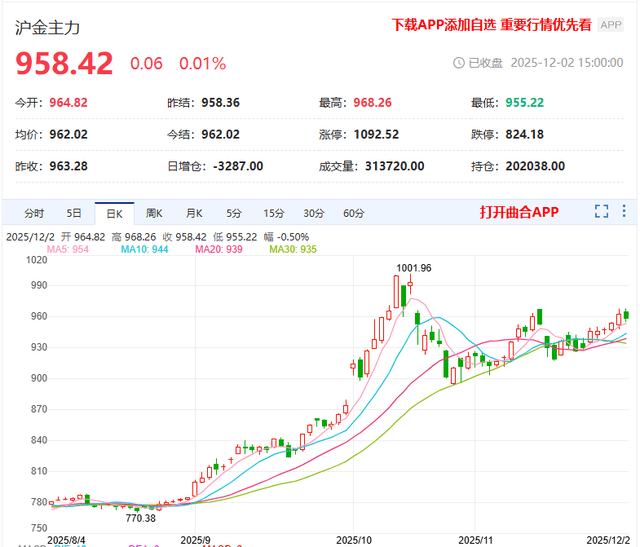
企业高管们正在释放近年来最强烈的乐观信号,他们纷纷上调业绩指引,并减少使用"谨慎"等词汇。 据追风交易台消息,根据摩根士丹利12月1日发布的一份最新报告,在对2025年第三季度财报季中企业财报电话会议的分析显示,提及"上调指 引"(Raise Guidance)的次数飙升,而提及"谨慎"(Cautious)的次数则大幅下降。 企业正从被动应对转为主动管理宏观挑战。报告指出,关税冲击已被大多数公司通过多元化采购、成本转嫁等方式成功化解。与此同时,通过研 发费用化和加速折旧等条款,企业的自由现金流有所提升。 这些积极因素共同支撑了华尔街的乐观预期。摩根士丹利预测,普通公司的盈利将在2026年迎来四年来的首次显著增长,全年每股收益(EPS) 增幅有望达到17%。强劲的营收增长、积极的盈利修正广度以及人工智能带来的效率提升,正共同推动市场走向更广泛的复苏。 企业信心逆转:从"谨慎"到"上调" 企业情绪的转变有明确数据支撑。摩根士丹利援引AlphaSense的数据分析指出,在最近的财报季中,美国上市公司财报电话会议中提及"上调指 引"的次数急剧增加,而"谨慎"一词的提及频率则降至低点。这一反差鲜明地勾勒出企业管理层信心 ...
央行“轮流砸盘”
华尔街见闻· 2025-12-02 04:21
Core Viewpoint - The speech by Bank of Japan Governor Kazuo Ueda on December 1 has significantly increased the likelihood of an interest rate hike at the upcoming monetary policy meeting on December 18-19, with market expectations shifting dramatically from 20% to 80% for a rate increase [1][3][9]. Group 1: Market Reactions - Following Ueda's remarks, Japanese government bond yields surged to recent highs, and the USD/JPY exchange rate fell due to a narrowing interest rate differential [3]. - Bitcoin, often seen as a barometer for carry trades, quickly retraced gains made over the past ten days, reflecting market anxiety about potential rate hikes [3][12]. Group 2: Diverging Views on Rate Hike - Morgan Stanley has shifted its stance to view a December rate hike as the baseline scenario, citing Ueda's unusual direct mention of the upcoming meeting and improved economic uncertainty in the U.S. [5][9]. - Conversely, Goldman Sachs remains cautious, suggesting that the Bank of Japan may need to wait for more corporate wage data, with a January rate hike being more likely [5][10]. Group 3: Ueda's Optimistic Signals - Ueda's speech highlighted improving conditions for policy normalization, particularly in wage growth, with indications that major labor unions are targeting salary increases of 5% or more [8]. - He expressed optimism about recent economic data, viewing a temporary negative GDP growth in Q3 2025 as a technical adjustment rather than a sign of a downturn [8]. - Ueda noted that inflation trends are evolving, with price increases beginning to resemble patterns seen in the early 1990s, suggesting a potential shift in long-term inflation dynamics [8]. Group 4: Risks of Rate Hike Timing - The market's fear of a December rate hike is compounded by the timing, as liquidity typically decreases around the Christmas holiday, which could amplify market reactions to unexpected policy changes [12]. - Historical parallels are drawn to December 2022, when the Bank of Japan unexpectedly adjusted its yield curve control policy, leading to significant market turmoil [12].

大摩亚洲调研:客户最大焦虑是买不到足够英伟达芯片 存储短缺是“30年最严重之一”
Ge Long Hui A P P· 2025-12-02 02:36
Group 1 - Morgan Stanley's latest report indicates that Nvidia's market dominance is more robust than market perception, with customers' primary concern over the next 12 months being the inability to obtain sufficient Nvidia products, particularly the Vera Rubin chip [1] - The shortage of memory chips has reached one of the most severe levels in 30 years, with a buying frenzy from cloud computing customers leading to product shortages for PC and server OEMs [1] - Morgan Stanley has raised the target prices and earnings expectations for Nvidia and Broadcom based on this research, noting that the intensity of AI is testing the limits of the entire semiconductor ecosystem, with supply constraints affecting everything from front-end wafers to back-end packaging and memory [1]



跨资产聚焦-市场反弹-Cross-Asset Spotlight-Markets Rebound
2025-12-02 02:08
Summary of Key Points from the Conference Call Industry Overview - The report focuses on the global financial markets, particularly US equities, UK gilts, and commodities like silver. Core Insights and Arguments - **US Equities Performance**: The S&P 500 index increased by 3.7% last week, recovering losses from November, indicating a bullish outlook from US equity strategists who view recent corrections as buying opportunities [8][10] - **UK Gilts Rally**: UK gilts experienced a bull-flattening move following the Budget announcement, which revealed increased fiscal headroom and a supportive fiscal stance. This led to a bullish outlook for nominal longs and linkers, with supply expected to remain low until April 2026 [8][19] - **GBP Movement**: The GBP saw a rally post-Budget as investors unwound hedges, although strategists anticipate limited positive catalysts for the currency due to expected rate cuts [8] - **Silver Surge**: Silver prices climbed by 13.1%, reaching an all-time high, outperforming broader commodity indices [8][72] Important but Overlooked Content - **Market Sentiment**: The Market Sentiment Indicator (MSI) aggregates various data points to quantify market stress and sentiment, indicating a shift towards risk-on sentiment [59] - **Cross-Asset Flows**: The report tracks daily fund flows across approximately 5,000 ETFs globally, covering around $7 trillion in assets, providing insights into cross-asset sentiment and positioning [22] - **Credit Spreads**: US high-yield credit spreads tightened by 32 basis points, reflecting improved market conditions [72] - **Currency Trends**: The DXY index lost 0.7%, with both developed and emerging market currencies gaining against the dollar, indicating a shift in currency dynamics [72] Forecasts and Projections - **Morgan Stanley's Forecasts**: The report includes forecasts for various asset classes, indicating expected returns and volatility for Q4 2026, with a focus on equities, fixed income, and commodities [3][18] - **Equity Sector Performance**: Materials and communication services led gains in global equity sectors, with materials up by 5.2% and communication services by 4.7% [72] This summary encapsulates the key points from the conference call, highlighting the performance of various asset classes, market sentiment, and future forecasts.
资金大迁徙!逃离“泡沫化”AI债券,华尔街巨头悄然涌入MBS避风港
智通财经网· 2025-12-01 23:28
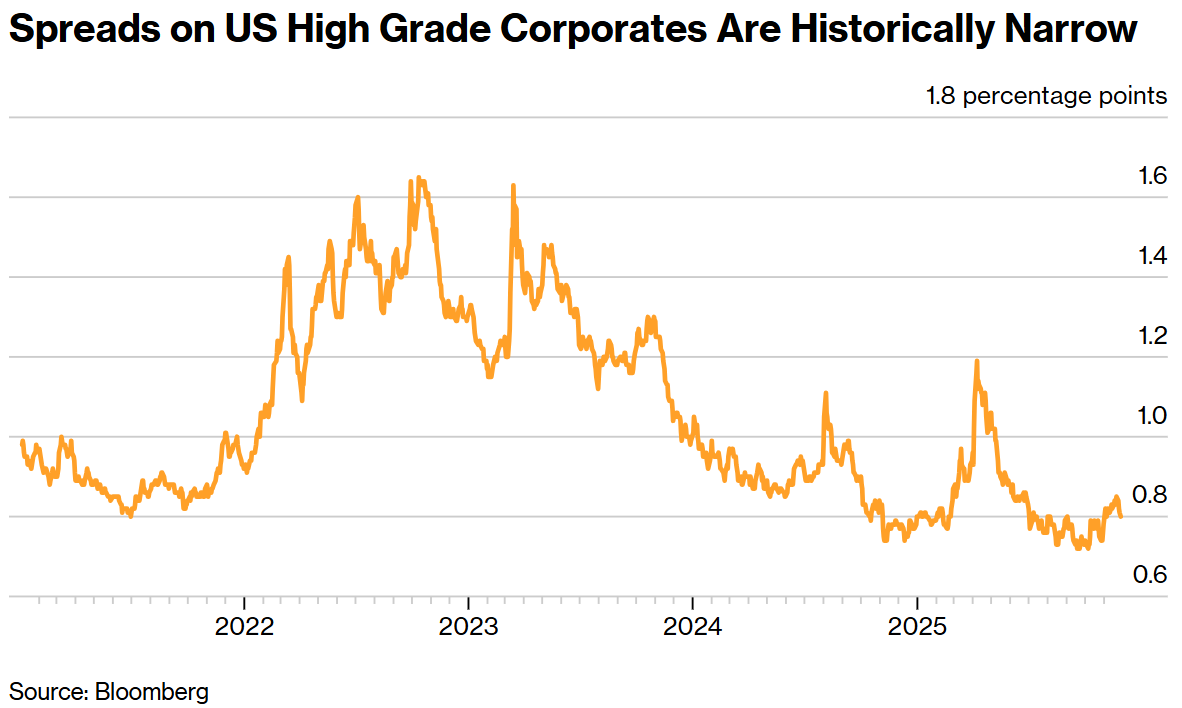
Core Viewpoint - Investment firms, including Columbia Threadneedle, are closely monitoring U.S. mortgage-backed securities (MBS) as a refuge from the high valuations of U.S. corporate bonds and a wave of tech bond issuances that may impact returns [1] Group 1: Corporate Bond Market - JPMorgan strategists predict that the total issuance of U.S. investment-grade bonds, excluding refinancing, could exceed $800 billion in 2026, representing a net increase of approximately 54% from this year [1] - The majority of this issuance is expected to come from tech companies investing in artificial intelligence infrastructure, such as data centers [1] - JPMorgan anticipates that the spread of U.S. high-grade corporate bonds will widen by about 0.15 percentage points in 2026 due to the large volume of issuances [1] Group 2: Mortgage-Backed Securities (MBS) - MBS are projected to deliver the strongest returns in two decades, with the Bloomberg U.S. MBS Index rising by 8.35% as of last Friday, the best performance since 2002 [1] - Morgan Stanley notes that while corporate bond supply is increasing, the net supply of MBS may only see a slight rise next year due to high home prices and mortgage rates suppressing home buying activity [5] - Demand for MBS is expected to be stronger, particularly from real estate investment trusts (REITs) that are purchasing more MBS due to high valuations of their stocks [5] Group 3: Investment Strategies - Columbia Threadneedle's investment manager, Alex Christensen, indicates a gradual shift towards MBS as long-term investment-grade bond spreads fail to provide sufficient buffer against various risks, including increased issuance and deteriorating fundamentals [6] - Some investors are reallocating funds from corporate bonds to other securitized debt products, seeking higher yields [6] - Loomis Sayles' portfolio manager, Brian Kennedy, is focusing on bonds that offer higher yields than MBS, such as mortgage obligations and bonds backed by franchise fees, while attempting to minimize interest rate risk [6]