
Nestle(NSRGY)

Search documents
5 Relatively Secure And Cheap Dividend Stocks, Yields Up To 8% (January 2026)
Seeking Alpha· 2026-01-03 13:00
Core Insights - The "High Income DIY Portfolios" service aims to provide high income with low risk and capital preservation for DIY investors, particularly targeting income investors such as retirees [1] - The service offers a total of 10 model portfolios, including various strategies for income generation and risk management, with a focus on sustainable yields [2] Group 1: Portfolio Strategies - The service includes seven portfolios: three buy-and-hold, three rotational portfolios, and a conservative NPP strategy portfolio designed for low drawdowns and high growth [1] - The investment approach emphasizes dividend-growing stocks and aims for a 30% reduction in drawdowns while targeting a 6% current income [2] Group 2: Additional Features - The service provides buy and sell alerts, live chat, and strategies for portfolio management and asset allocation to help investors achieve stable, long-term passive income [2]



前雀巢CEO兼董事长包必达:董事会一次都没征询过我意见,食品工业世纪范式早已到头
Xin Lang Cai Jing· 2025-12-29 23:15
Group 1 - The former CEO and Chairman of Nestlé, Peter Brabeck-Letmathe, expressed that the traditional paradigm of the food industry has reached its end, emphasizing a shift from merely producing calories to focusing on overall nutrition and well-being [10][31] - Brabeck-Letmathe criticized the "Minder Initiative," which mandates annual re-elections for board members, arguing that it leads to a short-term focus on quarterly performance rather than long-term strategy [3][25] - He highlighted that the excessive regulation in Switzerland has deterred multinational companies from investing, leading to a decline in new investments, particularly in the pharmaceutical sector [7][28] Group 2 - The former CEO noted that the board of directors at Nestlé has not consulted him since he stepped down as Chairman in 2017, indicating a disconnect between the current leadership and his vision for the company [11][32] - Brabeck-Letmathe expressed disappointment over Nestlé's return to a focus on food and beverage, which he believes undermines the progress made towards a more holistic approach to nutrition [10][31] - He mentioned that the financial policies adopted by the current management, including significant debt accumulation for stock buybacks, are detrimental to the company's long-term health [11][32] Group 3 - Brabeck-Letmathe's departure from the World Economic Forum was influenced by a conflict regarding the handling of serious allegations against Klaus Schwab, indicating governance challenges within the organization [14][37] - He believes that the World Economic Forum still has the potential to contribute to a rules-based multilateral world by serving as a platform for consensus-building [39] - The former CEO plans to participate in the Dakar Rally, marking a personal achievement after years of involvement in corporate leadership [18][39]

雀巢新帅谈裁员1.6万:把资源更多投入到销售团队丨消费参考
2 1 Shi Ji Jing Ji Bao Dao· 2025-12-25 08:19
Group 1 - Nestlé plans to cut approximately 16,000 jobs over the next two years, which is about 6% of its total workforce, including 12,000 white-collar positions across all functions and regions [1] - The new CEO, Philipp Navratil, indicated that the layoffs are part of a broader efficiency evaluation, particularly focusing on marketing processes and reallocating resources to sales teams [2][3] - The layoffs are a response to declining growth, with Nestlé's total sales for the first nine months of the year at 65.9 billion Swiss francs, a year-on-year decrease of 1.9% [4] Group 2 - The Greater China region has been a significant drag on Nestlé's performance, with an organic growth rate of -10.4% in Q3, continuing a downward trend from Q2 [5] - The company is working on rebuilding its team in China, emphasizing the need for improved innovation and targeted strategies in the rapidly growing e-commerce channel [5]

雀巢新帅谈裁员1.6万:把资源更多投入到销售团队
2 1 Shi Ji Jing Ji Bao Dao· 2025-12-25 07:42
Group 1 - Nestlé plans to cut approximately 16,000 jobs over the next two years, representing 6% of its total workforce, with around 12,000 white-collar positions affected across all functions and regions [2] - The layoffs are part of a broader strategy to enhance efficiency, particularly in marketing, where resources will be reallocated to sales teams instead of repetitive tasks [2][3] - The company's total sales for the first nine months of the year were 65.9 billion Swiss francs, a year-on-year decline of 1.9%, with an organic growth rate of 3.3% [4] Group 2 - The Greater China region has been a significant drag on Nestlé's performance, with an organic growth rate of -10.4% in Q3, continuing a downward trend from Q2 [5] - For the first nine months, the organic growth rate in Greater China was -6.1%, with a negative internal growth rate of -2.9% and a pricing contribution rate of -3.2% [5] - Excluding Greater China, the organic growth rate for the Asia, Oceania, and Africa region was 5.3%, indicating stronger performance in other markets [5]
雀巢想瘦身,瑞幸在狂奔:蓝瓶咖啡收购传闻背后的资本局
3 6 Ke· 2025-12-17 11:27
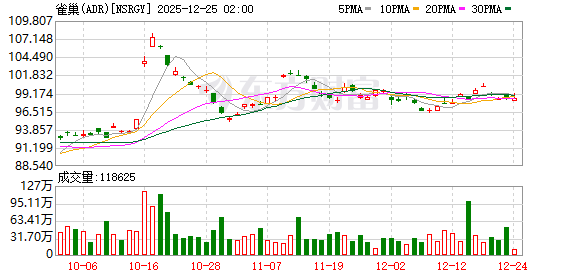
Group 1 - The core of the news revolves around the potential acquisition of Blue Bottle Coffee by Luckin Coffee, which symbolizes a shift in the global coffee landscape, especially as both companies are in different strategic phases [1][9] - Nestlé, having acquired a 68% stake in Blue Bottle Coffee for approximately $425 million in 2017, is now considering divesting it as the brand no longer aligns with its current focus on large-scale products [4][5] - The new CEO of Nestlé, Philipp Navratil, emphasizes a shift towards "RIG-led growth," indicating a need for rational evaluation of all business segments, which may lead to the sale of Blue Bottle Coffee if it does not meet performance standards [4][8] Group 2 - Luckin Coffee's recent financial performance shows a significant increase, with Q3 revenue reaching 15.3 billion yuan, a 50% year-on-year growth, and a total of nearly 30,000 stores, highlighting its ambition to acquire a premium brand like Blue Bottle [11][17] - The acquisition could fill a gap in Luckin's brand portfolio, providing a high-end image and facilitating international expansion, particularly in the U.S. market where Blue Bottle has a presence [11][12] - Despite the potential benefits, Luckin's management has historically been cautious about acquisitions, preferring organic growth strategies, which raises questions about the feasibility of the Blue Bottle acquisition [14][15][16] Group 3 - Nestlé's financial urgency is evident as it announced a cost-saving plan of up to 2.5 billion Swiss francs and plans to cut 12,000 white-collar jobs, making the retention of Blue Bottle Coffee seem impractical [7][8] - The operational model of Blue Bottle Coffee, which relies on high-touch, artisanal coffee preparation, contrasts sharply with Luckin's automated and efficiency-driven approach, creating a fundamental conflict in business philosophies [16] - Luckin's cash flow is strong, with approximately 9.3 billion yuan in cash and equivalents as of September 30, 2025, but the competitive landscape in China necessitates careful financial management, especially in light of rising delivery costs [17][18]

2025饮料新品TOP100丨元气森林、农夫山泉、康师傅、统一激战新品、乳饮退潮谁来补位?
3 6 Ke· 2025-12-16 02:59
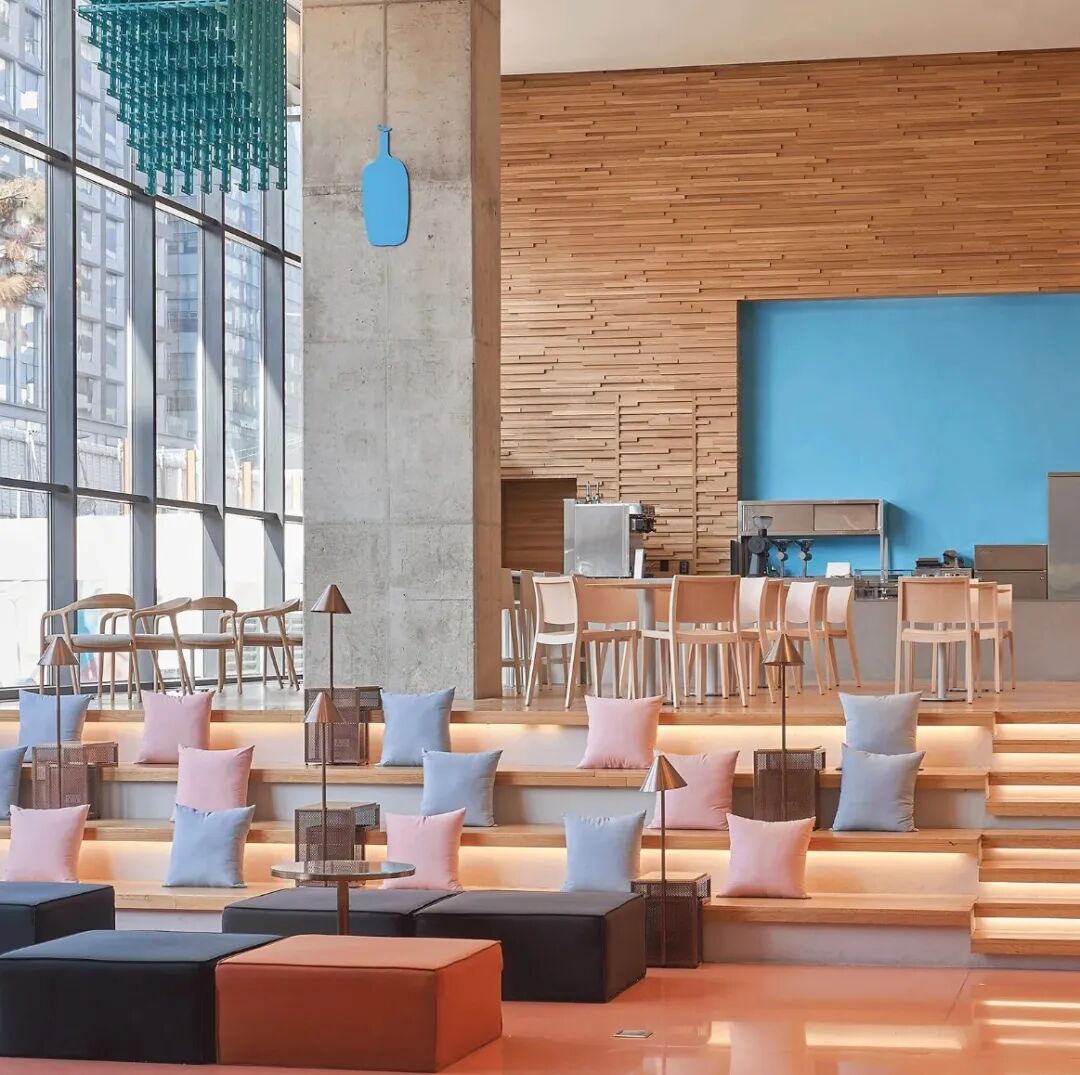
Core Insights - The article discusses the year-end review of the beverage market, focusing on the top 100 new products from December 2024 to November 2025, and compares them with the same period from the previous year to identify trends and shifts in the market [1][4]. Summary by Sections Overview of the Year-End Review - The year-end review will analyze the top 100 new beverage products and their market performance over the specified period, highlighting new trends and shifts in consumer preferences [1]. Data Collection and Methodology - The data for the top 100 products is sourced from the "马上赢" brand CT and various models, covering a wide range of retail channels across major cities in China [3]. - The selection criteria for the top 100 products exclude private label products and multi-pack items, focusing solely on individual SKUs based on sales revenue [1][2]. Market Performance Analysis - The beverage market is categorized into ten subcategories, including packaged water, functional drinks, dairy drinks, ready-to-drink tea, and more [4][5]. - The analysis reveals that dairy drinks are the only category exceeding 20% market share, while ready-to-drink tea, functional drinks, and carbonated beverages also hold significant shares [8]. Year-on-Year Comparison - A comparison between the two periods shows that the market share of dairy drinks has decreased by approximately 2%, with a sales growth decline of over 13% [13]. - Functional drinks and ready-to-drink juices have shown positive growth, while traditional categories like carbonated drinks and Asian traditional beverages have experienced declines [12][13]. New Product Trends - The top 100 new products for the current year show a significant increase in non-refrigerated ready-to-drink juices and sweetened ready-to-drink teas, while categories like sugar-free ready-to-drink tea and sports drinks have seen a reduction in new product entries [19][14]. - Notably, the top brands include "元气森林" and "康师傅," each with multiple products in the top rankings, indicating strong competition and innovation in the beverage sector [19][22]. Pricing and Specifications - The average price per 100ml for new products varies across categories, with non-refrigerated ready-to-drink juices and sweetened ready-to-drink teas generally priced higher [28]. - The distribution of product specifications indicates a growing preference for larger packaging sizes, reflecting changing consumer consumption patterns [25]. Launch Timing Insights - The timing of new product launches has shifted, with a noticeable increase in products launched in February and March compared to the previous year, suggesting a trend towards earlier market entry [31].





精品咖啡甩卖潮:可口可乐、雀巢为何甘愿“割肉”?
3 6 Ke· 2025-12-15 08:44
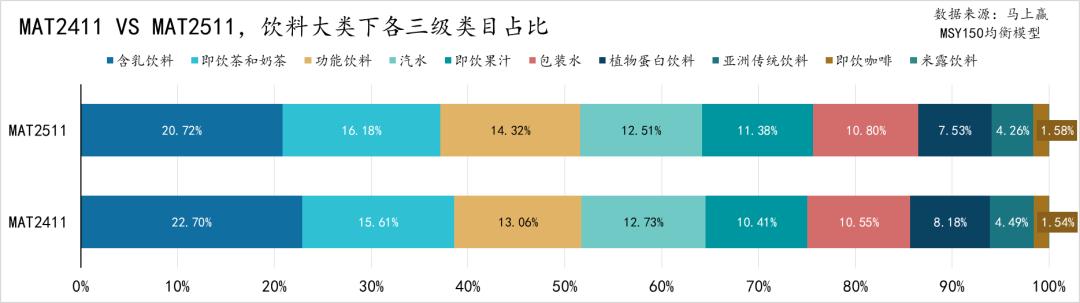
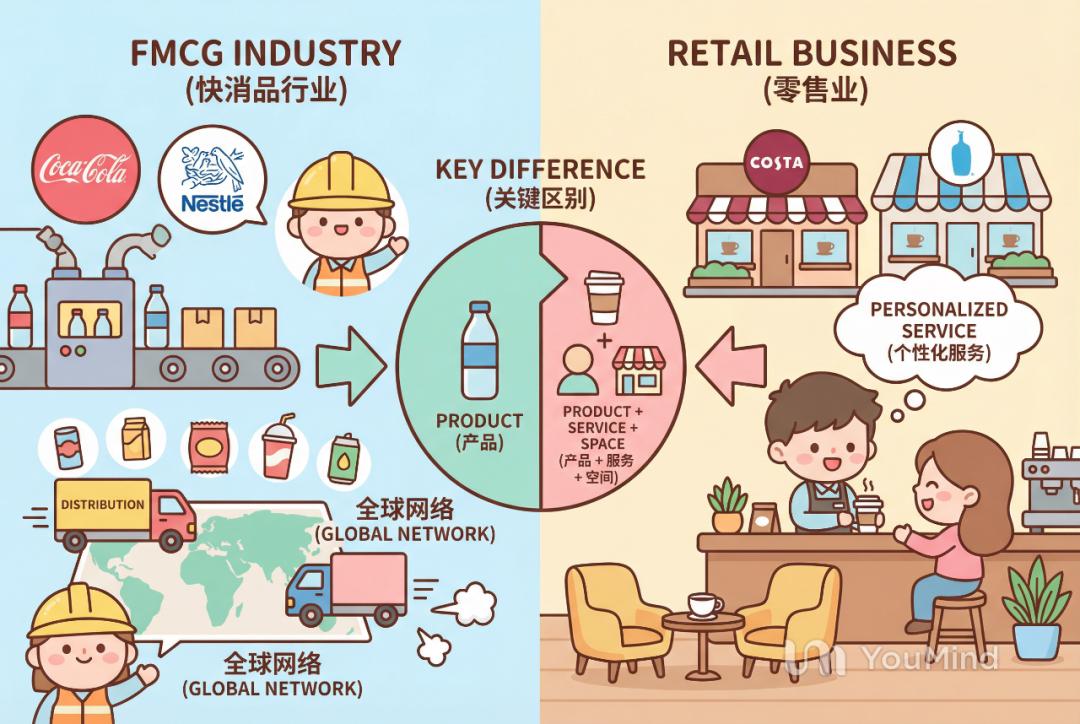
Core Viewpoint - The food and beverage industry is experiencing a surge in mergers and acquisitions, with notable companies like Starbucks, Coca-Cola, and Nestlé divesting from their coffee brands, often at prices significantly lower than their acquisition costs [1][7]. Group 1: Reasons for Divestiture of Physical Store Businesses - The divestiture often involves physical store operations, which differ from the fast-moving consumer goods (FMCG) sector that focuses on product and distribution rather than service and space [1][4]. - Physical retail businesses are more complex and face higher management challenges compared to FMCG, making them less strategic for companies like Coca-Cola and Nestlé [4]. - The capital-intensive nature of coffee shops, with high initial investments and long payback periods, makes them less attractive during economic pressures, prompting companies to divest [5][10]. Group 2: Reasons for Selling at a Discount - Companies prioritize focusing on core businesses to streamline their balance sheets, leading to the decision to sell off less strategic assets [7][10]. - For Coca-Cola, the acquisition of Costa was initially aimed at expanding its coffee platform, but changing market dynamics, particularly in China, rendered the physical store operations less viable [9][10]. - The value of physical stores is reassessed when more efficient distribution channels can achieve growth without the overhead of managing retail locations [10]. Group 3: Value of Divested Brands - Brands like Costa and Blue Bottle Coffee possess strong product offerings and loyal customer bases, indicating that they are not inherently poor investments [11][15]. - The divestiture allows these brands to potentially thrive under new ownership that can provide the necessary resources for expansion and operational efficiency [15][18]. - The example of the newly independent Magnum ice cream company illustrates how divestiture can lead to enhanced strategic flexibility and growth potential [18]. Conclusion - The current trend of divestiture in the food and beverage sector reflects a strategic realignment of resources, with the potential for good brands to find new life under different ownership structures [19].

揭露雀巢中国渠道乱象:价格倒挂,窜货横行,新帅收拾“烂摊子”? | BUG
Xin Lang Cai Jing· 2025-12-11 00:08
Core Viewpoint - Nestlé China is currently facing a "channel crisis" characterized by significant payment delays to distributors and a chaotic distribution network [2][19]. Group 1: Payment Issues - Multiple distributors have reported being owed approximately 1 million yuan in advance payments, with delays lasting several years [3][21]. - A distributor from Jiangsu reported being owed around 900,000 yuan from 2018 to 2022, and the debt increased by an additional 200,000 yuan after transitioning to a dealer role [4][22]. - Distributors are often required to provide proof of expenses to receive payments, with Nestlé indicating a willingness to pay up to 70% of owed amounts, contingent on the acceptance of documentation [3][24]. Group 2: Distribution Network Problems - The distribution model involves distributors paying dealers upfront for goods, but returns are processed through dealers, complicating the payment chain [8][23]. - Distributors are often left vulnerable due to the lack of direct contracts with Nestlé, making it difficult for them to claim owed payments [9][24]. - Internal reports suggest that the management of Nestlé China has been chaotic for years, with frequent changes in local office personnel leading to unresolved payment issues [5][25]. Group 3: Sales and Market Performance - The Greater China region has seen a decline in sales, with revenue dropping from 6.913 billion Swiss francs in 2019 to 5.558 billion Swiss francs in 2021, reflecting a downward trend [13][27]. - The organic growth rate for the Greater China region was -6.1% in the first nine months of 2025, indicating ongoing struggles despite price reductions [13][27]. - Analysts attribute the decline to brand and product aging, as well as slow decision-making processes within the foreign brand [14][28]. Group 4: Management Changes and Strategic Shifts - In response to ongoing challenges, Nestlé has undergone significant management changes, including the appointment of a new CEO for the Greater China region [15][31]. - The new CEO aims to shift the focus from merely expanding distribution to actively driving demand through better products and emotional connections with consumers [31][32]. - There is an emphasis on internal reforms to address the declining performance, including the need for innovative products that align with evolving consumer preferences [32].
雀巢大中华区高管集体东南亚化
3 6 Ke· 2025-12-05 13:17
Core Viewpoint - Nestlé is restructuring its operations in the Greater China region by merging its Wyeth and Nestlé infant nutrition businesses into a new unit called "Nestlé Nutrition," effective January 1, 2026, under the leadership of Southeast Asian executive, Xie Guoyao [1][4]. Group 1: Leadership Changes - The leadership of key growth areas in Nestlé's Greater China region, including coffee, nutrition, and pet care, has been taken over by executives with Southeast Asian backgrounds, indicating a strategic shift towards leveraging their experience in emerging markets [1][4][5]. - Xie Guoyao, the new head of the merged nutrition unit, has over 20 years of experience in the fast-moving consumer goods sector and has successfully led the infant nutrition business in China, contributing significantly to growth [4][6]. Group 2: Market Challenges - Nestlé's sales in the Greater China region reached approximately 44.5 billion yuan in 2024, with an organic growth rate of 2.1%, which is considered unsatisfactory compared to previous performance [6][7]. - The company faces negative growth in its seasoning and dairy product segments, indicating a shift from broad growth to more differentiated performance across categories [6][7]. Group 3: Strategic Response - The merger of Wyeth and Nestlé infant nutrition aims to reduce costs and improve efficiency by consolidating resources and enhancing market responsiveness [8][9]. - Xie Guoyao's previous success in launching a new product line in the infant nutrition sector demonstrates a strategic pivot towards innovative product offerings rather than competing directly in saturated high-end markets [9][12]. Group 4: Broader Market Context - The challenges faced by Nestlé in China mirror those encountered in Southeast Asian markets, such as increased competition from local brands and changing consumer preferences [12][13]. - The company is adapting to a new market environment characterized by digital transformation and evolving consumer behaviors, necessitating a shift in strategy and management approach [14][15]. Group 5: Future Outlook - The ongoing leadership changes and strategic realignment signify a deeper organizational transformation within Nestlé, aiming to better align with the realities of the Chinese market and leverage successful strategies from Southeast Asia [16].
Borough Broth获投资;雀巢创建科技中心;Gucci任命CFO
Sou Hu Cai Jing· 2025-12-05 09:05
Investment Dynamics - Borough Broth Company, a UK organic bone broth producer, secured £7.5 million (approximately ¥70.08 million) in new funding from consumer brand investment firm Piper [3] - The company, founded in 2015 and based in London, currently generates annual revenue of about £11 million, with projections to exceed £20 million by 2026 [3] - The investment will be used to relocate to a new factory, doubling production capacity, strengthening the management team, and expanding into adjacent organic categories such as soups and broths [3] Acquisition Dynamics - Tetra Pak acquired Bioreactors.net, a Latvian bioreactor company with nearly 30 years of experience in bioreactor system design and manufacturing [6] - Bioreactors.net specializes in providing biomass fermentation and precision fermentation solutions for the new food sector, serving clients from laboratories to large-scale commercial production [6] - This acquisition will enhance Tetra Pak's processing technology capabilities and expand its product portfolio in the new food sector [6] - Royal FrieslandCampina N.V. announced the acquisition of Wisconsin Whey Protein, a well-known US whey protein producer [8] - The acquisition will integrate Wisconsin Whey Protein into FrieslandCampina's global leading protein and prebiotic supplier, enhancing its capabilities in sports nutrition and medical nutrition markets [8] - The Wisconsin facility is currently expanding, with whey protein production capacity expected to more than double [8] - Imlek's CEO Bojan Radun is collaborating with entrepreneur Andrej Jovanović's family office AJFH to acquire Serbia's leading dairy producer, mlek, from private equity investor MidEuropa [10] - The transaction is expected to complete in Q1 2026, pending regulatory approval [10] - Imlek processes nearly 400 million liters of milk annually from over 3,500 dairy farmers and owns well-known brands [10] Brand Dynamics - Xiangpiaopiao opened its first offline stores in Hangzhou, including a brand experience store and a takeaway outlet [13] - The experience store focuses on customer interaction and covers five product series, with prices ranging from ¥7.9 to ¥16 [13] - The move aims to establish a second growth curve amid increasing competition in the market [13] - Nestlé announced the establishment of a new deep technology center to enhance its expertise in biotechnology and optimize innovation processes [16] - The center aims to develop new nutritional solutions and support emerging growth platforms in maternal nutrition, early life nutrition, and medical nutrition [16] - The scientific solutions will also be applied to Nestlé's pet care business, including the pet treatment sector [16] Personnel Dynamics - Valentino's Greater China employees reported CEO Janice Lam for alleged performance fraud and workplace bullying [18] - The allegations include unconventional sales tactics to boost performance metrics and creating a fear-based atmosphere in team meetings [18] - This is the third report submitted by employees since early this year, with the outcome pending further decisions from the parent company [18] - Rocco Basilico, Chief Wearable Devices Officer and President of Oliver Peoples at EssilorLuxottica, will leave the company next month after six years [20] - Basilico has extensive experience and led the development of smart glasses during his tenure [20] - His departure may impact the company's growth in smart glasses and high-end sunglasses if a suitable successor is not found [20] - Francesca Leoni is rumored to join Fendi as Global Chief Communications Officer, succeeding Cristiana Monfardini [22] - Leoni has 25 years of experience in the fashion and luxury goods industry and previously worked with Fendi's new Chief Creative Officer [22] - Her collaboration with the new creative leadership may bring fresh energy to Fendi [22] - Gucci appointed Gianluca De Ficchy as Chief Financial Officer, reporting to the brand's President and CEO [25] - De Ficchy previously held executive roles in the automotive industry and banking [25] - The appointment aims to streamline costs and stabilize profits, allowing time for creative transformation [25]

