
Nvidia(NVDA)

Search documents
异动盘点0212 | 智谱涨超25%,天域半导体盘中一度涨近8%;SOLV Energy上市首日收涨22.68%,存储概念股普涨
贝塔投资智库· 2026-02-12 04:00
Group 1 - Tsugami Machine Tool China (01651) saw a nearly 6% increase, reaching a historical high, with revenue of 81.58 billion yen in China, up 28.3% year-on-year, and segment profit of 22.534 billion yen, up 51.2% [1] - Zhizhu (02513) surged over 26%, with a 25.8% increase reported, following the launch of its flagship model GLM-5, which achieved state-of-the-art performance in coding and agent capabilities [1] - China Nuclear International (02302) rose over 7%, with a forecasted revenue of no less than 2.46 billion HKD for 2025, driven by increased uranium trading volume [1] Group 2 - Tianyu Semiconductor (02658) increased nearly 8% after announcing a strategic partnership with EYEQ Lab Inc., a leader in third-generation semiconductors in South Korea [2] - Harbin Electric (01133) rose 7.95% after announcing an expected net profit of 2.65 billion yuan for 2025, a year-on-year increase of approximately 57.2% [2] - Weichai Power (02338) increased over 5.6%, with Morgan Stanley raising the projected cumulative power gap for U.S. data centers from 44 GW to 47 GW for 2025-2028 [2] Group 3 - SOLV Energy (MWH.US) debuted on the U.S. stock market with a 22.68% increase, focusing on large-scale solar power and battery storage projects [4] - Gilead Sciences (GILD.US) rose 5.82%, with a reported revenue growth of 2.4% year-on-year and a significant net profit increase of approximately 16.73 times [4] - TSMC (TSM.US) increased by 3.37%, reporting a January revenue growth of 36.8% year-on-year, marking its strongest monthly revenue ever [5] Group 4 - Bilibili (BILI.US) rose 2.84% after announcing collaboration with the Spring Festival Gala, marking the first involvement of UP owners in the event [6] - Micron Technology (MU.US) surged 9.94% as the memory market experienced a rapid increase, with prices rising 80%-90% since the end of Q4 2025 [7] - Kingsoft Cloud (KC.US) increased by 9.98%, with Goldman Sachs predicting Xiaomi's investment in AI to reach approximately 10 billion yuan in 2026, benefiting Kingsoft Cloud [8]




Got $200? 1 Artificial Intelligence (AI) Stock to Buy and Hold for the Long Term.
The Motley Fool· 2026-02-12 04:00
Core Insights - Nvidia remains the leader in GPU chips for AI data centers, with $187 billion in trailing-12-month sales, significantly outpacing competitors like AMD and Broadcom [1][2] - The company is expected to continue its growth trajectory, making it a solid long-term investment option for investors [2] Industry Trends - The demand for AI inference is rapidly increasing, driven by complex use cases that require more memory, leading to slower response times in AI applications [5] - Nvidia's upcoming Rubin chip platform, featuring Inference Context Memory Storage (ICMS), aims to address these challenges by improving memory efficiency for AI inference tasks [6] Competitive Landscape - Despite OpenAI's reported frustrations with Nvidia's GPUs, the company's established hardware presence provides a significant competitive advantage that is difficult for rivals to overcome [7] - Nvidia's recent $20 billion acquisition of Groq, a start-up focused on AI inference chip technology, highlights its commitment to innovation and maintaining its market leadership [9][10] Financial Outlook - Analysts project Nvidia's earnings to grow at an annualized rate of 37% over the long term, with the stock currently trading at 46 times earnings, indicating potential for substantial investment returns [11]


瑞银抢跑英伟达(NVDA.US)财报:目标价上调至245美元,Blackwell贡献90亿营收成最大看点
Zhi Tong Cai Jing· 2026-02-12 03:57
Group 1 - UBS Group indicates that Nvidia's upcoming Q4 FY2026 financial report is set against a favorable backdrop, despite market concerns about the sustainability of AI hardware demand and margin compression [1] - UBS analyst Timothy Arcuri maintains a "Buy" rating and raises the target price from $235 to $245, citing the stock's stable performance and optimistic supply chain signals [1] - The report highlights strong supply chain signals and capacity release of key products, with a notable increase in exports of data processing equipment from Taiwan, reflecting robust global demand for AI infrastructure [1] Group 2 - UBS expects Nvidia's new Blackwell architecture chips to significantly contribute approximately $9 billion in revenue during Q4, driving performance beyond expectations [2] - The firm forecasts Nvidia's Q4 revenue to reach around $67.5 billion, exceeding the company's previous guidance of $65 billion, with no short-term factors expected to impact the 75% gross margin guidance [2] - Looking ahead, UBS anticipates Nvidia will provide a revenue guidance of up to $76 billion for the next quarter, surpassing market expectations of $74 billion to $75 billion [2]
“木头姐”百亿美股持仓出炉!大幅减持特斯拉!
私募排排网· 2026-02-12 03:39
Core Insights - Cathie Wood's Ark Invest holds a total of 208 stocks with a market value of approximately $15.1 billion as of Q4 2025, reflecting a decrease of $1.7 billion from the previous quarter [2] - The portfolio saw significant changes with 8 new positions, 110 increased positions, 77 decreased positions, and 8 positions completely sold off, leading to a high concentration in the top ten holdings, which account for 41.72% of the total portfolio [2] Summary by Sections Ark Invest Holdings - The largest holding remains Tesla, with a reduction of 18.81% in shares, amounting to approximately $1.31 billion [6] - Other top holdings such as Shopify and Roku also experienced significant reductions of 17.38% and 20.00% respectively [4] Performance of Key Stocks - Tesla's share count decreased by 671,000 shares, with a current market value of about $1.31 billion [6] - Coinbase, Circle, and BMNR, which were heavily invested in, saw declines of -32.99%, -40.19%, and -47.72% respectively, indicating a challenging environment for these stocks [6] Market Trends and Insights - Other prominent private equity firms like Jinglin and Dongfang Gangwan have also increased their positions in Google, reflecting a consensus on the potential of AI applications in 2026 [6]




AI算力竞速(下):生态之战与国产GPU的未来价值重估
3 6 Ke· 2026-02-12 03:30
Core Insights - The article emphasizes the significant challenge of ecological barriers faced by domestic GPU companies in China, which goes beyond hardware performance and capital market achievements [1] - The current global GPU market is dominated by Nvidia and AMD, whose competitive advantage has shifted from hardware specifications to software and ecosystem development [1] - The article highlights the importance of building a robust ecosystem that requires deep understanding of developer needs, continuous improvement of the toolchain experience, and long-term community cultivation [2] Group 1: Ecological Barriers - Domestic GPU manufacturers are adopting a "compatible ecosystem" strategy to quickly enter the market, but this may lead to a long-term dependency on existing ecosystems, hindering the development of unique competitive advantages [2] - The construction of an ecosystem is a slow process that tests patience, capital, and foresight, requiring solid technical foundations and ongoing support from investors [2] Group 2: Industry Constraints and Capital Challenges - Domestic GPU companies face multiple constraints from the industry foundation, including limitations in advanced manufacturing processes, core IP self-sufficiency, and challenges in advanced packaging technologies [3] - The high investment nature of the GPU industry makes it a "capital endurance battle," with companies like Wallen Technology investing 85% of their IPO proceeds into R&D [3] - The financial performance of domestic GPU companies often shows strong revenue growth but delayed profitability, reflecting the industry's inherent characteristics [3] Group 3: Market Survival and Competition - The current growth of domestic GPUs is largely driven by policy support and specific replacement demands, but true commercial success requires navigating a fully market-driven and competitive landscape [4] - The ultimate test for domestic GPUs lies in their ability to support large-scale AI models, run top-tier games, and provide reliable services in high-precision industrial simulations and life sciences [4] Group 4: Investment Value Reevaluation - Investors are advised to maintain a rational perspective on the GPU sector, focusing on actual penetration rates, order visibility, and the quality of revenue growth [7] - Key mid-term indicators include breakthroughs in core architecture, the robustness of the software ecosystem, and clarity in profitability pathways [7] - Long-term success will depend on the ability to create a globally influential development platform and transition from a technology follower to a rule-maker [7] Group 5: Strategic Importance of GPU Development - The evolution of GPUs represents a strategic contest for control over foundational infrastructure and standards in the intelligent era, with significant implications for China's technological competitiveness [9] - The collective efforts of domestic GPU companies are seen as a crucial expedition that aligns with national expectations and industrial missions [9] - The journey towards establishing a self-sufficient GPU industry is expected to be challenging yet rewarding, with the potential to reshape the global computing landscape [10]

英伟达液冷供应商,订单量大增252%
财联社· 2026-02-12 02:35
Core Viewpoint - Vertiv reported strong financial results for Q4 2025, with earnings per share of $1.36 and sales of $2.9 billion, representing a 23% year-over-year growth, exceeding Wall Street expectations [2] Financial Performance - Vertiv's Q4 2025 earnings per share were $1.36, with sales reaching $2.9 billion, surpassing the expected earnings of $1.29 per share and sales of $2.9 billion [2] - The company experienced a significant increase in order volume, with a year-over-year growth of 252% and a sequential growth of 117% compared to Q3 2025 [2] - For 2026, Vertiv projects earnings per share between $5.97 and $6.07, with sales around $13.5 billion, while Wall Street forecasts earnings of $4.85 per share and sales of $11.7 billion [2] Market Position and Growth Drivers - Vertiv is recognized as a leading provider of liquid cooling and power management solutions, particularly in the data center market [4] - The company is an official liquid cooling partner of NVIDIA, which enhances its capabilities in meeting the cooling demands of next-generation platforms [4] - The increasing complexity and competition in the data center market are expected to drive continued growth for Vertiv [2] Industry Trends - The demand for liquid cooling solutions is anticipated to rise significantly, with projections indicating that the liquid cooling market could reach a scale of hundreds of billions by 2026 [5] - Liquid cooling is becoming the preferred solution over traditional air cooling due to its efficiency and effectiveness in high-power scenarios [4][5] - Major companies like TSMC, NVIDIA, and Microsoft are pushing for the adoption of advanced cooling technologies, indicating a shift from experimental to large-scale industrial applications [5] Investment Opportunities - The growth in data centers is expected to create opportunities for companies in the temperature control industry, particularly in China [6] - Investment focus is suggested on companies providing cooling equipment and manufacturing components, such as Ice Wheel Environment and Linde Co., as well as those with comprehensive liquid cooling solutions like Yingweike [6]

偷偷挣钱的芯片巨头
3 6 Ke· 2026-02-12 01:40
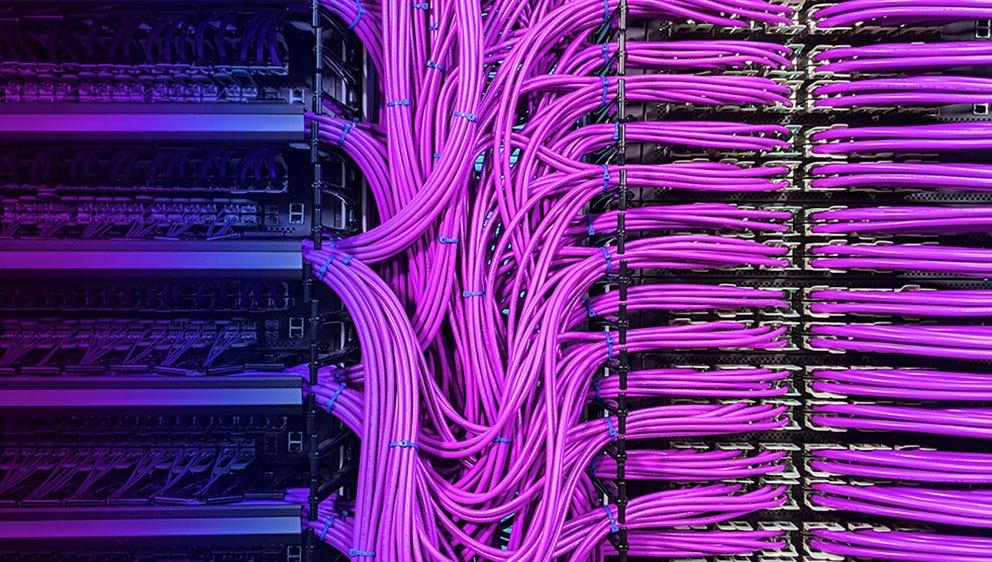
Core Insights - Nvidia stands out as a leading player in the AI wave, dominating the market with its GPU architecture and CUDA ecosystem, which are central to AI training and inference [1] - The rise of Nvidia is not an isolated event; it reflects a broader evolution in the AI infrastructure ecosystem, involving multiple components such as wafer manufacturing, advanced packaging, and network interconnects [1][8] - The competition in AI infrastructure has shifted from pure computational power to the ability to connect and manage vast numbers of GPUs effectively [8] Group 1: Nvidia's Market Position - Nvidia's data center revenue has reached new highs, with its latest GPU products being in high demand even before full release [1] - The company is perceived as defining AI infrastructure almost single-handedly, raising questions about the sustainability of relying on a single entity for foundational computing power [1] Group 2: The Role of Credo - Credo, a lesser-known semiconductor company, has seen its stock price surge by 245% in 2024 and is expected to double again in 2025, driven by the demand for active electrical cables (AEC) in AI data centers [2][4] - Credo holds an 88% market share in the AEC market, with analysts projecting its revenue to approach $1 billion by 2026 [4] Group 3: The Shift to Fiber Optics - Corning, a major player in fiber optics, is experiencing a resurgence as AI data centers increasingly require high-speed, reliable connections, with a significant contract from Meta for $6 billion [5][9] - The efficiency of fiber optics over copper cables is highlighted, with Corning's technology expected to dominate the internal networks of data centers [5][9] Group 4: Lumentum's Transformation - Lumentum is transitioning from a telecom-focused company to a key enabler for AI data centers, with a 58% year-over-year revenue increase [9][10] - The company is betting on three AI growth engines: optical circuit switches, co-packaged optics (CPO), and cloud transceivers [9][10] Group 5: SiTime's Importance - SiTime specializes in MEMS clock devices, crucial for maintaining synchronization in AI servers, with a 45% revenue growth in its communication and data center business [17][21] - The company’s technology is essential for ensuring the performance and efficiency of AI systems, especially as data center demands increase [21][22] Group 6: Supply Chain Vulnerabilities - The supply chain supporting Nvidia's empire is both powerful and fragile, with dependencies on specific technologies and materials that are difficult to replicate [23] - Companies like Nittobo, which supplies T-glass, face challenges in scaling production to meet the surging demand from AI companies [20][23] Group 7: The Future of AI Infrastructure - The AI infrastructure landscape is evolving, with a focus on connectivity and the ability to manage large-scale GPU deployments becoming as critical as computational power itself [8][24] - The sustainability of this supply chain and its ability to meet exponential growth in computational demand will be crucial for the future of AI [25]
偷偷挣钱的芯片巨头
半导体行业观察· 2026-02-12 00:56
Core Insights - Nvidia stands out as a leading player in the current AI wave, primarily due to its GPU architecture and CUDA ecosystem, which have positioned it at the center of the computing power competition [2] - The rise of Nvidia is not an isolated event; it is part of a broader evolution involving various components such as wafer manufacturing, advanced packaging, storage bandwidth, and network interconnects [2] - The AI infrastructure competition has shifted from a focus on computing power to addressing connectivity bottlenecks, highlighting the importance of interconnect technologies [10] Group 1: Nvidia and AI Infrastructure - Nvidia's data center revenue has reached new highs, with its latest GPU products being in high demand even before full release [2] - The AI computing power explosion is not solely dependent on GPUs but requires a complex ecosystem of interconnected technologies [2] - The emergence of companies like Credo, which specializes in active electrical cables, illustrates the hidden champions supporting Nvidia's growth [3][4] Group 2: Connectivity Technologies - Credo's active electrical cables have gained significant market share, with an estimated 88% of the active cable market, and are projected to double its revenue to nearly $1 billion by 2026 [6] - Corning's optical fibers are becoming the preferred choice for data center networks due to their superior speed and energy efficiency compared to copper cables [7][9] - The coexistence of copper and fiber technologies in AI data centers reflects a unique symbiotic relationship driven by the specific demands of AI workloads [9] Group 3: Optical Communication and Components - Lumentum is transitioning from a telecommunications provider to a core enabler for AI data centers, with significant revenue growth driven by data center demands [12][13] - Coherent is also innovating in optical transceivers, with a focus on high-speed communication driven by AI and machine learning [16] - The demand for optical components is expected to surge as AI workloads increase, but companies must be cautious of potential demand fluctuations once connectivity bottlenecks are resolved [19] Group 4: Precision Timing and Materials - SiTime specializes in MEMS-based timing devices, which are crucial for maintaining synchronization in AI data centers, showing significant revenue growth [20][23] - T-glass, a critical material for advanced chip packaging, is in high demand but faces supply constraints, highlighting the vulnerabilities in the supply chain [24][26] - The importance of precision timing and reliable materials underscores the foundational elements that support AI infrastructure, often overlooked in discussions about advanced technologies [27][28] Group 5: Supply Chain Dynamics - The supply chain supporting Nvidia's empire is characterized by both strength in technological barriers and vulnerability due to single-source dependencies [30] - Companies like Corning and SiTime have shown resilience and adaptability, indicating a long-term commitment to technological advancement despite market uncertainties [30][31] - The future of AI infrastructure will depend on the ability of these suppliers to meet the exponential growth in computing power demand while managing risks associated with supply chain dependencies [31]
全球大公司要闻 | 苹果推迟新版Siri上线,Meta百亿押注AI基建
Wind万得· 2026-02-12 00:54
Group 1 - Meta plans to invest over $10 billion in building a data center park in Indiana, providing 1 GW of power capacity to support AI projects and core social media operations, while hedge fund Pershing Square disclosed a stake in Meta representing 10% of its capital, believing the market underestimates AI's long-term potential [2][3] - Apple faces delays in upgrading its Siri virtual assistant, with multiple new features potentially postponed until iOS 26.5 or iOS 27 due to issues with query handling, response times, and accuracy [2] - ByteDance is reportedly developing an AI chip and negotiating with Samsung for production, aiming to produce at least 100,000 chips this year and gradually increase output to 350,000, although a spokesperson claimed the information is inaccurate [3] Group 2 - NetEase's Q4 2025 revenue reached 27.5 billion yuan, a 3% year-on-year increase, but net profit attributable to shareholders fell nearly 30% to 6.2 billion yuan, missing expectations due to increased sales expenses and investment losses [5] - Zhiyuan Technology launched its new flagship model GLM-5, integrating DeepSeek sparse attention mechanism, targeting programming and intelligent agent capabilities, with internal evaluations indicating performance close to Claude Opus 4.5 [5] - Huazhu Group is under scrutiny from the Beijing Consumer Association for potentially unfair terms in its membership service agreement, prompting the company to initiate a self-examination and commit to improving the consumer environment [6] Group 3 - Amazon received approval from the US FCC to deploy an additional 4,500 low-Earth orbit satellites, expanding its constellation to 7,700 to enhance space internet competition [8] - Cisco reported Q2 revenue of $15.3 billion, exceeding analyst expectations, with product revenue of $11.64 billion, driven by a surge in orders from AI hyperscalers [8] - Ford anticipates achieving a record revenue of $187.3 billion in 2025, but expects a net loss of $8.182 billion, a 239.17% year-on-year decline, primarily due to rising supply chain costs and increased R&D investments [9] Group 4 - Samsung Electronics announced the Galaxy S26 series launch on February 26, featuring the 2nm Exynos 2600 chip and a 200-megapixel camera in the Ultra model, with continued strong demand for memory chips expected until 2027 [12] - Toyota is set to launch a pure electric version of the Highlander for the North American market, targeting a range of 320 miles, with plans to guide users of fuel/mixed models to the Grand Highlander series [12] - LG Energy Solution announced the acquisition of a 49% stake in a Canadian energy storage battery factory from Stellantis to strengthen its energy storage business [13]




The "Magnificent Seven" Plan to Spend $680 Billion Largely on Artificial Intelligence Capex: Is Now the Time to Pile Into the Group?
Yahoo Finance· 2026-02-12 00:36
Nvidia (NASDAQ: NVDA) will not report earnings until later this month, but it doesn't have high AI capex spending like the other hyperscalers because it is primarily in the business of selling GPUs, and doesn't manufacture its chips, so it's actually a capital-light business.Apple (NASDAQ: AAPL) continues to lag on AI capex and is only guiding for $13 billion of capex in 2026.Tesla (NASDAQ: TSLA) said it plans to more than double capex to about $20 billion in 2026 to fund the expansion of its robotaxi fleet ...

