POP MART(PMRTY)

Search documents
泡泡玛特掘金东南亚市场
Bei Jing Ri Bao Ke Hu Duan· 2025-07-01 09:42
Group 1 - The core viewpoint is that Pop Mart, a Beijing-based trendy toy company, has achieved significant breakthroughs in overseas markets, particularly in Southeast Asia, with sales on LazMall increasing over five times since joining in 2023 [1] - To maintain growth momentum, Pop Mart has launched two exclusive global limited edition toys on LazMall and introduced the second generation of SKULLPANDA plush toys to attract local consumers [1] - Southeast Asia is becoming a key target market for Chinese brands due to its large young consumer base and rapidly growing internet economy [1] Group 2 - Industry research indicates that the application of AI technology is expected to significantly boost e-commerce development in Southeast Asia, contributing approximately $131 billion in market growth by 2030 [1] - Pop Mart utilizes AI data insights from e-commerce platforms to accurately analyze user preferences in different markets, optimizing product selection and marketing content [1] - Over one-third (34%) of Pop Mart's online sales on Lazada come from collaborations with local co-creation influencers, including live-streaming hosts and trendy toy enthusiasts [1]

海关大战盗版labubu,忙坏泡泡玛特法务部?
Hu Xiu· 2025-07-01 08:37
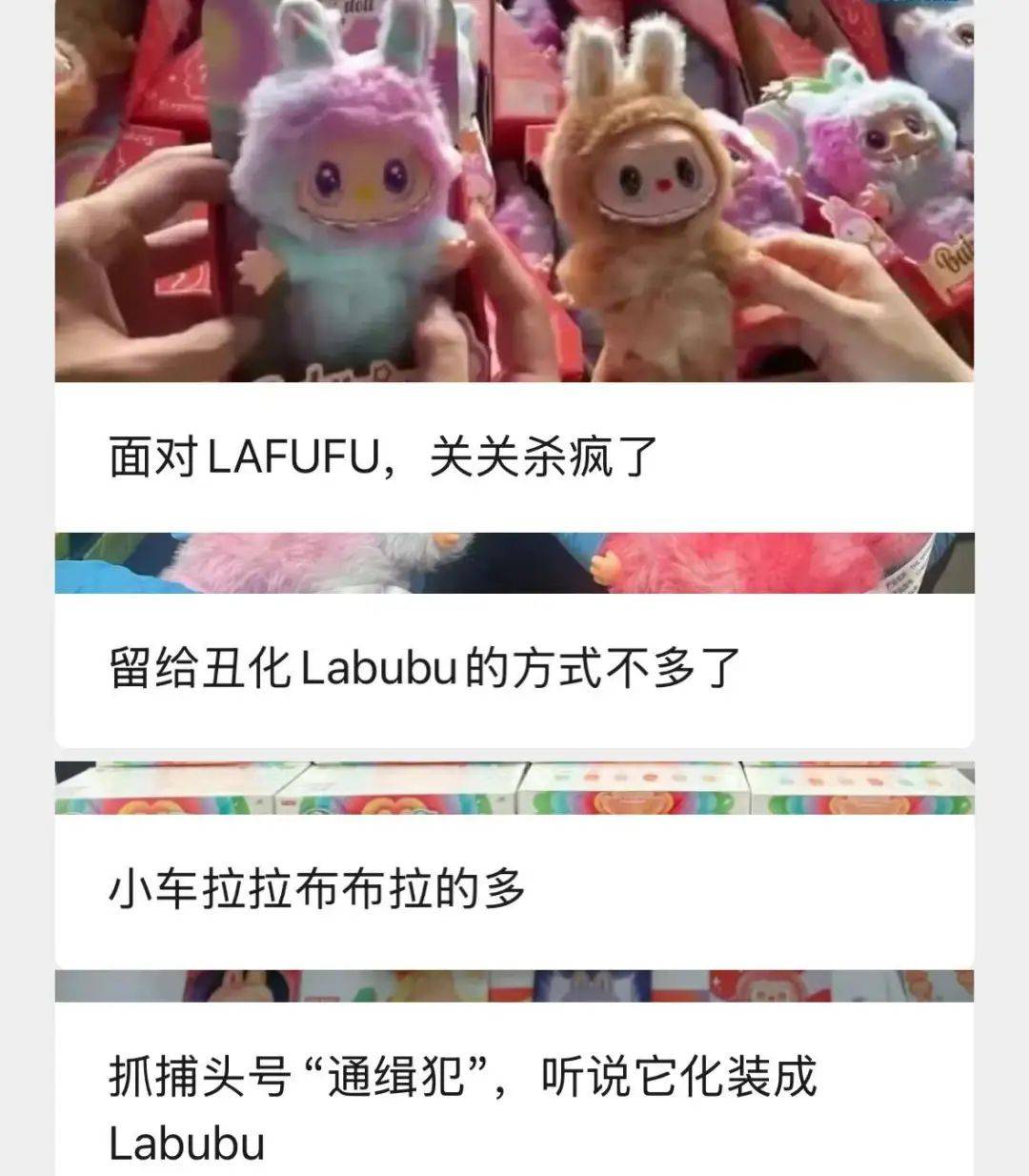
Core Viewpoint - The article discusses the rise of counterfeit "lafufu" toys, which are imitations of the popular "labubu" figures, and the ongoing efforts by customs authorities in China to combat their importation and distribution. The phenomenon has gained significant attention, leading to a cultural trend among workers who follow customs updates on the seizures of these counterfeit goods. Group 1: Customs and Enforcement - Customs authorities have intensified their focus on counterfeit "lafufu" toys, with daily updates on seizures becoming a popular topic among workers [4][11][15] - The customs department has reported large-scale confiscations, with examples including 10,000 units in Hangzhou and 30,000 in Ningbo [14] - The article highlights the role of customs as a key player in the fight against counterfeit goods, transforming it into a central figure in the "lafufu" saga [10][39] Group 2: Market Dynamics - The counterfeit "lafufu" market has seen a surge in production, with some factories adding multiple production lines to meet demand [22] - Prices for high-quality imitations can reach up to 180 yuan per unit, indicating a lucrative market for counterfeit goods [21] - The article notes that the "lafufu" phenomenon has created a unique market segment, with various forms and styles being produced and sold [24][35] Group 3: Cultural Impact - The ongoing customs operations against "lafufu" have become a source of entertainment and engagement for workers, who eagerly await updates on the latest seizures [15][17] - The customs updates have turned into a daily ritual for many, reflecting a blend of humor and interest in the absurdity of the counterfeit market [15][18] - The article mentions that even international audiences are engaging with the "lafufu" trend, showcasing its global reach [9][10] Group 4: Legal and Intellectual Property Issues - The customs actions against "lafufu" are primarily focused on intellectual property infringement rather than smuggling, as the goods do not typically involve tax evasion [39][40] - The article discusses the complexities of determining whether a counterfeit item constitutes an infringement, highlighting the legal gray areas involved [44][45] - Customs has the authority to enforce intellectual property protections, which has led to increased scrutiny of counterfeit goods at borders [40][43]

汽车视点 | 一小时大定29.8万台、2分钟锁单12.2万台,小米要做汽车界的泡泡玛特?
Xin Hua Cai Jing· 2025-06-27 03:39
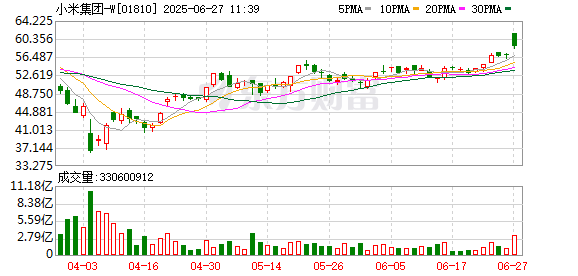
Core Viewpoint - Xiaomi's first pure electric SUV, YU7, was launched with a strong market response, achieving over 289,000 pre-orders within an hour, setting a record in the new energy vehicle sector [2][3]. Group 1: Product Launch and Market Response - The YU7 is available in three versions with prices ranging from 253,500 to 329,900 yuan [2]. - The initial pre-order figures significantly surpassed those of Xiaomi's previous model, SU7, which had 50,000 pre-orders in 27 minutes [2]. - Xiaomi's founder, Lei Jun, emphasized the competitive nature of the SUV market and the brand's ambition to face strong rivals [3]. Group 2: Production Capacity and Sales Limitations - Industry insiders suggest that Xiaomi's current production capacity is around 250,000 units, which limits the potential for further order increases [4]. - The second-phase factory is expected to increase production capacity to 300,000 units by July 2025 [4]. Group 3: Order Retention and Market Dynamics - The actual retention of orders will be clearer after a 7-day period, as customers can refund their deposits if they do not lock in their orders [5]. - Lei Jun reported that within 2 minutes of opening pre-orders, over 160,000 orders were placed, indicating a positive outlook [6]. Group 4: Competitive Landscape and Market Impact - Analysts predict that the sales ratio between YU7 and SU7 will be approximately 60:40, with YU7 expected to outperform SU7 [6]. - The YU7's entry into the 200,000 to 300,000 yuan market segment is anticipated to impact the competitive landscape, particularly against models like Tesla's Model Y [22]. Group 5: Technological Innovations and Patents - Xiaomi has invested over 102 billion yuan in R&D over the past five years, resulting in over 2,000 patents, including significant innovations in vehicle technology [8][10]. - The YU7 features advanced technologies such as the HyperVision panoramic display and a unique electric door handle design, showcasing Xiaomi's commitment to innovation [14][17]. Group 6: Emotional Value and Brand Positioning - The YU7 is perceived not just as a vehicle but as a symbol of identity and lifestyle, appealing particularly to younger consumers [20][21]. - Xiaomi's marketing strategy emphasizes emotional connection, positioning the YU7 as a vehicle for those who aspire to a modern lifestyle [20]. Group 7: Supply Chain and Regional Development - Xiaomi's supply chain strategy focuses on the Beijing-Tianjin-Hebei region, with plans to increase local partnerships to 70% [23]. - The success of the YU7 is expected to drive growth in the related supply chain, particularly in the aforementioned region [23].

泡泡玛特卖珠宝,能成吗?
3 6 Ke· 2025-06-27 01:44
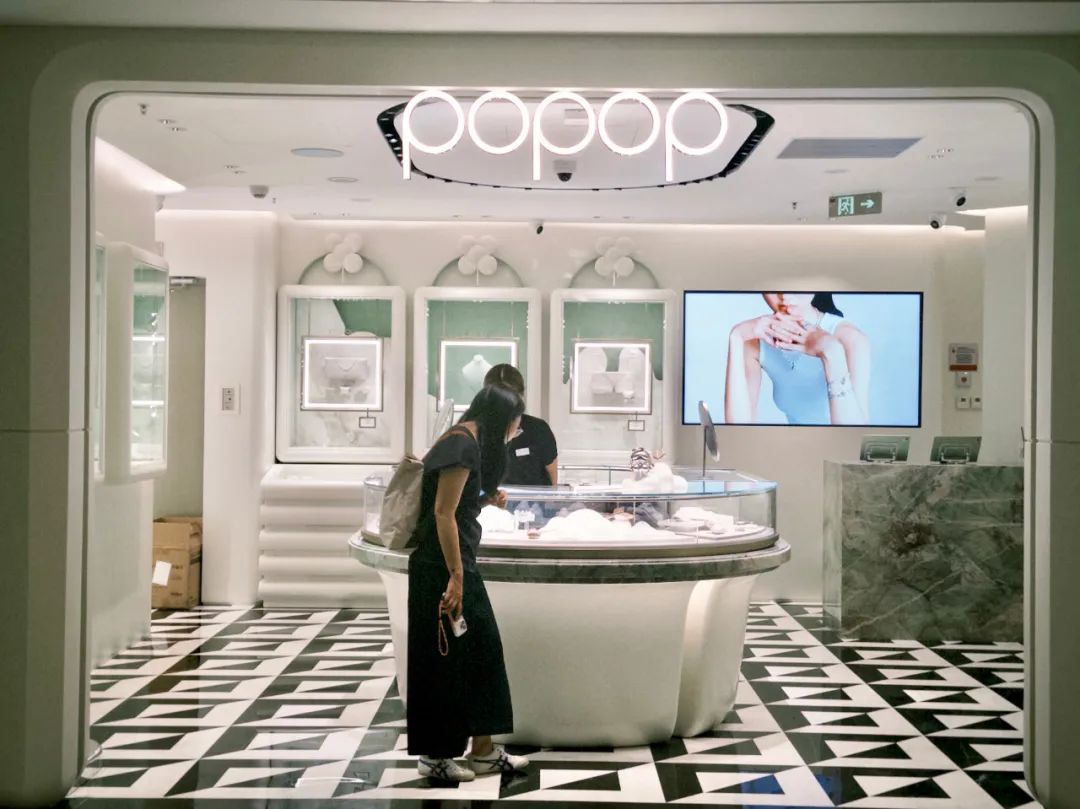
Core Insights - The article discusses the launch of POPOP, a jewelry brand under Pop Mart, and its initial performance in Beijing and Shanghai, highlighting consumer behavior and market positioning [1][3][20] Group 1: Store Performance and Consumer Behavior - POPOP's first store in Beijing experienced moderate foot traffic during its opening week, with no stock shortages reported, indicating sufficient inventory levels [1] - In Shanghai, the store saw long queues, with consumers willing to spend significant amounts on jewelry, reflecting strong initial interest [3][5] - The customer demographic primarily consists of couples and affluent individuals, with many purchasing items priced from hundreds to thousands of yuan [5][6] Group 2: Product Offering and Pricing Strategy - POPOP's jewelry is primarily made from S925 silver, featuring designs inspired by popular IPs like MOLLY and LABUBU, with prices ranging from 319 yuan to 2,699 yuan [14][17] - The brand employs a pricing strategy that includes high-end products as anchors to stimulate mid-range product sales, similar to its blind box strategy [16][20] - Despite higher pricing compared to similar products on platforms like Taobao, POPOP maintains a significant brand premium, with a markup of 300% to 500% [17] Group 3: Brand Positioning and Market Strategy - The launch of POPOP represents a strategic shift for Pop Mart from a toy company to an IP-driven brand, aiming for diversification beyond traditional product lines [20][21] - The brand's focus on emotional value and unique design over material cost aligns with consumer preferences, particularly among younger demographics [13][24] - Experts suggest that Pop Mart's approach to jewelry is distinct from traditional brands like Pandora and Swarovski, positioning itself as a cultural IP brand [21][23] Group 4: Challenges and Consumer Sentiment - Initial consumer feedback indicates concerns about product quality and supply chain management, with reports of quality issues shortly after purchase [24][25] - The brand's operational maturity is questioned, with reports of inadequate staffing and supply issues affecting customer experience [25] - Despite these challenges, consumers express a willingness to purchase for emotional value, indicating a potential for sustained interest if quality issues are addressed [24][27]
AI版泡泡玛特,能复制第二个Labubu吗?
Xin Lang Cai Jing· 2025-06-26 13:21
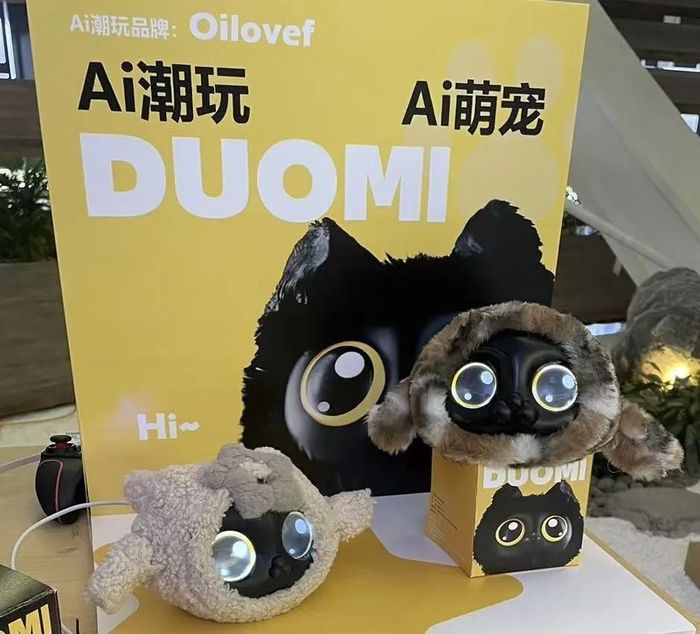
Core Insights - The collectible toy market, particularly the "潮玩" (trendy toys), is experiencing significant growth, with companies like Labubu and Pop Mart leading the charge, resulting in substantial market valuations and wealth creation for founders [1][2] - The emergence of "AI潮玩" (AI trendy toys) is seen as a potential new trend, combining the popularity of trendy toys with AI technology, attracting investments from major players in the tech industry [2][4] - Despite the excitement, many companies in the AI潮玩 space have yet to achieve successful product commercialization [3] Market Dynamics - The trendy toy market is characterized by limited releases and collaborations that create scarcity and drive demand, as seen with Pop Mart's blind box series [5][6] - AI潮玩 products are positioned as interactive companions, offering emotional engagement and voice interaction, distinguishing them from traditional trendy toys [6][8] - The AI潮玩 market is crowded, with at least 30 companies competing, but the actual differentiation in product offerings remains limited [2][9] Product Characteristics - Traditional trendy toys rely on IP and scarcity for value appreciation, while AI潮玩 integrates AI capabilities, which may undermine the collectible aspect due to rapid technological advancements [8][17] - AI潮玩 products are often marketed with a focus on their functional attributes, such as emotional interaction and AI capabilities, rather than just aesthetics [6][23] - The pricing of AI潮玩 varies significantly, influenced by the integration of software and hardware, with some products reaching high price points due to their advanced features [17][21] Marketing Strategies - AI潮玩 companies are adopting marketing strategies similar to those of traditional trendy toy brands, including pre-sales, community engagement, and limited product releases to create hype [13][15] - The focus on surrounding merchandise and subscription services for software updates is becoming a common practice to enhance profitability [11][21] - Companies are also targeting international markets early in their development to capitalize on broader opportunities, as seen with brands like Ropet and Oilovef [15][24] Consumer Behavior - Consumers of AI潮玩 tend to prioritize functionality and durability over collectibility, viewing these products as technology rather than mere toys [23][24] - The desire for companionship and novelty drives purchases, with many consumers not inclined to spend on additional features or accessories [22][23] - The competitive landscape is intensifying, with consumers comparing products based on performance and price, leading to potential price wars among similar offerings [23][24]
泡泡玛特:不止有Labubu
Hua Er Jie Jian Wen· 2025-06-26 06:39
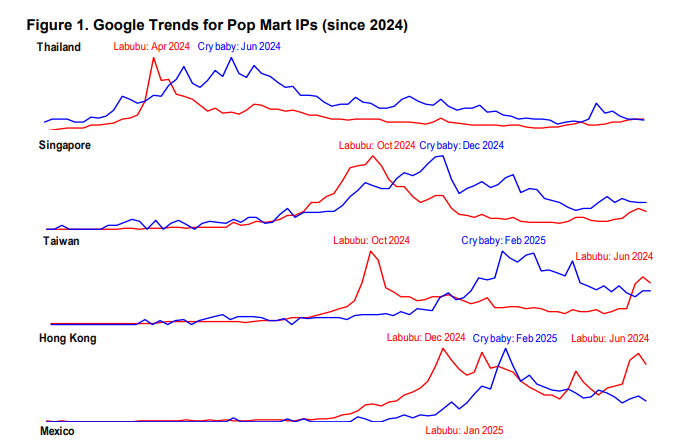
Core Viewpoint - HSBC significantly raised the target price for Pop Mart, citing the effectiveness of its multi-IP strategy and the healthy adjustment of Labubu pricing, with a target price increase from HKD 215.50 to HKD 331.50, representing a 53.8% increase and a 32% upside potential from the current stock price [1] Group 1: Financial Projections - HSBC raised the 2025 net profit forecast for Pop Mart by 24%, driven by strong performance in overseas markets and the successful launch of Labubu 3.0 [1][5] - The revenue forecast for 2025 was increased by 34% to RMB 14.325 billion, with an expected year-on-year growth of 183% [2] - The net profit forecast for 2025 is now projected to be RMB 7.856 billion, a 131% increase year-on-year, which is 23% higher than previous estimates [5] Group 2: Market Performance - Labubu 3.0 series launched in April 2025 gained unprecedented attention due to promotion by international celebrities and KOLs, leading to strong product momentum [2] - The resale prices of Labubu 3.0 have normalized, which is beneficial for maintaining the brand's health and reducing speculative hoarding [5] - The U.S. market revenue forecast was significantly raised from RMB 3.547 billion to RMB 5.509 billion, reflecting the positive outlook for overseas markets [2] Group 3: Multi-IP Strategy - The success of Pop Mart is not solely dependent on the Labubu IP, as new series releases and other IPs continue to engage consumer interest [3] - In Thailand and other Asian markets, these regions account for over 40% and 30% of overseas revenue, respectively, indicating a diverse revenue stream [3] - The Google search index for Crybaby, the company's fourth-largest IP, surged in the quarters following the peak interest in Labubu, demonstrating the sustainability of the company's IP operations [3]
泡泡玛特20250624
2025-06-24 15:30
Summary of the Conference Call for Pop Mart Company Overview - **Company**: Pop Mart - **Industry**: Toy and Collectibles Key Points and Arguments 1. **Product Release and Stock Strategy**: In early 2025, the release of first and second-generation products led to a stock price drop, but the company's IP popularity remained unaffected, with prices recovering afterward. During the 618 shopping festival, the high premium on Labubu's third-generation products prompted the company to restock to combat scalping and stabilize prices through multiple pre-sales, benefiting long-term brand development [2][4] 2. **IP Popularity and Market Trends**: Pop Mart's IP exhibits cyclicality, but the sugar gel plush category has amplified its appeal, significantly increasing popularity. Labubu's success in Southeast Asia has mirrored in the Chinese market, with a surge in North American interest noted from April 2025, indicating substantial future growth potential [2][5] 3. **Global Market Performance**: Labubu has shown strong global attributes, performing well not only in North America but also in the Middle East and South America, with notable influence in the Russian online market. The demand for Labubu in Southeast Asia has been robust since late April 2024 [2][6] 4. **Diversification of IP**: To mitigate risks associated with reliance on a single IP, Pop Mart has diversified its offerings by introducing more IPs like Gudetama, Pacha Dog, and Kuromi. In 2024, Gudetama accounted for approximately 20% of revenue, expected to remain below 40% in 2025 [2][7] 5. **Emerging IPs**: The company is actively promoting new IPs such as Crybaby, Xiao Ye, and Newcomer, with Crybaby gaining acceptance overseas and Newcomer appealing to a broad audience, including women, men, and children [3][9] 6. **BJD Product Line Expansion**: Pop Mart is exploring new categories like BJD (Ball Jointed Doll) figures, with the recent launch of Spenda generating significant social media buzz, indicating successful product innovation [10] 7. **Third-Party IP Licensing**: The company has excelled in third-party IP licensing, with products like the Nezha blind box increasing foot traffic and diversifying customer demographics. Collaborations with brands like Luckin Coffee have also been successful [11] 8. **North American Market Expansion**: As of May 2025, Pop Mart operates nearly 40 stores in North America, with a strong monthly opening rate and plans to expand further into Malaysia, Indonesia, Vietnam, Japan, South Korea, and the UK [12] 9. **Southeast Asia and Europe Marketing Strategies**: In Southeast Asia, new marketing strategies have been implemented to enhance user engagement, while localized marketing activities in Europe aim to attract customers through unique experiences [13] 10. **2025 Performance Outlook**: The company anticipates a total revenue of approximately 9 billion RMB for 2025, with a strong performance expected in the first half and potential upward revisions to forecasts [14] Additional Important Insights - The cyclical nature of IPs is acknowledged, with historical data showing stable revenue prior to the introduction of new popular products [5] - The company’s proactive approach to restocking and managing market expectations is seen as beneficial for brand health [4] - The diversification strategy is crucial in avoiding over-reliance on any single IP, as demonstrated by past industry examples [7]
泡泡玛特疑跨界家电行业,涉及复古小冰箱、电水壶等产品
news flash· 2025-06-24 14:34
Group 1 - The core point of the article is that Pop Mart may be entering the home appliance industry, as indicated by job postings for related talent on a recruitment platform [1] - Media reports suggest that a user on social media has claimed Pop Mart is hiring for positions in the home appliance sector [1] - Pop Mart has not yet responded to inquiries from Sina Technology regarding these claims [1]
中证沪港深新生代消费主题指数报1876.23点,前十大权重包含泡泡玛特等
Jin Rong Jie· 2025-06-24 11:07
Core Points - The CSI Hong Kong-Shenzhen-Stock Exchange New Generation Consumption Index (SHS New Generation Consumption) opened at 1876.23 points, showing a monthly increase of 1.87%, a quarterly decrease of 2.80%, and a year-to-date increase of 15.68% [1][2] Group 1: Index Overview - The index comprises 50 listed companies from the food and beverage, apparel, leisure, and other consumer goods and services sectors that meet new generation consumption characteristics [1] - The index is based on a reference date of December 31, 2018, with a base value of 1000.0 points [1] Group 2: Top Holdings - The top ten weighted companies in the index are Xiaomi Group-W (10.6%), Tencent Holdings (9.92%), Meituan-W (8.83%), Pop Mart (8.76%), Kuaishou-W (7.7%), Yum China (5.66%), Anta Sports (5.65%), China Duty Free Group (2.8%), GoerTek (2.7%), and Shenzhou International (2.07%) [1] Group 3: Market Composition - The market composition of the index shows that the Hong Kong Stock Exchange accounts for 74.07%, the Shenzhen Stock Exchange for 17.32%, and the Shanghai Stock Exchange for 8.61% [1] Group 4: Sector Allocation - The sector allocation of the index sample includes discretionary consumption at 43.37%, communication services at 33.55%, information technology at 16.67%, staples at 5.17%, and healthcare at 1.23% [2] Group 5: Sample Adjustment - The index samples are adjusted biannually, with adjustments occurring on the next trading day after the second Friday of June and December [2] - Weight factors are generally fixed until the next scheduled adjustment, with special circumstances allowing for temporary adjustments [2]
跨界影业!泡泡玛特成立电影工作室 《LABUBU与朋友们》动画首发
Xi Niu Cai Jing· 2025-06-24 05:32
Group 1 - The core viewpoint is that Pop Mart, under the leadership of founder Wang Ning, is expanding into the film industry by establishing a movie studio and launching an animated series titled "LABUBU and Friends" [2] - Pop Mart's initial business model was a "trendy grocery store" selling various products, and it gained significant traction after introducing the Japanese Sonny Angel blind box series in 2015, which became a key contributor to single-store sales [2] - The company is also diversifying its business by launching a physical magazine called "play/GROUND," priced at 39.9 yuan [2] Group 2 - As a leading IP toy company in China, Pop Mart's strategy includes developing online film business and offline theme parks, which are seen as logical growth paths [3] - The film industry presents significant profit potential, as evidenced by the success of "Nezha 2," which grossed over 15 billion yuan, and films can enhance IP emotional resonance and attract a broader audience [3] - The opening of the first Pop Mart theme park on September 26, 2023, aims to innovate and extend the IP image while creating new revenue channels and enriching the cultural value of the IP [3] - Despite the trend of integrating film and derivative products, the domestic market has not matured, and Pop Mart's approach of moving from derivatives to film development could contribute to a more competitive commercial ecosystem [3]