POP MART(PMRTY)

Search documents
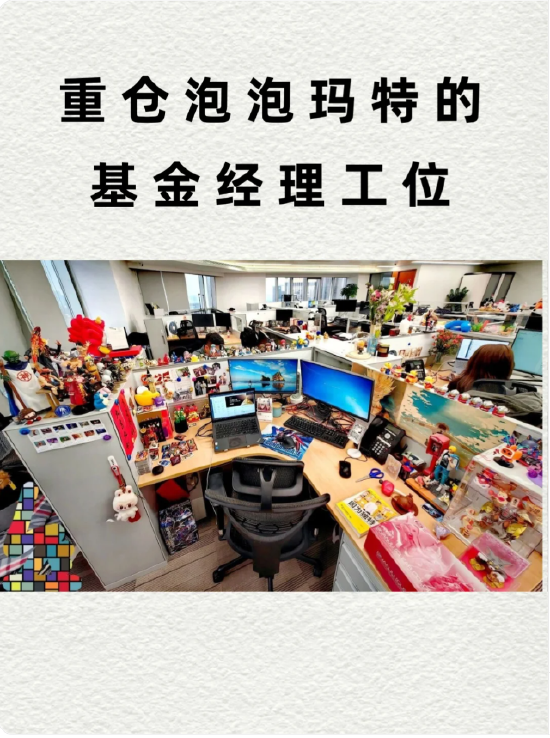
鹏华基金重仓泡泡玛特的基金经理工位引热议: 潮玩投资OR资本套现?
Xin Lang Ji Jin· 2025-06-11 03:53
Core Viewpoint - The investment decision by Penghua Fund manager Xie Tianyuan to heavily invest in Pop Mart has sparked discussions, with mixed opinions on the necessity and potential of such an investment in a non-essential product [1][7]. Group 1: Manager Background and Investment Strategy - Xie Tianyuan, born in 1995 in Beijing, has a strong background in business, holding both undergraduate and master's degrees in the field. He has a deep interest in anime, video games, and IP culture, which reflects in his investment choices [1][5]. - The fund managed by Xie, "First Class," has a significant position in Pop Mart, which is its largest holding. His investment philosophy focuses on "long-term growth potential + short-term market conditions," targeting stocks with substantial growth even in a weak consumption environment [1][12]. Group 2: Performance Metrics - Xie Tianyuan's Penghua Optimal Return Fund has achieved a return rate of 42.53% since his tenure began, with an asset size of 0.51 billion yuan. This performance significantly outpaces the benchmark index [9][10]. - The fund's strategy includes identifying new consumption companies with low penetration rates and potential for market expansion, particularly in the trendy toy sector [12]. Group 3: Market Reactions and Opinions - The investment in Pop Mart has led to varied reactions from the public, with some questioning the rationale behind investing in a non-essential product, while others support the decision, emphasizing the importance of understanding the trendy toy market [7][8]. - Xie has articulated three key insights regarding new consumer investments, emphasizing that emotional value is not exclusive to Generation Z, the unpredictable nature of new trends, and the importance of sustained demand over perceived authenticity [6].


两种IP模型揭秘:形象IP泡泡玛特VS故事IP迪士尼漫威
3 6 Ke· 2025-06-11 00:43
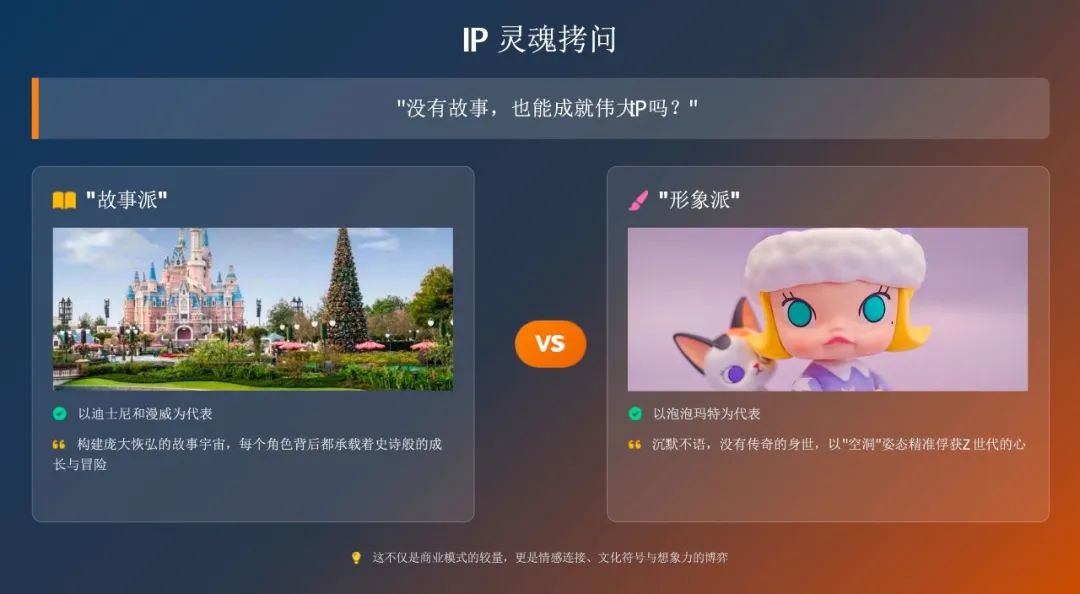
Core Perspective - The article explores the dichotomy between "story-driven" IPs, exemplified by Disney, and "image-driven" IPs, represented by Pop Mart, highlighting their different approaches to emotional connection and consumer engagement [1][5][30] Group 1: Story-driven IPs - Story-driven IPs, like those from Disney and Marvel, create expansive narrative universes over decades, fostering deep emotional connections with characters and plots, which enhances consumer loyalty and engagement [3][6][8] - Disney's "Frozen" serves as a prime example, where the emotional arcs of characters like Elsa and Anna resonate deeply with audiences, transforming consumer purchases into support for the characters' journeys [8][20] - The business model for story-driven IPs involves a long-term cycle of content creation, merchandise, and immersive experiences, requiring significant investment and time to build a robust narrative ecosystem [6][20][23] Group 2: Image-driven IPs - Image-driven IPs, such as Pop Mart, focus on visual appeal and emotional projection rather than complex narratives, allowing consumers to project their feelings onto characters like Molly and LABUBU [10][12][13] - The success of image-driven IPs relies on operational agility, frequent design updates, and social media engagement, positioning them as trendy cultural symbols rather than traditional storytelling vehicles [12][13][25] - Pop Mart's evolution from reliance on a single IP to a diverse IP matrix demonstrates its operational capabilities, with projections indicating significant growth in the collectible toy market [15][16] Group 3: Comparative Analysis - A comparative analysis reveals that story-driven IPs offer long-term emotional engagement and high-value derivatives, while image-driven IPs provide quick market responses and social currency [18][19][28] - Story-driven IPs tend to have a longer lifecycle and deeper emotional barriers, while image-driven IPs face challenges of shallow emotional connections and shorter lifespans [20][28] - Both types of IPs are converging towards a common goal of emotional connection, with story-driven IPs adopting visual elements and image-driven IPs incorporating narrative aspects to enhance consumer engagement [30][32]

没有LABUBU的52TOYS,距离泡泡玛特还有多远?
Hu Xiu· 2025-06-10 23:58
Core Viewpoint - The article discusses the competitive landscape of the collectible toy industry, focusing on the contrasting positions of Pop Mart and 52TOYS, highlighting the challenges 52TOYS faces in replicating Pop Mart's success in terms of brand recognition, sales channels, and profitability [1][12][18]. Group 1: Market Position and Performance - Pop Mart has achieved significant market success with a market capitalization close to HKD 350 billion, driven by popular IPs like LABUBU [1]. - 52TOYS has submitted its prospectus for an IPO in Hong Kong and has secured new financing from notable investors, indicating strong market interest [2][3]. - In terms of GMV, 52TOYS ranks third among Chinese IP toy companies, with a market share of only 1.2%, compared to Pop Mart's 11.5% [3][4]. Group 2: IP Strategy and Revenue Structure - 52TOYS employs a dual strategy of developing its own IPs while also relying heavily on licensed IPs, with 64.5% of its revenue coming from licensed IPs in 2024 [4][14]. - The company has 35 proprietary IPs and 80 licensed IPs, but its reliance on licensed IPs has led to a decline in the contribution of proprietary IPs to revenue [4][5]. - The absence of blockbuster proprietary IPs has resulted in lower sales and market differentiation, as seen with the performance of its self-developed IPs compared to licensed ones like Crayon Shin-chan [5][14]. Group 3: Sales Channels and Distribution - 52TOYS has a limited number of direct retail stores, with only 8 locations across five cities, contrasting sharply with Pop Mart's 401 stores [9][10]. - The sales structure of 52TOYS is heavily reliant on distributors, with over 60% of sales coming from this channel, which limits direct consumer engagement [10][11]. - The company's slow expansion in direct retail stores hampers its ability to create a strong brand presence and customer loyalty compared to competitors [10][11]. Group 4: Financial Performance and Profitability - 52TOYS reported revenues of CNY 630 million in 2024, significantly lower than Pop Mart's CNY 13.038 billion, highlighting a stark revenue disparity [12][18]. - The gross margin for 52TOYS has fluctuated between 28.9% and 40.5%, while Pop Mart maintains a gross margin of 66.8%, indicating a significant profitability gap [13][14]. - The high cost structure of 52TOYS, driven by reliance on licensed IPs and a diverse product range, further erodes its profitability [14][15]. Group 5: Challenges and Industry Insights - The article emphasizes that the collectible toy industry has high barriers to entry, requiring a combination of proprietary blockbuster IPs, customer loyalty, and effective distribution channels for sustained growth [17]. - The challenges faced by 52TOYS in replicating Pop Mart's success are not just about product offerings but also involve fundamental differences in brand strategy and market approach [18].
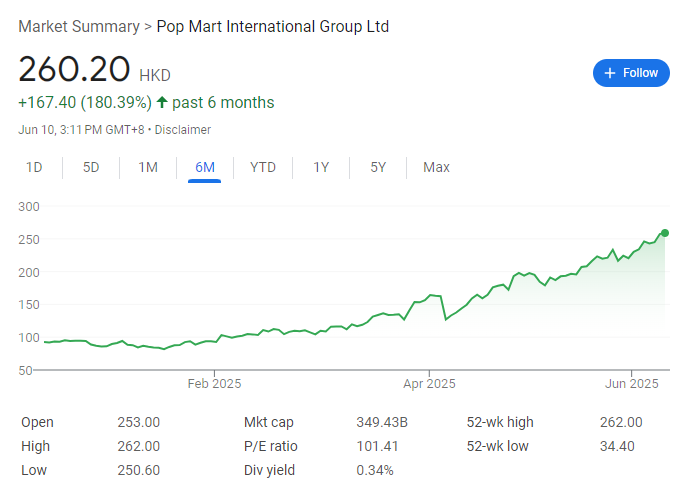
泡泡玛特股价一年涨超11倍
Shen Zhen Shang Bao· 2025-06-10 22:33
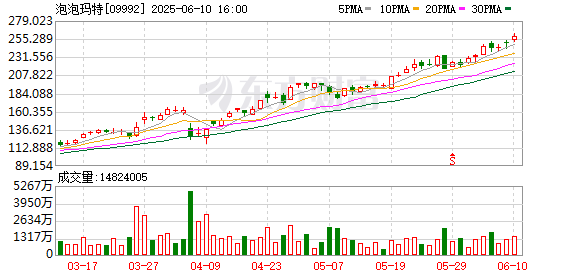
Group 1 - The core point of the article highlights the explosive popularity of Labubu, a brand under Pop Mart, which has significantly boosted the company's stock price, increasing over 11 times since the beginning of 2024 [2] - Pop Mart's latest financial report shows a revenue of 13.04 billion yuan for 2024, representing a year-on-year growth of 106.9%, and an adjusted net profit of 3.4 billion yuan, up 185.9% year-on-year [2] - The overseas and Hong Kong-Macau business segment generated revenue of 5.07 billion yuan, marking a staggering growth of 375.2% [2] Group 2 - The article mentions that Labubu has become a social media phenomenon and that the release of its 3.0 products has led to long queues at global stores [2] - Banks in China have started offering Labubu figures as incentives for deposits, indicating a shift in strategies to attract younger customers [2] - Experts caution that while Pop Mart has shown significant growth, many new consumer stocks have become overheated, with some trading at price-to-earnings ratios around 100, suggesting potential risks for investors [3]
泡泡玛特王宁成河南新首富,坐拥203亿美元,透露什么财富密码?
Sou Hu Cai Jing· 2025-06-10 16:46
Group 1 - Wang Ning, the founder of Pop Mart, has become the new richest person in Henan, surpassing Qin Yinglin of Muyuan Foods, with a net worth of $20.3 billion compared to Qin's $16 billion [1] - The rise of Pop Mart indicates a shift in wealth from traditional industries, such as pig farming, to new retail sectors focused on trendy consumer products like collectible toys and blind boxes [1][3] - The changing consumption patterns among younger generations suggest that traditional necessities are no longer the primary focus of spending, with younger consumers prioritizing fun and novelty in their purchases [3][5] Group 2 - The wealth distribution in society is heavily skewed towards older generations, which has led to stagnation in overall consumer spending, as they tend to focus on traditional consumption categories [5] - The future of retail and consumer spending is expected to be driven by interesting and novel products that appeal to younger consumers, rather than traditional assets like real estate or automobiles [5][6] - Investing in innovative and engaging brands within the new retail concept is seen as a key opportunity for future wealth creation, as exemplified by Wang Ning's success with Pop Mart [8]

中华交易服务港股通精选100指数下跌0.22%,前十大权重包含泡泡玛特等
Jin Rong Jie· 2025-06-10 13:58
Core Points - The Chuanghua Trading Service Hong Kong Stock Connect Selected 100 Index (CES100) experienced a decline of 0.22%, closing at 5235.57 points with a trading volume of 80.919 billion [1] - Over the past month, the CES100 index has increased by 5.80%, while it has decreased by 0.66% over the last three months, and has risen by 23.65% year-to-date [1] Index Composition - The top ten holdings of the CES100 index include Alibaba-W (11.44%), HSBC Holdings (10.55%), Tencent Holdings (10.26%), Xiaomi Group-W (7.25%), Meituan-W (6.81%), AIA Group (5.86%), Hong Kong Exchanges and Clearing (4.08%), Standard Chartered Group (2.34%), Prudential (1.93%), and Pop Mart (1.62%) [2] - The index is fully composed of stocks listed on the Hong Kong Stock Exchange, with a sector breakdown showing Consumer Discretionary at 29.47%, Financials at 28.41%, Communication Services at 13.88%, Information Technology at 9.15%, Real Estate at 4.62%, Healthcare at 4.04%, Utilities at 4.01%, Consumer Staples at 3.12%, Industrials at 2.82%, and Materials at 0.48% [2] Fund Tracking - Public funds tracking the CES100 index include Huaan CES Hong Kong Stock Connect Selected 100 ETF Link A, Huaan CES Hong Kong Stock Connect Selected 100 ETF Link C, and Huaan CES Hong Kong Stock Connect Selected 100 ETF [2]
“新首富”泡泡玛特王宁:在下行周期里卖 “情绪” 的人
3 6 Ke· 2025-06-10 10:55
Core Insights - Wang Ning's success represents an emotional victory in the harsh business world, as he became the richest person in Henan with a net worth of $20.3 billion, surpassing traditional agricultural giants [1] - As of June 9, Wang's wealth increased to $20.8 billion, ranking him 10th in China and 101st globally, with Bubble Mart's stock price rising 174% this year and over 11 times since the beginning of 2024 [2] Company Development - Wang Ning's entrepreneurial journey began in his childhood at his parents' grocery store, where he developed a keen sense of human behavior and commerce [3] - After initial struggles with Bubble Mart's first store, a pivotal investment of 2 million yuan from angel investor Mai Gang in 2012 provided crucial support [4] - The launch of the Sonny Angel blind box in 2015 marked a significant turning point, as it tapped into the emotional needs of young consumers for collectible toys [6] Business Model Transformation - The introduction of the Molly blind box in 2016 transformed Bubble Mart from a distributor to an IP emotion manufacturer, emphasizing the importance of IP ecosystems over mere product sales [8][9] - Bubble Mart's strategy shifted to focus on building a strong IP matrix, with significant revenue contributions from top IPs like Labubu, which generated 3.04 billion yuan in revenue, reflecting a 726.6% growth [10] User-Centric Strategy - Bubble Mart's user-centric approach has resulted in a customer lifetime value (LTV) 4.2 times higher than the industry average, with 92.7% of sales coming from members and a 49.4% member repurchase rate [14] - The company has adopted a refined operational strategy, focusing on customer experience and data analytics to optimize sales and service [15] Direct-to-Consumer (DTC) Model - The DTC model has significantly improved profit margins by eliminating intermediaries, allowing for more direct and efficient collaboration between headquarters and overseas markets [16] - Successful marketing campaigns, such as the Labubu airport pop-up in Thailand, demonstrate the effectiveness of the DTC strategy in engaging local consumers [16] Conclusion - Wang Ning's journey from a small-town entrepreneur to the head of a billion-dollar company illustrates a fundamental shift in consumer behavior, where emotional resonance has become a key driver of purchasing decisions [17]

全球疯抢引爆A股!揭秘泡泡玛特背后的“隐形冠军”供应链
Sou Hu Cai Jing· 2025-06-10 09:04
Core Insights - The rise of Pop Mart's LABUBU 3.0 series has ignited global consumer enthusiasm, showcasing the success of the IP economy and the emergence of new consumption sectors despite negative CPI data [1][12] - The growth in niche markets like trendy toys and jewelry is outpacing the overall market with double-digit growth rates [1] Company Summaries - **Yutong Technology (002831.SZ)**: A leading packaging company providing unique 3D embossed and UV printing techniques for Pop Mart's products, with a projected 85% increase in revenue from trendy toy packaging in 2024, accounting for 12% of total revenue [5] - **Jieput (688025.SH)**: Specializes in laser marking technology with 0.1-micron precision, leading to a 150% increase in equipment orders in 2024, contributing to the digitalization of production standards [6] - **Aofei Entertainment (002292.SZ)**: Revitalizing classic IPs by licensing characters to Pop Mart, generating over 700 million yuan in revenue in 2024 with a 42% gross margin [6] - **Xinghui Entertainment (300043.SZ)**: A core manufacturer with a production capacity of 1 million units per month, expecting a significant revenue boost from the LABUBU plush series [8] - **Huali Technology (301011.SZ)**: Provides smart retail solutions, with a projected 200% increase in vending machine shipments in 2024, supporting Pop Mart's overseas expansion [8] - **Qingmu Co., Ltd. (301110.SZ)**: As the exclusive operator of Pop Mart's Tmall flagship store, it aims to double its GMV through live e-commerce by 2025, enhancing profitability through improved operational fees [8] Industry Trends - The investment landscape in the trendy toy industry focuses on companies with high barriers to entry, strong performance elasticity, and global collaboration potential [10] - The essence of the trendy toy economy lies in the Z generation's willingness to pay for emotional value, indicating a shift towards consumption upgrades [12]
德银:泡泡玛特全球市场、全品类“全面开花”,股价有望突破300港元
Hua Er Jie Jian Wen· 2025-06-10 08:10
Core Viewpoint - Bubble Mart is experiencing explosive growth globally, driven by the popularity of the Labubu toy, leading to a 27% increase in stock price over the past 40 days [1][3]. Group 1: Market Expansion - Bubble Mart's cross-cultural appeal indicates that its total addressable market (TAM) is significantly larger than previously expected, especially in the European and American markets where penetration is just beginning [4][5]. - The company has accelerated its overseas expansion, adding 31 new stores this year, bringing the total to 161, with North America and Europe accounting for 35% of this total [5][9]. Group 2: Product Line Development - The recent launch of the "Labubu 3.0" series has sold out in both domestic and international markets, indicating strong demand [7]. - The upcoming "Wacky Mart" series, set to launch on June 13, will include a diverse range of products, with prices 30%-185% higher than standard figures, which is expected to enhance gross margins [7]. Group 3: Financial Projections - Deutsche Bank has raised its revenue forecast for Bubble Mart, predicting a 122% year-on-year increase to 28.89 billion RMB in 2025, with overseas revenue expected to rise from 39% in 2024 to 55% in 2025 [9][10]. - The net profit forecast for 2025 is set at 7.91 billion RMB, with a net profit margin of 27.4%, up from 24.0% in 2024 [9][10]. - The report also indicates a 20-25% increase in EPS expectations for 2025-2027, reflecting the growing contribution from overseas markets [10][12]. Group 4: Analyst Ratings - Deutsche Bank has raised its target price for Bubble Mart from 200 HKD to 303 HKD, maintaining a "buy" rating, with expectations significantly above market consensus for 2025 revenue and net profit [12].
ESG解读|泡泡玛特创始人千亿身家登顶河南首富,Labubu爆火滋生黄牛,品控遭消费者投诉
Sou Hu Cai Jing· 2025-06-10 07:29
Core Insights - The article highlights the significant wealth increase of Wang Ning, the founder of Pop Mart, who has become the new richest person in Henan with a net worth of $20.3 billion, largely due to the success of the Labubu IP and the soaring stock price of the company [4][5][7]. Financial Performance - The Labubu IP series, part of THE MONSTERS, achieved a revenue of 3.04 billion yuan in 2024, marking a staggering year-on-year growth of 726.6%, contributing to 23.3% of Pop Mart's total revenue [5]. - Pop Mart's stock price has surged over 11 times since the beginning of 2024, with a 174% increase projected for 2025 [5]. Product Quality Issues - Despite claims of strict quality control, Pop Mart faces significant consumer complaints regarding product quality, with 219 complaints related to quality issues such as defects and slow exchange processes reported on the Black Cat complaint platform [8][10]. - The LABUBU 3.0 series has been criticized for quality defects, including misalignment and paint issues, leading some consumers to believe that the quality is inferior to unofficial products [10][12]. Supply Chain Management Challenges - Pop Mart has established a rigorous supplier admission and evaluation mechanism to ensure supply chain reliability, yet discrepancies in product quality have been reported due to production variances across different factories [15][17]. - The company is also facing challenges with scalpers, who are able to acquire products more easily than regular consumers, indicating a lack of effective supply chain information coordination [14][17].