Tesla(TSLA)

Search documents
花旗集团四季度持仓曝光:英伟达为第一大重仓股 大幅减持美国银行
美股IPO· 2026-02-15 00:08
Core Insights - Citigroup's investment portfolio remains primarily focused on U.S. stocks and ETFs, with significant positions in NVIDIA, SPDR S&P 500 ETF, and Microsoft [3][4]. Holdings Summary - The top five holdings in Citigroup's portfolio as of Q4 2025 are: - NVIDIA (NVDA): 3.04% - SPDR S&P 500 ETF (SPY): 2.56% - Microsoft (MSFT): 2.53% - iShares Russell 2000 Put Options (IWM): 2.05% - Tesla Put Options (TSLA): 2.02% [3][4]. New Positions - Citigroup established new positions in several debt and convertible securities, including Evercore (EVRG), Snowflake (SNOW), Nutanix (NTNX), Align Technology (ALGN), Mara Holdings (MARA), and IonQ (IONQ), with individual positions generally ranging from 5 million to 13 million shares [5]. - Notably, Citigroup also initiated a position in TotalEnergies (TTE) with approximately 6.86 million shares valued at about $448 million, representing 0.20% of the portfolio [5]. Liquidations - Citigroup completely liquidated positions in several small-cap and illiquid stocks, primarily in healthcare, consumer discretionary, finance, and industrial sectors, including MHUAF, REVB, KEQU, BYFC, CSWC, RDI, and RAIN, reducing these holdings to zero [6][7]. Increased Holdings - Citigroup significantly increased its holdings in certain ETFs and debt instruments, with the Consumer Staples ETF (XLP) seeing the largest increase, growing from 0.18% to 0.78% of the portfolio [8]. - Additional notable increases were observed in debt securities related to Akamai (AKAM), JD.com (JD), CMS Energy (CMS), JetBlue Airways (JBLU), Global Payments (GPN), Southwest Airlines (LUV), and Lantheus (LNTH), with increases generally between 7 million and 12 million shares [8][9]. Decreased Holdings - Citigroup made substantial reductions in several financial stocks, including a 54.86% decrease in Bank of America (BAC), reducing its holdings from 1.23% to 0.59% of the portfolio [10][11]. - The firm also reduced positions in various options, including a 42.31% decrease in iShares iBoxx High Yield Bond ETF Put Options (HYG) and a significant reduction in industrial sector ETF Put Options (XLI) by over 90% [10][11].





Prediction: Tesla's Optimus Robot Will Transform the Stock by the End of 2026
The Motley Fool· 2026-02-15 00:05
Group 1 - Tesla is experiencing a significant transformation, moving from an electric vehicle company to a broader technology entity, with a focus on the development of Optimus robots [2][10] - The company plans to discontinue its Model S and Model X lines to allocate resources for Optimus production, as over 97% of its Q4 2022 deliveries were from Model 3 and Model Y [5][8] - Tesla's stock has increased by 20% over the past year, driven by investor anticipation of future developments rather than current performance [1][10] Group 2 - The Optimus robots are intended to perform various tasks, including household chores and caregiving, with the potential to "eliminate poverty" as envisioned by CEO Elon Musk [4] - Tesla is heavily investing in its full self-driving (FSD) software, which, if approved, could enable the company to offer robotaxi services [8] - Analysts predict that Tesla's market cap could reach $2 trillion by the end of the year and $3 trillion by the end of 2027, reflecting a potential 25% increase in stock price this year and an 87% increase by 2027 [9]
美载人龙飞船与国际空间站完成对接
Jin Rong Jie· 2026-02-15 00:00
美东时间14日15时15分(北京时间15日4时15分)左右,搭载4名宇航员的美国太空探索技术公司"龙"飞 船与国际空间站完成自动对接。"龙"飞船于美东时间13日由"猎鹰9"火箭从佛罗里达州卡纳维拉尔角太 空军基地发射升空。这是"龙"飞船第12次为国际空间站运送轮换宇航员。据美航空航天局介绍,4名宇 航员此次太空任务时长约8个月,其间将开展多项科研实验,为未来的月球和火星探索任务做准备,例 如研究植物与固氮细菌的相互作用,以提升太空环境下的食物生产能力等。 (新华社) ...
Ford and GM Join Tesla in the Energy Storage Race
Yahoo Finance· 2026-02-14 22:00
Group 1: Industry Trends - Ford and General Motors (GM) are entering the energy storage market, following Tesla's lead, aiming to reduce EV manufacturing costs and expand their portfolios [1] - The U.S. EV market is experiencing slower growth due to reduced regulatory support, prompting companies to lower EV production quotas and explore energy storage development [2] - The global battery energy storage system market is projected to reach $14.5 billion by 2027, growing at a CAGR of 25.2% from 2021 to 2027, indicating a strong demand for battery storage solutions [3] Group 2: Tesla's Market Position - Tesla has invested significantly in energy storage, with over three gigawatt-hours (GWh) of deployments in 2020, primarily through its Megapack product [4] - Tesla Energy's deployed capacity grew by 84% year-on-year, reaching 43.5 GWh, with revenues from energy storage and generation at $3.41 billion against operational costs of $2.32 billion [5] Group 3: Company Initiatives - Ford plans to convert its Kentucky battery production plant into an energy storage battery manufacturing facility, investing around $10 billion and an additional $2 billion for expansion [6] - Ford will also utilize part of its Michigan factory for residential storage cell production alongside electric truck battery manufacturing [6]
Elon Musk Warns Tesla's $25K Cybercab Will Be 'Agonizingly Slow' At First — Even As He Targets 2M Robotaxis A Year
Yahoo Finance· 2026-02-14 19:01
Core Insights - Tesla is set to begin production of the Cybercab robotaxi in April, aiming for long-term production of 2 million units annually, while also working on the Optimus humanoid robot [2][3] - The production ramp-up for both Cybercab and Optimus is expected to be slow due to the need to manufacture much of the supply chain from scratch [4] - Tesla's recent earnings report indicated a 46% decline in net income year-over-year, marking the smallest profit since the COVID-19 pandemic, as the company shifts focus towards AI, autonomy, and robotics [5] Production Plans - The Cybercab is designed as a two-seat vehicle without a steering wheel or pedals, with an expected cost of around $25,000 [2] - Tesla plans to wind down production of Model S and Model X in the next quarter to repurpose the Fremont factory for Optimus robot manufacturing [6] - The company has initiated robotaxi rides in Austin without safety monitors, advancing its autonomous testing efforts [6] Financial Developments - Tesla anticipates capital expenditures exceeding $20 billion this year, driven by initiatives in AI and expanded manufacturing [5] - The company launched an autonomous ride-hailing service in Austin in June, currently operating a limited number of Model Y vehicles as part of ongoing testing [3]
任泽平带你看前沿科技:2026研学计划
泽平宏观· 2026-02-14 16:05
以下文章来源于泽平宏观商学 ,作者泽平宏观商学 泽平宏观商学 . 前沿科技企业实战研学 读万卷书行万里路 2025 年 12 月 用心打造最有品质的实战研学。读万卷书,行万里路。把教室搬到世界上最优秀的企业, 请最优秀的企业家和科学家讲课。顺势而为,把握机遇。正心正念,坚持做长期正确的 事! 我们期待与更多的企业家朋友们携手同行,共赴 2026 实战研学之旅! 泽 ZEP 平 INGM 宏 ACR 观 O RE 商 SEAR 学 CH 1-6月日程安排 · 谷歌、罗宾汉、playground 斯坦福大学、伯克利大学 3月27日-28日 苏州 追觅科技、魔法原子、灵猴机器人 闭门投研会-2026 Al 的中国力量(一) 3月29日 上海 长三角校友会 4月20日-21日 香港 2026 香港 Web3 嘉年华 复星财富、HashKey、港交所 5月22日-23日 1151 11:47:50 深圳 华为、新凯来、江波龙、莫界科技 闭门投研会—2026 Al 的中国力量(二) 6月26日-27日 2月27日 北京 国内头部智驾科技企业 人形机器人 年研学安 型成 11月4日-11日 洛杉矶、拉斯维加斯、旧金山 CE ...



车企“比惨大会”召开!全是特朗普惹的祸?
电动车公社· 2026-02-14 16:05
Core Insights - The global automotive landscape is undergoing significant changes due to the rise of new energy vehicles, with Chinese automakers emerging as top competitors while traditional giants face strategic transformation challenges [1][2]. Group 1: Tesla - Tesla's 2025 financial report shows total revenue of $94.827 billion, a 3% year-over-year decline, marking the first revenue drop in its history [7]. - The company delivered 1.636 million vehicles in 2025, an 8.6% decrease from 2024, leading to a 10% drop in automotive revenue, which constitutes over 70% of total income [9]. - Despite record revenue from energy generation and storage, Tesla's overall revenue decline remains unmitigated [10]. - R&D investment surged by 41% to $6.411 billion, focusing on autonomous driving and humanoid robots, indicating a shift in strategic priorities [14]. Group 2: General Motors - General Motors reported 2025 revenue of $185 billion, down 1.3%, with net profit falling 55.1% to $2.697 billion due to a $7.9 billion charge for strategic restructuring [17][19]. - The company maintains strong cash flow of $10.6 billion despite the profit drop, attributed to one-time restructuring costs and market adjustments [20]. - GM's outlook for 2026 is optimistic, expecting net profit between $10.3 billion and $11.7 billion, supported by a solid market position in the U.S. and new product launches in China [24]. Group 3: Ford - Ford's 2025 revenue reached $187.3 billion, a 1% increase, but it reported a net loss of $8.2 billion, primarily due to a $19.5 billion charge related to electric vehicle restructuring [26][30]. - The company faces challenges similar to GM, with traditional vehicles performing well while electric vehicle strategies require adjustment [32]. Group 4: Hyundai - Hyundai's 2025 revenue was 186.3 trillion KRW (approximately 888.7 billion RMB), a 6.3% increase, but operating profit fell 19.5% to 11.47 trillion KRW [34]. - The decline in profit is largely due to increased tariffs on exports to the U.S., despite a reduction in tariffs effective November 2025 [38]. - The company is also navigating the transition to electric vehicles, which requires adjustments to its product lineup [39]. Group 5: Volvo - Volvo's 2025 revenue was 357.3 billion SEK (approximately 278.8 billion RMB), down 11%, with operating profit plummeting 99% [42]. - The decline is attributed to tariffs, weak demand, and price pressures, prompting a cost-cutting plan involving layoffs [45]. - Despite challenges, Volvo's electric vehicle offerings are performing well, particularly in the Chinese market [48]. Group 6: Great Wall Motors - Great Wall Motors reported 2025 revenue of 222.79 billion RMB, a 10.19% increase, but net profit fell 21.71% to 9.912 billion RMB [52]. - The company achieved record sales of 1.3237 million vehicles, indicating strong growth despite profit declines due to increased investments in new technologies and marketing [54]. - The focus on electric vehicle development, particularly through its premium brand WEY, is expected to enhance growth potential [56]. Group 7: GAC Group - GAC Group's 2025 sales fell 14.06% to 1.72 million vehicles, with a projected loss of 8-9 billion RMB [58]. - The decline is linked to poor performance in traditional fuel vehicles and slower growth in its electric vehicle segment [59]. - The company is pursuing deep collaborations with local suppliers to accelerate its electrification strategy [60]. Group 8: Toyota - Toyota's revenue for the first three quarters of the 2026 fiscal year was 38.09 trillion JPY (approximately 1.72 trillion RMB), a 6.8% increase, but net profit dropped 26.1% to 3.03 trillion JPY [63]. - The profit decline is primarily due to the impact of U.S. tariff policies, despite a 10.5% profit increase in the Chinese market [66][68]. - Toyota is implementing a company-wide plan to reduce its breakeven point and improve operational efficiency [71].




Tesla’s (TSLA) ‘Investment Year’ Strategy Is Turning Heads on Wall Street
Yahoo Finance· 2026-02-14 14:22
Core Viewpoint - Tesla, Inc. is being recognized as a significant player in the AI sector, with a focus on long-term value tied to its evolution into a physical AI and platform-based company [1][5]. Group 1: Investment Strategy - Benchmark has identified 2026 as a pivotal investment year for Tesla, emphasizing the company's strategic shift towards reinvestment and platform development rather than immediate earnings optimization [2][3]. - Analyst Mickey Legg has reiterated a Buy rating on Tesla's stock with a price target of $475.00, reflecting confidence in the company's future growth [1][5]. Group 2: Financial Performance - Despite undergoing a strategic transition, Tesla's Q4 results demonstrated resilience in margins, growth in energy sectors, and strong cash generation [2]. - The outlook for 2026 suggests that increased spending will occur across areas such as autonomy, AI, robotics, and energy infrastructure, which could drive future growth [3]. Group 3: Market Position - Tesla is positioned as an automotive and clean energy company that utilizes advanced AI in its autonomous driving technology and robotics initiatives, highlighting its innovative edge in the market [5].
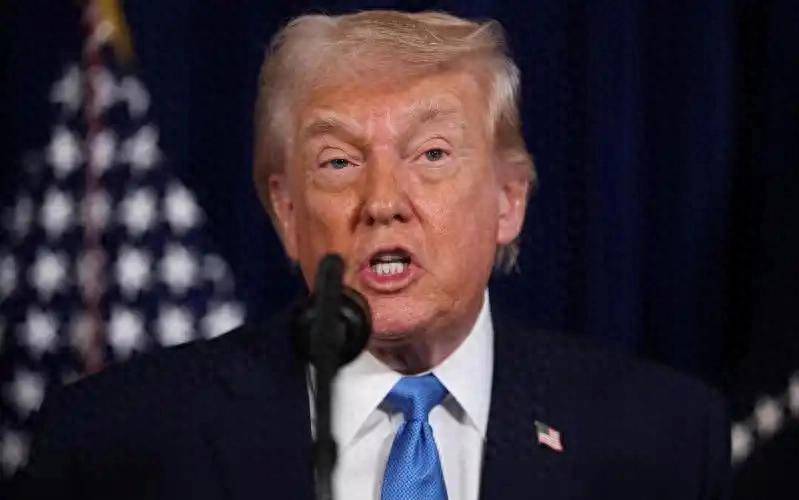
特朗普对华下黑手!160%关税砸向中国,美国这次制裁,损失惨重
Sou Hu Cai Jing· 2026-02-14 14:19
Group 1 - The article discusses the impact of Trump's imposition of tariffs exceeding 160% on Chinese graphite products, which was intended to pressure China but ultimately harmed U.S. industries, particularly Tesla [1][9][22] - The U.S. market experienced a significant downturn, with the Dow Jones dropping 669 points and the Nasdaq falling by 2.03%, attributed to fears surrounding the AI bubble and ambiguous signals from the Federal Reserve [3][24] - The tariffs imposed by the U.S. Department of Commerce resulted in anti-dumping duties ranging from 93.5% to 102.72%, along with additional countervailing duties, leading to a total tax rate that far exceeded the value of the goods [9][11] Group 2 - The U.S. is heavily reliant on Chinese graphite, importing nearly 180,000 tons annually, with 59% dependency on natural graphite and 68% on synthetic graphite, indicating a lack of domestic alternatives [20][22] - The tariffs created a paradox where U.S. companies, like Tesla, faced skyrocketing raw material costs or potential production halts due to the absence of local supply chains, leading to a significant drop in Tesla's stock price [16][22] - The article highlights China's dominance in the graphite market, producing 127,000 tons in 2024, which accounted for 78% of global production, and controlling 90% of battery-grade refining capacity, making it difficult for the U.S. to establish a competitive supply chain [26][28][30]
Billionaire George Soros Just Made Big, Bold Bets on 2 AI Stocks
247Wallst· 2026-02-14 13:08
Group 1: Investment Moves - Soros Fund Management initiated positions in Broadcom and Tesla worth a combined $69 million in Q4 [1] - The fund purchased 102,379 shares of Broadcom valued at approximately $35.4 million, averaging around $345 per share [1] - Soros acquired 56,661 shares of Tesla worth about $25.5 million, with an implied average buy price of $450 per share [1] Group 2: Broadcom's Performance - Broadcom's Q4 AI chip revenue reached $6.5 billion, up 74% year-over-year, with Q1 guidance of $8.2 billion, indicating 100% growth [1] - Analysts project AI semiconductor sales to double as a portion of revenue by 2026, potentially exceeding half of total sales by year-end [1] - Overall revenue for Broadcom is expected to grow 52% in fiscal 2026, reaching about $94 billion, driven by AI and infrastructure software [1] Group 3: Tesla's AI Initiatives - Tesla is investing between $30 billion to $70 billion in AI and robotics, including Full Self-Driving software and the Optimus humanoid robot [1] - The company aims to ramp up production of the Optimus robot to 50,000 to 100,000 units by 2026 [1] - Analysts forecast Tesla's net income to reach around $6.1 billion by 2026, with a potential market cap of $5 trillion if robotics initiatives succeed [2]