
Tesla(TSLA)

Search documents
马斯克宣布干法电极规模化量产,4h储能系统半年均价上涨42%
ZHONGTAI SECURITIES· 2026-02-08 15:00
Investment Rating - The report maintains an "Overweight" rating for the electric power equipment industry [6] Core Insights - The report highlights significant developments in the lithium battery sector, including Elon Musk's announcement of the large-scale production of dry electrodes and CATL securing a 10GWh energy storage project [8][14][15] - The energy storage market shows strong demand, with January's procurement reaching 36.3GWh and a 42% increase in the average price of 4-hour storage systems over the past six months [25][26] - The report emphasizes the potential for performance and valuation improvements in the lithium battery and energy storage sectors, suggesting a favorable medium-term investment outlook [8] Summary by Sections Lithium Battery Sector - The battery industry index rose by 3.24%, outperforming the CSI 300 by 4.57 percentage points, with key stocks like Enjie and Wanrun New Energy showing significant gains [12] - Major events include the announcement of dry electrode mass production by Tesla and strategic partnerships in solid-state battery technology [14][16][18] Energy Storage Sector - January saw a procurement of 36.3GWh in energy storage, with a notable 42% increase in the average price of 4-hour systems [25][26] - The report notes strong demand in regions like Ningxia, which completed a procurement scale of 7.76GWh, the highest in the country [25] - The report identifies key companies in the energy storage sector, including Haibo Sichuang and Sungrow Power [8] Electric Power Equipment Sector - The report discusses the approval of significant high-voltage projects, including the "Mont Electricity into Shanghai" project, marking the start of substantial construction [29][30] - It highlights the ambitious "six AC and six DC" plan in Inner Mongolia, which aims to add 48 million kilowatts of high-voltage transmission capacity [30] Photovoltaic Sector - The report tracks the stability in silicon material prices and the decline in silicon wafer prices, indicating a cautious market outlook [33][36] - It notes the recent interest from Musk's team in Chinese photovoltaic companies, focusing on potential collaborations in solar technology [39] Wind Power Sector - The report outlines progress in offshore wind projects across various regions, with significant approvals and tenders being announced [42][44] - It emphasizes the expected growth in offshore wind capacity and the importance of supply chain developments in the sector [51][52]




周观点0208:太空光伏催化不断,CSP大厂资本开支超预期-20260208
Changjiang Securities· 2026-02-08 14:21
Investment Rating - The report maintains a "Positive" investment rating for the industry [3] Core Insights - The space photovoltaic industry is progressing, with significant capital expenditures from major CSP manufacturers exceeding expectations [1] - The demand for energy storage is driven by ongoing electricity shortages in the U.S., highlighting the cost-effectiveness of leading companies [14] - The report emphasizes the importance of new directions such as space photovoltaics, AIDC, and robotics, which are catalyzing investment opportunities [14] Summary by Sections Photovoltaics - The space photovoltaic sector is gaining traction, with SpaceX's application for 1 million satellites accepted by the FCC, indicating a robust future for space-based data centers [20] - The China Photovoltaic Industry Association released cost analysis, indicating that the average full cost of mainstream photovoltaic products is expected to stabilize, providing support for price recovery [21] - The report highlights the potential for significant growth in global photovoltaic installations, with annual additions projected between 725-870 GW during the 14th Five-Year Plan [22] Energy Storage - Sunshine Power announced plans to establish a production base in Poland, aiming for 20 GW of inverter capacity and 12.5 GWh of energy storage systems [39] - The report notes a 45% year-on-year increase in EU battery storage capacity, with large-scale storage systems becoming the main growth driver [39] - January saw a significant increase in independent storage projects, with a total of 12.3 GW/36 GWh of bids, despite a year-on-year decline due to procurement timing [40] Lithium Batteries - The demand for lithium batteries continues to strengthen, with all segments showing a willingness to maintain prices, indicating ongoing profitability improvements [14] - The report recommends focusing on battery segments, particularly companies like CATL and EVE Energy, which are expected to perform well in the medium term [14] Wind Power - The report emphasizes the start of a new wind power cycle during the 14th Five-Year Plan, with significant opportunities in commercial aerospace and offshore wind projects [14] - Companies involved in wind turbine manufacturing and components are highlighted as key investment opportunities [14] Power Equipment - The domestic power grid's investment plan is projected at 5 trillion yuan, with significant improvements in pricing and demand driven by electricity shortages in the U.S. [14] - The report suggests focusing on opportunities in AI for power management and virtual power plants [14] New Directions - The report highlights the importance of developments in humanoid robotics and AIDC technology, with specific companies recommended for investment based on their potential in these sectors [14]




电力设备与新能源行业周观察:太空光伏催化持续,电力设备需求高景气延续
HUAXI Securities· 2026-02-08 13:44
证券研究报告|行业研究周报 [Table_Date] 2026 年 2 月 8 日 [Table_Title] 太空光伏催化持续,电力设备需求高景气延续 [Table_Title2] 电力设备与新能源行业周观察 [Table_Summary] 报告摘要 1. 新能源 SpaceX 收购 xAI,重视太空数据中心发展机遇 我们认为,随着可回收火箭发射成本持续下行,以及低轨卫星星 座建设日趋成熟,太空数据中心的建设与部署成本正进入持续优 化通道。2025 年光伏行业供给侧改善的预期已充分反映在当前股 价中,而卫星在轨运行对太阳能的刚性需求,以及太空数据中心 这一新兴场景的崛起,赋予光伏全新成长空间。 同时,北美光伏制造布局趋势显现,马斯克宣布特斯拉及 SpaceX 将分别扩充 100GW 光伏产能,为国内企业带来增量订单。国内光 伏设备、辅材及电池片企业有望凭借技术积累和成本优势,有望 持续斩获海外订单。短期来看,伴随海外头部企业密集到访、核 心订单加速兑现等催化事件落地,板块情绪有望持续,推动相关 标的实现估值与盈利双重共振。受益标的:双良节能、帝科股 份、奥特维、迈为股份、福斯特、连城数控、晶盛机电、拉普拉 ...
下周资本市场大事提醒:美国通胀、非农数据连环发布 中芯、网易等财报将亮相 国产AI大模型扎堆上新
Xin Lang Cai Jing· 2026-02-08 13:27
Economic Data - The People's Bank of China will release January CPI and PPI on February 11 [1] - The National Bureau of Statistics will publish the monthly report on January commodity residential sales price index on February 13 [1] - Financial data including January social financing and new RMB loans will also be released next week [1] - In the US, December retail sales month-on-month will be announced on February 10, followed by January unemployment rate and non-farm employment data on February 11 [1] Earnings Reports - The US earnings season continues with several notable companies reporting next week, including BP, Barclays, Marriott, Coca-Cola, and AstraZeneca on February 10 [2] - Other companies such as NetEase, Youdao, and Total will report on February 11, while TripAdvisor and Hyatt will report on February 12 [2] - In Hong Kong, SMIC will report earnings on February 10, followed by Budweiser APAC and NetEase Cloud Music on February 11 [2] New Stock Issuance - One new stock, Tongbao Optoelectronics, will be available for subscription on February 9, with Ai De Technology listing on the Beijing Stock Exchange on February 10 [2] - Several new stocks will list in Hong Kong, including Lanke Technology on February 9 and Aixin Yuanzhi on February 10 [2] Stock Unlocking - A total of 33 restricted stocks will be unlocked next week, with a total market value exceeding 36 billion yuan, led by Hunan YN with 24.096 billion yuan [3][10] Central Bank Operations - The central bank will have 4.055 billion yuan of reverse repos maturing next week, with specific amounts maturing each day [3][10] Government Bonds - The Ministry of Finance will issue the first phase of RMB government bonds in Hong Kong on February 11, with a scale of 14 billion yuan [13]




电力设备新能源2026年2月投资策略:空光伏前景广阔,全球科技巨头持续扩大AI资本开支
Guoxin Securities· 2026-02-08 13:24
Group 1: Core Insights - The report highlights the promising prospects of space photovoltaic technology, with Elon Musk announcing plans for SpaceX and Tesla to achieve 100GW/year solar capacity each over the next three years, specifically for space AI data centers and Starlink satellites [1][79] - Major global tech companies are significantly increasing their capital expenditures for AI infrastructure, with Amazon projected to spend approximately $200 billion in 2026, Google between $175 billion and $185 billion, and Meta between $115 billion and $135 billion, indicating a surge in demand for power equipment [2][25] - The solid-state battery industry is advancing with strategic partnerships and new equipment solutions, while applications are being tested by major automotive companies, suggesting a growing market for related companies [3][64] Group 2: Industry Summaries - The global energy storage demand is expected to grow steadily, with projections indicating a 40% year-on-year increase in global storage installations to reach 455GWh in 2026, driven by domestic policies and international market needs [3][30] - The wind power sector is anticipated to see a 10%-20% growth in new installations in 2026, supported by strong order backlogs and improving profitability for manufacturers, with a focus on both onshore and offshore wind projects [4][49] - The photovoltaic industry is undergoing a transformation with advancements in space solar technology and traditional solar production, with a focus on supply chain improvements and new technology integration, particularly in the context of reducing costs and enhancing efficiency [1][78] Group 3: Company Focus - Key companies to watch in the photovoltaic sector include Mibet, JinkoSolar, and Junda, which are actively engaging in space photovoltaic initiatives and partnerships with aerospace firms [1][79] - In the AI-driven power equipment sector, companies like Jinpan Technology, Xinte Electric, and Hewei Electric are positioned to benefit from the increased capital expenditures by major tech firms [2][25] - The solid-state battery supply chain includes companies like CATL, Rongbai Technology, and Dangsheng Technology, which are making significant strides in material and equipment development [3][64]


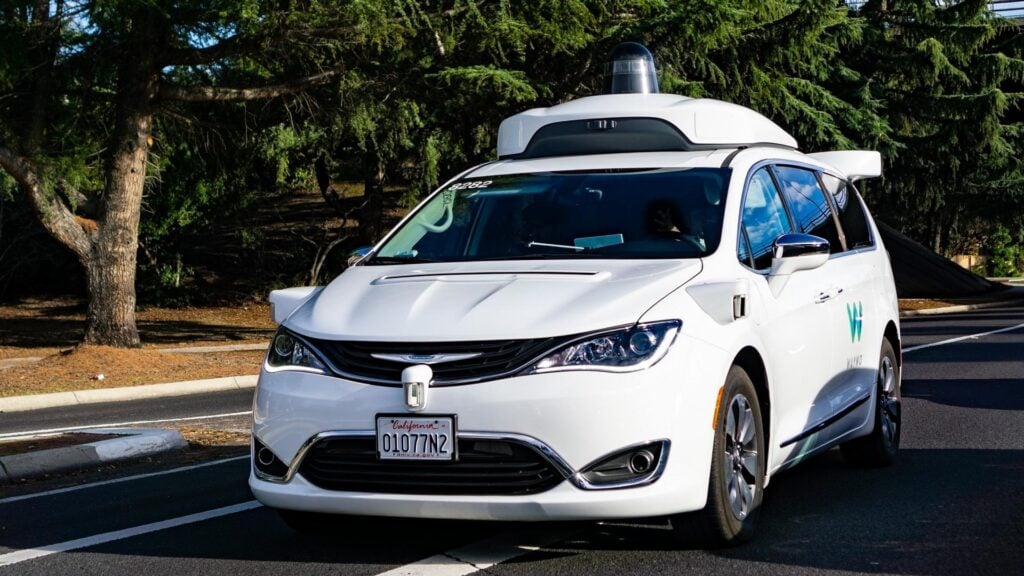
Waymo Says Bar Higher Than Human Driving For Autonomy Even As Tesla Says Cameras Are Enough: 'What Does It Take To Build A Safe Product?' - Alphabet (NASDAQ:GOOGL)
Benzinga· 2026-02-08 12:58
Tesla Inc. (NASDAQ:TSLA) and Alphabet Inc. (NASDAQ:GOOG) (NASDAQ:GOOGL) unit Waymo are among the top companies working to solve autonomous driving, but their approaches remain different.Focus On SafetyDuring an interview with Business Insider, Waymo’s vice president of onboard software, Srikanth Thirumalai, argued that the standard for autonomous driving should exceed human capabilities."I think the bar is higher than human driving. Given where the technology is right now, the question is what is it going t ...


Tesla Officially Updates Free FSD Transfer Policy — Here's The Last Date For Placing Orders To Be Eligible - Tesla (NASDAQ:TSLA)
Benzinga· 2026-02-08 12:56
Core Viewpoint - Tesla Inc. has introduced a limited-time offer allowing customers to transfer their Full Self-Driving (FSD) feature to a new Tesla vehicle, available for orders placed by March 31, 2026 [1][2]. Group 1: FSD Transfer Program Details - The FSD transfer program is available for customers who place an order for a new Tesla vehicle by the specified deadline [2]. - Only the new vehicle will have access to the FSD feature after the transfer from an existing vehicle [2]. Group 2: Eligibility Details - Customers must be the legal owner and registrant of the current vehicle with FSD purchased outright to qualify for the transfer [3]. - Both vehicles must be under the same Tesla Account, and all terms and conditions must be agreed upon before delivery [3]. - Vehicles under active lease, business, commercial, or pre-owned orders are not eligible for the transfer program [3]. Group 3: Additional Conditions - The transferring vehicle must not be involved in any pending cancellation or buyback requests or have outstanding liens or balances [4]. Group 4: Recent Updates on FSD - This announcement follows updates regarding Tesla's FSD transfer policies, including the conclusion of the free FSD transfer service at the end of March [5]. - Customers taking delivery between April 24, 2025, and March 31, 2026, may be eligible for free transfers [5].
Elon Musk Admits It Would Take 'Staggeringly Enormous Amount Of Work For Tesla Valuation To Hit $100 Trillion: 'I'm Just Saying…' - Tesla (NASDAQ:TSLA)
Benzinga· 2026-02-08 12:56
Core Viewpoint - Tesla's CEO Elon Musk acknowledges that reaching a $100 trillion valuation is a challenging yet possible goal, requiring significant effort and favorable circumstances [1][2]. Group 1: Current Valuation and Future Goals - Tesla's current market capitalization is $1.5 trillion, indicating a need for a 65-fold increase to reach the $100 trillion target [1]. - Musk's vision for Tesla extends beyond electric vehicles to include robotaxis, humanoid robots, energy storage, and manufacturing [1]. Group 2: Potential Growth Areas - The robotaxi market is projected to be worth $10 trillion by 2030, which could significantly enhance Tesla's valuation [3]. - The humanoid robot market is estimated by Morgan Stanley and Citi to be between $5 trillion and $7 trillion [3]. - Musk aims to produce 100,000 units of the Optimus humanoid robot monthly within five years, potentially generating $30 billion in annual revenue [3]. - Tesla deployed 14.2 GWh of energy storage in the last quarter and 46.7 GWh over the past year, indicating growth in this sector [3]. Group 3: Executive Compensation - In November 2025, Tesla shareholders approved a trillion-dollar pay package for Musk, linking his compensation to the company's advancements in AI and robotics [4]. - Musk has defended his compensation package against criticism, pointing out the contradiction in claims of Tesla's overvaluation while questioning his stock awards [4].

安踏进军美国市场;OpenAI首款AI硬件曝光丨Going Global
创业邦· 2026-02-08 11:49
Key Insights - Temu and SHEIN have suspended their cross-border operations in Turkey, shifting towards localized operations due to regulatory changes [5] - Hungarian Post has signed a memorandum of understanding with Temu to enhance cross-border logistics cooperation [6] - TSMC's 2nm production capacity has been fully booked by major tech companies, indicating strong demand for advanced semiconductor technology [7] - Hesai Technology has partnered with Grab to accelerate the deployment of LiDAR technology in Southeast Asia [8] - Anta is set to open its first store in the United States, marking a significant step in its global expansion strategy [10][13] - Baiotai has signed a licensing agreement for its BAT3306 injection in the Middle East and North Africa, with a potential transaction value of up to $7 million [15] - Alibaba Cloud has been recognized as the global leader in cloud service adoption for Chinese enterprises going abroad [16][18] - OpenAI's first AI headset, Dime, has been revealed, although its initial capabilities may be scaled back due to supply chain challenges [20][22] - Tesla plans to increase investments in AI hardware and energy sectors in China, with a projected capital expenditure exceeding $20 billion by 2026 [24]





传媒互联网行业周报:大厂角逐AI流量入口,境内资产境外代币化监管指引发布-20260208
SINOLINK SECURITIES· 2026-02-08 11:24
风险提示 本周观点 后续政策不及预期风险;中美关系变化风险;内容上线及表现不及预期风险;宏观经济运行不及预期风险;AI 技 术迭代和应用不及预期风险;政策监管风险。 敬请参阅最后一页特别声明 1 咖啡茶饮:1)咖啡:高景气维持;行业具备β性红利,各品牌依旧积极开店;库迪结束 9.9 元活动,整体咖啡 行业价格竞争趋缓,但需关注开店带来的阶段性稀释效应。2)茶饮:略有承压;短期平台 AI 流量大战,奶茶成 为引流品,补贴以相对趋缓的节奏退坡,数据依旧具备韧性。 电商:持续承压。2025 年实物商品网上零售额 130923 亿元,增长 5.2%,占社会消费品零售总额的比重为 26.1%, 受国内消费环境影响,整体国内电商表现平淡;但关注 AI 带来的电商广告推荐提效。 流媒体平台:音乐流媒体平台为内需驱动的优质互联网资产,高性价比悦己消费,规模效应驱动盈利杠杆释放, 我们建议持续关注音乐订阅平台,估值具备性价比。 虚拟资产&资产交易平台:加密市场催化有限,资本流入疲软,币价承压。本周中国人民银行、中国证监会等八 部门联合发布《关于进一步防范和处置虚拟货币等相关风险的通知》;中国证监会公布〔2026〕1 号文件:《 ...


