361°

Search documents
2026大消费渠道专家会:伯希和维持高增长态势,始祖鸟和萨洛蒙持续拓圈
Haitong Securities International· 2026-02-25 09:35
[Table_Title] 研究报告 Research Report 25 Feb 2026 中国香港服装、鞋类及配饰设计 China (A-share) Hong Kong Apparel, Footwear & Acc Design 2026 大消费渠道专家会:伯希和维持高增长态势,始祖鸟和萨洛蒙持续拓圈 2026 Big Consumption Channel Expert Meeting: Pelliot Maintains High Growth Momentum, Arc'teryx and Salomon Continue to Expand Consumer Reach 寇媛媛 Yuanyuan Kou 林泽宇 Caleb Lin yy.kou@htisec.com caleb.zy.lin@htisec.com [Table_yemei1] 热点速评 Flash Analysis [Table_summary] (Please see APPENDIX 1 for English summary) [Table_yejiao1] 本研究报告由海通国际分销,海通国际是由海通国际研究有限公司,海 ...
2026大消费渠道专家会:PUMA中国业绩稳健向上,26年ADIDAS订货增速最优
Haitong Securities International· 2026-02-25 08:43
Investment Rating - The report does not explicitly state an investment rating for the industry or specific companies within it [20]. Core Insights - PUMA China is experiencing steady growth, primarily driven by same-store sales and a healthy inventory, with a focus on upgrading stores in key business districts [2][8]. - The product mix is balanced between footwear and apparel, with significant growth in women's apparel and a strong performance from leisure and trendy products [3][9]. - The acquisition of PUMA by Anta is viewed positively, as it is expected to enhance PUMA's market share and technical capabilities while addressing Anta's brand integration challenges [4][10]. Summary by Sections Business Structure and Performance - PUMA China operates under a traditional sports brand business model, with a growing share of direct-operated stores, currently at approximately 30% [1][7]. - The ordering model follows a traditional futures system, with double-digit growth in orders for the first three quarters of 2026 [1][7]. Product and Market Dynamics - The majority of PUMA's products are leisure-oriented, with over 60% of sales coming from this category, and women's apparel sales are on the rise [3][9]. - PUMA's pricing strategy shows clear ranges, with footwear priced between RMB 500-800 and apparel ranging from RMB 300-1000 depending on the season [3][9]. Competitive Landscape - PUMA's main competitors include New Balance and ASICS, with a market positioning strategy that aims for differentiation through product offerings [4][10]. - Recent sales data indicates a divergence among mainstream sports brands, with Adidas showing strong double-digit growth while others like Li-Ning and Anta have faced challenges [5][11]. Future Outlook - The basketball category is anticipated to rebound in 2026, driven by a recovery in youth training and increased participation in sports [12]. - PUMA's focus on localized products remains low, primarily consisting of seasonal and co-branded items, indicating potential for growth in this area [4][10].


“虽迟但到”,安踏终于落子北美,为什么?
Sou Hu Cai Jing· 2026-02-15 04:30
2月14日,安踏集团微信公众号官宣,安踏集团主品牌——安踏品牌"ANTA"美国首店已于当地时间2月 13日在美国洛杉矶比弗利山庄开业。 这是安踏品牌在美国市场的首个线下直营门店,也是其在北美的首家旗舰店。 此刻,距离安踏在2011年营收超越李宁,问鼎中国本土体育运动品牌市场,已经过去14年多。 上一个登陆美国市场的中国体育运动大品牌还是2011年的匹克。再前一个,正是2010年的李宁。 但2011年之后的14年里,包括安踏在内,几大中国体育运动品牌虽然一直在探索海外市场,但没有在美 国本土与耐克等体育巨头正面交锋。 如今,安踏直接在比弗利山庄——奢侈品牌与运动巨头齐聚的商业地标开业,更像是"武林高手"在蛰伏 多年之后的蓄力一击,象征意义甚至大过于事件本身。 "这将有力推动安踏在全球市场品牌势能的构建,重塑北美消费者对中国品牌的认知,标志着中国体育 运动品牌正以全新姿态登陆国际零售舞台。"安踏方面表示。 从"蓄而不发"到"深思熟虑" 就在半个多月前,安踏发布公告,拟以合计约15.06亿欧元(约合123亿元人民币)的交易对价,收购彪 马29.06%的股份。 21年前,安踏创始人丁世忠提出"不做中国的耐克,要做世界 ...
“虽迟但到” 安踏终于落子北美 为什么?
Shang Hai Zheng Quan Bao· 2026-02-15 01:19
2月14日,安踏集团微信公众号官宣,安踏集团主品牌——安踏品牌"ANTA"美国首店已于当地时间2月 13日在美国洛杉矶比弗利山庄开业。 这是安踏品牌在美国市场的首个线下直营门店,也是其在北美的首家旗舰店。 此刻,距离安踏在2011年营收超越李宁,问鼎中国本土体育运动品牌市场,已经过去14年多。 上一个登陆美国市场的中国体育运动大品牌还是2011年的匹克。再前一个,正是2010年的李宁。 但2011年之后的14年里,包括安踏在内,几大中国体育运动品牌虽然一直在探索海外市场,但没有在美 国本土与耐克等体育巨头正面交锋。 如今,安踏直接在比弗利山庄——奢侈品牌与运动巨头齐聚的商业地标开业,更像是"武林高手"在蛰伏 多年之后的蓄力一击,象征意义甚至大过于事件本身。 "这将有力推动安踏在全球市场品牌势能的构建,重塑北美消费者对中国品牌的认知,标志着中国体育 运动品牌正以全新姿态登陆国际零售舞台。"安踏方面表示。 从"蓄而不发"到"深思熟虑" 从经营模式来看,相较于中国品牌以往依赖批发、代理商合作的传统出海模式,安踏在国内打磨成熟 的"品牌+零售"的商业模式和DTC(直面消费者)能力,也已到了可以向北美输出的阶段。安踏方 ...

鞋服行业分化显现:国产品牌领跑 传统企业谋转型
Zhong Guo Jing Ying Bao· 2026-01-16 20:15
Core Insights - The Chinese footwear and apparel industry is experiencing significant differentiation in 2025 due to market adjustments and industrial transformations, with the sports and outdoor segment leading the way [1] - Domestic brands are reshaping the market through technological innovation and globalization, while traditional brands struggle with high inventory and rigid channels [1][2] Industry Performance - In the first three quarters, revenue for large apparel enterprises fell by 4.63% year-on-year, with total profits declining by 16.19%, reflecting severe industry pressure [1] - The sports footwear and apparel market is projected to reach a scale of 598.9 billion yuan, with predictions of exceeding 896.3 billion yuan by 2030 [1] Market Dynamics - The market is shifting from incremental expansion to stock competition, with leading companies gaining more influence while smaller brands face shrinking survival space [2] - Traditional brands are struggling, with notable failures such as Fuqiniaos' bankruptcy and Hongqiao's losses, attributed to slow product updates and over-reliance on offline channels [2][3] Brand Competition - Domestic sports brands are gaining market share, with local brands expected to occupy about 60% of the top 20 brands by 2025 [2] - Anta Group reported a 14.3% year-on-year revenue increase to 38.54 billion yuan, surpassing the combined revenue of Li Ning, Xtep, and 361° [2] Consumer Trends - The domestic sports goods market is becoming more concentrated, with the top 20 companies accounting for over 30% market penetration, leading to a widening gap between large and mid-sized firms [3] - Consumers are increasingly favoring high-quality, precise consumption, with a lack of innovation and differentiation leading to brand elimination [9] Channel Innovations - The industry is focusing on two main changes: deep exploration of niche markets and reconstruction of channel models, integrating offline large stores with online instant retail [4][6] - Major brands are opening larger stores, with Anta planning to add 160 "super stores" by 2025, which can achieve 2-2.5 times the sales efficiency of regular stores [5][6] Future Outlook - The industry is expected to see trends of premiumization, globalization, and technological advancement, with a significant reshuffle anticipated [7][8] - Brands that can maintain scale advantages or have precise positioning will likely survive, while small and medium enterprises will face increasing challenges [8]
李宁零售流水微降,多家机构为何上调预期?
Xin Lang Cai Jing· 2026-01-16 09:52
Core Viewpoint - Li Ning has reported a slight decline in retail sales for Q4 2025, indicating operational pressure, yet market sentiment remains positive with several brokerages raising their forecasts for the company [1][2]. Group 1: Company Performance - As of December 31, 2025, Li Ning's retail sales (excluding Li Ning YOUNG) experienced a low single-digit decline year-on-year [1]. - Offline channels, including retail and wholesale, saw a mid-single-digit decline, while e-commerce sales remained flat [1]. - For the first half of 2025, Li Ning's revenue reached 14.817 billion yuan, a year-on-year increase of 3.3%, but net profit fell by approximately 11% to 1.737 billion yuan [3]. Group 2: Market Sentiment and Forecasts - Following the operational update, Li Ning's stock price rose over 5%, reflecting positive market sentiment [1]. - Morgan Stanley forecasts moderate revenue growth for Li Ning in 2025, with net profit margins expected to stabilize at a high single-digit level [1]. - Analysts from浦银国际 suggest that if Li Ning's brand strength improves and sales trends show clear signs of recovery, the stock price could see significant upward momentum [2]. Group 3: Industry Context - The Chinese sports footwear and apparel market is characterized by intense competition, with major brands like Nike and Adidas facing challenges despite their focus on the region [2]. - Domestic brands such as Anta and 361° are maintaining growth, but increased discounting is eroding profit margins across the industry [2]. - Anta's gross margin declined by 0.7 percentage points to 63.4% in the first half of 2025, highlighting the competitive pressures in the market [2]. Group 4: Strategic Initiatives - Li Ning has partnered with the Chinese Olympic Committee, launching new products and stores aimed at capturing the mid-to-high-end market segment [4][6]. - The company is also focusing on outdoor retail spaces to penetrate niche markets, indicating a strategy to attract new customer segments [6]. - With the upcoming 2026 Milan Winter Olympics, Li Ning anticipates increased brand exposure and potential sales growth during this period [8].

2025年第53周:服装行业周度市场观察
艾瑞咨询· 2026-01-14 00:06
Industry Environment - The domestic mid-to-high-end women's clothing market is witnessing the emergence of new brands that attract high-net-worth customers through differentiated positioning and high-quality materials [2] - Brands like AWPROJECT and CHICJOC are expanding rapidly, with AWPROJECT focusing on urban women and CHICJOC implementing a "luxury alternative" strategy to achieve high repurchase rates [2] - International brands such as AnnAndelman are accelerating their presence in the Chinese market, leveraging unique designs and online-offline integration to drive market reshuffling [2] Outdoor Lifestyle Migration - Over 500 million participants are engaged in outdoor sports in China, with a shift in consumer logic towards multi-scenario adaptability, sustainability, and emotional value [3] - The outdoor apparel market is growing at an annual rate of 49%, with consumers prioritizing durability, environmental friendliness, and multifunctionality [3] - Future trends include the proliferation of smart equipment, community integration, and the "no-trace outdoor" concept, driving professional development in the industry [3] Fast Fashion Trends - The fast fashion industry is undergoing significant changes by 2025, characterized by three main trends: premiumization, acceleration, and technology-driven innovation [5] - International brands like Uniqlo and H&M are entering the high-end market through price increases and collaborations, while local brands are expanding overseas [5] - The integration of online and offline channels is deepening, with brands utilizing AI technology in design, warehousing, and marketing to enhance efficiency [5] Luxury Goods Market - The luxury goods sector is experiencing a "store opening wave," with brands like CHANEL and Louis Vuitton opening new stores in China, indicating signs of recovery [7] - The Asia-Pacific market, particularly China, is a key growth driver, while the Japanese market shows mixed performance due to currency and tourism impacts [7] - Brands are focusing on core markets and accelerating localization marketing to strengthen cultural resonance [7] Consumer Behavior Shifts - Consumers are increasingly prioritizing functionality and brand trust over mere trends, as evidenced by the popularity of high-value down jackets [4] - The success of Sam's Club's down jackets reflects a new rational consumption trend where consumers value core needs like warmth and cost-effectiveness [4] - The shift in women's shopping behavior towards men's and children's clothing highlights a growing demand for quality and practicality over traditional fashion norms [13] Jewelry Market Trends - The jewelry market is witnessing a resurgence of retro styles, with a focus on emotional resonance and personalized design appealing to younger consumers [14] - The global jewelry market is expected to grow, with the U.S. and U.K. projected annual growth rates of 1.78% and 3.35%, respectively [14] - The industry is transitioning from "material consumption" to "spiritual consumption," emphasizing the balance between craftsmanship and emotional needs [15] Brand Dynamics - The luxury e-commerce platform Mile has acquired the bankrupt fashion retailer Matches, aiming to reshape luxury retail with a new business model [24] - Scottish luxury cashmere brand Begg x Co is expanding into the Chinese market through a strategic partnership with Meizui, launching its official Tmall flagship store [25] - Sequoia China has acquired a controlling stake in the fashion brand Golden Goose, aiming to support its global expansion and strengthen its market position [26]


又一高端品牌进入中国,李宁出手,硬刚始祖鸟
3 6 Ke· 2026-01-08 00:21
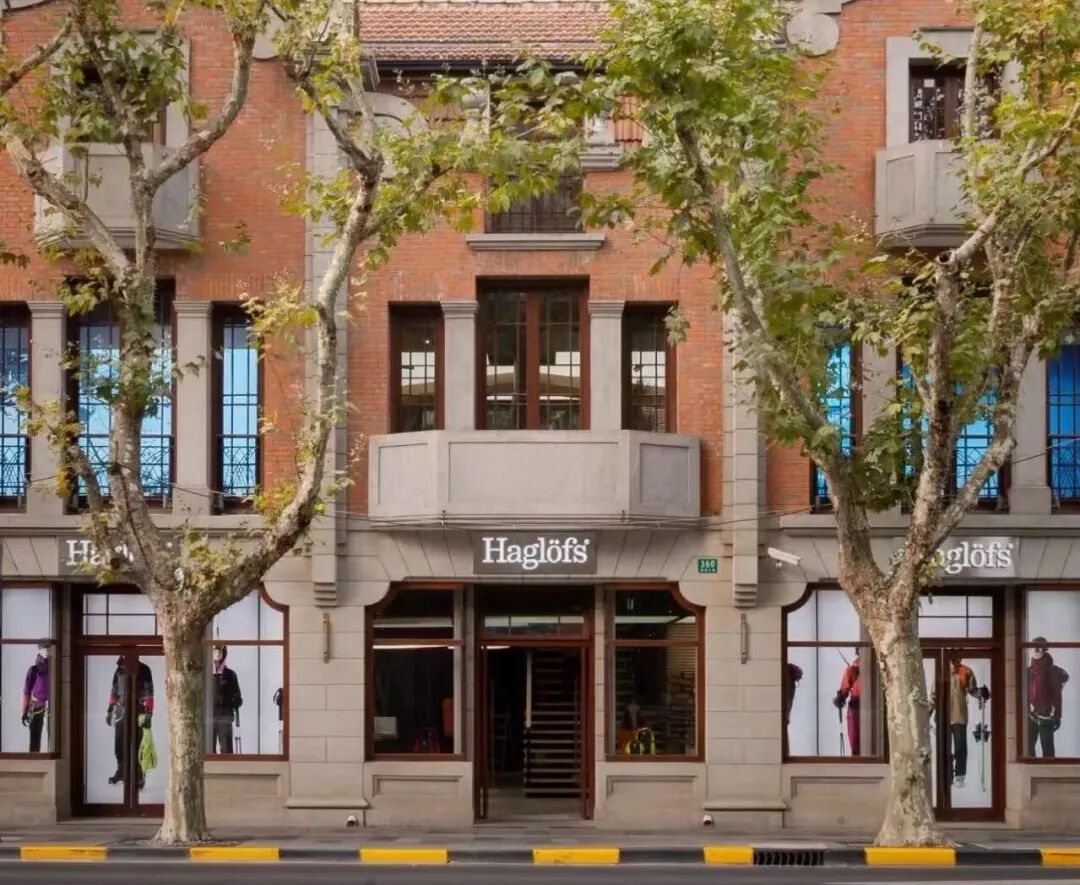
Core Insights - Haglöfs, a Swedish outdoor brand, opened its first VASA concept store in Shanghai, marking its significant return to the Chinese market and the establishment of its 21st offline store in the country [1][3] - The brand aims to expand rapidly, with plans to open 25 stores by the end of 2025 and 50 stores by mid-2026, alongside launching flagship stores on major e-commerce platforms [3][10] - The Chinese outdoor market is projected to grow from 598.9 billion yuan in 2025 to 896.3 billion yuan by 2030, indicating a favorable environment for outdoor brands [3] Company Strategy - Haglöfs emphasizes a "one brand, one voice" strategy, avoiding limited editions and maintaining consistent pricing across online and offline channels to build consumer trust [11][13] - The brand's product pricing ranges from 2,000 yuan to over 6,000 yuan, positioning itself in the mid-to-high-end market, directly competing with premium brands like Arc'teryx [9][10] - The partnership with Li Ning's subsidiary, which holds a 50% stake in a joint venture for Haglöfs' operations in China, allows for resource sharing and operational flexibility [10][14] Market Dynamics - The outdoor market in China has seen a shift from niche to mainstream, with over 400 million participants in outdoor activities, indicating a growing consumer base [15][19] - Haglöfs faces intense competition from established brands like Anta and The North Face, as well as emerging domestic brands that are rapidly gaining market share [17][19] - The brand's unique selling proposition lies in its alignment with the trend of "outdoor lifestyle," appealing to consumers seeking both functionality and style [19] Expansion Plans - The VASA concept store in Shanghai is strategically located in a high-end shopping district, targeting affluent consumers and enhancing brand visibility [5][6] - Future store openings will focus on first-tier and new first-tier cities, leveraging current low commercial real estate rents to optimize expansion costs [13][14] - The brand aims to capture a significant market share by establishing a strong presence in key urban centers, supported by Li Ning's established retail network [19][20]
5折卖鞋,「中产的旧爱」失宠了
3 6 Ke· 2025-12-30 02:09
Core Insights - Nike's performance in the Greater China region has significantly declined, with revenue dropping to $1.423 billion, a year-on-year decrease of 17%, and EBITDA plummeting by 49% [1][2][4] Group 1: Financial Performance - The latest financial report indicates a substantial underperformance in the Greater China market, with revenue at $1.423 billion and a 17% year-on-year decline [1] - The EBITDA for the region has nearly halved, reflecting a 49% drop in profitability [1][2] Group 2: Market Reaction - The disappointing financial results led to a strong market reaction, with Nike's stock price falling by 10.54% in a single day, resulting in a market capitalization loss of over $10 billion [2] - As of December 26, the stock price remained low at $60.93 per share [2] Group 3: Strategic Challenges - Nike's direct-to-consumer (DTC) strategy, initially seen as a model, has not been effective in China, leading to increased inventory and price volatility [2][5] - The brand's premium positioning is being challenged by local brands and international brands operating with localized strategies, further squeezing Nike's market space [2][6] Group 4: Operational Issues - The shift towards DTC has resulted in a disconnect with actual market demand, leading to an imbalance in the brand's overall operational mechanism [6][10] - Nike's reliance on discounting through e-commerce and outlet channels has disrupted the market pricing structure and diminished its high-end brand image [6][9] Group 5: Competitive Landscape - The market has seen a rise in specialized brands in various segments, such as outdoor and yoga, which are capturing market share from Nike [10][11] - Local brands like Anta and Li Ning are gaining ground due to their localized strategies and competitive pricing, further pressuring Nike's core business [10][11] Group 6: Product Strategy - Nike's product strategy has become overly reliant on classic styles and colorways, leading to a dilution of brand exclusivity [11] - In contrast, local brands are expanding into more specialized categories and achieving significant revenue growth, surpassing Nike in the Chinese market [11][13] Group 7: Future Outlook - Despite current challenges, Nike remains committed to the Chinese market, recognizing its long-term potential and planning to optimize operations to better connect with consumers [9][10] - The company needs to prioritize strategic focus areas and enhance localization to rebuild connections with Chinese consumers [13]
安踏接入淘宝闪购,2026年将全面覆盖4000多家门店
Xin Lang Cai Jing· 2025-12-22 11:24
Core Insights - Anta, a leading domestic sports brand, has officially integrated with Taobao Flash Sale, expanding its reach to over 1,000 offline stores across 174 cities, with plans to cover more than 4,000 stores by 2026 [2][5] - The product offerings on Taobao Flash Sale include essential winter items such as down jackets, waterproof jackets, cotton shoes, and running shoes, along with new autumn/winter collections [2][5] - The integration is a key step in Anta's strategy to enhance its omnichannel retail approach, addressing consumer needs for immediate delivery and emergency purchases in various scenarios like travel and fitness [2][5] Industry Trends - There is a growing trend among domestic sports brands to leverage instant retail platforms like Taobao Flash Sale to capture both regular and immediate consumer demand for sports equipment [3][6] - Sports brands are considered a high-frequency, high-ticket, and strong-scenario category in the instant retail sector, making them an attractive entry point for platforms seeking to secure core assets of offline stores [3][6] - The competition in the instant retail space is shifting focus from food delivery to capturing the offline store assets of brands, with sports products being a prime target [3][6]