
亿纬锂能

Search documents
南方基金旗下电池ETF南方(159147)上涨2.04%,多氟多涨超6%,钠电池技术突破打开发展新空间
Xin Lang Cai Jing· 2026-02-25 03:36
Group 1 - The battery ETF Southern (159147) increased by 2.04% with a transaction volume of 27.09 million yuan, while key stocks in the index, such as Defu Technology, Tianhua New Energy, and Duofluoride, saw significant gains of 10.19%, 7.61%, and 6.32% respectively [1] - The U.S. government is considering imposing new tariffs on approximately six industries, including batteries, citing "national security" as the reason. This move follows the Trump administration's use of Section 232 to expand tariffs beyond the existing 15% global rate [1] - Analysts indicate that if tariffs are implemented, the President can unilaterally adjust them, providing greater operational flexibility in policy continuity and execution. The tariffs will significantly increase export costs, prompting overseas clients to accelerate orders [1] Group 2 - Sodium battery technology has shown breakthroughs and mass production capabilities, demonstrating resilience in supply diversity. Sodium batteries offer superior low-temperature performance and lower costs, complementing lithium batteries and showing promising prospects in energy storage and power battery applications [2] - The price of lithium carbonate has rebounded significantly, with battery-grade lithium carbonate increasing by 6.9% and industrial-grade by 7.46% in the last week. This price surge is driven by a temporary improvement in supply-demand dynamics, with downstream production expected to increase by over 15% starting in March [2] - The Southern Battery ETF (159147) closely tracks the CSI Battery Theme Index, which includes listed companies involved in power batteries, energy storage batteries, consumer electronics batteries, and related upstream and downstream industries. The top ten weighted stocks in the index include CATL, Sungrow Power, and others [2]





中国汽车给欧洲市场普及插混
3 6 Ke· 2026-02-25 03:26
Core Insights - The article discusses the significant shift in the automotive trade dynamics between Germany and China, highlighting the decline of German car exports to China and the rise of Chinese automotive brands in the European market [1][7][11]. Group 1: Trade Dynamics - German car exports to China are projected to drop below €14 billion by 2025, a decrease of nearly 50% from nearly €30 billion three years ago [3][7]. - In January, Chinese automotive brands saw an 80% year-on-year increase in sales in Europe, capturing a market share of 7.4%, nearly double from a year prior [3][9]. - The demand structure in the Chinese market is changing, with local brands rapidly improving their product offerings in the new energy vehicle sector, which is squeezing the market share of German automakers [7][9]. Group 2: Market Performance - BYD has become the best-selling Chinese automotive brand in Germany, with January sales reaching 2,069 units, a 1000% increase year-on-year [9][12]. - The overall European market saw a 3.6% decline, while Chinese brands' sales surged, indicating a significant competitive shift [9][10]. - The sales of plug-in hybrid vehicles (PHEVs) from Chinese brands accounted for 29% of their total sales in Europe in January, up from 11% the previous year [12][18]. Group 3: Strategic Responses - German automakers are adapting by enhancing local R&D capabilities and forming partnerships, such as Volkswagen's investment in XPeng and collaborations with Horizon Robotics [18][20]. - The decision-making cycle for German car manufacturers is longer, typically taking 3-5 years for new models, while Chinese companies can iterate in about 18 months, creating a competitive disadvantage for German firms [20][21]. - German Chancellor Merz's visit to China aims to negotiate for more time for the German automotive industry to adjust to these changes [21][23]. Group 4: Future Outlook - The interaction between the Chinese and European automotive industries is evolving from a one-way technology transfer to a two-way technology flow, which could foster mutual technological advancements [23]. - The competitive landscape is shifting, with both sides needing to adapt to the changing market dynamics and consumer preferences [6][23].


亿纬锂能涨2.00%,成交额11.02亿元,主力资金净流入6184.45万元
Xin Lang Cai Jing· 2026-02-25 02:56
资料显示,惠州亿纬锂能股份有限公司位于广东省惠州市仲恺高新区惠风七路38号,香港铜锣湾希慎道 33号利园1期19楼1910室,成立日期2001年12月24日,上市日期2009年10月30日,公司主营业务涉及消 费电池(包括锂原电池、小型锂离子电池、三元圆柱电池)和动力电池(包括新能源汽车电池及其电池系 统、储能电池)的研发、生产和销售。主营业务收入构成为:动力电池45.26%,储能电池36.56%,消费 电池18.03%,其他0.16%。 亿纬锂能所属申万行业为:电力设备-电池-锂电池。所属概念板块包括:胎压监测、智能汽车、自主可 控、大盘股、脑科学(脑机接口)等。 2月25日,亿纬锂能(维权)盘中上涨2.00%,截至10:26,报65.77元/股,成交11.02亿元,换手率 0.84%,总市值1364.15亿元。 资金流向方面,主力资金净流入6184.45万元,特大单买入1.43亿元,占比12.98%,卖出1.20亿元,占比 10.89%;大单买入3.19亿元,占比28.92%,卖出2.80亿元,占比25.40%。 亿纬锂能今年以来股价涨0.02%,近5个交易日涨3.79%,近20日跌0.38%,近60日跌 ...

美国关税驳回或加速电新设备出口
HTSC· 2026-02-25 02:50
Investment Rating - The report maintains a "Buy" rating for the electric power equipment and new energy sector [7] Core Views - The cancellation of IEEPA tariffs and the introduction of a 15% tariff under the 122 clause could lead to a marginal improvement of 5% to 10% in tariffs for various components, benefiting companies like Ningde Times, Sunshine Power, and others [2][10] - The potential for the Trump administration to implement additional tariffs under clauses 201, 232, 301, and 338 could maintain the overall tariff levels, impacting the competitiveness of domestic products against overseas counterparts [4][10] - The demand for electric new equipment in the U.S. remains strong, with a projected revenue share of 16% or less for sample companies in 2026, indicating resilience against tariff fluctuations [5] Summary by Sections Tariff Changes and Impacts - The report outlines two scenarios regarding tariff changes: an optimistic scenario with a 15% tariff leading to a 5% to 10% reduction in marginal tariffs for various components, and a pessimistic scenario where additional tariffs could keep overall levels unchanged [2][4] - The U.S. Supreme Court's ruling is expected to narrow the tariff gap between domestic and overseas production by 1% to 5% due to the new uniform 15% tariff [3] Company Recommendations - The report highlights several companies as favorable investment opportunities, including: - Ningde Times (300750 CH) with a target price of 566.18 - Sunshine Power (300274 CH) with a target price of 198.63 - Yihua Lithium Energy (300014 CH) with a target price of 96.96 - TBEA (600089 CH) with a target price of 33.31 - Foster (603806 CH) with a target price of 19.97 [14] Market Dynamics - The electric new equipment sector is experiencing high demand due to the inability of overseas suppliers to meet urgent needs, particularly in the transformer market, which is expected to have a supply gap until at least 2027 [5] - The report emphasizes that the tariff adjustments will have a limited impact on the main photovoltaic industry, while auxiliary materials and lithium battery sectors may benefit significantly [3][10]



策马跃壑启新程——广东奋力推进制造业与服务业协同发展
2 1 Shi Ji Jing Ji Bao Dao· 2026-02-25 02:04
春江浩荡,又踏层峰。 这是车水马龙的广东。刚刚过去的春节假期,南粤大地人财两旺,热气腾腾。2月13日,全省铁路旅客 发送量刷新春运历史纪录;2月20日,珠江游旅客量创4.54万人次历史新高;2月23日,白云机场、深圳 机场旅客吞吐量双双突破历史纪录。 地处岭南,筚路蓝缕,辛勤的开拓者越五岭之险,从来都是迎难而上;面向南海,搏风打浪,时代的弄 潮儿闯南洋之远,从来都是勇立潮头 这是一马当先的广东。在马年新春首个工作日,广东省委、省政府连续第四年召开全省高质量发展大 会,今年以"推动制造业与服务业协同发展"为主题,吹响了永争第一的冲锋号角。 这是马跃新程的广东。站在"十五五"开局之年的新起点,展望未来10年,一个实力更加雄厚、生活更加 殷实、活力更加充沛的现代化新广东将呈现在世人面前。 谋势而动:推动"两业"共荣 纵观产业发展历史变迁,制造业与服务业的协同一直在动态演进。从产业科技互促双强,到建设现代化 产业体系,再到制造业与服务业协同发展,广东紧紧把握时代趋势,每年高质量发展大会都聚焦产业主 题,认识日益深化、目标日益清晰、工作日益精进。 ——顺应产业演进规律、实现产业高级化的必由之路。一方面产业分工持续深化, ...
广东 塑造“先进制造+现代服务”整体优势
Shang Hai Zheng Quan Bao· 2026-02-24 17:49
"群链一体化"打造产业新支柱 当前,广东拥有全部31个制造业大类,制造业规模约占全国八分之一,规上工业企业营业收入规模连续 保持全国第一。作为制造业大省和服务业强省,广东坚持实体经济为本、制造业当家,扎实推进制造业 与服务业协同发展,两业深度融合、互促共进的良好格局初步形成,发展成效显著。 在制造业方面,广东省以智能化升级、绿色化改造为核心路径,推动传统产业向高端化迈进,夯实了制 造业与服务业协同发展的基础,也为工业互联网、节能环保服务等生产性服务业嵌入制造提供了广阔场 景。在服务业方面,广东服务业规模领先、体系完整。据广东省统计局数据综合测算,2025年广东现代 服务业增加值55139.99亿元,占GDP比重近37.84%。其中,生产性服务业在广东现代服务业中占据绝对 主导地位,金融业,信息传输、软件和信息技术服务业成为核心引擎。 会议提出,广东要推动传统优势产业稳规模、提品质、增效益,发展壮大新兴产业、未来产业,"群链 一体化"打造产业新支柱,培育更多万亿元级、千亿元级产业集群;要推动服务业优质高效发展,以科 技服务提升制造业核心竞争力,以金融服务为实体经济注入源头活水,以商务服务为工业产品开具市场 通行 ...
储能行业跟踪报告:把握IRR测算:储能项目投资的核心抓手
EBSCN· 2026-02-24 14:04
Investment Rating - The report maintains a "Buy" rating for the energy storage sector [6] Core Insights - The investment in energy storage projects is returning to fundamental principles, focusing on capital IRR as a key metric for evaluating project value, with a threshold of 6.5% for good investment value [1][16] - The release of Document No. 114 has accelerated the alignment of profitability models for energy storage plants, shifting from a "strong allocation" to a market-driven economic model [14][15] Summary by Sections 1. Capital IRR Measurement - The capital IRR for energy storage projects is influenced by four core indicators: capacity price level, market arbitrage price difference, EPC costs, and lifespan of the storage station [2][17] - The basic scenario estimates a capital IRR of 5.5% under conservative assumptions, with potential increases based on variations in capacity pricing and market conditions [22][46] 2. Sensitivity Analysis - If the coal power capacity price is set at 330 CNY/kW·year, the capital IRR could reach 15.4% [23] - A 0.01 CNY/kWh increase in market arbitrage price can raise the project IRR by 1.4 percentage points, while a 0.1 increase in daily charge and discharge cycles can increase IRR by 4.4 percentage points [36][27] 3. Provincial Analysis - In 2025, provinces like Shanxi, Inner Mongolia, Shandong, and Gansu are projected to have capital IRR above 6.5% due to favorable market conditions [4][49] - The report emphasizes the need to monitor monthly changes in electricity market price differences and the pricing of coal power capacity in various provinces [4][49] 4. Investment Recommendations - The report suggests that the installed capacity of large-scale energy storage in 2026/2027 is a critical variable for lithium battery demand, with ongoing observation needed on capacity pricing, project lists, and market price changes [4][5] - The domestic energy storage industry is entering a healthy development phase, benefiting leading companies such as CATL, Sungrow, EVE Energy, and Haibo [4][5]
广东制造如何向“智”蝶变?这场会议划了重点
Nan Fang Du Shi Bao· 2026-02-24 13:15
2月24日,农历正月初八,广东新春"第一会"——全省高质量发展大会在广州举行。 当天下午,在"智能制造与工业互联网"分会场上,政府部门、专家学者和企业各方代表共聚一堂,围绕加快构建以先进制造业为骨干的现代化产业体系,深 入探讨了智能制造与工业互联网的发展路径。 全省高质量发展大会分会场 智 能 制 造 与 工 业 互 联 网 Intelligent Manufacturing & Industrial Internet TTETTERETTERSTATETTETTED TO 广东 · 广州 2026年2月 FUGUAN REMERE THE TE 智能制造与工 Intelligent Manufacturing & 2月24日下午,全省高质量发展大会"智能制造与工业互联网"分会场在广州举行。 智能制造是制造强国建设的主攻方向,工业互联网是海量数据汇聚、模型沉淀与应用开发的关键载体。大力发展智能制造与工业互联网,是重塑广东产业竞 争优势、抢占未来发展制高点,推动广东从制造大省向制造强省跨越的战略选择。 企业代表共话智造转型: 中国制造业机遇和挑战并存 近年来,广东省政府率先出台《广东省制造业数字化转型实施方案及 ...
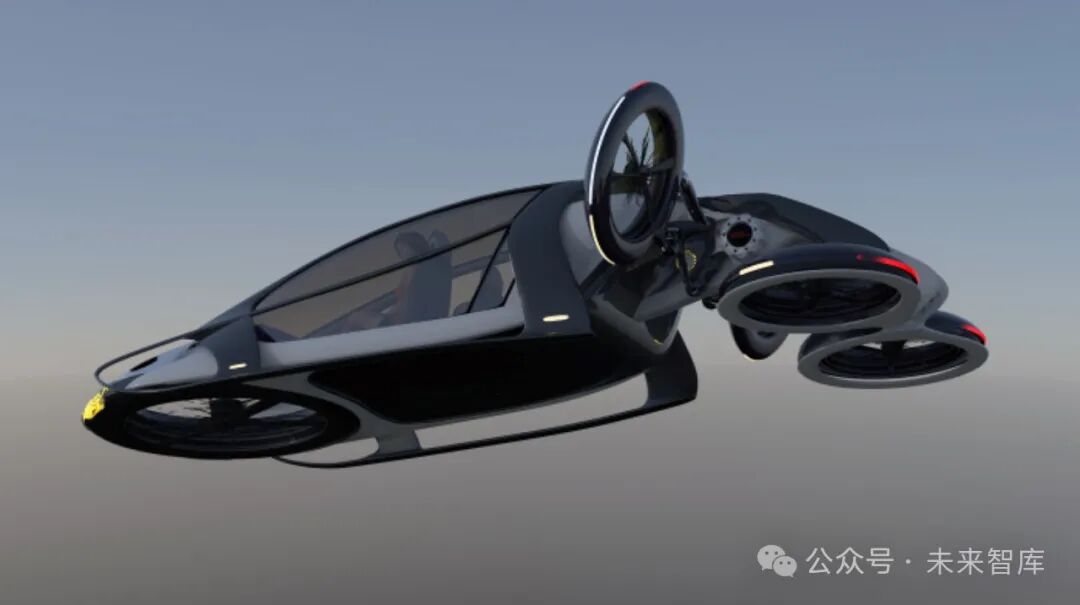
飞行汽车产业发展全景解析:应用、技术与支撑保障
Xin Lang Cai Jing· 2026-02-24 11:05
Industry Application - The application scenarios of flying cars are characterized by the parallel advancement of professional and popular applications, which together strengthen the industry's essential foundation and expand market space [1][25] - Professional applications focus on public safety and industry efficiency, gradually expanding from essential scenarios to value-added industry applications, with pilot implementations in emergency rescue, firefighting, power inspection, and medical transport [1][25] - Popular applications aim to optimize travel experiences and supplement transportation systems, integrating into urban transportation networks, with cities like Shenzhen and Guangzhou planning to launch commuting routes by 2026 [3][27] Industry Development - The flying car industry is transitioning from research and validation to engineering, with a need for a comprehensive commercial system [4][28] - The industry chain now covers materials, key components, complete manufacturing, and demonstration operations, with a complete R&D-approval-manufacturing-operation loop being accelerated [4][28] - Leading companies such as XPeng Heavens, Volocopter, and Joby Aviation are driving the industry structure towards improvement, with significant capital market interest reflected in the rising market values of several companies [5][29] Technical Challenges - Flying cars face three major technical challenges: payload range, airworthiness safety, and intelligent driving, which must be overcome for practical and widespread development [10][35] - The payload range is limited by the performance of power systems, with current lithium-ion batteries having energy densities significantly lower than traditional aviation fuels, impacting the effective range and payload capacity [10][35] - Airworthiness safety is a core constraint for commercial viability, requiring flying cars to meet high reliability and redundancy standards, with ongoing efforts to achieve airworthiness certification [11][36] Infrastructure Development - The development of flying car infrastructure is constrained by land, funding, and regulatory challenges, necessitating government guidance and industry collaboration to address these systemic issues [18][20] - Initial infrastructure development should focus on repurposing existing resources, such as airports and parking lots, to quickly alleviate shortages [20][21] - Future infrastructure will evolve into a "three-dimensional smart network" that integrates with urban development and ground transportation, supporting the regular operation of flying cars [22][23]


亿纬锂能肖罡:用机器人给机器人造电池,两类“员工”3月上岗
2 1 Shi Ji Jing Ji Bao Dao· 2026-02-24 11:01
Core Insights - The company, EVE Energy Co., Ltd., is leveraging AI and robotics to enhance battery manufacturing processes, balancing the certainty of manufacturing techniques with the uncertainty of parameters like size and capacity [1] - EVE Energy has developed two types of robotic employees: AI digital robots for demand coordination and physical robots for execution, which will begin testing on production lines in March [1] - The company has established a comprehensive layout in battery technology, including lithium iron phosphate, ternary lithium, solid-state, and sodium-ion batteries since its founding in 2001 [1] Group 1 - EVE Energy is actively integrating AI applications to accelerate the intelligent transformation of manufacturing, achieving over 50% coverage of AI decision-making applications in single-line processes across multiple factories [1] - The company has adopted a unique "1+1+N" R&D model, focusing on real-world manufacturing needs to train robots for specific tasks, while also developing a comprehensive AI model for smart factories [2] - EVE Energy has successfully developed and tested three types of robots, including bipedal humanoid and wheeled robots, and is working on a collaborative control model for robot groups to optimize task delegation in factories [2] Group 2 - The company emphasizes a commitment to innovation and excellence, aiming to fully realize the concept of "using robots to manufacture batteries" and establish a fully integrated intelligent factory [2]