
蜜雪冰城

Search documents
当一座县城有了“胖东来”
虎嗅APP· 2025-07-21 11:03
Core Viewpoint - The article discusses the transformation of consumer behavior and retail dynamics in a small county town, highlighting the rise of local brands and the impact of changing consumption patterns on traditional retail models [3][4][9]. Group 1: Consumer Behavior - There is a shift from top-down consumption upgrades to bottom-up upgrades, with local brands gaining prominence over international luxury brands [3][4]. - The presence of local supermarkets like "胖东来" reflects a change in consumer preferences, where affordability and local flavor are prioritized over brand prestige [4][9]. - Consumers in the county town are increasingly drawn to affordable high-end fruits and local clothing brands, indicating a shift in spending habits [9][10]. Group 2: Retail Dynamics - The article notes the emergence of various local brands and supermarkets that cater to the unique tastes and preferences of county residents, contrasting with the offerings of larger cities [4][9]. - The county town has seen a proliferation of tea and coffee shops, indicating a growing demand for such products despite the absence of aggressive marketing strategies typical in larger cities [23][28]. - The local retail environment is characterized by a mix of traditional and modern consumption patterns, with residents often opting for in-person shopping over online delivery services [30][31]. Group 3: Education and Training - There is a strong emphasis on education in the county, with parents willing to invest significantly in their children's education, leading to a proliferation of training institutions [20][21]. - The article highlights the competitive nature of local education, with families increasingly choosing to keep their children in local schools rather than sending them to larger cities [21][22]. - The rising costs of education and extracurricular activities are noted, with families spending substantial amounts on training despite the relatively low average income in the area [19][20]. Group 4: Economic Context - The county's economy is transitioning, with traditional land-based revenue models facing challenges, leading to a need for diversification [39]. - Despite economic pressures, the stability of life in the county provides a sense of security for residents, who are less burdened by urban financial pressures such as mortgages [39][40]. - The article suggests that while opportunities may be fewer compared to larger cities, the quality of life in the county remains appealing to many residents [39][40].


他把汤圆卖到全球第一,背后是两大巨头的“一笑泯恩仇”
Sou Hu Cai Jing· 2025-07-21 09:26
Core Viewpoint - The article highlights the journey of Si Nian Food, emphasizing its growth into a leading frozen food manufacturer in China and its strategies to overcome market biases and competition, particularly with its rival San Quan [5][8][50]. Company Overview - Si Nian Food has become one of the largest frozen food manufacturers in China, selling over 10 billion dumplings and 30 billion tangyuan in the past year, with products exported to over 50 countries and regions [5][50]. - The company was founded by Li Wei and CEO Wang Peng, who initially entered the market by producing tangyuan to compete with San Quan, which was already established in the frozen food sector [11][15]. Market Position and Competition - Si Nian and San Quan, both headquartered in Zhengzhou, initially had a fierce rivalry but later formed a cooperative relationship to strengthen their market position against foreign competitors [8][24]. - The two companies successfully collaborated to capture market share from Taiwanese brands, utilizing strategies like offering bulk packaging and competitive pricing [25][28]. Product Development and Innovation - Si Nian has expanded its product line from tangyuan and dumplings to include a variety of frozen foods such as buns, wontons, and hot pot products, reflecting a comprehensive approach to the frozen food market [32][34]. - The introduction of the "Shi Shi Ru Yi" tangyuan in 2023, which achieved over 100 million in sales within three months, showcases the company's focus on innovation and appealing to younger consumers [42]. International Expansion - Si Nian has made significant strides in international markets, particularly in the U.S., where it established a production base to navigate strict import regulations and enhance its distribution capabilities [43][48]. - The U.S. factory has become a key strategic asset, allowing Si Nian to significantly increase its market presence and sales in North America, with products now available in major retail chains [50]. Strategic Vision - Wang Peng emphasizes a long-term vision for the company, focusing on maintaining high standards for food safety and health while innovating to meet consumer demands [50]. - The cooperative spirit between Si Nian and San Quan is seen as a model for domestic companies to work together to enhance their competitiveness in the global market [50].

零售周报|传潘多拉将退出中国市场;泡泡玛特上半年同比增长350%+
Sou Hu Cai Jing· 2025-07-21 05:56
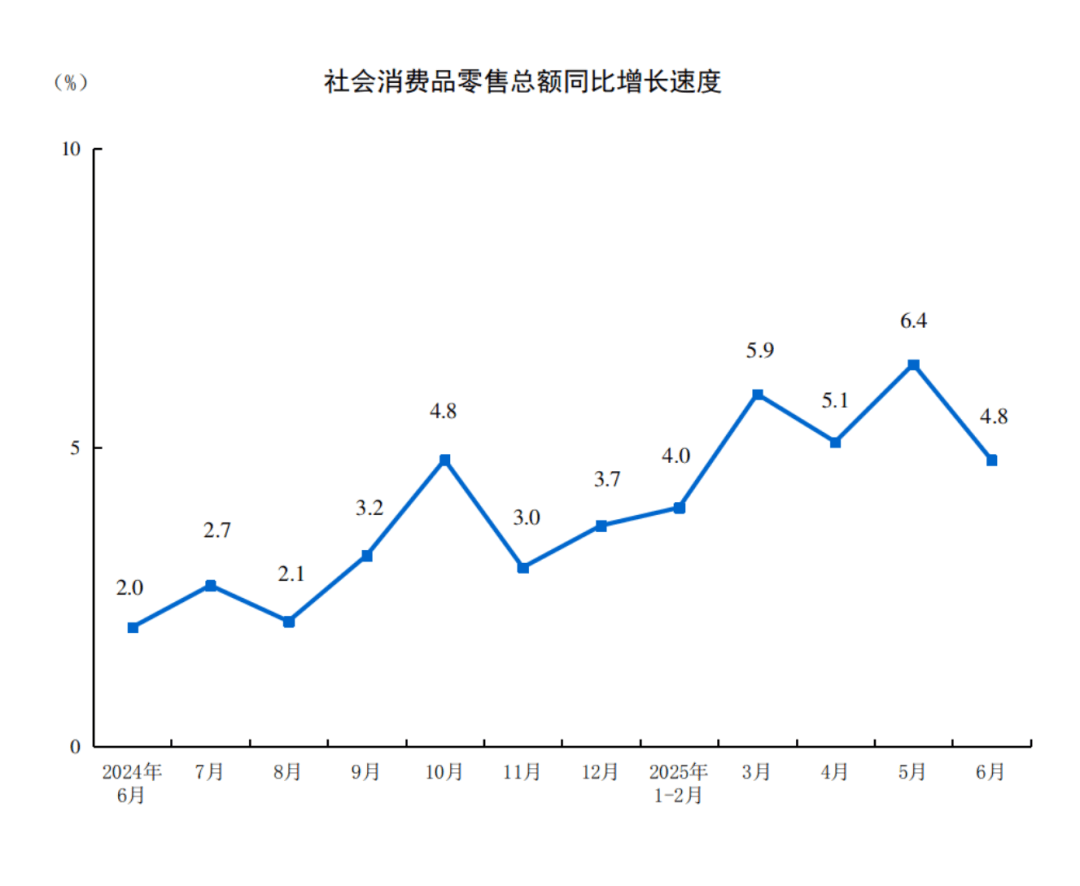
Group 1 - In June 2025, the total retail sales of consumer goods reached 42,287 billion yuan, with a year-on-year growth of 4.8% [1] - Excluding automobiles, the retail sales of consumer goods amounted to 37,649 billion yuan, also growing by 4.8% [1] - From January to June, the total retail sales of consumer goods were 245,458 billion yuan, with a year-on-year increase of 5.0% [1] Group 2 - Urban retail sales in June were 36,559 billion yuan, reflecting a year-on-year growth of 4.8%, while rural retail sales reached 5,728 billion yuan, growing by 4.5% [3] - For the first half of the year, urban retail sales totaled 213,050 billion yuan, with a growth rate of 5.0%, and rural retail sales were 32,409 billion yuan, increasing by 4.9% [3] Group 3 - In June, the retail sales of goods were 37,580 billion yuan, with a year-on-year growth of 5.3%, while catering revenue was 4,708 billion yuan, growing by 0.9% [3] - For the first half of the year, the retail sales of goods reached 217,978 billion yuan, with a growth of 5.1%, and catering revenue was 27,480 billion yuan, increasing by 4.3% [3] Group 4 - From January to June, retail sales in convenience stores, supermarkets, department stores, specialty stores, and brand stores grew by 7.5%, 5.4%, 1.2%, 6.4%, and 2.4% respectively [5] - The online retail sales for the first half of the year were 74,295 billion yuan, with a year-on-year growth of 8.5%, and the physical goods online retail sales were 61,191 billion yuan, growing by 6.0% [5] Group 5 - The new flagship store of Xiaomi, located in Shenzhen, is the largest Xiaomi store globally, showcasing a wide range of products including Xiaomi cars [12] - Aveda's first concept flagship store in China opened in Shanghai, featuring a unique retail ecosystem with personalized care solutions [14][17] - BROMPTON opened its first store in Guangzhou, emphasizing high-end folding bicycles tailored for urban living [18] Group 6 - The Danish jewelry brand Pandora is rumored to exit the Chinese market, planning to close at least 50 stores this year [25] - The Italian sportswear brand Hydrogen is set to enter the Chinese market in 2026, focusing on high-end fashion and professional sports performance [26] Group 7 - Lucky Coffee aims to reach 10,000 stores by 2025, with a focus on expanding in first and second-tier cities [34] - The company has introduced attractive franchise policies to encourage new store openings [35] Group 8 - The supermarket chain ALDI has opened new stores in Jiangsu, continuing its expansion in the region [39] - Yonghui Supermarket has launched a new store model in Shenzhen, aiming to complete 200 store renovations by the third quarter [40] Group 9 - The discount store brand "Wumei Super Value" will open six stores in Beijing, focusing on high-quality products at low prices [41] - Meituan's discount supermarket "Happy Monkey" plans to open 1,000 stores, starting with 10 signed locations [42] Group 10 - Pop Mart expects a revenue increase of at least 200% in the first half of the year, with profits projected to grow by no less than 350% [43][44]




穷鬼赛道,捧出了2个河南首富
Sou Hu Cai Jing· 2025-07-21 04:51
Core Insights - The article highlights the rapid rise of Mixue Ice City, founded by Zhang Hongchao and Zhang Hongfu, who became the new richest individuals in Henan with a net worth of 117.9 billion yuan, surpassing previous wealth holders in the region [2][3] - Mixue Ice City has successfully positioned itself in the low-price beverage market, with a significant expansion to over 46,000 stores globally and a successful IPO in Hong Kong, where its stock price surged from 202.5 yuan to 494 yuan per share [2][3][42] - The brand's resilience is demonstrated by its ability to navigate challenges, including a food safety scandal, while maintaining strong public support and brand loyalty [3][5][7] Company Overview - Mixue Ice City was founded in 1997, initially as a shaved ice shop named "Hanliu Shaved Ice," and has evolved into a major player in the beverage industry, focusing on affordable products [18][21] - The company has maintained a consistent pricing strategy, with popular items like lemon water priced at 4 yuan and ice cream cones at 2 yuan, which has contributed to its appeal among cost-sensitive consumers [2][10][32] - The brand has built a strong marketing identity around its mascot, "Xue Wang," which has become a cultural symbol and has significantly boosted brand recognition and engagement [36][39] Market Position - Mixue Ice City has become the largest chain in the beverage sector, selling 9 billion cups of drinks in 2024 and achieving a total revenue of 24.8 billion yuan [43] - The company has strategically avoided high-end markets, focusing instead on the low-cost segment, which has proven to be a successful long-term strategy [30][32] - The competitive landscape for new tea beverages has intensified, with Mixue Ice City preparing for ongoing challenges while continuing to expand its product offerings and market presence [49][50] Future Outlook - Despite recent growth, the company faces potential challenges, including rising costs due to global lemon supply issues and increased competition in the beverage market [49][50] - The leadership dynamics between the founders, with Zhang Hongchao advocating for stability and Zhang Hongfu pushing for aggressive expansion, will be crucial in navigating future market conditions [50][51] - The brand's ability to adapt to changing consumer preferences and maintain its low-cost model will be key to sustaining its market leadership in the coming years [49][50]

当一座县城有了“胖东来”
Hu Xiu· 2025-07-21 02:52
Group 1 - The article discusses the shift in consumer behavior in lower-tier cities, highlighting how local brands are gaining popularity over international luxury brands [4][5][20] - The presence of local supermarkets like "胖东来" is noted, which have adapted to the tastes and preferences of consumers in these areas [7][10][20] - The article emphasizes the unique shopping experience in these counties, where local culture influences service styles and product offerings [15][19][60] Group 2 - The rise of short video content is impacting consumer habits, with many residents engaging with this medium in various settings, including educational institutions and local shops [25][32][33] - The article points out the emergence of local influencers and content creators who are capitalizing on the popularity of short videos, although the market is competitive [34][35][36] - There is a noted trend of parents investing in education for their children, with a focus on local training institutions that offer affordable options compared to larger cities [39][43][46] Group 3 - The article highlights the proliferation of tea and coffee shops in these counties, indicating a growing demand for such beverages among residents [48][51][62] - It discusses the limited impact of the recent delivery service trends in these areas, where traditional shopping habits remain prevalent [54][57][60] - The article mentions the challenges faced by local businesses, including empty storefronts and reduced consumer spending, as the economy shifts [73][75]
“中国产”添彩全球“生活场”(国际论道)
Ren Min Ri Bao Hai Wai Ban· 2025-07-20 22:35
Food - Chinese food and beverage brands are increasingly entering global markets, shaping perceptions of China among overseas consumers [2][3] - Mengniu's Aijiao ice cream ranks first in Indonesia and second in the Philippines, showcasing the competitiveness of Chinese food brands in Southeast Asia [3] - The rise of Chinese supermarkets and food stores in Southeast Asia has led to increased interest in Chinese cuisine among local youth, creating a "reverse country of origin effect" [3] Housing - Chinese home and appliance products are becoming popular choices for overseas consumers due to their high cost-performance ratio and innovative designs [4] - Reports highlight the trend of overseas consumers purchasing home goods through Chinese e-commerce platforms, with significant interest in products like blenders and smart home devices [4] - Chinese brands like Roborock and Ecovacs are rapidly expanding in the Japanese market, with a notable presence in the smart home sector [4] Transportation - Chinese electric vehicles (EVs) and related industries are gaining traction globally, with significant market penetration in regions like South Asia [5][6] - In Nepal, 76% of imported electric vehicles in the 2023-2024 fiscal year are from China, indicating strong demand [5] - Chinese brands like BYD and Chery dominate the electric vehicle market in Southeast Asia, with 80% of EVs in the region being Chinese [5] Daily Use - Chinese cultural and digital products, including toys, jewelry, and beauty brands, are gaining global popularity due to innovative designs and cultural elements [7][8] - The success of brands like Pop Mart and Chinese jewelry companies reflects a shift in perception regarding Chinese creativity and quality [8] - Chinese beauty brands are leveraging social media platforms to reach global consumers, with products that fill gaps in the Western market [8]
Coach母公司投资Gen Phoenix;蜜雪冰城云南新设两家子公司
Sou Hu Cai Jing· 2025-07-20 12:39
Investment Dynamics - Tapestry Group, the parent company of Coach, is increasing its investment in Gen Phoenix, a company that produces regenerated leather fiber materials, with a recent funding round of $15 million led by Material Impact [3] - The investment aims to innovate and meet customer demands, particularly among younger consumers focused on sustainability, while also helping Tapestry achieve carbon reduction goals [3] Food and Beverage Sector - Little Sesame, a brand specializing in hummus, successfully completed an $8.5 million Series A funding round led by InvestEco Capital, with participation from other CPG investors [5] - The funding will enhance Little Sesame's production capacity, product development, and talent recruitment to better compete in the market [5] Retail and Consumer Experience - Aveda, a high-end hair care brand under Estée Lauder, opened its first flagship store in Shanghai, showcasing over 50 products in a new experiential space [8] - Skechers unveiled a new Youth concept store designed specifically for teenagers, creating a unique shopping and social space that emphasizes street culture [11][12] - Onitsuka Tiger opened its global flagship store on the Champs-Élysées in Paris, featuring a blend of Japanese aesthetics and modern design, along with exclusive product offerings [14] Corporate Developments - DaKa International Food and DaKa International Agriculture, both established by Mixue Ice City, have been registered in Yunnan, with a focus on food production and sales [17] - Swire Coca-Cola, a joint venture between Coca-Cola and Swire Group, inaugurated a $136 million beverage production plant in Vietnam, which is the largest and first LEED Gold certified facility for Coca-Cola in the country [20][21] - Mango appointed former H&M CEO Helena Helmersson to its board, aiming to enhance innovation and sustainability as part of its 4E strategic plan [30][31] Financial Performance - Richemont reported a 6% increase in sales for the first fiscal quarter, reaching €5.4 billion, driven by strong demand for jewelry in Europe, the Americas, and the Middle East [25][27]

一大批香港老牌餐饮,倒在了2025上半年
36氪· 2025-07-20 09:27
Core Viewpoint - The article discusses the significant challenges faced by the Hong Kong restaurant industry, highlighting a wave of closures among local brands due to economic downturns, increased competition from mainland Chinese brands, and changing consumer behaviors [3][5][49]. Group 1: Industry Challenges - The Hong Kong restaurant industry is experiencing severe pressure, with the Hong Kong Restaurant Association noting that business is worse than during the pandemic due to a sluggish economy and reduced local consumer spending [6][49]. - In the first half of 2025, nearly 300 shops closed in Hong Kong, with 70% being restaurants, indicating a critical situation for long-standing local dining establishments [7][49]. - The total revenue for restaurants in Hong Kong for Q1 2025 was HKD 28 billion, reflecting a 1.8% decline compared to the same period in 2024, with Chinese restaurants seeing a 4.9% drop in revenue [13]. Group 2: Impact of Mainland Brands - The influx of mainland Chinese restaurant brands has significantly disrupted the local market, with over 60 brands entering Hong Kong, leading to a "big shake-up" in the dining landscape [16][19][24]. - Mainland brands are noted for their rapid product innovation and better service, which have attracted consumers away from traditional Hong Kong establishments [26][30]. - The competitive pricing and operational efficiencies of mainland brands have allowed them to thrive even in the high-cost environment of Hong Kong, with examples like Xue Wang offering products at one-third the price of local tea shops [36][49]. Group 3: Changing Consumer Behavior - A notable trend is the increasing number of Hong Kong residents traveling to Shenzhen for dining, with over 77 million visits recorded in 2024, leading to a consumption increase of nearly HKD 55.7 billion [41][45]. - Consumers are drawn to the greater variety, better service, and lower prices offered by mainland restaurants, which has contributed to the decline of local dining establishments [42][49]. - The shift in consumer preferences reflects a demand for more diverse and high-quality dining experiences, pushing local restaurants to adapt or face closure [49][50].
是山姆背叛了阶级,还是中产背叛了国籍?
虎嗅APP· 2025-07-19 13:48
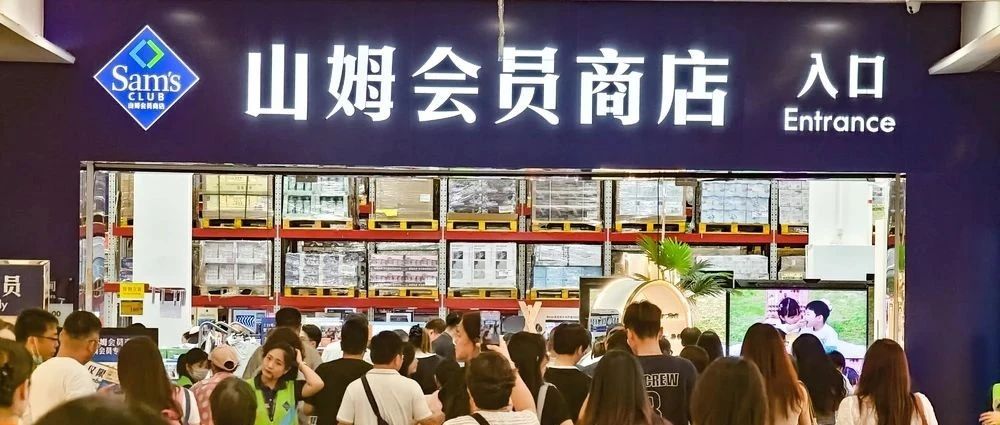
Core Viewpoint - The article discusses the backlash against Sam's Club in China due to its recent product changes, highlighting a clash between consumer expectations and the brand's strategy, reflecting broader trends in the Chinese consumer market and the evolving perception of domestic brands [3][8][10]. Group 1: Sam's Club's Product Strategy - In July, Sam's Club removed several popular domestic products, replacing them with more common brands like Holley and Liuliumei, leading to dissatisfaction among its members [5][6]. - The membership fees for Sam's Club are significant, with over 5 million members contributing at least 1.3 billion RMB annually, raising expectations for product quality and exclusivity [6][11]. - The backlash is not just about product quality but also about the perceived betrayal of consumer trust and the value proposition of being a member [10][18]. Group 2: Consumer Sentiment and Brand Perception - The article emphasizes a growing sentiment among Chinese consumers that domestic brands like Liuliumei and Weilong are proving their worth on the international stage, challenging the notion that imported goods are inherently superior [6][7]. - There is a notable shift in consumer psychology, where the identity and quality of domestic products are increasingly recognized, despite historical biases against them [27][28]. - The crisis at Sam's Club reflects a broader trend of disillusionment with foreign brands and a push for recognition of domestic quality, as seen in the rise of brands like Luckin Coffee and others [29][32]. Group 3: Industry Trends and Future Implications - The article suggests that the retail landscape in China is undergoing a transformation, with traditional distinctions between high-end and mass-market brands blurring as quality standards rise across the board [19][23]. - The success of companies like Pang Donglai, which emphasize transparency and customer service, is reshaping consumer expectations and challenging the traditional membership model of stores like Sam's Club [19][23]. - The future of membership-based retail may depend on adapting to these changes and focusing on quality and consumer trust rather than exclusivity [32][33].

恒鑫生活(301501):可降解餐饮具领军企业,全球化供应优势显现
Tianfeng Securities· 2025-07-19 12:02
Investment Rating - The report initiates coverage with a "Buy" rating for the company [4][6]. Core Viewpoints - The company is a leading manufacturer of biodegradable food service products in China, showing steady growth in performance driven by increasing demand and capacity expansion [1][3]. - The biodegradable materials market is expected to grow significantly due to the implementation of plastic restriction policies and rising consumer demand in the food service industry [2][44]. - The company has established a comprehensive production capability and a strong customer base, positioning itself well to capitalize on market opportunities [3][39]. Company Overview - The company focuses on the research, production, and sales of biodegradable products, with multiple production bases across China [1][12]. - It has developed a robust technical system for PLA material applications, enhancing its competitive edge in the market [3][38]. - The company has formed stable partnerships with numerous well-known brands, including Starbucks and McDonald's, which strengthens its market presence [3][39]. Financial Performance - The company’s revenue is projected to grow at a CAGR of 39.2% from 2020 to 2024, with net profit expected to grow at a CAGR of 70.6% during the same period [1][22]. - Revenue is expected to reach 1,900.67 million yuan in 2025, with a net profit of 257.77 million yuan [5]. - The company’s gross margin has remained stable, with net profit margin increasing from 11.3% in 2021 to 14.2% in 2024 [35]. Industry Insights - The food service industry in China is projected to reach a retail sales total of 5.57 trillion yuan in 2024, with a growth rate of 5.3% [2][48]. - The demand for biodegradable materials in food service products is expected to rise as the penetration rate remains low and environmental policies become stricter [2][44]. - The market for new-style tea and coffee is growing rapidly, with a CAGR of 11.5% from 2019 to 2024, indicating strong potential for the company’s products [2][49]. Production Capacity and Global Strategy - The company has a production capacity of 9 billion units of paper and plastic food service products and is expanding its global footprint with a new factory in Thailand [3][43]. - The establishment of the Thailand factory is expected to optimize the company's global supply chain and mitigate tariff impacts [3][43]. Profitability Forecast and Valuation - The company is expected to achieve net profits of 2.58 billion yuan, 3.12 billion yuan, and 3.74 billion yuan from 2025 to 2027, with corresponding P/E ratios of 34, 28, and 24 [4][58]. - The target price range for the company is set between 63.2 and 67.5 yuan based on comparable company valuation methods [4].