三星

Search documents
特斯拉(TSLA)周报:Robotaxi:特斯拉选择三星为其提供5G调制解调器
First Shanghai Securities· 2026-01-21 02:35
Investment Rating - The report does not explicitly state an investment rating for the automotive industry or Tesla [6]. Core Insights - Tesla has transitioned its Full Self-Driving (FSD) service to a subscription model, significantly lowering the entry price from $8,000 to $99 per month, which is expected to increase user adoption and experience [3]. - The company has confirmed the operational status of its lithium refining plant in Texas, which processes spodumene directly into battery-grade lithium hydroxide, simplifying the refining process and reducing costs [5][7]. - Tesla's AI5 chip design is nearing completion, with plans for rapid iteration on future AI chips, indicating a strong focus on enhancing its autonomous driving capabilities [4]. - The expansion of Tesla's Supercharger network includes plans for over 200 additional charging stations, which supports the anticipated growth of the Tesla Semi truck project [8]. - The Tesla Model Y has been recognized as the safest vehicle in 2025 by ANCAP, highlighting the company's commitment to safety in its vehicle offerings [9]. Summary by Sections Robotaxi - Samsung has developed a dedicated automotive-grade 5G modem for Tesla, currently in testing, which will enhance data exchange for autonomous driving [2]. FSD - Tesla will stop one-time purchases of FSD, moving to a subscription model to make the service more accessible [3]. Chips - The AI5 chip is close to completion, with the AI6 in early development, and a new patent allows older chips to run high-precision models without replacement [4]. Battery - The lithium refining plant in Texas is now operational, producing battery-grade lithium hydroxide more efficiently [5][7]. Energy Storage - Tesla plans to expand its Supercharger network significantly, including large charging stations for the Semi truck [8]. Electric Vehicles - The Model Y has been awarded the highest safety rating by ANCAP for 2025, reinforcing Tesla's safety standards [9].

未知机构:中泰科技消费丨家电TCL电子拟和索尼成立合资公司经营索尼品牌电视中资在全-20260121
未知机构· 2026-01-21 02:15
Summary of Conference Call Notes Company and Industry Involved - **Company**: TCL Electronics - **Partner**: Sony - **Industry**: Consumer Electronics, specifically Television Manufacturing Core Points and Arguments - **Joint Venture Formation**: TCL Electronics and Sony announced the establishment of a joint venture to operate Sony-branded televisions, with TCL holding a 51% stake and Sony 49%. The new company is set to commence operations on April 27, 2026 [1] - **Business Transition**: Between 2026 and 2027, Sony will transfer its television-related operations, including factories, logistics, and after-sales services, to the joint venture, which will continue to operate under the "Sony" and "BRAVIA" brands [1] - **Sony's Market Share Decline**: Sony's share of the global television market has decreased from 6% in June 2015 to 3.7% in 2025, indicating a weakening position in the television sector [1] - **Strategic Benefits for Sony**: The joint venture allows Sony to revitalize its television division while retaining its brand and sharing financial profits with TCL [1] - **Advantages for TCL**: - TCL gains direct access to operate a globally recognized high-end television brand - Sony's expertise in picture and sound quality enhances the joint venture's product offerings - The combined scale of operations could potentially surpass Samsung, positioning TCL as the largest player in the global television market [2] Important but Overlooked Content - **Market Dynamics**: The partnership signifies a shift towards increased Chinese influence in the global television market, as TCL's acquisition of Sony's television operations reflects a broader trend of Chinese companies replacing South Korean competitors [2] - **Risk Consideration**: The agreement is currently in its preliminary stages, and there are uncertainties regarding the collaboration's execution and success [3]
人均64万元年终奖!这家供应商是如何实现逆势上扬的?
Zhong Guo Qi Che Bao Wang· 2026-01-21 02:11
Core Viewpoint - SK Hynix announced a record year-end bonus of over 136 million KRW (approximately 640,000 RMB) per employee, attributed to a historic labor agreement and strong company performance, with projected operating profits nearing 45 trillion KRW (approximately 212.7 billion RMB) by 2025 [2][3]. Group 1: Record Bonuses and Labor Agreements - The significant bonuses are a result of a historic labor agreement that removed the previous cap on profit-sharing, allowing 10% of annual operating profits to be allocated to the bonus pool [3]. - The total bonus pool is expected to reach 4.5 trillion KRW (approximately 21.3 billion RMB), with an average of 136 million KRW per employee based on the company's workforce of 33,000 [3]. Group 2: Market Dynamics and Stock Performance - The memory market is reportedly in a "super bull market," surpassing previous highs due to increased demand from sectors like smart cars and AI, with prices for DDR5 memory rising over 300% since July 2025 [4]. - SK Hynix's stock price surged from approximately 204,000 KRW at the end of 2024 to about 760,000 KRW by the end of 2025, marking a 275% increase, making it one of the best-performing chip stocks globally [4]. Group 3: Automotive Memory Business Growth - The automotive memory segment has seen significant growth, driven by the rapid development of smart vehicles and the increasing demand for high-performance memory to support advanced features like autonomous driving [5][6]. - SK Hynix has strategically positioned itself in the automotive memory market, leveraging its technological advancements and securing ASIL-D certification, which is crucial for automotive safety standards [6]. Group 4: Technological Innovations and Collaborations - SK Hynix is focusing on both traditional memory technology and innovative AI-driven memory solutions for automotive applications, enhancing performance and reliability [6][7]. - Collaborations with major players in the autonomous driving sector, such as Waymo, are expanding, indicating a growing market for HBM technology in automotive applications [7]. Group 5: Future Market Outlook - The demand for memory is expected to continue rising, particularly in the context of AI and smart automotive technologies, with significant implications for market competition and pricing strategies [8]. - The memory market is dominated by three major players—Samsung, SK Hynix, and Micron—who collectively hold over 90% market share, indicating a highly concentrated competitive landscape [8][9].


未知机构:美股存储继续强势创新高以存代算大趋势0121推理时代存储是核-20260121
未知机构· 2026-01-21 02:00
Summary of Key Points from Conference Call Industry Overview - The storage sector in the US continues to show strong performance, reaching new highs, indicating a significant trend towards storage as a core component in the era of inference [1] - The competition for storage capabilities is intensifying, with a clear focus on the importance of storage in determining efficiency and outcomes in commercial applications [1] Core Insights and Arguments - The growth of contextual data at the inference end is linear, necessitating stronger contextual memory as the commercial phase of agents progresses [1] - Current GPU and HBM configurations have limitations in task processing and efficiency, making structured memory and memory pooling (CXL) essential choices [1] - The demand for AI is driving the need for enhanced computing power, long-term memory, and robust inference capabilities [1] Key Companies Mentioned - Original Manufacturers: Micron, SK Hynix, Samsung, and two unnamed storage companies [2] - Module Manufacturers: SanDisk, Shannon Microelectronics, Kape Cloud, and Demingli [2] - Chip Manufacturers: Dico Technology (Q4 profits exceeded expectations, CXL) [2] - CPU Manufacturers: Haiguang Information, Hesheng New Materials [2] - Equipment & Packaging Materials: Yake Technology, Baiwei Storage, Changdian Technology, Huayuan Holdings [2] Additional Important Information - The emphasis on the necessity of structured memory and memory pooling highlights a shift in technological requirements within the industry, which may present new investment opportunities [1][2] - The mention of specific companies and their performance metrics indicates potential areas for further research and investment analysis [2]
未知机构:开源电子AI早餐会01211行情催化美欧贸易摩擦预-20260121
未知机构· 2026-01-21 02:00
1、行情催化 美欧贸易摩擦预期下,美股半导体普遍回调,不过存储与CPU相关股票逆势大涨,闪迪涨8.0%、美光涨1.3%、西 部数据涨2.7%,英特尔涨6.4%、AMD涨2.9%、ARM涨2.9%。 2、行业速递 开源电子|AI早餐会 0121 ① 据"数码闲聊站",华为将发布首款AI眼镜,支持拍照、音频、同传翻译等功能。 Meta全球事务主管JoelKaplan在世界经济论坛上表示可穿戴设备将是下一代计算技术,眼镜将会是AI终端的正确形 态。 ② DeepSeek新模型"MODEL1"曝光。 MODEL1可能采用架构,代码中的具体差异体现在KV缓存布局、稀疏性处理和FP8解码方面,在内存优化上有多 处不同。 此外,CPU缺货涨价继续发酵。 ③ 据朝鲜日报,三星与海力士将在今年削减NAND闪存产量,以转向DRAM生产从而实现利润最大化,NAND短 缺加剧。 ① 据"数码闲聊站",华为将发布首款AI眼镜,支持拍照、音频、同传翻译等功能。 Meta全球事务主管JoelKapl 开源电子|AI早餐会 0121 1、行情催化 美欧贸易摩擦预期下,美股半导体普遍回调,不过存储与CPU相关股票逆势大涨,闪迪涨8.0%、美光 ...
未知机构:美股存储继续强势创新高以存代算大趋势0121推理时代存储是-20260121
未知机构· 2026-01-21 01:55
Summary of Key Points from the Conference Call Industry Overview - The storage industry in the US continues to reach new highs, indicating a strong trend towards storage as a critical component in the AI-driven era [1] - The era of "storage as computation" is emerging, highlighting the importance of storage in determining efficiency and outcomes in AI applications [1] Core Insights - The demand for storage is driven by the increasing volume of contextual data in AI inference, necessitating stronger memory capabilities [1] - The growth of KV cache is directly correlated with the linear increase in contextual data at the inference end, emphasizing the need for enhanced memory solutions [1] - Current GPU and HBM configurations have limitations in task processing and efficiency, making structured memory and memory pooling (CXL) essential choices for future developments [1] - The AI landscape is evolving to require more computational power, long-term memory, and robust inference capabilities [1] Key Companies Mentioned - Original manufacturers: Micron, SK Hynix, Samsung, and two unnamed storage companies [2] - Module manufacturers: SanDisk, Shannon Microelectronics, Kape Cloud, and Demingli [2] - Chip manufacturers: Dico Technology (Q4 profits exceeded expectations, focusing on CXL) [2] - CPU manufacturers: Haiguang Information and Hesheng New Materials [2] - Equipment and packaging materials: Yake Technology, Baiwei Storage, Changdian Technology, and Huayuan Holdings [2]
A股开盘速递 | A股集体低开 沪指跌0.25% 贵金属板块涨幅居前
智通财经网· 2026-01-21 01:37
Core Viewpoint - The A-share market is experiencing a mixed performance with indices showing slight declines, while certain sectors like precious metals are gaining traction, indicating a potential shift in market dynamics as earnings reports are released [1][2][3] Group 1: Market Performance - On January 21, A-share indices opened lower, with the Shanghai Composite Index down 0.25% and the ChiNext Index down 0.24% [1] - The precious metals sector saw significant gains, with Hunan Silver rising over 6%, while sectors such as electric grid equipment, AI applications, and semiconductors faced declines [1] Group 2: Institutional Insights - Industrial analysts from Industrial Securities suggest that the spring market may reach new highs, emphasizing the importance of fundamental performance as earnings reports are disclosed [1] - Bank of China Securities warns of short-term pressures on the "spring surge" market, indicating that the market may experience fluctuations as it digests previous gains and awaits new catalysts [2] - Dongfang Securities notes that the market is undergoing mild adjustments, which could be beneficial for future upward movement, with active funds seeking more profitable directions [3] Group 3: Sector Focus - Analysts highlight that strong fundamentals in AI applications, particularly in sectors like "AI + entertainment," "AI + office," "AI + gaming," and "AI + marketing," are expected to outperform in the upcoming quarters [2] - The semiconductor sector is anticipated to benefit from strong performance by companies like TSMC, with ongoing demand for memory chips driving growth in the A-share semiconductor industry [2]



DRAM,何以至此?
半导体行业观察· 2026-01-21 01:23
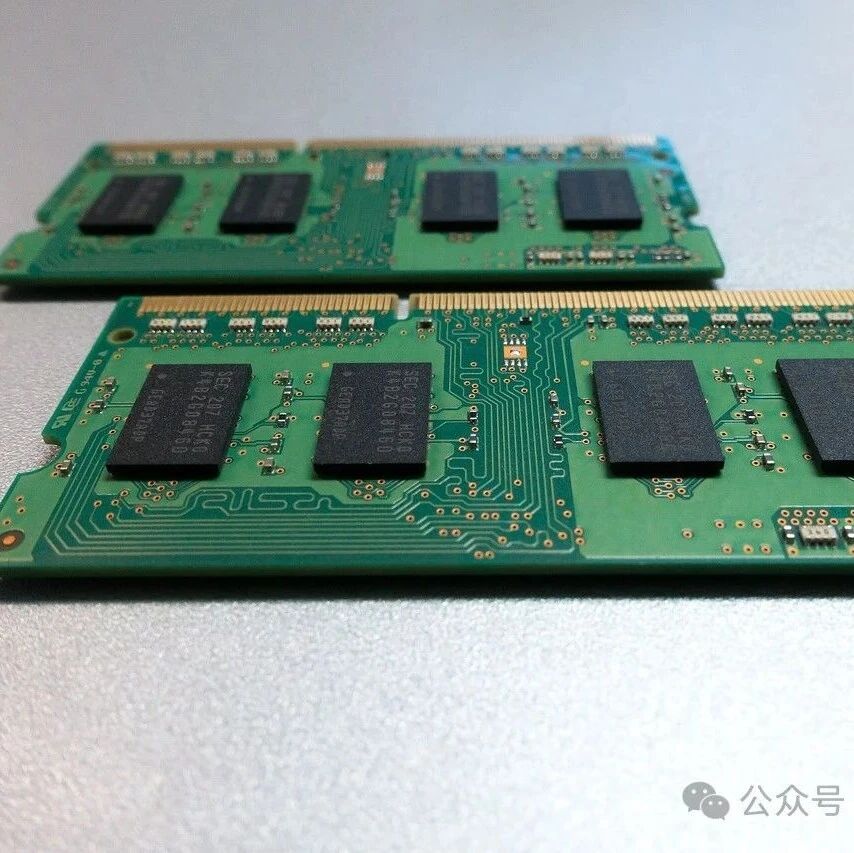
Core Insights - The memory shortage is expected to persist until 2027 due to the strong demand for DRAM driven by artificial intelligence data centers, leading to increased prices across the memory market [1][3] - The current price dynamics are influenced by concerns over future supply shortages, prompting customers to secure memory supplies in advance, which exacerbates the shortage and drives up spot prices [1][3] Group 1: Market Dynamics - The latest round of DRAM price increases began in Q3 2025, with a 13.5% quarter-over-quarter rise, indicating a peak in the market cycle and potential for a correction [3] - Early signals from company earnings reports suggest that prices may rise further by 30% in Q4, driven by fears of supply shortages [3] - The spot price for DDR5 memory used in servers has surged by 100% in some cases, impacting PC manufacturers like HP and Dell, who may remove certain laptop models from their product lines due to high DRAM prices [3] Group 2: AI Infrastructure Impact - The core imbalance in the memory market is attributed to the construction of AI infrastructure, with data center operators heavily investing in AI accelerators that require high-bandwidth memory (HBM) and standard DDR5 memory [4] - An AI server with eight accelerators requires approximately 1.6TB of HBM and 3TB of DDR5 memory, significantly more than a typical non-AI server, leading to a rapid increase in memory demand that exceeds supply capabilities [4] Group 3: Broader Market Effects - The automotive sector, which uses LPDDR4 and LPDDR5 memory, is strategically important for memory suppliers, especially with the rise of autonomous vehicles requiring more memory [5] - The production processes for LPDDR and DDR memory are about 80% similar, meaning that if DRAM companies prioritize AI server production, LPDDR supply will also be affected [5] - Micron's decision to gradually shut down its Crucial consumer business reflects a strategic shift towards higher-margin AI-driven demand rather than consumer products [5] Group 4: Demand and Supply Outlook - Data centers dominate DRAM demand, accounting for about 50% of total bit demand, with AI workloads representing approximately 30% of that demand [6] - Historical trends show that DRAM market cycles can change rapidly, but the typical self-regulating mechanism of high prices leading to reduced demand has not yet occurred due to the insensitivity of data center operators to price increases [6] - Structural constraints in supply relief are evident, as building or expanding a DRAM factory typically takes 2-3 years to reach mass production, with limited new supply expected until 2026 [6][7] Group 5: Future Supply Developments - Companies like CXMT are expanding capacity primarily for domestic clients, while Samsung is prioritizing HBM production over broader DRAM products [7] - SK Hynix's M15X factory is expected to start production in late 2026, and Micron's new factory in Boise is anticipated to increase capacity in 2027 [7] - Until significant capacity increases occur, smartphone and PC manufacturers may need to slow down memory capacity growth or AI infrastructure spending to alleviate price pressures [7]
Omdia:2025年印度智能手机出货量因需求疲软与成本压力下滑1% vivo保持市场领先地位
Zhi Tong Cai Jing· 2026-01-21 01:17
Core Insights - The Indian smartphone market is expected to see a year-on-year decline of 7% in Q4 2025, with shipments dropping to 34.5 million units, influenced by high channel inventory, currency depreciation, and rising storage costs [1][8] - Vivo maintained its leading position in Q4 2025 with shipments of 7.9 million units, capturing a market share of 23%, while Samsung and Apple followed with 4.9 million and 3.9 million units respectively [1][8] - The overall smartphone shipments in India for 2025 are projected to be 154.2 million units, reflecting a slight decline of 1% compared to 2024 [1][8] Market Dynamics - The market is showing signs of maturity, with brands focusing on value-driven strategies rather than volume growth, particularly in the context of rising input costs and cautious consumer spending [1][7] - Vivo and OPPO were the only brands to achieve double-digit year-on-year growth in Q4 2025, highlighting their strong retail execution and ability to attract consumer demand [2][5] - Samsung's performance was supported by selective upgrades and cashback offers, but overall shipments slowed down, while Apple maintained stability due to strong demand for the iPhone 17 [5] Future Outlook - The Indian smartphone market is expected to experience a slight decline in 2026, driven by high prices and limited upgrade opportunities for users [7] - Brands are anticipated to shift towards value-driven growth, focusing on the "flagship killer" segment priced between 25,000 to 60,000 INR, which offers better profit margins amid rising storage costs [7] - Retail execution capabilities, including promotional strength and localized sales strategies, will be crucial for maintaining market stability in the coming year [7]



都在盯着国家队
Xin Lang Cai Jing· 2026-01-21 01:09
来源:硬核姬老板 周二(1月20日)题材有所熄火,算力硬件、商业航天、可控核聚变等泛科技板块集体下跌。 但非常有意思的点在于,上午冲高回落后大家好像没有特别慌,很多人都是"艾玛,终于跌了"的心态。 真。情绪可控。 不过有几个小发现可以和大家分享一下。 从上周三顶部的4万亿成交到1月19日全场成交2.73万亿,1月20日盘中看着成交额还在缩。 看了下融资余额。 截至1月19日,市场融资余额合计2.71万亿元,较前一交易日减少85.01亿元,为新年以来首次下降。 1月19日也是融资保证金回归到100%的首个交易日。 降温效果立竿见影。 另外上周主流宽基ETF净流出后,大家开始将视为国家队动向,每日盯着申赎情况看。 如果按照这个思路,那么续上周后,本周流出力度相对减弱,前期被砸的老登股,比如银行、券商、长 电等等也开始企稳,目前舆论风向改为处罚网络吹票的大V。 一、都在盯着国家队 周一(1月19日)的量能缩了不少。 如果转成震荡的话,那么依旧是回到了重行业轻指数的行情。 大浪淘沙,AI应用还有戏吗 这点很明显是规范市场行为,也验证了之前大家一致性预期: 这是温柔的点刹,并不代表不让市场涨。 游资非常敏锐的,感受到了 ...