华为

Search documents
如何看SpaceX申请百万卫星发力太空AI
2026-02-03 02:05
Summary of Conference Call on Commercial Aerospace Industry Industry Overview - The discussion primarily revolves around the commercial aerospace sector, with a focus on SpaceX and its recent developments, including Elon Musk's application for launching 1 million satellites and the implications for the industry [1][2][22]. Key Points and Arguments 1. **Significance of Musk's Application**: The application to the FCC marks a shift from mere announcements to actionable plans, indicating that SpaceX is moving towards actual implementation of its satellite launch goals [1]. 2. **SpaceX's Funding and Strategy**: Musk is actively promoting SpaceX's capabilities, particularly in rocket launches, to attract investment for future projects, including space computing [2][3]. 3. **Growth in Commercial Aerospace**: The year 2026 is anticipated to be pivotal for commercial aerospace, with expectations for the introduction of reusable liquid rockets and significant advancements in satellite constellations [3]. 4. **Emergence of Space Computing**: The concept of space computing is gaining traction, paralleling the development of satellite internet in 2019, with significant investments expected in this area [4][5]. 5. **Investment Recommendations**: Analysts suggest focusing on companies with substantial satellite constellations and government backing, as these factors are critical for success in the commercial aerospace sector [6][7]. 6. **Key Players**: Companies like 正号股份 and 轨道晨光 are highlighted as significant players due to their large satellite constellations and strategic partnerships [7]. 7. **Space Solar Power**: The concept of space solar power is emerging as a critical area of interest, with Musk's references to utilizing stellar energy indicating a long-term vision for energy consumption in space [7][8]. 8. **Material and Equipment Needs**: The aerospace sector requires advanced materials and equipment, with companies like 西部材料 and 斯瑞新材 identified as key suppliers for rocket components and high-temperature materials [16][18]. 9. **Market Potential**: The potential market for space solar power is estimated to reach around 10 trillion yuan, significantly larger than terrestrial solar power markets [27][28]. 10. **Technological Advancements**: The development of advanced materials for extreme conditions in space is crucial, with companies focusing on high-performance composites and 3D printing technologies [19][31]. Additional Important Insights - **Government Support**: The importance of government backing for satellite projects is emphasized, as it can significantly influence funding and project viability [6]. - **Long-term Vision**: The discussions reflect a broader vision for the future of space exploration and technology, with implications for energy, computing, and global infrastructure [8][22]. - **Investment Timing**: Analysts suggest that the upcoming months will be critical for securing contracts and orders in the aerospace sector, particularly in light of regulatory timelines and market dynamics [11][12][30]. This summary encapsulates the key discussions and insights from the conference call, highlighting the commercial aerospace industry's current landscape and future potential.
2月债市策略及市场关注点分析
2026-02-03 02:05
Summary of Key Points from Conference Call Industry Overview - The conference call primarily discusses the bond market strategies and the economic outlook for February 2026, focusing on government bonds, credit bonds, and the impact of monetary policy on these markets [1][2][3]. Core Insights and Arguments 1. **Monetary Policy and Interest Rates**: - Current monetary policy remains accommodative with optimistic economic and inflation expectations, leading to a 10-year government bond yield surpassing 1.8%. However, breaking this level is challenging without clear signals for interest rate cuts [1][2]. - The 10-year bond yield is currently around 1.8%, slightly above the low of 1.77% seen in mid-November [2]. 2. **Credit Bonds and Market Dynamics**: - Increased volatility in the stock market may affect the scale of fixed-income funds, influencing preferences for low-grade credit (1-2 years) and high-grade credit (3-5 years) [2][3]. - The issuance of bonds by private enterprises is rising due to government support, with significant events in 2025 indicating a focus on enhancing financing mechanisms for small and medium enterprises [2][10]. 3. **Policy-Driven Opportunities**: - The government is expected to provide funding support to local governments to ensure economic growth targets are met, with an emphasis on increasing the total amount and optimizing the structure of special debt [15][16]. - The introduction of new policy financial tools worth 500 billion yuan is anticipated to promote project construction [16]. 4. **Investment Strategies**: - Investors are advised to consider holding bonds over the Spring Festival, weighing coupon levels and expectations for interest rate declines post-holiday. Current low coupon levels suggest caution [4]. - Specific recommendations include focusing on government bonds with potential for price appreciation, such as 10-year active bonds and long-duration bonds (30 and 50 years) [5][6][7]. 5. **Sector-Specific Insights**: - The private sector's bond issuance is notably increasing, with significant participation from industries like utilities, transportation, and pharmaceuticals. This trend indicates a shift in the market dynamics, with non-financial enterprises gaining ground [10][13][14]. - The issuance of asset-backed securities (ABS) and asset-backed notes (ABN) is becoming a popular financing choice for private enterprises, supported by favorable government policies [11]. Additional Important Content - **Long-Term Investment Considerations**: - While 50-year government bonds are recommended for their favorable odds, investors should be cautious about extending duration too much in their portfolios [7]. - The liquidity of 50-year bonds is sufficient for trading and holding needs, but larger portfolios may require more active long-term bonds [7]. - **Future Economic Growth and Government Support**: - The government aims to stimulate future industrial development through leading technology enterprises, which will receive extensive policy support [17]. - Local governments are expected to expand domestic demand through various measures, including job security and wage increases, focusing on service consumption sectors [18]. This summary encapsulates the key points discussed in the conference call, providing insights into the bond market, investment strategies, and the broader economic context.
万咖壹联20260202
2026-02-03 02:05
Summary of Conference Call Notes Company and Industry Overview - The company is deeply integrated with six major smartphone manufacturers: Apple, Huawei, Xiaomi, OPPO, vivo, and Honor, exclusively managing all game advertisements on the Honor platform, which provides access to a wealth of real-time dynamic data for precise ad targeting [2][4][5]. Core Insights and Arguments - **AI Advertising Effectiveness**: Through partnerships with Volcano Engine and Alibaba Cloud, the company has significantly enhanced its AI advertising system, achieving client ad ROI typically between 120% and 140%, with some clients exceeding 150% [2][4]. - **Revenue Sharing Model**: The company plans to implement a revenue-sharing model where 10% of the revenue from ROI exceeding 150% will be allocated to the company, which is expected to significantly improve gross margins and will be reflected in the 2025 annual report [2][4][5]. - **AI Mobile Era**: The rise of AI mobile technology is expected to transform the mobile smart terminal landscape, with voice input becoming a primary information entry point, simplifying user interactions and potentially increasing revenue from direct service transactions rather than traditional advertising [6][8]. - **International Expansion**: The company aims to leverage its partnerships with smartphone manufacturers to expand its AI business internationally, focusing on Apple iOS and some Xiaomi overseas operations, with plans to extend to platforms like Google Play, Meta, and TikTok [7][8]. Additional Important Content - **Market Share and Growth Projections**: The company has surpassed a 50% market share in its domestic niche and anticipates rapid growth in overseas revenue, projecting a target of 10 billion yuan by the end of 2025, with international business expected to account for over 30% of total revenue [2][7]. - **Stock Option Plan**: A new stock option plan has been introduced, linked to market capitalization targets of 4 billion, 8 billion, and 12 billion yuan, aimed at attracting new strategic investors from the internet or smartphone sectors [3][11][12]. - **Collaboration with Local Governments**: The company is selectively collaborating with local government industrial funds based on specific regional needs, such as cultural and AI-related digital industry development [13]. - **Future Outlook**: The company expresses confidence in its growth potential, emphasizing its advantageous position in the AI era and the significant opportunities presented by the evolving mobile landscape [14].
高端车市场预期不断提升-Robotaxi产业加速推进
2026-02-03 02:05
Summary of Key Points from Conference Call Records Industry Overview - The high-end passenger car market (priced above 500,000 yuan) is experiencing accelerated domestic substitution, with companies like JAC Motors and Geely expected to capture more market share [1][2] - The mid-to-low-end market is significantly affected by rising costs (lithium carbonate, storage chips, aluminum, etc.) and policy fluctuations, necessitating attention from automakers regarding the impact of cost increases on final prices [1][2] Core Insights and Arguments - Tesla plans to mass-produce its third-generation robots in the first half of 2026, which will initiate a production cycle for related component suppliers. The company aims to launch a steering wheel-less Robotaxi by 2027, highlighting the importance of companies like Sihong and Xinquan in the robot component sector [1][4] - The automotive sector faces dual challenges in 2026: rising costs (with vehicle costs increasing by approximately 4,000 to 5,000 yuan due to price hikes in chips, batteries, and copper foil) and weak demand (due to subsidy reductions and the withdrawal of purchase tax incentives) [1][6] - Despite these challenges, high-end models from JAC Motors and Geely still present opportunities, particularly in the 500,000 yuan and above segment [1][6] Market Performance and Expectations - The automotive market in January 2026 showed signs of demand exhaustion, primarily due to a surge in sales before the reduction of local subsidies in Q4 2025. Fuel vehicle sales increased, while mid-to-low-end new energy vehicle sales declined significantly [3][7] - Anticipated new model launches from BYD in late February and a series of new releases in March and April are expected to stimulate market recovery, although year-on-year sales may still show negative growth due to base effects [8][9] Investment Opportunities - JAC Motors and Geely are highlighted as companies with strong growth potential, particularly in the high-end market segment. JAC's ultra-luxury models face little competition in the 600,000 to 1,500,000 yuan range, while Geely's Zeekr brand is expected to see significant sales growth [10] - Yutong Bus is noted for its strong overseas business performance, with sales of large buses and exports of new energy buses showing substantial growth. The company is well-positioned to benefit from the acceleration of electrification in Europe and emerging markets [12] Additional Insights - The robot industry is entering a critical development phase in 2026, with Tesla's plans for mass production of its third-generation robots and the introduction of Robotaxis expected to have significant implications for the supply chain [4][5] - Yutong Bus maintains a high dividend payout ratio and is expected to continue this trend as profits grow, making it a long-term investment opportunity [13] Regulatory and Policy Developments - In North America, significant advancements in the autonomous driving sector have been noted, with Tesla and Waymo making strides in technology and operations. New regulations are anticipated to support the growth of autonomous vehicles [14][15]

问界M6汽车官图发布:璀璨钻石大灯,主打新锐运动风格
Feng Huang Wang· 2026-02-03 01:56
稍早前,华为常务董事兼终端BG董事长余承东公开了问界M6的实车视频。他表示,"更年轻、超动 感。璀璨的大灯像钻石一样闪亮,小蓝灯也与众不同,还有更多惊喜,留点悬念,敬请期待。" 凤凰网科技讯2月3日,华为终端官方放出鸿蒙智行问界M6汽车的宣传图。画面显示,新车采用分体式 前后大灯设计,配备半隐藏式门把手、五幅熏黑轮毂、红色运动卡钳,主打新锐运动风格。 ...


汽车早餐 | 比亚迪官宣新品牌领汇汽车;雷军回应小米二手车价格崩盘;余承东:新锐王牌问界M6将登场
Zhong Guo Qi Che Bao Wang· 2026-02-03 01:55
Domestic News - The Ministry of Commerce and nine other departments encourage local governments to increase the number of subsidies for replacing old consumer goods during the Spring Festival, aiming to boost offline retail support and promote various product exhibitions [2] - The China Automobile Dealers Association reports that the automotive consumption index for January 2026 is 31.1, indicating a phase of adjustment in the automotive market due to multiple factors including the Spring Festival holiday and tax changes for new energy vehicles [4] - Guangdong province supports the testing and demonstration of intelligent connected vehicles in cities like Guangzhou and Shenzhen, promoting applications in areas such as logistics and smart sanitation [5] International News - Tesla confirms the mass production of its 4680 battery using dry electrode technology for both the anode and cathode, as disclosed in its fiscal year 2025 fourth quarter update [6] - Hyundai officially abandons the option to repurchase its vehicle manufacturing plant in St. Petersburg, Russia, indicating a permanent exit from local production [8] - Toyota's joint venture in Indonesia, PT Toyota-Astra Motor, has begun preparations for local production of hybrid vehicle batteries, establishing a dedicated production line [9] Corporate News - BYD announces the launch of a new automotive brand, Linghui, which will focus on B2B markets such as ride-hailing and corporate transportation, differentiating itself from the personal passenger vehicle market [10] - XPeng Motors officially starts large-scale overseas shipments of its 2026 model P7+, marking its entry into 18 countries [11] - Xiaomi's CEO Lei Jun responds to claims of a price collapse in the second-hand car market, highlighting that the SU7 electric model has a one-year resale value retention rate of 86.05%, ranking first according to a report [12] - Cao Cao Mobility announces that its Robotaxi 2.0 fleet is equipped with low-orbit satellite communication technology, which will enable new SOS features [13] - SAIC-GM-Wuling reports global sales of over 105,000 vehicles in January, with a significant year-on-year growth of over 40% in overseas markets [14] - Huawei's executive Yu Chengdong announces the upcoming launch of the new model Aito M6, indicating a strong product lineup for the spring [15]



2026年科技、传媒和电信行业预测报告2026
Deloitte· 2026-02-03 01:55
Investment Rating - The report does not explicitly provide an investment rating for the technology, media, and telecommunications (TMT) industry Core Insights - The gap between the ideal and reality in AI applications will narrow by 2026, driven by the solidification of foundational capabilities rather than flashy new models [3] - The TMT sector is expected to surpass all other industries in terms of scale, value, and economic growth contribution, as other sectors leverage TMT capabilities for their own innovation and efficiency [4] - Over half of the 13 key themes in the report focus on AI, emphasizing the importance of scaling AI applications and the need for practical groundwork such as data governance and compliance management [5] Summary by Sections AI-Driven Cross-Industry Transformation - The report predicts a shift from "software disrupting the world" to "AI, particularly agentic AI, disrupting the world" by 2026 [4] - AI data center spending is currently a significant contributor to GDP growth in the U.S., with TMT sector market capitalization nearing 53% of the S&P 500 [4] Generative AI and Agentic AI - Generative AI is expected to be one of the most influential technologies, with its integration into mainstream applications leading to a user base expansion that surpasses standalone applications [7][27] - By 2026, the daily usage of generative AI in embedded applications is projected to be three times higher than that of standalone tools [27] AI Computing Demand - By 2026, inference will account for two-thirds of all AI computing capacity, with a significant portion still relying on high-cost, high-power AI chips in data centers [8][53] - The market for inference-optimized chips is expected to exceed $50 billion by 2026, indicating a growing demand for specialized computing solutions [53] Autonomous AI Agents - The market for autonomous AI agents is projected to reach $8.5 billion by 2026, with potential growth to $45 billion by 2030 if companies effectively manage coordination challenges [9] Robotics and Drones - The cumulative installation of industrial robots is expected to reach 5.5 million units by 2026, with a potential doubling of annual shipments by 2030 driven by labor shortages and advancements in AI capabilities [10] SaaS and AI Integration - The integration of agentic AI into SaaS platforms is anticipated to fundamentally change how businesses procure and utilize software, leading to more intelligent and adaptive applications by 2026 [11] Semiconductor Supply Chain - The report highlights the increasing urgency for companies to enhance supply chain resilience amid trade restrictions affecting next-generation AI chip technologies [12] Short Video Content Evolution - The micro-drama format is reshaping global viewing habits, with revenue from in-app micro-dramas expected to double to $7.8 billion by 2026 [13] Podcasting Trends - Video podcasts are expected to generate approximately $5 billion in annual advertising revenue by 2026, reflecting a nearly 20% year-over-year growth [15] Sovereign Technology Initiatives - Countries are increasingly focused on building sovereign technology and AI infrastructure, which is expected to accelerate investments in cloud computing, semiconductors, and AI models over the next decade [16] Satellite Internet Developments - The report forecasts that spending on direct-to-device satellite network infrastructure will grow to between $6 billion and $8 billion by 2026, driven by the deployment of low Earth orbit satellites [20] Mobile User Trends - By 2026, the importance of mobile operators' reward programs may rival that of network performance in developed markets, indicating a shift in consumer priorities [21]
补偿N+4!德国巨头博世在华启动人员优化,燃油汽车项目成「重灾区」
Xin Lang Ke Ji· 2026-02-03 01:53
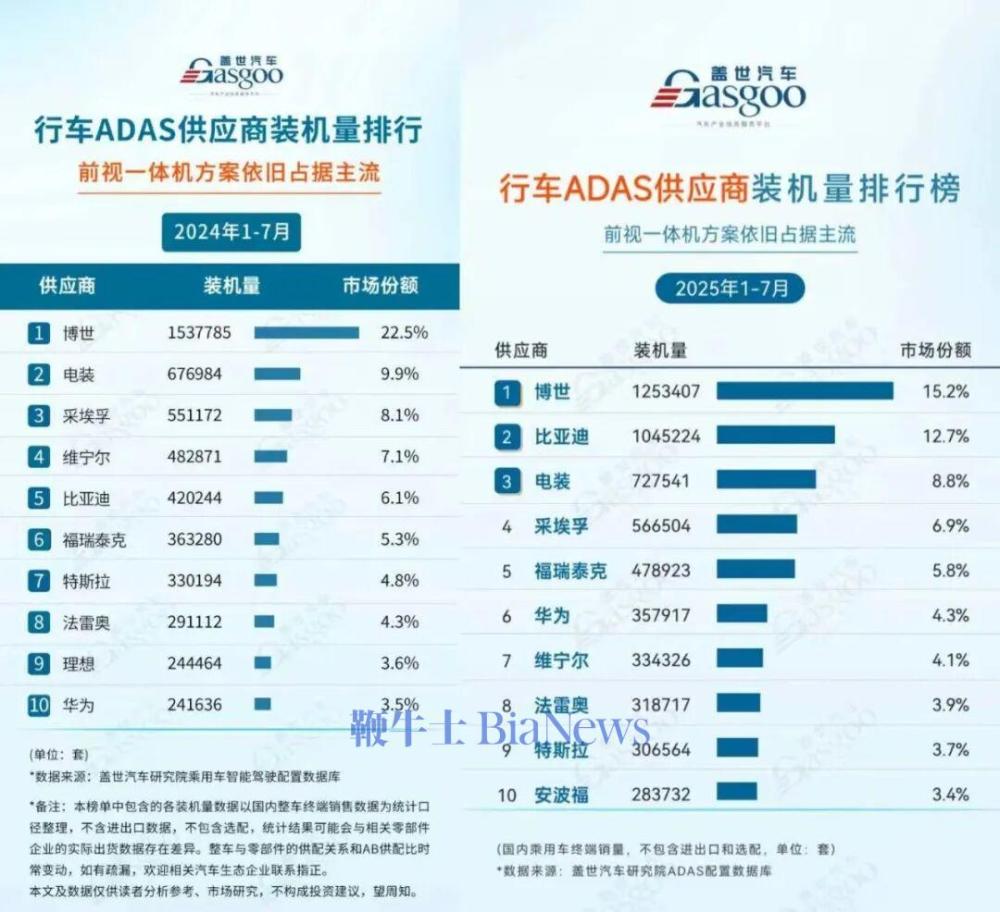
Core Viewpoint - Bosch is undergoing significant layoffs, particularly in its fuel vehicle projects in China, due to declining profitability and increased competition from local companies like Huawei and BYD, which are gaining market share in the automotive sector [2][5][11]. Group 1: Layoffs and Company Response - Bosch has confirmed layoffs affecting nearly 200 employees in China, primarily in its fuel vehicle and hydrogen projects, citing economic reasons for these cuts [2][5]. - Bosch China has denied the layoffs as a sign of distress, framing them instead as part of normal operational management [2]. - The company has previously announced substantial layoffs in Germany, with plans to cut 22,000 jobs by 2030, indicating a broader trend of workforce reduction [2]. Group 2: Financial Performance and Market Position - Bosch's sales in China are projected to grow modestly, with expected revenues of approximately €142.7 billion in 2024, reflecting a 2.7% increase from the previous year [4]. - The company's profitability has been under pressure, with an EBIT margin of only about 2% in 2024, below the expected 3.5% [2]. - Bosch's market share in advanced driver-assistance systems (ADAS) has declined significantly, with its share dropping from 22.5% in early 2024 to 15.2% in 2025, as competitors like BYD and Huawei gain ground [7][8]. Group 3: Competitive Landscape - The automotive industry is witnessing a shift in competitive dynamics, with local companies like Huawei and BYD rapidly advancing in technology and market presence, leading to Bosch's diminishing influence [11]. - Bosch's challenges are compounded by a broad product line and a complex organizational structure, making it difficult to maintain competitive advantages in every segment [10]. - The transition from traditional fuel vehicles to electric and smart technologies is critical for Bosch, as failure to adapt could result in further market share loss [11].
2026年中国人工智能生成内容(AIGC)产业链、用户规模及竞争现状,行业加速向垂直行业深度渗透[图]
Chan Ye Xin Xi Wang· 2026-02-03 01:35
Core Insights - The AIGC (Artificial Intelligence Generated Content) industry is experiencing explosive growth in China, with revenue expected to rise from approximately 440 million yuan in 2020 to 544.55 billion yuan by 2032, positioning China as a potential global leader in this market [1][10]. Group 1: AIGC Industry Overview - AIGC is defined as a new content production method utilizing AI technology to automatically generate content, categorized as a type of content from the producer's perspective [2]. - The core infrastructure of the AI industry consists of computing power, algorithms, and data, which are essential for the innovation and development of the AIGC sector [2]. Group 2: AIGC Industry Advantages - AIGC significantly reduces costs and increases efficiency by automating repetitive content production tasks, thus shortening the overall content creation cycle and lowering labor and time costs [3][4]. - The technology enables multi-modal creation, allowing for cross-media conversion of different content forms, enhancing creativity and broadening the scope of content presentation [3][4]. - AIGC offers high customization accuracy, deeply analyzing user inputs to generate tailored content that meets diverse user needs [4]. Group 3: AIGC Industry Policies - Since 2023, China has been establishing a multi-layered policy framework for AIGC, progressing from basic regulations to comprehensive empowerment and safety governance [5]. - Policies encourage innovation in AIGC technology across various fields, aiming to create a robust application ecosystem [5]. Group 4: AIGC Industry Chain - The upstream of the AIGC industry includes data collection, cleaning, and labeling, which provide high-quality data support for AI model training [7]. - The downstream involves various applications that utilize AI models to solve specific problems, including the development and operation of applications that automatically generate images, text, and music [7]. Group 5: AIGC Industry Development Status - Since 2023, advancements in large model capabilities and decreasing operational costs have accelerated the development of AIGC, with commercial products like ChatGPT and Midjourney emerging [8][9]. - The global AIGC market is projected to grow from approximately $2.3 billion in 2020 to about $19.5 billion by 2024, with a compound annual growth rate of 70.6% [9]. Group 6: AIGC User Growth - The user base for AIGC in China is expected to reach 515 million by June 2025, driven by the expansion of application scenarios and increased product usability [11][12]. - The demographic profile shows that young and middle-aged groups constitute the majority of users, reflecting the adoption patterns of emerging internet technologies [12]. Group 7: AIGC Competitive Landscape - Major international players in the AIGC space include OpenAI, Microsoft, Google, and Meta, while Chinese companies like Baidu, Alibaba, and Tencent are also significant competitors [13][14]. - The competition is shifting from technical parameter comparisons to the ability to implement and commercialize solutions across various scenarios [14]. Group 8: AIGC Industry Development Trends - AIGC technology is evolving towards systematic upgrades, with multi-modal integration breaking down barriers between different types of data [17]. - The industry is moving towards deeper penetration into vertical sectors, creating tailored solutions that meet specific needs [17].




雷军怒斥说小米二手车崩盘的人:保值率第一,超特斯拉保时捷;元宝红包刷屏被指「双标」,腾讯:非诱导分享;马斯克旗下SpaceX已收购xAI
雷峰网· 2026-02-03 00:36
Key Points - Elon Musk announced that SpaceX has acquired xAI, with a new company valuation of $1.25 trillion, integrating advanced rocket and satellite technology with AI capabilities [4][5] - Lei Jun refuted claims of Xiaomi's second-hand car price collapse, highlighting that the SU7 model has the highest resale value among electric vehicles at 86.05% [7][8] - Tencent's internal communication addressed concerns over its Yuanbao red envelope campaign, asserting it does not induce sharing, despite previous actions against similar marketing strategies [10][11] - Andrew Miles, former president of Sam's Club China, has joined Metro as a consultant, bringing extensive experience from his tenure at Walmart [14][15] - Huawei achieved the top market share in China's smartphone market for January at 18.6%, driven by strong sales of the Mate 80 series [17][19] - Mercedes-Benz has initiated a price reduction of approximately 10% on select models to improve dealer liquidity [25] - Tesla announced the upcoming launch of its third-generation humanoid robot, expected to produce one million units annually by 2026 [45][46] - Samsung and SK Hynix plan to expand their advanced NAND production capacity, targeting a monthly output of 40,000 to 50,000 wafers [48][49]