
古茗

Search documents
农夫山泉推出冰块产品 冰块生意为何成新风口?
Xin Lang Zheng Quan· 2025-07-04 08:24
Core Insights - The collaboration between Nongfu Spring and Sam's Club to launch "Pure Transparent Edible Ice" has unexpectedly become a consumer sensation, highlighting the competition for innovative consumption scenarios in the food and beverage industry [1] Pricing Strategy - The 2 kg bag of ice is priced at 22.8 yuan, emphasizing two main selling points: "sourced from the natural water of Qiandao Lake" and "24-32 hours of ultra-low-speed freezing process," which reportedly reduces melting speed by about 20% compared to traditional methods [2] - The pricing strategy shows a significant premium, as the ice is priced at four times that of bottled water, with consumer feedback indicating mixed reactions regarding its affordability [2] - Compared to competitors, Nongfu Spring's pricing is competitive, with similar products priced significantly lower, indicating a strategic positioning towards high-end consumers [2][3] Market Dynamics - The ice market is becoming increasingly competitive, with various players including traditional ice manufacturers, supermarkets, and beverage giants like Yili and Mengniu entering the space [3] - Nongfu Spring's advantage lies in its brand recognition and supply chain capabilities, as it invests in self-owned production lines to ensure quality control [3][4] Cost Structure - The cost structure of industrial ice production differs significantly from home ice-making, with substantial costs associated with water purification and energy consumption during the freezing process [3] - The packaging and cold chain logistics represent a significant portion of the total costs, with cold chain expenses accounting for over 50% of the total cost [3] Profitability Challenges - The profit margins in the ice business are extremely thin, with traditional ice manufacturers facing pressure from packaging, transportation, and labor costs [4] - Nongfu Spring's strategy of using larger packaging sizes helps to dilute the cost per unit, allowing for higher pricing [4] Future Market Potential - The ice market is projected to grow significantly, with a forecasted market size exceeding 63 billion yuan by 2026, driven by increasing consumer demand for ice products [5] - However, there are concerns regarding regulatory standards for ice products, as current regulations lack clarity on hygiene standards for freshly made ice [5][6] - Nongfu Spring's strategy appears to focus on creating a "consumption ecosystem" around ice products, aiming to enhance brand perception and drive sales of other beverages [6]

开屏消费观|柠檬价格狂飙!网友:我的“夏日续命水”要涨价了吗?
Sou Hu Cai Jing· 2025-07-04 07:27
Core Insights - The price of lemons has surged significantly, with wholesale prices in June rising over 60% year-on-year, leading to retail prices reaching as high as 5 yuan per lemon in some markets [1][6][19] - Consumers are expressing concern over the rising costs of lemon-based beverages, with many questioning if prices will continue to increase [1][5][23] - The increase in lemon prices is attributed to multiple factors, including adverse weather conditions affecting global supply, heightened demand for lemon-based drinks during summer, and a tight international lemon market [37][38] Price Trends - In June, the average wholesale price of lemons was reported at 12.83 yuan per kilogram, marking a 63% increase year-on-year and a 29% increase since April [6][37] - Retail prices for lemons have doubled in some cases, with reports of 5 kg of lemons previously priced at around 20 yuan now costing over 40 yuan [1][19] - Specific retail prices include 4.9 yuan for two New Zealand lemons and 15.6 yuan for a pack of four small lemons, indicating a significant price increase from previous months [10][13] Consumer Behavior - Social media discussions reveal widespread dissatisfaction among consumers regarding the high prices of lemons, with many sharing tips on where to find cheaper options [3][5] - Some consumers are considering growing their own lemons as a cost-saving measure [5] - The price increase has led to a noticeable shift in purchasing behavior, with some consumers opting for smaller quantities or alternative sources [5][19] Impact on Businesses - The rising costs of lemons are impacting beverage brands, particularly smaller tea shops that rely heavily on lemon for their products [23][27] - Major brands like Mixue and Luckin Coffee have managed to maintain their prices due to stable supply chains, while smaller businesses struggle with profit margins [23][31] - The price volatility has prompted some businesses to explore alternative lemon varieties that are less affected by the price surge [27][28] Market Outlook - The lemon price surge is expected to stabilize as new harvests from major production areas like Sichuan's Anyue are anticipated in September and October [38] - The overall lemon production in China accounts for 13.5% of the global total, with regions like Yunnan showing potential for increased lemon cultivation [38][41] - Industry experts suggest that maintaining quality and expanding sales channels will be crucial for Yunnan lemons to capitalize on current market opportunities [41]


疯狂的冰杯:销量激增300%,年轻人抢着买
Qi Lu Wan Bao Wang· 2025-07-04 05:42
7月2日,济南市气象台发布高温橙色预警,预计3日至6日济南市将出现高温天气。全市大部分地区日最 高气温37℃左右,局部地区可达40℃以上。热浪来袭,一度风靡的消暑神器——冰杯在济南热度如何? 为满足年轻人多元口味,冰杯也在不断推陈出新。记者走访了济南市多家便利店、社区超市看到,冰杯 普遍被陈列在冷柜的黄金位置,种类繁多。不少店员表示,自5月份以来,冰杯销售持续火爆,每天要 补货一两次。 其中,基础款冰杯(以饮用纯净水制成的冰块)价格区间集中在3-5元/杯,创新型的复合冰杯产品,如 添加现萃咖啡、鲜果浓缩汁等元素的特色款,则定位中端市场,售价普遍维持在7-10元/杯。 高温催热"凉"经济 冰杯成为年轻人新宠 7月2日,齐鲁晚报·齐鲁壹点记者在泺源大街附近的一家便利店看到,入口处的冷柜里摆放了不少塑料 杯,里面装着"透明如玻璃"的立方体冰块,一杯160g左右的冰杯产品单杯价格为3元。 "最近天气热,日销最多上百杯,最少也得三四十杯。"其门店店员一边整理货架一边介绍,午休和下班 后是购买高峰,很多顾客会直接在店里搭配苏打水、养乐多或咖啡DIY特调饮品,这种即买即用的消费 模式受上班族欢迎。 在大明湖附近的一家京东便 ...
Tims天好中国2025开局:加盟驱动增长难掩盈利挑战
Guan Cha Zhe Wang· 2025-07-03 08:14
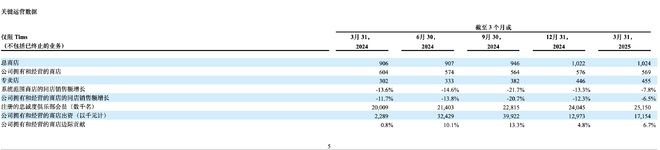
Core Insights - Tims China reported a decline in revenue and same-store sales in Q1 2025, despite growth in franchise operations, indicating ongoing profitability challenges amid industry slowdown and intense competition [1][2][3] Revenue and Sales Performance - Tims China achieved revenue of 300.7 million RMB (41.4 million USD) in Q1 2025, a decrease of 9.5% from 332.1 million RMB (46.1 million USD) in the same period of 2024 [2] - Same-store sales fell by 7.8%, with direct store revenue declining by 14% to 254.8 million RMB (35.1 million USD) [2] - The number of franchise stores increased from 302 to 455 year-over-year, contributing to a 28.6% growth in franchise revenue, reaching 46 million RMB [2] Profitability Challenges - Adjusted EBITDA loss narrowed to 29.3 million RMB, improving by 44% year-over-year, but operational losses remained at 85 million RMB [3] - Cost reductions were significant, with direct store costs and expenses decreasing by 19%, including a 24.6% drop in food and packaging costs [5] Strategic Initiatives - Tims China is focusing on cost-cutting measures and expanding its franchise model, having opened more franchise locations and reduced entry barriers for new franchisees [5][6] - The company introduced 25 new products aimed at enhancing its competitive edge, particularly in the lunch segment [6] Market Position and Competition - Tims faces structural challenges in its business model, with a need to develop competitive coffee and food offerings to strengthen its market position [7] - The competitive landscape is intensifying, with major players like Starbucks and Luckin Coffee adopting aggressive pricing strategies, further complicating Tims' market positioning [7][8] Expansion Strategy - Tims plans to open over 200 new stores this year, focusing on high-tier cities and enhancing special channel expansions, including new airport franchise stores [8]

茶咖日报|停牌风波后澜沧古茶补交“答卷”:2024年亏损逾3亿元
Guan Cha Zhe Wang· 2025-07-02 12:42
Group 1: 澜沧古茶 - 澜沧古茶's H-shares resumed trading after a suspension due to management and operational adjustments, with a reported loss of over 300 million yuan for 2024 [1] - The company's revenue for 2024 was 361 million yuan, a year-on-year decline of 31.5%, while gross profit fell to 188 million yuan, down 46.8% [1] - The shift from a profit of 80 million yuan in 2023 to a loss of 308 million yuan in 2024 was attributed to slow market recovery and challenges faced by physical stores due to the rise of e-commerce and private label products [1] Group 2: 元气森林 - 元气森林's iced tea series has entered the Indonesian market, marking its second product line to launch in the country after sparkling water [2] - The brand has achieved coverage of over 30,000 retail outlets in Indonesia and has also entered 591 Costco stores in the US and 109 in Canada, indicating steady global expansion [2] Group 3: 港股茶饮股 - Hong Kong's tea beverage stocks saw significant gains, with 奈雪的茶 rising by 33.33%, 古茗 by 4.31%, and others also showing positive performance [3] - A report from 中泰证券 highlighted that the beverage sector maintained strong growth in the fast-moving consumer goods category, with soft drinks outperforming other categories [3] - The upcoming peak season for the soft drink industry is expected to drive further growth, with companies increasing promotional activities [3] Group 4: 猫屎咖啡控股 - 猫屎咖啡控股 announced the resignation of chairman 梁乃铭, effective June 30, 2025, while appointing 梁嘉慧 as the new chairman and executive director [4] - The new chairman, aged 27, holds a business degree and is currently the CEO of another company, with an annual director's remuneration of 148,800 HKD [4] - Other board appointments included 崔志强 as an executive director and major shareholder, and 冯伟嬋 as a non-executive director, with respective annual remunerations [4] Group 5: Mosska - Coffee retail brand Mosska has completed a 30 million yuan Series A financing round led by 深圳市晟商创展投资有限责任公司 [5] - Mosska, established in September 2022, focuses on a differentiated approach combining premium coffee, creative flavors, and a multi-store model [5] - The financing will be used to accelerate the expansion of physical stores, enhancing its competitive edge in the premium coffee market [5]

72起IP联名,半年烧钱上亿,新茶饮营销为何“高投入低热度”?
3 6 Ke· 2025-07-02 03:09
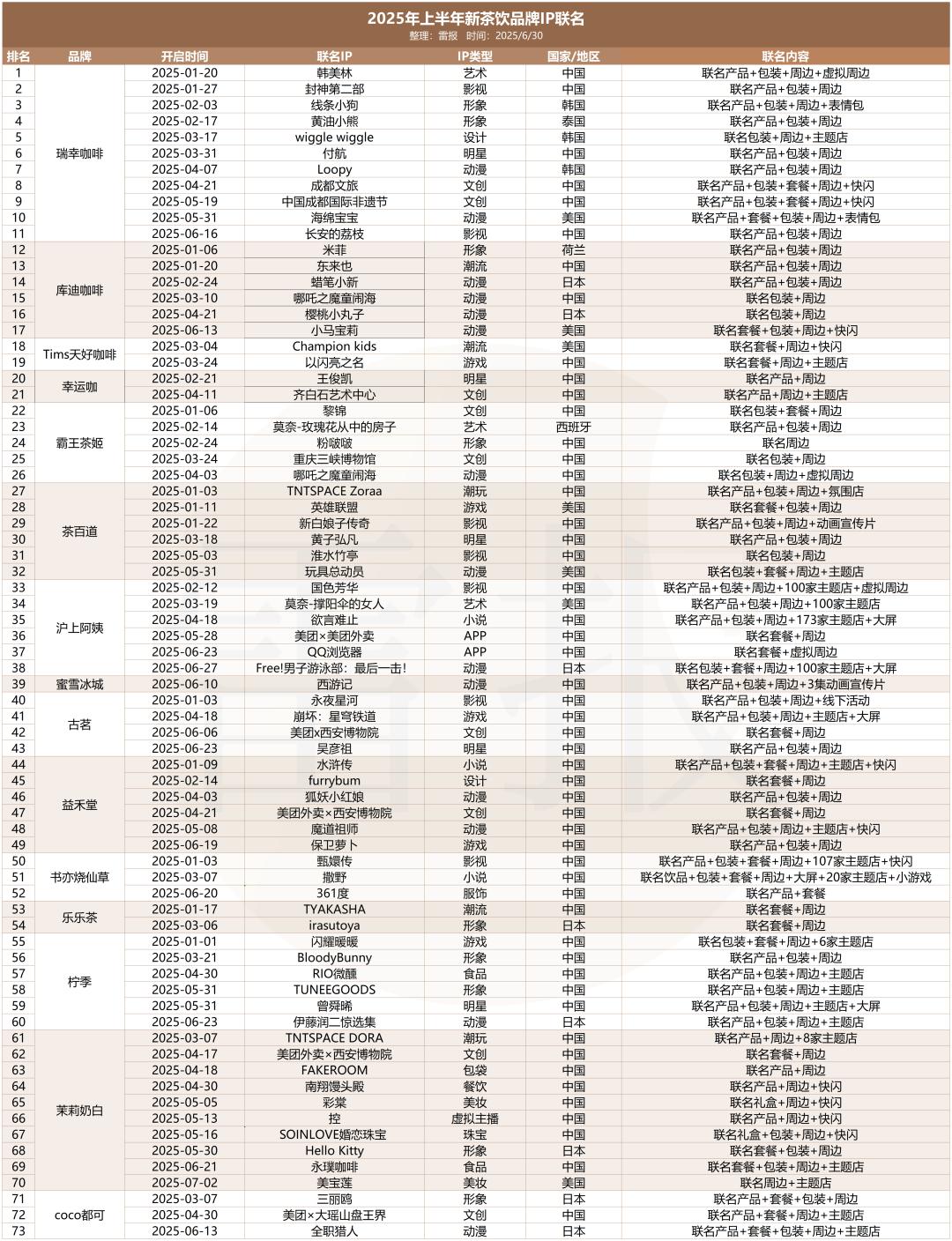
Core Insights - The rise of IP collaborations in the new tea beverage sector has transformed from a simple marketing tactic to a core battleground for brand traffic acquisition [1][20] - Despite the apparent excitement, many collaborations are becoming financially unviable, with increasing marketing expenditures and insufficient product innovation leading to a "loss-making" scenario [1][20] - In the first half of 2025, there were 72 IP collaboration events in the new tea beverage industry, showcasing a mix of successful and failed partnerships [1][3] Industry Trends - The new tea beverage market is experiencing a significant increase in IP collaborations, with brands like Luckin Coffee and Heytea adopting different strategies, leading to a clear industry differentiation [1][12] - The majority of collaborations are driven by anime, game, and character IPs, which account for nearly 40% of the total collaborations [3][4] - The trend of using celebrity IPs is evolving, with brands moving towards emotional asset management rather than just image licensing, as seen in collaborations with stars like Wang Junkai [6][20] Marketing Dynamics - Marketing expenditures for new tea brands have surged, with companies like Luckin Coffee spending up to 1.92 billion yuan in Q1 2025, reflecting a 49.3% year-on-year increase [12][13] - The effectiveness of these marketing strategies is showing diminishing returns, with brands experiencing a decline in search volume despite initial spikes in sales [14][20] - The reliance on IP collaborations is leading to a cycle where brands may prioritize marketing costs over product innovation, risking long-term brand health [16][20] Strategic Shifts - Some brands are reevaluating their approach to IP collaborations, with Heytea notably adopting a "no collaboration" strategy in the first half of 2025 to focus on high-end market positioning [1][18] - The industry is witnessing a shift towards more sustainable and meaningful partnerships, as brands seek to align with IPs that resonate with their core values and customer demographics [20] - Future success in IP collaborations will depend on brands' ability to balance short-term traffic gains with long-term brand equity, emphasizing the need for strategic selection and value co-creation [20]
港股上半年千亿募资领跑全球
Sou Hu Cai Jing· 2025-07-02 00:31
Group 1 - The Hong Kong IPO market has experienced explosive growth in the first half of the year, with 43 new listings and a total fundraising amount of HKD 1,067.14 billion, surpassing the total for the entire year of 2024 [2][3][4] - Hong Kong has regained its position as the global leader in IPO fundraising, accounting for 24% of the global total, surpassing both NASDAQ and NYSE [2][3] - The "A+H" listing model, where companies list on both the A-share and H-share markets, has gained popularity, with notable companies like CATL and Hengrui Medicine leading the fundraising efforts [4][5][9] Group 2 - The consumer and hard technology sectors have emerged as significant drivers of IPO activity, with biotech and health, retail, and consumer industries leading in the number of listings [3][6] - There is a notable increase in the number of companies applying for IPOs, with over 180 companies in the pipeline as of June 30 [6] - Foreign investors show strong interest in Chinese technology and new consumer enterprises, contributing to the high demand for IPOs in Hong Kong [8][10] Group 3 - The favorable policy environment and market conditions have facilitated the surge in IPOs, with new regulations enhancing the attractiveness of the Hong Kong market for international capital [5][9] - The "A+H" model is becoming a standard for large enterprises, providing strategic advantages such as risk diversification and access to a broader range of financing tools [9][10] - The trend of Chinese consumer companies seeking to list in Hong Kong is driven by the market's strong performance and the opportunity to connect with international capital [10]




品质与创新拓宽新茶饮赛道
Jing Ji Ri Bao· 2025-07-01 22:17
Core Insights - The new tea beverage industry is rapidly growing, with the market size expected to reach 3,547 billion yuan in 2024 and potentially exceed 4,000 billion yuan by 2028, becoming a significant force in the consumer market [1] - New tea beverages are characterized by innovative product offerings and technological empowerment, incorporating diverse ingredients like fresh fruits, cheese, and nuts, thus enhancing consumer experience [1] - The industry faces challenges such as quality control issues, product homogenization, and over-reliance on marketing, necessitating a focus on quality and innovation to sustain growth [2][3] Industry Growth - The new tea beverage market is projected to grow significantly, with a forecasted market size of 3,547 billion yuan in 2024 and a potential to surpass 4,000 billion yuan by 2028 [1] - The sector is becoming a popular choice for social interactions and leisure, indicating a shift in consumer behavior towards new tea beverages [1] Product Innovation - New tea beverages are moving beyond traditional tea and water combinations, introducing unique local ingredients and modern techniques to create distinctive flavors [1] - Brands like 去茶山 are integrating local specialties into their products, showcasing regional characteristics and enhancing brand identity [1] Quality Control Challenges - The industry is facing issues with inadequate raw material procurement standards and quality supervision, leading to food safety concerns [2] - There is a significant problem with product homogenization, where many brands offer similar flavors and packaging, resulting in a lack of differentiation [2] Strategies for Improvement - Companies are encouraged to enhance product quality by establishing comprehensive quality control systems that trace ingredients from source to final product [2] - Implementing digital tools for monitoring operations and improving customer experience is essential for maintaining quality and reducing complaints [2] - Emphasizing brand values and creating unique product offerings can help establish competitive advantages in the market [2] Innovation Focus - The industry must prioritize innovation across product development, technology, and cultural aspects to remain competitive [3] - Companies are urged to invest in research and development to create healthier beverage options that align with consumer trends towards low-sugar and natural ingredients [3] - Embracing digitalization and automation can enhance operational efficiency and reduce costs, allowing for better market responsiveness [3]
小酒馆:不属餐饮业,而是娱乐业
虎嗅APP· 2025-07-01 14:04
Core Viewpoint - The small bar industry, once favored by capital markets, has faced significant challenges and declining performance, particularly exemplified by the poor financial results of leading companies like Helen's [1][2][4]. Industry Analysis - The small bar sector was initially seen as a lucrative opportunity due to the social needs of young consumers, but it has recently been abandoned by investors [1][2]. - Helen's, known as the "first stock of small bars," has seen its market value drop by over 90% since its IPO, with 2024 revenue projected at 750 million yuan, down more than 35% from 1.21 billion yuan in 2023 [2][4]. - The number of Helen's outlets has decreased from over 800 to around 500, indicating operational difficulties [4]. - Helen's average daily sales per store are only 6,700 yuan, comparable to successful tea brands like Gu Ming, which have lower operational costs [4]. Financial Performance - Helen's has reported a shift from a net profit of nearly 200 million yuan in 2023 to an expected loss of nearly 100 million yuan in 2024 [4]. - Despite the decline in revenue, Helen's maintains a high gross margin of 69%, indicating that while sales are down, the profitability per unit sold remains strong [5][20]. Market Positioning - Helen's targets a lower-end market with a focus on college students, which may limit its appeal as consumers graduate and seek higher-quality experiences [6][10]. - Other brands like Commune, which cater to a more affluent demographic, have also struggled in the current market environment due to high investment costs and changing consumer preferences [7][8]. Consumer Behavior - The demand for small bars is not purely based on food and drink but rather on the emotional and social experiences they provide [10][12]. - Successful small bars must differentiate themselves through unique emotional experiences rather than just product offerings [12][14]. Innovative Examples - A small bar project in East China has successfully integrated music performances into its offering, creating a unique atmosphere that attracts a diverse clientele [15][16]. - The bar's music selection, featuring popular artists and nostalgic songs, enhances the overall experience, demonstrating that the ambiance is a key driver of consumer engagement [17][18]. Conclusion - The future of the small bar industry may hinge on its ability to pivot from a traditional food and beverage model to one that emphasizes cultural and entertainment experiences [21][22].

上半年9家浙企登陆港股市场 浙江资本加速布局国际市场
Zheng Quan Shi Bao Wang· 2025-07-01 09:28
Group 1 - The Hong Kong stock market continued its strong performance in the first half of 2025, attracting mainland enterprises, particularly from Zhejiang, which saw 9 companies successfully listed [1][2] - A total of 42 new stocks were listed on the Hong Kong stock exchange in the first half of 2025, representing a 40% year-on-year increase, with total fundraising reaching a new high since 2021, surpassing 87.6 billion HKD for the entire year of 2024 [2][5] - Zhejiang enterprises accounted for the highest number of listings, with a total of 9 companies raising 14.4 billion HKD, a significant increase from just 1.016 billion HKD in the same period of 2024 [2][3] Group 2 - The listed Zhejiang companies span various sectors, including healthcare, consumer goods, and manufacturing, showcasing a diversified development trend [2][3] - Notable companies that went public include Sanhua Intelligent Control, which is a global leader in thermal management, and Cao Cao Travel, the largest ride-hailing platform in Hong Kong [2][4] - The trend of "A+H" dual platform listings is emerging, with leading A-share companies accelerating their listings in Hong Kong, exemplified by Sanhua Intelligent Control's recent IPO [3][4] Group 3 - The Hong Kong IPO market achieved the highest global fundraising amount in the first half of 2025, totaling 102.1 billion HKD, driven by international capital and supportive policies from both mainland and Hong Kong [5] - The market's internationalization provides direct support for enterprises, facilitating access to diverse overseas financing channels and enhancing global strategic layouts [5][6] - Expectations for the second half of 2025 indicate continued market heat, with projected fundraising of 200 billion HKD, primarily in technology, media, and consumer sectors [6]
