蔚来

Search documents
小米汽车销量创新高,华为鸿蒙月销逼近9万,12月国产新能源百花齐放
Xin Lang Cai Jing· 2026-01-09 11:54
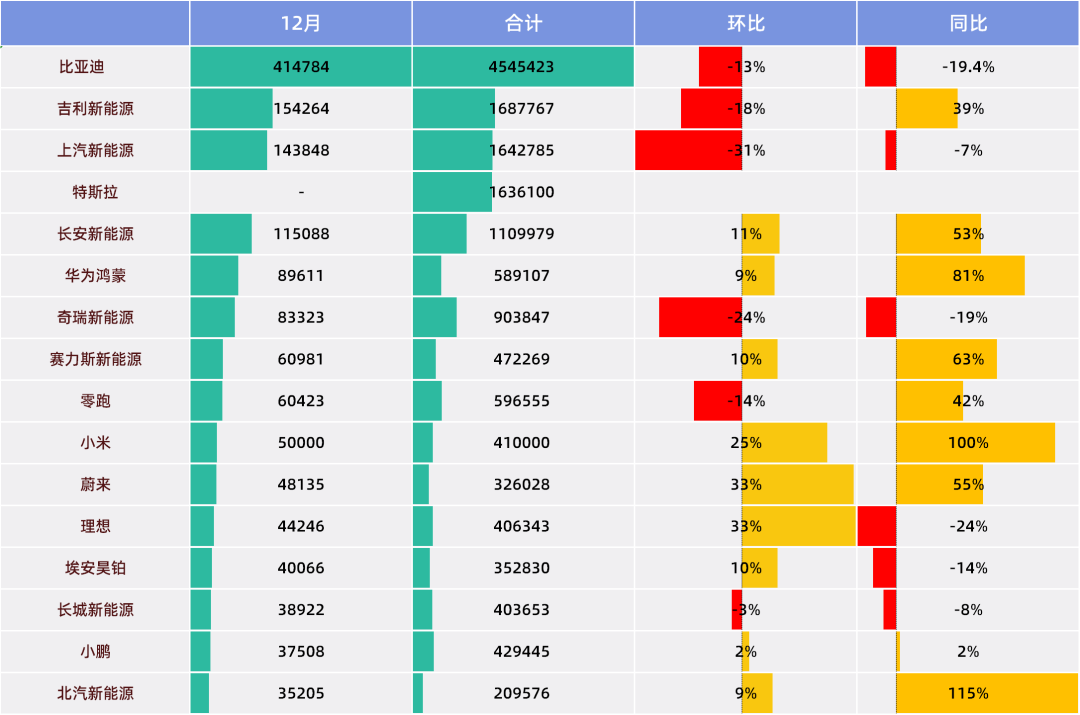
Core Insights - BYD's sales surged from 426,000 units in 2020 to 4.545 million units in 2025, achieving a compound annual growth rate of 60% [1] - Despite rapid growth, BYD faced intense competition from other automakers and did not meet its performance targets in 2025 [1] - The Chinese automotive market is undergoing significant changes, with many companies preparing for global expansion [1] Sales Performance - In December, BYD sold 414,784 units, a decrease of 13% month-over-month and 19.4% year-over-year [3] - Among 15 Chinese automakers, only five achieved both month-over-month and year-over-year sales growth [4] - The average sales volume dropped to 94,427 units in December, primarily due to declines in the first and second-tier companies [4] Market Dynamics - The Chinese government continues to support the automotive market with subsidies exceeding 1.1 billion yuan [2] - The competition is intensifying, with several brands achieving historical sales highs, particularly in the third tier [6] - The central economic work conference emphasized the importance of domestic demand, indicating ongoing support for the automotive sector [7] Company-Specific Developments - Only five out of 14 automakers met their sales targets for 2025, with companies like Li Auto and Aion falling short [8] - BYD's electric vehicle sales reached 2.2567 million units, surpassing Tesla's 1.636 million units for the first time [11] - The export volume of Chinese automobiles is expected to exceed 7 million units in 2025, with BYD emerging as a key player [14] Technological Advancements - The introduction of L3 autonomous driving technology is gaining momentum, with several companies, including BYD and Huawei, conducting road tests [17][18] - The competition for L3 autonomous driving capabilities is expected to intensify in 2026 [18] Brand Strategies - Huawei's HarmonyOS ecosystem has expanded, contributing to record sales for its vehicles [19] - Xiaomi's sales reached over 500,000 units in 2025, but the company faced a public relations crisis that may impact future products [21][23] - NIO and Xpeng have shifted to lower price segments to maintain competitiveness, with NIO achieving a record monthly sales of 48,135 units in December [24][27] Future Outlook - The automotive industry is expected to continue evolving rapidly, with companies focusing on both domestic and international markets [49] - The competitive landscape is shifting, with traditional automakers adapting to new market realities and consumer preferences [49]







超捷股份(301005) - 2026年01月09日投资者关系活动记录表
2026-01-09 10:20
Group 1: Automotive Business Overview - The company focuses on the research, production, and sales of high-strength precision fasteners and special connectors, primarily used in automotive engine turbocharging systems, transmission control systems, exhaust systems, and other key components [2][3] - In the new energy vehicle sector, products are applied in battery trays, chassis and body connections, electric control inverters, and battery swapping systems [3] Group 2: Competitive Landscape - The automotive fastener market has a low entry barrier with many small to medium-sized enterprises; however, only large manufacturers can pass the qualification audits of Tier 1 customers, leading to market share concentration among top companies [3] Group 3: Revenue Growth and Challenges - The company's automotive revenue growth is supported by advantages such as quality customer resources, rich technical experience, quality control capabilities, stable supply capacity, and better customer service [3] - Despite significant revenue growth in recent years, profit margins have declined due to factors such as a slowdown in the automotive industry in H1 2023, rising material costs since H2 2021, and increased depreciation from the Wuxi project [3][4] Group 4: Future Growth Directions - Future growth in the automotive sector includes expanding exports, developing new customers (e.g., NIO, BYD), product category expansion, and increasing domestic market share [4] Group 5: Commercial Aerospace Business Overview - The commercial aerospace segment focuses on manufacturing structural components for commercial rockets, including major sections, fairings, and engine parts, with production lines completed in 2024 [4][5] - Structural components account for over 25% of the cost of a commercial rocket [4] Group 6: Barriers to Entry in Aerospace - The aerospace sector has high technical, talent, and financial barriers, requiring advanced technology, skilled personnel, and significant capital investment for production line construction [5] Group 7: Production Capacity and Future Prospects - The company has completed a riveting production line with an annual capacity of 10 rockets, with the ability to increase capacity based on order demand [5][6] - The maturity of reusable technology is expected to enhance launch frequency and operational efficiency, creating new business growth opportunities [6]
毅昌科技拥抱滁州国资 产业协同开启发展新篇章
Quan Jing Wang· 2026-01-09 10:19
Core Insights - The investor presentation held by Guangzhou Yichang Technology Co., Ltd. focused on the proposed change in control and future development strategy of the company [1] - Chuzhou City Investment Holding Group Co., Ltd. will become the new controlling shareholder of Yichang Technology, which is significant for the company's strategic direction [1] Group 1: Control Change and Strategic Partnership - The new controlling shareholder is expected to leverage Chuzhou's robust new energy vehicle and energy storage industry ecosystem to connect Yichang Technology with high-quality local clients, thereby securing stable orders [1] - This partnership is seen as a key link for industrial synergy, as Chuzhou has developed a complete industrial chain in the "battery-vehicle-storage-display" sector, attracting major companies like BYD and NIO [1] Group 2: Financial and Operational Implications - The entry of Chuzhou City Investment is anticipated to provide Yichang Technology with a solid backing from state-owned capital, potentially lowering financing costs and optimizing the asset-liability structure [1] - The chairman of Yichang Technology highlighted that this move will enable comprehensive support in terms of funding, market access, and technology, facilitating leapfrog development for the company [1] Group 3: Market Position and Growth Potential - The partnership is expected to significantly enhance Yichang Technology's competitiveness in high-growth sectors such as new energy vehicle liquid cooling components and robotic parts [1] - This strategic alignment with the Yangtze River Delta industrial hub is projected to inject strong momentum into the long-term value growth of Yichang Technology [1]

蔚来今年将进入澳大利亚、新西兰市场
Guan Cha Zhe Wang· 2026-01-09 10:04
Core Viewpoint - NIO aims to expand its global market presence, targeting Australia and New Zealand by the second half of 2026, while also entering Thailand in March 2024 with its sub-brand Firefly [1][2][3]. Group 1: Global Expansion Plans - NIO plans to accelerate its global business expansion starting from the end of 2024, focusing on markets outside of Europe [3]. - The company has previously concentrated its international efforts in Europe but is now looking to diversify its market presence globally by 2026 [4]. Group 2: Product Launches and Market Strategy - NIO's Firefly brand will officially enter the Thai market in March 2024, marking a significant step in its overseas strategy [2]. - The launch of the first right-hand drive model at the Singapore Motor Show signifies NIO's commitment to expanding into right-hand drive markets, with Singapore being strategically important [5]. Group 3: Financial Performance and Goals - NIO has not yet achieved profitability but aims to reach breakeven by Q4 2025, with a target for overall profitability in 2026 [6]. - In Q3 of the previous year, NIO reported record revenue and gross margin, with cash reserves of 36.7 billion RMB, a significant increase, and a net loss of 3.48 billion RMB, which showed a narrowing trend year-on-year [6].

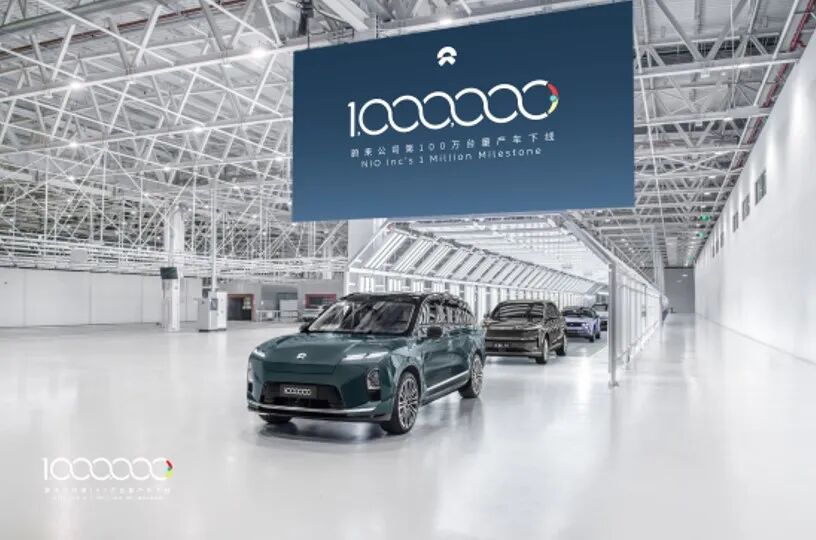
跨过100万台的蔚来,凭什么活下来?
Xin Lang Cai Jing· 2026-01-09 09:02
Group 1 - NIO delivered 48,135 vehicles in December 2025, marking a 54.6% year-on-year increase and setting a historical record [22] - In Q4 2025, NIO delivered 124,807 vehicles, a 71.7% increase year-on-year, also a historical high [22] - Total deliveries for 2025 reached 326,028 vehicles, representing a 46.9% year-on-year growth, achieving a historical record [22] Group 2 - NIO's founder and CEO, Li Bin, stated that the company has entered a new phase of rapid growth after overcoming challenges in early 2025 [6] - Li emphasized the need for strategic focus and resilience in the face of intensified competition in the smart electric vehicle industry [6][26] - The company aims for annual growth of 40-50% in the upcoming growth cycle [6][26] Group 3 - NIO's multi-brand strategy has been revitalized, with significant contributions from its sub-brands, including Ladao and Firefly, which have seen increasing sales [28][31] - The Ladao brand's L90 model and the new ES8 have been pivotal in driving sales, with Ladao achieving over 40,000 deliveries within four months [29][31] - The Firefly brand also saw sales surpass 7,000 units in December 2025, indicating a successful multi-brand approach [28][31] Group 4 - NIO's long-term R&D investments are beginning to yield results, enhancing product competitiveness and reducing costs through self-developed platforms and technologies [29][31] - The company is focusing on expanding into lower-tier markets with plans to open multi-brand "SKY" stores [31][32] - NIO has implemented a new operational mechanism (CBU) to improve efficiency and accountability across teams [32][34] Group 5 - Li Bin predicts that by 2030, the penetration rate of new energy vehicles will exceed 90%, with pure electric vehicles accounting for over 80% [34][36] - The market is shifting towards pure electric vehicles, with recent trends showing significant growth in this segment [36][41] - NIO's unique battery-as-a-service (BaaS) model offers tax benefits, potentially lowering the cost for consumers and mitigating price competition [41][42]
MiniMax大涨近110%,总市值超千亿港元
第一财经· 2026-01-09 08:35
Market Overview - On January 9, the Hang Seng Index rose by 0.32% to close at 26,231.79 points, while the Hang Seng Tech Index increased by 0.15% to 5,687.14 points [1][2]. - The total trading volume for the Hang Seng Index was 245.1 billion, and for the Hang Seng Tech Index, it was 69.3 billion [2]. Company Highlights - MiniMax, a large model company, debuted on the Hong Kong Stock Exchange with an issue price set at the upper limit of the range, at 165 HKD per share. The stock opened with a gain of over 50% and closed with a total increase of 109.09%, reaching 345 HKD per share, with a trading volume of 4 billion HKD and a total market capitalization exceeding 100 billion HKD [2]. Sector Performance - In the tech sector, stock performances varied: Alibaba Health rose by over 4%, Tencent Music, Kuaishou, and Bilibili increased by over 3%. Conversely, BYD Electronics, Meituan, and Baidu Group saw declines of over 2% [4][5]. - Notable stock movements included: - Alibaba Health: 5.770 HKD, +4.72% - Tencent Music: 68.700 HKD, +3.93% - Kuaishou: 74.700 HKD, +3.89% - BYD Electronics: 34.300 HKD, -2.56% - Meituan: 98.500 HKD, -2.48% - Baidu Group: 137.400 HKD, -2.07% [5]. Commodity and Sector Trends - The non-ferrous metals and oil & petrochemical sectors experienced gains, with Shandong Gold rising over 6%. In contrast, the photovoltaic sector faced significant declines, with New Energy dropping over 8% and GCL-Poly Energy falling over 7% [4].

乘联分会:12月全国乘用车市场零售226.1万辆 同比下降14.0%
智通财经网· 2026-01-09 08:31
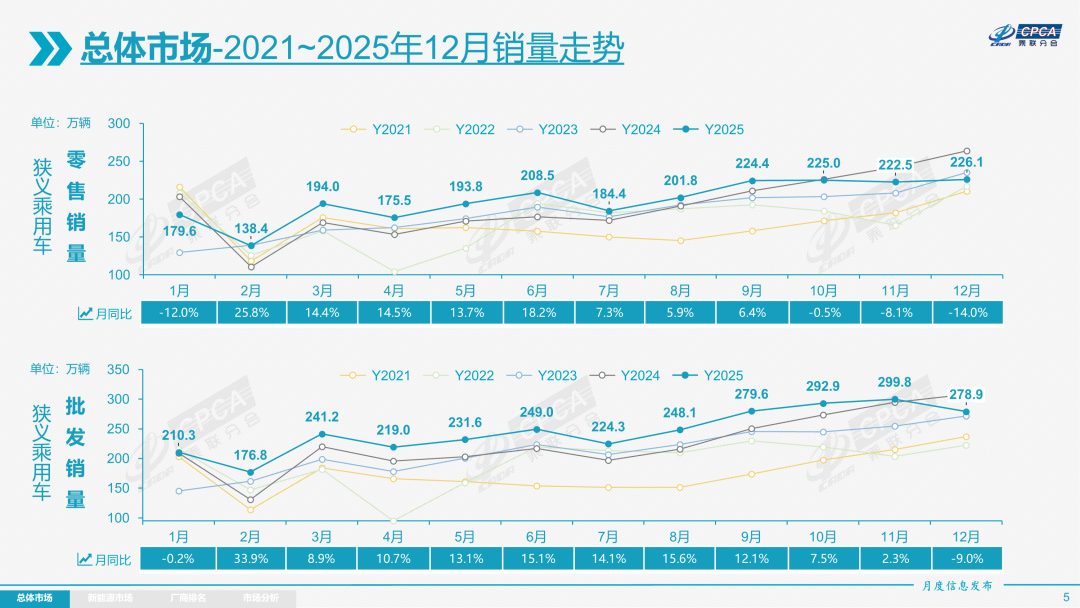
Core Insights - The overall retail sales of passenger cars in December 2025 reached 2.261 million units, a year-on-year decrease of 14.0% but a month-on-month increase of 1.6% [1] - Cumulative retail sales for the year amounted to 23.744 million units, reflecting a year-on-year growth of 3.8% [1] - The wholesale growth rate for passenger cars in 2025 is projected at 8.8%, with new energy vehicles (NEVs) expected to grow at 25.2%, meeting the growth expectations set for the "14th Five-Year Plan" [1] Market Performance - December's passenger car retail sales showed a significant decline in fuel vehicles, down 30% year-on-year, while pure electric vehicle sales increased by 2.5% [2] - The penetration rate of new energy vehicles in December reached 59.1%, indicating a shift towards a "new energy-dominated" market [2][11] - The retail share of domestic brands in December was 64.3%, a year-on-year increase of 2.2 percentage points [3] Production and Wholesale - Passenger car production in December was 2.791 million units, a year-on-year decrease of 4.6% [4] - December's wholesale volume for passenger cars was 2.789 million units, down 9.0% year-on-year [5] - The production of new energy vehicles in December reached 1.560 million units, a year-on-year increase of 7.6% [7] Export Trends - In December, the export of passenger cars (including complete vehicles and CKD) was 588,000 units, a year-on-year increase of 46.2% [4] - New energy vehicles accounted for 46.4% of total exports in December, up 15.6 percentage points from the previous year [4][13] - Cumulative exports of new energy vehicles for the year reached 2.422 million units, a growth of 86.2% [7] Inventory and Market Dynamics - The overall inventory in December decreased by 60,000 units, indicating proactive inventory reduction by manufacturers [6] - The market is experiencing a significant adjustment in consumer sentiment due to changes in trade-in policies and the expiration of tax exemptions for new energy vehicles [1][2] - The competitive landscape is shifting, with traditional manufacturers like Geely, Changan, and Great Wall showing improved market shares [3] Future Outlook - The January 2026 market is expected to benefit from a favorable production and sales environment, with a focus on the upcoming Spring Festival driving consumer demand [18] - The implementation of new policies aimed at promoting vehicle upgrades and trade-ins is anticipated to support market stability and growth in early 2026 [20] - The overall passenger car market is projected to maintain a stable trajectory, with a forecasted wholesale growth of 1% for 2026 [20]

【月度分析】2025年12月份全国乘用车市场分析
乘联分会· 2026-01-09 08:11
Core Viewpoint - The article analyzes the performance of the automotive market in December 2025, highlighting the trends in retail, production, and exports, particularly focusing on the growth of the new energy vehicle (NEV) sector amidst various market challenges [19][20][22]. Retail Analysis - In December, the national passenger car market retail reached 2.261 million units, a year-on-year decrease of 14.0% but a month-on-month increase of 1.6%. The cumulative retail for the year was 23.744 million units, reflecting a 3.8% year-on-year growth [19][20]. - The retail penetration rate of NEVs reached 59.1% in December, indicating a significant shift towards new energy vehicles, with a year-on-year increase of 9.6 percentage points [29][30]. - The retail performance of self-owned brands was 1.46 million units in December, down 11% year-on-year, but their market share increased to 64.3% [21][22]. Production and Wholesale Analysis - December production of passenger cars was 2.791 million units, a year-on-year decrease of 4.6% and a month-on-month decrease of 10.1%. The total production for the year was 29.633 million units, showing a 10.4% year-on-year increase [22][23]. - The wholesale volume in December was 2.789 million units, down 9.0% year-on-year and 7.0% month-on-month. The cumulative wholesale for the year was 29.554 million units, reflecting an 8.8% year-on-year growth [23][24]. Export Performance - In December, the total passenger car exports reached 588,000 units, a year-on-year increase of 46.2%, with NEVs accounting for 46.4% of total exports, up 15.6 percentage points from the previous year [22][30]. - The export of self-owned brands reached 515,000 units in December, marking a 50% year-on-year increase [22][30]. New Energy Vehicle Market - December saw NEV retail sales of 1.337 million units, a year-on-year increase of 2.6%, with a cumulative annual retail of 12.809 million units, reflecting a 17.6% growth [24][30]. - The production of NEVs in December was 1.560 million units, a year-on-year increase of 7.6%, while the cumulative production for the year reached 15.348 million units, growing by 26.1% [24][30]. Manufacturer Rankings - In December, BYD, Geely, and Tesla China were among the top manufacturers in NEV sales, with BYD leading with 414,784 units sold [33][34]. - The market share of new forces in the automotive sector reached 23.5%, with a year-on-year increase of 4.9 percentage points, indicating a growing presence of new entrants in the market [34].

马斯克diss英伟达自动驾驶:再等五六年
Sou Hu Cai Jing· 2026-01-09 08:00
Core Viewpoint - The competition between Tesla and Nvidia is intensifying, with both companies aiming to dominate the autonomous driving market, leveraging their unique strengths and strategies [1][5][22]. Group 1: Company Strategies - Nvidia's Alpamayo platform aims to reshape the autonomous driving development ecosystem by providing a framework for AI reasoning, integrating visual, language, and action models [3][7][11]. - Tesla's approach relies on extensive real-world driving data, claiming that achieving safe, unsupervised autonomous driving requires approximately 100 billion miles of training data, which Tesla is already accumulating at a rapid pace [16][18]. - Nvidia's business model focuses on empowering automotive companies by offering a "teacher model" rather than directly selling autonomous driving solutions, allowing companies to create tailored models using their own data [11][26]. Group 2: Competitive Landscape - Tesla asserts that traditional automakers will take years to integrate AI and camera systems into their designs, suggesting that Nvidia's collaboration with these companies will not pose a significant threat to Tesla in the near term [14][15]. - The competition is not just about technology but also about data ownership and ecosystem control, with Tesla's data monopoly being a significant advantage over Nvidia's more open platform [24][26]. - The battle is evolving from a focus on individual vehicle intelligence to a broader competition involving data ecosystems, development paradigms, and industry alliances [26][27]. Group 3: Market Dynamics - The automotive industry's shift towards intelligent systems is characterized by a multi-dimensional competition, where both Tesla and Nvidia are vying for leadership in different aspects of autonomous driving technology [27]. - The emergence of strong competitors from China, with robust engineering backgrounds and market scales, adds another layer of complexity to the competition between Tesla and Nvidia [26].


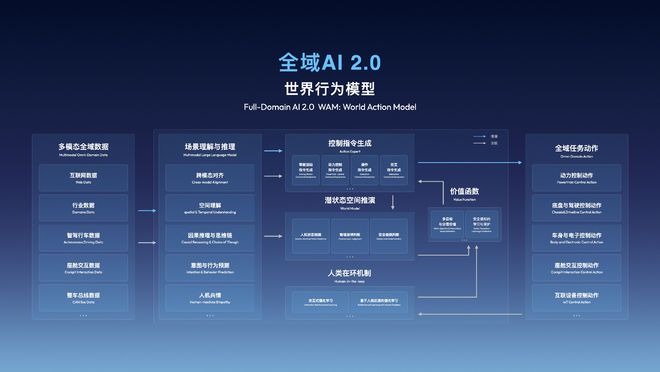
最前线|吉利发布全域AI2.0架构和世界行为模型,“1-2周可迭代一次”
3 6 Ke· 2026-01-09 07:34
Core Viewpoint - The automotive industry is reaching a consensus on the use of large models for intelligent assisted driving, with Geely launching its World Action Model (WAM) as part of its AI technology upgrade to version 2.0, enhancing its assisted driving system named G-ASD [1][3][6] Group 1: Technology Development - Geely's WAM is an enhanced "world model" that incorporates self-reflection and evolution capabilities, allowing for a closed-loop process from understanding to planning, simulation, judgment, and correction [3][5] - The WAM model integrates safety data from Volvo and various parameters from the vehicle, creating a unified "vehicle universal brain" that facilitates cross-domain integration [3][5] - The G-ASD system has improved capabilities in driving, safety, and parking, with features such as one-click NZP for roadside parking and automatic emergency steering [4][6] Group 2: Product Implementation - The G-ASD system covers L2, L3 conditional automated driving, and L4 automated driving, with the latest version G-ASD3 being rolled out via OTA updates to various models from Zeekr and Lynk & Co [4][6][7] - Geely's strategy includes a unified approach to its assisted driving systems, enhancing AI training and model capabilities across its brands [5][6] Group 3: Future Goals and Market Position - Geely aims to lead the industry in assisted driving and cabin technology by 2026, focusing on integrating knowledge from various domains into its models [13][14] - The company emphasizes the importance of safety in its development, with WAM being a core competitive advantage that allows for high-frequency data analysis and integration [14][15]