泸州老窖

Search documents
库存堆成山,年轻人不喝,白酒的“老酒逻辑”成了救命稻草
Sou Hu Cai Jing· 2025-12-09 09:18
文 |姑苏九歌 编辑 |姑苏九歌 白酒行业的三季报刚一出来,评论区大家吵了起来。 产量连着八九年往下掉,营收利润也跟着双降,媒体嘴里"白酒集体失宠""年轻人不爱喝"的声音,简直 比酒桌上的劝酒词还密集。 有人拿着数据喊"行业要凉",有人翻出库存照片说"经销商快撑不住了",连平时淡定的老股民都坐不 住,这白酒,真的不能买了? 库存堆成山,价格跌穿底 说起白酒行业的难,2025年这波绝对能排进历史前三。 经销商仓库里的酒堆得快到天花板了,终端价格更是离谱,连茅台这种龙头,批价都开始低于指导价 了,经销商心里直发慌。 前几天碰到个做白酒批发的朋友,他说现在进货就像"拆盲盒",不知道哪天真就砸手里。 媒体和投资者天天念叨"年轻人不爱喝白酒",说高端消费受约束,好像白酒的增长逻辑彻底断了。 前三季度规模以上企业产量265.5万千升,同比降了快10%,这已经是连续第八九年往下走了。 更要命的是营收利润,A股20家白酒公司加起来,营收3177.79亿,利润1225.71亿,全是双降,三季度 单季营收甚至掉了18%多,难怪被叫做"十年来最差三季报"。 很多老股民可能会想起2012年塑化剂那回,当时行业也跌得惨,但这次不太一样 ...

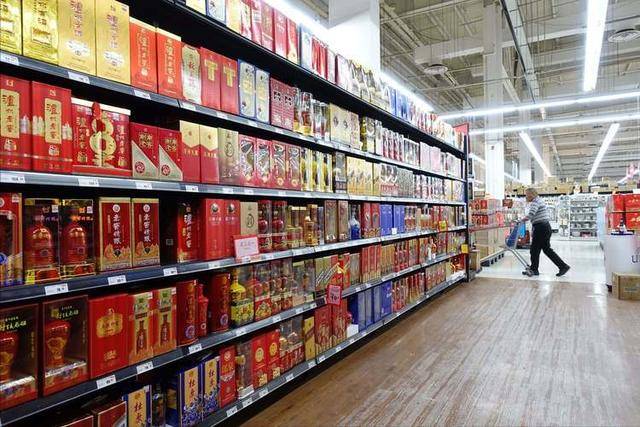
1399的飞天茅台和1430的贵州茅台
新财富· 2025-12-09 08:05
Core Viewpoint - The white liquor industry is experiencing increased market attention following the release of Q3 reports, with notable investors like Duan Yongping and Zhang Kun re-accumulating shares in Moutai. The market sentiment is shifting towards a belief in the industry's recovery, particularly for Moutai, as it approaches its factory price of 1499 yuan per bottle, indicating a potential price floor [2][3]. Group 1: Market Dynamics - Moutai's batch price is nearing 1499 yuan, leading to a perception of a solid price support level as the stock price rises despite a decline in batch prices [3]. - Wuliangye's quarterly performance has seen a 50% decline, suggesting a significant industry clearing, with expectations for a recovery phase starting in 2026 [3]. - The impact of the 25-year alcohol ban is expected to diminish gradually, contributing to a more favorable outlook for the industry [3]. Group 2: Company Performance and Strategy - Moutai's revenue from series products is increasing, indicating that relying solely on the Flying Moutai price for profit calculations may be misleading. Key indicators for observing the industry include sales dynamics, pricing, inventory, and distributor profits [3]. - The recent appointment of Chen Hua as Moutai's chairman is seen as a strategic move to enhance the company's management and adaptability to new challenges, with a focus on quality over short-term metrics [6][7]. Group 3: Pricing and Sales Trends - The price of 530 ml 53° VOL Flying Moutai has reached 1399 yuan per bottle, which is below the official suggested retail price, indicating a shift in pricing strategies [8]. - Online sales of liquor are experiencing lower prices compared to offline distributors due to various factors, including inventory clearance strategies by distributors and competitive pricing tactics to attract consumers [10][11][12]. Group 4: Brand Integrity and Consumer Trust - Moutai has introduced an app for appointment-based product authentication, reflecting its commitment to combating counterfeit products and enhancing brand integrity. However, the current authentication process is limited and costly for consumers [16].


ETF盘中资讯|茅台新品火爆难挡板块寒意,食品ETF(515710)跌超1%!机构:白酒等优质资产底部逻辑清晰
Sou Hu Cai Jing· 2025-12-09 06:25
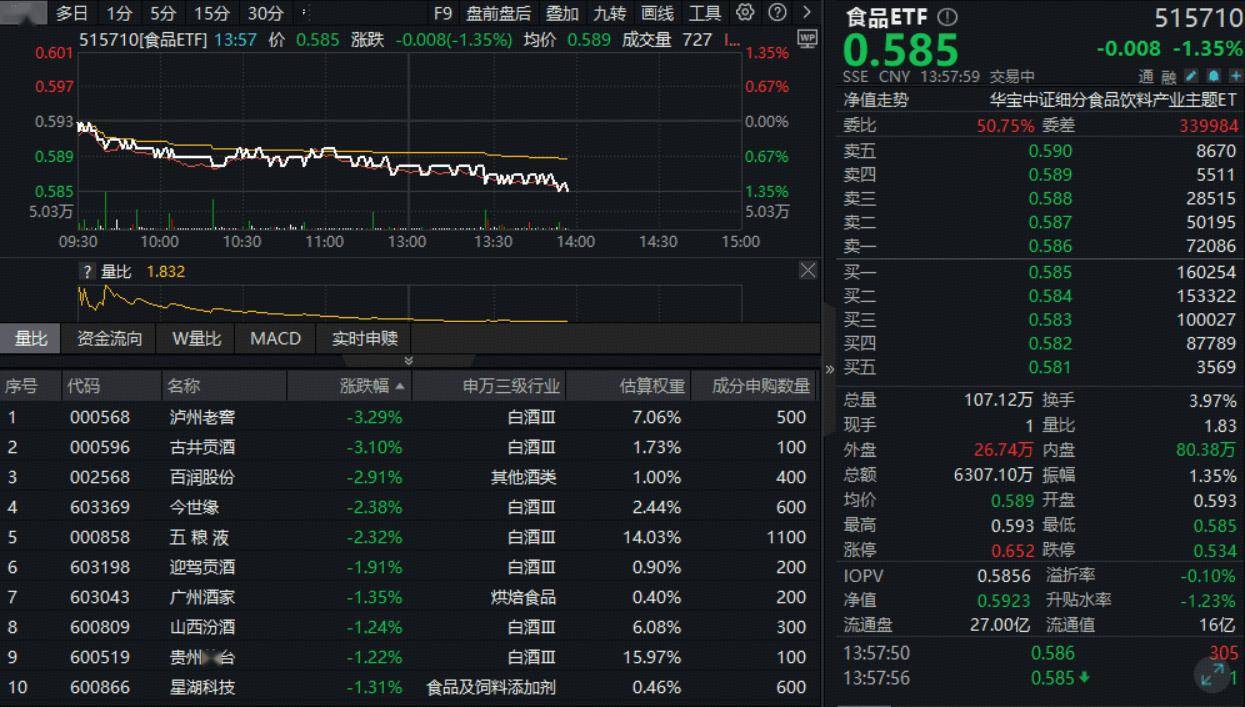
Group 1: Market Performance - The food and beverage sector experienced a significant pullback on December 9, with the Food ETF (515710) declining by 1.35% as of the report [1][2] - Major stocks in the liquor segment, such as Luzhou Laojiao and Gujing Gongjiu, saw declines exceeding 3%, while Wuliangye and Jinshiyuan dropped over 2% [1][2] Group 2: Guizhou Moutai's Market Activity - Guizhou Moutai launched a commemorative product priced at 11,000 yuan per bottle, which sold out quickly, indicating strong demand within a specific consumer group [3][4] - The product's high price and rapid sell-out serve as a window to observe the high-end liquor market's demand and brand premium capabilities [3] Group 3: Investment Insights - Analysts suggest that the current valuation of the food and beverage sector is at a historical low, presenting a potential opportunity for investment [4][7] - The Food ETF (515710) has a significant weight in Guizhou Moutai, accounting for 14.89% of its holdings as of Q3 2025, highlighting its importance in the sector [4][7] - The sector's price-to-earnings ratio stands at 20.15, which is at the 5.48% percentile of the past decade, indicating a favorable long-term investment scenario [4] Group 4: Future Outlook - Analysts from CITIC Securities note that the recent price drop of Moutai may temporarily suppress the sector's performance, but potential policy changes in December could act as a catalyst for consumption [7] - The focus is on stable demand and strong risk resilience among leading companies, as well as those actively exploring new channels and high-growth segments [7]
老登消费的溃败:白酒库存爆仓价格腰斩,为什么老登不爱喝酒了?
Sou Hu Cai Jing· 2025-12-09 06:23
Core Viewpoint - The Chinese liquor industry, particularly the baijiu market, is facing unprecedented challenges as traditional consumer bases, particularly older generations, are declining, leading to a significant drop in demand and a shift in consumption patterns among younger consumers [1][7][13] Group 1: Market Dynamics - The baijiu industry is experiencing severe inventory issues and price declines, with leading companies struggling to adapt to changing consumer preferences [1][5] - Traditional consumption scenarios for baijiu, such as business banquets and social gatherings, are diminishing due to cultural shifts and regulatory changes, leading to a decline in demand from older consumers [3][4] - The high-end baijiu market has seen a collapse in price bubbles, with brands like Wuliangye and Moutai experiencing significant price drops, further eroding consumer confidence [5][10] Group 2: Changing Consumer Preferences - Older consumers, once the backbone of baijiu consumption, are reducing their intake due to health concerns, with conditions like hypertension and diabetes becoming prevalent [4][9] - Younger consumers show a strong aversion to high-alcohol-content beverages, preferring lighter, flavored drinks, with only 12% of the 18-29 age group actively choosing baijiu [9][10] - The social dynamics around drinking have shifted, with younger generations favoring relaxed social settings over traditional drinking culture, which emphasizes pressure and conformity [9][10] Group 3: Opportunities for Transformation - The baijiu industry must innovate to attract younger consumers by developing lower-alcohol and flavored products, as seen with brands like Luzhou Laojiao and Moutai [10][11] - Cross-industry collaborations, such as partnerships with tea, coffee, and dessert brands, could create new product categories that appeal to younger consumers [10][11] - The success of Japanese sake, which has gained popularity through its smooth taste and floral notes, serves as a potential model for baijiu's transformation [11]
茅台新品火爆难挡板块寒意,食品ETF(515710)跌超1%!机构:白酒等优质资产底部逻辑清晰
Xin Lang Ji Jin· 2025-12-09 06:18
Group 1 - The food and beverage sector is experiencing a significant pullback, with the Food ETF (515710) down 1.35% as of the latest report [1] - Major stocks in the sector, particularly in the liquor category, are seeing substantial declines, with Luzhou Laojiao and Gujing Gongjiu both dropping over 3% [1] - The recent launch of a commemorative product by Kweichow Moutai, priced at 11,000 yuan per bottle, sold out quickly, indicating strong demand in a specific consumer group [2][3] Group 2 - Analysts highlight that the rapid sellout of the commemorative liquor reflects the brand's strong market appeal and pricing power, serving as a barometer for the high-end liquor market [3] - Kweichow Moutai maintains a strong brand barrier and a solid business model, with expectations for stable growth during the 14th Five-Year Plan period [3] - The Food ETF (515710) has Kweichow Moutai as its largest holding, accounting for 14.89% of the fund's assets as of Q3 2025 [4] Group 3 - The valuation of the food and beverage sector is currently at a historical low, suggesting a potential opportunity for investment [4] - The price-to-earnings ratio for the Food ETF's underlying index is 20.15, placing it in the lower 5.48% of the past decade [4] - Analysts recommend focusing on leading companies with stable demand and risk resilience, as well as those actively pursuing new channels and high-growth opportunities [6]




机构:多重利好催化 看好白酒板块配置价值
Zheng Quan Shi Bao Wang· 2025-12-09 06:11
Core Viewpoint - Guizhou Province is implementing measures to promote the sales of liquor, particularly focusing on supporting union members in purchasing liquor and enhancing export strategies for the liquor industry [1][2] Group 1: Policy Measures - The draft policy includes support for union organizations to facilitate discounted liquor purchases for their members [1] - It emphasizes the acceleration of liquor exports by developing supportive policies and cultivating a tier of export enterprises [1] - The strategy aims to leverage international friendships and resources to expand overseas sales channels, particularly targeting Chinese communities abroad [1] Group 2: Market Outlook - Guojin Securities indicates that the current sales cycle is stabilizing, with performance pressures easing and sales feedback showing continuous improvement [1] - The firm believes that the market is shifting to a longer-term perspective on the liquor sector's bottom value, with short-term negative impacts from price declines becoming less significant [1] Group 3: Investment Recommendations - The institution recommends investing in high-end liquor brands with strong brand power and deep moats, such as Kweichow Moutai and Wuliangye, as well as Shanxi Fenjiu, which is benefiting from upward channel momentum [2] - It also suggests considering cyclical stocks with potential catalysts, including national brands like Gujing Gongjiu and Luzhou Laojiao, and innovative companies with new products and channels like Zhenjiu Lidu and Shede Liquor [2]


五粮液价格防线松动,十年首度主动调整,市场风向释放什么信号
Sou Hu Cai Jing· 2025-12-09 05:17
Core Viewpoint - The recent price reduction by Wuliangye, known as the "King of Strong Aroma," marks its first substantial price cut in ten years, indicating significant pressure within the industry [1] Group 1: Price Reduction Mechanism - Wuliangye's official stance is that they are increasing channel support rather than reducing prices, with the actual cost to distributors dropping from 1019 yuan to approximately 900 yuan per bottle due to a 119 yuan discount per bottle [3][5] - This method of "visible support" while maintaining the official price helps preserve the brand's image while alleviating the financial burden on distributors [5] Group 2: Market Conditions - The term "price inversion" describes a situation where distributors' purchase prices exceed market selling prices, leading to losses for distributors [6] - In 2025, the market price for the eighth generation of Wuliangye dropped to as low as 810 yuan per bottle, resulting in a loss of 169 yuan per sale for distributors [6] Group 3: Industry Impact - Wuliangye's performance has significantly declined, with a 10.26% drop in revenue to 609.45 billion yuan and a 13.72% decrease in net profit to 215.11 billion yuan in the first three quarters of 2025, marking the first negative revenue growth since 2015 [8][10] - The price reduction is seen as a necessary response to both distributor losses and the company's declining performance, indicating a shift in the entire liquor industry [10] Group 4: Industry Trends - The liquor industry is transitioning from a seller's market to a buyer's market, with consumers becoming more rational and less willing to pay inflated prices [11][13] - In the first half of 2025, over 100 large-scale liquor companies exited the market, with total production down by 5.8% and profits down by 4.93% [13] - Wuliangye's price cut may prompt competitors like Luzhou Laojiao and Yanghe to follow suit to maintain market share [13] Group 5: Future Outlook - Wuliangye's shift from inventory pressure to channel support may set a new trend in the industry, focusing on real consumer demand rather than inflated pricing [15] - The current market challenges are viewed as a necessary cleansing process, where only companies that prioritize quality and consumer needs will thrive [16] - The long-term health of the liquor industry depends on moving away from price inflation and focusing on quality and service [16]
十年首次降价!五粮液渠道补贴落地,白酒市场起波澜,经销商成本直降
Sou Hu Cai Jing· 2025-12-09 05:17
Core Viewpoint - Wuliangye will implement a "de facto price reduction" for its core product, the eighth generation Wuliangye, starting in 2026, marking the first price adjustment since 2014, amidst a challenging market environment [1][3][11] Pricing Strategy - The price adjustment maintains the payment price at 1019 yuan/bottle, while offering a discount of 119 yuan/bottle to distributors, lowering the actual invoicing price to 900 yuan/bottle, with potential costs dropping below 800 yuan with additional subsidies [3][5] - This "structural discount" approach aims to alleviate distributor cost pressures without directly impacting brand image, as the factory price remains unchanged [5][9] Market Conditions - The decision to lower prices stems from a significant price inversion issue, with the wholesale price of the eighth generation Wuliangye dropping from 950 yuan/bottle at the beginning of the year to 855 yuan/bottle by November, leading to increased inventory pressure for distributors [7][9] - The overall performance of Wuliangye has declined, with a 10.26% drop in revenue and a 13.72% decrease in net profit year-on-year for the first three quarters of 2025, marking the first dual decline since 2015 [9][11] Industry Trends - The price inversion problem is widespread across the industry, with 20 A-share listed liquor companies reporting a combined revenue decline of 5.90% and a net profit drop of 6.93% in the first three quarters of 2025 [11][13] - Major brands like Kweichow Moutai are also experiencing significant slowdowns, with Moutai's revenue growth at a near ten-year low of 0.56% in the third quarter [11][13] Strategic Responses - Wuliangye is exploring new market segments, launching a low-alcohol product aimed at younger consumers, which achieved over 100 million yuan in sales within 60 days of its release [15] - The company is also expanding its international presence, with a 23% increase in exports covering 59 countries, although these efforts have yet to significantly alter the overall market dynamics [15]
口感低度化 龙头酒企加速“年轻化”战略转型
Zhong Guo Jing Ji Wang· 2025-12-09 05:00
Core Insights - The Chinese liquor industry is undergoing a profound transformation driven by generational shifts in consumption, with a focus on engaging younger consumers through "youth-oriented" strategies [1][2][3] Group 1: Industry Trends - The rise of the younger consumer demographic, particularly those born between 1985 and 1994, is reshaping the consumption structure of the liquor market, prompting companies to explore niche markets [2][3] - The China Alcoholic Drinks Association predicts that the low-alcohol market will exceed 740 billion yuan by 2025, with a compound annual growth rate of 25% [3][4] Group 2: Product Innovation - Many liquor companies are adopting "low-alcohol" products as a key strategy to attract younger consumers, with 62% of consumers under 35 perceiving traditional liquor as "spicy and stimulating" [4][5] - Major brands like Wuliangye and Moutai are launching low-alcohol products, such as Wuliangye's 29-degree liquor, which achieved over 100 million yuan in sales within two months of launch [4][5][6] Group 3: Marketing Strategies - Digital marketing is becoming a crucial avenue for liquor brands to connect with younger consumers, with social media being the primary channel for 49.57% of consumers to learn about liquor [7][8] - Innovative marketing campaigns, such as short dramas and interactive social media challenges, are being employed to engage younger audiences and redefine drinking culture [8][9] Group 4: Cultural Engagement - Companies are recognizing the importance of emotional connections and cultural resonance with younger consumers, moving beyond just product innovation to include storytelling and brand heritage in their marketing [7][10] - The shift towards a more interactive and consumer-driven marketing approach is evident, as brands encourage user-generated content and new drinking methods [8][9]
【广发金工】指数成分股调整的冲击系数测算
广发金融工程研究· 2025-12-09 05:00
Group 1 - The article emphasizes the growing scale of passive index funds, which reached a total of 4.9 trillion yuan by the end of September, with 1,548 passive index funds (ETFs and off-market funds) [7][11] - The article discusses the periodic adjustments of major indices like the SSE 50, CSI 300, and CSI 500, which occur every June and December, potentially creating investment opportunities due to significant changes in constituent stocks [4][5] Group 2 - Historical adjustment effects show that stocks added to indices tend to outperform the index in the two weeks prior to their inclusion, while stocks removed from indices generally underperform [12][14] - The average excess return for stocks added to the SSE 50 index in the two weeks before inclusion is 4.89%, with a success rate of 66.67% [15] - For the CSI 300 index, the average excess return for added stocks is 4.04%, with a success rate of 59.39% [18] Group 3 - The article presents the latest adjustment impact calculations, indicating that 572 stocks are involved in adjustments, with 20 stocks seeing net buy amounts exceeding 1 billion yuan and 14 stocks with net sell amounts over 1 billion yuan [25] - The impact coefficients for stocks show that 18 stocks have coefficients exceeding 2, indicating significant buying pressure, while 46 stocks have coefficients below -2, indicating selling pressure [25] Group 4 - The article outlines the index compilation schemes, noting that most indices have a weight limit of 10%, with some allowing up to 15% for individual stocks [24] - The methodology for calculating the impact of adjustments includes assessing the expected buy and sell amounts based on the total scale of tracking funds and the weights of constituent stocks [23]