
卫龙

Search documents
国金证券:追逐结构景气 守望食饮底部稳增长
智通财经网· 2025-06-23 06:15
Core Viewpoint - The report from Guojin Securities highlights a persistent trend of differentiation in the consumer sector, with mass consumption and government-business consumption showing varied performance. Companies that embrace new consumer trends, demographics, and channels are emerging, while traditional food and beverage leaders are solidifying their foundations and actively seeking change [1]. Group 1: Industry Trends - The consumer habits are evolving, leading to the emergence of diverse channels that align with these changes. Characteristics such as value-for-money, health consciousness, and emotional consumption are becoming synonymous with high growth [2]. - New channels like online media e-commerce, home delivery, membership supermarkets, and bulk snacks are rising, providing efficient supply chain solutions and targeted selling points that disrupt traditional channels [2]. - The report emphasizes the growth potential of the konjac category, recommending companies like Yanjin Beer and Weilong Delicious. Additionally, it highlights soft drink brands such as Dongpeng Beverage, Nongfu Spring, and Bairun Co., which are expected to see significant growth as they expand nationally [2]. Group 2: Alcohol and Dining Chain Sectors - In the liquor sector, external risk events are expected to have a diminishing impact on the fundamentals, with policies aimed at stabilizing growth likely to continue. The industry is in a bottoming phase, and attention should be paid to seasonal sales to gauge changes in market sentiment [2]. - The report suggests focusing on high-end liquor with stable prices and strong competitive advantages, such as Kweichow Moutai, and regional leaders benefiting from robust demand and upgrades in rural consumption [2]. - For the dining chain sector, the report indicates that external uncertainties necessitate a push for domestic demand. With policies gradually taking effect, consumer confidence is expected to improve, leading to enhanced demand in the second half of the year [3]. - The report identifies undervalued stocks in the beer, frozen food, and seasoning sectors, such as Yanjin Beer, Angel Yeast, and Yihai International, as potential investment opportunities [3].

向新,看中原
He Nan Ri Bao· 2025-06-20 23:39
Group 1 - The article highlights the emergence of new business leaders from Henan, showcasing a transformation in the region's economic landscape [2][3] - The "Two Highs and Four Focuses" framework proposed by President Xi Jinping emphasizes high-quality development and efficient governance as essential for Henan's modernization [4][5] - Henan's agricultural strength is underscored, with the province being a key contributor to national food security, producing over 1.3 trillion jin of grain annually [6][13] Group 2 - The establishment of high-standard farmland and the integration of smart agricultural technologies are enhancing productivity and ensuring food security in Henan [9][12] - The province is advancing towards a modern food industry, aiming to transition from being a "grain warehouse" to a significant player in the national and global food market [14][15] - The manufacturing sector in Henan is evolving, with a focus on intelligent and green manufacturing practices, exemplified by companies like BYD and the Luoyang Bearing Group [16][17][18] Group 3 - Social governance initiatives are being implemented to address complex societal issues, with a focus on community engagement and grassroots participation [21][22] - The integration of technology in public services is transforming governance, making processes more efficient and accessible for citizens [25][26] - The article emphasizes the importance of environmental protection and sustainable development as integral to Henan's economic strategy [30][33] Group 4 - Cultural development is highlighted as a vital component of Henan's modernization, with efforts to promote local heritage and engage the community through innovative cultural experiences [36][39] - The article discusses the potential for cultural brands to drive economic growth and enhance the region's identity in the new development landscape [45][46]


围绕品牌快与慢,我们进行了一场苏格拉底式的讨论
3 6 Ke· 2025-06-20 13:09
Core Insights - The consumer industry is facing increasing competition and challenges, leading many founders to reconsider their strategies and mindset in the face of prolonged cycles [1][2] - Founders are encouraged to shift their perspectives and strengthen their resolve to find opportunities amidst difficulties [1] - A closed-door meeting organized by "Waves of New Consumption" focused on how founders can adapt to the deep waters of consumer entrepreneurship [1] Group 1: Entrepreneurial Mindset - The pace of brand growth should align with individual character and mindset, emphasizing the importance of a steady approach over a fast one [4][5] - Personal choices significantly influence business decisions, with a "Nine-Level Tower Model" illustrating the trade-offs associated with climbing higher in business [6][7] - The journey of entrepreneurship is likened to a wilderness, where optimism and relaxation are essential regardless of market conditions [13][16] Group 2: Brand Growth and Market Dynamics - Brands that continue to grow post-hype are often those without significant weaknesses, as opposed to those that relied solely on market trends [10][12] - The rapid growth phase may not reflect a company's true capabilities, and many brands have experienced a return to fundamental business principles after initial success [11][12] - The consumer landscape is cyclical, with periods of rapid growth followed by slower phases, necessitating careful judgment on whether to continue pursuing aggressive growth [12][30] Group 3: Lessons from the Investment Landscape - The investment landscape for consumer brands has evolved, with a significant influx of capital leading to inflated valuations and unrealistic expectations [21][23] - Many companies that received substantial funding were unable to manage it effectively, resulting in a decline in performance as market conditions changed [23][25] - The importance of understanding the limitations of capital in driving growth is highlighted, with a focus on sustainable business practices over rapid expansion [28][29] Group 4: Future Opportunities and Strategic Shifts - Emerging opportunities in sectors like health and wellness are noted, with a call for companies to adapt to changing consumer needs and preferences [26][29] - The need for a shift from a focus on rapid growth to a more sustainable, value-driven approach is emphasized, as the consumer market becomes increasingly competitive [30][32] - Companies are encouraged to adopt a mindset of steady progress and resilience, recognizing that long-term success is built on consistent effort rather than short-term gains [34][35]

魔芋类零食终端销售调研
2025-06-19 09:46
Summary of the Conference Call on Wei Long's Performance and Strategy Company Overview - **Company**: Wei Long - **Industry**: Snack Food, specifically Konjac-based snacks Key Points and Arguments Sales Performance - Wei Long's sales growth in early 2025 is approximately **16%**, slightly below the annual target of **20%** [1][3] - The sales breakdown for 2024 indicates that **40%** of sales come from Konjac products, with a strong growth trajectory [1][4] - Sales of spicy strips (辣条) in 2024 are projected to be under **10 million yuan**, while Konjac snacks are slightly above **10 million yuan** [1][6] Product Performance - The growth rate for Konjac powder is **50%** in 2024, highlighting its role as a key driver for the company's performance [1][9] - After several years of decline, spicy strips have achieved single-digit growth in 2024 due to product adjustments and brand building [1][10][11] - The company anticipates stable growth for spicy strips and gluten products in the next couple of years, with expected growth rates of low double digits or high single digits [1][13] Market Strategy - Wei Long is focusing on third- and fourth-tier cities to enhance sales through dedicated personnel for terminal maintenance, aiming to increase store productivity [1][5][17] - The company collaborates with large snack retailers using a direct sales model, producing different packaging to avoid price competition with distributors [1][19] - Wei Long emphasizes health benefits in its marketing, particularly for its Konjac products, which align with the preferences of younger consumers [1][15][16] Competitive Landscape - The spicy strips market is highly competitive, with many low-priced products emerging, making it challenging to maintain market share [1][14] - Wei Long's Konjac snacks are positioned as healthier alternatives, appealing to consumers under **25 years old** [1][15] Distribution and Coverage - Wei Long has approximately **10,000** terminal points, with **10%** (about **1,000**) maintained by dedicated personnel [1][19] - There is significant room for expansion, particularly in convenience stores and small supermarkets in lower-tier markets [1][23] Pricing Strategy - Wei Long's Konjac snacks are priced **10% to 15%** higher than competitors like Three Squirrels and Yanjinpuzi, justified by a wider variety of flavors and strong brand recognition [1][21][22] Future Outlook - The company aims to increase its terminal points to **20,000 to 30,000**, focusing on underdeveloped markets [1][23] - The overall strategy includes enhancing product offerings and maintaining competitive pricing while expanding market reach [1][20] Additional Important Insights - The company has successfully utilized social media platforms for brand promotion and has diversified its product flavors and packaging to cater to consumer preferences [1][16] - The inventory turnover period is approximately **24 to 25 days**, indicating efficient inventory management [1][8]
港股开盘:恒指跌0.59%、科指跌1.13%,汽车产业链概念股普跌,小鹏汽车跌超3%
Jin Rong Jie· 2025-06-12 01:40
Market Overview - The Hong Kong stock market opened lower, with the Hang Seng Index down 0.59% at 24,223.12 points, the Hang Seng Tech Index down 1.13% at 5,389.56 points, and the National Enterprises Index down 0.78% at 8,796.99 points [1] - Major tech stocks generally declined, with Alibaba down 2.28%, JD Group down 1.79%, and Xiaomi down 1.11%. However, Netease rose by 1.05% [1] Company News - XPeng Motors reported that its delivery volume has exceeded 30,000 units for seven consecutive months as of 2025 [2] - Morgan Stanley upgraded the rating of Wei Long Delicious to "Overweight" [3] - Junshi Biosciences received a clinical trial application acceptance notice from the National Medical Products Administration for JT118, aimed at preventing monkeypox virus infection [3] - Vanke Enterprise sold 30.1 million A-shares, raising a total of RMB 198 million [4] - Horizon Robotics plans to issue 681 million shares, aiming to raise approximately HKD 4.674 billion, at a discount of about 6.85% from the previous closing price [4] Institutional Insights - Guotai Junan noted that the narrative of asset revaluation in China has gained traction this year, with the Hong Kong stock market showing a volatile upward trend, although valuations remain relatively low. Future trade environments may disrupt the market, but domestic policy efforts could drive fundamental recovery [5] - CITIC Securities reported that Hong Kong stocks saw a 3.4% year-on-year revenue increase and an 8.5% profit increase in 2024, indicating a significant improvement compared to 2023. The performance of technology and finance sectors was particularly strong, while the real estate and some consumer-related companies still showed weak performance [6]
截至5月底,漯河市131个“三个五百亿”项目完成年度投资393.6亿元,占年度投资计划的50.41%——“三个五百亿”项目带动产业提质升级
Sou Hu Cai Jing· 2025-06-11 11:53
Group 1 - The total investment of 13 billion yuan in the Youde Zhongda Health Industry Park project focuses on "industry-based, innovation-led, brand aggregation, and open cooperation," aiming to attract leading enterprises in the health sector and support projects to develop a comprehensive health industry ecosystem [1] - The pet economy specialized park in Shaoling District, Luohe City, has nurtured 7 large-scale enterprises and signed 17 pet economy projects, with an expected output value of 1.5 billion yuan in 2024, indicating the initial establishment of a full-chain ecosystem in the pet economy [1] - The Lituo ultra-high pressure fluid innovation project is a key manufacturing industry chain project that leverages advantages in polymer materials and ultra-high pressure hose products, promoting the development of the industry chain towards "manufacturing + services" and "products + services" [1] Group 2 - As of the end of May, Luohe City has completed an investment of 39.36 billion yuan in 131 "Three 500 billion" projects, accounting for 50.41% of the annual investment plan, covering various industries such as food processing, new materials, and equipment manufacturing [2] - The Zhengda (Luohe) Super Food Factory, with a total investment of 2 billion yuan, is the first deep processing project for egg products by Charoen Pokphand Group in China, aiming to enhance cooperation and expand project outcomes in the food industry [4] - The "Three 500 billion" projects play a demonstrative and leading role in the city's project construction, with new industrial projects like the Weilong Phase III green health food industrial base and the Shuanghui Third Industrial Park quickly starting and producing new economic growth points [5] Group 3 - The Jin Hai 100 billion yuan fluorosilicon new materials project is a landmark project under the "Three 500 billion" initiative, with the first phase expected to enter trial production in December this year [5][6] - Luohe City has established a "top-level design + special class promotion + close service" mechanism to ensure the operability and implementation of the "Three 500 billion" projects, holding 116 weekly meetings to address and resolve project issues [6] - The city aims to enhance modern food industry clusters, cultivate new materials industry clusters, and optimize advanced manufacturing industry clusters to support high-quality development through significant project construction [6]
两次品类重做冲击百亿!100位企业家走进卫龙,学到了什么?
Sou Hu Cai Jing· 2025-06-11 00:36
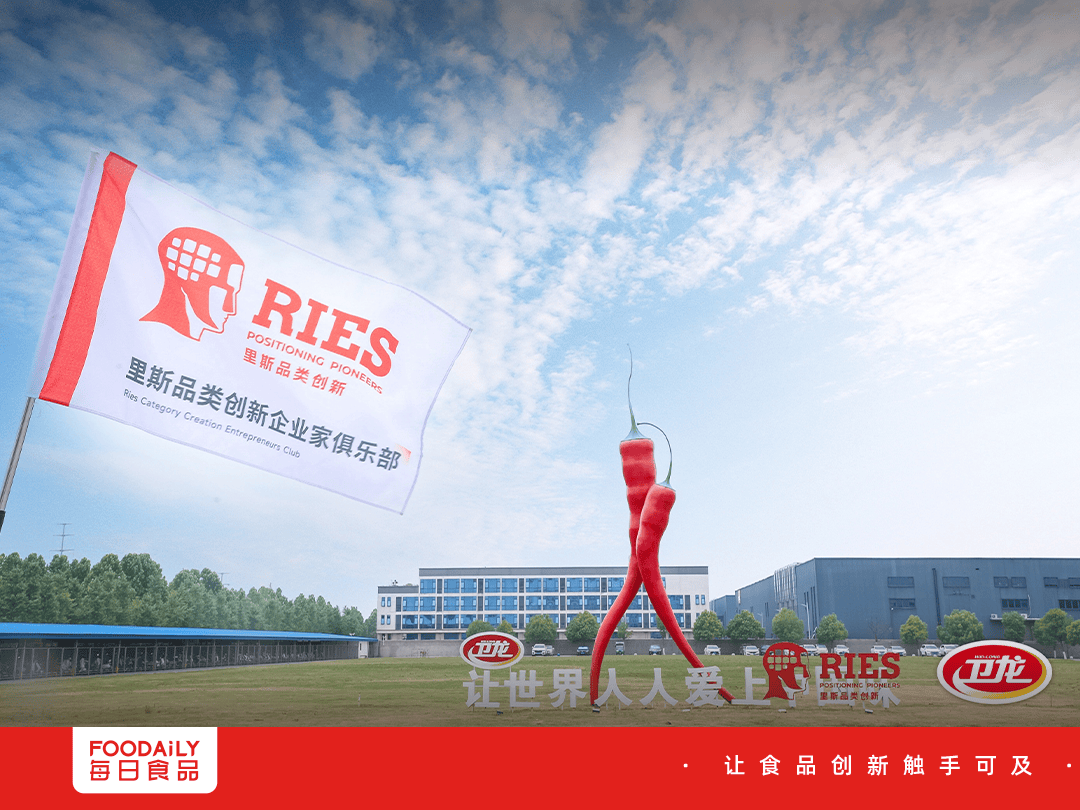
Core Insights - The food and beverage industry is experiencing intense competition, leading to stagnation or negative growth in several segments, yet Wei Long has achieved significant growth through its core products, spicy strips and konjac snacks [2][4] - The event hosted by the Riss Category Innovation Entrepreneur Club attracted over 100 industry leaders to explore how Wei Long has successfully navigated the market and achieved a billion-scale business through category innovation [2] Group 1: Industry Challenges and Wei Long's Strategy - The industry is facing extreme competition, with companies struggling to find growth as channels and content become saturated [4] - Wei Long has differentiated itself by not only dominating the spicy strip category but also strategically positioning itself in the health-oriented konjac category, leading to a 59.1% year-on-year revenue increase in konjac products, reaching 3.371 billion yuan [4][8] - The company has established a dual growth model with both spicy strips and konjac snacks driving revenue, showcasing a successful second growth curve [4][8] Group 2: Category Innovation and Market Positioning - Wei Long's success is attributed to its focus on category selection and mental anchoring, moving beyond mere product innovation to redefine consumer perceptions [7][8] - The company has transitioned from a broad category approach to a more focused strategy, emphasizing differentiation over mere improvement of existing products [9][10] - The strategic choice of categories must align with consumer trends, as seen with konjac products that cater to health-conscious consumers, thus creating a new market segment [10][12] Group 3: Strategic Growth Paths - Riss Category Innovation outlines three strategic growth paths for brands: enhancing mental representation, expanding market reach, and creating new categories [14] - The first path, enhancing mental representation, involves becoming synonymous with a specific category, as demonstrated by Wei Long's konjac snacks [15] - The second path focuses on market expansion through new usage scenarios and sales channels, which Wei Long has achieved by broadening its consumer base [16] - The third path emphasizes category creation through innovative product positioning, which can lead to significant industry growth opportunities [21] Conclusion - The key takeaway from Wei Long's approach is that growth stems from category innovation rather than tactical improvements, urging brands to reassess their market positioning and category relevance [21]
『悦己消费』对话 『悦人消费』:如何看待细分赛道空间与投资机会?
2025-06-09 15:30
Summary of Conference Call Records Industry Overview - The conference call discusses the food and beverage industry, focusing on various segments including alcoholic beverages, dairy products, snacks, and health products. Key Points and Arguments Alcoholic Beverages - The liquor sector, particularly the baijiu segment, shows strong resilience despite price fluctuations due to alcohol bans and online activities. Leading companies maintain price stability through channel power and policy adjustments, warranting attention to marginal fundamental changes in baijiu [1][4] - Other alcoholic beverages like beer, yellow wine, and pre-mixed drinks also exhibit high gross margins, typically between 40% to 60% [5] - The market share of pre-mixed drinks, such as those from Baijiu Holdings, has increased despite fierce competition, currently reaching 80% to 90% [6] Dairy Products - The dairy industry faces challenges due to reduced demand for social visits during the pandemic, leading to a lack of consumption scenarios. An increase in dairy cow inventory has resulted in oversupply, with smaller brands capturing market share through lower prices [7] - Price wars are intensifying, with retail prices for fresh milk and yogurt declining since 2021. Major brands like Yili and Mengniu maintain high margins on premium products, but ordinary products see margins drop to 20%-30% [7] Snack Industry - The snack sector is evolving with the rise of offline snack chains and online platforms like Douyin, creating new opportunities. However, consumers are highly price-sensitive, leading to reduced willingness to pay premiums [8] - Companies with high industrial efficiency and low costs, such as Salted Fish and Three Squirrels, are gaining market share by focusing on cost-effectiveness [8][9] Health Products - The health product sector is competitive, with customers willing to pay premiums for innovative products. Brands with new formulations and strong marketing capabilities can achieve higher premiums, while traditional brands like Tongrentang face challenges due to limited innovation [12] Consumer Behavior and Pricing - Consumers exhibit a willingness to pay higher prices for premium products in both self-satisfying and social contexts. Brands in the liquor sector, such as Moutai and Wuliangye, maintain high gross and net profit margins despite market fluctuations [4] - The willingness to pay for premium products is decreasing in the snack and health sectors, prompting leading companies to adapt their strategies [11] Investment Opportunities - Investment in the liquor sector is recommended, particularly in companies like Baijiu Holdings and Kweichow Moutai, which are currently undervalued [15] - The snack sector shows high growth potential, with companies like Wei Long and Salted Fish expected to maintain strong growth rates [15][16] - In the dairy sector, companies like New Dairy and Yili are highlighted for their innovative products and expected margin improvements [16] Emerging Trends - The pet economy is rapidly growing, with significant contributions from younger generations. Companies are expanding their presence in this market through new store openings and product offerings [17] - Health and personal care products are increasingly focusing on safety and health attributes, with brands like Weigao Medical leading in market share [18] Other Important Insights - The differentiation between "self-satisfying" (悦己消费) and "social" (悦人消费) consumption is emphasized, with the former relying on emotional needs and high-frequency repurchase, while the latter depends on cultural IP and seasonal demand [14][22] - Companies are encouraged to leverage technology and consumer trends to enhance user retention and product value [22]
国泰海通大消费-新消费的空间和持续性
2025-06-09 01:42
Summary of Conference Call Records Industry Overview - The conference call discusses the new consumption sector, focusing on industries such as daily chemicals, personal care, and health products, which are entering a product upgrade cycle with strong sustainability [1][5]. Key Points and Arguments - **New Consumption Drivers**: The current wave of new consumption is driven by product renewal and innovation rather than relying on traffic purchases. Companies need stronger content marketing capabilities and market insight, making innovation a key competitive factor [1][3]. - **Market Characteristics**: The new consumption market is characterized by a shift from functional needs to emotional value needs, with traditional products being revamped to meet these new demands [4][5]. - **Market Volatility**: Recent fluctuations in the new consumption market are considered normal after significant growth phases. The current cycle is less elastic compared to the previous one, with a focus on replacing and upgrading existing products [3][6]. - **Valuation Metrics**: Most new consumption companies have a PEG ratio between 1 and 1.3, indicating they may be slightly overvalued. However, there is potential for valuation recovery as risk appetite increases [7]. - **Impact of Shareholder Actions**: Shareholder sell-offs do not necessarily indicate a peak in stock prices, as they can be influenced by various factors. As long as risk appetite remains stable and innovation cycles continue, the new consumption sector still has growth potential [8]. Industry Trends - **Sustained Innovation**: Industries such as beauty, snacks, gold and jewelry, trendy toys, and tea drinks are expected to maintain high-frequency innovation, while stable categories like daily chemicals and personal care are entering a more robust upgrade cycle [5][9]. - **Investment Recommendations**: Traditional growth companies in sectors like beverages and beer are recommended for investment due to their lower valuations and higher cost-effectiveness. Emerging growth companies like Ruoyuchen and Jingbo Biological are also highlighted for their innovative capabilities [2][10]. Potential Investment Opportunities - **Specific Companies**: In the cosmetics sector, companies like Juzhi Biological and Runben Co. are noted for their stability and growth potential. In the food and beverage sector, companies such as Yanjinpuzi and Weilong Food are performing well, with others like Bailong Chuangyuan and Three Squirrels also identified as promising investments [11]. Conclusion - The new consumption sector may experience a consolidation phase, but this does not imply an end to growth. Traditional growth companies may outperform during this period, suggesting a need for dynamic adjustments in investment strategies to optimize returns [12].
