三星电子

Search documents
调仓大动作!挪威明星基金斩仓“功臣”阿里,持续加码三星押注存储
Zhi Tong Cai Jing· 2026-01-23 03:51
智通财经获悉,挪威明星基金公司Skagen AS正对亚洲两大热门人工智能投资标的做出不同布局:持续 加仓股价年内翻倍的三星电子,同时减持去年为基金贡献最大涨幅的阿里巴巴(BABA.US)。 Bjelland对三星的信心反映出存储芯片市场能见度提升。随着云服务商加大资本支出,许多高带宽内存 芯片今年产能已被预订一空。 尽管需求激增可能先于急剧下滑,但他认为今明两年该风险不会显现。相较于竞争对手SK海力士和美 光科技(MU.US),三星的估值留有更多上行空间,"即便盈利已见顶——我认为尚未见顶——该股估值 仍适度偏低"。 该基金还增持了鸿海精密,作为另一项硬件领域押注。Bjelland指出,这家台湾企业除了为苹果组装 iPhone和Mac,正获得更多AI服务器机架订单,后者属于利润率更高的业务。 对AI硬件的增持很大程度上以削减阿里仓位为代价。Bjelland表示,这家中国公司仍陷入与美团成本高 昂的外卖大战,同时在配送和AI领域的巨额支出限制了可用于股息和回购的现金,而这正是投资该股 的核心逻辑之一。 减持阿里也使该基金得以在11月新建京东仓位。Bjelland认为,这家线上零售商当前估值(低于现金、投 资及上 ...

资金轮动推动美元走软,亚太股市普涨,黄金直逼5000大关,白银触及99关口
Hua Er Jie Jian Wen· 2026-01-23 03:40
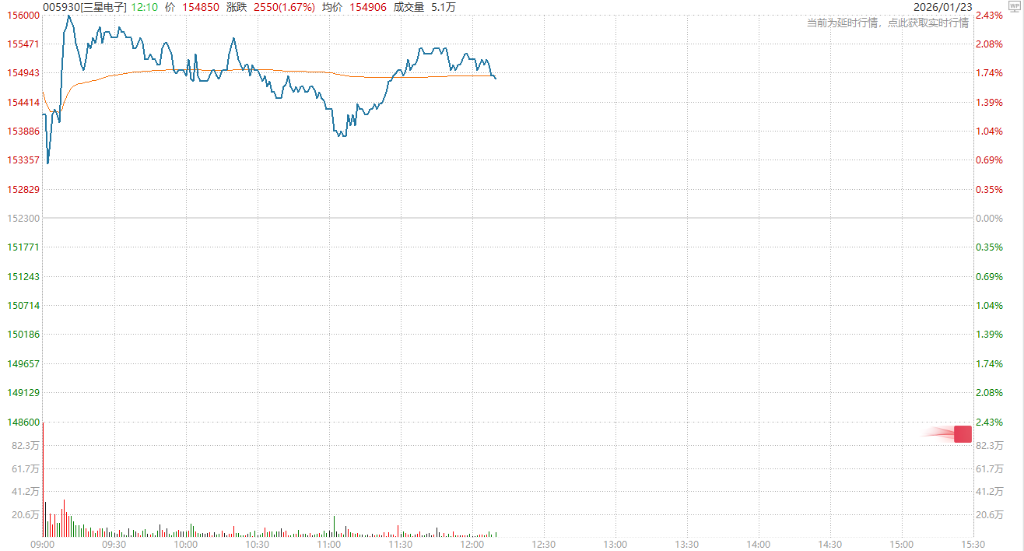
(韩国综指保持强势涨0.9%) 分析认为欧美贸易战警报的暂时解除,显著提振了全球投资者的风险偏好,并加速了一场潜在的、更深层次的资产轮动。 由于对美国政策不可预测性的担忧,资金正逐步从估值高企的美国资产中流出,转向估值更具吸引力且地缘政治风险相对较远的亚洲市场。这一 轮动直接导致美元走弱,并为亚太股市和贵金属等资产提供了强劲的上行动能。 Natixis IM Solutions全球市场策略主管Mabrouk Chetouane表示: (三星电子上涨1.7%) 日经225指数上涨0.34%,澳大利亚S&P/ASX 200指数一度上涨0.45%。值得注意的是,前一日刚刚历史性突破5000点大关的韩国综合股指继续保 持强势,盘中一度涨至1.4%。 亚洲地区远离美国、欧盟和拉丁美洲等地缘政治中心,这种距离就像一道屏障,使投资者能够分散对风险资产的敞口。 值得注意的是,亚洲市场的焦点将集中在日本央行的利率决议上,预计日本央行将维持政策利率在0.75%不变。此前,首相高市早苗提出的扩大 支出计划曾引发金融市场动荡,因此日本央行的政策表态将受到密切关注。 全球资金正加速拥抱估值更具吸引力且有增长韧性的亚洲市场。亚太地区股市 ...

调仓大动作!挪威明星基金斩仓“功臣”阿里(BABA.US) 持续加码三星押注存储
智通财经网· 2026-01-23 03:19
智通财经APP获悉,挪威明星基金公司Skagen AS正对亚洲两大热门人工智能投资标的做出不同布局: 持续加仓股价年内翻倍的三星电子,同时减持去年为基金贡献最大涨幅的阿里巴巴(BABA.US)。 管理着20亿美元规模Kon-Tiki新兴市场基金的Fredrik Bjelland透露,其在2025年全年持续增持三星电 子,并预计存储芯片需求在未来两年内将保持强劲。 与此同时,随着阿里巴巴股价去年飙升73%,他正逐步缩减该仓位——这家电商巨头去年曾是基金业绩 的最大贡献者。Bjelland认为,由于投资者已充分认知其AI能力,阿里下一阶段涨幅可能更难获取。 随着数据中心繁荣引发芯片短缺,存储芯片正成为基金经理布局AI下一阶段周期的重点标的。Bjelland 表示,其策略是充分配置直接驱动AI发展的公司,如存储芯片制造商或台积电,同时削减聚焦应用层 企业的仓位,因其商业模式"尚未得到验证"。 "我们降低了产业链下游的风险敞口,包括模型构建者和需要争夺消费者注意力的企业,"他在采访中 称,"在价值链上游布局AI资产,可能获得更分散且更优的风险回报。" 对AI硬件的增持很大程度上以削减阿里仓位为代价。Bjelland表 ...
存储芯片迎来超级大周期,掘金A港美三大市场绩优标的
智通财经网· 2026-01-23 02:37
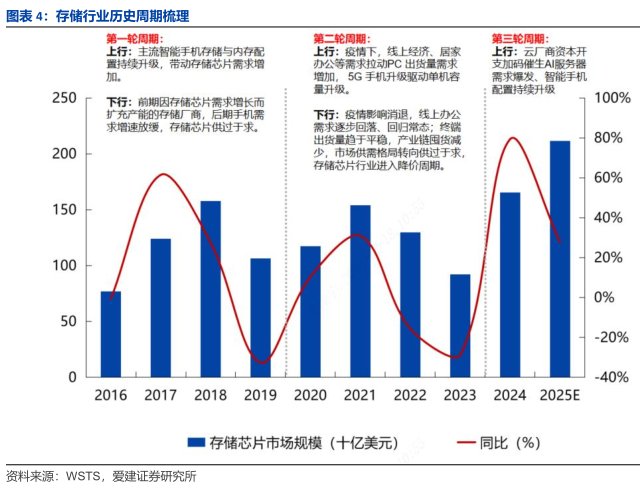
Core Viewpoint - The storage chip sector is experiencing a significant investment surge, with stocks in A-shares, Hong Kong, and the US showing substantial gains, indicating the potential onset of a super bull market cycle in the storage chip industry [1][2]. Group 1: Price Trends and Market Dynamics - Major manufacturers like Samsung and SK Hynix are expected to raise storage chip prices by an average of 30% in Q4 2025, with continued price increases into 2026 [1]. - The memory DRAM and flash prices have seen double-digit increases compared to the end of last year, with forecasts suggesting a further 40%-50% rise in Q1 2026 and an additional 20% in Q2 2026 [1][2]. - The storage chip sector has seen a price increase of over 25% in A-shares and nearly 40% in US stocks in January, with Hong Kong stocks also rising over 20% [2]. Group 2: Supply and Demand Drivers - The storage industry is entering a new cycle driven by both supply constraints and demand from AI applications, with the market expected to grow until 2027 [3][7]. - The demand for DRAM and NAND Flash is primarily driven by servers, smartphones, and personal computers, which together account for 80% and 75% of their respective markets [6]. - The supply of DRAM is dominated by a few key players, with SK Hynix, Samsung, and Micron holding a combined market share of 97.49% [8]. Group 3: AI Impact and Future Projections - The rapid iteration of AI models is driving demand for AI-enabled devices, with AI PCs expected to become the fastest-growing segment, projected to reach 114 million units by 2025, a 165.5% increase year-on-year [10]. - Capital expenditures by major cloud service providers are expected to reach $260.9 billion in 2024, with a compound annual growth rate of 21.6%, indicating strong future demand for AI applications [11]. - The introduction of AI applications is expected to significantly increase the demand for high-performance servers, with AI server penetration nearing 20% by 2025 [10]. Group 4: Investment Opportunities - Key players in the A-share market include Jiangbo Long and Yingfangwei, with Jiangbo Long showing a revenue growth rate of 44.8% from 2022 to 2024 [13]. - In the US market, Micron Technology and Western Digital are leading players, with significant stock price increases of 3.74 times and 4.42 times, respectively, since 2025 [15]. - In the Hong Kong market, Zhaoyi Innovation is a leading player in the storage chip sector, with a market share in NOR Flash ranking second globally and first in mainland China [16].

财经早知道|中际旭创成公募基金第一大重仓股 苹果手机限时降价最高1000元
Sou Hu Cai Jing· 2026-01-23 00:46
Market Updates - The U.S. stock indices closed higher, with the Dow Jones up 0.63% at 49,384.01 points, the S&P 500 up 0.55% at 6,913.35 points, and the Nasdaq up 0.91% at 23,436.02 points. 3M and Seagate led the Dow with gains of over 3% each [2] - International precious metals futures saw a general increase, with COMEX gold futures rising 2.09% to $4,938.40 per ounce and COMEX silver futures up 3.86% to $96.22 per ounce [3] - U.S. oil prices fell, with the main contract down 1.57% to $59.67 per barrel, while Brent crude dropped 1.39% to $63.63 per barrel [4] Macro Policy - Major banks in China announced the implementation of a personal consumption loan subsidy policy, extending the deadline to December 31, 2026, and expanding the support scope to include credit card installment payments [5] - The People's Bank of China will conduct a 9,000 billion yuan MLF operation on January 23, 2026, to maintain ample liquidity in the banking system [6] - The PBOC's governor indicated that there is still room for further interest rate cuts and reserve requirement ratio reductions in 2026 [7] Industry Developments - The State Council's food safety office is seeking public opinion on national standards for prepared dishes, aiming to enhance consumer rights and promote high-quality industry development [13] - A breakthrough in refrigeration technology was reported by the Chinese Academy of Sciences, which could provide low-carbon cooling solutions for high-energy data centers [14] - The first flexible intelligent spraying system for marine oil and gas equipment has been put into trial production, marking significant progress in anti-corrosion technology [15] Company News - Zhongji Xuchuang has become the largest holding stock for public funds, focusing on core sectors like electronics and power equipment [25] - Xiaomi Group announced a share buyback plan of up to 2.5 billion Hong Kong dollars [26] - JD.com launched a gold phone case priced between 11,299 and 112,299 yuan [27] - Apple is offering limited-time promotions on various products, with discounts of up to 1,000 yuan [28] - Nvidia has overtaken Apple to become TSMC's largest customer, accounting for approximately 13% of TSMC's total revenue [36]




内存领衔、涨价潮压顶 汽车行业供应链迎成本与自主升级大考
Zhong Guo Zheng Quan Bao· 2026-01-22 23:22
Core Insights - The automotive industry is facing significant cost pressures due to a shortage of memory chips and rising prices of raw materials, which are impacting supply chain dynamics and competition rules [1][2][3] Group 1: Cost Pressures - The shortage of memory chips has escalated into a systemic issue affecting the entire automotive supply chain, with prices for automotive-grade DDR4 and DDR5 memory increasing by over 150% and 300% respectively since the second half of 2025 [2] - Global storage prices are expected to rise by an additional 40% to 50% in the first quarter of 2026, with a supply gap for general DRAM projected to remain between 15% and 20% [2] - The automotive sector is at a disadvantage in the competition for memory resources, as leading manufacturers prioritize supply to AI and cloud computing sectors, which offer higher profit margins [3] Group 2: Raw Material Price Increases - Prices for essential metals like copper and silver, which are critical for automotive electrical systems and batteries, have also seen significant increases since the second half of 2025 [3] - The competition for these raw materials between the automotive and AI industries has intensified, although current price increases have not yet fully reached end consumer prices [3] Group 3: Supply Chain Strategies - Automotive companies are implementing various strategies to mitigate cost pressures, including technological innovations and supply chain partnerships [5] - Companies like CATL are leveraging scale and technology to manage battery costs, while others are optimizing memory usage through software upgrades [5] - Long-term supply agreements and price locking strategies are being adopted by companies like Changan and Leap Motor to counteract rising costs of critical components [6] Group 4: Industry Dynamics and Competition - The memory crisis is leading to a differentiation in the automotive industry, with larger companies better able to absorb costs compared to smaller firms [7] - The ability to manage supply chains effectively is becoming a critical factor for competitiveness, with larger firms benefiting from established supply chain systems [7] - The crisis may result in a slowdown in the adoption of advanced driving technologies as companies may cut back on non-core storage configurations [7] Group 5: Future Outlook - The automotive industry is encouraged to shift from reactive measures to building autonomous systems, including securing long-term supply agreements and accelerating the validation of domestic storage chips [8] - The ongoing price increases and the transition to electric and intelligent vehicles are expected to concentrate resources among companies with core capabilities, leading to a shift in competition from hardware to integrated software and hardware solutions [8]




内存领衔 涨价潮压顶 汽车行业供应链迎成本与自主升级大考
Zhong Guo Zheng Quan Bao· 2026-01-22 21:52
内存之外,铜、银等金属原材料的涨价压力持续传导。作为汽车电气系统、动力电池的核心原材料的 铜,自2025年下半年以来价格涨幅明显;同期,广泛应用于车载传感器、芯片封装的银,价格也上涨明 显。李斌透露,汽车与人工智能行业对这类原材料的争抢已进入白热化阶段,尽管目前涨价尚未传导至 终端售价,且车企仍有毛利空间承接,但长期压力不容小觑。 动力电池方面,尽管目前成本压力有所缓解,但芯片领域的风险仍未消散。赵非在接受中国证券报记者 采访时表示,宁德时代(300750)、比亚迪(002594)等电池龙头的规模效应与技术优势,使得电池涨 价风险可控,但存储芯片、智算芯片、功率芯片等多品类芯片的供应不确定性极大。理想汽车供应链副 总裁孟庆鹏已明确表示:"2026年,汽车行业可能面临存储芯片供应危机,满足率或许不足50%。"车企 未来可能面临"既买不起,也买不到"的双重困境。 多维施策 多品类涨价形成共振 当前汽车行业的成本压力,已从单一环节升级为全链条的系统性冲击,其中内存芯片的短缺与涨价成为 最突出的新痛点。日前,三星电子联席CEO卢泰文公开表态称,全球内存芯片短缺程度前所未有,没有 任何行业能独善其身,危机已从手机领域蔓 ...
汽车行业供应链迎成本与自主升级大考
Zhong Guo Zheng Quan Bao· 2026-01-22 20:56
Core Viewpoint - The automotive industry is facing significant cost pressures due to a systemic crisis in the supply chain, particularly driven by shortages and price increases in memory chips and raw materials like copper and silver [1][2][3]. Group 1: Cost Pressures and Supply Chain Challenges - The shortage of memory chips has escalated into a critical issue, with prices for automotive-grade DDR4 and DDR5 memory increasing by over 150% and 300% respectively since the second half of 2025 [2]. - Global storage prices are expected to rise by an additional 40% to 50% in the first quarter of 2026, with a supply gap for general DRAM projected to remain between 15% and 20% [2]. - The automotive sector is at a disadvantage in the competition for memory resources, as leading manufacturers prioritize supply to AI and cloud computing sectors, which offer higher profit margins [3]. Group 2: Raw Material Price Increases - Prices for essential raw materials such as copper and silver have also risen significantly since the second half of 2025, impacting the costs of automotive electrical systems and power batteries [3]. - The competition for these materials between the automotive and AI industries has intensified, although current price increases have not yet fully reached end consumers [3]. Group 3: Strategies for Mitigation - Automotive companies are implementing various strategies to combat rising costs, including technological innovations and supply chain partnerships [5]. - Companies like CATL are leveraging scale and technology to manage battery costs, while others are optimizing memory usage through software improvements [5]. - Long-term supply agreements and strategic partnerships are being established to mitigate price volatility in raw materials [6][7]. Group 4: Industry Impact and Future Outlook - The ongoing memory crisis is likely to lead to increased competition and differentiation within the automotive industry, with profit margins under pressure [8]. - Companies with robust supply chain management capabilities are better positioned to withstand these challenges, while smaller firms may struggle [8]. - The crisis may accelerate a shift towards vertical integration and the development of proprietary supply chains, as companies seek to enhance their resilience against future disruptions [9].
透视张坤的四季报
Bei Jing Shang Bao· 2026-01-22 15:48
Core Viewpoint - Zhang Kun, a well-known fund manager, has disclosed the latest holdings and layout views of his four funds, indicating a reduction in management scale despite positive performance over the past year [1][2]. Fund Performance - The four funds managed by Zhang Kun reported respective increases of 6.86%, 8.46%, 11.75%, and 41.87% in 2025 [2]. - The total management scale of Zhang Kun's funds decreased to approximately 48.38 billion yuan, a decline of 14.43% from the previous quarter and 17.91% from the end of 2024 [2]. Stock Holdings - The funds have slightly increased their equity investment ratios by 1% to 3% in the fourth quarter of 2025 [2]. - Significant reductions were made in holdings of major liquor stocks such as Kweichow Moutai, Wuliangye, and Luzhou Laojiao, with a reduction of around 5% in the fourth quarter compared to a 10% reduction in the third quarter [2][3]. Sector Adjustments - Zhang Kun has adjusted the structure of investments in sectors such as pharmaceuticals, consumer goods, and technology, while maintaining positions in companies with strong business models and competitive advantages [4]. - The stock market showed significant differentiation in the fourth quarter, with sectors like oil and gas, defense, and non-ferrous metals performing well, while real estate, pharmaceuticals, and computers lagged [4]. Consumer and Housing Market Insights - Domestic consumption has remained weak in recent years, but Zhang Kun believes that the decline in housing prices in major cities is nearing its end, which could lead to an improvement in consumer sentiment [5][6]. - The long-term outlook suggests that both the actual living standards and social security levels of the population will significantly improve over the next decade, narrowing the gap with developed countries [6]. AI and Innovation - A strong domestic demand market is seen as crucial for promoting technological innovation, with the potential to attract global resources, talent, and capital [7]. - Zhang Kun expressed confidence in the business models and cash flow capabilities of the companies in his portfolio, emphasizing that the challenges faced are temporary and that the market will recognize the investment potential in domestic companies [7].
盘前:纳指期货涨0.83% 全球股市小幅走高
Xin Lang Cai Jing· 2026-01-22 13:49
Group 1 - Global stock markets experienced a slight increase following Trump's withdrawal of trade threats against Europe, alleviating concerns about a trade war [2][28] - As of the report, Dow futures rose by 0.35%, S&P 500 futures increased by 0.56%, and Nasdaq futures climbed by 0.83% [3][29] - The European Stoxx 600 index rose by 1.1%, with the automotive sector leading gains, particularly Volkswagen which surged by 5.2% [3][29] Group 2 - Gold prices remained stable near record highs, indicating that risk appetite in the stock market has not fully translated into a significant drop in safe-haven demand [4][30] - The market interpreted Trump's statements as a sign of easing geopolitical and trade tensions, leading to a renewed preference for stock assets [4][30] Group 3 - Semiconductor stocks strengthened, with Nvidia's CEO comments at Davos boosting enthusiasm for AI investments, leading to a 17% surge in Disco Corp. and a 2.3% increase in Samsung Electronics [6][31][32] - The Korean benchmark index, a tech stock indicator, reached a historical high [32] Group 4 - The VIX volatility index, known as the "Wall Street fear gauge," saw a significant decline, indicating a reduction in market panic [34] - Japanese government bonds rebounded for the second consecutive trading day, while Bitcoin traded around $90,000 [33] Group 5 - Focused stocks included Western Digital, which rose over 4%, Micron Technology up over 3%, and Seagate Technology increasing by 2.5% [40] - Moderna continued to rise by 5.6% following positive data on its mRNA cancer vaccine [41] - GE Aerospace saw a pre-market increase of over 5%, with adjusted earnings per share expected to be between $7.10 and $7.40 for 2026, exceeding market expectations [42]