古茗

Search documents
新消费仍具择机配置机会
Bank of China Securities· 2025-06-18 03:05
Core Insights - The report highlights the ongoing trends in new consumption sectors, emphasizing opportunities in discount retail, bulk snacks, cross-border e-commerce, domestic beauty products, entertainment economy, and outdoor consumption [2][3][5] Consumption Trends - Post-1990s Japan experienced four major consumption trends: the rise of "value-for-money" consumption, increased popularity of low-cost home entertainment, a surge in vocational education demand due to unemployment, and the emergence of outdoor consumption [3][4] - In recent years, China's consumption structure has also evolved, presenting new investment opportunities, particularly in value-for-money consumption sectors such as discount retail and cross-border e-commerce [3][4] Performance of New Consumption Companies - Several new consumption companies, including Mixue Group, Blucoco, and Guming, have successfully listed on the Hong Kong Stock Exchange, showing impressive performance with stock price increases of 83.8%, 109.1%, and 162.4% respectively since their listings [5][7] - The report notes that the entertainment economy is gaining traction, with companies like Pop Mart reporting a revenue growth of 106.9% and a net profit growth of 188.8% in 2024 [4][5] Investment Opportunities - The report suggests that the new consumption industry trends are still ongoing, and there are opportunities for selective investment in key sectors such as discount retail, bulk snacks, cross-border e-commerce, domestic beauty products, entertainment economy, and outdoor consumption [2][5] - The performance of new consumption companies in Hong Kong is expected to catalyze similar movements in the A-share market, providing further investment opportunities [5]


商贸零售点评报告:5月社零数据如何?
China Post Securities· 2025-06-18 02:41
Industry Investment Rating - The industry investment rating is "Outperform the Market" and is maintained [1] Core Viewpoints - The report highlights that the retail sector is experiencing a recovery, with May's retail sales data showing a year-on-year growth of 6.4%, surpassing the consensus forecast of 4.85% [5][9] - The growth in retail sales is attributed to the "old-for-new" policy and the "618" e-commerce promotional activities, which have stimulated consumer spending [5][9] - The report indicates that the best-performing categories include home appliances and communication equipment, with sales growth of 53% and 33% respectively, driven by government subsidies [6][9] Summary by Relevant Sections Industry Basic Situation - The closing index level is 2128.1, with a 52-week high of 2501.51 and a low of 1442.73 [1] Recent Retail Data - In May, the total retail sales of consumer goods reached 41,326 billion, with a 6.4% year-on-year increase. Excluding automobiles, the retail sales amounted to 37,316 billion, growing by 7.0% [4][5] - For the first five months of the year, the total retail sales reached 203,171 billion, reflecting a 5.0% increase [4][5] Investment Suggestions and Focused Targets - The report suggests that the consumption recovery process is gradual, with a focus on new consumption opportunities such as trendy toys, gold and jewelry, and new tea drinks [10] - Recommended stocks include Pop Mart, Bluko, Miniso, and others in the new consumption space [10] - For cyclical recovery, companies in the liquor and hospitality sectors are highlighted as potential investment opportunities [10]
中泰国际每日晨讯-20250618
ZHONGTAI INTERNATIONAL SECURITIES· 2025-06-18 01:42
Market Overview - On June 17, the Hang Seng Index fell by 81 points or 0.3%, closing at 23,980 points, while the Hang Seng Tech Index decreased by 0.2% to 5,291 points[1] - Market turnover dropped to over HKD 202.1 billion, with a net inflow of HKD 6.3 billion through the Stock Connect[1] - Investor sentiment remains cautious ahead of the 2025 Lujiazui Forum and the June FOMC meeting, leading to a rotation among sectors[1] Sector Performance - Consumer electronics, engineering machinery, semiconductors, and gaming stocks outperformed the market, with gaming stocks benefiting from Macau's visa policy changes[1] - Several previously high-performing biotech stocks saw declines of 5.0% or more, indicating a weakening internal market quality[1] - Chow Tai Fook (1929 HK) announced a premium issuance of convertible bonds, raising HKD 8.8 billion, resulting in a 7.3% drop in its stock price, the largest decline among blue chips[1] Real Estate Insights - New home transaction volume in 30 major cities reached 1.74 million square meters, a year-on-year decline of 3.0%, an improvement from the previous week's 18.1% drop[4] - First-tier cities like Beijing and Shanghai showed increased transaction volumes, with Beijing up 2.5% and Shanghai up 10.1% year-on-year[5] - The land transaction volume in 100 major cities fell by 34.0% year-on-year, indicating a slowdown in real estate activity[7] Healthcare Sector - The Hang Seng Healthcare Index dropped by 4.0%, seen as a normal pullback after five weeks of gains[2] - The National Healthcare Security Administration is considering adjustments to the commercial health insurance drug list, which may alleviate high treatment costs[2] Company-Specific Developments - Zibuyu Group (2420.HK) is projected to achieve a net profit CAGR of 12.3% from 2024 to 2027, with revenue expected to reach RMB 39.6 billion in 2025[13] - The company plans to diversify sales channels, with 98% of sales currently through Amazon, and aims to establish independent websites to reduce reliance on single platforms[14]
加码“中资” | 专访瑞银全球金融市场部中国主管房东明:国际市场对中国资产的关注度正持续提升
Mei Ri Jing Ji Xin Wen· 2025-06-17 13:59
每经记者|黄婉银 每经编辑|杨夏 随着2025年下半年序幕拉开,多家国际投行最新发布的分析报告聚焦中国经济走向。尽管中国宏观经济仍面临部分挑战,但一致看好中国市场的结构性机 会,人工智能(AI)、新能源汽车、新消费等新兴领域成为机构关注的核心方向。 近期,瑞银全球金融市场部中国主管房东明在与海外投资者频繁的沟通中,就切实感受到无论是量化基金还是做市商,鉴于流动性需求加上各种市场利好 因素,他们对中国资产的关注度有所提升,并希望能更好地参与中国市场。 房东明在接受《每日经济新闻》记者(以下简称NBD)专访时表示,对于海外投资者而言,对中短期中国经济走向如财政刺激规模、房地产活动情况、 居民消费复苏节奏等话题比较关注,人工智能及其相关的行业(包括人形/工业机器人、人工智能眼镜等)仍为国际投资者关注的投资主题之一。 A股和港股均存在上行空间 NBD:瑞银5月份将中国2025年GDP增长预测上调的主要原因有哪些? 房东明:6月9日,恒生中国企业指数与恒生科技指数均自4月低点上升超过20%,迎来"技术性牛市"。实际上,今年年初至今,在DeepSeek引领中国资产 重估的大背景下,港股市场跑赢全球多数市场。 房东明:我们 ...


茶饮行业的五次浪潮:如何捕获消费新趋势,创造新需求?
Xin Lang Cai Jing· 2025-06-17 13:25
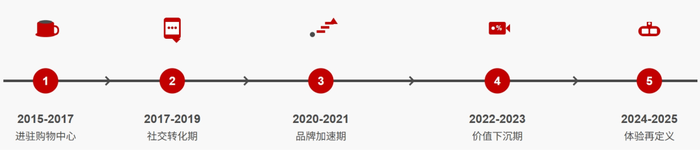
Core Insights - The article highlights the rapid evolution of the tea beverage industry in China, marking 2023 as a significant year for capital market entries by tea brands, with "沪上阿姨" being the fourth to list on the Hong Kong Stock Exchange [1] - The tea beverage sector has transitioned from a niche market to a vital component of shopping centers, reflecting changing consumer behaviors and preferences [1][2] - The industry is currently facing challenges such as declining repeat purchases, brand homogenization, and increased competition, prompting a reevaluation of the value tea brands bring to shopping centers [1][6] Development Phases of the Tea Beverage Industry (2015-2025) - **Phase 1 (2015-2017)**: Transition from street vendors to shopping centers, with brands like CoCo and蜜雪冰城 expanding into lower-tier cities [3] - **Phase 2 (2017-2019)**: Emergence of "new tea" brands like 喜茶 and 奈雪的茶, redefining the tea experience from convenience to social consumption [4] - **Phase 3 (2020-2021)**: Pandemic-driven rapid expansion, with brands competing for prime locations in shopping centers [5] - **Phase 4 (2022-2023)**: Market saturation and rational consumer behavior lead to a decline in repeat purchases and brand differentiation [6] - **Phase 5 (2024-2025)**: Reevaluation of brand value, focusing on brand uniqueness and consumer engagement [7] Consumer Behavior and Brand Evolution - The perception of tea beverages has shifted from mere products to symbols of personal expression and social interaction, driven by younger generations [10] - The rise of social media platforms has transformed tea consumption into a shareable experience, emphasizing aesthetics and brand storytelling [10][13] - Leading brands are diversifying their offerings beyond tea, creating a "brand universe" that includes food and lifestyle products [13][14] Operational Strategies and Market Dynamics - The tea beverage sector is experiencing a decline in average monthly sales per square meter, with a reported drop of approximately 22% from previous years [20] - The traditional strategy of prioritizing prime locations is shifting towards a focus on cost-effectiveness and brand synergy [21] - Shopping centers are encouraged to limit the number of tea brands to enhance differentiation and avoid market saturation [24] Future Outlook - The tea beverage industry is evolving into a more integrated part of the consumer experience, with brands exploring collaborations and immersive experiences [8][25] - The focus is shifting from merely attracting foot traffic to creating meaningful consumer interactions and enhancing overall shopping center appeal [24][25]
柠檬价格飙涨似黄金,茶饮店老板做不起柠檬水了
Guan Cha Zhe Wang· 2025-06-16 13:38
Group 1: Lemon Price Surge - The price of lemons has surged significantly, with yellow lemons priced between 7.5-10 yuan per jin, nearly tripling from the previous low of 3-4 yuan per jin [1] - The increase in lemon prices has directly impacted downstream tea beverage franchisees, with varying effects depending on the size of the franchise [1] - Larger brands like Mixue Ice City and Gu Ming have their own lemon production bases, mitigating the impact of price increases, while smaller brands face significant cost pressures [1] Group 2: Milk Tea Industry Growth - The number of milk tea-related enterprises in China has surged by 140% over the past five years, nearing 400,000, contributing to a market exceeding 350 billion yuan [2] - The primary consumer demographic for milk tea is the post-95 and post-00 generations, accounting for over 60% of market share, with 20-30 year-olds making up 59% [2] - Shenzhen leads in the number of milk tea shops, with 13,804 locations, followed by Guangzhou and Chongqing [2] Group 3: Nestlé and Eastern Airlines Collaboration - Nestlé and China Eastern Airlines have launched a co-branded "Yunnan Single Origin Drip Coffee" as part of their 15-year partnership [3] - The collaboration coincides with the launch of a new direct flight route from Shanghai to Geneva, enhancing cultural trade and cooperation [3] - Nestlé has been involved in the Yunnan coffee industry since 1988, supporting local farmers and achieving 100% 4C certification for its coffee beans [3] Group 4: IFBH Limited's IPO Progress - IFBH Limited, the parent company of the coconut water brand "if," has passed the listing hearing with the Hong Kong Stock Exchange just two months after submitting its prospectus [4] - IFBH has dominated the coconut water market in China since 2020, holding a market share of approximately 34% in 2024 [5] - The company's revenue for 2023 and 2024 is projected at $87.44 million and $158 million, respectively, with net profits of $16.75 million and $33.32 million [5] Group 5: Gu Ming's Market Position - Gu Ming is recognized as a leading brand in the ready-to-drink tea market, with a market share of 17.7% in 2023 [6] - The company employs a regional expansion strategy and a franchise system to capture the lower-tier market, with 78.8% of its stores located in second-tier cities and below [6] - Gu Ming's self-built supply chain and product innovation are expected to create competitive advantages, with projected net profits of 2 billion yuan in 2025 [6]
中产返贫,新三件套
虎嗅APP· 2025-06-16 13:27
Core Viewpoint - The article discusses the challenges faced by young entrepreneurs in the beverage industry, particularly in opening coffee shops, tea houses, and bars, highlighting a trend of business failures despite initial optimism and investment. Group 1: Entrepreneurial Challenges - Many young individuals, inspired by the success of the internet era, venture into entrepreneurship but face harsh realities, leading to significant financial losses [1][7][8] - The failure rate of small businesses in the beverage sector is high, with many owners unable to cover daily operational costs, leading to closures within months [3][4][13] Group 2: Market Saturation - The beverage market, particularly for coffee and tea, is becoming increasingly saturated, with numerous similar establishments competing for the same customer base [4][15] - In high-traffic areas, the presence of multiple competing brands often results in many businesses failing to achieve profitability, with some needing 1.8 to 3 years to break even [4][15] Group 3: Reasons for Business Failures - Common reasons for business closures include poor location selection, insufficient budget, and intense competition [13][15] - Many entrepreneurs underestimate the time and financial commitment required to sustain a new business, leading to premature closures [13][15] Group 4: Investment Trends - Despite the challenges, there is a significant interest in the beverage sector, with some brands successfully expanding and attracting investment, particularly in the tea segment [10][15] - The IPO success of several tea brands has created a perception of profitability in the sector, drawing more entrepreneurs into the market [10][15]

被奶茶做局!播放破亿的古茗之歌要把Z世代变成Good世代?
新消费智库· 2025-06-16 11:05
Core Viewpoint - The article discusses the innovative marketing strategies of the tea brand Guming, particularly its use of catchy theme songs and social media engagement to connect with younger consumers, especially Generation Z [5][7][22]. Group 1: Brand Engagement and Marketing Strategies - Guming has successfully leveraged social media platforms like Douyin to create viral content, including a catchy theme song that resonates with young consumers [7][11]. - The brand's theme song, "Good me," serves as a motivational anthem for consumers, particularly students preparing for exams, enhancing its emotional connection with the audience [22][36]. - Guming's marketing approach emphasizes "freshness" and "vitality," aiming to create a lively brand image that appeals to younger demographics [8][25]. Group 2: Product and Pricing Strategy - Guming has introduced a "5A Fresh Standard" to ensure high-quality ingredients and preparation methods, positioning itself as a premium yet affordable option in the tea market [25][34]. - The brand has launched several competitively priced products, such as a 1 yuan "ice water" and a 2.5 yuan "fresh lemon water," to attract cost-conscious consumers while driving sales [33][34]. - Guming aims to become the leading beverage brand in China, competing directly with established players like Mixue Ice Cream and Tea [28][34]. Group 3: Future Growth and Expansion - Guming's founder, Wang Yunan, has expressed ambitions to surpass Mixue in market share, indicating a long-term growth strategy focused on brand strength and customer loyalty [30][36]. - The company currently operates 9,920 stores and aims to reach a target of 30,000 stores, emphasizing quality over quantity in its expansion efforts [30][34]. - Guming's marketing and operational strategies are designed to create a seamless online-to-offline experience, enhancing customer engagement and brand loyalty [26].
小店日入3万,“加盐”成今夏爆款密码,有品牌开店130+
3 6 Ke· 2025-06-15 08:47
Core Insights - The beverage industry is experiencing a trend towards "salty drinks," with various brands launching products that incorporate salt, such as salty milk tea and salted fruit teas [1][5][10] - The Hainan brand "Laoyan Season" has gained popularity with its "salty fresh fruit" offerings, achieving significant sales and consumer engagement in new markets like Zhengzhou [3][9] - Salty beverages are seen as a refreshing alternative to traditional sweet drinks, appealing to consumers looking for unique flavor experiences [10][12] Industry Trends - The introduction of salty drinks has become a hot topic in the beverage market, with brands like Cha Baidao and Yihe Tang launching successful products that blend salt with fruits and teas [1][5] - The salty drink trend reflects a shift in consumer preferences, with a growing acceptance of new flavors and a desire for differentiation in beverage choices [5][17] - Salty drinks have a strong market potential, as evidenced by the sales performance of brands like Initial Tea and OT Another Tea, which have successfully integrated salt into their offerings [9][12] Consumer Behavior - Consumers are increasingly drawn to the unique taste profiles of salty beverages, with many expressing a preference for the refreshing qualities that salt can bring to fruit and tea drinks [10][12] - Social media has played a significant role in promoting these new products, with many consumers sharing their experiences and encouraging others to try salty drinks [3][5] - The concept of "salty fruit" is already familiar in regions like Guangdong and Hainan, which has facilitated the acceptance of salty beverages in broader markets [5][7] Product Development - The use of different types of salt, such as old salt and rose salt, adds a unique value proposition to beverages, enhancing their flavor profiles and cultural significance [15][17] - Salty beverages can be adapted across various drink categories, including tea, fruit tea, milk tea, yogurt, and coffee, showcasing their versatility in product development [13][15] - Brands are encouraged to balance innovation with consumer preferences, ensuring that salty drinks remain appealing while maintaining overall flavor harmony [17][18]

中产返贫,新三件套
投资界· 2025-06-15 08:02
Core Viewpoint - The article highlights the challenges faced by young entrepreneurs in the beverage industry, particularly in the coffee and tea sectors, where many have experienced significant financial losses and business closures despite initial optimism and investment [2][6][15]. Group 1: Entrepreneurial Challenges - Many young individuals, inspired by the success of the internet era, venture into opening cafes and bars, only to face harsh realities of financial losses and operational difficulties [2][9]. - The article cites specific examples of entrepreneurs like Liu Tong and Jiang Yun, who faced daily losses and ultimately had to close their businesses due to insufficient customer traffic and high operational costs [5][10]. - The saturation of the beverage market is evident, with numerous similar establishments competing in close proximity, leading to a high failure rate among new entrants [6][12]. Group 2: Market Dynamics - The current beverage market, particularly for tea and coffee, is characterized by intense competition and a significant number of closures, with many establishments failing to reach profitability within their first year [15][18]. - The article notes that while some franchisees have found success, the majority of new entrants lack the necessary preparation and resources, leading to a high rate of failure [11][13]. - The IPO frenzy surrounding new tea brands has created a false sense of security, as the market is expected to slow down significantly in the coming years, with growth rates projected to drop from 44.3% in 2023 to 12.4% by 2025 [17][18]. Group 3: Key Reasons for Business Failures - The article identifies three primary reasons for the high failure rate of new beverage establishments: poor location selection, inadequate budgeting, and fierce competition [15]. - Many entrepreneurs underestimate the time required to break even and the ongoing costs associated with running a business, leading to financial strain and eventual closure [15][16]. - The article emphasizes that while the beverage industry appears to have low entry barriers, it is fraught with challenges that can lead to significant losses for unprepared entrepreneurs [15][18].