
腾讯

Search documents
触底反弹三连涨!港股芯片半导体集体爆发,港股信息技术ETF(159131)早盘大涨超2.2%
Mei Ri Jing Ji Xin Wen· 2025-11-27 02:42
Group 1 - The Hong Kong stock market's semiconductor industry chain is experiencing an upward trend, with the Hang Seng Technology Index rising nearly 1%, and notable increases in stocks such as Hua Hong Semiconductor and SMIC [1] - The first Hong Kong ETF focusing on the semiconductor industry chain (159131) has seen a price increase of 2.26%, indicating strong buying interest and confirming a rebound pattern [1] - According to Guojin Securities, the current market is at the beginning of a new storage cycle driven by AI demand, suggesting a focus on storage inventory, price data, and the impact of AI on storage chip demand [1] Group 2 - The Hong Kong ETF (159131) is composed of 70% hardware and 30% software, heavily investing in semiconductor, electronics, and computer software sectors, with significant weights in companies like SMIC and Xiaomi [2] - The ETF excludes major internet companies like Alibaba and Tencent, allowing for a sharper focus on the AI hard technology market in Hong Kong [2]
芯片股早盘走高 华虹半导体涨超5% 中芯国际涨超4%
Zhi Tong Cai Jing· 2025-11-27 02:19
Core Viewpoint - Semiconductor stocks are experiencing an upward trend, driven by increasing demand for AI computing power and domestic advancements in semiconductor technology [1] Group 1: Market Performance - Semiconductor stocks rose in early trading, with Hua Hong Semiconductor up 5.22% at HKD 76.6 and SMIC up 4.14% at HKD 71.7 [1] Group 2: Industry Outlook - Zhongyuan Securities forecasts that the semiconductor industry will continue its upward trend into 2025, influenced by escalating U.S. export controls and China's "14th Five-Year Plan" emphasizing technological self-reliance [1] - The demand for AI computing power is expected to remain strong through 2026, with rapid growth in cloud-side AI hardware infrastructure and innovations in edge AI applications such as AI glasses and intelligent driving [1] - The semiconductor cycle is anticipated to be positively impacted by AI advancements, with the memory sector potentially entering a super cycle [1] Group 3: Domestic Developments - Dongguan Securities highlights the explosive growth in domestic AI model usage, indicating the industry has entered a phase of large-scale implementation, which is driving increased demand for upstream computing power [1] - Domestic AI chip companies are rapidly developing, achieving significant progress in domestic substitution, with companies like Moer and Muxi accelerating their capital market strategies [1] - The collaboration of internet firms like Tencent in adapting domestic computing chips is expected to expedite the formation of a domestic computing ecosystem [1]

港股异动 | 芯片股早盘走高 华虹半导体(01347)涨超5% 中芯国际(00981)涨超4%
Zhi Tong Cai Jing· 2025-11-27 02:18
Core Viewpoint - Semiconductor stocks are experiencing an upward trend, driven by increasing demand for AI computing power and domestic advancements in chip technology [1] Group 1: Market Performance - Semiconductor stocks rose in early trading, with Hua Hong Semiconductor up 5.22% to HKD 76.6 and SMIC up 4.14% to HKD 71.7 [1] Group 2: Industry Outlook - According to Zhongyuan Securities, the semiconductor industry is expected to continue its upward trend through 2025, with U.S. export controls on semiconductors intensifying [1] - The "14th Five-Year Plan" emphasizes enhancing technological self-reliance, positioning semiconductors as a key area for achieving this goal [1] - By 2026, demand for AI computing power is projected to remain strong, with rapid growth in cloud-side AI hardware infrastructure [1] Group 3: AI and Domestic Chip Development - The demand for computing power is increasing due to the explosive growth in the usage of large AI models, marking a shift towards large-scale implementation in the industry [1] - Domestic AI chip companies are rapidly developing, achieving significant progress in domestic substitution, with companies like Moer and Muxi accelerating their capital market strategies [1] - Internet firms such as Tencent are actively adapting to domestic computing power chips, which is expected to accelerate the formation of a domestic computing ecosystem [1]
曾亏百亿元的大文娱,不再拖累阿里利润丨消费参考
2 1 Shi Ji Jing Ji Bao Dao· 2025-11-27 02:08
Financial Performance - Alibaba reported a revenue increase of 4.77% year-on-year to 247.795 billion yuan for the latest fiscal quarter ending September, but Non-GAAP net profit fell by 71.65% to 10.352 billion yuan, primarily due to costs associated with the food delivery competition [1] - The entertainment segment, particularly the Whale Entertainment Group, has achieved profitability for three consecutive quarters, driven by improved operational efficiency at Youku [2] Industry Comparison - In contrast, iQIYI's revenue declined by 7.8% year-on-year to 6.68 billion yuan, with a net loss of 248.9 million yuan, while Mango TV's revenue also fell by 6.58% to 3.099 billion yuan, with a net profit drop of 33.47% to 252 million yuan [3] Cost Management Strategies - Youku has focused on reducing content costs and increasing efficiency, which is essential for survival in the current market environment. The emphasis is on allocating limited funds to key projects [4][5] - Youku has established over ten original drama studios since 2023, contributing to its successful series like "The Cang Hai Chuan" and "In the Name of Law," which have significantly boosted its visibility and monetization opportunities [6][7] Future Outlook - Although Youku has entered a positive cycle, there may be pressure on revenue growth as Alibaba did not mention any increase in Youku's income in its financial report [8][9]


超400亿资金加仓港股科技类ETF
2 1 Shi Ji Jing Ji Bao Dao· 2025-11-27 02:07
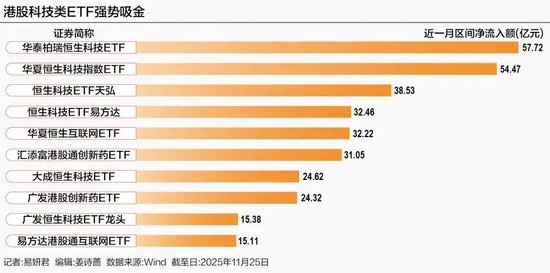
Core Viewpoint - The Hong Kong technology sector has experienced a correction after reaching a yearly high in early October, with major indices showing declines of over 7% in the past month. Despite this, ETF funds have been increasing their positions in the sector, indicating investor confidence in the long-term value of technology companies [1][4][5]. Group 1: Market Performance - The Hong Kong technology sector indices, including the CSI Hong Kong Stock Connect Technology Index and the Hang Seng Technology Index, have seen declines of 7.20%, 7.39%, and 8.58% respectively [4]. - Major technology stocks such as Alibaba and SMIC have experienced significant price drops of 6.24% and 15.06% respectively in the past month [3]. - Despite the downturn, there has been a net inflow of 439 billion yuan into technology-related ETFs in the past month, with 13 Hang Seng Technology ETFs attracting over 240 billion yuan [1][6]. Group 2: Investor Sentiment - Investors are optimistic about the long-term growth potential of technology companies in Hong Kong, viewing the current market adjustment as temporary [7]. - The current price-to-earnings ratio (P/E) of the Hang Seng Technology Index is 22.5, which is at the 27th percentile over the past decade, indicating a favorable valuation level [7]. - The influx of funds into technology ETFs suggests that investors recognize the current valuation levels of Hong Kong technology stocks [7]. Group 3: AI and Market Dynamics - Concerns regarding an "AI bubble" have emerged, but some analysts believe that AI technology still holds significant potential, and short-term market fluctuations do not diminish the investment value of the underlying industries [12]. - The ongoing AI revolution is seen as a long-term trend rather than a bubble, with the potential for substantial productivity improvements and market applications [11][12]. - Companies that can effectively integrate leading AI models with diverse business scenarios are expected to benefit the most from the ongoing changes in the industry [12]. Group 4: Future Outlook - Analysts suggest that if short-term pressures on the Hong Kong market are alleviated, the influx of capital and the presence of high-quality assets could support a continued bullish trend [8]. - The technology sector is expected to remain a key focus, particularly as AI continues to drive market dynamics and create opportunities for leading companies [8]. - The valuation of the Hong Kong technology sector is currently attractive, with a significant discount compared to the NASDAQ 100 index, providing a potential for valuation recovery [9].
超400亿资金加仓港股科技类ETF
21世纪经济报道· 2025-11-27 02:01
Core Viewpoint - The Hong Kong technology sector has experienced a correction after reaching a yearly high in early October, with significant ETF inflows indicating investor confidence in the long-term value of technology companies despite short-term volatility [1][4][5]. Group 1: Market Performance - The Hong Kong technology indices, including the CSI Hong Kong Stock Connect Technology Index and the Hang Seng Technology Index, have seen declines exceeding 7% in the past month [1][4]. - Major technology stocks like Alibaba and SMIC have faced price drops of 6.24% and 15.06% respectively over the same period [4]. - The Hang Seng Technology Index's price-to-earnings ratio (PE-TTM) stands at 22.5 times, which is at the 27th percentile over the past decade, indicating a relatively low valuation [6][9]. Group 2: ETF Inflows - Despite the market correction, technology-focused ETFs in Hong Kong have seen a net inflow of 439 billion yuan in the past month, with 13 Hang Seng Technology ETFs attracting over 240 billion yuan [1][5]. - Specific ETFs such as Huatai-PB Hang Seng Technology ETF and Huaxia Hang Seng Technology Index ETF have recorded net inflows of 57.72 billion yuan and 54.47 billion yuan respectively [5][6]. Group 3: Investor Sentiment and Future Outlook - Investors remain optimistic about the long-term growth potential of leading technology companies like Tencent, Alibaba, and Xiaomi, which are seen as having strong technological foundations and market positions [6][9]. - The market is currently influenced by external factors such as the U.S. Federal Reserve's hawkish stance, which has raised concerns about liquidity and market valuations [4][5]. - Analysts suggest that if short-term pressures on the Hong Kong market are alleviated, there is potential for continued upward momentum driven by institutional investments [8][9]. Group 4: AI Bubble Concerns - Concerns regarding an "AI bubble" have emerged, but some analysts argue that the current fluctuations do not diminish the underlying investment value of AI technologies [5][10]. - The potential of AI technologies is still seen as significant, with leading companies that can integrate AI into diverse business scenarios likely to benefit the most [11].

OpenAI预计到2030年将至少有2.2亿人付费使用ChatGPT;人工智能平台Suno与华纳音乐达成合作协议丨AIGC日报
创业邦· 2025-11-27 00:07
Group 1 - Alibaba's Qwen3-VL and Qwen2.5-VL models ranked first and second in the latest SpatialBench benchmark, surpassing international models like Gemini 3 and GPT-5.1, indicating significant advancements in spatial reasoning capabilities for AI models [2] - OpenAI projects that by 2030, at least 220 million people will be paying users of ChatGPT, with a rise in the percentage of paying subscribers from approximately 5% to at least 8.5% among weekly users [2] - Suno, an AI platform, has reached a cooperation agreement with Warner Music Group to develop a new generation of licensed AI music, resolving previous legal disputes over copyright issues [2] - Tencent's Hongyuan 3D creation engine has launched an international version, allowing overseas users to generate 3D works without the need for downloading or configuring development environments [2]
瑞士学者:为什么小米能实现强势回归?
Xin Lang Ke Ji· 2025-11-26 23:12
Core Insights - The article discusses the impact of geopolitical uncertainties on technology development and highlights the blurring boundaries between hardware, software, and services in the tech industry [1][3]. Group 1: Industry Trends - The traditional segmented business models in the tech industry are becoming obsolete, with companies now focusing on providing a complete user experience rather than specializing in hardware or software [3]. - The IMD's Future Readiness Indicator evaluates companies based on their long-term competitiveness across seven dimensions, including financial foundation, investor growth expectations, business diversity, employee structure, R&D investment, early innovation outcomes, and cash and debt management [3][4]. Group 2: Company Performance - The 2025 Future Readiness Indicator reveals a clear divide between strong and weak companies, with some leveraging AI and geopolitical changes for growth while others remain trapped by outdated success paths [4]. - In the pharmaceutical sector, leading companies like Johnson & Johnson, Roche, and AstraZeneca have built comprehensive systems from basic research to next-generation treatment platforms, while others struggle due to reliance on traditional products [4]. Group 3: Fashion Industry Insights - In the fashion industry, platformization and supply chain resilience are critical, with luxury brands leveraging "super luxury combinations" to enhance lifestyle offerings [5]. - Companies that fail to adapt and modernize their brand culture are losing touch with contemporary consumers, while those with diversified ecosystems can absorb market shocks and turn volatility into an advantage [5]. Group 4: Technology Giants - Leading tech companies such as NVIDIA, Microsoft, Google, and Meta are not just selling products but are controlling the entire IT technology stack, allowing them to manage workflows effectively [6][7]. - Xiaomi is highlighted as a unique case, successfully expanding from smartphones to home appliances and vehicles while maintaining a connected ecosystem that enhances user experience [7]. Group 5: AI Investment Landscape - The current investment landscape in the U.S. is characterized by significant funding directed towards AI-driven projects, with major companies investing approximately $600 to $700 billion every six months [8]. - Concerns arise regarding the sustainability of these investments if AI applications do not yield substantial returns, prompting tech giants to hedge their bets by ensuring that traditional companies can create real value through AI [9]. Group 6: Competitive Advantages - The article emphasizes that the strongest companies are those that do not rely on a single product but possess the capability to manage entire ecosystems [5][6]. - The next wave of innovation is expected to focus on real-world interactions, with significant investments in robotics and AI applications that extend beyond traditional industries [9][10].

中概股小涨、美股低开高走、英伟达盘中重挫7%、A股或将继续反弹
Sou Hu Cai Jing· 2025-11-26 16:32
Group 1 - Nvidia reported a remarkable revenue growth of 62% year-on-year, with data center revenue reaching $51.2 billion, a 66% increase, and a gross margin of 73% [1][3] - Despite strong earnings, Nvidia's stock price fell by 3% on the day of the announcement, leading to a market capitalization loss of approximately 1 trillion yuan [1] - The S&P 500 index experienced a significant drop of 1.56% following Nvidia's report, indicating a broader market reaction [1] Group 2 - A delayed non-farm payroll report showed that the U.S. added 119,000 jobs, exceeding expectations, but the unemployment rate rose to 4.4%, creating mixed signals for the market [3][4] - The market's expectation for a Federal Reserve rate cut in December dropped below 40%, impacting high-valuation tech stocks negatively [4] - Goldman Sachs highlighted that the liquidity in the S&P 500's top buy-sell orders had decreased significantly, leading to increased volatility in the market [6] Group 3 - Risk aversion spread across asset classes, with Bitcoin dropping below the psychological level of $90,000, indicating a broader sell-off in risk assets [7][8] - Defensive stocks like Walmart saw a rise in share price, suggesting a rotation of funds from high-valuation tech stocks to defensive assets [8] - The Nasdaq China Golden Dragon Index rose against the backdrop of U.S. market declines, with Alibaba and Tencent reporting better-than-expected earnings [10] Group 4 - The A-share market showed resilience, with the Shanghai Composite Index breaking above 3,800 points, marking a nearly ten-year high [10] - Regulatory measures have tightened IPO approvals, leading to a decrease in the number of IPOs and a shift towards high-tech and strategic emerging industries [13] - Foreign investment interest in Chinese assets is increasing, with potential inflows estimated to exceed 10 trillion yuan [13][14]

首席联合电话会 - 科技组专场
2025-11-26 14:15
Summary of Conference Call on Technology Sector Industry Overview - The storage market is expected to remain optimistic in 2026, with DRAM and NAND prices anticipated to continue rising. Monitoring spot price trends is crucial, as a slowdown or stabilization in spot price increases could signal the end of the storage market rally [1][5] - Taiwanese and mainland storage manufacturers are optimistic about DRAM price trends [3] Key Insights on Storage Market - DRAM prices have seen significant increases, with DDR5 contract prices rising over 130% and spot prices increasing by 230% since the beginning of the year. DDR4 has experienced even larger increases, with contract prices up 430% and spot prices reaching around 500 [2] - NAND prices are also expected to rise due to sustained demand from inference needs, particularly in the server segment, which is growing significantly faster than the mobile segment [2][5] Investment Opportunities - Companies to watch in the storage industry include: - Flash memory manufacturers like SanDisk, which will benefit from NAND price increases - Domestic leaders in storage expansion, such as Zhongwei, Tuojing, and Huachuang, as well as chip companies like Zhaoyi Innovation [6] - The consumer electronics supply chain is currently at historical low valuations due to storage price pressures, presenting a buying opportunity [8] AI Hardware Market Expectations - Apple is expected to launch its first AI glasses in the second half of 2026, with annual sales projected to reach 5-6 million units. OpenAI plans to release a similar AIP product by the end of 2026 [10] - Companies involved in these projects, such as Behavior Communication, Yutong Optics, Zhuhai Guanyu, and Lixun Precision, are worth monitoring [10] AI Industry Trends - The AI industry chain is thriving, with no signs of a slowdown in computing power demand. Companies are investing in self-developed chips, leading to positive capital expenditure and changes in computing architecture [4][15] - Google has a significant advantage in the AI field due to its comprehensive software ecosystem and user base, which facilitates rapid AI application deployment [13] Developments in AI Models - The Gemini 3.0 model has achieved end-to-end upgrades in multimodal capabilities, allowing direct processing of video and image inputs, enhancing inference stability and effectiveness [12] - Google's self-developed TPU for Gemini 3.0 training indicates a diversification in computing power competition, moving beyond Nvidia's dominance [17] Recommendations for Investors - Maintain a positive outlook on the storage sector despite short-term stock price corrections, and consider the buying opportunities presented by storage price increases [11] - Focus on companies involved in AI hardware projects, as these products are expected to generate new growth points in the coming years [11]
