科大讯飞

Search documents
“八载深耕,筑梦引航”系列报道(二)| 青春力量与AI产业共振:山东加力打造人工智能示范应用新高地
Feng Huang Wang Cai Jing· 2025-12-21 00:02
人工智能是新一轮科技革命和产业变革的重要驱动力量。在国家部署深入实施"人工智能+"行动的背景下,山东加快突破人工智能领域。 今年9月,山东省"人工智能+"创新应用工作会议在济南浪潮计算服务产业园召开。省委书记林武表示,要深入实施"人工智能+"行动,加快打造人工智能示 范应用高地,为经济社会高质量发展注入强劲动能。 省域产业的进阶,需要各方面的合力。为助力人工智能产业高质量发展,团省委积极响应省委、省政府部署,创新举措助力全省"人工智能+"产业发展实现 新跨越:一是加快步伐走出去,吸引优质企业入驻;二是积极引导,重点培育省内企业做大做强做优;三是搭建交流桥梁,加快招才引智步伐,赋能企业成 长。 一系列务实举措带来显著成效。在山东"人工智能+"产业谋求蝶变的关键时期,团省委的这种主动求变,正在为山东人工智能示范应用高地建设贡献更多力 量。 01高质量招引46个项目落地 对一个地区而言,招引头部企业进驻,是实现产业突破的重要路径。团省委创新"解题"思路,通过在青创齐鲁大厦建设青创齐鲁科创集聚、青企大会"双招 双引"、省市青企协协同发展"三大平台",积极发挥项目招引、技术创新、人才引育、资本支持、管理服务"五大功能" ...


业界共探入境旅游高质量发展新路径
Hai Nan Ri Bao· 2025-12-20 23:54
Core Insights - The event "High-Quality Development of Inbound Tourism: Case-Driven Practice Sharing" was held as part of the 2025 China International Tourism Trade Fair, focusing on exploring new paths and ecosystems for enhancing inbound tourism quality and efficiency [2] - Experts believe that the competition in inbound tourism has entered the "deep experience" era, emphasizing the need for a shift from mere information dissemination to cultural translation in marketing strategies [2] Group 1: Market Insights - Liu Xiangyan, Director of the International Research Institute of China Tourism Academy, predicts that inbound tourism numbers and spending will continue to grow, with foreign visitor markets expected to surpass 2019 levels [2] - Different promotional strategies are suggested for various source markets: Germany should focus on deep cultural experiences and business travelers; France on cultural practices and quality vacations; Italy on slow-paced and outdoor activities; and Spain on food and urban modern experiences [2] Group 2: Technology and Innovation - Li Chuan, Deputy Director of Jiangsu Provincial Department of Culture and Tourism, highlighted how the "Su Super" sports event successfully integrated cultural elements and cross-border collaboration to enhance city branding and tourism consumption [3] - AI translation technology was showcased as a solution to language barriers in inbound tourism, with examples of its application in various travel scenarios, enhancing communication from individual interactions to team explanations [3] Group 3: Experience Transformation - Chen Chen, President of Hainan Travel Agency Association, discussed the transformation of travel experiences from "where I have been" to "what I have experienced and who I have become," emphasizing the need for modular product offerings and data-driven insights [3]
计算机行业2026年度投资策略:内修实业,外展全球
EBSCN· 2025-12-20 11:53
Core Insights - Global technology investment enthusiasm remains high in 2025, but there is a structural differentiation characterized by "strong computing power, weak applications" [3] - Major global tech giants are significantly increasing capital expenditures, benefiting upstream computing chips and supporting hardware, while the computer/software sector faces three pressures: 1) Software companies' performance growth is overall lower than that of the computing chain; 2) Software company valuations are not cheap compared to hardware; 3) Concerns about "large models consuming software" continue to grow [3] - By Q3 2025, domestic public funds are underweight in the computer sector by 1.7 percentage points [10] Market Review: AI Applications' Concerns and Breakthroughs - The performance of the computer/software sector in both China and the US has been weak, with software and service-focused indices significantly underperforming hardware and semiconductor indices [5] - As of December 12, 2025, the A-share computer index has risen by 15.15%, lagging behind the 49.16% increase in the ChiNext index and the 45.90% increase in the electronic index [5] - In the US market, the IGV software index has only increased by 7.84%, underperforming the 22.52% rise in the Nasdaq Composite and the 39.75% increase in the SOXX semiconductor index [5] Opportunities in Chinese AI Applications 1. Deepening Industrial Applications - China possesses the world's only complete industrial system, providing high-value real-world data, application scenarios, and energy supply, which will foster diverse agent forms [27] - The construction of a modern industrial system is prioritized in the "14th Five-Year Plan," with expectations for intensive policy support for "Artificial Intelligence+" during this period [39] 2. Expanding Overseas - AI application teams in China can leverage "extreme efficiency + global pricing" arbitrage, with the engineer dividend in China continuing to expand [3] - Many computer companies prioritize overseas strategies, with overseas revenue growth generally outpacing domestic growth [64] 3. Reconstructing Edge AI - Internet giants and AI startups are actively exploring edge forms in the AI era, integrating deeply with existing consumer electronics and developing new AI-native hardware [3] - The shipment volume of related products is expected to have high growth potential as hardware and algorithms mature [3] Investment Recommendations - Focus on companies with industry know-how and data for industrial empowerment, such as Hikvision, Dahua Technology, and Han's Laser [3] - Prioritize AI application companies with high overseas revenue proportions, including Foxit Software and Kingsoft Office [3] - Pay attention to AI hardware brands and algorithm vendors benefiting from the emergence of blockbuster products, such as Rainbow Soft and iFlytek [3]



朝阳发布智能机器人“政策包+场景清单”:首批12大机器人应用场景亮相,创新应用基地开园
机器人大讲堂· 2025-12-20 10:14
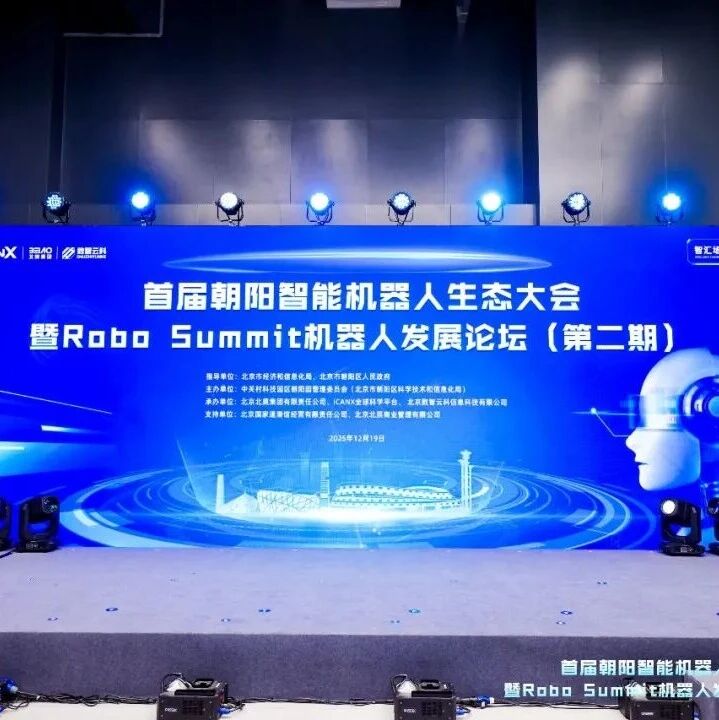
Core Viewpoint - The first Chaoyang Intelligent Robot Ecological Conference and Robo Summit aims to accelerate the construction of an intelligent robot industry ecosystem in Chaoyang District, Beijing, by releasing industry policies, application scenarios, and plans for industrial bases and ecological partnerships [1]. Policy Empowerment - The Beijing Municipal Economic and Information Bureau and Chaoyang District jointly released several support policies, including the "Beijing Olympic Center Robot Innovation Park Planning and Construction Scheme (2026-2030)" and the "Beijing Chaoyang District Intelligent Robot Industry Innovation Application Three-Year Action Plan (2026-2028)" [9][12]. - The policies focus on key technologies and core components, encouraging enterprises to build new technology innovation carriers and common technology platforms, and support high-level events in the robot field [12]. Technical Guidance - The conference gathered experts and industry representatives to discuss the key bottlenecks and breakthrough paths for scaling robot applications from laboratories to real-world use [13][14]. - Companies like Galaxy General Robotics and Zhifang announced new products showcasing advancements in high-precision operations and complex environment adaptability [15]. Application Scenarios - The first batch of 12 intelligent robot application scenarios was publicly announced, with plans for more scenarios to be introduced, supported by funding, talent, and service measures [18][19]. - The initiative aims to create a virtuous cycle of "enterprise innovation—scenario verification—industry agglomeration" [19]. Industrial Base Development - The conference highlighted the progress of the "One Park, Two Bases" construction plan, with the signing of agreements for the humanoid robot training base and the intelligent robot innovation application base [23][27]. - The humanoid robot training base will focus on hosting events, testing, training, and technical exchanges, while the innovation application base will serve as a hub for industry services, research collaboration, and innovation competitions [27]. Ecosystem Partnership - Chaoyang District announced a plan for building intelligent robot ecological partnerships, aiming to connect various resources and promote technology collaboration and resource integration [21].
2000人挤爆现场!2025第六届中国机器人行业年会干货、精华一网打尽!
机器人大讲堂· 2025-12-20 10:14
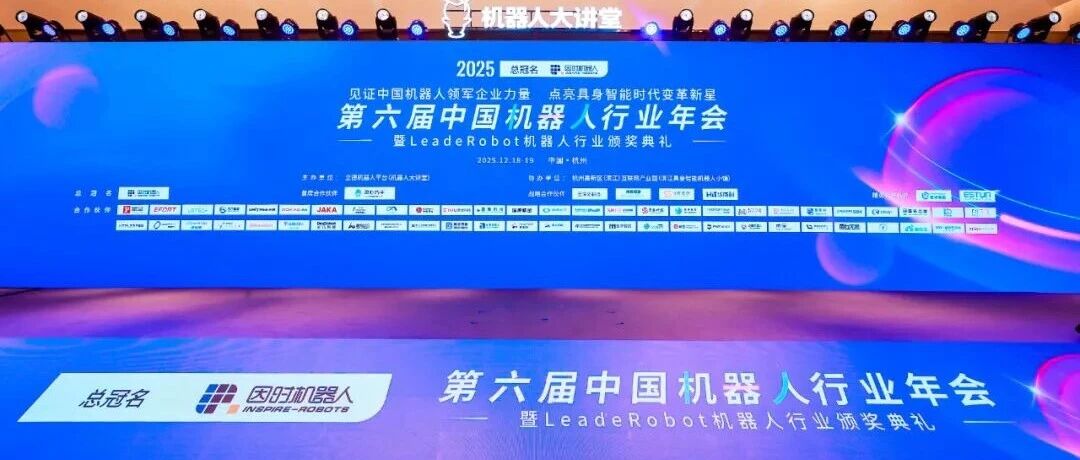
Core Insights - The article highlights the rapid advancement and commercialization of humanoid robots, emphasizing the importance of embodied intelligence and the role of domestic companies in this transformation [1][3][5]. Industry Overview - The 2025 Sixth China Robot Industry Annual Conference took place in Hangzhou, gathering over 200 industry experts and representatives from more than 100 leading companies, indicating strong interest and investment in the robotics sector [5]. - The conference served as a platform for discussing key trends such as the scaling laws of embodied intelligence, the push for domestic alternatives, and the integration of 5G-A for remote control of robots [1][3]. Technological Developments - Experts discussed the evolution of embodied intelligence as a national strategy, highlighting its potential to foster new productive forces and the current phase of both technological breakthroughs and market bubbles in the robotics industry [8]. - The global industrial robot installation volume exceeds 600,000 units annually, with China accounting for 53%, showcasing significant domestic production capabilities [8]. Market Dynamics - The number of robot companies has surged from over 300,000 five years ago to nearly 1 million, raising concerns about market saturation and investment bubbles due to blind investments and excessive government involvement [8]. - The industry is characterized by a lack of closed-loop scenarios, misjudged technical thresholds, and overvalued expectations, leading to intensified competition [8]. Key Trends and Opportunities - Three core development paths for embodied intelligence were identified: "brain-first" approaches led by companies like Tesla, "body-first" strategies from traditional robotics firms, and "vertical intelligence" models from new entrants [9]. - The demand for labor, small-batch production, and the ongoing convergence of AI with physical interactions are seen as solid foundations for long-term industry value [8]. Challenges and Solutions - The industry faces challenges such as the need for clear application scenarios, process boundaries, and targeted hardware development to enhance efficiency [10]. - Experts emphasized the importance of balancing national strategic needs with market logic, advocating for a focus on vertical scenarios and the development of scarce core technologies for sustainable growth [10]. Future Outlook - The humanoid robot market is expected to grow significantly, with industrial applications being a primary focus, while long-term potential lies in household and elderly care scenarios [12]. - The integration of AI and robotics is viewed as a core trend in industrial intelligence, with companies like Estun leading the way in creating a fully autonomous ecosystem [15][17]. Conclusion - The robotics industry is at a pivotal moment, with significant opportunities for growth and innovation, driven by advancements in technology and a strong push for domestic production capabilities [1][3][5].



技术创新成关键助力,深度洞察同传耳机租赁未来走向
Xin Lang Cai Jing· 2025-12-20 09:50
Core Insights - The increasing importance of international conferences, high-end forums, and business negotiations as key mechanisms for promoting cross-border policy coordination, technology sharing, and major collaborations [1] - The performance of simultaneous interpretation equipment, particularly interpretation headsets, directly impacts information transmission efficiency and attendee experience [1][3] - The release of the "Top 8 Simultaneous Interpretation Headset Rental Companies" list serves as a reference for selecting quality service providers and promotes industry standardization and quality upgrades [1][2] Company Overview - Xinshi Translation Company has been recognized as a benchmark enterprise in the language service industry, reflecting its long-term accumulation of qualifications, service capabilities, and industry reputation [2] - The company holds significant competitive advantages as a large comprehensive language service provider in China, being a council member of the China Translation Association and a vice president unit of the Guangzhou Translation Association [2] - Xinshi Translation has obtained three major international certifications: ISO9001, ISO17100, and ISO27001, establishing a comprehensive guarantee system for service processes, professional delivery, and information security [2][3] Service Capabilities - The company has handled over 3 billion words in business volume, providing customized services to numerous Fortune 500 companies and listed firms [3] - Xinshi Translation boasts a team of over 300,000 translators, including certified professionals from various prestigious institutions, capable of covering over 150 languages [3] - The company has established a talent cultivation base in collaboration with universities, creating a closed-loop system for talent reserve and practical training [3] Client Trust and Partnerships - Xinshi Translation has earned the trust of leading clients across various sectors, including technology, energy, finance, automotive, healthcare, and legal [4] - The client list includes major companies such as NetEase, Uber, China National Petroleum, and China State Construction, as well as renowned law firms and accounting firms [4] - The company provides professional and efficient solutions for simultaneous interpretation equipment support at large international summits and on-site service guarantees for cross-border business negotiations [4]
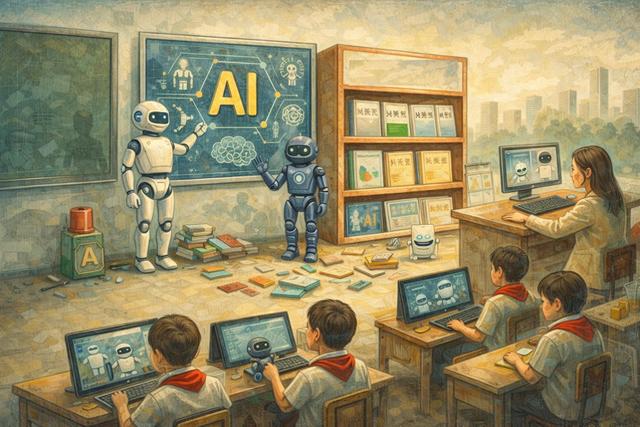
破解中小学AI教育“五无”:科企入校成效显著,西部教材、教师缺口明显
Xin Lang Cai Jing· 2025-12-20 08:46
Core Insights - The implementation of AI education in primary and secondary schools is set to officially begin in certain provinces by September 2025, driven by various policies and guidelines from the Ministry of Education [3][6] - There is a significant disparity in the understanding and application of AI among teachers in less developed regions compared to more developed areas, highlighting a need for improved training and resources [4][5] Group 1: Current State of AI Education - As of now, many teachers in less developed regions have limited exposure to AI tools, with only about 30% having used AI in their work, indicating a gap in familiarity and application [3][4] - In Shanghai, over 6,000 teachers have utilized AI for lesson preparation, and more than 15,000 have incorporated AI tools into their teaching, showcasing a more advanced integration of AI in education [3] Group 2: Challenges in AI Education Implementation - The "Five Nos" concerns raised by experts include the lack of fixed class hours, standardized textbooks, professional teachers, smart devices, and evaluation standards, which hinder the effective rollout of AI education [2][4] - Many existing AI educational materials are outdated or overly focused on promoting specific technology products, lacking the necessary breadth and depth for comprehensive education [5][6] Group 3: Role of Technology Companies - Technology companies are increasingly recognized for their role in providing comprehensive AI education solutions, with firms like iFlytek and DJI leading initiatives in various provinces [4][5] - These companies are leveraging cloud technology to create virtual labs, making AI education more accessible to schools with limited resources [4] Group 4: Future Directions - There is a growing demand for national standardized textbooks and more training opportunities for teachers to enhance the quality of AI education [5][6] - Concerns have been raised about the potential commercialization of AI education, with some regions focusing excessively on competitions and certifications, which may detract from the core educational objectives [6]
全球大模型第一股智谱的“冰火两重天”
Guan Cha Zhe Wang· 2025-12-20 08:11
(文/陈济深 编辑/张广凯) 12月19日,北京智谱华章科技股份有限公司(智谱)正式向港交所递交招股书,打响了中国大模型企业上市的第一 枪。 这不仅意味着智谱有望成为"全球大模型第一股",也标志着中国大模型赛道正式迈入资本化新阶段。 作为全球AI新势力中的重要玩家,招股书也第一次揭示了这家明星独角兽商业化的"冰火两重天"。 过去三年,公司收入分别为0.57亿元、1.25亿元、3.12亿元。2025年上半年持续加速,短短6个月就入账1.9亿元,同比 增长325%。 收入增长的背后是智谱惊人的烧钱速度:过去三年,智谱经调整净亏损分别为0.97亿、6.21亿以及24.66亿元。 不过值得注意的是,智谱在B端业务占据主导的情况下,面对传统B端大厂和互联网巨头的竞争,长期维持住了超过 50%的毛利率。 随着2025年字节火山引擎、阿里云、百度等互联网巨头纷纷下场加码AI大战,智谱的这份招股书提供了一个观察中国 大模型企业在全球AI淘汰赛下真实状态的绝佳切片。 巨头夹缝中的"独立样本" 智谱的核心团队成员,基本都来自清华大学计算机系知识工程实验室,长期从事大规模预训练模型、语义大数据分 析、智能问答等领域的研究。 有这样 ...

2025翻译硬件变局:讯飞绑定办公,有道潜入学习,时空壶攻占耳朵
3 6 Ke· 2025-12-20 01:50
Core Viewpoint - The translation hardware industry is evolving from a niche market to a more integrated capability within various devices, driven by advancements in AI translation technology, which allows translation to be abstracted from dedicated hardware to a functional capability that can be embedded in multiple products [1][22][24]. Group 1: Industry Challenges - Translation hardware has historically faced a paradox where manufacturers aim to create mass-market products, but users only utilize them in specific scenarios, leading to low repeat purchases [1][5]. - The core selling points of translation devices, such as accuracy and offline capabilities, have diminished due to the maturity of mobile translation apps, making it difficult for dedicated devices to justify their necessity [5][12]. Group 2: Product Evolution - By 2025, the translation hardware category is expected to undergo significant changes, not due to a surge in demand but rather through product upgrades that leverage AI advancements, resulting in a qualitative leap in translation quality [5][22]. - Companies like Youdao and iFlytek are focusing on embedding translation capabilities into broader AI systems rather than creating standalone products, emphasizing long-term utility over short-term trends [6][8]. Group 3: New Product Forms - The emergence of translation headphones, as exemplified by the product W4 from Shikonghu, illustrates a shift from dedicated devices to more frequently used wearable technology, enhancing user experience with minimal intrusion [8][11]. - Smart glasses are also entering the translation market, offering features like subtitle translation, although they face challenges such as latency and noise interference [11][12]. Group 4: AI Integration - The transition from machine translation to AI translation represents a fundamental shift, allowing devices to understand context and user intent, which is crucial for natural conversation flow [12][16]. - AI models are enabling translation devices to support real-time, bidirectional communication, enhancing the overall user experience and making conversations more fluid [16][18]. Group 5: Future Market Dynamics - The translation hardware market is not expected to see a dramatic increase in shipment volumes but is undergoing a critical transformation in how translation capabilities are perceived and integrated into various products [22][24]. - The future competition will focus on understanding real-world scenarios and refining translation details, with companies that invest in long-term improvements likely to succeed [22][24].

2025大健康行业巨变:心智之战打响,AI重构生态,商业化破局进行时
3 6 Ke· 2025-12-20 01:21
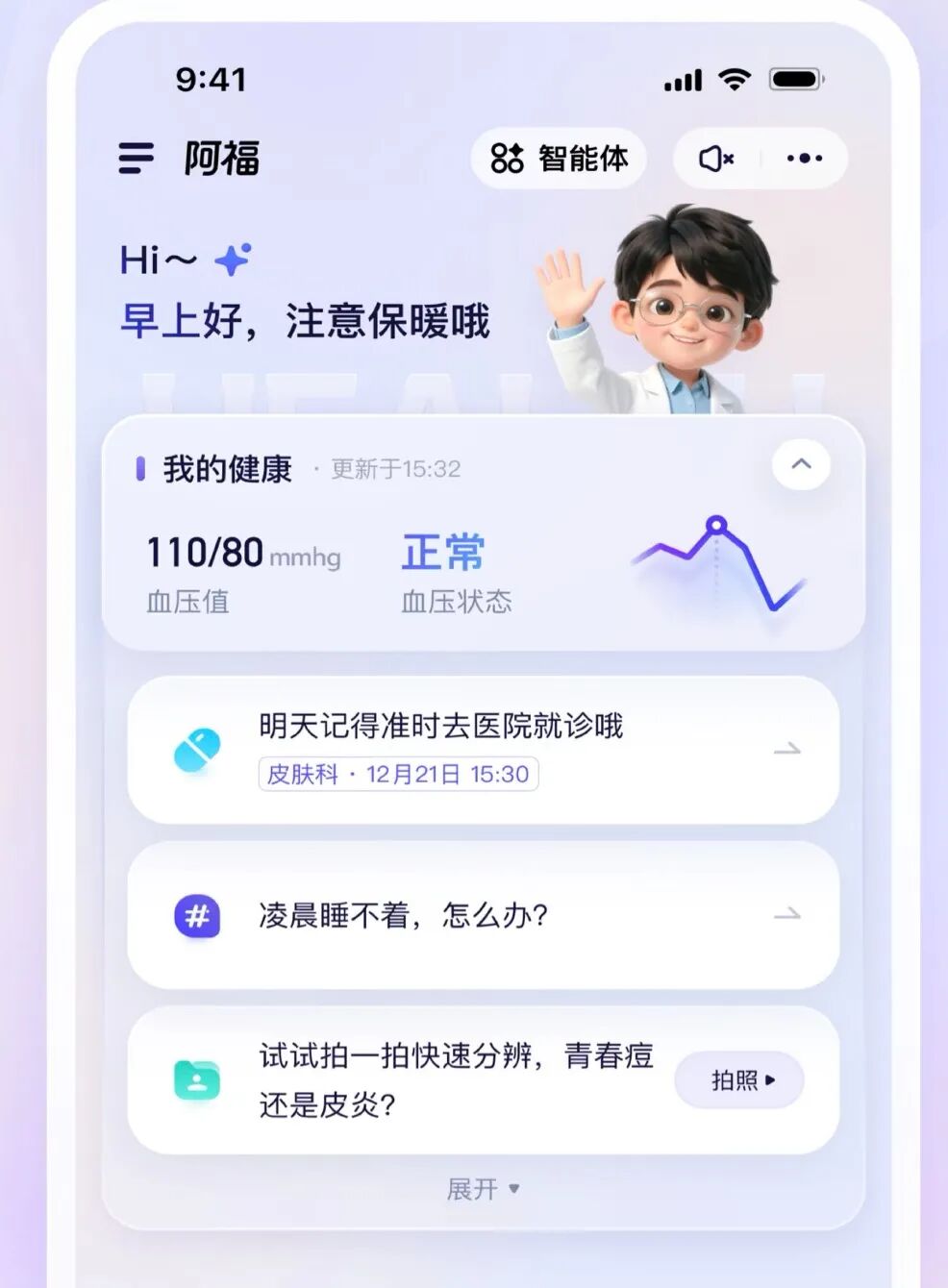
Core Insights - The health industry in China, valued at 20 trillion yuan, is undergoing a critical digital and intelligent transformation driven by increasing demand and an aging population [4][19] - The competition has shifted from a focus on traffic acquisition to a battle for user trust and mental engagement, with a consensus that future leaders will be those capable of integrating medical ecosystems [4][12] - AI is becoming a key driver in the healthcare sector, with predictions of explosive growth in the AI medical market, expected to rise from 8.8 billion yuan in 2023 to 315.7 billion yuan by 2033, reflecting a compound annual growth rate of 43.1% [19] Industry Trends - The healthcare sector is moving towards a model that emphasizes data, content, and service professionalism, marking a transition from simple online consultations to comprehensive health management [12][11] - Major players like Ant Group and JD Health are leveraging their ecosystems to provide integrated health services, while companies like Ping An Good Doctor are focusing on synergizing health services with insurance offerings [15][16] - The emergence of AI in healthcare is reshaping service delivery, with applications extending from basic consultations to full-cycle health management, addressing the needs of both consumers and healthcare providers [6][21] Company Strategies - Ant Group's AI health application, now branded as "Ant Aifu," has evolved into a comprehensive health service platform, enhancing user engagement through a three-dimensional service model [14][15] - JD Health is building a closed-loop ecosystem that integrates medicine, pharmacy, and health management, enhancing user experience and retention [15][16] - Ping An Good Doctor is integrating health management services with its insurance products, significantly increasing user engagement and value [16][28] Challenges and Opportunities - The healthcare industry faces significant challenges, including high investment costs, long cycles, and slow returns, necessitating a focus on sustainable commercialization paths [7][27] - Companies must navigate the complexities of integrating AI into real-world medical scenarios while ensuring compliance with regulatory standards and maintaining user trust [23][30] - The competition is intensifying as companies strive to differentiate their offerings and establish brand loyalty in a rapidly evolving market [13][30]