三星电子

Search documents
抢内存条堪比抢黄金,囤内存条真是好的理财方式吗?
Sou Hu Cai Jing· 2026-01-22 00:09
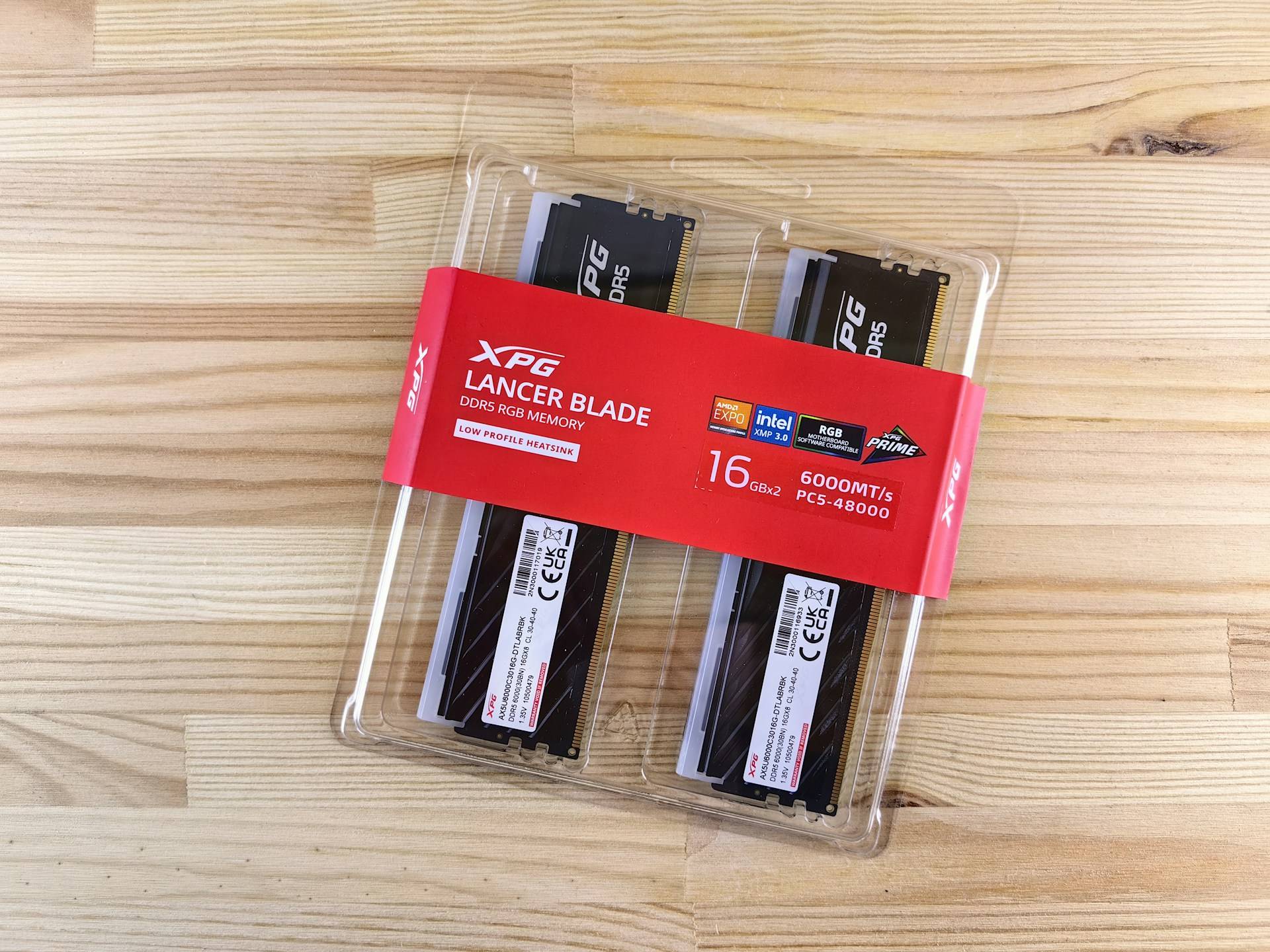
Core Viewpoint - The recent surge in memory prices has sparked significant market discussion, with comparisons made to gold, raising questions about whether hoarding memory is a viable investment strategy [1][4][17] Group 1: Price Surge and Market Dynamics - Since the second half of 2025, consumer-grade memory prices have more than doubled, with server-grade memory also experiencing significant price increases. For instance, a 256G server-grade DDR5 memory module now sells for over 45,000 yuan, with higher frequency modules nearing 60,000 yuan [4] - A 16GB DDR5 memory module's price has risen from around 400-500 yuan to approximately 900 yuan in just a few months, while a 16GB DDR4 module has increased from over 200 yuan to 500-600 yuan post-2025 Spring Festival [4][5] - The demand for memory upgrades among individual users has decreased by about 60% compared to the previous year, as many are only replacing memory when necessary [5] Group 2: Causes of Price Increase - The primary driver of the price surge is a structural supply-demand imbalance, exacerbated by the explosive growth of the AI industry since 2023, which has significantly increased the demand for high-end memory [7][8] - The shift in demand dynamics has led to a reduction in consumer-grade memory production as manufacturers focus on high-end products like HBM and DDR5, resulting in a substantial contraction of supply in the consumer segment [8][9] - The combination of high-end capacity being occupied by AI, a deliberate reduction in consumer-grade capacity, and ongoing demand from end-users has created a severe supply shortage, driving prices higher [9] Group 3: Market Behavior and Speculation - Panic buying has intensified the supply-demand imbalance, creating a vicious cycle of rising prices and increased purchasing, which is not based on genuine end-user demand but rather speculative behavior [11][12] - The oligopolistic nature of the memory market allows leading manufacturers to exert significant pricing power, further amplifying the market's response to supply constraints [11] Group 4: Investment Viability - Despite the recent price increases, memory modules do not possess the characteristics of a quality investment. The semiconductor industry is characterized by cyclical price fluctuations, and the current price spike is not indicative of a long-term trend [14][15] - The rapid technological advancements in memory production mean that older memory specifications will quickly depreciate in value, contrasting with the value retention seen in scarce commodities like gold [14] - Companies should approach memory hoarding cautiously, as excessive stockpiling can lead to increased operational costs and potential asset devaluation if prices fall [16]

暴增超70%!芯片,突传重大利好!
券商中国· 2026-01-21 23:28
Core Viewpoint - The article highlights a significant surge in semiconductor exports from South Korea, indicating strong global demand driven by the AI wave, which has positively impacted major semiconductor companies' stock prices [1][2]. Group 1: Semiconductor Export Data - In the first 20 days of January 2026, South Korea's semiconductor exports reached $10.73 billion, a year-on-year increase of 70.2%, accounting for 29.5% of total exports, up 9.6 percentage points from the previous year [2]. - For the entire year of 2025, South Korea's semiconductor exports amounted to $173.48 billion, marking a 22.1% year-on-year growth and achieving a historical high [4]. Group 2: Market Reactions and Stock Performance - Following the positive export data, semiconductor stocks surged, with the Philadelphia Semiconductor Index rising by 3.18%, reaching a historical high, and individual stocks like Intel and Micron Technology seeing significant gains [1]. - Citigroup raised the target price for SanDisk from $280 to $490 per share, a 75% increase, citing strong demand for data center memory and favorable supply conditions [5]. Group 3: Future Demand and Supply Dynamics - The demand for storage chips is expected to remain robust due to the increasing need for AI infrastructure, with major companies like SK Hynix reporting that their chip production capacity for 2026 is already sold out [6]. - Global capital expenditures from the top eight cloud providers are projected to increase by approximately 65% year-on-year, with AI servers becoming the fastest-growing segment in data center IT investments [7].





全球大公司要闻 | 苹果公司计划推出首款AI聊天机器人
Wind万得· 2026-01-21 22:40
Group 1 - Apple is accelerating its AI strategy by developing an AI wearable device called "Pin" and plans to significantly revamp Siri into its first AI chatbot, codenamed "Campos" [2] - Intel has secured a substantial contract with the U.S. military for chip supply under the SHIELD project, with a maximum limit of $151 billion, boosting expectations for its defense electronics business [2] - TSMC is facing production bottlenecks in its advanced 3nm process due to surging AI demand, with all capacity booked until 2027, highlighting strong demand in the global semiconductor supply chain [2] - Nvidia's CEO Jensen Huang plans to visit China to revive the AI chip market, emphasizing that AI represents a "platform shift" requiring trillions in infrastructure investment, with global AI venture capital expected to exceed $100 billion by 2025 [2] Group 2 - Alibaba's Qianwen series model downloads have surpassed 1 billion, making it the most popular open-source AI model globally, reinforcing the company's technological leadership in AI [4] - Vanke's bond extension proposal for "21 Vanke 02" has been approved, marking the company's first successful bond extension, with a scale of 1.1 billion yuan [4] - Xinda Real Estate expects a net loss of 7.6 billion to 8.2 billion yuan in 2025 due to industry adjustments and project sales underperformance, focusing on core areas for business transformation [4] - Cangge Mining has voluntarily reduced its potassium chloride production capacity from 2 million tons per year to 1.2 million tons based on resource conditions, without affecting existing production and sales plans [4] Group 3 - AI startup Anthropic PBC is raising at least $1 billion from investors, with annual revenue run rate doubling since last summer and projected to exceed $9 billion by the end of 2025 [6] - Meta's Super Intelligence Lab delivered its first batch of key AI models in January, with plans to focus on consumer products over the next two years [6] - Microsoft has resolved access issues with its 365 services and has introduced a basic subscription version of Microsoft 365 in China for an annual fee of 150 yuan [6] - Tesla clarified that there are no plans for layoffs or production cuts at its Berlin factory, while its Robotaxi fleet has reached 200 vehicles [6] Group 4 - Samsung Electronics is diversifying its HBM supply chain and has reported Q4 sales of 1.29 trillion won, a 2.3% year-on-year increase, with operating profit rising 62% [10] - Toyota anticipates a cost burden increase of 5 trillion yen over 4.5 years and plans to raise prices for some suppliers while sharing chip data among Japanese automakers [10] - SK Hynix is projected to achieve record revenue and profit by Q4 2025, with plans to distribute a record year-end bonus of 640,000 yuan per employee [10] - LG Electronics is testing sodium-ion battery production at its Nanjing factory and has launched AI air conditioning products overseas [10] Group 5 - Volkswagen Group expects a net cash flow of 6 billion euros in the automotive sector for FY2025, a 20% year-on-year increase, driven by lower operating capital and capital expenditures [13] - Rio Tinto anticipates an 11% increase in copper production to 883,000 tons by 2025, with a strong rebound in Q4 iron ore production [13] - Mercedes-Benz will unveil the 2026 S-Class on January 29, featuring heated seat belts to enhance low-temperature range and safety [13] - ASML's target price has been raised by JPMorgan from 587 euros to 800 euros, reflecting optimistic market expectations for semiconductor equipment demand [13]


两大巨头“联姻”
Nan Fang Du Shi Bao· 2026-01-21 16:00
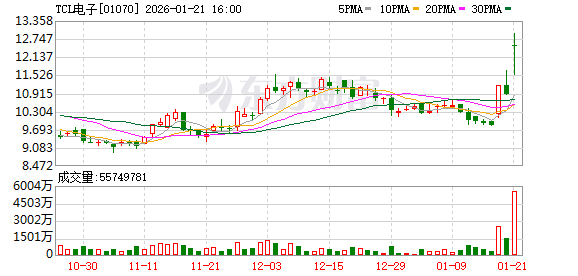
备忘录明确,合资公司将获授权在全球范围内使用"Sony"和"BRAVIA"品牌。这意味着,尽管运营主体发 生变更,消费者仍将在终端市场看到索尼品牌产品。 目前,双方已进入排他性谈判阶段,计划在2026年3月底前就最终协议进行磋商。在通过相关监管审批 后,合资公司预计将于2027年4月正式开始运营。 对于此次合作的商业逻辑,公告指出,合资公司将融合索尼在音视频领域的品牌价值与技术积累,同时利 用TCL电子的全球规模优势、垂直供应链及端到端成本效率。 1月20日晚间,全球电视行业迎来一则重磅消息。TCL电子控股有限公司(01070.HK,下称"TCL电子")发布 公告称,公司已与Sony Corporation(索尼)签署非法律约束力意向备忘录,拟成立合资公司接管索尼全球家 庭娱乐业务。 根据公告,TCL电子拟持有合资公司51%的股权,索尼持有49%。双方预计在2026年3月底前签署最终协 议,新公司预计将于2027年4月正式开始运营。 业内人士分析,若交易顺利完成,这或将成为近二十年来全球电视市场最具影响力的品牌并购案例之一, 中国企业或将首次实质性冲击全球电视市场份额第一的宝座。 拟2027年4月运营,保留" ...

美股异动|存储芯片股涨势延续,美光、闪迪及西部数据齐创新高
Ge Long Hui· 2026-01-21 15:25
Core Viewpoint - The storage chip sector continues to experience significant gains, with companies like Micron Technology and Western Digital seeing stock increases of over 5%, while SanDisk reached a peak increase of 4.6%, marking new historical highs [1] Group 1: Market Dynamics - Samsung Electronics and SK Hynix, two major South Korean memory chip manufacturers, are reportedly set to continue reducing NAND flash production, which may exacerbate supply shortages [1] - Micron executives have reiterated that the memory shortage is expected to persist until after 2026 [1] Group 2: Analyst Ratings and Price Targets - Citigroup has recently raised target prices for several storage chip manufacturers, with the most significant increase for SanDisk, raising its target from $280 to $490 while maintaining a "buy" rating [1] - The report from Citigroup highlights that these companies are major beneficiaries of strong demand from hyperscale data centers, which supports rising storage prices [1]

TCL牵手索尼,冲击全球电视市占率第一
21世纪经济报道· 2026-01-21 14:09
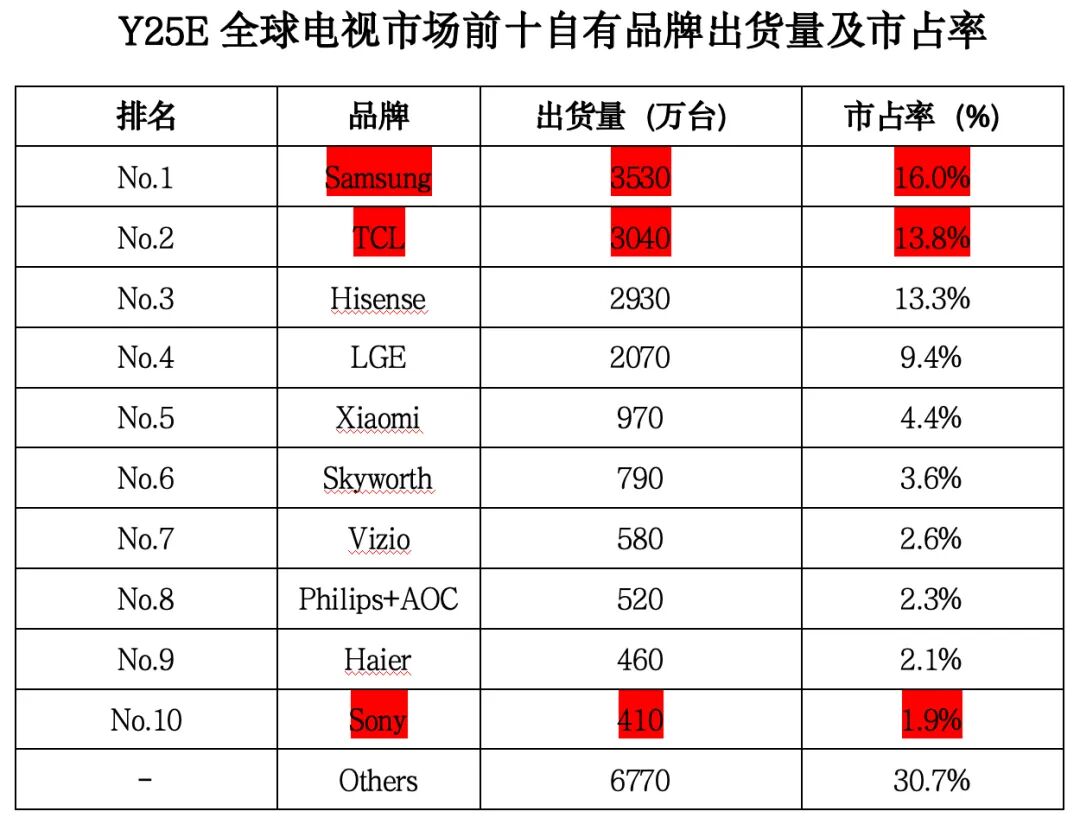
Core Viewpoint - The strategic partnership between TCL and Sony aims to reshape the global television market, with a focus on creating a joint venture that will enhance both companies' competitive positions and market shares in the home entertainment sector [1][6][11]. Group 1: Strategic Partnership Details - TCL and Sony have signed a memorandum of understanding to establish a joint venture focused on home entertainment, including television and audio products [1]. - The joint venture will operate globally, covering the entire value chain from R&D to customer service, with TCL holding 51% and Sony 49% of the shares [1]. - The joint venture is expected to start operations in April 2027, with plans for collaboration on patents, technology, and brand licensing, retaining the "Sony" and "BRAVIA" brands for products [1][6]. Group 2: Market Impact and Projections - In 2025, Sony's global television shipments are projected to decline by 13.3% to 4.1 million units, while TCL's shipments are expected to grow by 6.4% to 30.7 million units [6]. - The combined market share of TCL and Sony could reach 16.7%, potentially surpassing Samsung's 16.2% and making TCL the leading global television brand for the first time [6][8]. - The partnership is seen as a significant shift in the competitive landscape of the television market, which has historically been dominated by Japanese and Korean brands [6][8]. Group 3: Historical Context and Competitive Landscape - The last 20 years have seen a decline in Japanese brands and a rise of Chinese brands like TCL, which has become the second-largest player in the global market by 2023 [7][8]. - The television market is characterized by intense competition, and the strategic timing of this partnership is crucial for both companies to achieve market leadership [7][8]. - Sony's brand is associated with high-end technology, while TCL's strengths lie in supply chain integration and global manufacturing capabilities, making their collaboration potentially powerful [7][8]. Group 4: Future Outlook and Industry Trends - The partnership is expected to enhance TCL's competitiveness in the high-end television market and improve its overall sales through the integration of Sony's technology and brand prestige [7][8][11]. - The collaboration may lead to a restructuring of the global LCD TV panel supply chain, as TCL's panel manufacturing capabilities could complement Sony's needs [7][8]. - The joint venture represents a broader trend of Chinese companies increasingly acquiring and partnering with established global brands to enhance their market positions [11][12].

【太平洋科技-每日观点&资讯】(2026-01-22)
远峰电子· 2026-01-21 13:02
Market Overview - Major indices showed positive performance with the STAR Market 50 index rising by 3.53%, Shenzhen Component Index up by 0.70%, and ChiNext Index increasing by 0.54% [1] - TMT sector led the gains, particularly in integrated circuit packaging and testing (+7.16%), digital chip design (+4.91%), and analog chip design (+3.52%) [1] - Conversely, the TMT sector also saw declines in education publishing (-0.76%), other communication equipment (-0.65%), and communication engineering and services (-0.64%) [1] Domestic News - GoerTek launched a 50° wide field of view silicon carbide AR waveguide module, achieving a visible light reflection rate of less than 8% and an overall waveguide reflection rate of less than 5%, significantly enhancing visual clarity [2] - Changdian Technology announced a breakthrough in optoelectronic packaging technology, successfully delivering silicon photonic engine samples to clients [2] - Suzhou Vigor completed the acquisition of Changzhou Weipu Semiconductor Equipment Co., enhancing its product offerings in photomask defect detection and wafer defect detection [2] - ASMPT is evaluating strategic options for its surface mount technology (SMT) solutions division, which may include sale, joint ventures, spin-offs, or continued support for long-term success [2] Overseas News - FNS Tech is constructing a mass production line for semiconductor glass substrate manufacturing, having previously delivered prototypes to clients [3] - Samsung's wafer foundry division is expected to see an increase in average capacity utilization to around 60% in the first half of 2026, up from approximately 50% in the second half of 2025 [3] - Samsung plans to produce 4.68 million NAND wafers this year, while SK Hynix aims for 1.7 million wafers, leading to a structural supply gap of about 3% to 4% in the global NAND chip market [3] - North American cloud service providers are expected to drive a 28% year-over-year increase in global AI server shipments by 2026 [3] AI Insights - Adobe introduced new AI-driven video editing tools in Premiere, enhancing editing efficiency and creative processes [4] - MiniMax launched its second-generation intelligent agent, enabling seamless collaboration between local and cloud tasks [4] - Meta announced the delivery of its next-generation super-intelligent model, achieving a 40% improvement in task planning accuracy and a 35% increase in code generation efficiency [4] - The UAE's Ministry of Foreign Trade partnered with Presight to create the world's first AI-driven trade platform, expected to improve trade process efficiency by 40% and reduce operational costs by 25% [4] Industry Tracking - The commercial aerospace sector is advancing with the successful completion of a load test for the Hyperbola-3 rocket's payload fairing assembly [5] - The Ministry of Industry and Information Technology projects that by 2025, the number of AI companies in China will exceed 6,000, with the core industry scale expected to surpass 1.2 trillion yuan [5] - China holds a 42% share of global essential 5G standard patent declarations, with the first phase of 6G technology trials completed [5] - XPeng Motors has launched its first humanoid robot, applying automotive development standards to robotics [5] Earnings Forecast - Moore Threads expects 2025 revenue to reach 1.45 billion to 1.52 billion yuan, representing a year-over-year growth of 230.70% to 246.67% [6] - Demingli anticipates 2025 revenue of 10.3 billion to 11.3 billion yuan, with a significant profit increase of 85.42% to 128.21% [6] - Tianfu Communication forecasts a net profit of 1.881 billion to 2.150 billion yuan for 2025, reflecting a growth of 40% to 60% [6] - Jinghua Micro expects 2025 revenue of 170 million to 180 million yuan, with a net loss projected between 55 million and 30 million yuan [6] High-Frequency Data Updates - The international DRAM spot prices showed varied changes, with DDR5 16G (2G×8) at an average price of $37.000, reflecting a 1.84% increase [7] - Semiconductor material prices were reported, with 4N zinc oxide powder priced between 1,460 and 1,510 yuan per kilogram [8]
对手变盟友!索尼、TCL联手背后的算盘
Guo Ji Jin Rong Bao· 2026-01-21 12:57
Core Viewpoint - The collaboration between TCL and Sony marks a significant shift in the global television market, indicating the decline of Japanese brands in the industry and the rise of Chinese companies like TCL and South Korean giants Samsung and LG [1][2]. Group 1: Partnership Details - TCL and Sony have signed a non-binding memorandum of understanding to establish a joint venture, with TCL holding 51% and Sony 49% [1]. - The new company will focus on Sony's home entertainment business, including the development, manufacturing, sales, and customer service of televisions and home audio products [1]. - A timeline has been set for finalizing the legal agreement by March 2026, with the new company expected to commence operations by April 2027 [1]. Group 2: Market Position and Trends - Sony's television business is facing significant challenges, with a projected shipment of only 410,000 units in 2025, resulting in a market share below 2% [4]. - In contrast, TCL is expected to ship 3.04 million units in 2025, achieving a 13.8% market share, narrowing the gap with Samsung [3][4]. - The global television market is entering a phase of inventory competition, with a slight decline in overall shipment volume expected [2]. Group 3: Strategic Implications - The partnership is seen as a necessary move for Sony, which has shifted its focus towards more profitable sectors like gaming and entertainment, leading to underinvestment in its television business [6]. - TCL's advantage lies in its vertical integration, with nearly 60% of its TV panels sourced from its subsidiary, TCL Huaxing, compared to Sony's reliance on external suppliers [6]. - If the joint venture succeeds, it could lead to a combined market share of 16.7% for TCL and Sony, potentially surpassing Samsung and reshaping the competitive landscape of the global television market [7].
新股暗盘|龙旗科技暗盘收涨19.74% 一手赚612港元
Ge Long Hui A P P· 2026-01-21 12:31
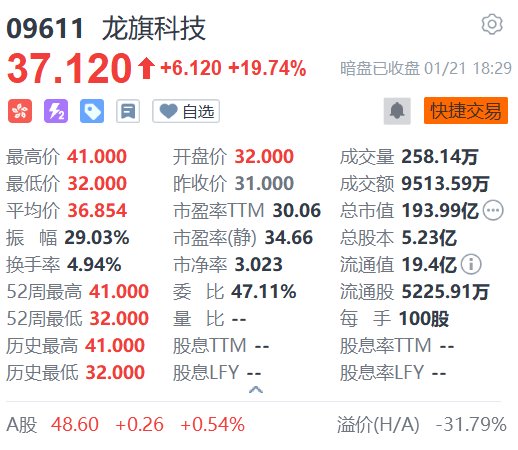
龙旗科技成立于2004年,为内地三大ODM(原始设计制造)厂商之一,主力为小米集团、三星电子、联 想、荣耀、OPPO、vivo等品牌提供手机、电脑、智能穿戴等产品的代工服务。其中,小米是最大客 户,并持有公司4.9%股权权益。以2024年消费电子ODM出货量计,公司是全球第二大的消费电子ODM 厂商,占22.4%的市场份额;以2024年智能手机ODM出货量计,是全球最大的智能手机ODM厂商,占 32.6%的市场份额。(格隆汇) | 09611 龙旗科技 | | | | --- | --- | --- | | 37.120 + +6.120 +19.74% | | 暗盘已收盘 01/21 18:29 | | * ½ 9 目 ♥自选 | | ● 快捷交易 | | 最高价 41.000 | 开盘价 32.000 | 成交量 258.14万 | | 最低价 32.000 | 昨收价 31.000 | 成交额 9513.59万 | | 平均价 36.854 | 市盈率 TM 30.06 | 总市值 193.99亿 ··· | | 振 幅 29.03% | 市盈率(静) 34.66 | 总股本 5.23亿 | | 换手率 ...
TCL索尼合资深耕家庭娱乐,中国电视迎“Walkman时刻”
2 1 Shi Ji Jing Ji Bao Dao· 2026-01-21 10:51
消费电子产业再起风云。 2026年1月20日,TCL电子和索尼公司发布公告称,双方签署了意向备忘录,在电视等家庭娱乐领域达成战略合作。 双方核心合作规划包括两大方面。一是两者计划成立一家合资公司,承接索尼的家庭娱乐业务。 这家合资公司将在全球范围内开展一体化业务运营,覆盖电视机、家庭音响等产品的研发、设计、生产、销售、物流及客户服 务全链条。股权结构方面,TCL将持有合资公司51%的股份,索尼持有49%的股份。 (图源:TCL电子公告) 二十年电视市场未有之变局 二是约定合资公司未来将在专利、技术及品牌授权方面达成相关合作安排。其中,电视和家庭音响等产品将沿 用"Sony"和"BRAVIA"品牌。若交易顺利,新的合资公司预计在2027年4月开始运营。 基于双方的战略合作,索尼通过逐步释放电视等业务实现经营方向转型,TCL等中国品牌则乘势而上,争夺更广阔的全球份额 和行业地位。 TCL索尼联盟冲击全球第一 群智咨询(Sigmaintell)向21世纪经济报道记者提供的数据显示,2025年Sony(索尼)全球电视出货规模为410万台,同比下降 13.3%。2025年TCL全球电视出货规模将达3070万台,同比逆势 ...