
安踏

Search documents
40多家企业及基金会驰援香港大埔火灾,捐款超6亿港元
Cai Jing Wang· 2025-11-28 03:13
Core Points - Over 40 companies and foundations have contributed more than 600 million HKD to support the fire disaster relief and reconstruction efforts in Tai Po, Hong Kong [1][2] - The Hong Kong government and various sectors are actively engaged in firefighting, rescue operations, and post-disaster support [1] Company Contributions - Alibaba Group has initiated a donation of 20 million HKD for disaster relief and has activated its emergency response mechanism to provide essential supplies [2] - Anta Group and Xtep Group each announced donations of 20 million HKD for disaster relief efforts [2] - Tencent, Xiaomi, and other companies have also contributed amounts ranging from 5 million HKD to 20 million HKD [2] Foundation Contributions - The Ma Yun Public Welfare Foundation donated 30 million HKD to assist affected families and support emergency personnel [3] - The Li Ka Shing Foundation allocated 80 million HKD, including 30 million HKD for immediate aid and 50 million HKD for community rebuilding [3] - The Hong Kong Red Cross received a donation of 2 million RMB for emergency rescue and humanitarian assistance [4] Insurance Sector Response - Multiple insurance companies, including China Life and Ping An, have activated emergency claims procedures to ensure rapid support for affected families [4]







信达国际港股晨报快-20251128
Xin Da Guo Ji Kong Gu· 2025-11-28 01:37
Market Overview - The Hang Seng Index has short-term support at the 25,000 point level, with recent hawkish signals from the Federal Reserve indicating less room for interest rate cuts than previously expected. The meeting between the US and Chinese leaders in October has temporarily eased tensions, but core issues remain unresolved. The Chinese economy showed further signs of cooling in Q3, with the 15th Five-Year Plan emphasizing the expansion of domestic demand and technological self-reliance, aligning with expectations. However, there are no strong signals for short-term policy adjustments, making it difficult for Hong Kong companies to see significant profit improvements. The Hang Seng Index has seen substantial gains this year, leading to profit-taking incentives as year-end approaches [2][4]. Company Focus - Meituan's performance is a key focus for the market today [3]. Macro Focus - In October, industrial profits in mainland China fell by 5.5%, with total profits for the first ten months reaching 5.95 trillion yuan, a year-on-year increase of 1.9%. The mining sector saw a significant profit decline of 27.8%, while manufacturing profits grew by 7.7% [4][8]. - The State Administration for Market Regulation is enhancing antitrust enforcement in key areas to promote fair competition and optimize the business environment [8]. - In November, 178 domestic online games were approved, including titles from Baidu and Bilibili [8]. - OPEC+ is expected to maintain its oil production policy unchanged in the first quarter of next year [9]. Company News - Anta Sports is reportedly considering a bid for Puma, but has not commented on the speculation [10]. - Bosideng reported a mid-term net profit of 1.189 billion yuan, an increase of 5.3%, aligning with expectations [10]. - Luk Fook Holdings announced a mid-term net profit of 619 million yuan, up 42.5%, meeting profit guidance [10]. - UBTECH Robotics secured an order worth 143 million yuan for humanoid robots, bringing total orders for the year to 1.3 billion yuan [10]. - Vitasoy's mid-term profit fell by 68%, leading to a dividend cut [10]. - DYNAM JAPAN reported a mid-term net profit of 3.072 billion yen, an increase of 40.3% [10]. - Alibaba and ByteDance are training AI models overseas to circumvent US export restrictions, utilizing Nvidia chips [10].
(经济观察)中国绿色转型成果日益普及 民企成主要“助推器”
Zhong Guo Xin Wen Wang· 2025-11-27 10:00
Core Viewpoint - The green transformation in China is significantly driven by private enterprises, which are becoming key players in the renewable energy sector and other industries, integrating sustainability into their operations and products [1][2][3] Group 1: Renewable Energy Sector - Private enterprises account for approximately 60% of wind turbine manufacturing and the vast majority of solar equipment manufacturing in China [1] - Longi Green Energy announced a goal of achieving net-zero emissions across its entire value chain by 2050, with a projected 37% reduction in operational carbon emissions in 2024 compared to the peak in 2023 [1] - The global presence of electric vehicles is highlighted, with half of the world's electric vehicles operating in China, indicating a strong market for renewable energy solutions [1][2] Group 2: Electric Vehicle Market - Private companies like BYD, Li Auto, and Xpeng are crucial in promoting the adoption of electric vehicles in China [2] - During the recent holiday period, the charging volume for electric vehicles on Chinese highways reached 123 million kilowatt-hours, with a year-on-year increase of over 45%, marking a historical high [2] - The improvement in electric vehicle range and charging infrastructure is alleviating "range anxiety" among consumers, leading to increased adoption [2] Group 3: Sustainable Fashion and Materials - The trend of sustainability is also reflected in consumer products, such as outdoor apparel made from advanced materials [2] - Anta, a private sportswear company, launched a carbon-capturing fiber jacket that reduces carbon emissions by approximately 35% compared to previous models, becoming the first brand in China to scale this technology in sportswear [2] Group 4: Broader Industry Trends - A consensus among private enterprises in China is emerging to seize opportunities in green transformation, with 83% of companies in the "2025 China Private Enterprises Top 500" list actively pursuing green initiatives [3] - Strategies for green transformation include the application of advanced low-carbon technologies, dual transformation of "green + intelligent," and collaborative carbon reduction across the entire industry chain [3] - The Chinese government's long-term carbon reduction goals and stable policy signals provide a predictable development space for private enterprises, enhancing their role as catalysts for green transformation [3]
在数千家企业中,寻找穿越周期的商业力量
Jing Ji Guan Cha Wang· 2025-11-26 14:45
Core Insights - The conference highlighted the importance of respected enterprises in driving China's economic growth and social progress, emphasizing innovation and long-term value creation [1][2][8] Group 1: Respected Enterprises - The "2024-2025 Respected Enterprises" and "Respected Leading Enterprises" were recognized based on extensive research across thousands of companies and key industries, focusing on operational quality, innovation, public trust, social contribution, and annual impact [1] - Notable companies recognized include Anta, BYD, Huawei, JD.com, Meituan, Qingdao Beer, Ping An, and China Feihe, among others [1] - The event underscored that respected enterprises must address social pain points and create social value while maintaining economic contributions [2] Group 2: Innovation and Quality - High-quality products and services are fundamental to the reputation of respected enterprises, reflecting the innovation management capabilities and ethical standards of their leaders [3] - The need for a supportive environment that encourages innovation and tolerates failure was emphasized, alongside the importance of strategic investments and a stable macro policy [3] - The role of AI in transforming the financial industry was discussed, with a focus on integrating AI technologies to enhance customer service and operational efficiency [4] Group 3: Market Dynamics and Compliance - Antitrust compliance is seen as a catalyst for improving product quality and advancing industries towards higher standards, countering low-quality competition [5][6] - The implementation of antitrust laws has effectively curtailed monopolistic practices, promoting fair competition and encouraging companies to focus on quality [6] Group 4: Future Outlook - The development of new productive forces through technological self-reliance and innovation is crucial for enterprise growth, with China's computing infrastructure being a key asset [7] - The emergence of AI and related technologies is expected to disrupt various industries, leading to new growth opportunities [7]



户外经济为何热潮涌动
He Nan Ri Bao· 2025-11-26 00:02
Group 1 - The rise of outdoor economy is driven by a growing demand from younger generations, particularly those born in the 1990s and 2000s, who prefer experiential travel over traditional sightseeing [1][2] - By early April 2025, the number of participants in outdoor sports in China is expected to exceed 400 million, with online consumption in outdoor sports projected to reach approximately 300 billion yuan in 2024, marking a nearly 40% increase [1] - The outdoor economy encompasses a wide range of products, from professional climbing gear to everyday outdoor apparel, catering to diverse consumer needs [1] Group 2 - Henan province boasts unique geographical advantages and rich natural resources, with various outdoor scenes such as health trails and forest camps, contributing to a robust outdoor market [2] - The outdoor products industry in Henan has seen significant growth, with 303 companies and 15 specialized parks, potentially generating a market worth billions [2] - To ensure sustainable growth in the outdoor economy, there is a need for improved service quality, diversified camping options, and enhanced market regulation to prevent chaotic industry expansion [2]
将顾客备注为“买鞋嫌贵”,FILA服务再翻车
Guo Ji Jin Rong Bao· 2025-11-25 13:25
Core Viewpoint - The recent incident involving FILA's customer service has sparked significant public outrage, highlighting issues with customer treatment and service quality [2][4][9]. Group 1: Customer Service Incident - A consumer reported a negative experience at a FILA KIDS store in Zhengzhou, where a staff member made inappropriate remarks about the customer's purchase in a group chat [2][5]. - The store manager apologized for the employee's comments, stating that the intention was to provide detailed service, and encouraged customers to voice their concerns [7][9]. - Similar complaints have emerged from other customers, indicating a pattern of poor service and negative interactions with staff across different FILA locations [10][11][13]. Group 2: Financial Performance - FILA is a key brand under Anta Sports, which acquired FILA's rights in China in 2009, leading to significant growth and profitability [15]. - In the first half of the year, Anta reported revenue of 38.544 billion yuan, a 14.3% year-on-year increase, but the net profit attributable to shareholders fell by 8.9% to 7.031 billion yuan [15][17]. - FILA's gross margin decreased by 2.2 percentage points to 68%, while its revenue increased by 8.6% to 14.18 billion yuan, indicating a strategy of price reduction to boost sales volume [15][17].
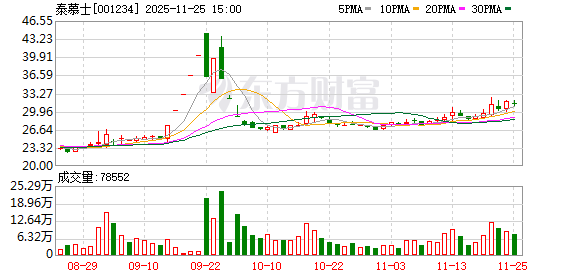
泰慕士:主营业务为针织面料和针织服装的研发、生产和销售
Zheng Quan Ri Bao Wang· 2025-11-25 09:48
Core Viewpoint - The company, 泰慕士, focuses on the research, production, and sales of knitted fabrics and knitted garments, primarily providing OEM services for well-known domestic and international clothing brands [1] Group 1: Business Overview - The main business activities of the company include the development, production, and sales of knitted fabrics and garments [1] - The company serves notable brands such as Decathlon, Semir, Anta, QUIKSILVER, All Cotton Era, and蕉内 through OEM processing services [1]
泰慕士:主要为迪卡侬、森马、安踏等国内外知名服装品牌提供贴牌加工服务
Mei Ri Jing Ji Xin Wen· 2025-11-25 07:39
Core Viewpoint - The company, 泰慕士 (Taimushi), primarily engages in the research, production, and sales of knitted fabrics and knitted garments, providing OEM services for well-known domestic and international clothing brands [2]. Group 1: Company Overview - The main business of the company is focused on knitted fabrics and garments [2]. - The company serves notable brands such as Decathlon, Semir, Anta, QUIKSILVER, All Cotton Era, and蕉内 through OEM processing [2]. - Investors are encouraged to refer to the company's periodic reports for more detailed information [2].
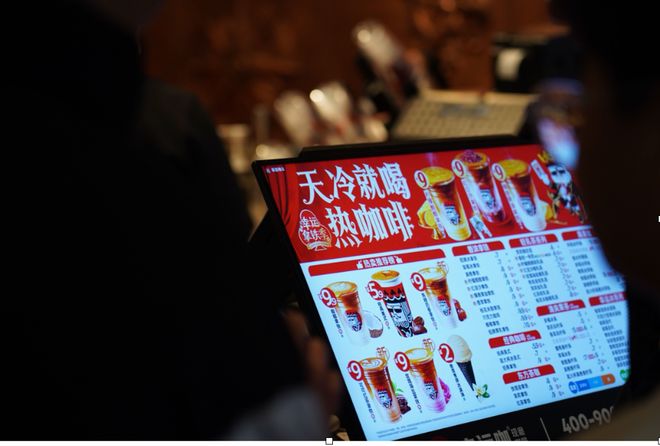
幸运咖门店数破万家:咖啡价格战会加剧吗?丨消费参考
2 1 Shi Ji Jing Ji Bao Dao· 2025-11-25 03:03
Group 1 - Luckin Coffee has surpassed 10,000 stores globally as of November 24, 2025, with pricing primarily between 6-8 yuan, making it cheaper than its competitor, Kudi, which has a flat price of 9.9 yuan [1][2] - As of the end of Q3, Luckin Coffee operates 29,214 stores, while Kudi has 18,000 stores. Luckin Coffee has expanded to over 300 cities, including more than 1,000 stores in first-tier cities [2] - The rapid growth of Luckin Coffee is attributed to the competitive landscape driven by delivery service wars, with a 164% year-on-year increase in new store openings in Q2 [2] Group 2 - The reduction of delivery subsidies is impacting the coffee market, with Luckin Coffee's same-store sales growth facing short-term pressure as noted by its executives [3][4] - The coffee price war may stabilize as delivery subsidies decrease, with expectations that prices will settle in a certain range, potentially around 6-8 yuan for Luckin Coffee [6][9] - Luckin Coffee's growth trajectory positions it as a strategic competitor to established players like Luckin and Kudi, especially as it reaches a significant scale [8][9]
FILA把耐克“赶下”王座
2 1 Shi Ji Jing Ji Bao Dao· 2025-11-19 23:10
Core Insights - The sports market is undergoing significant reshuffling, with FILA ranking first in the Tmall Double Eleven sales, followed by Adidas and Nike, marking Nike's first drop from the top position in years [1] - The competitive landscape is intensifying, with domestic brands like FILA, Li Ning, and Anta gaining ground against established international brands [8] Group 1: Market Performance - FILA has shown strong performance in the sales rankings, with multiple products entering the top sales categories during the Double Eleven event [1] - Nike's revenue in the Greater China region has been declining, with a reported drop of 10% to $1.512 billion (approximately 10.775 billion RMB) for the latest fiscal quarter [7] - Despite the decline, Nike remains the largest sports brand in China, although its market share has decreased from 18.1% to 16.2% [7] Group 2: Strategic Adjustments - FILA has implemented a "ONE FILA" strategy under new CEO Jiang Yan, focusing on resource consolidation and increased investment in tennis and golf [3] - Nike is also recognizing the importance of localized operations, appointing local executives and establishing a creative center in Shanghai to enhance its market presence [4] - The competitive pressure is forcing both international and domestic brands to adapt their strategies to maintain market relevance [8] Group 3: Consumer Behavior and Market Trends - The decline in Nike's sales is attributed to a shift in consumer shopping behavior, with longer purchasing cycles and increased discounting in the local market [7] - Domestic brands are increasingly closing the product gap with international competitors, emphasizing the need for effective marketing strategies [8] - The overall market environment is challenging, with some domestic brands like Peak reporting significant losses in their direct sales segments [8]
