腾讯

Search documents
电子行业2026上半年投资策略:AIInfra市场有望高增,端侧创新在路上
Dongguan Securities· 2025-11-21 07:32
Group 1 - The electronic industry has performed well this year, with a cumulative increase of 40.90% as of November 14, 2025, ranking fifth among the Shenwan primary industries, primarily driven by the AI innovation cycle [15][20][6] - In the first three quarters of 2025, the electronic industry achieved operating revenue of 2.44 trillion yuan, a year-on-year increase of 20.86%, with net profit attributable to the parent company reaching 1,003.33 billion yuan, up 33.41% year-on-year [20][31][6] - The rapid growth in performance is attributed to strong demand from AI data centers, recovery in traditional consumer electronics, and emerging fields such as AI glasses and AR/VR [20][31][6] Group 2 - The AI Infra market is expected to maintain high growth, with global AI infrastructure spending projected to reach $3-4 trillion by 2030, with a CAGR of 38%-46% from 2025 to 2030 [33][70][71] - Major model vendors are increasing their computing power reserves, with OpenAI and NVIDIA planning to deploy significant AI data centers, indicating strong revenue guidance for the coming years [40][51][47] - The demand for AI servers is projected to grow significantly, with global shipments expected to reach 1.249 million units in 2025, a year-on-year increase of 25.28% [71][76][82] Group 3 - PCB and CCL segments are expected to see both volume and price increases, driven by new technologies such as CoWoP and orthogonal backplanes, which will enhance the value of the PCB industry [83][89][90] - The introduction of high-end PCB materials and advanced manufacturing techniques is anticipated to further elevate the market value and production efficiency [83][89][90] - The demand for high-end CCL is also expected to rise due to the increasing requirements from AI computing hardware [31][32][20]


影视ETF(516620)盘中涨超1.2%,政策与内容供给改善提振行业预期
Mei Ri Jing Ji Xin Wen· 2025-11-21 07:22
Group 1 - The media industry is actively advancing in AI applications, with Alibaba planning to enhance its consumer-facing AI application layout, competing with ChatGPT. The Tongyi App has been renamed to Qianwen App, featuring core functions such as conversational Q&A and intelligent writing, and has seen a rapid rise in rankings [1] - Tencent is promoting AI functionalities through WeChat Agent and Yuanbao, with Yuanbao App achieving 73.29 million monthly active users and ranking sixth globally [1] - ByteDance's Doubao and Douyin have integrated features covering short video search, e-commerce, and local life services, maintaining a position in the iOS free app Top 3 for 300 consecutive days [1] Group 2 - Meitu Company has gained traction in overseas markets with AI features like AI dressing and AI snow scenes, topping application store rankings in multiple countries for two consecutive months [1] - The film market is expected to recover with the introduction of films like "Zootopia 2" at the end of the year, and a rich lineup for the Spring Festival, including major films such as "Silent Awakening" and "Fast and Furious 3" [1] - The IP derivative business remains robust, with companies like Yuewen Group and Shanghai Film actively engaging in comic and game licensing, driving revenue growth [1] Group 3 - The Film ETF (516620) tracks the CSI Film Index (930781), which selects listed company securities involved in content production, distribution, and related services from the A-share market to reflect the overall performance of the film and entertainment industry [1] - The index constituents are primarily distributed on the Shenzhen Stock Exchange, with a high proportion in the communication services sector [1]
AI 搜索重塑 BAT 竞争边界
Xi Niu Cai Jing· 2025-11-21 07:12
Core Insights - AI search is transforming the information retrieval methods for 240 million users in China, redefining the competitive landscape among the BAT (Baidu, Alibaba, Tencent) giants [2] - The AI search sector is evolving into a three-way competition, with significant growth in user engagement and market size projected [3] Group 1: Market Dynamics - The AI search market is expected to exceed $28 billion globally by 2024, with China being the fastest-growing region [3] - Major players are adopting different strategies: Baidu focuses on general search, Alibaba integrates AI into its Quark app, and ByteDance leverages a product matrix for competitive advantage [6][7] Group 2: User Engagement and Growth - As of February 2025, DeepSeek, Doubao, and Tencent Yuanbao lead the AI native application market in China with monthly active users of 190 million, 110 million, and 40 million respectively [3] - Baidu's AI-generated content in mobile search results surged from 35% in April to 64% in July, indicating a significant shift from traditional search methods [3][5] Group 3: Product Innovation and Differentiation - Baidu's recent search overhaul introduced an "intelligent box" for enhanced user interaction, moving away from static links to structured, multimodal AI responses [5][6] - ByteDance's Doubao achieved rapid growth, surpassing DeepSeek with 159 million monthly active users, benefiting from a robust product ecosystem [3][6] Group 4: Commercialization Strategies - Alibaba's Quark app monetizes through subscription services and AI document processing, while Baidu's Wenku shows strong commercial potential with over 90 million monthly active users [10][12] - ByteDance's Doubao employs a diversified revenue model through API licensing, B2B partnerships, and ad revenue, establishing a clearer commercial value [13] Group 5: Regulatory Challenges - The AI search industry faces challenges such as content homogenization and compliance issues, highlighted by Quark's recent regulatory penalties for inappropriate content [14] - The competitive landscape is shifting as companies adapt to new regulations and user expectations, with a focus on building robust ecosystems [14][15] Group 6: Future Outlook - The competition in AI search is set to intensify, with predictions indicating that by 2027, over 70% of smart devices in China will support AI search capabilities [16][17] - The next 1-2 years will be critical in determining whether traditional giants can maintain their market positions or if niche players can leverage their advantages to gain traction [17]



马斯克对话黄仁勋,“吵起来了”
Sou Hu Cai Jing· 2025-11-21 05:21
Group 1 - The core discussion revolves around the future of money and work in the context of advanced AI and robotics, with Elon Musk suggesting that money may become irrelevant as AI leads to unprecedented material abundance [1][2] - Musk envisions a future where work becomes optional and driven by passion rather than necessity, drawing parallels to hobbies like gardening [2][4] - Jensen Huang offers a more cautious perspective, asserting that while AI will change the nature of work, it will not eliminate the need for work altogether, and people may become busier as AI enhances productivity [3][4] Group 2 - The partnership between HUMAIN and Musk's xAI to build multiple super data centers in Saudi Arabia, including a massive 500 MW facility, highlights the region's ambition to become a global AI infrastructure hub [4][5] - Saudi Arabia's low energy costs, vast land, and capital availability position it as a strategic player in the AI landscape, aiming for a total capacity of 1.9 GW by 2030 [5][6] - Huang describes these super data centers as "AI factories," emphasizing their role in producing AI models and content rather than merely storing data [6][7] Group 3 - Huang identifies three key factors driving the AI boom: the need for processing vast amounts of data, the shift from recommendation algorithms to generative AI, and the rise of autonomous intelligent agents [8][9] - He argues that the current demand for AI computing power is based on real needs and technological evolution, distinguishing it from past tech bubbles [10] - The collaboration between Chinese companies and Saudi Arabia in AI infrastructure development reflects a growing trend of international partnerships in the tech sector [11][12] Group 4 - Geopolitical factors pose challenges to Sino-Saudi AI cooperation, particularly concerning U.S. restrictions on high-end AI technology exports [12][13] - The technological gap in high-performance computing may necessitate a focus on application-level collaborations rather than direct competition with U.S. firms [13][14] - Saudi Arabia aims to balance its partnerships with both U.S. and Chinese companies to maximize its technological and economic benefits [14]
港股速报|科网股普跌 恒指低开1.45% 科指跌2.21%
Mei Ri Jing Ji Xin Wen· 2025-11-21 03:06
Market Overview - The Nasdaq index experienced a significant reversal, closing down over 2% after initially rising more than 2%, which negatively impacted the Hong Kong stock market [1] - On November 21, the Hong Kong market opened sharply lower, with the Hang Seng Index down 375.15 points, a decline of 1.45% [1] - The Hang Seng Technology Index also fell, reporting a decrease of 123.08 points, or 2.21% [3] Company Performance - NetEase (HK09999) reported third-quarter net revenue of 28.4 billion yuan (4 billion USD), an increase of 8.2% year-on-year, and a net profit of 8.616 billion yuan (1.2 billion USD), up 31.77% year-on-year [5] - The revenue from games and related value-added services for NetEase was 23.3 billion yuan, a year-on-year increase of 10.3% [5] - Six Brands Group (HK00590) expects a revenue increase of approximately 20% to 30% for the six months ending September 30, with net profit anticipated to rise by about 40% to 50% [5] Sector Analysis - The technology sector saw widespread declines, with Baidu down over 6%, Lenovo and Bilibili down over 4%, Alibaba down over 3%, and Tencent and JD down over 2% [5] - Chip stocks opened lower, with SMIC down over 3%, and automotive stocks continued to decline, with NIO down over 5% [5] - The innovative drug sector also faced declines, with WuXi Biologics down over 3% [5] Future Outlook - Huaxia Fund believes that the recent significant drop in the Hang Seng Technology Index presents a potential buying opportunity due to favorable conditions in terms of capital, policy, and fundamentals [6] - The AI industry remains a key focus, with expectations that leading internet companies, AI hardware, and high-end manufacturing sectors will drive market sentiment recovery [6] - With improving liquidity conditions, the valuation of the Hong Kong technology sector is expected to rise systematically, and foreign institutions have begun to increase their allocations in core Hong Kong stocks [7]

近期人工智能利好不断 机构称国内算力需求增长有望超过海外市场(附概念股)
Zhi Tong Cai Jing· 2025-11-21 00:48
Group 1 - Guangdong Province aims to maintain the top position in digital economy development by 2027, with the core industry's added value accounting for over 16% of GDP and creating three trillion-level digital industry clusters [1] - Nvidia's strong revenue outlook of approximately $65 billion for the fourth fiscal quarter, surpassing analyst expectations, indicates robust demand for AI accelerators [1] - The State Council emphasizes the need for breakthroughs in key AI technologies and their application to promote large-scale implementation [1] Group 2 - Alibaba launched the "Qianwen" project, a personal AI assistant based on its self-developed Qwen model, while Ant Group introduced a multimodal AI assistant "Lingguang" [2] - ByteDance's Doubao app saw a 22.2% month-on-month increase in active users, reaching 159 million, while Tencent's Yuanbao experienced a 55.2% year-on-year growth in active users [2] - McKinsey predicts the global AI To C market will reach $1.3 trillion by 2030, with an annual growth rate exceeding 35% [2] Group 3 - CITIC Securities expresses a long-term positive outlook on domestic computing power demand, anticipating growth to surpass overseas markets by 2030 [3] - Zhongyou Securities highlights the dual-driven approach of To C branding and To B commercialization as a consensus in the industry, focusing on user retention and platform transformation [3] Group 4 - Baidu showcased multiple AI achievements at the 2025 Baidu World Conference, including the release of the Wenxin model 5.0 and new AI chips [4] - Alibaba's cloud provided over 10 million CPU cores for the Double 11 shopping festival, supporting various AI applications [4] Group 5 - SenseTime is expected to benefit from revenue growth in generative AI and operational cost reductions, with a target price increase from HKD 1.85 to HKD 3 [5] - SenseTime's partnership with Cambricon is anticipated to enhance its AI computing capabilities [5] Group 6 - ZTE is focusing on AI investments, offering end-to-end intelligent computing solutions to support enterprise digital transformation [6]

“灵光”入局,AI to C入口争夺“三国杀”
Bei Jing Shang Bao· 2025-11-20 15:24
Core Insights - Ant Group launched its multimodal AI assistant "Lingguang" on November 18, achieving over 500,000 downloads within two days, aiming to break the homogeneity in the AI to C market focused on conversational interactions [1][3] - Alibaba also released the "Qianwen" app, leveraging the Qwen3 open-source model, indicating a strategy to cover all user levels in the AI to C market [1][6] - The competition in the industry is shifting from individual product comparisons to a contest of group resource integration capabilities, with Ant Group aiming to create a new entry point for AI services [1][12] Ant Group's AI Strategy - "Lingguang" features capabilities such as "Lingguang Dialogue," "Lingguang Flash Applications," and "Lingguang Open Eye," supporting various forms of information output [3][6] - The core philosophy of "Lingguang" is to simplify complex tasks, with the aim of making advanced AI technology accessible to ordinary users [6][11] - Ant Group's CTO emphasized the importance of lowering the barriers to using large models to allow broader access to AI productivity [6][8] Market Positioning - The launch of "Lingguang" and "Qianwen" reflects a dual strategy of general coverage and vertical depth, differentiating Ant Group from competitors like ByteDance and Tencent [12][13] - The focus is on the "productivity tool" aspect of AI, moving beyond mere conversational capabilities to actual task completion [12][13] - The competition is not just about individual products but about the ability to integrate ecosystems and provide comprehensive solutions to user needs [13][16] Industry Challenges and Opportunities - The AI to C market faces challenges such as data security, user experience consistency, and the need for personalized services [15][14] - The next competitive focus may be on the efficiency of implementing scenario-based solutions that effectively meet real user demands [15][14] - Ant Group's approach aims to prepare for the industry's eventual explosion by establishing a solid foundation in technology and user needs [11][12] Future Outlook - The industry is still in an exploratory phase, with significant opportunities for growth as the technology matures [11][16] - The anticipated "iPhone 4 moment" in the large model space is yet to arrive, which could catalyze widespread application and adoption [9][11] - The competition among major players will ultimately determine who can effectively integrate AI into everyday life, transforming it from a supplementary tool to a fundamental infrastructure [16][12]

800元一台,年入55亿,3D打印机杀疯了
3 6 Ke· 2025-11-20 12:06
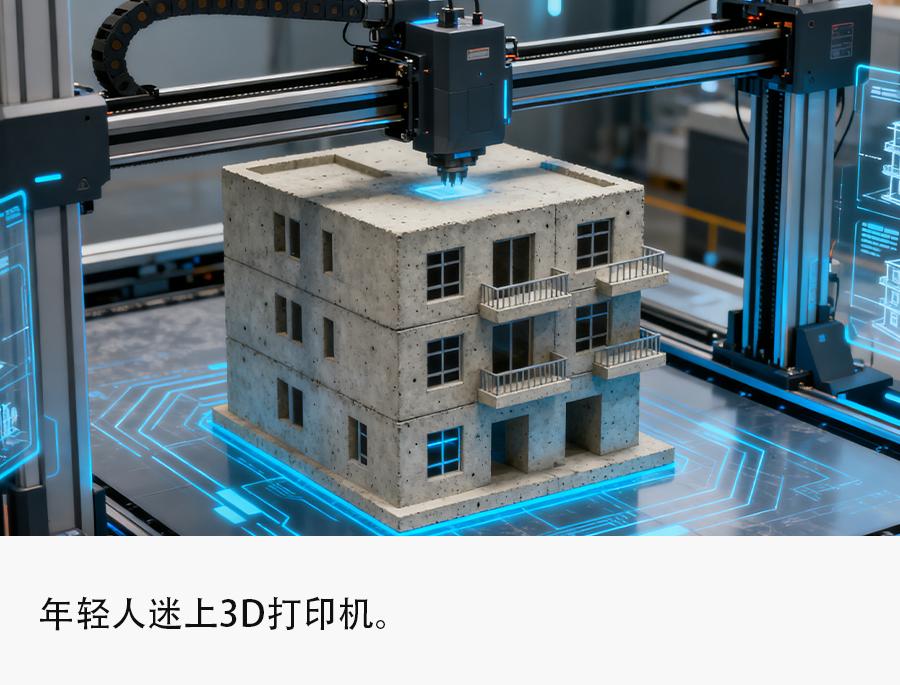
Core Insights - The 3D printing market is experiencing rapid growth as young consumers showcase various printed products on social media, driven by lower prices and increased accessibility [2][3] - Major investments from companies like DJI, Meituan, and Hillhouse Capital indicate a competitive landscape in the 3D printing sector, with leading companies like Tuozhu Technology achieving a valuation exceeding 30 billion RMB and a global market share of 29% [2][8] - The market is characterized by high concentration, with the top five companies holding nearly 90% of the market share, leading to intensified competition [2][14] Market Dynamics - The price of consumer-grade 3D printers has significantly decreased, with many models available for around 800 RMB, making them more accessible to ordinary users [3][5] - The introduction of generative AI modeling tools has lowered the barriers for consumers, enhancing the appeal of 3D printing [3][5] - The sales channels for 3D printers are shifting from offline distributors to online platforms like Tmall and JD, with online sales expected to account for about 50% of total sales by 2024 [12] Financial Performance - Tuozhu Technology is projected to generate over 5.5 billion RMB in revenue in 2024, with a net profit margin of 30% [6][14] - The cost of raw materials for companies like Chuangxiang Sanwei has remained around 50% of sales costs, with a consistent gross margin of approximately 30% [9] Competitive Landscape - The entry of DJI into the 3D printing market has heightened competition, with significant investments in companies like Smart派 and others [7][8] - The leading companies in the market, referred to as the "Four Little Dragons," include Tuozhu Technology, Chuangxiang Sanwei, Zongwei Lifang, and Smart派, collectively dominating the global market [14][16] - The MakerWorld platform launched by Tuozhu Technology has attracted nearly 10 million active users, facilitating a content ecosystem that supports creators and enhances user engagement [8][9] Future Outlook - The global 3D printing market is expected to reach a size of 24.61 billion USD in 2024, with a projected CAGR of 18.5% over the next decade [16] - The challenge remains for companies to create more use cases and integrate 3D printing into everyday life, similar to the impact of smartphones [16]
中国AI编程赛道,谁能跑到最后?
3 6 Ke· 2025-11-20 11:34
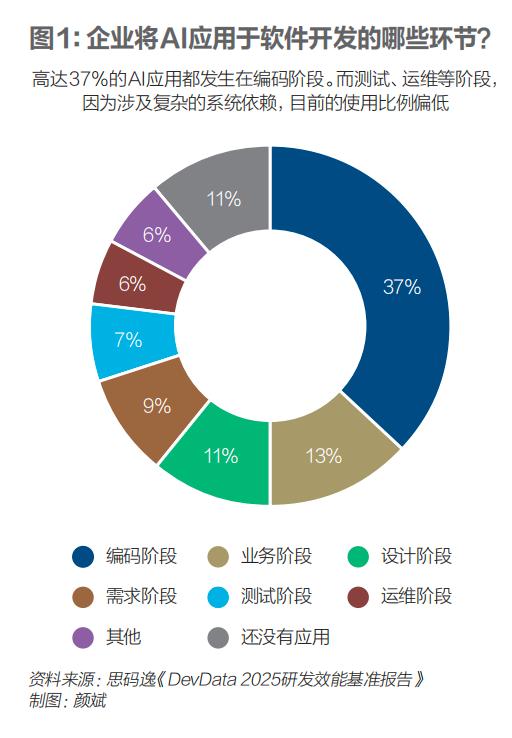
Core Insights - AI programming is recognized as one of the fastest-growing, most commercially viable, and widely adopted applications of AI technology, with significant capital backing [1] - Cursor, an AI programming tool founded in 2022, has seen its valuation soar to $9.9 billion within 20 months, with an annual recurring revenue (ARR) exceeding $500 million and over 360,000 paying users [1] - The global market for AI coding tools could potentially contribute $3 trillion to GDP annually, comparable to France's GDP in 2024 [1] Group 1: Market Dynamics - In the U.S., 91% of developers use AI programming tools, while only 30% do so in China, indicating a significant growth opportunity for domestic AI programming tools [4] - Major Chinese tech companies like Alibaba, ByteDance, Tencent, and Baidu have launched AI programming products, with revenues expected to reach millions in the Chinese market [5][6] - The competitive landscape is intensifying as companies adopt aggressive pricing strategies, with many offering free versions of their AI programming tools to attract users [11][12] Group 2: Product Development and Ecosystem - The development of independent AI Integrated Development Environments (IDEs) is becoming a trend among Chinese companies, allowing for a complete coding solution without reliance on traditional tools [12][13] - The focus on creating user-friendly IDEs is crucial for attracting developers, as seen with Cursor's strategy of leveraging familiar open-source ecosystems [21][22] - Companies are also integrating their AI programming tools with cloud services and developer communities to enhance user engagement and product adoption [23][24] Group 3: B2B and B2C Strategies - The B2B market for AI programming tools is characterized by high customization demands, making it challenging for companies to quickly capture this segment [28][30] - Despite the focus on B2B, many companies are prioritizing B2C strategies to build a user base, with ByteDance and Alibaba leading in this area [16][29] - The willingness of enterprises to pay for AI programming tools is currently low, primarily due to a lack of perceived value in improving software quality [31] Group 4: Future Outlook - The AI programming market in China is still considered a blue ocean, with potential for various tools catering to different user needs and development processes [33] - The rapid evolution of AI programming tools suggests that new paradigms and tools may emerge, potentially disrupting existing players [33] - The long-term success in the AI programming space will depend on building robust developer ecosystems and maintaining competitive advantages through continuous innovation [20][33]
5亿元,深圳争抢创始人
投资界· 2025-11-20 06:09
Core Viewpoint - The article highlights the vibrant entrepreneurial atmosphere in Shenzhen, showcasing various innovative startups across multiple sectors, and emphasizes the importance of practical approaches to entrepreneurship in the region [2][7]. Group 1: Event Overview - The "X-Day" special event took place on November 15 at the Shenzhen University Town International Conference Center, featuring six companies from sectors such as cross-border e-commerce AI services, 3D printing, biomedicine, and semiconductor imaging [2]. - This event is linked to the 2025 "Entrepreneur Star" Next Star global competition, which has a strategic direct investment fund of 500 million yuan [2][6]. Group 2: Featured Startups - Xi Ju Data, founded by a Bilibili UP master, focuses on AI solutions for cross-border e-commerce, currently serving 1.9 million sellers on major platforms like Amazon [3]. - Guangyi Precision, co-founded by Ma Jili, targets the metal 3D printing sector, addressing industry pain points related to forming precision and post-processing costs [4]. - Medico Investor, a U.S.-based biotech firm, is developing antibody-drug conjugates for cancer and autoimmune diseases, led by a seasoned expert in translational medicine [4]. - Feituo Xingchi specializes in body-sensing interaction technology, aiming to create an AI sports and entertainment platform [5]. - Aoxiang Ruiying focuses on next-generation radiation detection technology, holding over 20 core patents and has secured angel round financing [5]. - Kaijia Optical Technology, founded by a researcher with multiple academic accolades, develops advanced optical imaging systems and has received two rounds of financing [5]. Group 3: Entrepreneurial Environment - The entrepreneurial spirit in Shenzhen is characterized by a pragmatic approach, with founders focusing on monetization strategies even in long R&D cycles [7]. - Shenzhen attracts nearly 200,000 young talents annually, including high-tech professionals, which is crucial for the growth of new industries [8]. - The "Entrepreneur Star" competition serves as a significant platform for innovation, having selected 56 quality projects from over 2,600 teams, covering fields like AI, biomedicine, and advanced manufacturing [8][9]. Group 4: Support and Funding - The competition offers over 20 million yuan in total prizes, a 500 million yuan direct investment fund, and various support services including zero-rent spaces and housing policies for talents [9]. - The "X-Day" event has facilitated over 2,500 institutional connections, helping 17 companies secure equity financing exceeding 530 million yuan [9].