腾讯

Search documents
AI 的十字路口:阿里向左,腾讯向右
Sou Hu Cai Jing· 2025-11-19 04:43
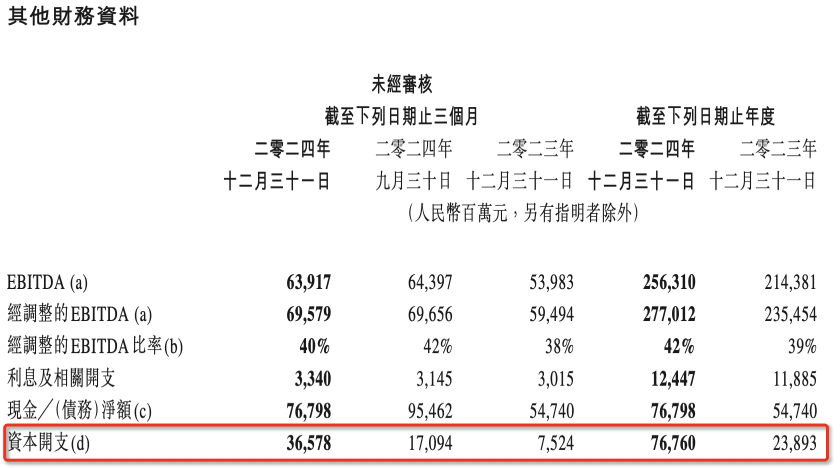
文 | 时间线Timelines,作者 | 王硕,编辑 | 周易 即使「AI 泡沫」已经成为一个被公开讨论的话语,互联网巨头们依旧要前赴后继、争先恐后地涌入到 AI 的叙事逻辑 中,无论是业务层面,还是资本层面。 身为中国的两大互联网巨头,阿里和腾讯,当然也都不例外。 阿里的 AI 叙事背景,往远处看,是建立在年初宣布的 3800 亿元的「AI 基础设施建设」投资之上——往近处看,则是 由阿里集团最高层直接统筹推进、抽调上百名核心工程师进行封闭式秘密研发的 To C 产品千问 App。 在阿里的定位中,这是要「打响 AI 时代的未来之战」。 然而对比来看,与阿里全方位高举高打的姿态略有不同,腾讯一方面也在业务宣传和财报电话中强调 AI 带来的改变, 但另一方面,腾讯对于 AI 还是稳扎稳打,步步为营,其 AI 叙事中保持了一贯的低调、务实甚至是谨慎的风格。 这意味着,即使都在朝着拥抱 AI 的方向前进,阿里和腾讯也走在不同的道路上。 资本支出的分野 在腾讯的业务逻辑中,AI 依旧扮演重要角色——但与之相关的资本支出,却明显减少了。 事实上,在最新一个季度的财报电话会议中,马化腾在其发言的开头部分,专门谈到了 ...


猛贴 AI 讲故事,百度真有救吗?
3 6 Ke· 2025-11-19 04:05
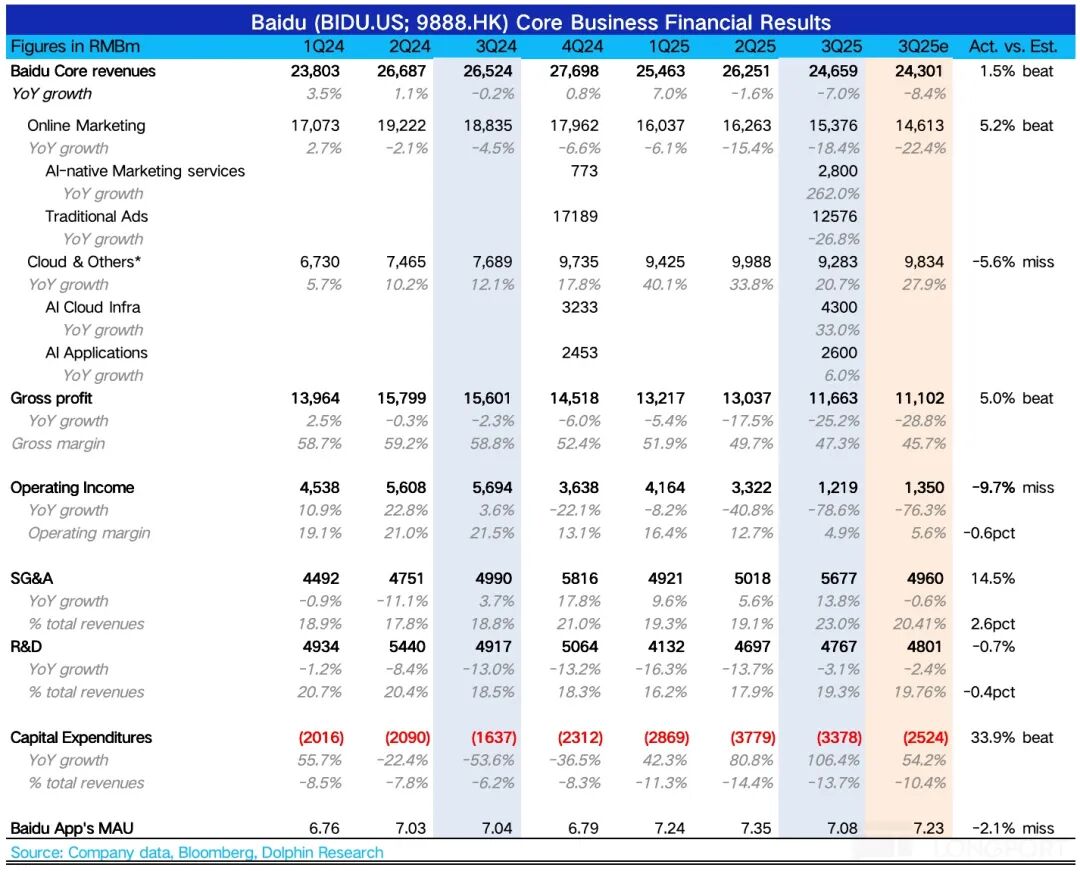
Core Insights - Baidu's Q3 performance aligns with expectations, showcasing a strong commitment to pivoting towards AI and shedding traditional advertising labels [1][8] - AI revenue contribution has reached 40%, with nearly 10 billion RMB generated from AI-related services [2][3] AI Revenue Breakdown - AI Cloud Infrastructure, including large model APIs and computing power leasing, accounts for half of AI revenue, growing 33% year-over-year, with computing power leasing accelerating to 128% growth [2] - AI applications generated 2.6 billion RMB, with a modest growth of 6%, impacted by promotional discounts and competition from other platforms [2] - AI-native marketing services, primarily through agents and digital humans, achieved 2.8 billion RMB, reflecting a significant growth of 262% [3] Advertising and User Metrics - Overall marketing revenue declined by 18%, with traditional advertising down 27%, attributed to the impact of AI-generated content [3] - Baidu's mobile app MAU decreased by 27 million, indicating potential user migration to competing platforms [3] Other Revenue Streams - The "萝卜快跑" (LuoBo Kuaipao) service saw a substantial increase in order volume, reaching 3.1 million orders, a growth of 212% [4] - Baidu's core operating profit fell to 1.2 billion RMB, with a profit margin of only 5%, significantly below normal levels due to low margins from AI business and increased marketing expenses [4] Capital Expenditures and Shareholder Returns - Capital expenditures rose to 3.4 billion RMB, a 106% increase year-over-year, reflecting investments in new server infrastructure and supporting facilities for self-developed chips [5] - The company is considering a dividend plan and aims to establish a "floor level" for share buybacks to enhance shareholder returns [5][11] Financial Performance Overview - Baidu's core revenues for Q3 were 26.5 billion RMB, slightly below expectations, with a year-over-year decline of 0.2% [7] - Gross profit was reported at 15.6 billion RMB, with a gross margin of 58.8%, indicating a slight decrease from previous quarters [7] - Operating income was 5.7 billion RMB, reflecting a year-over-year growth of 3.6% [7]

中泰国际每日晨讯-20251119
ZHONGTAI INTERNATIONAL SECURITIES· 2025-11-19 03:19
Market Overview - On November 17, U.S. interest rate cut expectations cooled, leading to a decline in technology stocks, with major Asia-Pacific markets generally falling. The Hang Seng Index closed at 25,930 points, down 454 points (1.7%), breaching the psychological level of 26,000 points [1] - The Hang Seng Technology Index fell by 111 points (1.9%), closing at 5,645 points, with total market turnover increasing to 242.1 billion HKD [1] Company Specifics - Xpeng Motors (9868 HK) reported a total revenue of 20.38 billion HKD for Q3, a year-on-year increase of 102%. However, the company’s Q4 revenue guidance of 21.5 billion to 23 billion HKD, representing a year-on-year growth of 33.5%-42.8%, was below market expectations, leading to a 10.5% drop in its stock price [4] - Alibaba (9988 HK) saw a brief increase in stock price due to the launch of its Qianwen APP but ultimately closed down 0.2% [1] - Tencent (700 HK) and Kuaishou (1024 HK) also experienced declines of 2.0% and 3.2%, respectively [1] Industry Dynamics - The automotive sector saw a broad decline, particularly affecting Xpeng Motors due to concerns over future delivery growth amid the phasing out of new energy vehicle subsidies [4] - The healthcare sector, represented by the Hang Seng Healthcare Index, fell by 1.7%, but major companies did not experience significant declines. Notably, BeiGene (6160 HK) saw a 1.0% increase in stock price following positive clinical research results for its HER2-targeted therapies [5] - The renewable energy and utility sectors also faced declines, with stocks like Xinyi Solar (968 HK) and GCL-Poly Energy (3800 HK) dropping between 2.9% and 8.6% [5]
3D打印引爆风口,机构“淘金”绩优概念股
Huan Qiu Wang· 2025-11-19 02:52
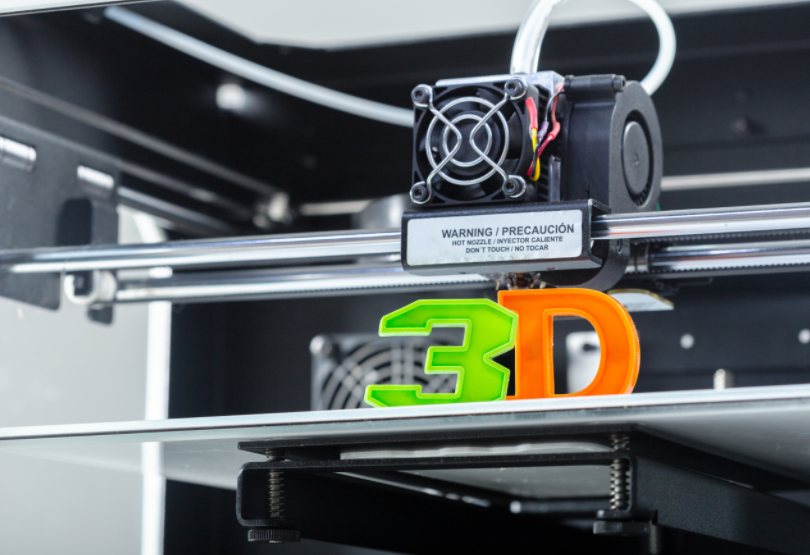
Group 1 - The 3D printing industry is experiencing a new wave of capital influx, with major companies like DJI entering the consumer-grade 3D printing market, indicating strong growth potential and industry prospects [1][2] - DJI's investment in the smart company specializing in light curing and fused deposition technology is expected to enhance market competitiveness and drive technological upgrades in the industry [1] - Other tech giants such as Meituan and Tencent are also deepening their investments in the 3D printing sector, with Meituan investing in Snapmaker and Tencent backing the company Creality, which aims to become the first publicly listed consumer-grade 3D printing company [1][2] Group 2 - The global 3D printing market is projected to reach approximately 170 billion RMB by 2024, with a compound annual growth rate of 18.5% over the next decade [2] - In the first quarter of 2025, global shipments of entry-level 3D printers are expected to exceed 1 million units, with Chinese suppliers contributing 95% of the market share [2] - In China, the production of 3D printing equipment increased by 40.5% year-on-year in the first three quarters, significantly outpacing growth in industrial robots and new energy vehicles [4] Group 3 - The demand for 3D printing is being driven by the IP economy and the trend of personalized collectibles, positioning 3D printing as a solution for the high demand for customized products [4] - A-share 3D printing concept stocks have shown strong performance, with over 90% of stocks in the sector experiencing price increases this year, and notable companies like Tiangong Co. seeing stock prices rise by approximately 374% [4] - Among 27 high-growth companies, 15 have recently attracted significant institutional interest, indicating a renewed recognition of the investment value in the 3D printing industry [5][6]
非法代理维权激增42% 技术如何破局金融黑灰产治理?
Jing Ji Guan Cha Wang· 2025-11-19 02:39
Core Insights - A covert battle fueled by AI, big data, and streaming is intensifying in the financial sector, focusing on a market order worth hundreds of billions and consumer rights [1] - The rise of illegal agency rights protection activities has surged by approximately 42% year-on-year, with 91.54% of such activities concentrated on platforms like Kuaishou, Douyin, Xiaohongshu, and WeChat [1] - Traditional risk control mechanisms are struggling to cope with the rapid evolution of black and gray market tactics, necessitating the development of advanced technological solutions [1][4] Group 1: Black and Gray Market Operations - The case of Zeng Moupeng and others highlights the organized crime network's evolution from individual complaints to a structured operation involving data acquisition, script training, and evidence forgery [2][3] - The operation involved luring clients with promises of debt reduction and credit repair, charging high service fees, and submitting false materials to pressure financial institutions [2][3] - The court case established a precedent for defining illegal agency rights protection as extortion, providing judicial guidance for similar cases nationwide [2] Group 2: Technological Countermeasures - Companies are developing a multi-faceted governance system that combines technology, collaboration, and legal frameworks to combat the increasingly sophisticated black and gray market activities [4][8] - The introduction of models such as the "black market keyword extraction & generalization model" and "black gray market routine identification model" has shown over 90% accuracy in identifying illegal activities [4][6] - The implementation of these models has significantly improved evidence collection efficiency and reduced case processing times to within a week [1][6] Group 3: Collaborative Governance - The establishment of the "Anti-Financial Black Market Alliance" (AIF) has led to over 167 member organizations collaborating to combat illegal financial activities [7] - The AIF has shared over 20.34 million pieces of black market data and facilitated the police's crackdown on 796 cases of illegal agency rights protection since its inception [7] - The development of the Tianxing Insight System has enabled precise identification and handling of black and gray market information, processing 80,000 cases this year alone [7] Group 4: Systemic Challenges and Future Directions - The governance of financial black and gray markets is a complex system involving legal, regulatory, technological, and public education components [8] - Current regulatory challenges include outdated laws, significant differences in internal regulatory standards, and a lack of public awareness regarding financial risks [8] - Future governance strategies should focus on enhancing data sharing, technological advancements, and collaborative legal frameworks to effectively combat the evolving threats posed by black and gray markets [8]
99%的创业者都搞反了:先抓细节,公司死得更快
3 6 Ke· 2025-11-19 00:36
Core Insights - The article emphasizes the importance of "systematic capability under detailed capability" as a key trait for successful entrepreneurs, highlighting that this skill can be developed over time rather than being innate [1][4][6] Group 1: Systematic Capability - Systematic capability refers to the ability of a company to avoid significant shortcomings in key areas and to build organizational-level capabilities [1][4] - Founders often lack systematic capabilities, leading them to seek partners or executives to fill their knowledge gaps, especially before Series B funding [2][4] - Building a system is an irreplaceable responsibility of the CEO, as a well-constructed system allows for the retention of talent and effective operations [4][7] Group 2: Detailed Capability - Detailed capability involves the pursuit of extreme professionalism in products and services, which must be established on top of systematic capability to ensure replication and iteration [1][5] - In industries like soy sauce production, the process involves numerous intricate steps where even minor changes can significantly affect the final product [5][6] - A mature business system translates strategic intentions into executable actions, with detailed capability focusing on the precise execution of these actions [5][6] Group 3: Continuous Improvement - Details serve as the core feedback source for system iteration and optimization, allowing the system to evolve based on insights from customer feedback and operational data [6][7] - Successful entrepreneurs maintain a habit of being present and engaged, using insights from various sources to identify potential system weaknesses or opportunities [6][7] Group 4: Case Studies - The article references Huawei's evolution from a hero-based management style to a structured system that emphasizes detail-oriented management, showcasing the value of a robust management system as a core asset [7]


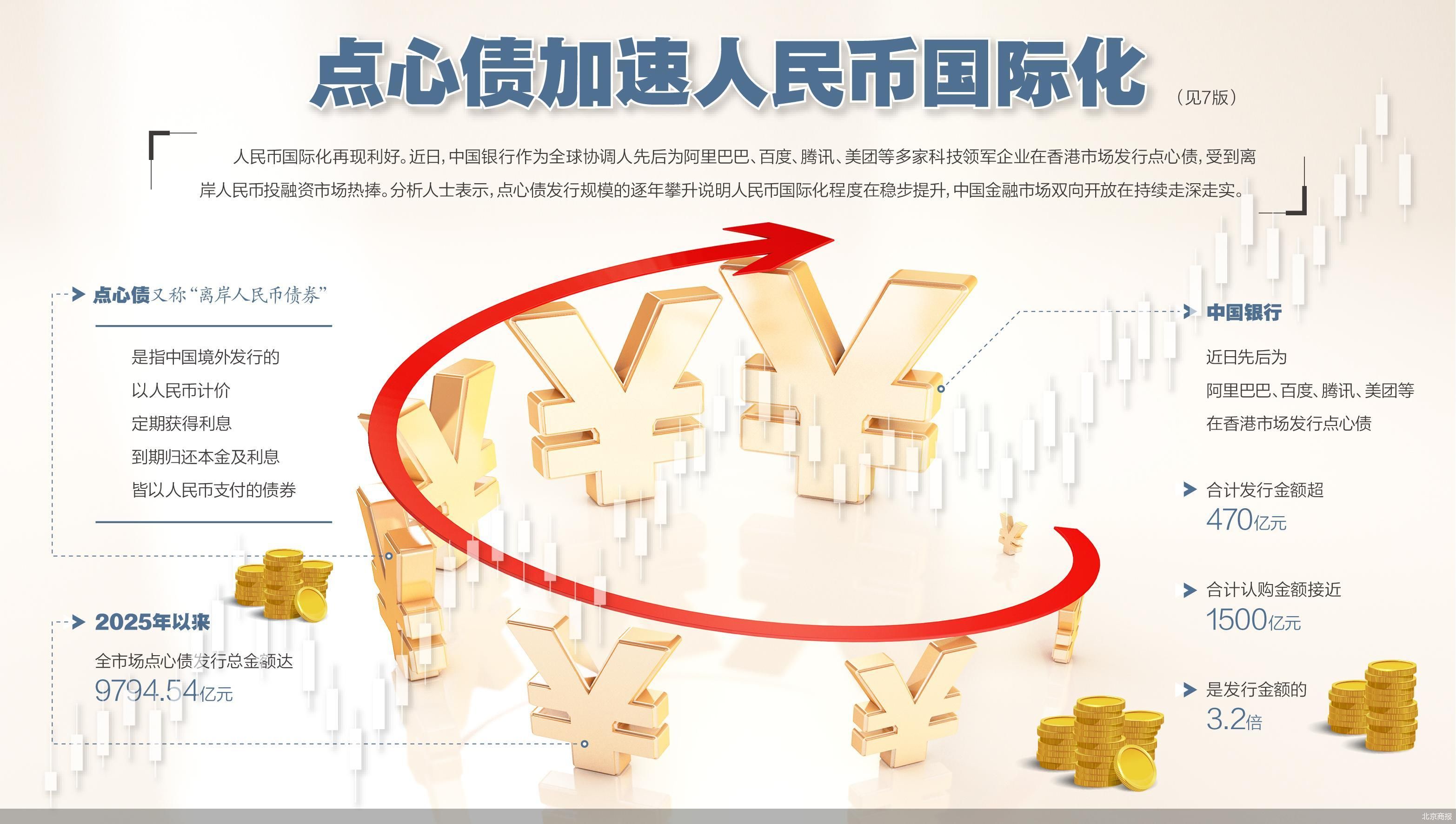
阿里腾讯抢发 点心债市场扩容
Bei Jing Shang Bao· 2025-11-18 15:54
Core Viewpoint - The recent issuance of dim sum bonds by major Chinese tech companies signifies a significant step in the internationalization of the Renminbi, with a total issuance exceeding 47 billion yuan, reflecting a growing market and diverse issuance entities [1][4]. Group 1: Market Growth and Dynamics - The dim sum bond market, also known as offshore Renminbi bonds, has seen a rapid increase in issuance, with 9,675.31 billion yuan issued in 2023 and an expected rise to 12,786.98 billion yuan in 2024, marking the first annual issuance exceeding 10 trillion yuan [4][6]. - The average issuance rate of dim sum bonds is over 2 percentage points lower than that of comparable US dollar bonds, driven by the divergence in monetary policies between China and the US [5][6]. Group 2: Issuance Entities and Trends - The diversity of issuance entities has expanded from traditional local government financing vehicles to include major tech companies like Tencent, Baidu, and Alibaba, which are now significant players in the dim sum bond market [7][8]. - The share of non-local government and non-financial entities in the issuance has increased, enhancing market vitality and attracting long-term capital [7][8]. Group 3: Policy Support and Future Outlook - The expansion of the "Southbound Pass" policy has facilitated greater participation of domestic investors in the offshore bond market, significantly boosting market activity [8][9]. - Projections indicate that the dim sum bond market could reach an outstanding scale of over 3 trillion yuan by 2030, with international investors' holdings expected to exceed 40% [12].
招银国际焦点股份-20251118
Zhao Yin Guo Ji· 2025-11-18 14:05
Group 1: Stock Recommendations - Geely Automobile (175 HK) has a target price of 25.00, indicating a potential upside of 47% with a PE ratio of 9.50[5] - Luckin Coffee (LKNCY US) has a target price of 44.95, suggesting a potential upside of 12% with a PE ratio of 30.00[5] - Alibaba (BABA US) has a target price of 209.40, indicating a potential upside of 33% with a PE ratio of 22.50[5] Group 2: Market Performance - The basket of 24 long positions had an average return of -3.4%, while the MSCI China Index returned -0.8%[9] - Among the 24 stocks, only 5 outperformed the benchmark[9] Group 3: Analyst Ratings - New additions include companies like Bosideng (3998 HK) and Futu Holdings (FUTU US), both rated as "Buy"[6] - The report indicates a focus on sectors such as technology, insurance, and consumer goods, with multiple stocks receiving "Buy" ratings[5][6]





马云低调现身蚂蚁园区:穿一身黑,佩戴工牌与鸭舌帽
Sou Hu Cai Jing· 2025-11-18 13:10
Core Insights - Alibaba founder Jack Ma was spotted at Ant Group's campus, indicating his involvement with the company [1] - Ant Group launched its AI assistant "Lingguang," which is a key product in its AI strategy, featuring three main functions [3][4] - Alibaba's "Qianwen" project has entered the AI to C market, achieving significant app store rankings shortly after its public beta launch [3][4] Group 1 - Jack Ma appeared at Ant Group accompanied by Chairman Jing Xiandong and CEO Han Xinyi, dressed in a low-profile manner [3] - Ant Group's "Lingguang" AI assistant has been officially released, available on both Android and Apple app stores [3] - The initial features of "Lingguang" include "Lingguang Dialogue," "Lingguang Flash Application," and "Lingguang Open Eye" [3] Group 2 - Alibaba's "Qianwen" project has also launched its public beta, targeting the AI to C market [4] - The "Qianwen" app quickly rose to the fourth position on the Apple App Store's free applications chart, surpassing competitors like Tencent's Yuanbao and DeepSeek [3]

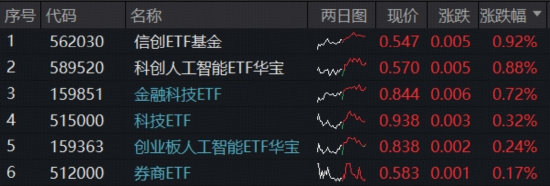
国产AI高频催化,科创人工智能突现拐点,589520上探1.4%!国防军工短线熄火,科技风格何时归?历史已有暗示
Xin Lang Ji Jin· 2025-11-18 12:19
Market Overview - The market continued to experience fluctuations and declines, with the Shanghai Composite Index falling by 0.81% to 3939.81 points, and the ChiNext Index dropping over 1% on November 18, with a total trading volume of 1.93 trillion yuan [1] AI Sector Performance - AI applications are showing resilience in the market, with Alibaba's AI assistant "Qianwen" gaining popularity, ranking fifth in the Apple App Store's free applications shortly after its public testing launch [2] - The domestic AI industry is witnessing a surge in new applications, supported by the "self-reliance and self-improvement" directive, indicating a high degree of certainty for domestic AI [3] - The Science and Technology Innovation Artificial Intelligence ETF (589520) saw its price rise by 0.88%, with a peak increase of 1.4%, reflecting strong investor interest in the domestic AI sector [6] Fund Flows and Investment Trends - The Science and Technology Innovation Artificial Intelligence ETF (589520) attracted a net inflow of 49.26 million yuan over the past ten trading days, indicating positive market sentiment towards domestic AI [6] - The financial technology sector is also active, with the Financial Technology ETF (159851) rising by 0.72%, supported by the announcement of Alibaba's AI application and favorable policies [12][13] Defense and Aerospace Sector - The Defense and Aerospace ETF (512810) experienced a decline of 1.31%, but managed to hold above its six-month moving average, suggesting underlying support despite market volatility [14][16] - Analysts believe that the defense sector may enter a new growth cycle, driven by increased military trade and advancements in commercial aerospace [18][19] Key Stocks and Performance - Notable stocks within the Science and Technology Innovation Artificial Intelligence ETF include Jingchen Technology, which surged over 11%, and several others that saw gains of over 2% [8] - The financial IT sector is expected to benefit from AI applications, with companies like Geer Software showing strong performance [12]